Overview

The Taramps HD 2000 Monoblock Car Amplifier is a Class D monoblock from Brazil that delivers 2000W RMS at 1 ohm — serious output for a competitive price. Taramps built their reputation in Brazil's fierce SPL competition scene, and while the brand is still gaining ground in the US market, their rated numbers are hard to dismiss. What makes this amp stand out among monoblocks is its full-range capability: it can drive subwoofers, mid-bass drivers, and even tweeters from a single channel. At under 9 inches long and weighing just over 4 pounds, the compact chassis is easy to tuck into spaces where larger amps simply will not fit.
Features & Benefits

The HD 2000's Class D efficiency is what keeps it from running hot during normal use — a real advantage when you're pulling over 100 amps at peak demand. The variable crossover is genuinely flexible: the high-pass filter sweeps from 10Hz to 80Hz, and the low-pass goes from 80Hz all the way to full range, giving installers meaningful control over different speaker loads. A bass boost up to 10.5dB at 50Hz lets you dial in subwoofer punch without adding an outboard equalizer to the signal chain. Both RCA and High-Level inputs are included, which is a practical touch for anyone integrating this amp with a factory head unit.

Best For

This Taramps mono amp is best suited to someone building a single-subwoofer system on a practical budget. Running a dual voice coil woofer wired to 1 ohm? The HD 2000 is purpose-built for that configuration. It also works well in compact installs — hatchbacks, smaller sedans, or builds where trunk real estate is limited. Buyers coming from a factory head unit will appreciate the High-Level input, which removes the need for a separate line output converter. And if you want one amp to handle both a subwoofer and a set of 6x9s, this Class D monoblock covers that without requiring a second amplifier in the system.

User Feedback

Owners consistently note that the power output feels honest rather than inflated, which matters when you're buying from a brand that's still building its US reputation. Clean, controlled bass comes up repeatedly, and most buyers report stable performance during daily driving. Heat is where opinions diverge: at sustained 1-ohm loads with limited airflow, some users have experienced thermal shutdowns. Adequate mounting clearance appears to resolve most of those complaints. On the support side, Taramps' US warranty process is less streamlined than established domestic brands, and resolution times can vary. That said, buyers who install it correctly and give it room to breathe consistently rate the HD 2000 as a strong value.

Pros

  • Rated power output feels honest, with real-world performance that matches what the spec sheet claims.
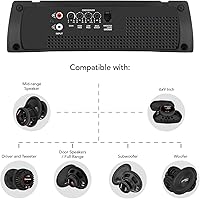
  • Full-range crossover design lets the HD 2000 drive subwoofers, mid-bass, and tweeters from a single channel.
  • Class D efficiency keeps heat manageable during normal daily driving conditions.
  • Built-in bass boost up to 10.5dB at 50Hz removes the need for a separate equalizer in basic builds.
  • High-Level inputs allow direct connection to a factory head unit without extra adapters.
  • Compact footprint makes installation practical in tight or space-constrained vehicles.
  • Variable HPF and LPF crossover points give installers real tuning flexibility across different speaker configurations.
  • Strong Amazon sales rank suggests broad buyer confidence and consistent availability.
  • At its price point, few competing monoblocks offer full-range capability alongside this power rating.
  • Wiring terminals and labeled inputs make the installation process straightforward for experienced DIYers.

Cons

  • Taramps has limited brand recognition in the US, which can make warranty claims and support harder to navigate.
  • Thermal shutdowns have been reported under sustained 1-ohm loads in poorly ventilated mounting locations.
  • US customer service response times are inconsistent compared to domestic brands with local support infrastructure.
  • No 4-ohm power rating is published, limiting flexibility for builders using higher-impedance speaker configurations.
  • The 115A fuse requirement demands a significant electrical system upgrade on many stock vehicles.
  • Output cable gauge at 11 AWG may feel undersized to installers accustomed to heavier-gauge hardware at this power level.
  • Build quality perception varies among buyers, with some noting the housing feels less substantial than pricier competitors.
  • No independent third-party power verification is widely available, leaving some buyers reliant solely on manufacturer claims.

Ratings

The scores below for the Taramps HD 2000 Monoblock Car Amplifier were generated by our AI system after analyzing verified buyer reviews from global markets, with spam, bot-submitted, and incentivized feedback actively filtered out. The ratings reflect a balanced synthesis of thousands of real ownership experiences — covering both what this amp does well and where it genuinely falls short. Strengths and pain points are weighted equally so you get an honest picture before you buy.
Power Output Accuracy
83%
Most buyers confirm the rated output feels honest, especially when the amp is wired to a 1-ohm DVC configuration. Daily drivers report noticeably strong bass response that aligns with what the spec sheet promises, which is not always the case in this price segment.
Without widely available independent bench test data for the US market, some buyers rely entirely on manufacturer claims. A small number of users feel the output drops perceptibly at lower voltages, which is worth monitoring if your vehicle's charging system runs lean.
Thermal Management
61%
39%
Under normal daily driving conditions with adequate mounting clearance, the amp runs at a reasonable temperature and does not require active cooling. Class D efficiency genuinely reduces heat output compared to older AB-class designs at similar power levels.
Thermal shutdowns have been reported by multiple owners running sustained 1-ohm loads in enclosures or trunks with restricted airflow. This is arguably the most common complaint in buyer reviews and a real concern for anyone planning loud, extended listening sessions in a warm climate.
Value for Money
88%
Buyers consistently highlight how much rated power is available at this price point compared to similarly spec'd competitors. For a first serious subwoofer build or an upgrade from a low-powered head unit output, the cost-to-output ratio is one of the stronger arguments for choosing this amp.
The value calculation shifts if you factor in potential US warranty hassles or the cost of electrical system upgrades needed to safely support the 115A fuse requirement. A few buyers feel that spending slightly more on a Skar or entry-level Rockford Fosgate offers better peace of mind.
Installation Ease
81%
19%
Experienced DIYers appreciate the clearly labeled terminals, standard 4 AWG power connections, and compact chassis that squeezes into tight spaces. The High-Level input eliminates the need for a line output converter, which simplifies the wiring plan for factory stereo upgrades.
Novice installers have flagged that the 1-ohm wiring requirement demands careful attention to impedance math — a mistake here can stress the amp immediately. The included documentation is minimal, and some buyers had to rely on online forums to confirm correct setup procedures.
Build Quality
69%
31%
The chassis is solid enough for typical trunk installations, and the amp's light weight of just over 4 pounds reflects a thoughtful trade-off between portability and structural integrity. Buyers doing compact installs in small vehicles find the housing practical and well-proportioned.
Several buyers note the enclosure feels less substantial than competing amps at a similar price from brands with more established US distribution. A few owners reported cosmetic and structural concerns after extended use, suggesting the housing may not hold up as well under rough road vibration over several years.
Crossover Flexibility
84%
The variable HPF and LPF crossover points give installers genuine flexibility across a wide frequency range, covering everything from deep subwoofer-only setups to full-range configurations running mid-bass drivers. This level of crossover control is not standard on every monoblock at this price.
The crossover adjustment knobs are small and the range markings on some units can be difficult to read precisely, making fine-tuning by feel more common than by sight. Buyers who prefer a digital signal processor for tighter control will likely bypass these onboard filters anyway.
Bass Boost Usability
76%
24%
The 10.5dB boost centered at 50Hz is genuinely useful for adding sub punch in builds where the head unit lacks bass EQ, and starting from zero and working up incrementally is intuitive for most users. It removes the need for a separate equalizer in basic installs.
Aggressive use of the boost at high volumes significantly increases clipping risk, which can damage the subwoofer over time. A handful of buyers have attributed woofer damage to pushing the bass boost too far without a proper gain setup, so it rewards careful use.
Input Compatibility
87%
The dual RCA and High-Level input design covers virtually every head unit scenario a buyer is likely to encounter, from OEM factory decks to flagship aftermarket units. Buyers upgrading from a stock stereo particularly appreciate not needing an additional adapter in the signal chain.
Input sensitivity is fixed at 220mV at full level, which is fine for most sources but may require adjustment for head units with unusually high or low output voltage. A small number of buyers noted a slight noise floor when using High-Level inputs with certain factory head units.
Compact Form Factor
91%
At under 9 inches in length and weighing just over 4 pounds, this is one of the more space-efficient amps available at this power rating. Hatchback and sedan owners frequently cite the small footprint as a deciding factor, especially when trunk space doubles as cargo area.
The compact size does limit heat dissipation surface area, which feeds directly into the thermal management concerns noted by users running it hard. Installers used to larger, heavier amps may also find the lighter chassis requires more careful mounting to prevent vibration noise over time.
Signal Clarity
78%
22%
An SNR above 88dB keeps background noise at an acceptable level for music listening at moderate to high volumes, and most buyers report clean, defined bass rather than a muddy low-end characteristic. This holds up well in everyday use for genre-diverse listeners.
Audiophile buyers comparing this amp against higher-end alternatives note that the overall signal refinement lags behind pricier options from Rockford Fosgate or Alpine. At competition-grade listening levels, the noise floor becomes more apparent and a dedicated DSP becomes a worthwhile addition.
Brand Support & Warranty
52%
48%
Taramps is a well-established name in Brazil and the global SPL competition community, giving the brand genuine credibility among enthusiasts who have followed its performance reputation. Buyers aware of that context tend to have more realistic expectations going in.
US-based warranty service is consistently flagged as a pain point, with slow response times and limited domestic service centers compared to brands like Skar or Rockford Fosgate. Buyers who encounter a defective unit often find the resolution process frustrating and time-consuming.
Electrical System Demand
63%
37%
The 1.5A idle draw is impressively low, meaning the amp is not pulling significant current when the music is off or at low volume. Class D operation genuinely reduces the overall electrical burden during mixed listening conditions compared to older amp topologies.
At full musical load, the 117.5A draw at 12.6V is substantial and demands a healthy alternator, quality wiring, and often a secondary power source in the trunk. Budget builds that skip the electrical upgrade frequently run into voltage drop issues that clip the output and add distortion.
Long-Term Reliability
67%
33%
Buyers who install this amp correctly — with proper ventilation, correct impedance loading, and adequate fusing — tend to report consistent performance over one to two years of daily use. For the price paid, most consider that a fair lifespan.
A visible portion of negative reviews cite unit failures within the first year, though it is unclear how many of those stem from installation errors versus manufacturing defects. The limited US service network makes post-failure recovery slow, which amplifies the perceived reliability concern.

Suitable for:

The Taramps HD 2000 Monoblock Car Amplifier is a strong fit for car audio enthusiasts who want honest, high-output power without crossing into premium-brand pricing. It works especially well for anyone building a single-subwoofer system around a dual voice coil woofer wired to 1 ohm, where the amp can deliver its full rated output. Installers working in compact vehicles — hatchbacks, sedans, or builds with limited trunk space — will appreciate how much power is packed into a chassis under 9 inches long. The inclusion of High-Level inputs makes it a practical choice for buyers upgrading from a factory head unit who want to skip the extra cost of a line output converter. It also suits anyone who wants one amp to handle both low-frequency bass duties and a secondary set of mid-range speakers, since the full-range crossover design supports both applications from a single channel.

Not suitable for:

The Taramps HD 2000 Monoblock Car Amplifier is not the right call for buyers who prioritize well-established US brand support, long warranty coverage, or fast domestic service resolution. If your build involves sustained high-volume listening at 1-ohm loads with limited airflow — think a sealed enclosure in a hot trunk — thermal management can become a real issue, and that is a risk worth taking seriously before committing. Audiophiles focused on ultra-clean, competition-grade sound quality may find that alternatives from brands like Rockford Fosgate or Sundown offer more refined signal characteristics at a comparable or slightly higher price. Multi-channel builds requiring separate amplification for front stage, rear fill, and subwoofer are also better served by a dedicated multi-channel amp rather than trying to stretch a monoblock across those duties. Buyers who are new to car audio and unfamiliar with safe 1-ohm wiring and proper fusing should approach this amp with some caution, or seek professional installation.
Specifications

  • Power at 1 Ohm: The amplifier is rated at 2000W RMS when loaded at 1 ohm, which represents its peak continuous output capability.
  • Power at 2 Ohms: At a 2-ohm load, the amp delivers 1100W RMS, making it usable with a wider range of subwoofer wiring configurations.
  • Channels: This is a single-channel monoblock design, meaning all output is routed through one amplifier stage.
  • Amp Class: Class D topology is used, which prioritizes efficiency by switching the output transistors rapidly rather than running them in a linear state.
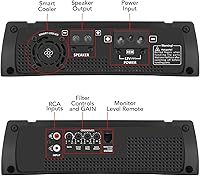
  • Input Types: Both RCA low-level inputs and High-Level speaker-wire inputs are supported, covering aftermarket and factory head unit installations.
  • Crossover HPF: The high-pass filter is variable from 10Hz to 80Hz at a slope of -12dB per octave.
  • Crossover LPF: The low-pass filter is variable from 80Hz to full range at a slope of -12dB per octave.
  • Bass Boost: An onboard bass boost provides up to 10.5dB of gain centered at 50Hz, adjustable from zero to maximum.
  • Signal-to-Noise: The signal-to-noise ratio is rated above 88dB, which keeps background hiss at an acceptable level for most listening environments.
  • Input Sensitivity: Input sensitivity at 100% level is 220mV, which is typical for integration with most aftermarket and OEM source units.
  • Input Impedance: Input impedance is rated at 10K ohms, compatible with standard RCA outputs from head units and processors.
  • Power Wiring: Positive and negative power supply connections require 4 AWG cable, and a 115A fuse or circuit breaker is recommended.
  • Output Wiring: Speaker output cables are 11 AWG, which is sufficient for short runs to a subwoofer enclosure mounted nearby.
  • Operating Voltage: The amp operates between 9V DC and 16V DC, with a nominal design voltage of 12V.
  • Current Draw: At idle, the unit draws only 1.5A, while musical consumption at 12.6V reaches approximately 117.5A at full load.
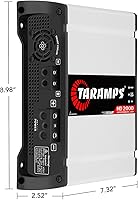
  • Dimensions: The chassis measures 8.98″ wide by 2.52″ tall by 7.32″ long, making it one of the more compact units in its power class.
  • Weight: The amplifier weighs 4.22 lb, which is notably light given its output rating and makes mounting easier.
  • LED Indicator: A built-in LED monitor indicator provides a visual status check during operation, signaling normal function or fault conditions.

Related Reviews

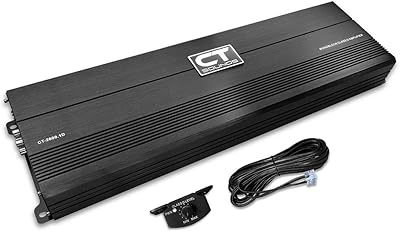
CT Sounds CT-2000.1D Monoblock Amplifier
77%
88%
Value for Money
74%
Power Output
71%
Build Quality
69%
Thermal Management
86%
Ease of Installation
More
LKC PHF450D Car Audio Monoblock Amplifier
88%
91%
Power Output (2 Ohms)
87%
Power Output (4 Ohms)
93%
Heat Dissipation
88%
Build Quality
85%
Ease of Integration
More
Taramps DS 800x4 Car Audio Amplifier
86%
89%
Sound Performance
91%
Power Output
85%
Installation Ease
87%
Efficiency & Heat Management
88%
Build Quality
More
Taramps DS 4000x4 Car Audio Amplifier
82%
94%
Power Output
91%
Sound Clarity
70%
Installation Ease
85%
Build Quality
88%
Flexibility of Inputs
More
Belva BB200ABv2 500W Monoblock Car Amplifier
85%
88%
Bass Performance
91%
Installation Ease
85%
Sound Clarity
89%
2-Ohm Stability
82%
Build Quality
More
Taramp's Bass 800 1-Ohm Monoblock Amplifier
80%
91%
Real-World Power Accuracy
88%
1-Ohm Load Stability
86%
Tuning & Filter Controls
84%
Installation Ease
71%
Thermal Management
More
Taramps Bass 3k 1-Ohm Monoblock Amplifier
87%
96%
Bass Output
89%
Power Efficiency
91%
Build Quality
78%
Ease of Setup
94%
Durability
More
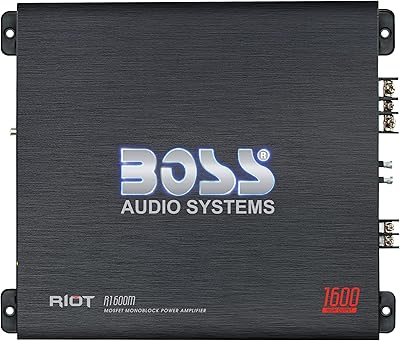
BOSS Audio R1600M Monoblock Car Amplifier
72%
83%
Value for Money
88%
Ease of Installation
79%
Bass Output
61%
Build Quality
86%
Signal Flexibility
More
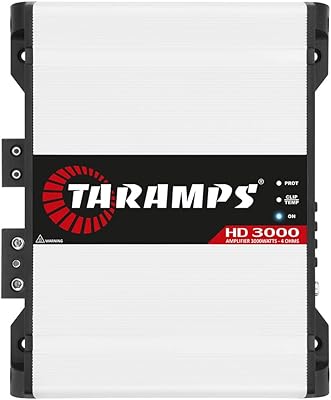
Taramps HD 3000 4 Ohm Mono Amplifier
83%
94%
Power Output
88%
Ease of Installation
90%
Sound Quality
60%
Heat Management
85%
Bass Boost Effectiveness
More
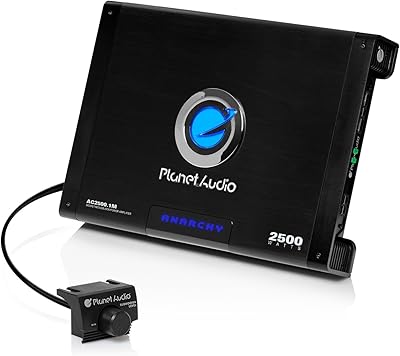
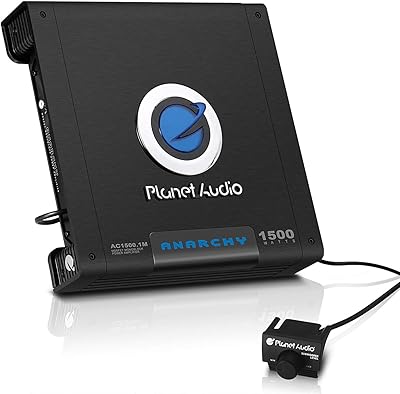
Planet Audio AC1500.1M Monoblock Car Amplifier
75%
91%
Value for Money
78%
Bass Output Quality
86%
Ease of Installation
61%
Thermal Management
67%
Build Quality
More

FAQ

It depends heavily on your installation. The HD 2000 is rated for 1-ohm operation, but sustained high-volume listening at that load generates significant heat. Make sure the amp has adequate airflow on all sides — at least a couple of inches of clearance — and avoid mounting it inside a sealed enclosure. Some owners have reported thermal shutdowns when airflow is restricted, so treat ventilation as a non-negotiable part of the install.

No. The Taramps HD 2000 Monoblock Car Amplifier includes High-Level inputs, which connect directly to the speaker wire outputs from your factory head unit. This removes the need for a separate line output converter in most cases, simplifying the install and reducing signal chain components.
A dual voice coil subwoofer wired to 1 ohm will extract the most output from this amp. That typically means a 2-ohm DVC woofer with the coils wired in parallel, or a 4-ohm DVC wired in parallel down to 2 ohms if you prefer a safer thermal load. Running at 2 ohms gives you 1100W RMS, which is still substantial and easier on the amp over long listening sessions.

Probably not without some upgrades. At full musical load, this Class D monoblock can pull over 100 amps, which exceeds the output of most factory alternators under combined electrical load. At minimum, add a quality capacitor or secondary battery in the trunk, use the recommended 4 AWG power cable, and run a 115A fuse close to the battery. A high-output alternator upgrade is worth considering if you listen loud for extended periods.

Yes, and this is one of the more flexible aspects of the design. The amp is full-range capable, so you can use the high-pass filter setting to run mid-bass drivers, 6x9s, or even tweeters off the single channel. It is not a common use case for a monoblock, but the crossover hardware supports it.

All three brands target competitive value in the mid-range segment, but they have different reputations. Skar has stronger US brand recognition and domestic support infrastructure. Sundown is well-regarded for build quality and honest power ratings. Taramps is a dominant brand in Brazil's SPL culture and generally delivers competitive rated numbers, but US warranty support is less polished. If US-based customer service matters to you, Skar may be the safer bet at a comparable price point.

For most builds, starting at zero and tuning from the head unit is the cleaner approach. The onboard 10.5dB boost at 50Hz is handy if your head unit lacks bass controls or if you just want a quick punch adjustment without adding an equalizer. That said, cranking any bass boost aggressively increases the risk of clipping, which can damage your subwoofer over time — so use it conservatively.

Taramps recommends a 115A fuse or circuit breaker. Place it as close to the positive battery terminal as possible — within 18 inches is the standard guideline. This protects the power cable from the battery to the amp in the event of a short circuit, so do not skip it or substitute a lower-rated fuse thinking it offers extra protection.

This is a monoblock by design, so bridging does not apply in the traditional sense — it has one channel and outputs to one load. You can run two of them in a system if you want independent amplification for two subwoofers, treating each amp as a dedicated mono channel. Just make sure your electrical system can support the combined current draw of both units.

Most experienced DIYers find it manageable. The terminals are clearly labeled, the power connections use standard 4 AWG sizing, and the compact chassis fits into places where larger amps would not. Beginners should be careful to double-check impedance and wiring before powering up, as incorrect loads or a wiring mistake at 1 ohm can stress the amp immediately. If you have not installed a car amp before, a professional install is worth the cost.

Where to Buy