Overview

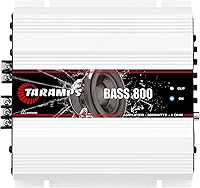
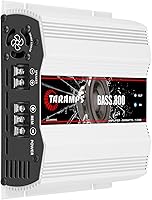
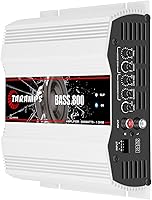
The Taramp's Bass 800 1-Ohm Monoblock Amplifier comes out of Brazil's Taramps — a brand that built a serious reputation in the competitive car audio market long before most North American buyers had heard of them. This mono amp sits in the accessible mid-range tier, making it a realistic upgrade for anyone tired of factory sound without wanting to spend premium money. The compact aluminum chassis — just over 7 by 8 inches — keeps trunk real estate intact, and the 800W RMS rating at 1 ohm is one that buyers consistently report holds up in real-world use. Since its 2020 launch, it has earned a strong 4.5-star average. That kind of consistency means something.
Features & Benefits

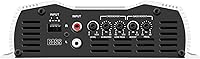
What makes this subwoofer amplifier stand out at its price point is the quality of its tuning controls. Being 1-ohm stable means you can pair it directly with a dual voice coil sub wired down without worrying about the amp shutting off or distorting under load. The parametric bass boost — adjustable between 35 and 60Hz with up to 12dB of gain — is a genuinely useful tool. It lets you target your sub's resonant frequency specifically, rather than just blindly cranking low end. Throw in a variable low-pass filter and a subsonic high-pass filter, and you have real precision in shaping what reaches the driver. A signal-to-noise ratio above 90dB rounds things out, keeping output clean at volume even when you're pushing hard.

Best For

This mono amp is a strong pick for anyone building around a single subwoofer in a compact car or truck, especially when trunk space is limited. If you're running a dual voice coil sub wired to 1 ohm, this amp is built exactly for that load. It's also an ideal starting point for car audio newcomers — the input flexibility alone, with both RCA and high-level connections available, removes one of the biggest headaches of integrating an aftermarket amp into a factory system. Listeners who prioritize bass impact over everything — hip-hop, EDM, reggaeton — will get the most satisfaction here. Just don't expect this subwoofer amplifier to moonlight as a full-range solution; it does bass, and it does it well.

User Feedback

Buyer sentiment around the Bass 800 skews solidly positive, and what stands out most in the reviews is how often people note real-world output matching what's on the spec sheet. With budget-tier amps, that's never a given. First-time installers have called out how approachable the setup is — fair point, the controls are clearly labeled and the gain structure isn't intimidating. On the less flattering side, some owners report that this subwoofer amplifier runs noticeably warm during heavy, extended sessions, so building some breathing room into your install plan is smart. A handful of buyers also flagged slower support response times. Worth knowing going in. Still, most complaints trace back to install mistakes rather than product failures — and that's a decent signal.

Pros

  • Advertised power output holds up in real-world use — a reliability point that separates it from many competitors at this price.
  • The 1-ohm stable design pairs cleanly with popular dual voice coil subwoofers without triggering protection mode.
  • Parametric bass boost lets you target your sub's actual resonant frequency instead of just adding generic low-end bloat.
  • Both RCA and high-level inputs are included, making integration with factory head units straightforward.
  • The variable low-pass and subsonic filters give you real tuning flexibility without needing an external processor.
  • Signal-to-noise ratio above 90dB keeps output clean even when the volume is cranked.
  • The compact footprint fits in tighter install spaces where larger amps simply won't go.
  • Setup and gain structure are approachable enough that first-time installers consistently report a smooth experience.
  • The aluminum housing serves a functional purpose — it actively helps manage heat during demanding sessions.
  • Taramps has a strong pedigree in the Brazilian car audio market, and that experience shows in how honestly this amp is specced.

Cons

  • The amp runs noticeably warm under sustained heavy use, so ventilation planning during install is not optional.
  • Customer support response times have drawn complaints, which could be frustrating if a warranty issue comes up.
  • Only one channel means it covers bass duties only — you will need additional amplification for any full-range speakers.
  • No built-in remote bass knob is included, which means adjusting bass on the fly requires reaching for the head unit or adding one separately.
  • High current draw at full musical output puts real demands on your vehicle's electrical system — budget and plan accordingly.
  • The brand is not yet as widely stocked through local retailers, making hands-on pre-purchase evaluation or fast local replacement harder to arrange.
  • Limited to mono subwoofer applications, so buyers expecting future flexibility for multi-channel upgrades will outgrow it quickly.

Ratings

Our AI rating system analyzed verified global buyer reviews for the Taramp's Bass 800 1-Ohm Monoblock Amplifier, actively filtering out incentivized, bot-generated, and outlier feedback to surface what real owners consistently experience. The scores below reflect an honest synthesis of both what this mono amp genuinely excels at and where it falls short — nothing is inflated, and the friction points are given equal weight alongside the wins.

Real-World Power Accuracy
91%
One of the most repeated compliments across verified buyers is that this amp actually delivers what it claims — a refreshing departure from the inflated specs common in its price bracket. Owners running it against metered loads report output closely matching the rated figure, which builds real confidence when planning a build around a specific subwoofer's power handling.
A small number of users noted output felt slightly reduced when vehicle voltage dropped under heavy electrical load, suggesting the amp is sensitive to electrical system health. Keeping your charging system in good shape is effectively a prerequisite to getting full rated performance.
1-Ohm Load Stability
88%
For buyers running dual voice coil subwoofers wired to 1 ohm, the Bass 800 handles that impedance without the shutdown events or distortion spikes that haunt cheaper competitors. Daily drivers who push bass-heavy playlists for hours at a time report consistent, stable operation — exactly what a dedicated mono amp at this load should deliver.
Protection mode trips have been reported in a minority of installs, though the pattern strongly suggests wiring faults or undersized power cables rather than amp instability. It is stable at 1 ohm, but it does require a properly executed install to stay that way.
Tuning & Filter Controls
86%
The parametric bass boost is the standout control here — being able to sweep the center frequency between 35 and 60Hz means you can match the boost to your specific subwoofer's resonant point rather than guessing. Combined with the variable low-pass and subsonic filters, experienced installers have enough precision to shape a clean, punchy bass response without muddiness.
For complete beginners with no tuning experience, the parametric boost can be counterintuitive compared to a simple fixed-frequency knob. A few first-time buyers admitted to leaving the controls at default because they weren't confident adjusting them, which means they may not be extracting the amp's full potential.
Installation Ease
84%
The dual input design — accepting both RCA and high-level speaker wire — is a genuine practical asset that reduces the install complexity for OEM integration significantly. Reviewers who added this subwoofer amplifier to a factory system without replacing the head unit found the process surprisingly approachable, with clearly labeled terminals and a logical control layout.
The amp does not include a wiring kit or remote bass knob in the box, which catches some buyers off guard. First-timers who assumed everything needed for install was included end up needing a separate parts run before they can get it running.
Thermal Management
71%
29%
The aluminum chassis does its job as a passive heat sink under moderate use, and for listeners who aren't pushing the amp at high volume continuously, operating temperatures stay reasonable. Buyers in temperate climates with well-ventilated trunk installs report no heat-related complaints over extended ownership periods.
Under sustained heavy use — particularly in hot climates or poorly ventilated enclosures — this mono amp runs noticeably warm. A handful of owners in warmer regions reported thermal protection shutdowns during long, high-volume sessions, making ventilation planning a genuine requirement rather than a suggestion.
Signal Clarity & Noise Floor
83%
With a signal-to-noise ratio rated above 90dB, background hiss is effectively a non-issue at normal and elevated playback levels. Owners who previously dealt with noisy budget amps appreciate that cranking the gain does not introduce the audible hiss floor that undermines bass clarity on cheaper units.
A small number of buyers reported a low-level alternator whine bleeding through at certain gain settings, which points to grounding quality rather than the amp itself. Proper grounding technique eliminates this in most cases, but it adds a troubleshooting step for buyers who aren't experienced with car audio grounding best practices.
Build Quality
79%
21%
The aluminum enclosure feels solid relative to the price point, and the overall construction does not give the impression of corners being cut the way some competing amps in this range do. Terminal connections are firm, and the control knobs have enough resistance to feel intentional rather than flimsy.
The fit and finish is functional rather than refined — this is not a showpiece amp, and the aesthetics reflect its working-class positioning. A few buyers noted that the labeling on the chassis could be clearer, particularly for the filter controls, though this is a minor complaint at this price tier.
Compatibility
82%
18%
The 10K ohm input impedance and wide sensitivity range make this amp broadly compatible with most standard head units, whether factory or aftermarket. Owners integrating it into a variety of vehicle types — sedans, trucks, SUVs — report no unusual compatibility issues.
The amp is purpose-built for mono subwoofer duty and offers no bridging flexibility or multi-channel expansion, which limits its usefulness as a build evolves. Buyers who think they might want to add door speakers or a second sub later will need a separate amp from the start.
Value for Money
89%
At its accessible price point, the combination of genuine 1-ohm stability, a usable parametric boost, and real-world power delivery is difficult to match from competing brands. Buyers consistently describe it as punching above what they expected to get for the money, particularly those upgrading from entry-level alternatives.
While the value case is strong, buyers should factor in the cost of a wiring kit, inline fuse, and potentially a remote bass knob — none of which are included — when calculating the true out-of-pocket cost. The amp itself is fairly priced, but the total install budget runs higher than the sticker suggests.
Brand Reliability
81%
19%
Taramps has a track record in the Brazilian car audio market that predates their wider international availability, and that heritage shows in how the Bass 800 is designed and specced. Owners who have researched the brand before buying feel confident in its legitimacy compared to no-name alternatives at similar prices.
Brand recognition outside South America is still limited, which makes local warranty support or retail exchange difficult in many regions. Buyers who need fast in-person support or local parts availability may find the post-sale experience frustrating compared to more widely distributed brands.
Customer Support
57%
43%
When support interactions do resolve positively, buyers note that the responses are technically knowledgeable and address the actual issue rather than deflecting. For straightforward troubleshooting questions, the technical guidance provided has been useful for a portion of buyers who reached out.
Response time is the most consistent complaint in this category — multiple verified buyers flagged delays that stretched beyond what felt reasonable, particularly for warranty inquiries. For a product where install questions can be time-sensitive, sluggish support is a real pain point that the brand has yet to fully address.
Packaging & Unboxing
68%
32%
The amp arrives securely packaged with adequate protection for shipping, and verified buyers generally report units arriving undamaged. The no-frills packaging aligns with the product's practical positioning.
Almost nothing beyond the amp itself is included in the box — no wiring, no hardware, no instructions beyond a basic sheet. Buyers new to car audio who expected a more complete kit will need to source accessories separately, which adds friction to getting started.
Size & Fitment
85%
At just over 7 by 8 inches and under 3 inches tall, this subwoofer amplifier fits comfortably in locations where larger amps simply cannot go — shallow trunk floors, behind rear seat panels, or in custom enclosure cavities. Compact car owners specifically call out the size as a deciding factor.
The compact chassis does limit the number and size of external heat fins, which contributes to the warmth issue under heavy load. There is an inherent tension between the small form factor and thermal performance that the aluminum body only partially resolves.

Suitable for:

The Taramp's Bass 800 1-Ohm Monoblock Amplifier is built for a very specific buyer, and if you fit the profile, it's a hard one to argue against. It's aimed squarely at single-subwoofer builds — particularly setups running a dual voice coil sub wired down to 1 ohm — where you want a dedicated, load-stable amp without paying a premium price. Compact car and truck owners will appreciate the chassis footprint, which keeps installation options open even in tight quarters. If you're coming from a factory head unit and haven't run an aftermarket amp before, the high-level input support removes one of the most common stumbling blocks. Listeners who live in the low end — hip-hop, EDM, reggaeton, heavy electronic music — will get the most out of what this mono amp was designed to do. It's also a solid choice for anyone who has been burned by budget amps that over-promise on paper and under-deliver on install day, since buyers consistently report this one earns its rated output in practice.
Not suitable for:

The Taramp's Bass 800 1-Ohm Monoblock Amplifier is not the right call if your build needs more than dedicated bass reinforcement. If you're hoping to power door speakers, tweeters, or a full multi-channel system, you'll need to look elsewhere — this is a single-channel mono design, full stop. Audiophiles or listeners who prioritize tonal accuracy and nuanced soundstage over raw low-end punch will find the feature set narrow for their goals. Builds that run sustained, extremely high-volume sessions in hot climates should also think carefully: the amp manages heat reasonably well for its class, but it does run warm under heavy load, and an install without adequate airflow will stress it over time. If post-sale manufacturer support is a high priority for you — whether for troubleshooting or warranty questions — a few buyers have flagged slower response times, so that's worth factoring in before committing. Finally, anyone needing to bridge two channels or run a more complex impedance configuration should verify compatibility carefully, as this amp's strengths are specifically tied to straightforward 1-ohm mono operation.
Specifications

  • Power Output: Delivers 800W RMS at 1 ohm, providing substantial headroom for driving a single high-demand subwoofer.
  • Channels: Single-channel monoblock configuration, dedicated exclusively to subwoofer and bass speaker applications.
  • Frequency Response: Operates across a range of 8Hz to 250Hz (-3dB), covering the full spectrum of audible and sub-bass frequencies.
  • Low-Pass Filter: Variable low-pass filter adjustable from 60Hz to 250Hz at -12dB per octave, allowing precise high-frequency rolloff.
  • High-Pass Filter: Subsonic high-pass filter variable from 8Hz to 30Hz at -12dB per octave, protecting subwoofers from damaging infrasonic content.
  • Bass Boost: Parametric bass boost centered between 35Hz and 60Hz, with gain adjustable from 0 to +12dB for targeted low-end enhancement.
  • Signal-to-Noise Ratio: Rated above 90dB, ensuring the audio output remains clean and free of audible background noise at high playback levels.
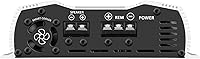
  • Input Types: Accepts both RCA line-level inputs and high-level speaker wire inputs, supporting factory and aftermarket head unit installations.
  • Input Impedance: Input impedance is rated at 10K ohms, compatible with a wide range of source units and signal processors.
  • Input Sensitivity: Minimum input sensitivity at 100% level is 220mV, suitable for most standard head unit output levels.
  • Idle Current Draw: Draws just 1.20A at idle when loaded at 1 ohm, keeping parasitic drain on the vehicle electrical system minimal.
  • Musical Current Draw: Pulls 43A during typical musical playback at 14.4VDC, requiring appropriately rated power and ground wiring for safe operation.
  • Supply Voltage: Operates between a minimum of 9.5VDC and a maximum of 16VDC, covering the full range of standard automotive electrical systems.
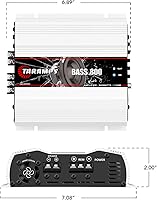
  • Dimensions: The chassis measures 7.09″ x 8.27″ x 2.36″, making it compact enough for most trunk and under-seat mounting locations.
  • Weight: Weighs 2.64 pounds, light enough to mount in a variety of locations without significant structural reinforcement.
  • Housing Material: Constructed from aluminum, which conducts and dissipates heat effectively during sustained high-output listening sessions.
  • Brand Origin: Designed and manufactured by Taramps, a Brazilian car audio brand with an established reputation in high-demand bass amplification markets.

Related Reviews

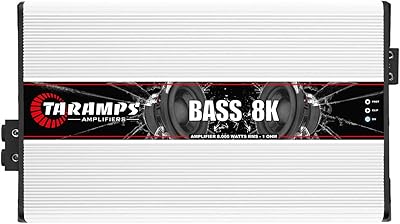
Taramps Bass 8K Monoblock Car Amplifier
73%
88%
Power Output Accuracy
91%
Bass Performance
63%
Thermal Management
79%
Build Quality
83%
Onboard Filter Controls
More
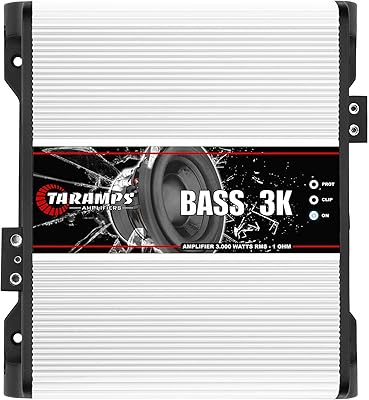
Taramps Bass 3k 1-Ohm Monoblock Amplifier
87%
96%
Bass Output
89%
Power Efficiency
91%
Build Quality
78%
Ease of Setup
94%
Durability
More
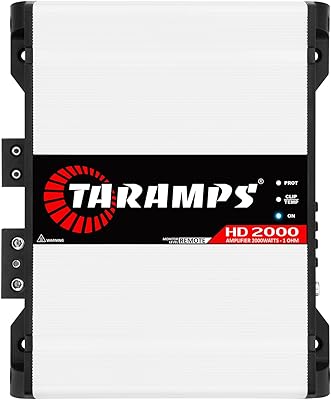
Taramps HD 2000 Monoblock Car Amplifier
75%
83%
Power Output Accuracy
61%
Thermal Management
88%
Value for Money
81%
Installation Ease
69%
Build Quality
More
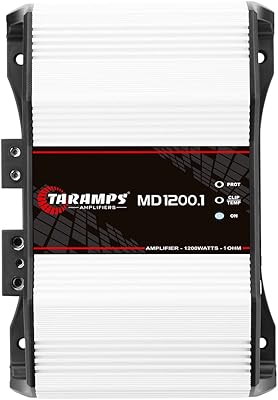
Taramp's MD 1200.1 1-Channel 1200W RMS Car Audio Amplifier
86%
93%
Power Output
89%
Sound Quality
91%
Installation Ease
85%
Build Quality
65%
Thermal Performance
More
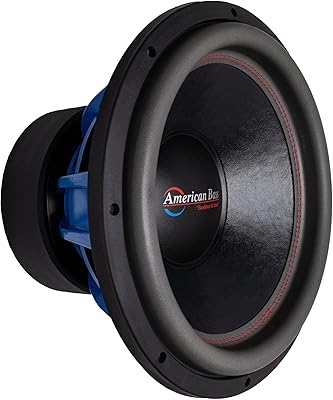
American Bass HD-1511 15″ Car Subwoofer
75%
94%
Bass Output & Impact
88%
Build Quality
91%
Power Handling
67%
Amplifier Compatibility
59%
Enclosure Requirements
More
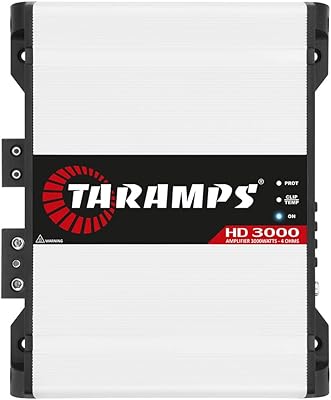
Taramps HD 3000 4 Ohm Mono Amplifier
83%
94%
Power Output
88%
Ease of Installation
90%
Sound Quality
60%
Heat Management
85%
Bass Boost Effectiveness
More
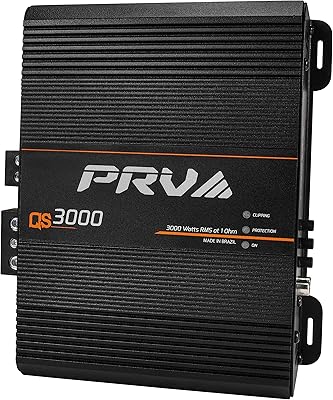
PRV Audio QS3000 1 Ohm Car Amplifier
78%
88%
Power Output Accuracy
91%
1-Ohm Stability
61%
Electrical Demand & Installation Complexity
84%
Build Quality
78%
Thermal Management
More
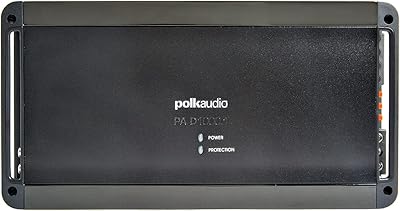
Polk Audio PA D1000.1 Class D Monoblock Amplifier
86%
94%
Power Output
88%
Build Quality
90%
Bass Performance
78%
Ease of Installation
91%
Thermal Protection
More
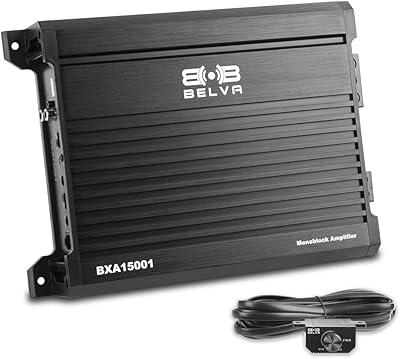
Belva BXA15001 1500W Monoblock Car Amplifier
78%
86%
Value for Money
67%
Power Output
89%
Ease of Installation
91%
Remote Bass Control
71%
Build Quality
More
Kicker CXA1800.1 Amplifier
85%
92%
Power Output
88%
Sound Quality
89%
Energy Efficiency
91%
Value for Money
84%
Ease of Installation
More

FAQ

It is genuinely 1-ohm stable, and this is one of the points buyers most consistently confirm in real-world use. If you have a dual voice coil subwoofer wired down to 1 ohm, this mono amp is designed to handle that load without going into thermal protection or distorting under pressure. Just make sure your wiring gauge and fusing match the current demands at that impedance.

Yes, and this is one of the more practical aspects of the Bass 800. The high-level input accepts speaker wire directly from your factory head unit's speaker outputs, so you don't need to replace your radio to add a subwoofer. Just tap the rear speaker outputs and run them into the amp's high-level inputs.

At 1 ohm, the amp can pull over 40A during heavy musical playback, so a 60A inline fuse near the battery is a reasonable starting point — though you should always verify against the total system load. For power and ground wiring, 4-gauge cable is typically the minimum recommended for this current demand, and 1/0 gauge is worth considering if you're running other equipment simultaneously.

No, a remote bass knob is not included in the box. If you want to adjust bass on the fly without reaching for the head unit, you would need to purchase a compatible remote level control separately. It's a worthwhile addition for daily drivers where bass preferences change between tracks or passengers.

It runs warm — that's the honest answer. Under moderate listening, heat is manageable, but during extended sessions at high volume it does get noticeably warm to the touch. That's not unusual for a 1-ohm amp working hard, and it's not a defect — it just means you should plan your install with airflow in mind. Avoid enclosing it in a sealed box with no ventilation, and leave a few inches of clearance around the chassis.

The Taramp's Bass 800 1-Ohm Monoblock Amplifier is rated for a 1-ohm minimum load, which is its optimal operating impedance. You can also run it at 2 ohms or 4 ohms, though the output power will be lower at those impedances than the rated 800W. Running below 1 ohm is not supported and risks damaging the amplifier.
Yes, it's well-matched to a single 12-inch subwoofer, particularly a dual voice coil model that can be wired to 1 ohm. It also pairs well with 10-inch and 15-inch drivers depending on their power handling. Just make sure the sub's RMS power rating is in the same ballpark — pairing a 300W sub with this amp at full gain is asking for trouble.

The safest approach is the ear-and-head-unit method: set your head unit to about 80% volume, play a bass-heavy track, and slowly increase the gain until you hear distortion, then back it off slightly. That gives you maximum clean output without clipping. If you want to be more precise, a DMM and a test tone work well, and there are free guides online that walk through the math for your target impedance.

It works with both. The subsonic filter is especially useful with ported enclosures — setting it around 25 to 30Hz helps block the very low frequencies that a ported box can't reproduce efficiently, protecting the driver from over-excursion. For sealed enclosures, the subsonic filter is less critical but still worth using to clean up the lowest frequencies.

Protection mode usually points to one of a few things: a wiring fault (check for shorts between speaker outputs and ground), incorrect impedance (verify your sub is actually presenting a 1-ohm load as wired), insufficient power and ground connections causing voltage drop, or inadequate ventilation causing thermal shutdown. Start by checking all connections and confirming your wiring gauge is appropriate for the current load before assuming the amp itself is faulty — most protection mode reports from owners trace back to install issues.

Where to Buy