Overview

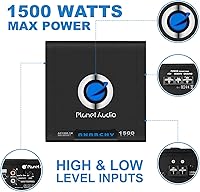
The Planet Audio AC1500.1M Monoblock Car Amplifier has been a fixture in the budget car audio market since 2004 — that kind of staying power says something. While plenty of cheap amps come and go, this Planet Audio unit has built a track record that newer competitors simply can't match. It runs a Class A/B topology paired with a MOSFET power supply, giving it efficient, stable operation without the heat concerns associated with older Class A designs. Don't expect competition-grade output — this is an honest entry-level amp built for real-world value. The 6-year warranty Planet Audio backs it with adds a layer of purchase confidence that most rivals at this price tier don't offer.
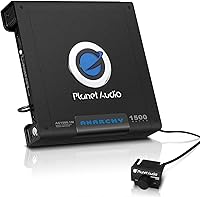
Features & Benefits

The spec sheet lists 1500W max, but the number buyers should actually focus on is the 750W RMS at 4 ohms — that's the continuous, real-world power this monoblock amp delivers to your sub. The 2/4 ohm stability is genuinely useful, meaning you're not locked into a single subwoofer configuration. Onboard controls include a variable low-pass crossover to roll off frequencies your sub shouldn't handle, plus a variable bass boost for dialing in punch without a separate equalizer. The included remote level control is a small but practical addition — adjusting bass from the driver's seat beats reaching into the trunk mid-drive. At 10″ x 10″ x 2.4″, it fits cleanly into most trunk installs.

Best For

This monoblock amp is most at home in a first car audio build — specifically for someone who wants genuine bass improvement over factory speakers without spending a fortune or hiring a shop. Pair it with a single 2- or 4-ohm subwoofer in a ported or sealed enclosure and you'll have a setup that punches well above its cost. The onboard controls are straightforward enough that confident DIYers can wire and tune it without professional help. That said, if you're chasing SPL competition numbers or planning a multi-sub setup, this isn't the right tool. Think of the AC1500.1M as a no-nonsense daily driver amp — honest output, simple tuning, and enough budget left over for the rest of your build.

User Feedback

With over 3,000 ratings averaging 4.3 stars, the AC1500.1M has clearly connected with real buyers — and reading through the feedback, the pattern is consistent. Easy installation and solid bass output for the price come up repeatedly in positive reviews, alongside reports of the amp holding up reliably through summer heat and cold winters alike. The most common criticism centers on wattage marketing: buyers who bench-test the unit find actual output falls short of the advertised max, which is a widespread issue across budget amplifiers, not unique to this one. A few users also flag heat buildup during long listening sessions, making proper ventilation during installation a real consideration. Long-term reliability reports, though, lean notably positive.

Pros

  • Delivers real, audible bass improvement over factory car audio at a fraction of mid-range amp prices.
  • 2/4 ohm stability gives you flexibility to pair it with a wide range of subwoofers.
  • Onboard variable low-pass crossover removes the need for a separate signal processor in basic setups.
  • The included remote level control lets you adjust bass from the driver seat without touching the amp.
  • Class A/B design runs more efficiently and cooler than older Class A amps at this price point.
  • Compact footprint fits cleanly into most trunk builds without eating up usable cargo space.
  • A 6-year warranty is notably generous for an entry-level amplifier and adds real purchase confidence.
  • Over 3,000 buyer ratings averaging 4.3 stars signals consistent satisfaction across a wide user base.
  • MOSFET power supply helps maintain stable output even as vehicle voltage fluctuates during real-world driving.
  • Long production history since 2004 means parts availability and community troubleshooting knowledge are well established.

Cons

  • Advertised 1500W max power is a peak figure — actual continuous output falls well short of that number.
  • Some units have been reported to run noticeably warm during extended listening sessions, requiring good ventilation.
  • Not suited for multi-subwoofer builds; single-channel design limits scalability if your plans grow.
  • Budget-tier component quality means long-term durability may vary more than with higher-end brands.
  • The single 30-amp fuse rating is on the lower side for users trying to push the amp harder.
  • No built-in subsonic filter, which can matter when pairing with ported enclosures at high output levels.
  • Bass boost and crossover controls lack precise detents, making repeatable fine-tuning harder than on pricier amps.
  • Planet Audio’s brand reputation sits below established names like Rockford Fosgate or Alpine in enthusiast communities.

Ratings

Our editorial team used AI to analyze thousands of verified global reviews for the Planet Audio AC1500.1M Monoblock Car Amplifier, actively filtering out incentivized, duplicate, and bot-generated feedback to surface what real buyers actually experience. The scores below reflect both the consistent strengths that keep this amp near the top of its budget category and the genuine friction points that show up repeatedly across independent user accounts. Nothing has been smoothed over — if buyers ran into problems, you will see that reflected here.

Value for Money
91%
Across budget car audio builds, few amps in this price range generate as much consistent satisfaction as the AC1500.1M. Buyers repeatedly note that the bass output they get — especially for a first subwoofer setup — far exceeds what the price tag would suggest, making it a frequent recommendation in enthusiast forums for beginners.
The value perception takes a hit once buyers realize the 1500W headline figure is a peak rating rather than sustained output. Those who purchased expecting near-1500W continuous delivery feel misled, even though this wattage inflation is an industry-wide practice rather than something unique to this unit.
Bass Output Quality
78%
22%
For daily commuting and casual listening, the low-end punch this monoblock delivers is genuinely satisfying, particularly when paired with a ported enclosure and a 4-ohm subwoofer. Users frequently describe the bass as tight and impactful at moderate volumes, which covers the vast majority of everyday use cases.
At higher volumes or with more demanding music genres like EDM or hip-hop, the bass can lose some definition and feel slightly loose. The output ceiling is real — pushing the amp hard for extended periods does not yield the kind of clean, layered bass response that mid-range amplifiers in the next price tier deliver.
Ease of Installation
86%
DIY installers consistently rate this as one of the easier amps to wire up at this price level. The terminal layout is logical, the onboard controls are clearly labeled, and the compact square chassis fits into standard trunk builds without requiring creative mounting solutions.
Users who skipped professional installation and had limited car audio experience reported frustration with setup-related issues like noise interference and incorrect gain settings. The amp performs best when installed correctly, and the margin for wiring errors is less forgiving than more advanced units with built-in protection circuits.
Thermal Management
61%
39%
Under normal daily driving conditions — moderate volumes, reasonable ambient temperatures — the AC1500.1M stays within comfortable operating range without triggering thermal shutdown. Buyers in cooler climates report zero heat-related issues even after months of regular use.
Running the amp hard during summer months or in poorly ventilated enclosures generates complaints about the chassis getting uncomfortably warm to the touch. A handful of users report thermal shutdowns during extended high-volume sessions, which points to a real limitation in the passive cooling design at this price point.
Build Quality
67%
33%
The metal chassis feels sturdy enough for everyday use and does not rattle or flex when mounted securely. For a budget amp, the external construction holds up well — users who have owned the unit for two or more years rarely report physical deterioration of the housing or terminal connections.
The internal component quality is consistent with the price tier, which means it is not built to the same tolerances as brands like Rockford Fosgate or JL Audio. A small percentage of buyers report unit failures within the first year, suggesting some variability in quality control at the manufacturing level.
Signal Clarity
73%
27%
The 102 dB signal-to-noise ratio and 0.01% THD rating translate to a noticeably clean signal at normal listening volumes. For buyers coming from a no-amp setup or an underpowered factory system, the improvement in bass clarity is immediately apparent and well-regarded.
At higher gain settings, some users report a faint background hiss, particularly in quieter vehicle cabins or with sensitive subwoofers. The signal chain is clean enough for casual listeners but can reveal its budget-tier limitations for users who are more attuned to audio fidelity.
Crossover Usability
74%
26%
The variable low-pass crossover is a genuine practical feature — users appreciate being able to roll off higher frequencies without adding a separate processor to the signal chain. It works reliably and consistently, which matters more to most buyers than having highly precise adjustment points.
The crossover knob lacks numbered detents, so replicating a specific setting after adjusting it is largely guesswork. Buyers who want repeatable, precise control over their crossover frequency will find this frustrating compared to amps with stepped or digitally controlled filters.
Bass Boost Control
71%
29%
Having an onboard bass boost is a practical convenience for a budget build — it removes the need to budget separately for an equalizer and gives users immediate tactile control over their low-end character. Most buyers find it effective for adding impact to tracks that feel thin at factory tuning.
Aggressive use of the bass boost at high volumes can introduce distortion and increases thermal stress on the amp. Experienced car audio users tend to recommend leaving it at or near zero and relying on gain staging instead, which somewhat limits its utility for those who do not understand signal chain fundamentals.
Remote Level Control
82%
18%
The included wired remote subwoofer controller is a feature buyers genuinely use and appreciate — being able to drop the bass when switching from bass-heavy tracks to podcasts or phone calls without touching the amp directly is a real day-to-day convenience. The control responds smoothly and predictably.
The remote cable supplied is functional but not particularly long, which can limit where in the cabin you route and mount the knob. A few users also report the remote connection becoming intermittent over time, though this appears to be a minority experience rather than a widespread failure mode.
Compatibility & Flexibility
79%
21%
Supporting 2 to 8 ohm loads means this monoblock pairs cleanly with nearly any single subwoofer on the market, as well as common dual-sub wiring configurations. Buyers running dual voice coil subwoofers particularly appreciate the impedance flexibility when calculating their final wiring load.
As a single-channel amp, it cannot be repurposed for anything other than subwoofer duty — buyers who later want to expand their system will need to add a separate multi-channel amp for their door speakers. Its flexibility within the subwoofer segment is solid, but its overall system versatility is inherently limited.
Long-Term Reliability
72%
28%
The volume of multi-year ownership reports is genuinely reassuring for a budget amp. A meaningful number of buyers report running the AC1500.1M daily for one to three years without any failures, including through temperature extremes — both hot southern summers and cold northern winters.
The unit does not have a uniformly consistent reliability record, with a notable minority of buyers reporting failures within the first six to twelve months. Whether this reflects installation errors or component variability is unclear from reviews alone, but it is a pattern worth factoring into purchase expectations.
Warranty Coverage
83%
A 6-year warranty is an unusually strong offer for an entry-level amplifier and gives buyers real confidence at purchase time. The fact that Planet Audio backs this amp for that duration through authorized sellers suggests a degree of confidence in the product that shorter-warranty competitors cannot match.
The warranty is only valid for purchases made through authorized dealers, which means marketplace resellers or third-party Amazon sellers may leave buyers without coverage. Users who did not verify seller authorization before purchasing have reported difficulty making warranty claims, which diminishes its practical value for that segment of buyers.
Packaging & Accessories
63%
37%
The amp arrives well protected and includes the remote level controller out of the box, which is a useful inclusion that some budget competitors omit. Packaging is solid enough that most buyers report the unit arriving in perfect condition without cosmetic damage.
Beyond the remote, the accessory bundle is minimal — no wiring kit, no mounting hardware bag, and no detailed installation guide beyond a basic diagram. First-time installers will need to budget separately for a wiring kit and spend time finding reliable setup tutorials, which adds friction to the overall out-of-box experience.

Suitable for:

The Planet Audio AC1500.1M Monoblock Car Amplifier is a strong match for anyone taking their first serious step into car audio — particularly those running a single subwoofer on a tight budget. If your current setup is stock speakers with no dedicated bass, this amp will deliver a noticeable, satisfying upgrade without requiring a significant financial commitment. DIY installers will appreciate how approachable the onboard controls are; the variable low-pass crossover and bass boost mean you can tune the system yourself without needing additional equipment. It works well with both 2- and 4-ohm subwoofers, giving buyers flexibility when pairing it with whatever woofer fits their budget. Anyone building a practical daily driver system — one that sounds good on the commute without the complexity of a high-end rig — will find this monoblock amp a reliable, sensible foundation.

Not suitable for:

Buyers chasing genuine high-output performance should look elsewhere before considering the Planet Audio AC1500.1M Monoblock Car Amplifier. The advertised 1500W max figure is a peak rating under ideal conditions — real-world continuous output is significantly lower, which matters if you are powering a demanding subwoofer or planning a competition-level build. Audiophiles who prioritize signal purity and low distortion at high volumes may find the limitations of a budget Class A/B amp frustrating over time. This is also not the right choice for multi-subwoofer configurations, since it is a single-channel monoblock designed around one woofer. Installers working in tight or poorly ventilated spaces should be cautious, as some users report the unit runs warm under sustained use — thermal management needs to be factored into your installation plan.

Specifications

  • Max Power: Delivers up to 1500W peak at 2 ohms, which represents best-case output under ideal, momentary conditions.
  • RMS Power: Continuous rated output is 750W RMS at 4 ohms, which is the reliable, sustained figure buyers should plan their system around.
  • Amplifier Class: Operates in Class A/B, balancing efficiency and audio fidelity better than pure Class A designs at this price tier.
  • Power Supply: Uses a MOSFET power supply, which provides stable current delivery and helps maintain consistent output as vehicle voltage fluctuates.
  • Channels: Single-channel monoblock configuration, purpose-built for powering one subwoofer or a parallel subwoofer pair.
  • Impedance Range: Stable across 2 to 8 ohm loads, giving buyers flexibility to match a variety of subwoofer configurations without risking amp damage.
  • Distortion (THD): Total harmonic distortion at RMS output is rated at 0.01%, indicating clean signal reproduction at normal listening levels.
  • Signal-to-Noise: Signal-to-noise ratio of 102 dB means background hiss and interference are kept well below audible thresholds during typical use.
  • Frequency Response: Rated from 20 Hz to 20 kHz, covering the full audible spectrum, though practical use is focused on low-frequency subwoofer reproduction.
  • Crossover Type: Variable low-pass crossover allows users to set a custom frequency cutoff so the subwoofer only handles the bass frequencies it is designed for.
  • Bass Boost: Onboard variable bass boost lets users increase low-frequency output to taste without needing a separate equalizer or processor.
  • Dimensions: Chassis measures 10″ x 10″ x 2.4″, a compact square profile that fits cleanly in most trunk builds and under-seat enclosures.
  • Weight: Unit weighs 6.69 pounds, making solo installation manageable without needing additional hands during mounting.
  • Operating Voltage: Designed to run on a standard 12V DC vehicle electrical system, compatible with virtually all passenger cars and trucks.
  • Fuse Rating: Protected by a single 30-amp ATO blade fuse, which should be matched to the appropriate gauge power wire during installation.
  • Remote Control: Includes a wired remote subwoofer level controller so bass output can be adjusted from the driver seat without accessing the amp directly.
  • Mounting Type: Designed for car mounting and is intended to be fixed in place, typically to a flat surface in the trunk or cargo area.
  • Warranty: Planet Audio provides a 6-year Platinum warranty exclusively for purchases made through authorized online dealers, including Amazon.

Related Reviews
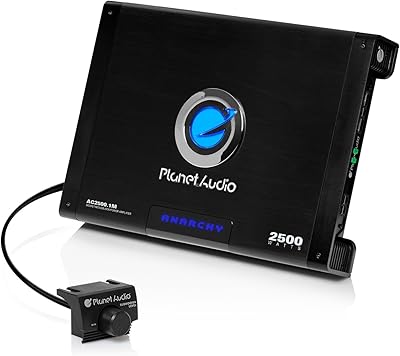
Planet Audio AC2500.1M Monoblock Car Amplifier
85%
92%
Performance
95%
Bass Output
85%
Ease of Installation
65%
Thermal Performance
88%
Build Quality
More
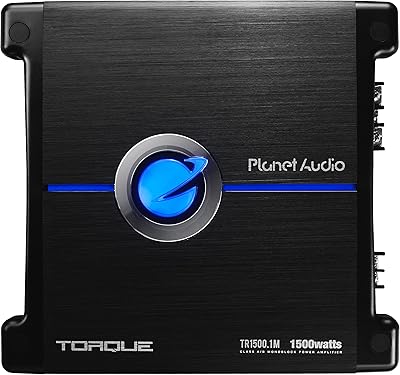
Planet Audio TR1500.1M Monoblock Car Amplifier
70%
88%
Value for Money
79%
Bass Output & Performance
83%
Ease of Installation
63%
Build Quality
57%
Thermal Management
More
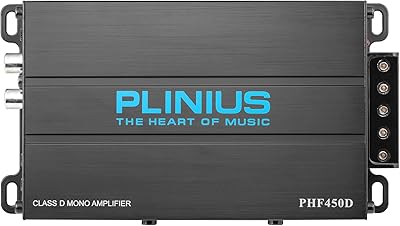
LKC PHF450D Car Audio Monoblock Amplifier
88%
91%
Power Output (2 Ohms)
87%
Power Output (4 Ohms)
93%
Heat Dissipation
88%
Build Quality
85%
Ease of Integration
More
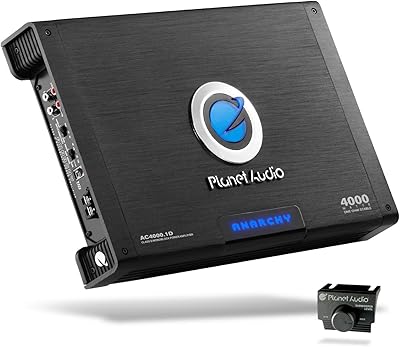
Planet Audio AC4000.1D Monoblock Car Amplifier
77%
88%
Value for Money
79%
Power Output
82%
Thermal Management
67%
Build Quality
63%
Installation Experience
More
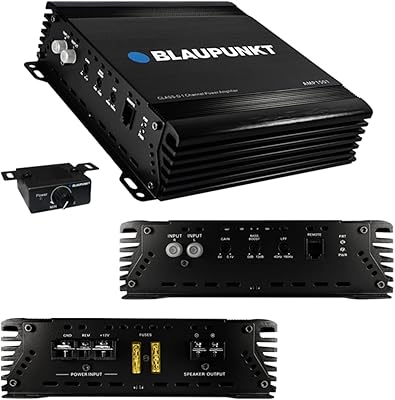
Blaupunkt AMP1500M Monoblock Car Amplifier
73%
81%
Value for Money
63%
Real-World Power Output
88%
Ease of Installation
77%
Audio Clarity
58%
Build Quality
More
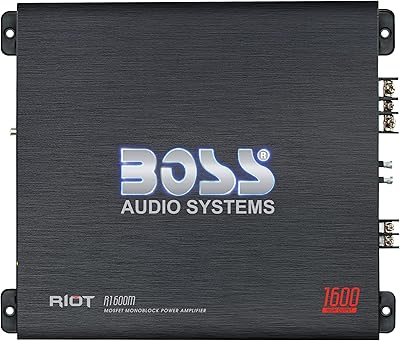
BOSS Audio R1600M Monoblock Car Amplifier
72%
83%
Value for Money
88%
Ease of Installation
79%
Bass Output
61%
Build Quality
86%
Signal Flexibility
More
Planet Audio BB4.1200 4-Channel Car Amplifier
74%
83%
Value for Money
61%
Power Output Accuracy
88%
Ease of Installation
67%
Build Quality
58%
Thermal Management
More
Planet Audio MB2200.5D 5-Channel Car Amplifier
71%
83%
Value for Money
81%
Ease of Installation
86%
Channel Configuration
54%
Power Output (Real-World)
77%
Thermal Management
More
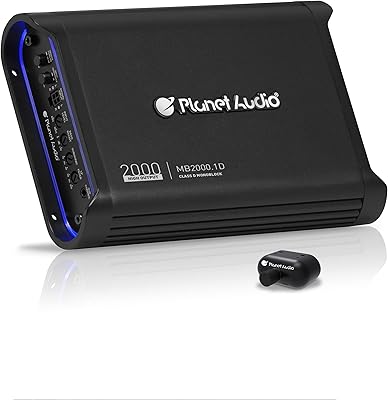
Planet Audio MB2000.1D Class D Car Amplifier
86%
94%
Power Output
88%
Sound Quality
85%
Build Quality
90%
Size and Portability
75%
Efficiency & Heat Management
More
Planet Audio P10AWK 10-Inch Amplified Car Subwoofer
71%
83%
Ease of Installation
71%
Bass Output & Impact
76%
Sound Tuning & Flexibility
86%
Compatibility & Input Options
58%
Build Quality & Materials
More

FAQ

The AC1500.1M is stable at both 2 and 4 ohms, so either will work fine. If you want maximum output, wiring your sub to a 2-ohm load will push more power, but a 4-ohm setup runs cooler and is generally more reliable for daily listening. Most single-subwoofer builds do well at 4 ohms.

That 1500W figure is a peak rating — the kind of power the amp can hit for a fraction of a second under perfect conditions. The number you should actually care about is 750W RMS at 4 ohms, which is the continuous, real-world output. This is normal across budget amplifiers, not a flaw unique to this one, but it is worth understanding before you buy.

Plenty of buyers install it themselves successfully, especially those with some basic electrical knowledge. Planet Audio does recommend professional installation, and that advice is worth taking seriously — an improper ground or undersized power wire is the root cause of most amplifier problems. If you are confident with car audio wiring basics, it is a fairly approachable install.

Yes, it can. You will need a line output converter to adapt the speaker-level signal from your factory radio into a preamp signal the amp can use. This is an inexpensive add-on and a common part of any factory-radio-to-amp install.

Some users do report it running warm during extended sessions at higher volumes. It is not unusual for a Class A/B amp at this price point, but it does mean ventilation matters. Make sure there is at least a couple of inches of airflow clearance around the unit and avoid mounting it flush against carpet or foam.

For an amp in this power range, 4-gauge wiring for both power and ground is the standard recommendation. Running undersized wire is one of the most common causes of amp shutdowns and blown fuses, so do not cut corners here even if the kit that came with your sub suggests otherwise.

You can, as long as your total wiring impedance stays within the 2 to 8 ohm range the amp supports. Wiring two 4-ohm subs in parallel gives you a 2-ohm load, which this monoblock handles fine. Just be aware that splitting power across two subs means each gets less headroom than a single dedicated woofer would.

The remote knob connects to the amp via a small cable and lets you turn the subwoofer volume up or down from the driver seat — no reaching into the trunk needed. It is genuinely useful for switching between music genres that have very different bass levels, or just for keeping things civil when you have passengers.

The low-pass crossover filters out higher frequencies so your subwoofer only reproduces bass. For most subwoofer setups, setting it between 80 Hz and 120 Hz is a solid starting point. Tune it by ear — if you hear vocals or instruments coming from your sub, drop the crossover frequency until the sound cleans up.

Planet Audio sits in the value-oriented tier of car audio brands and has been around long enough to have a real track record with everyday buyers. The 6-year warranty is legitimately strong for this segment, but it only applies to purchases through authorized dealers like Amazon — buying from a third-party reseller or marketplace seller may void that coverage. Keep your order confirmation just in case.

Where to Buy