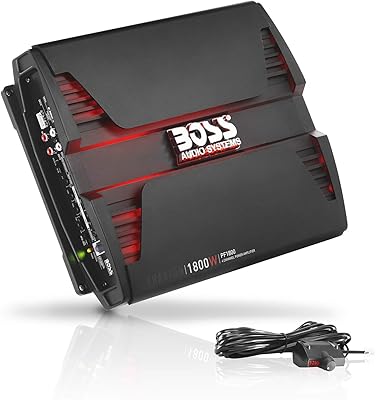

Overview

The BOSS Audio R1600M Monoblock Car Amplifier has been a consistent presence in the budget car audio market since 2011, and its steady placement near the top of Amazon's mono amp rankings reflects real-world demand rather than marketing momentum. It runs on a Class A/B topology, which strikes a practical middle ground — cleaner sound than pure Class B, without the heat inefficiency of Class A. That said, going in with the right expectations matters here. This is a value-tier amp built to punch above its weight class, not to satisfy the demands of a serious audiophile build. Strong fundamentals, predictable trade-offs.

Features & Benefits

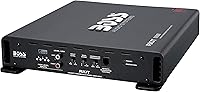
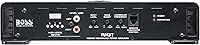
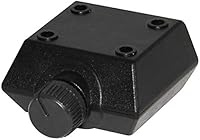
The MOSFET power supply is one of the more useful specs here — it regulates voltage cleanly, which translates to a more stable signal at the subwoofer end. A variable low-pass crossover lets you set the exact frequency where bass kicks in, which matters when you are matching it to a specific woofer and enclosure type. Independent bass boost and gain controls let you shape the output without relying on whatever EQ your head unit offers. The high-level inputs are a standout inclusion: they let you pull signal directly from your speaker wires, essential if you are keeping a factory radio. A remote bass knob is included, and the chassis stays compact enough to tuck neatly into most trunk setups.

Best For

This monoblock amp is well suited for someone assembling their first car audio system on a modest budget — particularly if the goal is a single subwoofer without the complexity of a full multi-channel setup. The high-level inputs are especially useful for drivers keeping a factory head unit, since they eliminate the need for a separate line output converter. It handles both 2-ohm and 4-ohm loads, so compatibility with common off-the-shelf subwoofers is rarely an issue. What it is not built for is high-demand use where sustained power output close to the rated maximum is expected. Think of this entry-level car amp as a practical starting point, not a long-term performance solution.

User Feedback

With over 3,200 ratings and a 4.0-star average, this Boss mono amplifier sits in comfortable territory — broadly liked, with a few recurring gripes worth knowing about. The most consistent praise centers on ease of installation: buyers frequently mention the clear terminal layout and how approachable the wiring process is, even without prior experience. Bass output also draws steady positive marks, especially from users upgrading from stock setups with no dedicated amplification. The main complaint, and it surfaces often enough to matter, is that the stated 1,600W figure is a peak maximum, not an RMS rating, so real sustained output lands noticeably lower. A smaller subset of buyers also flagged long-term durability concerns after running the amp hard at high gain for extended periods.

Pros

  • High-level inputs allow direct connection to a factory head unit without extra adapters or converters.
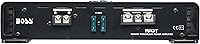
  • Installation is beginner-friendly, with a clear terminal layout that most DIYers can handle confidently.
  • The variable low-pass crossover and bass boost give you real tuning control without depending on head unit EQ.
  • A remote bass knob is included in the box, which is a genuinely useful addition at this price tier.
  • Compatible with both 2-ohm and 4-ohm subwoofers, covering the most common wiring configurations.
  • The MOSFET power supply helps deliver a stable signal even with fluctuating vehicle voltage.
  • Compact dimensions make it easy to mount in a trunk or under a seat without sacrificing too much space.
  • Over 3,200 buyer ratings and a 4.0-star average reflect consistent satisfaction across a wide range of installs.
  • Handles both RCA and speaker-level inputs, making it flexible across a variety of source units.
  • Has remained in active production since 2011, suggesting the design holds up well enough to sustain long-term demand.

Cons

  • The 1,600W rating is a peak figure; real sustained output is considerably lower and can mislead buyers at purchase.
  • Build quality reflects the price point — the plastic and metal housing feels less robust than mid-range competitors.
  • Running the amp at high gain settings for extended periods has led to reliability issues for some users.
  • No dedicated remote turn-on delay or protection indicator lights, which can complicate troubleshooting during setup.
  • Bass output, while decent for the price, lacks the definition and control that a higher-grade amp provides.
  • The gain control requires careful setting to avoid distortion, which can be tricky for true first-timers.
  • Thermal performance under prolonged heavy use is a known weak point based on recurring user feedback.
  • Not suitable for bridged or multi-subwoofer configurations that more serious builds often require.

Ratings

The BOSS Audio R1600M Monoblock Car Amplifier has been scored by our AI rating system after processing thousands of verified global buyer reviews, with spam, bot-generated, and incentivized submissions actively filtered out before analysis. The scores below reflect a balanced synthesis of what real installers and everyday drivers actually experienced — both the genuine strengths and the recurring frustrations. Nothing has been smoothed over to flatter the product or the brand.

Value for Money
83%
Among buyers upgrading from a completely stock system, this monoblock amp consistently delivers a noticeable bass improvement at a price point that is hard to argue with. For a first subwoofer build, the feature set included — crossover, bass boost, remote knob — would cost more to assemble separately on a pricier unit.
The value perception takes a hit once buyers realize the wattage figure on the box is a marketing peak, not a usable RMS number. Those who bought expecting near-1,600W of real output felt misled, which skews value satisfaction downward among more informed purchasers.
Ease of Installation
88%
The terminal layout is one of the clearest in its class, and first-time DIY installers frequently mention getting everything connected correctly on the first attempt without professional help. The inclusion of a remote bass knob with a ready-to-run cable also removes one common wiring headache from the process.
A small but consistent group of buyers found the gain calibration less intuitive than expected, particularly when setting it by ear without an oscilloscope or multimeter. Without careful setup, it is easy to introduce distortion that takes time to diagnose and correct.
Bass Output
79%
21%
For a budget monoblock, the low-end punch this amp delivers into a mid-range subwoofer genuinely surprises buyers coming from factory audio. In trunk-mounted sealed or ported enclosures running a single 10-inch or 12-inch woofer, the output is full enough for daily driving and casual listening at moderate volumes.
At higher volumes or with more demanding subwoofers, the output starts to feel constrained compared to what the spec sheet implies. Bass definition and tightness also fall behind what a mid-range amplifier can achieve, particularly on tracks with fast, layered low-frequency content.
Build Quality
61%
39%
The metal and plastic chassis feels adequately solid for light-duty use, and the overall assembly is consistent enough that units arrive without obvious defects in the majority of reported cases. At this price tier, the construction is about what an experienced buyer would reasonably expect.
Long-term durability is where the build quality concern is most pronounced. Users running the amp at consistently high gain settings over months of daily use report a higher-than-average rate of failures, suggesting the internal components are not rated for sustained thermal stress at the top of the operating range.
Signal Flexibility
86%
The combination of RCA low-level inputs and high-level speaker wire inputs is a genuinely practical design choice that opens this amp up to a much wider range of vehicles. Buyers keeping their factory head unit — a very common scenario — can connect directly without any extra hardware.
The high-level input sensitivity is fixed rather than adaptive, which means optimal gain matching can require more careful adjustment than with amps that auto-detect input level. In some factory head unit pairings, achieving a clean signal without background noise takes extra effort.
Tuning Controls
77%
23%
Having independent variable controls for gain, low-pass crossover frequency, and bass boost on one unit gives installers a meaningful degree of flexibility that entry-level amps often skip. Being able to set the crossover point to match a specific subwoofer without touching the head unit EQ is a real practical advantage.
The control knobs feel lightweight and imprecise, with no detents or clear reference markings to help set repeatable positions. Buyers who have used higher-quality amps find the tactile feedback underwhelming and occasionally struggle to make fine adjustments without overshooting the target setting.
Thermal Management
57%
43%
Under moderate listening conditions — daily commutes at reasonable volume, occasional highway driving — the amp stays at a manageable temperature and does not trigger thermal shutdowns in a properly ventilated mounting location.
Sustained high-volume listening in warm climates or enclosed mounting positions leads to heat buildup that several users identified as the direct cause of performance degradation and eventual failure. The heatsink design is functional at low demand but is not engineered for heavy-duty thermal loads.
Remote Subwoofer Control
81%
19%
The included remote knob is a meaningful convenience that buyers consistently appreciate, allowing quick bass level adjustments from the driver seat without reaching back into the trunk. The cable length is sufficient for most standard installation layouts in sedans and compact SUVs.
The knob itself feels plasticky and the pot action is not particularly smooth, which some buyers find annoying during frequent adjustments. A small number of users also reported the remote control developing an intermittent connection after extended use.
Compatibility
84%
The dual-impedance support at both 2 ohms and 4 ohms means this Boss mono amplifier works reliably with the vast majority of consumer subwoofers without requiring custom wiring configurations. It slots into a broad range of vehicle types without demanding specific installation conditions.
It is strictly a monoblock and offers no compatibility path for multi-channel or multi-subwoofer expansion without purchasing an additional amplifier. Buyers who anticipate wanting to grow their system will quickly find this amp is a dead end rather than a foundation.
Noise Floor
68%
32%
In a properly wired installation with grounding done correctly, this entry-level car amp produces a reasonably quiet background for a unit at this price. Buyers who take the time to route signal cables away from power wires report a clean listening experience at moderate listening levels.
Alternator whine and ground loop hum show up more frequently with this amp than with more expensive alternatives, and tracking down the source requires patience and basic troubleshooting knowledge. Factory head unit pairings in particular can be prone to introducing noise into the signal chain if the high-level input is not carefully managed.
Power Accuracy
44%
56%
The amplifier does produce meaningful output relative to its cost, and buyers who set expectations around an honest entry-level RMS figure — rather than the peak number on the box — generally find the real-world performance acceptable for a single moderate-sized subwoofer.
The gap between the marketed 1,600W peak figure and the actual sustained RMS output is substantial, and this is one of the most frequently cited frustrations in user reviews. Buyers who matched a high-RMS subwoofer to this amp based on the peak spec were often left disappointed by the combination's real performance.
Long-Term Reliability
55%
45%
For light-use scenarios — a single subwoofer at moderate volume in a daily commuter vehicle — a reasonable number of buyers report months or years of trouble-free operation. The amp's longevity record is not uniformly negative, particularly among users who installed it conservatively.
Heavy use cases paint a much less reassuring picture, with a notable cluster of reported failures occurring within the first year among buyers running the amp hard and consistently. The brand's warranty and customer support response to these failures also drew criticism in several detailed user reviews.
Packaging & Unboxing
72%
28%
The unit arrives well protected in most cases, and the inclusion of the remote bass control knob and cable in the box means buyers have everything needed to start the install without an extra parts order. The out-of-box condition is generally consistent across reported purchases.
The documentation included is basic at best, offering minimal guidance for first-time installers beyond a rudimentary wiring diagram. Buyers who needed help with gain calibration or crossover setup had to rely entirely on third-party online resources rather than anything provided by BOSS.
Aesthetics & Form Factor
74%
26%
The compact chassis dimensions make it genuinely easy to mount in a trunk or under a seat, and the brushed finish gives it a cleaner look than some budget competitors. For buyers who care about how the install looks, the size makes routing and placement straightforward.
The overall visual design reads as utilitarian rather than premium, with a plastic-heavy construction that feels inconsistent with the slightly bold styling cues on the faceplate. Enthusiast builders doing a visible install in a competition-style trunk may find the appearance underwhelming next to branded alternatives.

Suitable for:

The BOSS Audio R1600M Monoblock Car Amplifier is a natural fit for anyone stepping into car audio for the first time and wanting to add meaningful bass without committing to a complex or expensive build. It is especially well matched to drivers who are keeping their factory head unit, since the built-in high-level inputs let you pull signal straight from existing speaker wires without buying a separate line output converter. DIY installers will appreciate how approachable the wiring layout is — terminals are clearly marked, and the control set is simple enough that you can get everything dialed in without an instruction manual marathon. Single-subwoofer setups running at either 2 or 4 ohms are well within its operating range, making it broadly compatible with the most common off-the-shelf woofers. If your goal is noticeably better bass than your stock system provides, and you want to get there without a steep learning curve or a large upfront investment, this monoblock amp is a sensible and time-tested choice.

Not suitable for:

The BOSS Audio R1600M Monoblock Car Amplifier is not the right tool if you are building a serious, performance-oriented system where accurate power output and long-term reliability under sustained stress are non-negotiable. The advertised 1,600W figure is a peak maximum, and the real continuous RMS output is significantly lower — a gap that matters a great deal when matching an amplifier to a demanding subwoofer. Buyers who plan to run this entry-level car amp at or near its limits for extended periods have reported reliability concerns over time, which makes it a risky choice for daily high-volume listening. It is also not ideal for multi-subwoofer configurations or for anyone who needs multi-channel amplification alongside bass, since it is a single-channel monoblock with no flexibility beyond that. Audiophiles, or even intermediate enthusiasts who have outgrown budget gear, will likely find the build quality and raw performance ceiling frustrating compared to mid-range or enthusiast-grade alternatives.

Specifications

  • Topology: The amplifier uses a Class A/B design, which balances efficiency and audio cleanliness better than a pure Class B circuit.
  • Power Supply: A MOSFET-based power supply regulates output voltage precisely, reducing signal noise and improving stability across varying vehicle electrical conditions.
  • Max Output (2Ω): Peak power output is rated at 1,600W into a 2-ohm load, though sustained RMS output will be considerably lower under real operating conditions.
  • Max Output (4Ω): Peak power output is rated at 800W into a 4-ohm load, making it compatible with a wide range of single-voice-coil and dual-voice-coil subwoofers.
  • Channels: This is a single-channel monoblock amplifier, purpose-built for driving one subwoofer or a bridged subwoofer load.
  • Low-Pass Crossover: The variable low-pass crossover lets users set the upper frequency cutoff for bass reproduction, ensuring the subwoofer only handles the low-end frequencies it is designed for.
  • Bass Boost: An onboard variable bass boost circuit allows additional low-frequency emphasis to be dialed in independently of head unit tone controls.
  • Gain Control: The variable gain control adjusts the incoming signal level from the source unit to match the amplifier's input sensitivity, helping prevent clipping and distortion.
  • Signal Inputs: Both low-level RCA inputs and high-level speaker wire inputs are supported, enabling connection to aftermarket and factory head units without additional adapters.
  • Remote Control: A remote subwoofer level control is included in the box, allowing the driver to adjust bass output from the front seat without touching the amplifier directly.
  • Dimensions: The unit measures 12.34 × 10.44 × 2.25 inches, a compact footprint that fits in most trunk installations and under-seat enclosures.
  • Weight: The amplifier weighs 6.35 pounds, light enough for a single-person installation without requiring special mounting hardware.
  • Voltage Range: Operating supply voltage ranges from 10V to 14.4V DC, covering standard 12V automotive electrical systems under normal and high-load conditions.
  • Materials: The chassis is constructed from a combination of metal and plastic, providing basic structural rigidity while keeping overall weight down.
  • Certifications: The unit meets CE, FCC, RoHS, and WEEE compliance standards, confirming it satisfies baseline safety and environmental regulations across major markets.
  • Mounting Type: Designed for car mount installation, with a flat base suitable for horizontal surface mounting on trunk floors, side panels, or custom enclosures.
  • Model Number: The official manufacturer model number is R1600M, which can be used to verify compatibility with wiring kits, mounting hardware, and installation guides.
  • Brand: Manufactured by BOSS Audio Systems, a brand that has produced budget-oriented car audio equipment for the consumer market since the early 1990s.

Related Reviews
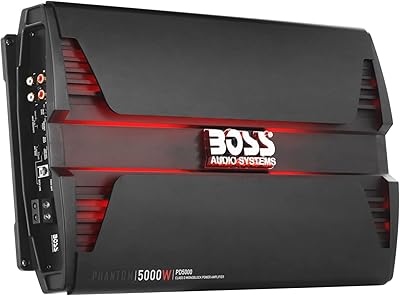
BOSS Audio Systems PD5000 Phantom 5000-Watt Class D Monoblock Car Amplifier
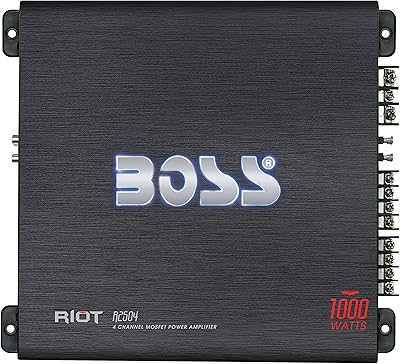
87%
94%
Power Output
91%
Sound Quality
88%
Ease of Installation
93%
Bass Performance
63%
Thermals/Heat Dissipation
More
BOSS Audio R2504 4-Channel Car Amplifier
70%
82%
Value for Money
86%
Ease of Installation
51%
Power Output (Real-World)
58%
Thermal Management
62%
Build Quality
More
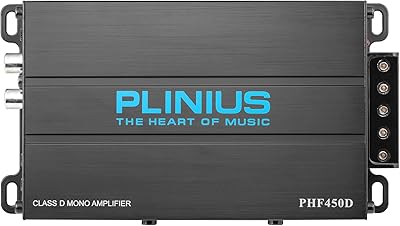
LKC PHF450D Car Audio Monoblock Amplifier
88%
91%
Power Output (2 Ohms)
87%
Power Output (4 Ohms)
93%
Heat Dissipation
88%
Build Quality
85%
Ease of Integration
More
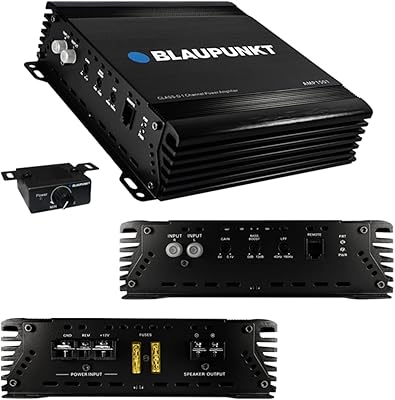
Blaupunkt AMP1500M Monoblock Car Amplifier
73%
81%
Value for Money
63%
Real-World Power Output
88%
Ease of Installation
77%
Audio Clarity
58%
Build Quality
More
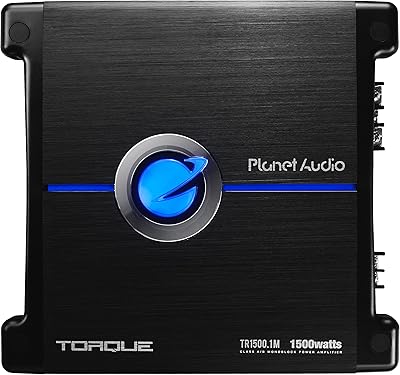
Planet Audio TR1500.1M Monoblock Car Amplifier
70%
88%
Value for Money
79%
Bass Output & Performance
83%
Ease of Installation
63%
Build Quality
57%
Thermal Management
More
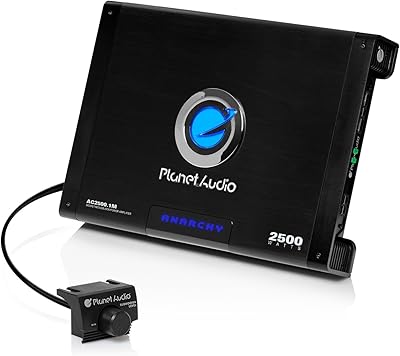
Planet Audio AC2500.1M Monoblock Car Amplifier
85%
92%
Performance
95%
Bass Output
85%
Ease of Installation
65%
Thermal Performance
88%
Build Quality
More
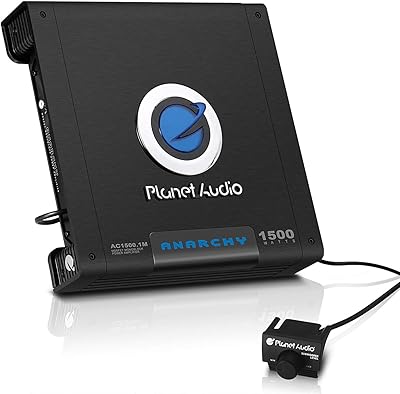
Planet Audio AC1500.1M Monoblock Car Amplifier
75%
91%
Value for Money
78%
Bass Output Quality
86%
Ease of Installation
61%
Thermal Management
67%
Build Quality
More
BOSS Audio CE102 2-Channel Car Amplifier
67%
83%
Value for Money
67%
Sound Quality
54%
Build Quality
81%
Ease of Installation
58%
Power Output
More
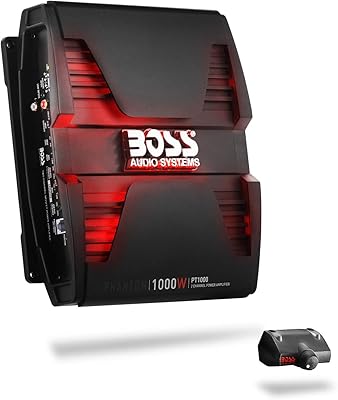
BOSS Audio PT1000 2-Channel Car Amplifier
65%
81%
Value for Money
47%
Power Output Accuracy
83%
Ease of Installation
51%
Thermal Management
58%
Build Quality
More
BOSS Audio PF1800 4-Channel Car Amplifier
71%
88%
Value for Money
84%
Ease of Installation
76%
Sound Quality
51%
Power Output Accuracy
58%
Thermal Management
More

FAQ

You can absolutely keep your factory head unit. This monoblock amp includes high-level inputs that accept signal directly from your existing speaker wires, so there is no need to install an aftermarket receiver or a separate line output converter. It is one of the more convenient features for anyone working with a stock stereo.

That is a fair and important question. The 1,600W rating is a peak maximum figure, which represents a brief burst under ideal conditions, not sustained output. The continuous RMS power — what you can actually count on during normal listening — is significantly lower. For practical subwoofer matching, focus on the RMS rating of your subwoofer and treat the peak spec as a rough indicator of headroom rather than a real operating figure.

Yes, the amp is rated for both 2-ohm and 4-ohm loads. At 4 ohms it delivers less peak power than at 2 ohms, but it is still well within the operating range for most entry-level and mid-range single-subwoofer setups. Just make sure your subwoofer's RMS rating is a reasonable match to the amp's actual sustained output, not its peak number.

Most buyers with basic tools and some patience handle the installation themselves without trouble. The terminal layout is clearly organized, the controls are straightforward to adjust, and there is plenty of community documentation online for the Boss R1600M specifically. That said, if you are not comfortable working around your vehicle's electrical system, having a professional handle the wiring is always a safe call.

The box includes a remote subwoofer level control, but it does not include a full wiring kit. You will need to purchase power and ground cables, an inline fuse holder, RCA cables or speaker wire for the signal connection, and a turn-on wire separately. Wiring kits sized for this type of amplifier are widely available and reasonably inexpensive.

Like most Class A/B amplifiers, this Boss mono amplifier generates some heat during use, especially at higher volume levels. Make sure you mount it in a location with reasonable airflow and avoid enclosing it in a sealed space with no ventilation. Users who run it at consistently high gain settings for long periods have reported heat-related issues, so giving it room to breathe is a worthwhile precaution.

It is a single-channel monoblock, so running two separate subwoofers independently is not how it is designed to be used. You could wire two subwoofers together to achieve a combined 2-ohm load and run them off one channel, but that requires careful impedance matching and means both subs share the available output. For a clean dual-subwoofer setup, a two-channel amp or a second monoblock is generally a better approach.

BOSS recommends using an inline fuse on the main power wire close to the battery. For an amplifier in this power class, a fuse in the 60 to 80 amp range is typically appropriate, but always verify with the documentation included in the box and cross-reference with the wire gauge you are using for the power run. Under-fusing can cause nuisance blows; over-fusing defeats the safety purpose.

Yes, a remote subwoofer control knob is included in the box. It connects to the dedicated remote level input on the amp using the cable that comes with it, and you can mount the knob within reach of the driver seat for convenient on-the-fly bass adjustment. It is a straightforward plug-and-play addition that most users find genuinely useful.

At its price point, this entry-level car amp competes well for casual bass upgrades and first-time installs. Step up to a mid-range amp and you generally get more honest power ratings, better thermal management, tighter bass control, and more durable construction. If you are building a system you plan to keep and upgrade over time, investing a bit more upfront usually pays off. But for a straightforward, single-subwoofer setup on a tight budget, this amp covers the basics reliably.

Where to Buy