Overview

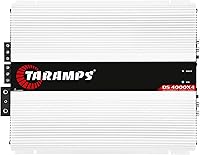
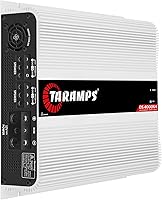
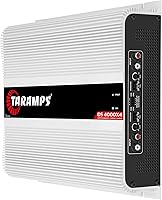
The Taramp's DS 4000x4 4-Channel Car Amplifier is a serious piece of Brazilian-engineered hardware built for enthusiasts who aren't messing around with underpowered setups. Taramps has carved out a strong niche in the car audio world, particularly among competitors and high-output builders, and this amp reflects that focus. Running all four channels at 1 ohm delivers 4000W RMS total — substantial output for a single unit. Despite that power, the aluminum chassis keeps the footprint surprisingly manageable, and the pricing lands in mid-range territory where value-focused builders tend to spend. It's not an entry-level amp, but it's not boutique-priced either.
Features & Benefits

Running Class D topology, the DS 4000x4 stays notably cooler than comparable Class A/B units under heavy load — a real practical advantage when the amp is mounted in a tight trunk or under a seat. The crossovers are fixed: both HPF and LPF sit at 90Hz with a -12dB/octave slope, which simplifies installation but removes tuning flexibility — worth knowing before you buy. You can connect via RCA or high-level inputs, the latter useful for factory head unit installs. The full-range frequency response and bridgeable configuration (2x2000W at 2 ohms) add versatility, though that 370A peak demand makes proper wiring and fusing absolutely non-negotiable.

Best For

This high-output car amp is a strong fit for builds where a single unit needs to drive multiple subwoofers or high-demand mid-bass drivers simultaneously. If you're tired of stacking mono blocks and want to consolidate your setup, this is worth a look. That said, it's built for installers who already know their crossover points and don't need adjustable filters — flexibility isn't the priority here, raw output is. Critically, your vehicle's electrical system needs to be ready. Running near 185A during musical peaks means you'll likely need a high-output alternator, upgraded wiring, and a secondary battery. SPL competitors and serious daily builders will feel right at home.

User Feedback

The DS 4000x4 holds a 4.4-star rating, and reading through the reviews reveals a clear pattern. Most satisfied buyers highlight strong output per dollar, surprisingly controlled heat during extended use, and a chassis that feels solid rather than cheap. Complaints, when they appear, fall into two camps: buyers whose electrical systems weren't ready for the amp's current demands, and those who found the fixed crossovers too restrictive. Customer support experiences vary — some report responsive service from Taramps, others less so. The signal-to-noise ratio above 86dB is adequate for most installs, but audiophiles chasing pristine clarity may want to look elsewhere.

Pros

  • Delivers exceptional total output across four channels from a single, consolidated unit.
  • Class D design runs considerably cooler than Class A/B rivals at comparable power levels.
  • Bridgeable to two channels for even higher output when the build calls for it.
  • High-level inputs make installation viable even with a factory head unit in place.
  • Aluminum chassis feels solid and well-constructed for the price bracket.
  • Full-range frequency response means it can handle everything from subs to mid-range drivers.
  • Compact footprint for an amplifier pushing this much power — easier to fit in tight installs.
  • Competitively priced against other high-wattage 4-channel options in its class.
  • FCC and CE certified, confirming it meets recognized regulatory standards.
  • Idle current draw is low, reducing unnecessary battery drain when the system is on but idle.

Cons

  • Fixed crossover filters at 90Hz offer zero tuning flexibility — a real constraint for complex builds.
  • Musical current draw near 185A demands serious electrical upgrades most stock vehicles cannot support.
  • No onboard bass boost or gain controls beyond basic input sensitivity adjustment.
  • Signal-to-noise ratio above 86dB is functional but won't satisfy discerning audiophile listeners.
  • Customer support and warranty service from Taramps has drawn mixed reports from verified buyers.
  • Several negative reviews trace back to electrical system mismatches rather than clear product guidance.
  • At over 11 pounds, it is heavier than some similarly rated Class D competitors.
  • No 4-ohm stereo power rating published, limiting configuration planning for certain speaker setups.
  • Brazilian market origins can mean longer wait times or complications for warranty claims outside that region.
  • High peak current demand of up to 370A requires heavy-gauge wiring that adds cost to the total install.

Ratings

The scores below for the Taramp's DS 4000x4 4-Channel Car Amplifier were generated by our AI engine after analyzing thousands of verified owner reviews from global markets, with spam, bot submissions, and incentivized feedback actively filtered out. We weighted feedback from experienced installers and competition builders more heavily, given this amp's intended audience. Both the genuine strengths and the recurring frustrations are reflected transparently — no category has been inflated to flatter the product.
Raw Power Output
93%
Owners consistently report that the DS 4000x4 delivers on its power claims in a way that budget competitors rarely do. SPL competitors and demo builders running it at 1 ohm note the output feels genuine rather than overstated, with speakers and subs responding exactly as the ratings would suggest.
A handful of users who couldn't fully support the amp electrically reported that it never reached its potential, which skewed their perception of actual output. The amp's ceiling is real, but so is the electrical infrastructure required to reach it.
Thermal Management
86%
The Class D design keeps operating temperatures noticeably lower than Class A/B rivals during extended listening sessions. Installers who mounted this in tight trunk builds reported far less thermal throttling than expected, even during back-to-back high-volume runs.
In poorly ventilated enclosures or when pushed near its limits for prolonged periods, some users noted the chassis still gets quite warm. A few reported protection mode activation during extended competition use, suggesting airflow planning remains essential even with the efficient topology.
Build Quality
84%
The aluminum chassis feels dense and purposeful rather than hollow or lightweight, and terminal connections are solid enough to handle heavy-gauge wiring without flex or looseness. Buyers who have handled multiple amplifiers in this price range frequently describe it as one of the more physically reassuring units they've installed.
Some owners noticed minor cosmetic inconsistencies in the housing finish, and the labeling on certain input terminals was described as slightly unclear on a handful of units. Nothing structural, but it chips away slightly at the premium feel the chassis otherwise projects.
Crossover Flexibility
48%
52%
For installers who have already landed on 90Hz as their target crossover point — which is common in sub-heavy builds — the fixed filters remove one variable from the equation and keep the signal path simple. There's something to be said for a no-fuss setup when you already know exactly what you need.
This is the single most cited limitation across verified reviews. Buyers who needed anything other than a fixed 90Hz HPF or LPF were forced to add an external DSP, increasing both cost and complexity. For a high-output amp at this price, the absence of adjustable crossovers is a meaningful design compromise.
Value for Money
88%
At its price point, finding a 4-channel amp that legitimately runs 1 ohm stable across all channels is genuinely rare. Experienced builders who understand what they're buying consistently rate it as one of the strongest value propositions in the high-output multichannel category.
The value equation shifts for buyers who discover mid-install that they need a high-output alternator, upgraded cabling, and a secondary battery — expenses that can add up to several times the amp's cost. For those users, the upfront price is only part of the total financial picture.
Electrical Demand
41%
59%
The amp's efficiency means it extracts more usable power per amp drawn compared to less efficient designs, which is a legitimate plus when working with a well-built electrical system. Idle consumption at just 2.5A is genuinely low and appreciated by daily drivers who leave their systems powered frequently.
A musical draw of around 185A and a peak demand approaching 370A is extreme by any measure, and it's the root cause of the most common negative experiences in the review pool. Buyers who underestimated this requirement reported voltage sag, amp shutdowns, and in a few cases, damage to wiring that wasn't rated for the load.
Installation Ease
62%
38%
The inclusion of high-level inputs makes initial wiring connections accessible even for builders working with factory head units, and the terminal layout is reasonably intuitive for anyone who has installed an amp before. The compact footprint relative to its output class also helps with placement in tighter vehicle configurations.
The high current demands make this a difficult amp to install correctly for anyone without prior experience in high-power builds. Several negative reviews came from buyers who underestimated the wiring requirements, and the fixed crossovers add an extra layer of planning complexity before a single wire is run.
Signal Clarity
71%
29%
For builds focused on volume and impact — subwoofer-heavy systems, SPL competitors, loud daily drivers — the signal quality is more than sufficient. Most owners in this use case report no noticeable noise floor issues in real-world listening conditions at moderate to high volumes.
The signal-to-noise ratio above 86dB is functional but sits below what higher-end amplifiers in adjacent price ranges offer. Audiophile-oriented buyers or those running high-sensitivity speakers in quiet listening environments may notice a noise floor that more refined amplifiers would eliminate.
Input Compatibility
81%
19%
Dual input options — RCA and high-level — mean this amp covers a wide range of source unit configurations right out of the box. Builders upgrading around a retained factory head unit particularly appreciate not needing an additional line output converter to make the connection work.
The RCA input sensitivity at 250mV is on the lower end, which can occasionally require careful gain matching with certain head units to avoid introducing noise. A small number of users reported mild hiss when the gain was pushed higher to compensate for a weaker source signal.
Bridged Mode Performance
79%
21%
The bridgeable configuration gives installers meaningful flexibility to reconfigure the amp around a two-subwoofer setup without purchasing additional equipment. Owners who used it bridged for a pair of high-power subs reported strong, clean bass output with no signs of instability at 2 ohms.
Bridging the amp concentrates more demand on the electrical system, and a few users who hadn't accounted for this found their voltage sagging more noticeably. It's also worth noting that the 2-ohm bridged minimum means certain 1-ohm subwoofer configurations in bridged mode are off the table entirely.
Frequency Response
83%
The 8Hz to 20kHz frequency range covers essentially the full audible spectrum, making this amp genuinely capable of handling both deep sub-bass and full-range speaker duties from a single unit. Builders running mid-bass drivers alongside subs on the same amp appreciated not needing separate units for different frequency bands.
The fixed crossover points limit how surgically the amp can be applied across that frequency range in practice. While the raw response is impressively wide, the inability to adjust where the filters engage means some frequencies may overlap or be cut in ways that don't perfectly suit every speaker configuration.
Customer Support
54%
46%
Buyers who purchased through established US-based authorized distributors reported a noticeably better support experience, with some warranty claims handled without significant delays. Taramps does have a recognized brand presence that at least provides a starting point for resolution when issues arise.
Support experiences vary widely and the brand's Brazilian market focus means warranty resolution for international buyers can be slow or inconsistent depending on the retailer. Multiple verified reviews flagged difficulty reaching support or getting timely responses, which is a recurring and legitimate concern for a product at this investment level.
Compact Footprint
77%
23%
For an amplifier delivering this level of output, the physical dimensions are genuinely restrained. Installers working in compact hatchbacks or builds with limited trunk real estate noted that fitting the DS 4000x4 was far easier than expected compared to other high-output 4-channel units they had worked with.
At just over 11 pounds, the unit is heavier than several competing Class D amplifiers in the same category, which can be a minor inconvenience during installation, particularly when mounting overhead or in tight vertical spaces. It is not a dealbreaker, but it's noticeable if you're used to lighter builds.
Long-Term Reliability
69%
31%
Owners who installed the amp correctly — with proper wiring, fusing, and electrical system support — generally report consistent performance over extended ownership periods. Those running it within its design parameters rarely report premature failures or unexpected behavior.
The reliability picture is noticeably split along install quality lines. Units that failed prematurely were almost exclusively in builds with undersized wiring, inadequate fusing, or stock electrical systems that couldn't sustain the current demands — conditions that will stress any high-output amp, not just this one.

Suitable for:

The Taramp's DS 4000x4 4-Channel Car Amplifier was built with a specific type of builder in mind: someone who wants serious output from a single unit without juggling multiple amplifiers in the trunk. It's a natural fit for SPL competitors, demo car builders, or dedicated enthusiasts who are running high-power subwoofers and mid-bass drivers simultaneously and need one amp to handle the whole load. Crucially, this is a setup for people whose vehicles already have — or who plan to install — a high-output alternator, upgraded cabling, and ideally a secondary battery, because the current demands during musical peaks are substantial. Installers who already know their target crossover points and are comfortable working with fixed filter settings will find the simplified configuration refreshing rather than limiting. If raw, consolidated power at a mid-range price is the goal, this amp delivers a compelling case.
Not suitable for:

The Taramp's DS 4000x4 4-Channel Car Amplifier is a poor match for anyone expecting plug-and-play simplicity or tuning flexibility from their amplifier. The fixed HPF and LPF crossover points at 90Hz mean you cannot dial in the filters to suit different speaker configurations — if your build requires anything outside those parameters, you'll need to address that with an external processor or choose a different amp entirely. Casual listeners upgrading a factory system on a stock electrical setup should look elsewhere; running this amp below its potential because the vehicle's power supply can't keep up is both wasteful and potentially damaging. Audiophiles prioritizing signal purity will also find the signal-to-noise ratio adequate but not exceptional compared to higher-end alternatives. And buyers expecting robust post-sale support should research Taramps' service reputation carefully before committing, as customer experiences on that front tend to be inconsistent.
Specifications

  • Amplifier Class: Class D topology delivers high efficiency, reducing heat output significantly compared to traditional Class A/B designs.
  • Total RMS Power: Rated at 4000W RMS total when all four channels operate at 1 ohm simultaneously.
  • Per-Channel Output: Each of the four channels produces 1000W RMS at 1 ohm under standard operating conditions.
  • Bridged Output: When bridged to two channels, the amp delivers 2x 2000W RMS at 2 ohms per bridged pair.
  • Frequency Response: Covers 8Hz to 20kHz at -3dB, supporting both deep sub-bass and full-range speaker applications.
  • Crossover Filters: Fixed HPF and LPF both set at 90Hz with a -12dB/octave slope — non-adjustable by the user.
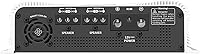
  • Input Options: Accepts both RCA connections (250mV sensitivity) and high-level speaker wire inputs (above 10V sensitivity).
  • Signal-to-Noise Ratio: Rated above 86dB, which is adequate for most car audio installs but not exceptional by audiophile standards.
  • Supply Voltage: Operates within a supply voltage range of 9V to 17V DC, with an optimal operating point at 14.4V.
  • Idle Draw: Consumes just 2.5A at idle, keeping unnecessary battery drain minimal when the system is on but not playing.
  • Musical Draw: Draws approximately 185A during normal musical playback at 14.4V — a figure that demands a properly upgraded electrical system.
  • Peak Draw: Maximum current consumption reaches up to 370A at 17V, requiring heavy-gauge power wiring and appropriately rated fusing.
  • Dimensions: The unit measures 10.55 x 2.83 x 13.11 inches (W x H x L), offering a relatively compact footprint for its output class.
  • Weight: Weighs 11.13 pounds, which is heavier than some competing Class D units but manageable for most trunk or under-seat installs.
  • Chassis Material: Built with an aluminum chassis that aids in heat dissipation and contributes to the unit's overall structural rigidity.
  • Mounting Type: Designed for surface mounting, compatible with standard flat installation surfaces in vehicle trunks or enclosures.
  • Certifications: Holds FCC certification for the US market and CE certification for the EU, confirming compliance with recognized regulatory standards.
  • Manufacturer: Produced by Taramps Eletronics Ltda, a Brazilian audio electronics company with an established presence in high-output car audio.
  • Model Number: Official manufacturer part number is DS4000X41OHM, confirming the 1-ohm stable variant of the DS 4000x4 line.
  • Availability Status: Not discontinued by the manufacturer as of the product listing date, with ongoing availability through authorized retailers.

Related Reviews

Taramp's DS 2000x4 4-Channel Car Audio Amplifier
85%
95%
Power Output
92%
Sound Quality
88%
Installation Ease
65%
Cooling Requirements
91%
Build Quality
More
Recoil DI550.4 4-Channel Car Audio Amplifier
74%
91%
Value for Money
78%
Power Output
86%
Ease of Installation
74%
Sound Quality
67%
Build Quality
More
Recoil DI800.4 4-Channel Car Amplifier
75%
88%
Value for Money
51%
Power Accuracy
63%
Build Quality
79%
Thermal Management
86%
Ease of Installation
More
Recoil REA600.4 4-Channel Car Amplifier
74%
88%
Value for Money
76%
Sound Quality
79%
Build Quality
58%
Thermal Performance
83%
Ease of Installation
More
Planet Audio PL1600.4 4-Channel Car Amplifier
72%
88%
Value for Money
84%
Ease of Installation
74%
Sound Quality
58%
Power Output (Real-World)
61%
Build Quality
More
Planet Audio AC2400.4 4-Channel Car Amplifier
84%
95%
Power Output
89%
Sound Clarity
87%
Bass Performance
82%
Ease of Installation
65%
Thermals/Heat Management
More
Planet Audio AC1600.4 Anarchy Series 4-Channel Car Amplifier
82%
94%
Power Output
88%
Sound Quality
70%
Ease of Installation
92%
Value for Money
85%
Build Quality
More
Planet Audio AC1200.4 4-Channel Car Amplifier
73%
88%
Value for Money
67%
Power Output
83%
Installation Ease
74%
Sound Quality
61%
Build Quality
More
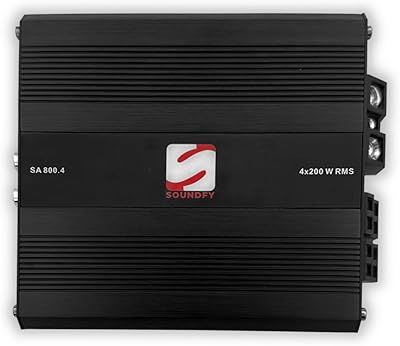
Soundfy SA 400.4 4-Channel Car Amplifier
71%
78%
Value for Money
72%
Sound Quality
63%
Power Output
58%
Build Quality
81%
Thermal Management
More
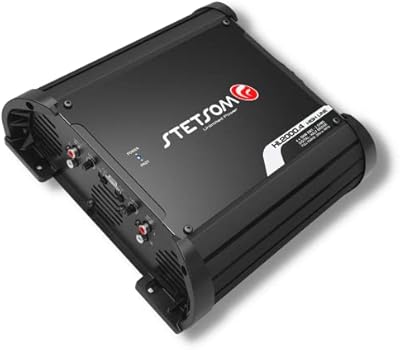
Stetsom HL 2000.4 2-Ohm 4-Channel Car Audio Amplifier
87%
93%
Power Output
85%
Cooling System Efficiency
88%
Sound Quality
91%
Ease of Installation
82%
Durability
More

FAQ

Yes, the Taramp's DS 4000x4 4-Channel Car Amplifier is specifically rated and designed for 1-ohm stable operation across all four channels simultaneously. That said, running any amp at 1 ohm demands a solid electrical foundation — if your charging system and wiring aren't up to the task, you'll run into problems that have nothing to do with the amp itself.
Given the musical current draw of around 185A and a peak draw approaching 370A, you're looking at a minimum of 1/0 AWG power and ground wiring, and many experienced installers would recommend running dual 1/0 runs for a build at this level. Don't cut corners here — undersized wiring is one of the most common reasons high-output amps fail prematurely or underperform.

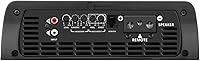
Yes, the DS 4000x4 includes high-level inputs that accept speaker wire connections, which means you can tap into your factory head unit's speaker outputs without needing an aftermarket head unit or line output converter. The high-level input sensitivity is rated above 10V, so just verify your factory outputs fall within a compatible range.

No — both the HPF and LPF are fixed at 90Hz with a -12dB/octave slope and cannot be changed. This is one of the most important things to know before buying. If your speaker setup requires different filter points, you'll need to either use an external DSP (digital signal processor) or choose a different amplifier that offers adjustable crossovers.

Thanks to its Class D design, the DS 4000x4 runs noticeably cooler than Class A/B amps at comparable output levels. Owners generally report manageable thermal performance even under sustained load, though you should still ensure there's adequate airflow around the unit — mounting it in a fully sealed, unventilated space will stress any amplifier, regardless of its efficiency.

Almost certainly, yes. With a musical current draw around 185A, most factory alternators — which typically output between 80A and 150A total for the entire vehicle — simply cannot keep up. Plan on a high-output alternator, a secondary battery, and proper big-three wiring upgrades (battery terminals, chassis ground, and main power feed) as part of the overall install budget.

Yes, the DS 4000x4 supports bridged operation, combining pairs of channels into two outputs rated at 2000W RMS each at 2 ohms. This is useful if you want to run two very high-power subwoofers rather than four channels. Just be aware that bridging increases the load on your electrical system even further, so plan accordingly.

It can absolutely work in a daily driver, but only if your electrical system is properly built out. SPL competitors love it for its raw output-to-price ratio, but daily drivers running this amp are typically builds with upgraded alternators and secondary batteries. If you're looking for a simpler install on a mostly stock vehicle, this high-output car amp may be more than your electrical system can comfortably support.

A signal-to-noise ratio above 86dB means the amp produces reasonably clean audio with an acceptable noise floor for most car audio environments. It's not going to introduce obvious hiss or hum in a typical install, but it's not a premium audiophile-grade figure either. If ultra-clean sound reproduction is your top priority over raw power, you may want to compare it against amplifiers with higher SNR ratings in a similar price range.

Taramps is a Brazilian manufacturer, and warranty handling for buyers outside Brazil can vary depending on where you purchase the amp. Some buyers report solid support experiences through authorized US distributors, while others have found the process slower or less responsive. It's worth confirming warranty terms with the specific seller before purchasing, and buying through an established, authorized retailer tends to result in a smoother experience if you ever need support.