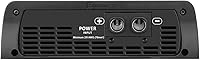
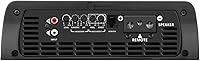
Overview

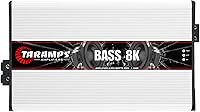
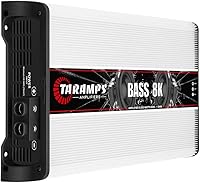
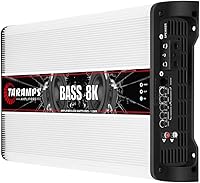
The Taramps Bass 8K Monoblock Car Amplifier comes from a Brazilian brand that has earned serious credibility in SPL competition and high-output car audio circles. This isn't a lifestyle amp dressed up with fancy aesthetics — the Bass 8K is purpose-built to move air, and it makes no apologies for that focus. Its Class D topology keeps efficiency high at extreme power levels, and the aluminum chassis manages to stay relatively compact given what's packed inside. At 9.41 inches wide and 16.5 inches long, it fits where many high-wattage competitors won't. Be clear going in, though: this high-output amp is built for experienced hands, not casual setups.
Features & Benefits

The Bass 8K delivers 8000W RMS at 1 ohm — that's a real, sustained figure, not a peak number padded to look impressive on the box. Wire your subs to a 2-ohm load and you're still pulling 5120W RMS, which gives builders genuine flexibility. The onboard variable low-pass filter sweeps from 60Hz to 250Hz, while the subsonic filter cuts below 30Hz to protect woofers from frequencies they can't handle. A built-in bass boost covers 35Hz to 60Hz with up to 10dB of gain, so you can dial in for trunk resonance without a separate processor. Signal-to-noise exceeds 95dB, keeping the output clean even when you're pushing hard.

Best For

This Taramps monoblock is built for a specific type of builder — one already running a high-output alternator and supplemental battery storage to handle the 638A peak current draw. It suits SPL competitors and serious bass enthusiasts wiring a large subwoofer, or a pair of subs, down to a 1-ohm final impedance. Truck and SUV owners with open cargo space will find the surface-mount form factor easy to work with. If you're building a daily driver for relaxed listening, this isn't the right fit. But if raw bass output is the primary goal and your electrical system can genuinely back it up, the Bass 8K was designed with exactly that build in mind.

User Feedback

Across roughly 90 ratings, this high-output amp holds a 4.1-star average — solid, but the split is worth understanding. Buyers consistently report that the power output is genuine: subs hit hard, bass is deep and controlled, and the amp handles sustained sessions without audible distortion. Where things get complicated is installation. Several reviewers found their existing electrical systems underprepared for the current demand, resulting in voltage drops and unexpected shutdowns — problems tied to the install, not the unit itself. A handful noted the chassis runs warm under prolonged heavy use, which is manageable with proper ventilation but requires planning. Warranty support draws mixed feedback, with some buyers reporting smooth resolution and others finding direct contact with Taramps difficult to establish.

Pros

  • Rated 8000W RMS at 1 ohm — a genuine sustained figure, not an inflated peak claim.
  • Class D design runs more efficiently than older amplifier topologies, reducing strain on your electrical system.
  • Onboard variable low-pass and subsonic filters eliminate the need for an external processor in many builds.
  • The built-in bass boost lets you compensate for trunk resonance without adding separate EQ hardware.
  • Signal-to-noise ratio exceeding 95dB keeps the output clean even at high volume levels.
  • Compact aluminum chassis is relatively easy to mount given the amp's power output.
  • Scales down to 5120W RMS at 2 ohms, giving builders real flexibility in subwoofer wiring configurations.
  • Minimum operating voltage of 9VDC adds a small but useful buffer during engine cranking or electrical dips.
  • The Bass 8K holds a 4.1-star average, with most positive reviewers confirming the power rating matches real-world performance.

Cons

  • Demands a fully upgraded electrical system — stock alternators and factory wiring will not handle the current draw.
  • No 4-ohm output rating listed, limiting compatibility with certain subwoofer configurations.
  • Several users report the chassis runs noticeably warm under sustained heavy use, requiring deliberate ventilation planning.
  • Warranty and after-sales support from Taramps can be difficult to access depending on your region.
  • Setup requires hands-on tuning experience; gain, subsonic filter, and crossover settings are not beginner-friendly.
  • At 14.17 pounds, it is heavier than many competing Class D units, which can complicate mounting in tight spaces.
  • The relatively low review count of 90 ratings makes it harder to draw firm long-term reliability conclusions.
  • Negative reviews frequently trace back to inadequate electrical preparation, but the product documentation offers limited installation guidance.
  • No 4-channel or bridgeable configuration — purely a dedicated subwoofer amp with no flexibility for mid-range or full-range use.

Ratings

The scores below reflect an AI-driven analysis of verified buyer reviews for the Taramps Bass 8K Monoblock Car Amplifier, sourced globally and filtered to remove incentivized, duplicate, and bot-generated submissions. Each category is scored based on patterns found across real user experiences, with strengths and recurring pain points weighted equally so you get an honest picture before you commit.

Power Output Accuracy
88%
Most buyers who tested with a clamp meter or oscilloscope confirmed the Bass 8K delivers output figures close to its rated 8000W RMS at 1 ohm — a rarity in a market full of inflated claims. SPL competitors specifically praised this credibility, noting the amp holds its output without flinching during extended competition runs.
A small subset of users running the amp below its optimal operating voltage reported noticeably reduced output, which skewed their perception of the power rating. Without a properly built electrical system, the true output figure is effectively unverifiable in a typical install.
Bass Performance
91%
Buyers consistently describe the low-end reproduction as deep, authoritative, and physically impactful — exactly what you want when running a large ported enclosure in a truck or SUV. The amp's frequency response extending to 8Hz gives subwoofers room to breathe at infrasonic ranges that many competing amps simply cut off.
A few users found the bass boost control added a slight coloration at higher boost settings that required careful tuning to avoid muddiness. Getting the best out of the low-end requires time spent dialing in the subsonic filter and LPF crossover, which is not always intuitive for less experienced installers.
Thermal Management
63%
37%
Under moderate listening conditions, the aluminum chassis handles heat passively without triggering thermal protection — multiple daily driver users reported no shutdowns during typical one to two hour sessions at moderate volume. Class D efficiency does meaningfully reduce the heat load compared to older Class AB designs at equivalent power levels.
Several reviewers flagged the unit running noticeably warm during sustained high-output sessions, particularly when mounted in enclosed or poorly ventilated spaces. A handful experienced thermal shutdowns during extended SPL practice sessions, pointing to ventilation requirements that the product documentation does not clearly communicate upfront.
Build Quality
79%
21%
The aluminum enclosure feels solid and purposeful, and the terminal blocks accept large-gauge wiring without struggle — a detail that matters when you're running 1/0 AWG power leads. Most buyers noted the overall construction felt competitive for the price point, with no obvious cost-cutting in the hardware.
Some users observed that the fit of the top panel and the quality of the RCA input jacks felt slightly below what the price tag implies. A few installers flagged minor cosmetic issues out of the box, though these did not appear to affect electrical performance.
Onboard Filter Controls
83%
The combination of a variable low-pass filter, adjustable subsonic filter, and bass boost in a single unit removes the need for an external processor in most dedicated subwoofer builds. Experienced installers appreciated the wide LPF sweep range from 60Hz to 250Hz, which gives real flexibility when integrating with different head units and crossover slopes.
The filter controls lack center-detent positions or clear markings beyond the endpoints, making precise and repeatable tuning more difficult than it should be. Users who prefer a set-and-forget setup will find the controls frustratingly imprecise compared to amps that include digital or stepped adjustment.
Electrical System Demands
44%
56%
For builders who have already invested in a high-output alternator and supplemental battery storage, the amp integrates well into a purpose-built electrical system. The minimum operating voltage of 9VDC adds a small buffer during engine cranking, which some users found helpful in vehicles with marginal charging systems.
The 638A peak current draw is the single most disruptive aspect of owning this amp for the majority of buyers. Users who underestimated the electrical requirements reported voltage sag, blown fuses, and unexpected shutdowns — problems that are costly to diagnose and fix after the install is already complete.
Installation Complexity
58%
42%
Experienced car audio installers found the physical mounting and wiring process straightforward, with accessible terminal placement and a compact enough footprint to fit in most trunk builds. The surface-mount form factor works well in custom enclosure builds where the amp can be positioned for both aesthetics and airflow.
For anyone without prior experience with high-powered amps, the setup curve is steep — gain structure, subsonic tuning, and impedance matching all need to be addressed before the first power-on. The included documentation provides minimal guidance, and several buyers reported needing to consult online forums or professional installers to complete a clean setup.
Signal Clarity
86%
The signal-to-noise ratio exceeding 95dB translates to a notably quiet noise floor in real-world installs, with users reporting no audible hiss or hum even at high gain settings when the source unit was properly matched. This is a meaningful advantage over cheaper high-wattage amps that often introduce ground noise at extreme output levels.
A small number of users experienced ground loop noise that required additional troubleshooting, though this is typically an install issue rather than a product defect. Getting the cleanest signal still requires careful attention to grounding and RCA cable routing, which adds complexity to the overall setup.
Value for Money
77%
23%
Buyers who compared the Bass 8K against similarly rated competition-grade monoblocks from European or North American brands consistently noted a favorable price-to-power ratio. For SPL builders on a budget who need verified high output, this Taramps monoblock occupies a strong position in its segment.
The total cost of ownership climbs quickly once you factor in the electrical system upgrades required to run the amp correctly — alternator, batteries, and wiring can easily double the overall investment. Buyers who did not account for these ancillary costs reported feeling misled about what the amp actually costs to install and operate properly.
Warranty & Support
51%
49%
Buyers who purchased through established authorized retailers reported smoother warranty resolution experiences, with some cases handled efficiently through the point of sale. Taramps does offer warranty coverage, and for users in Brazil or regions with local distribution, support availability appears to be better.
Multiple international buyers flagged difficulty reaching Taramps directly for warranty claims, with slow or no response being a recurring complaint in reviews. For buyers outside of South America, after-sales support is inconsistent enough to be a genuine purchasing risk, particularly given the investment involved in a high-powered amp build.
Dimensions & Fitment
82%
18%
At 9.41″ by 16.5″ by 2.87″, the Bass 8K is genuinely compact for an amplifier producing this level of output, and most truck and SUV builds accommodate it without major fabrication. Several users noted the form factor made it easier to mount visibly on a bass wall or custom enclosure panel.
At 14.17 pounds, the unit is heavier than many competing Class D amps of similar rated power, which can complicate single-person installation in tight or overhead mounting positions. The surface-mount-only design also rules out recessed or flush-mounted configurations that some custom builds require.
1-Ohm Stability
87%
The amp's stable 1-ohm operation is one of its strongest technical credentials, allowing builders to wire dual subwoofers in parallel without the risk of instability that plagues many lower-tier high-output amps. Competition users specifically praised this stability as a core reason for choosing the Bass 8K over alternatives.
While 1-ohm stability is confirmed by most users, a small number reported instability symptoms under sustained maximum output at 1 ohm, which may point to interaction with specific subwoofer configurations or marginal supply voltage. Running the amp near its limits requires a well-tuned, fully supported electrical system to maintain consistent behavior.
Packaging & Out-of-Box Experience
66%
34%
Most buyers received the amp well-protected in transit, with the shipping packaging adequate for a heavy, high-value unit. The physical condition on arrival was generally described as satisfactory, with no widespread reports of damage during shipping.
The unboxing experience is purely functional — no accessories, minimal documentation, and no installation hardware included. Buyers expecting a wiring kit, mounting screws, or even a basic quick-start guide were left to source everything independently, which added friction to what is already a complex install process.

Suitable for:

The Taramps Bass 8K Monoblock Car Amplifier is built for serious car audio enthusiasts who already know what they're doing and have the electrical infrastructure to back it up. If you're running a high-output alternator, upgraded battery bank, and large-gauge wiring, this amp will reward that investment with genuinely authoritative bass output. SPL competitors looking for a competition-ready monoblock at a competitive price point will find the 1-ohm stability and 8000W RMS rating particularly attractive. It also suits experienced builders working on dedicated bass vehicles — trucks, SUVs, and full-size sedans with trunk space for proper ventilation and surface mounting. If your priority is deep, clean low-end extension and you're not afraid to spend time dialing in filters and gain manually, this is a strong contender.
Not suitable for:

The Taramps Bass 8K Monoblock Car Amplifier is a poor fit for anyone who hasn't yet built out a serious electrical system, and that's not a minor caveat — it's a hard requirement. The amp can pull up to 638A at peak, and running it on a stock alternator and factory wiring is a reliable path to blown fuses, voltage sag, and premature failure. Casual listeners who want bass as one component of a balanced, full-range system should look elsewhere; this unit's frequency response stops at 250Hz, meaning it handles subwoofer duty exclusively. Buyers with limited install space or no experience tuning subsonic filters, gain structure, and LPF crossover points will likely struggle to get clean results. If you're new to high-powered car audio or simply want something that bolts in without deep technical knowledge, the Bass 8K will frustrate more than it satisfies.
Specifications

  • RMS Output (1Ω): The amplifier delivers 8000W RMS at a 1-ohm load, representing continuous sustained power under real operating conditions.
  • RMS Output (2Ω): At a 2-ohm load, output scales down to 5120W RMS, giving builders flexibility depending on subwoofer wiring configuration.
  • Amplifier Class: Class D topology is used throughout, prioritizing switching efficiency to reduce heat output and electrical system strain.
  • Channels: Single-channel monoblock design dedicated entirely to subwoofer and bass driver applications.
  • Frequency Response: Usable frequency range spans 8Hz to 250Hz at -3dB, covering the full low-frequency spectrum relevant to subwoofer use.
  • Low-Pass Filter: Variable low-pass filter sweeps from 60Hz to 250Hz with a steep -12dB per octave slope for precise crossover control.
  • Subsonic Filter: High-pass subsonic filter is adjustable from 8Hz to 30Hz at -12dB per octave, protecting subwoofers from damaging infrasonic content.
  • Bass Boost: Onboard bass boost is centered between 35Hz and 60Hz and provides up to 10dB of gain for trunk and enclosure tuning.
  • Signal-to-Noise: Signal-to-noise ratio exceeds 95dB, ensuring clean output even at high drive levels.
  • Input Sensitivity: Input sensitivity is rated at 220mV at 100% level, compatible with standard head unit preamp outputs via RCA connection.
  • Input Impedance: Input impedance is 15K ohms, appropriate for interfacing with most aftermarket source units without loading issues.
  • Peak Current Draw: At 14.4VDC operating voltage, peak power consumption reaches 638A, requiring a fully upgraded electrical system to operate safely.
  • Idle Consumption: At rest with no audio signal, the amplifier draws just 1.80A, minimizing parasitic battery drain when the vehicle is parked.
  • Supply Voltage: Operating voltage range spans 9VDC minimum to 17VDC maximum, with 14.4VDC as the nominal reference for all rated specifications.
  • Dimensions: The chassis measures 9.41″ wide by 16.5″ long by 2.87″ tall, a relatively compact footprint for an amplifier in this power class.
  • Weight: The unit weighs 14.17 pounds, which is heavier than many Class D competitors but within reasonable range for a surface-mount install.
  • Housing Material: The enclosure is constructed from aluminum, which aids in passive heat dissipation during extended high-power operation.
  • Mounting Type: Surface mount configuration is required, meaning the amp must be secured to a flat surface with adequate airflow clearance on all sides.
  • Input Connectivity: RCA input is provided for line-level signal connection from a head unit or audio processor.
  • Manufacturer: Taramps is a Brazilian car audio manufacturer with a strong presence in high-output and SPL-oriented amplifier markets.

Related Reviews
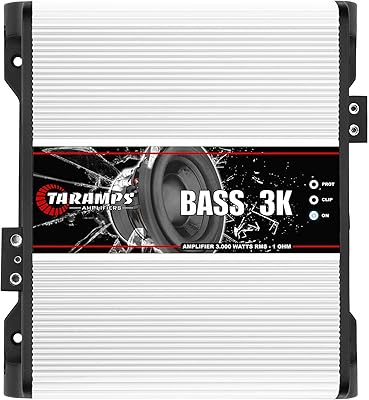
Taramp's Bass 800 1-Ohm Monoblock Amplifier
80%
91%
Real-World Power Accuracy
88%
1-Ohm Load Stability
86%
Tuning & Filter Controls
84%
Installation Ease
71%
Thermal Management
More
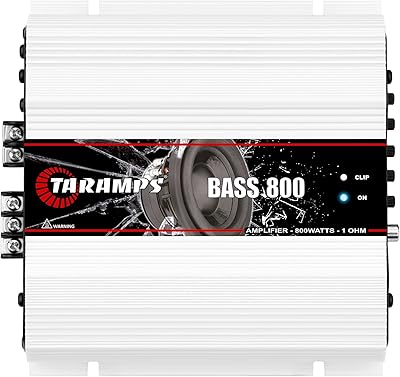
Taramps Bass 3k 1-Ohm Monoblock Amplifier
87%
96%
Bass Output
89%
Power Efficiency
91%
Build Quality
78%
Ease of Setup
94%
Durability
More
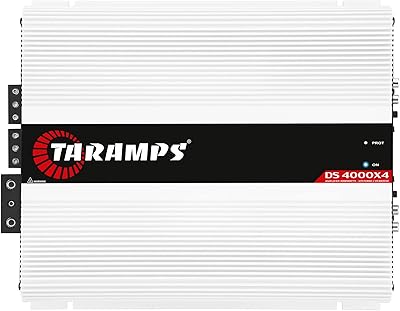
Taramps DS 4000x4 Car Audio Amplifier
82%
94%
Power Output
91%
Sound Clarity
70%
Installation Ease
85%
Build Quality
88%
Flexibility of Inputs
More
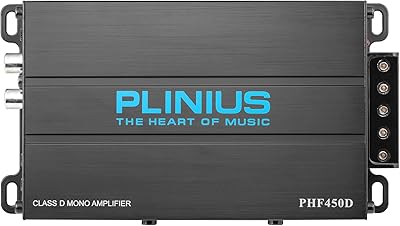
LKC PHF450D Car Audio Monoblock Amplifier
88%
91%
Power Output (2 Ohms)
87%
Power Output (4 Ohms)
93%
Heat Dissipation
88%
Build Quality
85%
Ease of Integration
More
Taramps DS 800x4 4-Channel Car Amplifier
78%
92%
Value for Money
89%
Power Output
84%
Installation Ease
51%
Crossover Flexibility
74%
Build Quality
More
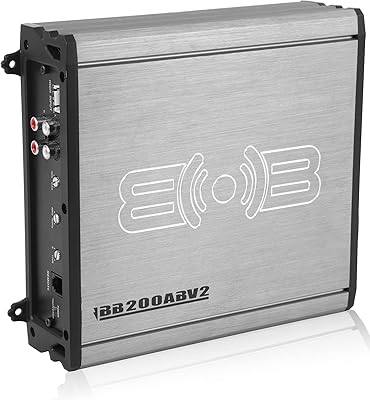
Belva BB200ABv2 500W Monoblock Car Amplifier
85%
88%
Bass Performance
91%
Installation Ease
85%
Sound Clarity
89%
2-Ohm Stability
82%
Build Quality
More
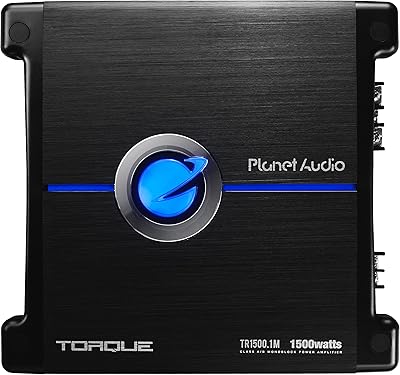
Planet Audio TR1500.1M Monoblock Car Amplifier
70%
88%
Value for Money
79%
Bass Output & Performance
83%
Ease of Installation
63%
Build Quality
57%
Thermal Management
More
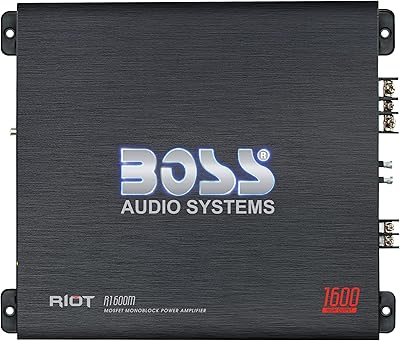
BOSS Audio R1600M Monoblock Car Amplifier
72%
83%
Value for Money
88%
Ease of Installation
79%
Bass Output
61%
Build Quality
86%
Signal Flexibility
More
Planet Audio AC2500.1M Monoblock Car Amplifier
85%
92%
Performance
95%
Bass Output
85%
Ease of Installation
65%
Thermal Performance
88%
Build Quality
More
Planet Audio AC1500.1M Monoblock Car Amplifier
75%
91%
Value for Money
78%
Bass Output Quality
86%
Ease of Installation
61%
Thermal Management
67%
Build Quality
More

FAQ

The 8000W figure is an RMS rating, not a peak or marketing number. RMS represents continuous, sustained power output under load — which is the number that actually matters for real-world performance. That said, hitting that rating requires a 1-ohm stable load and a vehicle electrical system capable of supplying the current demand.

At minimum, you should be looking at a high-output alternator in the 250A to 320A range, supplemental AGM or lithium battery storage, and full runs of 1/0-gauge or larger power and ground wiring. The amp can pull up to 638A at peak, and a stock electrical system will not come close to supporting that. Cutting corners here is the most common reason people have bad experiences with high-powered amps.

Yes, the amp is stable at both 1 and 2 ohms. At 2 ohms you'll get 5120W RMS, which is still a serious amount of power. If your subwoofer wiring works out more cleanly to a 2-ohm final impedance, running it that way is a perfectly valid choice and will be a bit easier on your electrical system.

For most subwoofer builds, the onboard controls are sufficient. The variable low-pass filter handles crossover duties from 60Hz to 250Hz, and the subsonic filter protects your woofers below 30Hz. The bass boost adds up to 10dB for enclosure tuning. If you're running a more complex multi-amp system with active crossovers, you might bypass the onboard filters, but for a standalone sub stage they work well.

Some heat is expected from any amplifier operating at these power levels, even with Class D efficiency. The aluminum chassis helps dissipate heat passively, but this high-output amp needs open airflow around it — don't box it in under carpet or inside a sealed enclosure. A few reviewers have flagged warmth under sustained heavy use, and the honest answer is that ventilation planning matters here. If the amp is getting uncomfortably hot, check your install for airflow restrictions before assuming there's a product issue.

It can work in a daily driver, but only if the electrical system is properly built out. If you're running a dedicated bass vehicle for shows or SPL events, it's an obvious fit. For a daily driver where you want deep, loud bass without the full competition build, it's still usable — you just need to be honest about your electrical capacity and tune the gain and filters conservatively.

Given the current draw, most experienced installers recommend running at least 1/0 AWG for both power and ground, with some high-output builds using multiple runs in parallel. Don't rely on the amp's terminal size alone to determine wire gauge — calculate based on total current demand and wire run length. A proper big-three upgrade to your vehicle's charging system is also strongly recommended before installation.

A single subwoofer works fine, as long as the final impedance at the amp's terminals lands at 1 or 2 ohms. A single dual-voice-coil sub wired in parallel to 1 ohm, or in series to 2 ohms, are both common and practical configurations. The key is matching the sub's power handling to the amp's output — a woofer rated for 2000W RMS is going to have a very short life on an amp putting out 8000W.

Taramps does offer warranty coverage, but buyer experiences with after-sales support have been mixed — particularly for customers outside Brazil. Some users report smooth resolution through their point of purchase, while others have found direct contact with Taramps difficult to establish. It's worth purchasing through a reputable authorized retailer who can help mediate warranty claims if needed.

Honestly, not as a first build. The Bass 8K is a specialist tool that rewards experienced hands. Getting clean, safe performance out of it requires comfort with gain structure, subsonic filter tuning, impedance matching, and electrical system design. If you're just getting started with car audio, building experience on a more forgiving mid-power amp first will save you money and frustration in the long run.

Where to Buy