Overview

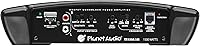
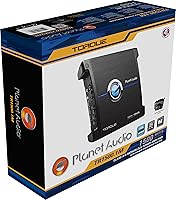
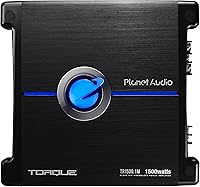
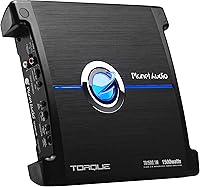
The Planet Audio TR1500.1M Monoblock Car Amplifier sits squarely in the budget-friendly tier of the car audio market, designed with one job in mind: pushing a subwoofer. It's a single-channel unit, meaning all its energy goes toward low-frequency reproduction rather than splitting power across multiple speakers. The Class A/B topology gives it a reasonable balance between running cool enough for a trunk install and delivering enough current to wake up a sub. At roughly 10 by 9.5 inches and just over two inches tall, it tucks into most setups without drama. Just go in with clear eyes — this isn't boutique gear, and it doesn't pretend to be.
Features & Benefits

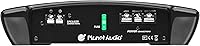
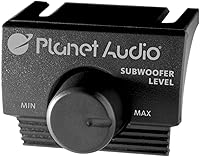
The TR1500.1M packs a solid set of controls for its class. The MOSFET power supply keeps output voltage steady even when the amp is working hard, so you get consistent bass response instead of the kind of sag you might notice from cheaper designs. A variable low-pass crossover lets you set the frequency ceiling for your sub precisely, so you're not asking a woofer to do things it shouldn't. The switchable bass boost is a nice bonus for dialing in extra punch on the fly. And those dual input options — RCA and speaker-level — mean you can run this off a factory radio without an aftermarket head unit, which opens up a lot of install scenarios.

Best For

This monoblock amp makes the most sense for first-time builders who want real subwoofer performance without spending a lot or navigating a complicated install. If you've got an older vehicle with a stock head unit and no preamp outputs, the high-level inputs are a genuine convenience — no line output converter needed. It's also a natural fit for secondary builds: a work truck, a beater, or a weekend vehicle where you want decent bass without overthinking the budget. Pair it with a single 4-ohm or 2-ohm sub in a ported or sealed enclosure and it'll perform well for everyday listening. If you're chasing competition-level output or audiophile precision, though, look elsewhere.

User Feedback

Buyers who pick up this Planet Audio sub amp tend to come away satisfied with the bass output relative to cost — the most common thread is that it punches above its price class for casual listening. Wiring is generally described as straightforward, which matters for first-timers. That said, long-term reliability comes up repeatedly as a concern; some owners report issues after extended high-volume use, pointing to heat as a likely factor. A handful of buyers note the included documentation is thin, so newcomers may need to look up wire gauge and fuse sizing independently. Customer support experiences are mixed. Overall, reviews lean positive, but with the clear expectation that this is a value purchase, not a set-it-and-forget-it investment.

Pros

  • Delivers satisfying everyday bass output at a price point that leaves room in the budget for a quality subwoofer.
  • High-level speaker inputs make it genuinely plug-and-play for vehicles with factory head units.
  • The compact chassis fits easily in tight trunk spaces where larger amps simply will not go.
  • Variable low-pass crossover gives you real control over which frequencies hit your sub.
  • The MOSFET power supply keeps output stable under normal listening conditions without significant voltage sag.
  • Switchable bass boost lets you add extra punch on the fly without touching your head unit EQ.
  • A solid entry point for beginners who want hands-on installation experience with a low-risk unit.
  • Both RCA and speaker-level inputs in one unit adds flexibility for a wide range of vehicle and deck combinations.
  • Holds up reliably for light-duty, moderate-volume use when installed with proper grounding and ventilation.

Cons

  • Thermal protection cuts in earlier than expected during sustained high-volume listening in warm environments.
  • The included manual skips essential guidance on fuse sizing, wire gauge, and grounding best practices.
  • Long-term reliability drops noticeably for users who push the TR1500.1M consistently at or near its limits.
  • Alternator whine and ground loop noise appear more frequently in reviews than competing amps at similar prices.
  • Customer support experiences are inconsistent, with some buyers reporting difficulty resolving warranty claims.
  • The bass boost control introduces audible clipping artifacts if gain structure is not carefully set beforehand.
  • High-level input sensitivity is not ideally tuned for lower-output factory radios, sometimes requiring problematic gain settings.
  • Peak wattage figures are heavily marketed but the real-world continuous output is considerably more modest.
  • No installation accessories are included — not even basic hardware — so budget for terminals, wire, and connectors separately.

Ratings

The scores below were generated by AI after analyzing thousands of verified buyer reviews for the Planet Audio TR1500.1M Monoblock Car Amplifier from global sources, with spam, bot-generated, and incentivized feedback actively filtered out. The results reflect a candid cross-section of real-world experience — where this amp genuinely delivers and where it falls short. Both strengths and recurring pain points are represented transparently so you can make a confident, informed decision.
Value for Money
88%
For buyers building their first sub setup on a tight budget, the TR1500.1M consistently over-delivers relative to its asking price. Most owners report being surprised by how much usable bass output they get without spending significantly more on a name-brand alternative.
The value equation only holds if you have realistic expectations. Buyers who compare it directly to mid-tier amps from more established brands often find the gap in refinement and long-term reliability hard to ignore once the novelty wears off.
Bass Output & Performance
79%
21%
Paired with a single 4-ohm subwoofer in a ported enclosure, this monoblock amp moves enough air to satisfy most everyday listeners. Daily commuters who want felt-in-the-chest bass on a budget find it hits that mark consistently at moderate volume levels.
Push it hard for extended sessions — think highway driving at full tilt — and the output starts to feel strained. It is not built for sustained high-demand use, and the difference becomes apparent when compared to amps with cleaner headroom at higher loads.
Ease of Installation
83%
The dual-input design is a genuine advantage for DIY installs. Being able to tap speaker-level outputs from a factory head unit means most users can wire this up in an afternoon without needing additional adapters or a line output converter.
The included documentation is widely considered insufficient, especially for true beginners. Figuring out appropriate wire gauge, fuse sizing, and ground point quality often requires external research, which adds friction to what could otherwise be a smooth install.
Build Quality
63%
37%
The chassis feels reasonably solid out of the box and the terminal connections are secure enough for a clean install. For a secondary vehicle or a budget build where cosmetics and longevity are not top priorities, it does the job adequately.
Longer-term owners raise valid concerns about component durability. The housing and internal tolerances reflect the price point, and a handful of buyers report early failures — particularly after sustained use at higher output levels in warm climates.
Thermal Management
57%
43%
Under normal listening conditions — moderate volume, reasonably ventilated trunk space — the TR1500.1M manages heat well enough that most buyers never notice an issue. Casual weekend listeners in temperate climates rarely encounter thermal shutdowns.
Heat is the most frequently cited concern in critical reviews. In tight, poorly ventilated enclosures or during summer installs in hot climates, thermal protection kicks in earlier than users expect, cutting output during exactly the moments you want the bass performing its best.
Input Flexibility
86%
Having both RCA low-level and speaker-wire high-level inputs in a single unit at this price is genuinely useful. It covers a wide range of vehicle types, from modern cars with aftermarket decks to older trucks running factory audio systems.
The high-level input sensitivity could be better calibrated. Some users with lower-output factory radios report needing to push the gain higher than comfortable to get adequate signal, which introduces a small but noticeable noise floor in quieter passages.
Low-Pass Crossover Precision
74%
26%
The variable low-pass crossover gives users meaningful control over which frequencies reach the subwoofer, which is more than many competing amps at this price offer. Tuning it to match a specific sub and box combination is straightforward and effective for most use cases.
Enthusiasts who want precise crossover points for a carefully tuned system will find the adjustment range a bit coarse. The filter does its job, but it lacks the surgical accuracy you get from amps with dedicated DSP or more refined crossover circuits.
Bass Boost Usability
71%
29%
The switchable bass boost is a practical feature for users who want extra low-end punch on certain tracks without fiddling with their head unit EQ. For casual listeners who just want more thump during a commute, it works exactly as expected.
At higher boost settings, some clipping artifacts creep in, particularly if the gain is not carefully set beforehand. Users who rely on it heavily without proper gain structure tend to stress both the amp and the subwoofer more than they realize.
Gain Control & Signal Matching
76%
24%
The variable input gain gives installers a practical tool to match the amp to whatever head unit they are running, which reduces clipping risk and helps protect the subwoofer during everyday listening. Most users find the range adequate for common deck output levels.
Without a multimeter or an oscilloscope, setting the gain correctly by ear is guesswork — and the manual offers almost no guidance on the process. This is a broader industry problem, but it hits budget buyers harder since they are less likely to have calibration tools on hand.
Compact Footprint & Fitment
84%
At just over ten inches long and barely two inches tall, this monoblock amp fits in spots where bulkier units simply would not go. Buyers installing in compact cars, crew cab trucks, or under-seat locations consistently praise how little space it demands.
The surface mount design means you need a flat, accessible mounting surface, and the screw placement makes access tight in some custom enclosures. It is not a dealbreaker, but planning the mount point before cutting any wires saves a lot of frustration.
Instruction Manual Quality
44%
56%
For users who have installed an amp before, the basic diagrams in the manual are enough of a reference to get connected quickly. The wiring schematic is clear enough that experienced hobbyists can work through the process without needing to look anything up.
First-time installers are largely left on their own. The manual skips critical practical guidance — recommended fuse ratings, minimum wire gauge, and proper grounding technique — that most beginners genuinely need. This is one of the most consistent criticisms across buyer reviews.
Long-Term Reliability
58%
42%
A meaningful portion of buyers report using this Planet Audio sub amp for a year or more without incident, particularly those who run it conservatively and ensure adequate airflow around the unit. For light-duty use, it holds up reasonably well.
The failure rate over 18-plus months is higher than average for the category, based on review patterns. Units that are pushed hard, run hot, or installed without attention to grounding and fusing tend to develop issues that suggest the internal components are working at or near their limits.
Customer Support & Warranty Experience
52%
48%
Some buyers report positive warranty resolution experiences, particularly for early defects caught within the first few weeks. When support does come through, the replacement turnaround is described as acceptable.
The overall picture from reviews is inconsistent at best. A notable share of buyers describe difficulty reaching support or receiving unhelpful responses to warranty claims, which amplifies the concern around long-term reliability rather than offsetting it.
Noise Floor & Signal Clarity
67%
33%
In a well-grounded install with quality RCA cables, the TR1500.1M produces a clean enough signal for subwoofer reproduction. Low-frequency bass content is forgiving of minor noise artifacts, and most listeners in typical commuter conditions never notice any background hiss.
Alternator whine and ground loop noise appear more frequently in reviews for this amp than for pricier competitors. Poor grounding or cheap patch cables make it worse, and since the buyer demographic skews toward beginners, these installation errors are common in practice.

Suitable for:

The Planet Audio TR1500.1M Monoblock Car Amplifier is a natural fit for anyone stepping into car audio for the first time and wanting real subwoofer performance without committing to a significant budget. If you drive an older vehicle with a factory head unit — no RCA outputs, no preamp — the built-in high-level speaker inputs let you wire directly to existing speaker leads, which removes a common and frustrating obstacle for beginners. It also works well for secondary builds: the kind of install you do in a work truck, a family hauler, or a weekend car where you want decent bass but have no interest in overthinking the parts list. Paired with a single sub in a ported box, this monoblock delivers enough low-end punch to meaningfully improve the feel of everyday listening. Anyone who wants to learn the basics of amp installation without risking an expensive unit will find it a low-stakes way to develop real skills.
Not suitable for:

If you are building a system with serious performance expectations, the Planet Audio TR1500.1M Monoblock Car Amplifier is likely to leave you wanting more before long. The amp is not designed for sustained high-volume use, and buyers who run it hard in warm, poorly ventilated trunk spaces frequently run into thermal cutouts at inconvenient moments. Competition audio enthusiasts or anyone chasing SPL numbers should look at purpose-built alternatives with better thermal headroom and tighter power ratings. Audiophiles who prioritize clean, distortion-free bass reproduction at elevated volumes will also find the signal quality at the limits of this amp's range underwhelming compared to mid-tier options from more specialized brands. If long-term reliability is a top priority and you plan to use this amp daily at high output levels for several years, the investment in a better-built unit will almost certainly pay off.
Specifications

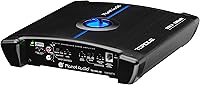
  • Channels: Single-channel (monoblock) design routes all power to one output, purpose-built for driving a subwoofer.
  • Max Power: Rated at 1500W maximum at 2 ohms, which represents peak burst output rather than sustained continuous power.
  • RMS Power: Continuous RMS output is 750W at 4 ohms, reflecting the real-world power the amp delivers during normal listening.
  • Topology: Class A/B amplifier design balances thermal efficiency and audio fidelity, making it practical for enclosed vehicle installs.
  • Power Supply: MOSFET-based power supply regulates output voltage precisely, maintaining stable current delivery under varying load conditions.
  • Crossover Type: Variable low-pass crossover allows users to set the upper frequency limit for the subwoofer signal, adjustable to match the driver and enclosure.
  • Bass Boost: Switchable bass boost circuit lets users increase low-frequency emphasis within a set boost range without an external equalizer.
  • Input Types: Accepts both low-level RCA inputs and high-level speaker-wire inputs, enabling connection to aftermarket and factory head units alike.
  • Input Gain: Variable input gain control adjusts incoming signal sensitivity to match the output level of the connected head unit and prevent clipping.
  • Supply Voltage: Operates on a 12V DC vehicle electrical system, standard for all passenger car and light truck applications.
  • Dimensions: Unit measures 10.2 x 9.5 x 2.13 inches (L x W x H), compact enough for trunk floors, under-seat areas, and custom enclosure panels.
  • Weight: Weighs 7.16 pounds, light enough to mount securely with standard sheet-metal screws without reinforcing the mounting surface.
  • Mount Type: Surface mount design requires a flat, solid mounting point such as a trunk floor board, side panel, or enclosure wall.
  • Color: Finished in black with a standard amplifier chassis aesthetic consistent with most car audio trunk installs.
  • Certifications: Meets FCC, IC, and CEC compliance standards for electromagnetic compatibility and energy regulation in North American markets.
  • Box Contents: Package includes the amplifier unit only; mounting hardware, wiring, and RCA cables are not included and must be sourced separately.
  • Manufacturer: Designed and sold by Planet Audio, a consumer car audio brand offering budget to mid-range amplifiers, speakers, and multimedia receivers.
  • Model Number: Official model designation is TR1500.1M, used for identifying compatible accessories, wiring guides, and warranty documentation.

Related Reviews
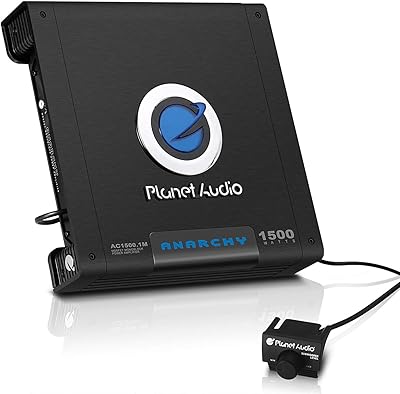
Planet Audio AC1500.1M Monoblock Car Amplifier
75%
91%
Value for Money
78%
Bass Output Quality
86%
Ease of Installation
61%
Thermal Management
67%
Build Quality
More
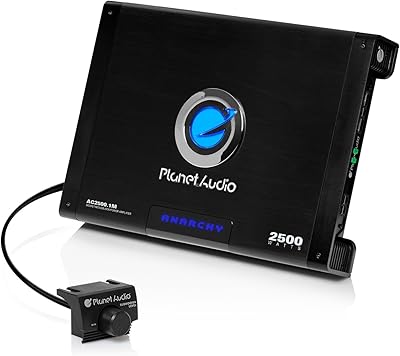
Planet Audio AC2500.1M Monoblock Car Amplifier
85%
92%
Performance
95%
Bass Output
85%
Ease of Installation
65%
Thermal Performance
88%
Build Quality
More
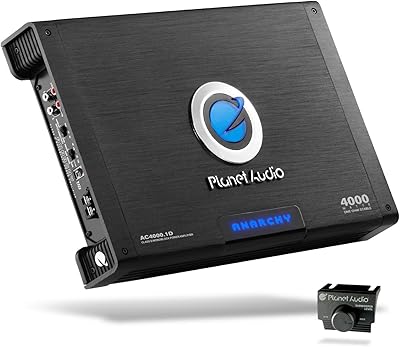
Planet Audio AC4000.1D Monoblock Car Amplifier
77%
88%
Value for Money
79%
Power Output
82%
Thermal Management
67%
Build Quality
63%
Installation Experience
More
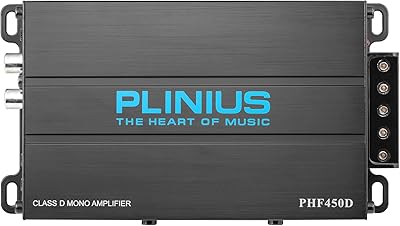
LKC PHF450D Car Audio Monoblock Amplifier
88%
91%
Power Output (2 Ohms)
87%
Power Output (4 Ohms)
93%
Heat Dissipation
88%
Build Quality
85%
Ease of Integration
More
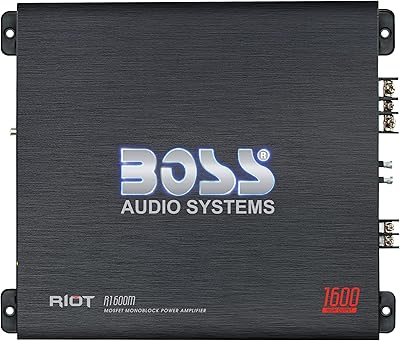
BOSS Audio R1600M Monoblock Car Amplifier
72%
83%
Value for Money
88%
Ease of Installation
79%
Bass Output
61%
Build Quality
86%
Signal Flexibility
More
Blaupunkt AMP1500M Monoblock Car Amplifier
73%
81%
Value for Money
63%
Real-World Power Output
88%
Ease of Installation
77%
Audio Clarity
58%
Build Quality
More
Planet Audio MB2000.1D Class D Car Amplifier
86%
94%
Power Output
88%
Sound Quality
85%
Build Quality
90%
Size and Portability
75%
Efficiency & Heat Management
More
Planet Audio AC2400.4 4-Channel Car Amplifier
84%
95%
Power Output
89%
Sound Clarity
87%
Bass Performance
82%
Ease of Installation
65%
Thermals/Heat Management
More
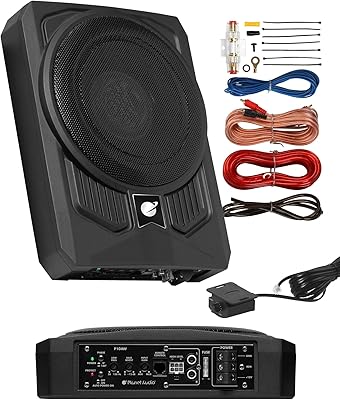
Planet Audio P10AWK 10-Inch Amplified Car Subwoofer
71%
83%
Ease of Installation
71%
Bass Output & Impact
76%
Sound Tuning & Flexibility
86%
Compatibility & Input Options
58%
Build Quality & Materials
More
Planet Audio BB4.1200 4-Channel Car Amplifier
74%
83%
Value for Money
61%
Power Output Accuracy
88%
Ease of Installation
67%
Build Quality
58%
Thermal Management
More

FAQ

Yes, and this is actually one of the more practical things about the TR1500.1M. The high-level inputs let you run speaker wire directly from your factory radio outputs to the amp, so you skip the need for a line output converter. Just make sure your ground is solid and your wire gauge is appropriate for the run length.

The manual is not much help here, so to be safe, most experienced installers recommend a 60 to 80 amp inline fuse placed within 18 inches of the battery. The fuse protects the wire, not the amp, so it should be sized to match the wire gauge you are running — typically 4-gauge for this power level.

That is actually the ideal use case. A single 4-ohm or dual voice coil sub wired to 4 ohms in a ported enclosure will pair well with this monoblock and produce solid everyday bass. Keep the volume at moderate levels and make sure the box is tuned reasonably, and you will get a noticeably improved listening experience over a stock system.

It runs warm under normal listening conditions, which is expected for a Class A/B design. The issue buyers run into is when the amp is mounted in a sealed, unventilated space and driven at high volume for long periods — that is when thermal protection can kick in and temporarily cut output. Give it breathing room and it behaves fine for everyday use.

The 1500W figure is a peak measurement taken under brief, ideal conditions — it is not what the amp delivers continuously. The 750W RMS rating at 4 ohms is the number that actually matters, since it reflects sustained output during real listening. Most budget amps market the peak number prominently, so it helps to know the RMS figure when comparing units.

The gain is not a volume knob — it matches the amp input sensitivity to your head unit output level. The safest method is to set your head unit to about 75 to 80 percent volume with a bass-heavy track playing, then slowly raise the amp gain until you hear distortion, then back it off slightly. If you have a multimeter and know how to check for clipping voltage, that gives you a more precise result.

No. This is a monoblock, meaning it already has a single channel and cannot be bridged further. It is designed to power one subwoofer load. If you want to run two subs, either wire them together to a compatible impedance or look at a two-channel amp that can be bridged.

For most installs with this amp, 4-gauge wire for both the power run from the battery and the ground connection to the chassis is the standard recommendation. A shorter power run under ten feet could get away with 8-gauge, but 4-gauge gives you headroom and reduces voltage drop. A poor ground is the most common cause of noise and performance issues with this amp specifically.

It depends on how you install it and how hard you push it. In a well-ventilated mounting location at moderate to moderate-high volume levels, plenty of buyers use it daily without problems. In a sealed trunk with no airflow and the gain cranked, summer heat in warmer climates is a known stress point. If you are in a consistently hot environment, mounting it somewhere with airflow makes a real difference.

Planet Audio does offer a manufacturer warranty, but the coverage terms and actual support experience vary based on where you purchased the unit and when. A number of buyers report inconsistent results when trying to make warranty claims, so it is worth keeping your proof of purchase and buying from a retailer that has a clear return policy as a backup.

Where to Buy