Overview

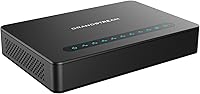
The Grandstream HT818 8-Port FXS VoIP Gateway is a business-grade device built for one specific job: bridging legacy analog telephone equipment to modern SIP-based phone systems. This is not a consumer ATA (analog telephone adapter) with a couple of ports — it is infrastructure hardware aimed at small and medium businesses that need to preserve existing desk phones while moving to a hosted PBX or cloud communications platform. Grandstream has a solid reputation in the SMB networking and VoIP space, and the HT818 sits at a practical mid-range price point compared to enterprise-tier gateways with similar port counts. Expect to configure it once and largely forget it is there.
Features & Benefits

Eight FXS (Foreign Exchange Station) ports mean you can connect up to eight analog phones, fax machines, or legacy handsets simultaneously — a density that would otherwise require stacking multiple consumer-grade adapters. The dual SIP profile support is genuinely useful in real deployments, letting you point different ports at different providers or PBX systems without extra hardware. A built-in NAT router with Gigabit throughput reduces the networking gear required at each location. Calls are protected by AES encryption tied to a per-unit security certificate. TR-069 — a remote device management protocol — lets IT teams provision and update units automatically. Each port also supports 3-way conferencing natively, without any add-ons.

Best For

This 8-port FXS gateway fits best in environments where analog phones are not going away anytime soon. The clearest candidates are SMB VoIP migrations — businesses that need every existing handset to keep working while the phone system transitions underneath them. IT administrators managing multiple sites will find the remote provisioning capabilities particularly valuable. Offices still running a fax line benefit directly from the built-in Fax-over-IP support. Managed service providers who standardize hardware across client deployments will appreciate the consistent configuration experience. Even advanced home-office users who need more than the usual one or two analog ports will find this a solid, purpose-built option.

User Feedback

With a 4.6-star average from roughly 88 buyers, the HT818 holds up well — though that pool is small enough that individual outliers carry real weight. Long-term stability is the standout theme in positive reviews; owners who have been running this analog VoIP gateway for a year or more consistently report it simply keeps working without intervention. Setup earns positive mentions too, though several reviewers note the web-based admin interface has a learning curve if you have not previously configured VoIP hardware. A recurring critique involves occasional provider compatibility friction — certain SIP providers required extra manual tweaking to function reliably. Worth confirming your provider against known-compatible lists before committing.

Pros

  • Eight FXS ports let you connect an entire small office worth of analog phones on a single unit.
  • Dual SIP profile support allows flexible routing across two separate providers or PBX systems simultaneously.
  • The built-in Gigabit NAT router reduces the need for an extra piece of networking hardware at smaller sites.
  • AES encryption with a per-unit security certificate keeps call data protected without any extra configuration.
  • TR-069 support is a real time-saver for MSPs — remote provisioning means fewer on-site visits.
  • Native Fax-over-IP support lets legacy fax machines coexist with a modern SIP phone system cleanly.
  • The HT818 has been on the market since 2018 and is still actively sold, signaling solid long-term vendor support.
  • Long-term reliability is a consistent theme in buyer feedback — the hardware tends to run for years without issues.
  • 3-way conferencing per port adds basic collaboration capability without requiring a separate conferencing bridge.
  • Compact form factor at just over one pound makes it easy to rack-mount or tuck into a server closet.

Cons

  • The web-based admin interface has a noticeable learning curve for anyone new to VoIP gateway configuration.
  • Eight ports is more capacity than most home users or micro-businesses will ever realistically need.
  • A handful of buyers have reported compatibility friction with specific SIP providers that required manual tweaking.
  • The listed wireless standard is older-generation, so it should not be relied upon as a primary Wi-Fi source.
  • With fewer than 90 ratings since 2018, the available user feedback pool is too small to draw firm conclusions.
  • No dedicated mobile app or simplified setup wizard exists — configuration is entirely web-GUI based.
  • Businesses that have already fully transitioned to IP phones will find this analog VoIP gateway completely redundant.
  • Initial setup time investment is real; expect at least an hour of configuration work for a first-time deployment.

Ratings

The scores below were generated by our AI rating engine after systematically analyzing verified buyer reviews for the Grandstream HT818 8-Port FXS VoIP Gateway from global sources, with spam, bot-submitted, and incentivized feedback actively filtered out. Each category reflects the genuine distribution of praise and frustration found across real-world deployments, not a sanitized average. Both the strengths that keep buyers recommending this device and the friction points that caused headaches are transparently represented in every score.

Long-term Stability
91%
The most consistently praised aspect across the review pool is how reliably the HT818 keeps running once deployed. IT administrators and MSPs repeatedly note that units installed years ago continue operating without reboots, dropped registrations, or hardware failures — exactly the behavior you need from infrastructure equipment.
A small segment of buyers report occasional registration drops under specific network conditions, particularly when placed behind certain ISP-provided modems. These appear to be edge cases rather than a systemic issue, but they are worth noting for anyone in a complex network environment.
Port Density & Value
88%
Getting eight active FXS ports from a single compact unit at this price tier is genuinely competitive. Buyers migrating a full small-office analog setup note that consolidating everything into one device rather than stacking four two-port adapters simplifies both cable management and configuration significantly.
For buyers who only need three or four ports, the cost-per-port advantage diminishes and simpler alternatives become more attractive. The value proposition is strongest when all — or nearly all — eight ports are actually put to use.
Setup & Configuration
61%
39%
Buyers with prior VoIP or networking experience generally report that the web GUI is logically organized and that getting the first port registered with a SIP provider is straightforward once you know what credentials to enter. MSPs in particular appreciate the structured menu layout for bulk deployments.
For users without a background in VoIP hardware, the initial configuration is a real obstacle. The admin interface surfaces a dense set of options — codec priorities, DTMF modes, NAT traversal settings — with minimal guidance for non-specialists. Several reviewers describe spending two to three hours troubleshooting settings that turned out to be provider-specific requirements.
SIP Provider Compatibility
72%
28%
The HT818 works reliably with major SIP trunk providers and popular hosted PBX platforms when configured correctly. The dual SIP profile architecture gives it more flexibility than single-profile gateways, which buyers using two different providers simultaneously find genuinely practical in mixed-deployment scenarios.
A recurring frustration in buyer feedback involves providers that require non-standard SIP signaling or specific NAT handling that the HT818 does not accommodate out of the box. Some users spent hours in back-and-forth with both Grandstream support and their VoIP provider before resolving interoperability issues.
Call Quality
84%
Voice clarity on active calls is consistently rated well, with buyers noting that the audio through connected analog handsets is clean and free from the compression artifacts or latency problems that plague lower-tier ATAs. Multi-port simultaneous call scenarios also hold up well without audible degradation.
A handful of buyers mention occasional jitter or audio drop-outs that correlate with network congestion rather than the device itself, though the HT818 offers limited built-in QoS tuning options compared to more expensive enterprise gateways, which can make solving those issues less straightforward.
Hardware Build Quality
78%
22%
The chassis feels solid for a device in its price bracket, with a no-frills but durable plastic enclosure that holds up well in server-room or closet installations. Port labeling is clear, and the unit runs cool under normal load without any reported thermal issues.
The build does not feel premium — the casing flexes slightly under pressure and the overall aesthetic is purely functional. For buyers mounting this in a customer-facing or executive office environment, the industrial look may be a minor aesthetic mismatch.
Security
87%
AES encryption with a per-unit security certificate is a meaningful security feature for business deployments, particularly for organizations in regulated industries where call data confidentiality matters. Buyers in financial services and healthcare settings specifically cite this as a deciding factor.
The security configuration options, while capable, require the administrator to actively enable and verify settings — the device does not enforce hardened defaults out of the box. Less experienced deployers may unknowingly leave security features in a weaker default state.
Remote Provisioning (TR-069)
83%
MSPs managing dozens of client sites consistently highlight TR-069 support as one of the HT818s most underrated features. The ability to push firmware updates and configuration changes to deployed units without a site visit translates directly into reduced labor costs and faster issue resolution.
TR-069 requires a compatible ACS (auto-configuration server) to be useful, which is a non-trivial infrastructure requirement for smaller IT teams without an existing remote management stack. For single-site buyers, this feature provides essentially no value.
Fax-over-IP Performance
65%
35%
For offices where fax is a low-frequency but mandatory workflow — legal, medical, and real estate settings come up frequently in buyer feedback — the built-in FoIP capability gets the job done without requiring a dedicated fax server or separate analog line.
Fax reliability over VoIP is inherently sensitive to network conditions, and the HT818 is no exception. Several buyers report intermittent fax failures on high-volume or time-sensitive transmissions, requiring fallback procedures. Fax-heavy operations should treat FoIP as a convenience feature, not a replacement for a dedicated fax line.
Built-in Router Capability
69%
31%
Having an integrated Gigabit NAT router genuinely simplifies deployment in small branch offices or single-room setups where adding a separate router is impractical. Buyers at remote sites with limited rack space cite this as a meaningful convenience.
The routing capabilities are basic by modern standards — advanced features like VLAN segmentation, traffic shaping, or enterprise firewall rules are not available. Organizations with more than a handful of users or any meaningful network complexity will outgrow the built-in router immediately and will need to deploy it behind a dedicated router anyway.
Documentation & Support
67%
33%
Grandstream maintains publicly accessible technical documentation, and the HT818 has been on the market long enough that a reasonable volume of community guides, forum threads, and third-party tutorials exist for common configuration scenarios.
Official documentation can feel dense and assumes a higher baseline of VoIP knowledge than many SMB buyers possess. Several reviewers mention that Grandstream direct support response times were slower than expected when dealing with compatibility edge cases, and the available resources do not always reflect the most current firmware behavior.
Firmware & Updates
74%
26%
Grandstream has maintained active firmware development for the HT818 since its 2018 launch, with updates addressing security patches and feature refinements over the years. The fact that the device remains officially supported and not discontinued reflects positively on the vendor commitment.
Some buyers report that firmware updates occasionally introduced new configuration quirks or required them to re-verify SIP settings after installation. The update process through the web GUI is functional but lacks the polish of more consumer-oriented networking products.
3-Way Conferencing
76%
24%
Native 3-way conferencing on each port is a practical inclusion that eliminates the need for a separate conferencing bridge for basic collaboration needs. Small teams handling occasional three-party calls directly from their analog desk phones find it a quiet but genuinely useful capability.
The conferencing feature is limited to three parties per port, which is insufficient for any organization running regular multi-participant calls. Buyers expecting more robust conferencing functionality will need to handle that at the PBX or UCaaS platform level rather than relying on this device.
Physical Footprint
81%
19%
At just over one pound and with a compact footprint under six inches on its longest side, this analog VoIP gateway tucks easily onto a shelf, into a network closet, or alongside other small networking equipment without demanding dedicated rack space.
The unit does not include rack-mount ears or a standard mounting bracket, which means buyers who want it integrated cleanly into a rack cabinet need a third-party tray solution. For wall-mounting or structured cabling environments, the lack of native mounting options is a minor but real inconvenience.

Suitable for:

The Grandstream HT818 8-Port FXS VoIP Gateway is purpose-built for small and medium businesses that are mid-migration from traditional landlines to a SIP-based or hosted PBX platform and cannot afford to retire their existing analog desk phones overnight. IT administrators who need to connect up to eight analog handsets or fax machines to a modern VoIP system — without buying multiple single-port adapters — will find the port density and dual SIP profile support genuinely practical. Managed service providers who deploy and remotely manage hardware across multiple client sites will particularly value the TR-069 provisioning support, which allows zero-touch configuration updates without an on-site visit. Offices that still depend on a physical fax line will appreciate the native Fax-over-IP capability, which lets that legacy workflow coexist cleanly with the rest of the VoIP setup. If you need a single, stable piece of infrastructure to anchor an analog-to-digital phone transition, this 8-port FXS gateway is a well-matched tool.

Not suitable for:

The Grandstream HT818 8-Port FXS VoIP Gateway is not the right fit for buyers who expect a plug-and-play experience with no networking background — the web-based configuration interface is functional but requires familiarity with SIP settings, IP addressing, and basic gateway concepts. If you only need to connect one or two analog phones, the eight-port capacity is significant overkill, and a simpler two-port ATA adapter would cost considerably less and be easier to manage. Purely IP-based offices that have already completed their VoIP transition and run only software phones or IP handsets have no use case for this device at all. Buyers running modern, high-throughput wireless networks should also note that the listed wireless standard is older-generation, so this should not be treated as a primary Wi-Fi access point. Finally, organizations that require certified interoperability with a very specific hosted PBX platform should verify compatibility beforehand, as a small number of users have reported needing manual workarounds with certain SIP providers.

Specifications

  • FXS Ports: The unit provides 8 FXS (Foreign Exchange Station) ports, allowing up to 8 analog telephone devices to connect simultaneously.
  • SIP Profiles: Supports 2 independent SIP profiles, enabling different ports to register with separate VoIP providers or PBX systems at the same time.
  • Built-in Router: Includes a high-performance Gigabit NAT router, eliminating the need for a separate routing device in smaller network deployments.
  • Encryption: Voice traffic is secured with AES encryption backed by a unique security certificate issued per individual unit.
  • Provisioning: Supports TR-069, a standardized remote management protocol that enables automated, zero-touch device provisioning and configuration updates.
  • Conferencing: Each FXS port supports native 3-way voice conferencing without requiring a dedicated conferencing bridge or additional hardware.
  • Fax Support: Compatible with Fax-over-IP (FoIP) protocol, allowing traditional fax machines to operate over a SIP-based phone system.
  • Wireless Standard: Lists 802.11g as the wireless communication standard; this should be treated as a supplemental connectivity option rather than a primary Wi-Fi access point.
  • Frequency Band: The unit is classified as tri-band for wireless communication purposes.
  • Dimensions: The device measures 3.54 x 5.12 x 1.12 inches, making it compact enough for desk placement or installation in a small network cabinet.
  • Weight: The unit weighs 1.1 pounds, which keeps physical installation straightforward with no specialized mounting hardware required.
  • Color: Available in black, consistent with standard business networking and AV equipment aesthetics.
  • Model Number: The official Grandstream model designation is HT818, used for firmware downloads, support tickets, and compatibility verification.
  • Market Availability: First made available in March 2018 and remains actively sold as of the time of this review, with no discontinuation announced by the manufacturer.

Related Reviews

Grandstream UCM6208 IP PBX Phone System
76%
88%
Value for Money
84%
Call Quality
47%
Ease of Setup
91%
Feature Depth
86%
Security
More
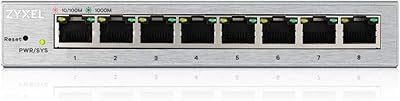
Zyxel GS1200-8 8-Port Gigabit Managed Switch
82%
88%
Ease of Setup
83%
Web Interface Usability
79%
Build Quality
97%
Noise Level
81%
VLAN Performance
More
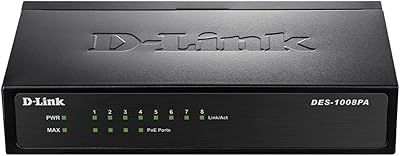
D-Link DES-1008PA 8-Port PoE Fast Ethernet Switch
82%
94%
Ease of Setup
88%
PoE Port Reliability
91%
Build Quality & Durability
58%
Network Speed & Throughput
97%
Noise Level
More
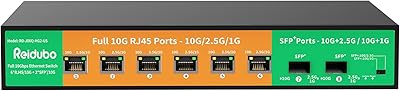
Reidubo 8-Port 10G Unmanaged Network Switch
76%
83%
Real-World Throughput
91%
Ease of Setup
61%
Fan Noise
78%
Build Quality
86%
SFP+ Port Utility
More
Cqenpr 8-Port 120W Outdoor Gigabit PoE Switch
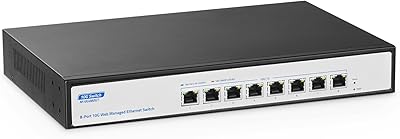
80%
93%
Ease of Installation
88%
Weatherproof Durability
84%
PoE Power Delivery
79%
AI Watchdog Reliability
82%
Surge & Lightning Protection
More
Amcrest 8-Port POE+ Unmanaged Network Switch
78%
93%
Ease of Setup
84%
POE Reliability
61%
Port Speed Performance
88%
Build Quality
58%
Thermal Management
More
YuLinca 8-Port 10G Managed Network Switch
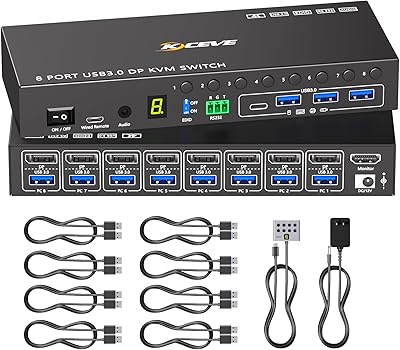
79%
92%
Port Speed & Auto-Negotiation
89%
Throughput & Switching Performance
88%
Build Quality & Chassis
71%
Web Management Interface
86%
L2 Feature Set Depth
More
TCNEWCL KS-801 8-Port HDMI KVM Switch
78%
88%
Ease of Setup
91%
Port Capacity & Scalability
74%
Video Quality & Resolution
69%
Switching Speed & Reliability
83%
IR Remote Control
More
YuanLey 8-Port 10G Unmanaged Ethernet Switch
80%
93%
Setup & Ease of Use
89%
Throughput Performance
86%
Build Quality
88%
Value for Money
71%
Fan Noise & Acoustics
More
StarTech 8-Port SATA III PCIe Expansion Card
80%
88%
Drive Detection Reliability
84%
Multi-Controller Architecture
79%
OS Compatibility
86%
Motherboard Compatibility
81%
Included Cables
More

FAQ

Yes, that is exactly what this 8-port FXS gateway is designed for. Each FXS port accepts a standard RJ-11 analog phone connection, so your existing desk phones plug in directly without any adapters or converters.

Not necessarily for smaller setups. The HT818 includes a built-in Gigabit NAT router, which can handle basic routing duties for a small office. That said, larger networks with heavier traffic or complex VLAN requirements will typically still benefit from a dedicated business-grade router sitting upstream.

Setup is manageable if you are comfortable navigating a web-based admin interface and understand basic SIP concepts like server addresses, credentials, and codec settings. It is not a plug-and-play device out of the box — plan for at least an hour on first configuration. Grandstream provides detailed documentation, and there are community guides online that walk through the process clearly.

It works with a wide range of SIP-compatible hosted PBX and UCaaS platforms, but compatibility is not universal. A small number of buyers have reported needing to manually adjust settings for certain providers. Before purchasing, it is worth checking Grandstream's interoperability list or asking your VoIP provider directly whether they support the HT818.

Yes. The Grandstream HT818 8-Port FXS VoIP Gateway includes Fax-over-IP (FoIP) support, which allows an analog fax machine connected to one of its FXS ports to send and receive faxes over a SIP connection. Performance can vary depending on your network quality and provider settings, but it is a supported and documented feature.

TR-069 is a remote management protocol that allows a central management server to push configuration changes, firmware updates, and settings to the gateway automatically — without anyone physically touching the device. If you are an IT admin or MSP managing multiple sites, it is a significant time-saver. For a single-location small business configuring it once and leaving it alone, you can safely ignore TR-069 and configure the unit manually through the web interface.

Yes. The dual SIP profile support is specifically designed for this scenario. You can assign ports to one SIP profile and the remaining ports to another, which is useful when you have separate providers for different departments or need to maintain a backup provider for redundancy.

Honestly, yes — if you only need two or three ports, a simpler two-port ATA adapter from Grandstream or another brand would cost less and be easier to configure. The HT818 makes the most sense when you genuinely need six, seven, or eight analog connections. Buying eight-port capacity for a two-phone home setup is paying for headroom you will probably never use.

Based on buyer feedback from a pool of roughly 88 ratings, long-term stability is one of the most consistently mentioned strengths. Multiple owners report running this analog VoIP gateway for two or more years without hardware failures or performance degradation. It has also been on the market since 2018 without being discontinued, which suggests it has held up both in the field and commercially.

Each port supports 3-way voice conferencing natively, meaning you can initiate a three-party call from any connected analog phone without needing a dedicated conferencing bridge or subscription service. It is a basic but genuinely useful feature for small teams that do not want to pay for a separate conferencing platform.

Where to Buy