Overview

The LiTime 3000W Pure Sine Wave Inverter Charger sits in an interesting spot in the market — not the cheapest option on the shelf, but far from the industrial-grade units that cost several times more. What makes it practical is the combined inverter-and-charger design in a single enclosure, cutting down on wiring runs and panel space in an RV bay or utility closet. It converts 12V DC battery power to clean 110-120V AC, which matters if you're running anything with a motor or microprocessor. The built-in UPS function adds another layer of practicality, keeping connected loads running if the grid drops without manual intervention. LiTime has built a solid reputation through their lithium battery line, and this unit extends that work into power conversion hardware.
Features & Benefits

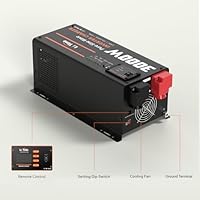
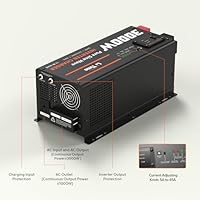
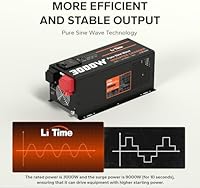
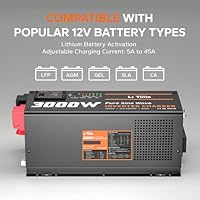
The 9000W peak surge capacity is what lets this all-in-one power unit handle hard-starting inductive loads — think a fridge compressor kicking on mid-trip or a circular saw drawing startup current. Continuous 3000W output covers most practical home and RV loads comfortably. The UPS switching speed of under 10ms means connected equipment like routers or NAS drives won't reset during a grid dropout, though it's worth noting this isn't a substitute for a purpose-built UPS if your equipment is particularly sensitive. Charging current adjusts from 5A to 45A and works across LFP, GEL, AGM, and other common battery chemistries. The remote LCD panel with its 23-foot cable is a genuinely useful touch, and built-in protections plus CE, FCC, and RoHS certifications round out the safety picture.

Best For

This inverter charger is a natural fit for RV and van builds where space is tight and you'd rather run one unit than stack a separate inverter and charger side by side. Off-grid solar users will appreciate the adjustable charging current and multi-chemistry support — it's flexible enough to work with whatever battery bank you already own. For home backup, the near-instant failover is the main appeal; nobody wants to manually flip switches when a storm kills the grid. Boat and marine installs are also viable, assuming the installation space can handle the weight. At roughly 52 to 57 pounds, this isn't a one-person lift, so plan your mounting location before committing.

User Feedback

With a 4.0-star average across 78 ratings, the early reception for this all-in-one power unit is encouraging but still limited in scale. Buyers frequently mention clean installation experience and appreciation for the remote panel, which genuinely seems to simplify day-to-day monitoring. The pure sine wave output draws consistent praise — sensitive devices like CPAP machines and laptops run without interference. On the downside, the 88% efficiency rating is real: expect some heat output and slightly faster battery drain under heavy loads compared to higher-efficiency alternatives. A handful of users flag the weight as a surprise, especially for solo RV installs with limited access. Thermal management and long-term reliability remain open questions with the current review count still relatively low.

Pros

  • Integrated inverter and charger in one enclosure cuts installation complexity and saves real panel space.
  • Pure sine wave output runs sensitive electronics — CPAPs, laptops, and medical devices — without interference.
  • 9000W peak surge handles the hard startup draws of refrigerators, compressors, and power tools reliably.
  • Charging current is adjustable from 5A to 45A, covering a wide range of battery bank sizes.
  • Compatible with LFP, GEL, AGM, SLA, and CAL batteries, so it works with most existing setups.
  • The 23-foot remote panel with LCD display is genuinely useful for hard-to-reach installation locations.
  • Sub-10ms UPS switching keeps connected loads running through brief grid outages without manual intervention.
  • CE, FCC, and RoHS certified with built-in protections covering overload, short circuit, and thermal events.
  • Early buyers consistently praise the straightforward installation process and clean sine wave output quality.

Cons

  • At 52 to 57 pounds, this is realistically a two-person install in most RV and marine applications.
  • The 88% efficiency rating translates to real heat buildup and faster battery drain under sustained heavy loads.
  • Only around 78 reviews at time of writing makes long-term reliability difficult to assess with confidence.
  • Strictly limited to 12V DC input — owners of 24V or 48V battery systems need to look elsewhere.
  • No USB output means small devices cannot be charged directly without a separate adapter.
  • The UPS function is not a true substitute for purpose-built UPS hardware on critical or sensitive equipment.
  • Operating temperature ceiling of 40 degrees C may cause concern in hot climates or poorly ventilated enclosures.
  • No wireless monitoring or app connectivity; remote control is limited to the included wired panel only.

Ratings

Our AI rating system analyzed verified buyer feedback for the LiTime 3000W Pure Sine Wave Inverter Charger from markets worldwide, actively filtering out incentivized reviews and suspicious patterns to ensure every score reflects genuine, purchase-confirmed user experience. Each category is weighted by recency and real-world usage context — not manufacturer specifications alone. Both the unit's clear strengths and its honest pain points are transparently reflected in the scorecard below.
Power Output Accuracy
83%
Most buyers confirm the unit genuinely sustains its rated 3000W output through real-world loads — running a full-size refrigerator alongside other appliances without the inverter tripping or throttling down. The 9000W surge headroom adds meaningful confidence when hard-starting motors that would otherwise overwhelm a tighter-rated competitor.
A number of users report the unit running noticeably warm when held near full load for extended periods, raising questions about sustained-output longevity. Actual delivered wattage under maximum draw has not been independently confirmed by many early reviewers, leaving some uncertainty for buyers planning aggressive continuous loads.
Sine Wave Quality
91%
The clean sine wave output is one of the most consistently praised aspects across early reviews — users running CPAP machines, laptops, and audio equipment report zero interference, hum, or device errors. For anyone who has dealt with modified sine wave inverters degrading or misrunning sensitive electronics, the difference is immediately noticeable.
There are no significant complaints about sine wave quality itself, but buyers should note the related efficiency trade-off: the 88% conversion rate means the unit consumes more battery energy than premium alternatives producing the same clean output. Users running highly sensitive lab or studio audio equipment may still want an inline power conditioner.
UPS Performance
79%
21%
The sub-10ms transfer time keeps most household and RV devices running without a blip when grid power drops — routers, NAS drives, and desktop computers generally do not notice the cutover. For home backup and RV users who want uninterrupted power continuity during outages, this feature performs close to as advertised.
This is not a purpose-built double-conversion UPS, and users who connected sensitive server hardware or medical equipment found the protection less robust than a dedicated UPS appliance. With only 78 total ratings collected so far, the UPS reliability picture is not yet comprehensively validated across diverse real-world failure scenarios.
Charging Versatility
87%
Being able to dial charging current from 5A all the way to 45A — and switch between LFP, AGM, GEL, SLA, and CAL profiles — means this all-in-one power unit works with virtually any 12V battery bank a buyer already owns. RV and off-grid solar users particularly appreciate not having to replace their existing battery ecosystem.
The charging input is AC-grid only, so the unit will not pull energy directly from solar panels — buyers expecting a combined solar charge controller and inverter in one box will be disappointed. The 45A maximum charging current is also on the modest side for larger 400Ah-plus battery banks where faster recharge rates would be preferred.
Build Quality
74%
26%
The enclosure feels solid enough for an RV utility bay or a home backup closet installation, and buyers report no obvious flex or panel-gap issues straight out of the box. CE, FCC, and RoHS certifications add a layer of reassurance about component standards, particularly for a brand still building its track record in the inverter segment.
With fewer than 100 reviews available, long-term durability data simply does not exist yet — early adopters cannot speak to how the unit holds up after two or three years of regular use. Some buyers note the external finish and terminal quality feel mid-tier rather than premium, which may matter to buyers expecting a more polished physical product.
Installation Experience
82%
18%
Buyers consistently highlight how straightforward the wiring process is once the unit is physically in place — the terminal layout is logical, and the included documentation covers the key steps clearly enough for a confident DIY installer. The remote panel with its LCD readout also simplifies commissioning by giving real-time feedback during initial setup.
The weight — somewhere between 52 and 57 lbs — is the single most common installation complaint, with multiple buyers noting it took two people just to safely lift and position the unit before a single wire was connected. Buyers with limited overhead or awkward bay access report the mounting process being genuinely difficult without a helper.
Thermal Management
63%
37%
The built-in thermal protection and automatic fan control do their job under moderate loads — most buyers running the unit at 50 to 70% capacity report no worrying heat events. The safety shutdown triggers before damage can occur, which at least prevents worst-case failure scenarios during demanding summer RV trips.
At 88% efficiency, the unit generates noticeable heat under sustained heavy loads, and buyers who installed it in poorly ventilated spaces have reported thermal shutdowns during high-demand periods. Without dedicated cooling duct planning in a tight RV bay or enclosed cabinet, heat management becomes a real installation design requirement rather than an afterthought.
Value for Money
77%
23%
For buyers who need a single unit handling inversion, battery charging, and basic UPS functionality without purchasing and wiring three separate components, the pricing lands in a reasonable range relative to comparable all-in-one units. The broad battery chemistry compatibility also adds genuine value for users with existing battery banks they do not want to replace.
The 88% efficiency rating is the main value detractor — over time, the wasted energy quietly costs more in battery cycles and runtime than a more efficient unit might, particularly for users running heavy loads daily. Buyers also receive no USB charging port at this price point, which feels like a minor omission given what several competitors include.
Remote Panel Utility
86%
The 23-foot wired remote panel with its LCD display is one of the most practically praised features — RV owners who mount the inverter in a rear utility bay can monitor status and toggle power from the cab or living area without crawling into a cramped space every time.
The panel depends on a physical cable, and buyers who need the display further than 23 feet away have no officially supported extension option. There is also no wireless monitoring or app connectivity, which feels like an increasingly visible gap as competing units begin offering Bluetooth or Wi-Fi status interfaces.
Weight & Portability
47%
53%
Once permanently mounted, the weight is not a daily concern — bolted securely into a utility bay or basement storage area, the unit sits solidly without any vibration or movement issues that lighter units sometimes develop over time. The dense construction may also contribute to its ability to dissipate heat generated at higher output levels.
At 52 to 57 lbs, this is one of the heaviest units in its output class, and moving or repositioning it is a genuine two-person job every time. Buyers considering it for any portable or semi-mobile application — a camping trailer or work van requiring occasional repositioning — will find the weight a significant and persistent practical barrier.
Safety Protections
84%
The comprehensive protection suite — covering overload, short circuit, high and low voltage, thermal events, and AC backflow — gives buyers meaningful peace of mind in unattended backup and RV installations. CE, FCC, and RoHS certifications indicate these protections have been independently tested rather than simply listed as marketing claims on a spec sheet.
With fewer than 100 reviews, real-world validation of these protection circuits across edge cases — extended grid outages, severe temperature swings, deep discharge events — remains limited. A few buyers note the unit erred toward shutting down too aggressively in some marginal voltage scenarios, requiring a manual restart rather than recovering automatically.
Noise Level
68%
32%
At standby or under light loads, the unit runs quietly enough that most buyers do not notice it — an important quality for home backup installations where the inverter lives near a living area. The fan activation appears well-calibrated for light-to-moderate use, staying in the background during typical RV daily power consumption.
Under sustained heavy loads — running a refrigerator, microwave, and other appliances simultaneously — the cooling fans become clearly audible and can be disruptive in smaller RV living spaces. Buyers who expected near-silent operation at all output levels, based on standby behavior, reported the loaded fan noise as a consistent surprise in day-to-day use.
Battery Compatibility
89%
Supporting five distinct battery chemistries with individual charging profiles makes this inverter charger genuinely flexible for most existing off-grid setups — buyers with LiFePO4 banks, legacy AGM arrays, or GEL batteries in marine applications all report the profile selection and configuration process working exactly as expected.
Buyers running 24V or 48V battery banks are completely excluded since the unit accepts only 12V DC input — this is not a configuration limitation but a hard electrical boundary that rules out a significant portion of larger off-grid and solar installations. There is also no stated support for lithium NMC or other non-listed chemistries.
Efficiency Rating
61%
39%
For moderate and intermittent load profiles — a fridge cycling on and off, occasional power tool use, or overnight CPAP operation — the 88% efficiency is functional enough that most buyers will not notice a meaningful runtime penalty compared to higher-efficiency alternatives. The losses matter most only during sustained near-maximum continuous draw.
At 88%, this unit trails competitors in the same price bracket that achieve 92 to 95% efficiency, meaning real-world battery depletion and heat output will measurably differ from a more efficient alternative over a full day of heavy use. For buyers with smaller battery banks or hot-climate installations, this gap translates directly into reduced daily runtime.
Long-term Reliability
71%
29%
Early buyers who have had the unit running for several months report stable, consistent performance without unexpected failures — the protection systems appear to handle edge cases appropriately, and the unit has not shown early-failure symptoms like erratic output voltage or unexplained shutdowns under normal operating conditions.
With the product on the market only since early 2024 and fewer than 100 reviews collected, there is genuinely no multi-year reliability data to evaluate. Buyers who need demonstrated longevity across two or three full seasons of heavy use before committing will need to wait, or accept that this remains an early-adopter purchase.

Suitable for:

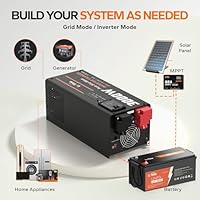
The LiTime 3000W Pure Sine Wave Inverter Charger is best suited for RV owners, van-lifers, and off-grid solar users who want a single, space-efficient unit that handles both power inversion and battery charging without cobbling together separate components. If your setup runs a 12V battery bank — whether LiFePO4, AGM, GEL, or otherwise — this all-in-one power unit covers the charging side with adjustable current from 5A to 45A, so you are not locked into one battery chemistry. The 9000W peak surge capacity makes it practical for running real appliances: a refrigerator, a power tool, or a coffee maker are not going to trip it on startup. Home backup users who lose power occasionally and want near-instant failover without flipping manual switches will also find it fits well, provided they understand it functions more like a transfer-switch UPS than a full-featured power conditioning unit. The remote LCD panel is a particularly good fit for anyone mounting the inverter in a hard-to-access cabinet, engine bay, or utility closet — being able to monitor and control it from 23 feet away is a genuine practical advantage in those setups.
Not suitable for:

The LiTime 3000W Pure Sine Wave Inverter Charger is not the right call for buyers who need extended runtime at full load from a modest battery bank — at 88% efficiency, the unit generates meaningful heat under sustained heavy draws, and that energy loss compounds quickly against smaller battery reserves. Anyone counting on it as a true UPS replacement for mission-critical equipment like medical devices or professional servers should look elsewhere; the sub-10ms switching is useful, but it is not equivalent to the near-zero transfer times and power conditioning of purpose-built UPS hardware. At 52 to 57 pounds, it is also a difficult solo install, and buyers without a solid, permanent mounting location will struggle with placement. Users running exclusively 24V or 48V battery systems will need a different unit entirely, since this inverter charger is designed specifically for 12V DC input. Finally, shoppers who want the reassurance of thousands of long-term owner reviews before committing should wait — with around 78 ratings at time of writing, the reliability picture is still developing.
Specifications

  • Continuous Output: Delivers 3000W of continuous AC power output under normal steady-state operating conditions.
  • Peak Surge Power: Handles surge loads up to 9000W to support the hard startup draws of inductive appliances.
  • DC Input Voltage: Accepts 12V DC input with a safe operating range of 10.5V to 16V.
  • AC Output Voltage: Produces 110V AC output with a tolerance of plus or minus 10%, matching standard North American grid voltage.
  • Output Waveform: Generates a pure sine wave signal, making it safe for use with sensitive electronics and motor-driven equipment.
  • Output Frequency: Outputs at a fixed frequency of 60Hz, matching standard North American mains power.
  • Charging Current: Charging current is user-adjustable between 5A and 45A to accommodate different battery bank sizes and charge rate requirements.
  • Battery Types: Compatible with LFP, GEL, AGM, SLA, and CAL battery chemistries via selectable charging profiles.
  • UPS Switching: Switches between mains and battery power in under 10ms to prevent connected loads from dropping or rebooting.
  • Remote Panel: Includes a wired remote control panel with a 23-foot cable and an LCD display for real-time status monitoring and remote on/off control.
  • Efficiency: Rated at 88% peak conversion efficiency, meaning approximately 12% of input energy is dissipated as heat during operation.
  • Operating Temp: Operates within an ambient temperature range of -10 degrees C to 40 degrees C (14 degrees F to 104 degrees F).
  • Dimensions: Unit measures 420 x 220 x 180 mm (16.54 x 8.66 x 7.09 inches) in length, width, and height.
  • Weight: Unit weighs approximately 52 to 57 lbs (around 23.6 kg), requiring two people for safe handling during installation.
  • Certifications: Carries CE, FCC, and RoHS certifications for safety, electromagnetic compatibility, and environmental compliance.
  • Protections: Includes built-in protections for overload, high and low voltage, high temperature, short circuit, and AC input backflow.
  • USB Output: Does not include a USB charging port; the unit provides AC output only with no direct USB connectivity.

Related Reviews
LiTime 3500W 48V Solar Inverter Charger
74%
83%
Value for Money
76%
Ease of Installation
81%
Power Output & Reliability
86%
Pure Sine Wave Quality
84%
Battery Compatibility
More
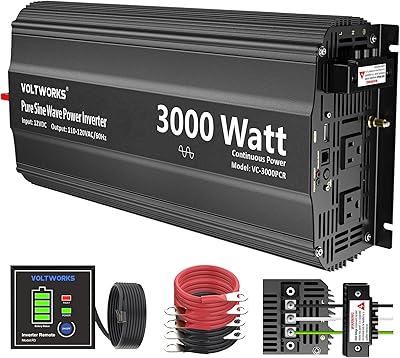
VOLTWORKS VS-3000PCR 3000W Pure Sine Wave Inverter
79%
83%
Output Power Accuracy
91%
Output Signal Quality
88%
Cooling & Noise Level
79%
Build Quality & Housing
86%
Installation Ease
More
SUNWHEEL 3000W 24V Pure Sine Wave Inverter
78%
88%
Output Power Quality
83%
Value for Money
86%
Ease of Installation
81%
Surge Handling
79%
Noise Level
More
OLTEANP TK-3 3000W Pure Sine Wave Inverter
78%
92%
Power Output Quality
88%
Lithium Battery Compatibility
74%
Build Quality
61%
Fan Noise
86%
LCD Display & Usability
More
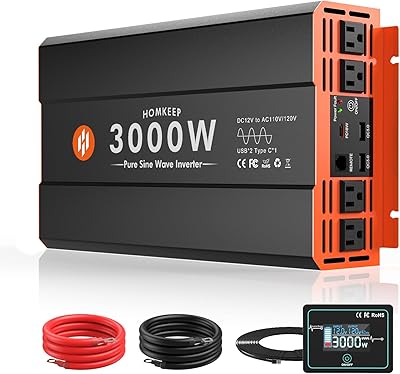
Homkeep 3000W Pure Sine Wave Power Inverter
88%
93%
Power Performance
88%
Ease of Use
90%
Build Quality
85%
Noise Level
91%
Safety Features
More
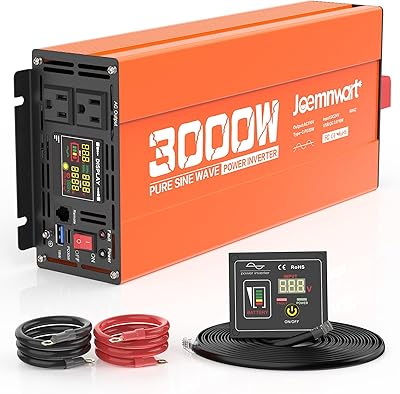
Joemnwart 3000W 24V Pure Sine Wave Inverter
78%
88%
Waveform Quality
74%
Power Output Accuracy
72%
Build Quality
83%
Value for Money
86%
Noise Level
More
WZRELB 3000W 24V Pure Sine Wave Inverter
76%
91%
Output Power Quality
84%
Build Quality
78%
Thermal Management
61%
Fan Noise
66%
Voltage Display Accuracy
More
TVNIKD 2500W Pure Sine Wave Power Inverter
77%
88%
Power Output Quality
81%
Build Quality
63%
Heat Management
86%
Ease of Installation
83%
LCD Display Usability
More
ZETAWALE 2500W Pure Sine Wave Inverter
78%
91%
Pure Sine Wave Quality
87%
Auto Transfer Switch
84%
Value for Money
61%
Long-term Reliability
68%
Cooling & Noise
More
SUNWHEEL 2000W Pure Sine Wave Inverter
80%
86%
Power Output Reliability
91%
Waveform Quality
83%
Build Quality
88%
Noise Level
67%
LCD Display Usefulness
More

FAQ

It depends on your specific AC unit. Most rooftop RV air conditioners draw 1500 to 2000W continuously, which sits comfortably within the 3000W continuous output. The more important figure is the startup surge — many RV AC compressors spike to 3000W or more on startup, and the 9000W peak surge capacity on this all-in-one power unit gives it enough headroom to handle that in most cases. Check your AC unit's labeled startup wattage before assuming full compatibility.

Yes, LFP (LiFePO4) is one of five battery chemistries the unit explicitly supports. You can select the appropriate charging profile, and the adjustable charging current between 5A and 45A lets you control the charge rate to match your battery pack's capacity and the manufacturer's recommendations.

When the unit detects a grid dropout, it switches over to battery power in under 10ms. In practical terms, most computers, routers, and consumer electronics will not register that brief gap — it is fast enough to prevent a reboot or data loss in the vast majority of cases. That said, this is not the same as a purpose-built double-conversion UPS; for truly critical equipment like medical devices or industrial control systems, a dedicated UPS appliance remains the more appropriate solution.

Not concerned, but it is worth understanding what it means in day-to-day use. At 88% efficiency, about 12% of the energy your battery bank puts out gets lost as heat inside the unit rather than delivered as usable AC power. Under light loads this barely matters, but if you are running close to the 3000W ceiling for extended periods, you will notice the unit warming up and your battery depleting somewhat faster than raw wattage math would suggest. Good ventilation around the unit is important to manage heat buildup.

The wiring itself is manageable for anyone comfortable with 12V DC systems — you are connecting battery cables and an AC input/output, not rewiring a breaker panel. The bigger practical challenge is the weight; at 52 to 57 lbs, this is not a comfortable solo lift inside a tight RV bay or utility cabinet. Plan to have a second person for the physical mounting step. If you are not confident working with high-current DC connections, having a licensed electrician review the final installation is a reasonable precaution.

They serve different functions and can absolutely coexist in the same system. The built-in charger in this unit is designed to charge from an AC grid source, not directly from solar panels. Your solar charge controller sits between the panels and the battery bank, while this inverter charger handles AC inversion and grid-side battery charging separately. Both draw from and feed into the same battery bank without conflict.

At 3000W continuous output from a 12V bank, you are drawing roughly 275 to 300 amps — and that is before accounting for the efficiency loss. A 200Ah battery can sustain that draw for well under an hour at full load. For meaningful runtime, most users running this inverter charger seriously will want a 400Ah or larger LiFePO4 battery bank. Lighter and intermittent loads, like a refrigerator cycling on and off, stretch that runtime considerably.

The included cable is 23 feet, which covers most RV dash-to-utility-bay or utility-room-to-living-area runs comfortably. Extending the cable beyond that is not officially documented as supported, so if your installation requires a longer run, contact LiTime support directly before attempting a custom extension to avoid degrading the panel communication signal.

No — this unit is designed specifically for 12V DC input, with a safe operating range of 10.5V to 16V. If your battery bank is wired at 24V or 48V, you will need a model rated for those input voltages. Connecting a higher-voltage bank to this unit is outside its design specification and could cause serious and irreversible damage.

Like any inverter of this output class, it uses internal cooling fans that spin up under load or in warm ambient conditions. At light loads or on standby, it is relatively quiet, but under sustained heavy draw you will hear the fans working noticeably. Mounting it in an RV utility bay, garage, or enclosed outdoor cabinet is typical and keeps noise from being a daily nuisance. Installing it adjacent to a sleeping area is not recommended.

Where to Buy