Overview

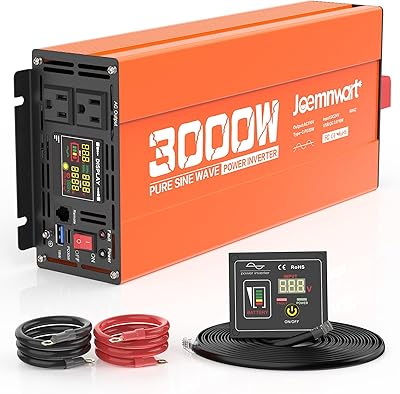
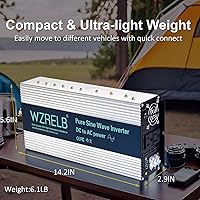
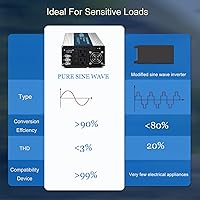
The WZRELB 3000W 24V Pure Sine Wave Inverter sits in an interesting spot in the market — capable enough for serious off-grid work, yet compact enough to fit in a truck cab or a tight RV compartment. Built by Yueqing Reliable Electric, a manufacturer with a focused catalog of power conversion products, it targets buyers who need clean sine wave output without stepping up to industrial-grade equipment. Unlike modified sine wave inverters, which can cause buzzing, overheating, or outright damage in sensitive electronics, this one delivers utility-grade AC power. At just over six pounds and under 15 inches long, the form factor is surprisingly manageable. Know going in, though: this is strictly a 24V system, not 12V.

Features & Benefits

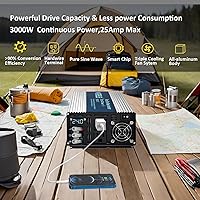
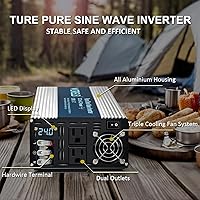
Pull 3000 watts continuously — that covers a refrigerator, a CPAP machine, and a laptop running at the same time — with a 6000W surge ceiling for motor-driven appliances that need extra power at startup. The pure sine wave output is the real selling point here: it produces AC power that mirrors what comes out of a household wall outlet, which matters a lot when you are running medical equipment, audio gear, or anything with a modern switching power supply. A soft-start circuit eases voltage in gradually rather than spiking it, reducing wear on motors and compressors over time. The front-panel LED shows your DC battery voltage in real time, so you can watch for low-battery conditions without a separate monitor. Two AC outlets handle most portable needs, and the hardwire terminal suits permanent installations.

Best For

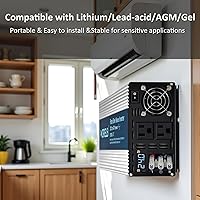
This 24V inverter makes the most sense for people already working within a 24V battery ecosystem — think full-size RVs, heavy-duty trucks, or a home battery bank built around 24V lithium cells. RV owners running a television, a CPAP, and phone chargers overnight will find 3000 watts more than adequate for typical loads. Truck drivers with 24V electrical systems can power small appliances or a portable cooler without issue. On the home side, it works well as a modest backup source for essential circuits during outages. DIY solar builders appreciate the hardwire option for clean, permanent installation. This pure sine wave inverter is not the right fit for anyone whose battery bank runs on 12V — worth confirming before purchasing.

User Feedback

Buyers generally speak well of the build quality — the aluminum chassis feels solid, and the unit runs cooler than some competitors at similar power levels, though the three cooling fans produce audible noise during sustained high-load operation. The LED voltage display draws mixed reactions: some users find it a helpful at-a-glance reference, while others note it reads slightly off under heavy load, which can mislead anyone relying on it for precise battery monitoring. Hardwire installation earns positive marks from those comfortable with DC wiring, but buyers expecting a plug-and-play experience can be caught off guard by the setup involved. Brand responsiveness appears reasonable based on available feedback, though the warranty terms are worth reading carefully before committing.

Pros

  • Pure sine wave output is safe for sensitive electronics like CPAP machines, laptops, and modern TVs.
  • The 6000W surge capacity handles motor-driven appliances that spike at startup without tripping the unit.
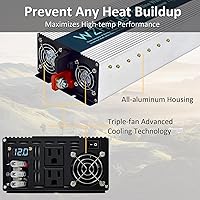
  • All-aluminum housing dissipates heat effectively, keeping operating temperatures reasonable during extended use.
  • At just over six pounds, this 24V inverter is easy to mount or reposition without heavy lifting.
  • The soft-start circuit reduces stress on connected appliances, which matters for long-term reliability.
  • A built-in LED display lets you monitor battery voltage in real time without buying extra equipment.
  • Dual AC outlets plus a hardwire terminal give you flexibility for both portable and permanent installations.
  • Standby draw stays under 30W, so battery drain during idle periods is kept to a minimum.
  • Solid aluminum build quality earns consistent praise from buyers who have used cheaper plastic-chassis alternatives.
  • Conversion efficiency at or above 90% means less energy wasted as heat compared to lower-quality inverters.

Cons

  • The 24V-only input immediately disqualifies this inverter for anyone with a 12V battery system.
  • Cooling fans run continuously and are audibly noticeable, which can be disruptive in quiet living spaces.
  • The LED voltage display has been reported to read slightly inaccurate under heavy load, limiting its reliability for precise battery management.
  • Only two AC outlets may feel restrictive for users who need to power several devices simultaneously.
  • Hardwire installation requires basic DC electrical knowledge; buyers expecting a plug-and-play experience may struggle.
  • Operating temperature tops out at 104°F (40°C), which could be a concern in very hot climates or enclosed compartments.
  • Brand support and warranty terms are not as clearly defined or well-documented as those from established North American inverter brands.
  • No USB charging ports are included, so device charging still requires a separate adapter or outlet slot.
  • The unit is rated for single-phase use only, which limits applicability in certain specialized off-grid or industrial setups.

Ratings

Our editorial team ran the WZRELB 3000W 24V Pure Sine Wave Inverter through an AI-assisted analysis of verified global buyer reviews, actively filtering out incentivized, duplicate, and bot-generated submissions to surface what real owners actually experience. The scores below reflect a balanced picture — strong performance in several critical areas, with a few genuine pain points that prospective buyers deserve to know upfront. Both what this inverter does well and where it falls short are transparently weighted into every category.

Output Power Quality
91%
Buyers running CPAPs, home theater setups, and laptops consistently report clean, stable power with no buzzing, flickering, or interference — exactly what you expect from a true sine wave unit. Users who switched from modified sine wave inverters note an immediate improvement in how their sensitive devices perform and run quieter.
A small number of users measuring output with external meters report minor voltage fluctuation under very high sustained loads near the 3000W ceiling, though this appears infrequent and may reflect installation or wiring variables rather than the unit itself.
Build Quality
84%
The all-aluminum chassis earns repeated praise for feeling solid and well-assembled compared to plastic-bodied competitors at similar price points. Owners who have mounted this unit permanently in RVs or truck compartments report no rattling, warping, or structural concerns after months of use.
A few buyers note that some external finish details — particularly around terminal covers and outlet housing — feel slightly less refined up close than the overall chassis suggests, giving the impression of minor cost-saving on finishing components.
Thermal Management
78%
22%
The combination of three active fans and the full aluminum body keeps operating temperatures genuinely controlled during sustained high-draw sessions, which is a real concern for inverters mounted in enclosed spaces. RV owners running this unit for hours at a stretch report it stays warm but never alarmingly hot.
The fans run at full speed continuously rather than ramping intelligently with temperature, which means the unit is always audible even at light loads. In warmer climates or poorly ventilated compartments approaching the 104°F operating ceiling, some users report the unit cycling off under heavy load.
Fan Noise
61%
39%
For installation in a garage, utility shed, truck cargo area, or outdoor power station, the fan noise is easy to tune out and most users in those contexts do not flag it as a meaningful issue. The sound itself is a consistent, steady hum rather than a high-pitched whine.
In sleeping quarters, small RV cabins, or any space where the inverter is within a few feet of an occupied area, the constant fan noise becomes a genuine irritant. Several buyers specifically mention it as something they wished they had known before mounting the unit inside their living space.
Voltage Display Accuracy
66%
34%
The built-in LED DC voltage display gives a fast, convenient reference for battery state without needing a separate monitor, and for casual use — a quick glance to confirm the battery is not dangerously low — it does the job reliably enough.
Under heavy load, multiple users have tested the display against calibrated external meters and found it can read one-half to nearly a full volt off, which is meaningful when you are managing a lithium battery bank with tight voltage thresholds. Relying on it alone for precision battery management is not advisable.
Surge Handling
88%
The 6000W surge rating holds up in real-world use: buyers report refrigerator compressors, well pumps, and power tool motors starting cleanly without tripping the inverter. The soft-start circuit appears to handle those initial inrush spikes well, reducing nuisance shutdowns that plague cheaper inverters.
At the very upper edge of surge demand — larger motors or multiple high-draw appliances starting simultaneously — a handful of users have experienced unexpected shutdowns, suggesting the peak rating may be optimistic under worst-case stacking scenarios.
Ease of Installation
72%
28%
Buyers with basic DC wiring experience find the hardwire terminal straightforward and well-labeled, and the two AC outlets make temporary portable use equally accessible without any tools. The compact footprint helps with placement in tight RV bays or behind truck seats.
Users without prior inverter installation experience often underestimate the cable sizing and fusing requirements for a 3000W 24V system, leading to frustration or safety concerns. The included documentation is minimal, and clearer guidance on wire gauge and fuse ratings would meaningfully reduce buyer confusion.
Conversion Efficiency
83%
At typical mid-range loads — running a TV, phone chargers, and a CPAP simultaneously — users report battery consumption that aligns with the 90%-plus efficiency rating, meaning the inverter is not silently wasting a meaningful chunk of their stored energy as heat.
Efficiency naturally drops at very light loads and at the upper power ceiling, and the under-30W standby draw, while acceptable, is not class-leading for buyers building tightly optimized off-grid systems where every watt-hour counts over a multi-day trip.
24V Compatibility
57%
43%
For buyers who actually have a 24V system — heavy-duty trucks, large RVs, and purpose-built solar banks — the 24V input is an advantage, allowing thinner, cheaper cables for a given current load compared to equivalent 12V inverters.
The 24V-only requirement is the single biggest source of buyer regret in reviews, as a significant number of purchasers assume inverters default to 12V compatibility. There is no workaround, and this mismatch results in a meaningful volume of returns and negative reviews that are entirely a compatibility oversight rather than a product fault.
Value for Money
77%
23%
For buyers who correctly identify this as a 24V purchase and need genuine pure sine wave output at 3000W, the price-to-performance ratio is competitive within its segment. You get more output quality here than from similarly priced modified sine wave alternatives.
The warranty terms are not as robustly communicated or enforced as those from well-known North American inverter brands, and some buyers feel the after-purchase support experience does not fully justify the investment relative to more established competitors in the same price range.
Portability
74%
26%
At 6.1 pounds and under 15 inches long, this pure sine wave inverter is one of the more manageable options at 3000W — easy to lift, reposition, or temporarily deploy for outdoor or event use without needing a cart or a second person.
The hardwire terminal is optimized for permanent installation, and while the two AC outlets work for portable use, the absence of any carrying handle or grip surface makes transporting it in a bag or backpack slightly awkward compared to inverters designed with portability as a primary goal.
Protection Features
82%
18%
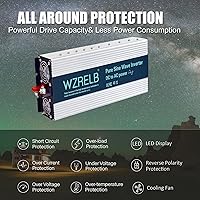
The layered protection stack — low voltage alarm, low voltage shutdown, high voltage cutoff, and overload protection — covers the main failure scenarios that damage either the battery or connected equipment, and real-world buyers report these protections triggering correctly when conditions warrant.
The low voltage shutdown range (18.5V to 20.5V) is relatively wide and may not suit buyers using lithium batteries with strict cutoff requirements, who may need an external battery management system to handle those thresholds more precisely than the inverter alone allows.
Brand Reliability
69%
31%
The underlying manufacturer, Yueqing Reliable Electric, has produced power conversion hardware for long enough that the core engineering in this unit reflects genuine experience rather than a rushed private-label product, and most buyers report units that work as advertised out of the box.
WZRELB does not carry the brand recognition or customer service infrastructure of established inverter names, and buyers who encounter problems post-purchase often find the resolution process slower and less transparent than they would experience with a more established brand.

Suitable for:

The WZRELB 3000W 24V Pure Sine Wave Inverter is a strong fit for anyone already operating within a 24V battery system and needing reliable, clean AC power in the field or at home. RV owners who run a CPAP machine overnight, keep a TV going, and charge devices simultaneously will find the 3000W continuous output comfortably handles those combined loads without pushing the unit to its limits. Full-size truck drivers with factory 24V electrical systems can power small appliances or a portable refrigerator during long hauls without worrying about damaging sensitive electronics. On the home side, it suits DIY builders putting together a modest solar or battery-backup setup where a hardwired, permanently mounted inverter is preferable to a portable unit. Anyone running medical or audio-visual equipment that absolutely requires clean sine wave power — rather than the choppy output of a modified sine wave inverter — will appreciate the stable AC this unit produces. It is also a practical choice for off-grid campers and overlanders who want a compact, reasonably light inverter without sacrificing output quality.

Not suitable for:

Buyers running a 12V battery system should stop here — this pure sine wave inverter is built exclusively for 24V input, and no amount of adapter workarounds will change that fundamental compatibility requirement. If your vehicle, RV, or battery bank operates on 12V, you will need a different inverter entirely, and this is the single most common source of buyer frustration with this model. Those expecting a completely silent unit will also be disappointed, since the three cooling fans run continuously and produce noticeable background noise — a real consideration if the inverter will be mounted inside a living space or bedroom. Buyers who need more than 3000W of sustained draw for high-demand tools or large appliances should look at higher-capacity units, as running this one near its ceiling for extended periods is not ideal for longevity. Finally, anyone who wants simple plug-and-play installation without dealing with DC wiring should know that getting the most out of the hardwire terminal requires basic electrical competence; it is not a unit you simply unbox and plug into a wall socket.

Specifications

  • Continuous Output: The inverter delivers a sustained 3000W of AC power, sufficient to run most common household appliances and sensitive electronics simultaneously.
  • Peak Surge: It can handle surge loads up to 6000W momentarily, covering the startup spike of motor-driven appliances like refrigerators and pumps.
  • DC Input Voltage: The unit accepts a DC input range of 20V to 30V, making it compatible exclusively with 24V battery systems.
  • AC Output: It produces 120V AC at 60Hz, matching standard North American household current.
  • Output Waveform: The inverter generates a true pure sine wave, identical in quality to utility grid power and safe for sensitive electronics.
  • Efficiency: Conversion efficiency is rated at 90% or higher, meaning minimal energy is lost as heat during normal operation.
  • Standby Draw: When idle with no connected load, the unit consumes under 30W from the battery, reducing unnecessary drain during standby.
  • Low Voltage Alarm: An audible or visual alarm activates when DC input drops to between 19.5V and 20.5V, warning of a low battery condition.
  • Low Voltage Shutdown: The inverter shuts down automatically when DC voltage falls to between 18.5V and 20.5V to protect the battery from over-discharge.
  • High Voltage Shutdown: An automatic cutoff engages if DC input exceeds 30.5V, protecting internal components from overvoltage damage.
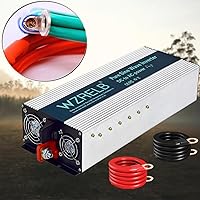
  • AC Outlets: Two standard 120V AC outlets are provided for portable device connections, alongside a dedicated hardwire terminal for permanent installation.
  • Cooling System: Three continuously operating fans combined with an all-aluminum housing provide active heat dissipation across the entire unit during operation.
  • Display: A front-panel LED display shows real-time DC input voltage, allowing basic battery monitoring without additional instrumentation.
  • Dimensions: The unit measures 14.2 × 5.6 × 2.9 inches, fitting compactly in RV compartments, truck cabs, or wall-mounted installations.
  • Weight: At 6.1 pounds, the inverter is light enough for a single person to install or reposition without assistance.
  • Operating Temperature: The safe ambient operating range is 32°F to 104°F (0°C to 40°C), which covers most standard outdoor and vehicle environments.
  • Soft Start: A built-in soft-start circuit ramps AC voltage up gradually at startup, reducing inrush current and extending the life of connected appliances.
  • Model Number: The official model identifier is SE3000W24V, as designated by manufacturer Yueqing Reliable Electric Co., Ltd.

Related Reviews
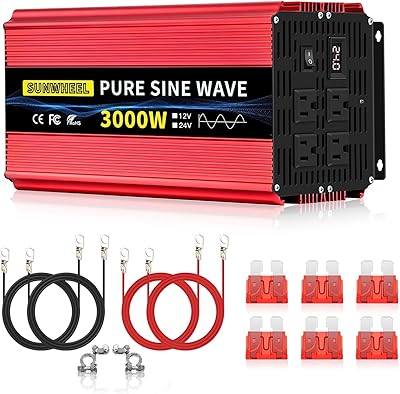
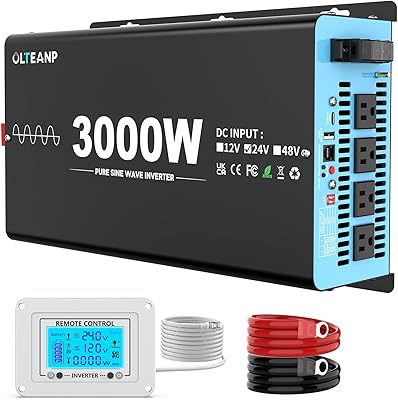
SUNWHEEL 3000W 24V Pure Sine Wave Inverter
78%
88%
Output Power Quality
83%
Value for Money
86%
Ease of Installation
81%
Surge Handling
79%
Noise Level
More
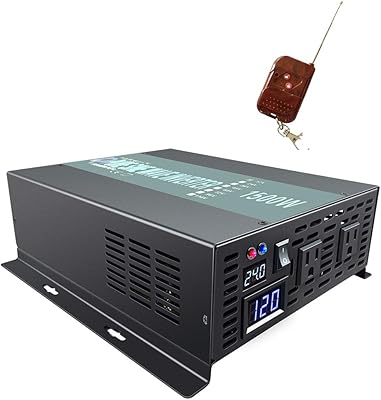
WZRELB 1500W 24V Pure Sine Wave Inverter
73%
88%
Output Power Quality
61%
Reliability & Longevity
84%
Cooling & Noise
82%
Ease of Installation
71%
Remote Control Function
More
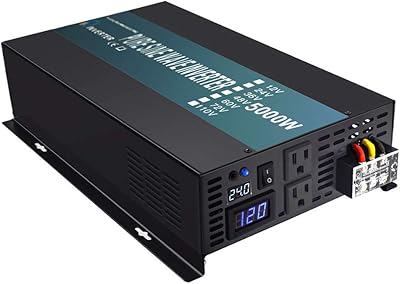
OLTEANP TK-3 3000W Pure Sine Wave Inverter
78%
92%
Power Output Quality
88%
Lithium Battery Compatibility
74%
Build Quality
61%
Fan Noise
86%
LCD Display & Usability
More
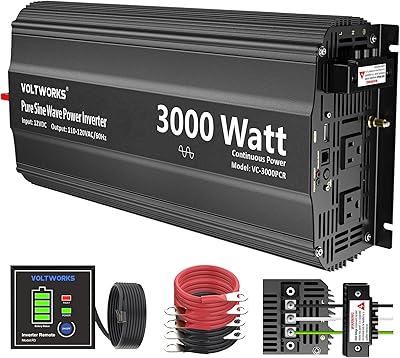
WZRELB RBP-500024S 5000W 24V Pure Sine Wave Inverter
84%
91%
Power Performance
73%
Ease of Setup
85%
Safety Features
88%
Cooling Efficiency
90%
Build Quality
More
Joemnwart 3000W 24V Pure Sine Wave Inverter
78%
88%
Waveform Quality
74%
Power Output Accuracy
72%
Build Quality
83%
Value for Money
86%
Noise Level
More
VOLTWORKS VS-3000PCR 3000W Pure Sine Wave Inverter
79%
83%
Output Power Accuracy
91%
Output Signal Quality
88%
Cooling & Noise Level
79%
Build Quality & Housing
86%
Installation Ease
More
LiTime 3000W Pure Sine Wave Inverter Charger
76%
83%
Power Output Accuracy
91%
Sine Wave Quality
79%
UPS Performance
87%
Charging Versatility
74%
Build Quality
More
Homkeep 3000W Pure Sine Wave Power Inverter
88%
93%
Power Performance
88%
Ease of Use
90%
Build Quality
85%
Noise Level
91%
Safety Features
More
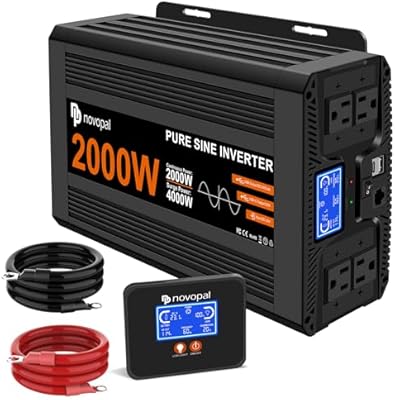
Novopal 2000W 24V Pure Sine Wave Inverter
79%
88%
Power Output Quality
83%
Build Quality
79%
Value for Money
74%
Ease of Installation
81%
Remote Control Functionality
More
WZRELB SE100048 1000W Pure Sine Wave Inverter
78%
88%
Power Output Quality
91%
Value for Money
61%
Long-Term Reliability
67%
Thermal Management
84%
Voltage Protection
More

FAQ

No, it does not. This pure sine wave inverter is designed strictly for 24V battery banks, accepting input anywhere between 20V and 30V DC. If your vehicle or battery setup runs on 12V, you will need a different inverter — this is the most common compatibility mistake buyers make before purchasing.

Yes, and this is actually one of the better use cases for this type of inverter. CPAP machines require clean sine wave power to operate correctly and safely, which this unit provides. A typical CPAP draws well under 100W, so even running it all night will barely register against the 3000W capacity.

The fans run continuously whenever the unit is powered on, not just when it gets hot. They produce a noticeable hum that is easy to ignore in a truck cab or utility room, but may be disruptive in a quiet bedroom or sleeping area. If fan noise is a dealbreaker, plan your mounting location accordingly.

A modified sine wave inverter produces a stepped, approximate version of AC power that works fine for basic loads like incandescent lights or simple power tools. A pure sine wave inverter produces smooth, utility-grade AC that is compatible with virtually everything — including motor-driven appliances, CPAP machines, audio equipment, and anything with a sensitive power supply. Sensitive electronics can overheat, buzz, or fail prematurely on modified sine wave power.

Yes, the unit includes a dedicated hardwire terminal specifically for permanent installations. You will need to run appropriately sized DC cables from your battery bank and secure the connections properly. If you are comfortable with basic DC wiring, it is a straightforward job; if not, having an electrician or RV technician do the hookup is worth the cost.

The display gives a reasonable real-time estimate of your DC battery voltage, which is useful for a quick at-a-glance check. However, some users have noted it reads slightly off under heavy load conditions. For casual monitoring it is practical, but if you need precise battery state-of-health data, a dedicated battery monitor will serve you better.

It can, yes. A standard household refrigerator typically draws 100W to 400W during normal operation, but the compressor motor can spike two to three times that at startup. The 6000W surge capacity covers that startup spike comfortably. Just make sure your 24V battery bank has enough capacity to sustain the fridge load over the time period you need.

The inverter has a two-stage response. First, a low voltage alarm triggers when the battery dips to around 19.5V to 20.5V to warn you. If the voltage continues to fall into the 18.5V to 20.5V range without recovery, the unit shuts down automatically to prevent damaging the battery through over-discharge.

The inverter itself can be mounted indoors, but the batteries powering it must be in a well-ventilated space, since charging or discharging batteries can release hydrogen gas. The inverter produces no exhaust, so mounting it inside a home utility room or enclosed RV cabinet is fine as long as airflow around the unit is adequate for the cooling fans to do their job.

The inverter does not come with DC battery cables, which is typical for units at this power level. You will need to source appropriately rated cables separately — at 3000W on a 24V system you are looking at over 125A of draw, so cable sizing and fusing matters a lot. Using undersized cables is a fire risk, so consult a wire gauge chart or an electrician if you are unsure.