StarTech PEX2S1050 2-Port PCIe Serial Card
Overview
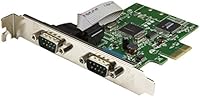
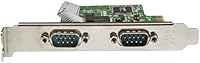
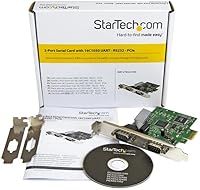
The StarTech PEX2S1050 2-Port PCIe Serial Card exists for a straightforward reason: modern motherboards dropped serial ports years ago, but plenty of real-world equipment still depends on them. What sets this card apart from generic alternatives is the 16C1050 UART chipset, which delivers more stable and consistent communication than the cheaper chips commonly found in bargain-bin options. The card ships with both standard and low-profile brackets, so it fits tower desktops and slim builds alike. For government or enterprise buyers, TAA compliance removes a common procurement hurdle. Serial ports are legacy technology, yes — but that is exactly the point.
Features & Benefits
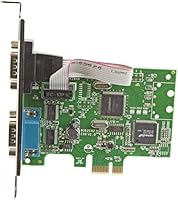
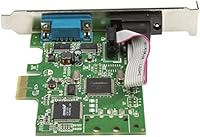
Physically, this RS232 expansion card is compact and installs into any PCIe slot from x1 to x16, which means you are rarely constrained by what is free on a given motherboard. The two DB9 serial ports support data rates up to 460Kbps, enough headroom for the vast majority of industrial and peripheral use cases. IRQ sharing and plug-and-play behavior make Windows driver setup straightforward — no manual resource juggling required. The included low-profile bracket is not an afterthought; it is properly fitted and practical for slim chassis deployments. At roughly 3.09 x 3.6 x 0.6 inches, it occupies minimal space inside any build.
Best For
This PCIe serial card is squarely aimed at IT professionals and systems integrators, not casual PC builders. It earns its place in environments where RS232 device reliability is non-negotiable — think manufacturing floors with serial-connected PLCs, retail setups running legacy POS terminals, or security installations using serial-controlled access hardware. The low-profile bracket option makes it equally valid for small form factor deployments where space is tight. If your organization has TAA procurement requirements, it clears that bar cleanly. One honest caveat: driver support is Windows-focused, so Linux or macOS environments need careful verification before purchasing.
User Feedback
Across 54 ratings, the StarTech dual serial adapter holds a 4.3-star average — respectable for a niche expansion card with a narrow, technically demanding audience. Buyers consistently highlight painless installation on Windows and the reliability of the UART chipset in sustained industrial use. The low-profile bracket gets specific praise from users working in compact chassis who found USB-to-serial adapters too unreliable. On the critical side, a handful of users flagged driver limitations outside Windows, and a few noted that documentation could be clearer for less experienced installers. Overall sentiment leans positive, especially from buyers in manufacturing and POS environments.
Pros
- The 16C1050 UART chipset delivers genuinely stable serial communication, not just adequate performance.
- Fits any PCIe slot from x1 to x16, making it compatible with virtually any modern desktop motherboard.
- Both standard and low-profile brackets are included in the box — no separate purchase required.
- Plug-and-play behavior on Windows means most deployments require zero manual driver hunting.
- TAA compliance removes a common sourcing obstacle for government and enterprise procurement teams.
- Internal PCIe installation eliminates the reliability concerns that plague USB-to-serial adapters in production environments.
- The compact footprint causes no clearance issues even in tightly packed small form factor builds.
- Buyers in industrial settings report consistent long-term stability through regular power cycling and temperature variation.
- At 4.3 stars across verified buyers, user satisfaction is notably strong for such a niche hardware category.
Cons
- No official Linux or macOS driver support limits deployment to Windows-only environments.
- Two serial ports is a hard ceiling — high-density serial setups will need a second card or a different product.
- In-box documentation is minimal, leaving less experienced installers without a reliable troubleshooting reference.
- The price is noticeably higher than generic alternatives, which is difficult to justify for low-frequency casual use.
- Bracket swap instructions are absent from the packaging, creating unnecessary risk of port stress during low-profile conversion.
- IRQ sharing works well in most cases, but edge-case conflicts on older Windows builds have been reported by a minority of users.
- With only 54 ratings on record, long-term reliability data is thinner than ideal for a card that has been available since 2017.
Ratings
The StarTech PEX2S1050 2-Port PCIe Serial Card has been evaluated using AI-assisted analysis of verified global buyer reviews, with spam, incentivized, and bot-generated feedback actively filtered out before scoring. Ratings reflect what real users — predominantly IT professionals, systems integrators, and industrial equipment managers — actually experienced after installation. Both the standout strengths and the genuine frustrations are represented transparently in the scores below.
Driver Installation & Setup
OS Compatibility
Signal Reliability & UART Performance
Physical Build Quality
Low-Profile Bracket Usability
Slot Compatibility & Motherboard Fit
Value for Money
Port Density
TAA Compliance
Documentation & Packaging
Long-Term Stability
Heat & Power Draw
Brand Reliability & Support
Suitable for:
The StarTech PEX2S1050 2-Port PCIe Serial Card is purpose-built for IT professionals and systems integrators who need to bridge the gap between modern PCIe-based desktops and legacy RS232 serial equipment. If you manage POS terminals, barcode scanners, receipt printers, or serial-controlled security hardware, this adapter gives you a reliable internal solution that sidesteps the stability issues common with USB-to-serial dongles. Industrial and manufacturing environments running PLCs or serial measurement instruments will particularly appreciate the 16C1050 UART chipset, which handles sustained communication workloads more dependably than generic chips. The dual-bracket design makes it equally viable for full-size towers and slim small-form-factor builds, so it fits naturally across a mixed hardware fleet. Government or enterprise buyers with TAA procurement requirements will also find this one of the few serial expansion options that clears that compliance bar without requiring special ordering.
Not suitable for:
The StarTech PEX2S1050 2-Port PCIe Serial Card is not the right choice for buyers running Linux or macOS environments, as official driver support is Windows-focused and non-Windows results in the field are inconsistent at best. If you only need a single serial port for occasional, light-duty use, the price premium over a basic USB adapter may be harder to justify — this card is engineered for professional reliability, not casual convenience. Users who need more than two serial ports simultaneously will hit the card's ceiling quickly and may be better served by a higher-density solution from the start. It also requires a free PCIe slot, so anyone working with an older system that only has legacy PCI slots available will need to look elsewhere. Finally, buyers expecting detailed setup documentation or hands-on troubleshooting guides in the box will find the included materials fairly bare-bones.
Specifications
- Model Number: The card is manufactured by StarTech.com and carries the model designation PEX2S1050.
- Interface: The card uses a PCI Express x1 interface and is physically compatible with PCIe slots sized x1, x2, x4, x8, and x16.
- PCIe Standard: The card conforms to the PCI Express 1.0a specification for broad motherboard compatibility.
- Serial Ports: Two RS232 serial ports are provided via standard DB9 (DE-9) connectors on the card bracket.
- UART Chipset: The card uses the Oxford 16C1050 UART chipset, which supports deeper buffers and more stable throughput than common 16550-based alternatives.
- Max Data Rate: Each serial port supports data transfer rates of up to 460Kbps under normal operating conditions.
- Brackets Included: Both a standard-profile bracket and a low-profile bracket are included in the box, covering full-size and slim desktop chassis.
- Dimensions: The card measures approximately 3.09″ x 3.6″ x 0.6″, making it compact enough for most desktop builds.
- Weight: The card weighs 2.15 oz, reflecting its lightweight PCB construction.
- OS Support: Official driver support covers Windows operating systems; Linux and macOS are not officially supported by the manufacturer.
- IRQ Sharing: The card supports IRQ sharing, reducing resource conflicts when installed alongside other expansion cards.
- Plug-and-Play: The adapter supports plug-and-play installation, allowing Windows to detect and configure the card without manual driver intervention in most cases.
- TAA Compliance: The card is Trade Agreements Act compliant, making it eligible for U.S. government and qualifying enterprise procurement contracts.
- Power Source: The card draws power directly from the PCIe slot and requires no additional power connectors from the system PSU.
- First Available: This product was first made available for purchase in January 2017 and remains an active product in the StarTech lineup.
Related Reviews
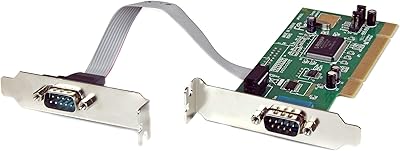
StarTech 2-Port PCI Low Profile RS232 Serial Adapter Card
StarTech 8-Port SATA III PCIe Expansion Card
GLOTRENDS LE8202 2-Port Gigabit PCIe Network Card
StarTech ST1000SPEX2L 1-Port PCIe Network Card
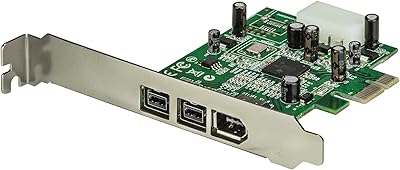
StarTech PEX1394B3 3-Port FireWire PCIe Card
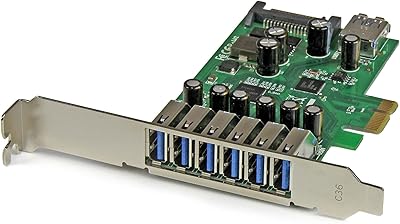
StarTech PEXUSB3S7 7-Port PCIe USB 3.0 Card
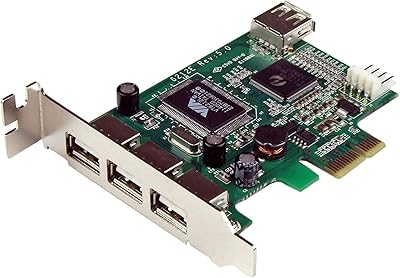
StarTech PEXUSB4DP 4-Port PCIe USB 2.0 Card
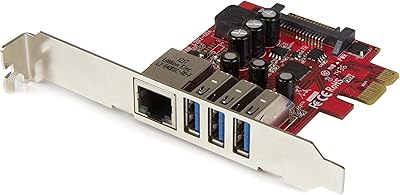
StarTech PEXUSB3S3GE USB 3.0 PCIe Card
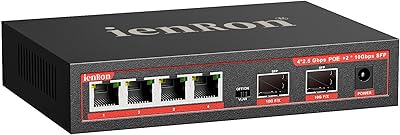
ienRon 6-Port 2.5Gb PoE Switch with 2-Port 10Gb SFP+