Overview

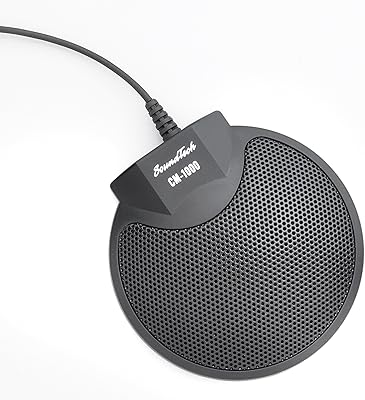
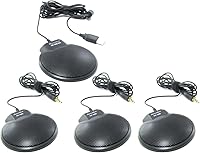
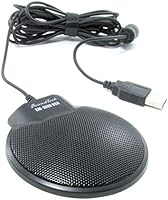
The SoundTech CM-1000USB Conference Microphone Kit (4-Mic) is a tabletop microphone system built specifically for multi-participant meetings, shipping as a set of four linked units — one USB-enabled hub mic and three passive daisy-chain extensions. It has been a consistent presence in the computer microphone category since 2016, which says something about its staying power in a crowded field. Plug it into a USB port and it is ready to go — no driver installation, no external power brick. The 360-degree omnidirectional pickup means every seat around the table gets covered, and its mid-range positioning puts it squarely between a basic single-mic solution and a full enterprise AV system.
Features & Benefits

The real appeal of this daisy-chain microphone setup lies in its ability to scale coverage without adding extra USB connections. Link all four mics across a long conference table and you have effectively got a distributed array — something a single puck-style microphone simply cannot do. The onboard USB sound card handles audio processing independently, so you are not at the mercy of your laptop's built-in audio chip. Built-in echo cancellation and noise reduction do a solid job in controlled environments like carpeted offices with moderate ambient noise. Full duplex keeps conversations flowing without cutoff, and the metal body feels noticeably sturdier than all-plastic rivals at this price tier.

Best For

This conference mic kit makes most sense for small-to-medium conference rooms where coverage across a wide table is the primary problem to solve. If your team runs daily standups or client calls on Zoom or Microsoft Teams and people keep leaning toward a single mic, the daisy-chain layout directly addresses that friction. It is also a strong fit for IT-free deployment — no configuration needed, just plug in and open your calling app. Organizations that want broader table coverage without committing to a ceiling-mounted or wall-panel AV installation will find this a practical middle ground. Just keep expectations calibrated: this is a voice-clarity tool, not a recording solution.

User Feedback

Buyers who have put the SoundTech tabletop system through regular use tend to land in a few distinct camps. The setup experience draws consistent praise — most people report it working immediately after plugging in, with no fuss. Call clarity gets positive marks too, particularly in smaller rooms. Where opinions split is around echo cancellation: open-plan offices and hard-surfaced rooms expose the limits of onboard processing. Cable management is another honest concern — running four linked cables across a table is not always tidy. A small number of buyers flagged older OS compatibility issues. The 3.9-star overall rating reflects a product that does its core job well but is not without real trade-offs.

Pros

  • Plug-and-play USB setup works out of the box — no drivers, no configuration, no IT needed.
  • Four daisy-chained mics provide genuine full-table coverage that a single mic simply cannot match.
  • Metal construction feels noticeably more durable than plastic-bodied competitors at a similar price.
  • Full duplex allows natural conversation flow without the awkward cutoffs common in cheaper systems.
  • Onboard USB sound card bypasses weak laptop audio hardware for more consistent call quality.
  • Stable long-term performance reported by users who have run the system for two or more years.
  • Recognized natively by Zoom, Teams, Google Meet, and other major conferencing platforms.
  • Low-profile cylindrical design sits unobtrusively on the table without dominating the workspace.
  • Distributed mic placement means remote participants hear voices from all seats at roughly equal levels.

Cons

  • Echo cancellation struggles noticeably in rooms with hard surfaces, glass walls, or open ceilings.
  • Running four linked cables across an active table creates clutter — no cable management accessories are included.
  • The 78 dB signal-to-noise ratio allows background office noise to bleed through in louder environments.
  • Tops out at four microphones, leaving very large or irregularly shaped rooms with potential dead spots.
  • A subset of users on older operating systems experienced inconsistent USB device recognition.
  • No carrying case or storage solution included, making multi-room portability more cumbersome than it should be.
  • After-sales support and warranty documentation are poorly documented based on buyer feedback.
  • The industrial aesthetic looks dated compared to newer, more design-forward conference audio systems.
  • Audio dropouts have been reported when the mic is connected through a loaded USB hub rather than a direct port.

Ratings

The SoundTech CM-1000USB Conference Microphone Kit (4-Mic) has been evaluated by our AI rating system after processing verified buyer reviews from multiple global markets, with spam, incentivized, and bot-generated feedback actively filtered out. The scores below reflect a balanced picture of where this daisy-chain conference mic setup genuinely delivers and where real users have run into friction. Both the strengths that keep it ranked in the top tier of its category and the pain points that hold it back from a higher overall score are represented transparently.
Ease of Setup
93%
Buyers consistently highlight how refreshingly quick the initial setup is — plug the USB into a laptop, open Zoom or Teams, and the system is recognized within seconds. For teams without dedicated IT support, this zero-configuration experience is a genuine day-one win.
A small but recurring group of users on older Windows builds or certain Mac OS versions reported the device not being recognized immediately, requiring a port swap or system restart. It is a minority experience, but worth noting for teams running legacy hardware.
Voice Clarity & Call Intelligibility
81%
19%
For standard boardroom conversations and video calls, voices come through cleanly and at a consistent level across the table. Participants seated further from a single-mic system frequently comment that they no longer need to lean in or repeat themselves when using this daisy-chain microphone setup.
The 78 dB signal-to-noise ratio is functional for voice calls but not impressive by any technical benchmark. Users in louder open-plan offices noticed that background noise — HVAC systems, keyboard clatter, foot traffic — bleeds through more than expected at higher input sensitivity.
Echo Cancellation Performance
67%
33%
In carpeted, acoustically treated, or smaller meeting rooms, the onboard echo cancellation does a solid job keeping feedback loops and room reverb out of calls. Teams that operate in well-controlled office environments rarely flag this as a problem in their reviews.
Rooms with hard floors, glass walls, or exposed ceilings expose the limits of the onboard processing fairly quickly. Several buyers in open-plan or reverberant spaces described a noticeable hollow or echoey quality that undermined call quality, particularly during larger group conversations.
Table Coverage & Mic Array Scalability
88%
The ability to chain four microphones across a long conference table is the defining advantage of this system over a single puck-style mic. Reviewers with 10- to 14-seat tables note that voices from the far end of the room are picked up without participants needing to project or reposition.
Coverage is only as good as mic placement, and users who do not distribute the four units evenly report uneven pickup. The system also tops out at four linked mics, which means very large or irregularly shaped rooms may still have dead spots near the corners.
Cable Management
54%
46%
Each unit ships with a 5-foot cable, which gives reasonable flexibility when positioning mics around a standard rectangular table. The cables are long enough to reach from a central USB source to most seated positions without straining.
Running four separate cables across an active conference table is a practical hassle that multiple buyers mention with some frustration. Without cable clips, channels, or management sleeves — none of which are included — the setup can look cluttered and becomes a tripping hazard in smaller rooms.
Build Quality & Durability
79%
21%
The metal construction is a genuine differentiator at this price tier. Compared to the all-plastic conference mics competing in the same range, this system feels noticeably more solid, and long-term buyers report no structural failures or connector degradation after extended regular use.
The metal body adds weight and a more utilitarian aesthetic that some buyers find dated compared to newer compact conference speaker systems. The base is stable but not weighted enough to prevent the mic from shifting slightly when cables are tugged accidentally during a meeting.
Noise Reduction Effectiveness
63%
37%
In quieter office environments, the noise reduction processing keeps background hum and low-level ambient sound reasonably well suppressed. Call participants on the receiving end of a well-placed setup in a quiet room typically report clean, uncluttered audio.
The noise reduction is less effective against intermittent or directional sounds like nearby conversations, HVAC bursts, or door closings. Users in shared or semi-open workspaces found that the processing could not keep up with the variable noise floor common in modern offices.
Full Duplex Communication
84%
The full duplex capability means conversations flow naturally — no awkward half-second cutoffs when two people speak at the same time, which is a persistent problem with cheaper single-duplex conference mics. Teams that have switched from lower-end solutions often specifically call this out as an improvement.
While full duplex works reliably under normal conditions, a few users noted that in high-echo environments the duplex processing occasionally introduced minor artifacts or a slight tinny quality. This was not widespread, but it appeared in enough reviews to be worth flagging for acoustically challenging rooms.
USB Audio Stability
86%
The onboard USB sound card provides a consistent audio signal independent of the host computer's built-in audio hardware. Users on laptops with notoriously poor integrated audio — common in budget business machines — found this particularly valuable for maintaining stable call quality.
A handful of buyers reported intermittent audio dropouts during extended calls, particularly when the USB hub or port was under load from other connected peripherals. Using a dedicated USB port rather than a hub largely resolved the issue, but it is an extra consideration for cable-heavy workstations.
Compatibility Across Platforms
72%
28%
The plug-and-play USB setup works reliably across most current Windows and Mac OS versions, and the system is recognized natively by Zoom, Microsoft Teams, Google Meet, and other major conferencing platforms without any additional configuration steps.
Buyers on older operating systems — Windows 7, early macOS Catalina builds — reported inconsistent recognition and occasional device conflicts. While these are edge cases on aging platforms, organizations managing legacy hardware fleets may want to verify compatibility before committing to a full rollout.
Value for Money
76%
24%
Compared to the cost of a single premium conference speaker-microphone system with similar table coverage, this daisy-chain microphone setup offers a practical cost-per-seat advantage. For teams outfitting multiple rooms on a budget, the per-room cost is genuinely competitive.
Buyers comparing it against a single high-quality USB microphone for smaller teams may feel the value proposition is less clear. If your meeting room seats four or fewer and people sit close together, the added cost of the full kit over a single well-placed mic is harder to justify.
Physical Footprint & Portability
71%
29%
Each unit is compact enough to leave permanently on a conference table without dominating the surface. The lightweight metal body also makes the kit reasonably portable for teams that rotate between rooms or occasionally set up in client-facing spaces.
Transporting all four linked units with their cables is not as effortless as tossing a single mic into a bag. Without a dedicated carrying case — which is not included — keeping all components organized and tangle-free between uses requires extra effort.
Aesthetic & Desk Presence
61%
39%
The low-profile cylindrical design does not draw excessive attention on a conference table, and the all-black metal finish is neutral enough to fit most office environments without clashing with existing equipment.
The industrial, utilitarian look has not aged as gracefully as some newer competitors with more modern form factors. Buyers who prioritize a polished, client-facing aesthetic for executive boardrooms sometimes describe the system as looking basic relative to its price point.
Long-Term Reliability
74%
26%
Given that the product has maintained a consistent market presence since 2016, there is a reasonable track record to reference. Long-term reviewers who have used the system for two or more years generally report no significant hardware degradation, connector failures, or mic dropout issues under normal office use.
Warranty and after-sales support documentation is sparse in buyer feedback, and a few users who encountered hardware issues post-purchase found the resolution process frustrating. For organizations that need guaranteed support coverage, this ambiguity is worth investigating before purchase.

Suitable for:

The SoundTech CM-1000USB Conference Microphone Kit (4-Mic) is a strong fit for small-to-medium businesses that need reliable, no-fuss audio coverage across a full conference table without hiring an AV integrator or purchasing expensive room systems. Teams of six to twelve people who run daily or weekly video calls on Zoom, Microsoft Teams, or Google Meet will find the distributed four-mic array solves the most common complaint in shared meeting rooms — people at the far end of the table not being heard clearly. It is particularly well-suited for offices without a dedicated IT department, since there are no drivers to install and no audio interface to configure. Organizations outfitting multiple conference rooms on a practical budget will also appreciate the per-room cost relative to premium all-in-one speaker-mic systems. If your meeting room has carpeted floors, moderate ceiling height, and reasonable ambient noise control, this daisy-chain microphone setup will perform at its best in exactly that environment.
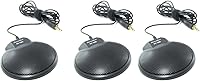
Not suitable for:

Buyers expecting studio-adjacent audio quality or professional podcast and recording performance should look elsewhere — the SoundTech CM-1000USB Conference Microphone Kit (4-Mic) is engineered for voice intelligibility on calls, not high-fidelity capture. Teams operating in acoustically challenging spaces — rooms with hard floors, glass partitions, open ceilings, or persistent HVAC noise — are likely to hit the ceiling of the onboard echo cancellation fairly quickly and may end up disappointed. Small teams of two to four people who sit close together around a compact desk will also find the four-mic kit more than they need; a single well-positioned USB microphone would serve them better at lower cost. Anyone running a legacy Windows 7 or early macOS setup should verify compatibility before purchasing, as a subset of users on older operating systems have reported inconsistent device recognition. Finally, buyers who care deeply about a polished, modern boardroom aesthetic may find the utilitarian metal design looks dated next to newer compact conference audio systems.

Specifications

  • Brand: Manufactured by SoundTech, a brand focused on affordable conferencing audio solutions for business environments.
  • Model: The kit consists of one CM-1000USB (USB-enabled hub microphone) and three CM-1000 passive daisy-chain extension units.
  • Connection Type: USB plug-and-play connection with an onboard USB sound card; no external audio interface or drivers required.
  • Polar Pattern: Omnidirectional 360-degree pickup pattern on each unit captures audio evenly from all directions around the microphone.
  • Kit Contents: Includes one USB-connected microphone and three passive daisy-chain microphones for distributed table coverage.
  • Cable Length: Each microphone unit is supplied with a 5-foot cable, allowing flexible positioning across a standard conference table.
  • Power Source: Entirely bus-powered via the USB connection; no external power adapter, batteries, or AC outlet required.
  • Signal-to-Noise Ratio: Rated at 78 dB, which is adequate for voice call intelligibility but below the threshold recommended for recording applications.
  • Material: Microphone housing is constructed from metal, offering greater resistance to physical wear than all-plastic competitors at this price tier.
  • Dimensions: Each unit measures 8 x 2 x 11 inches, providing a low-profile footprint suitable for placement on a conference table.
  • Weight: The full kit weighs approximately 1.4 pounds, making it light enough for relocation between rooms when needed.
  • Platform: Designed for PC compatibility and has been confirmed by users to work on current Windows and macOS operating systems via USB class compliance.
  • Special Features: Includes built-in echo cancellation, noise reduction processing, and full duplex communication for natural two-way conversation on calls.
  • Number of Channels: Operates as a single-channel audio input device as recognized by the host computer's operating system.
  • Max Mic Array: The daisy-chain system supports a maximum of four linked microphone units, covering tables of up to approximately 20 feet in length.
  • Market Rank: Holds a Best Sellers Rank of approximately #414 in the Computer Microphones category on Amazon as of available data.
  • Availability: First listed for sale in April 2016 and confirmed as not discontinued by the manufacturer as of the most recent product data.
  • UPC: The product UPC is 720189920950, corresponding to the full four-microphone kit configuration.

Related Reviews

SoundTech CM-1000 Omni-Directional Conference Microphone
85%
88%
Audio Quality
90%
Portability
75%
Noise Cancellation
82%
Build Quality
93%
Ease of Use
More
eufyCam 3C 4-Cam Kit
87%
94%
Video Quality
92%
Battery Life
89%
Ease of Installation
85%
AI Features
90%
Storage Flexibility
More
TONOR TM20
TONOR TM20
78%
83%
Voice Clarity
71%
Noise & Echo Handling
96%
Ease of Setup
91%
Mute Button & LED Indicator
76%
Omnidirectional Coverage
More
TONOR TM310
TONOR TM310
79%
83%
Voice Clarity
76%
Noise Rejection
68%
Noise Reduction Feature
94%
Ease of Setup
79%
Clip Design & Mounting
More
Bonke UM02
Bonke UM02
78%
94%
Ease of Setup
71%
Audio Clarity
63%
Noise Handling
78%
Build Quality
82%
Mute Button
More
WISE TIGER USB Conference Microphone
77%
94%
Ease of Setup
76%
Audio Clarity for Calls
58%
Noise & Background Pickup
91%
Mute Button Functionality
63%
Build Quality & Durability
More
Baseus N1 4-Cam Kit
Baseus N1 4-Cam Kit
85%
88%
Video Quality
94%
Battery Life
90%
Installation Ease
84%
Build Quality
80%
Night Vision Performance
More
Movo MC1000
Movo MC1000
75%
84%
Pickup Range & Coverage
67%
Audio Clarity
93%
Ease of Setup
81%
Headphone Monitoring
54%
Background Noise Rejection
More
ANSTEN OSM09 Conference USB Microphone
87%
86%
Audio Quality
94%
Ease of Use
80%
Noise Cancellation
88%
Portability
97%
Setup & Installation
More
Rode NTG5 Shotgun Microphone Kit
88%
95%
Audio Clarity
92%
Portability & Weight
88%
Build Quality & Durability
90%
Ease of Use
93%
Microphone Performance
More

FAQ

Yes, in the vast majority of cases it does. The SoundTech CM-1000USB Conference Microphone Kit (4-Mic) uses USB audio class compliance, which means Windows and macOS both recognize it as an audio device automatically. You plug it in, open your conferencing app, select it as the microphone input, and you are done. A small number of users on older OS builds have needed to switch USB ports or restart, but out-of-the-box recognition is the norm.
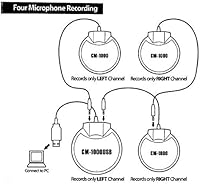
Each unit comes with a 5-foot cable, so the spacing depends on how you route the daisy chain from the USB source outward. In practice, most users covering a 12- to 16-foot table position one mic near the laptop, then space the remaining three at roughly equal intervals. If your table is longer than that, the cable lengths may limit your placement options without cable extensions.

Yes, all three platforms recognize this daisy-chain microphone setup as a standard USB audio device. You select it from the microphone input dropdown in each app's audio settings. There is nothing platform-specific about the configuration — if your OS sees it, your conferencing app will too.

No. The system is designed to support a maximum of four linked units — one USB hub mic and three passive extensions. There is no official way to extend the chain further. If your room genuinely needs more than four pickup points, you would be better served looking at a more scalable room audio system.

Honestly, it has limits. The onboard echo cancellation works well in carpeted, acoustically softened rooms where reflections are minimal. In harder, more reverberant spaces — think exposed concrete, glass partitions, or tiled floors — users consistently report that the echo suppression cannot fully keep up. If your room has challenging acoustics, you may need additional acoustic treatment or a system with more powerful DSP.

It works on both platforms. The USB class-compliant design means macOS recognizes it without any additional setup, just like Windows. That said, a handful of buyers on certain older macOS versions reported occasional recognition issues, so if you are on a significantly outdated OS release, it is worth confirming compatibility before purchasing.

You can use just the single CM-1000USB hub unit on its own if you only need one mic. The passive extension units only work when chained to the hub, so they cannot be used independently. For a small two-person meeting at a compact desk, using just the hub mic and leaving the extensions packed away is a perfectly reasonable approach.

This is a real consideration that comes up frequently in buyer feedback. Running four linked cables across an active conference table does create visible clutter, and the kit does not include any cable ties, clips, or management sleeves. Some users route cables along the table edge with adhesive clips purchased separately, which helps significantly. It is worth planning your cable layout before the first meeting.

For voice call intelligibility and meeting capture, it is adequate. For anything where audio quality matters beyond basic clarity — podcast production, recorded presentations, or client-facing content — the 78 dB signal-to-noise ratio and the compression introduced by the onboard processing will likely fall short of your expectations. This system is built for calls, not content creation.

The metal housing is a genuine plus here. Long-term reviewers who have used this conference mic kit for two or more years generally report no significant hardware failures, connector degradation, or dropout issues under normal daily use. It is not fragile. The main wear risk is the cables — particularly at the connectors — if the system is frequently packed up and redeployed rather than left in a fixed room setup.