
Overview

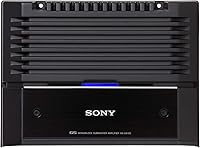
The Sony XM-GS100 Class D Subwoofer Amplifier sits in Sony's GS Series — a lineup built for drivers who want solid, branded performance without paying boutique prices. Class D topology matters here: it runs far more efficiently than older Class AB designs, generating less heat and drawing less current from your vehicle's electrical system. The GS100 is a mono-channel amp, meaning every bit of its output is focused entirely on driving a single subwoofer. At roughly 13 by 11 inches, the chassis is compact enough to tuck behind a rear seat or into a modest trunk build. This is an amp for the practical daily-driver crowd, not competition installers.

Features & Benefits

The numbers that actually matter on this Sony mono amp are the RMS figures, not the peak ratings. At 4 ohms, you're looking at 330W continuous RMS — that's the power it sustains during real listening. Drop to a 2-ohm load and it delivers 600W RMS, which gives meaningful headroom for a hungry sub. The gap between those figures and the published peak ratings is standard across the industry, but it trips up a lot of first-time buyers. Class D efficiency keeps thermal output low, so the amp won't overheat inside a sealed enclosure. The 3-year GS Series warranty is a genuinely useful backstop, and the packaging includes what you need to get wired without an extra trip to the parts store.

Best For

This subwoofer amplifier is a natural fit for the DIY installer who wants a trustworthy name-brand amp without the sticker shock of boutique alternatives. If you're building around a single sub in a sealed or ported enclosure, the GS100 has plenty of output for a daily street build — just don't expect it to win a dB drag competition. The compact footprint makes it genuinely easy to mount under a rear seat or in a shallow trunk well where a larger amp simply won't fit. It also suits listeners who value clean, controlled low end over sheer volume. If you're chasing SPL records, look elsewhere. If you want reliable, musical bass on a sensible budget, this hits the mark.

User Feedback

With a 4.2-star average across roughly 160 ratings, the GS100 lands in genuinely solid territory. Buyers consistently note that it runs cool, sounds clean at everyday listening levels, and that the wiring layout is intuitive — a real plus if this is your first amp install. Several owners appreciated how honest the RMS rating feels in practice; power delivery matches expectations rather than disappointing the way inflated peak specs sometimes do. On the downside, a handful of users flagged limited gain control flexibility, and a few reported thermal shutoff during sustained high-volume use in hot climates. One tip echoed repeatedly: sort your ground connection first — poor grounding is behind a disproportionate number of early performance complaints.

Pros

  • Honest RMS ratings mean the power you see on the spec sheet is close to what you actually hear.
  • Class D efficiency keeps the amp cool and reduces strain on your vehicle's electrical system.
  • The compact footprint fits comfortably in tight trunk builds or under rear seats.
  • Single mono channel delivers a focused, clean signal path purpose-built for subwoofer duty.
  • The 3-year GS Series warranty is notably longer than many competitors at this price level.
  • Wiring layout is intuitive enough for first-time amp installers to navigate without frustration.
  • Running a 2-ohm load unlocks 600W RMS, giving extra headroom for a demanding sub.
  • Sony's brand reliability means replacement parts and support are more accessible than off-brand alternatives.
  • Frustration-free packaging includes the essentials without unnecessary plastic waste or missing hardware.

Cons

  • Gain control range is limited, which can make fine-tuning output with certain head units tricky.
  • Thermal shutoff has been reported during extended high-volume sessions in warm or poorly ventilated installs.
  • No wireless remote means you cannot adjust bass level from the driver's seat without an aftermarket add-on.
  • Peak power figures prominently in the marketing can mislead buyers who skim specs without checking RMS numbers.
  • A poor ground connection causes a disproportionate number of early performance issues that can be hard to diagnose.
  • Limited crossover adjustment options make this a less flexible choice for complex, multi-component builds.
  • The 14V supply voltage spec leaves little tolerance for vehicles with aging or undersized charging systems.
  • At 6.5 pounds, the unit is not especially heavy, but the chassis width may still conflict with certain mounting brackets.

Ratings

The scores below reflect an AI-driven analysis of verified buyer reviews for the Sony XM-GS100 Class D Subwoofer Amplifier, gathered from global sources and filtered to remove incentivized, bot-generated, and duplicate feedback. Each category is scored on real-world performance patterns, not manufacturer claims, so both the strengths and the friction points you see here are genuine. Where buyers consistently praised something, that shows in the number — and where they ran into trouble, we didn't soften it.

Power Accuracy
83%
Most buyers found that the GS100's RMS output held up credibly in real installs — a 300W-range sub driven at 4 ohms produced the kind of bass response that matched expectations, which is more than can be said for many amps at this tier. Owners who understood the RMS vs. peak distinction came away satisfied.
The gap between the 330W RMS and the 1100W peak figure at 2 ohms confused a notable segment of buyers who felt the marketing leaned into the peak number. A handful reported that real-world output felt slightly conservative compared to similarly rated competitors under sustained use.
Build Quality
81%
19%
The chassis feels solid and purposefully constructed — not flimsy in the way some budget amps are. Buyers who had prior experience with entry-level no-name units consistently noted the GS100 felt like a step up in fit and finish, with terminals and heat-sink fins that held up well after months of use.
A small number of owners flagged cosmetic inconsistencies in the housing, and a few reported that the gain and crossover knobs felt looser than expected for a branded unit. It is not a boutique-grade chassis, and close inspection reveals that Sony prioritized function over premium aesthetics here.
Thermal Management
62%
38%
Under normal daily-driver conditions — moderate volumes, reasonable ventilation — the GS100 runs cool and stable, which is the expected upside of Class D efficiency. Buyers in temperate climates who mounted it in an open trunk space reported no meaningful heat issues during regular use.
In hot climates or sealed enclosures with poor airflow, thermal protection trips were a recurring complaint. Extended high-volume sessions in summer driving conditions pushed the amp into shutdown for several users, and this surfaced often enough in feedback to be a genuine concern rather than isolated incidents.
Installation Ease
84%
The wiring layout was one of the most commonly praised aspects across user feedback — terminals are clearly labeled and spaced generously enough to work with standard 4-gauge cable without fighting the connector block. First-time installers repeatedly mentioned that the layout removed a lot of the guesswork from the process.
Some buyers ran into issues with the RCA input sensitivity when using a factory head unit without a line output converter, requiring an extra purchase they had not anticipated. The manual, while functional, was described by several reviewers as thin on troubleshooting guidance for edge-case wiring scenarios.
Compact Footprint
88%
At roughly 13 by 11 inches, the GS100 is genuinely one of the more practical chassis sizes in its output class. Buyers with hatchbacks, smaller sedans, and limited trunk builds repeatedly cited the dimensions as a deciding factor, with several noting it fit under a rear seat where larger amps simply would not.
While compact for a mono amp at this power level, it still requires a minimum amount of clear mounting area that can be tricky in very small or irregular cargo spaces. A few truck and SUV owners found the footprint awkward to position alongside a ported subwoofer box.
Gain Control Range
58%
42%
For straightforward installs paired with aftermarket head units, the gain range is adequate and gets the job done without excessive fuss. Buyers running a standard RCA preamp output from a modern aftermarket stereo found the adjustment range sufficient to dial in a clean, distortion-free signal.
Buyers using low-voltage factory outputs without a converter frequently hit the upper limit of the gain control before reaching satisfying output levels, leaving the amp feeling underpowered in those setups. The limited adjustment window was a recurring frustration for installers trying to match the amp's sensitivity to a mixed-signal-chain build.
Low-Pass Crossover
74%
26%
The built-in low-pass filter does its core job reliably, rolling off midrange content cleanly when set between 60 and 100Hz. Buyers pairing it with a single 10-inch or 12-inch sub in a sealed box found the crossover transition natural-sounding and free of the muddy overlap that poorly implemented filters can introduce.
The crossover lacks the adjustability range that more experienced builders look for — there is no subsonic filter, and the slope steepness is fixed, which limits tuning flexibility for ported enclosure builds that benefit from a steeper low-end rolloff. Installers who like to fine-tune their system found the options here fairly basic.
Value for Money
78%
22%
The combination of Sony's brand reliability, an honest RMS spec, and a 3-year warranty creates a value proposition that is hard to argue with for a daily-use street system. Buyers who compared it directly to competing mono amps in the same tier frequently felt the GS100 offered slightly more long-term security per dollar spent.
Buyers who primarily focused on raw power-per-dollar found the GS100 outclassed by some lesser-known brands offering higher peak specs at a lower price — even if those specs are less honest. If upfront output numbers are your main benchmark, the value calculation here is less compelling.
Warranty & Support
79%
21%
Three years of coverage from a major manufacturer is a meaningful advantage in a product category where many competitors offer only one year. Buyers appreciated having an accessible support structure behind the purchase rather than dealing with opaque warranty processes from no-name brands.
A handful of users reported that navigating Sony's warranty claim process for car audio products was slower and more bureaucratic than expected. The support documentation and online resources for the GS Series are also relatively sparse compared to Sony's consumer electronics lines.
Signal Clarity
82%
18%
At moderate listening levels, the GS100 produces a clean, focused bass signal without audible distortion bleeding into adjacent frequencies. Buyers who listen to well-produced music at reasonable volumes — rock, hip-hop, electronic — appreciated how defined and uncolored the low end sounded compared to cheaper amps in the class.
At higher gain settings or when pushed toward its output ceiling, a few buyers detected a slight coarsening of the signal, particularly on complex low-frequency transients. This was more noticeable in musically demanding material than in simple bass-heavy tracks, and it suggests the amp performs best when not driven to its limits.
Electrical Efficiency
86%
Class D topology genuinely shines here — buyers reported no meaningful voltage drop at the battery under typical use, and the amp coexists peacefully with factory alternators in average daily-driver vehicles. In practical terms, it does not demand an upgraded charging system the way high-power Class AB amps often do.
Vehicles with aging or undersized alternators still showed occasional dimming under loud bass hits, which suggests the amp's current draw, while efficient, is not negligible at full output. This was a minor issue for most but worth noting for anyone with electrical concerns in an older vehicle.
Packaging & Unboxing
77%
23%
The frustration-free packaging approach means the essentials arrive intact and accessible without excessive plastic or confusing packaging layers. Buyers appreciated that the core hardware needed to get started was included, reducing the number of separate orders required before installation day.
The included accessory complement is functional but basic — there is no bass remote, wiring hardware is minimal, and the documentation is thin. Buyers who expected a more complete kit out of the box needed to source additional items separately, which added to the overall project cost.
Long-Term Reliability
76%
24%
The majority of buyers who left follow-up feedback after extended ownership reported that the GS100 continued performing consistently over one to two years of regular use, with no degradation in output or stability. Sony's component quality at this tier is generally better than discount-brand alternatives.
A small but notable share of users reported failures within the first year — most commonly related to internal protection circuitry triggering permanently rather than resetting. Whether these were installation-related or manufacturing defects was unclear, but they occurred often enough to temper confidence in the long-term durability picture.

Suitable for:

The Sony XM-GS100 Class D Subwoofer Amplifier is a strong match for the DIY car audio enthusiast who wants a dependable, name-brand mono amp without crossing into high-end boutique pricing. If you're building a street-oriented system around a single subwoofer in a sealed or ported box, the GS100's honest RMS output is more than enough to deliver satisfying, musical low end for everyday driving. Its compact chassis is a genuine advantage for anyone working with limited trunk real estate or trying to squeeze an amp under a rear seat in a smaller vehicle. The 3-year GS Series warranty also makes this a sensible long-term investment for someone who doesn't want to gamble on an off-brand unit. In short, if your goal is controlled, clean bass that complements your music rather than overwhelms it, this amp fits the brief well.

Not suitable for:

Buyers chasing competition-level SPL output or planning to run a demanding dual-subwoofer setup should look past the Sony XM-GS100 Class D Subwoofer Amplifier entirely. At 330W RMS into 4 ohms, this is a solid daily-driver amp, but it simply does not have the headroom for high-SPL builds or power-hungry subs that demand sustained output well beyond that threshold. Installers in consistently hot climates should also be cautious, since user reports suggest the amp can enter thermal protection during prolonged high-volume use without adequate ventilation. If you need fine-grained gain staging flexibility or advanced crossover adjustability for a complex multi-amp system, the limited controls here may frustrate you. And if you're a seasoned installer used to dedicated car audio brands with deeper tuning options, the GS100's more straightforward feature set may feel restrictive.

Specifications

  • Brand: Manufactured by Sony under the GS Series car audio lineup.
  • Model Number: The unit carries the model designation XM-GS100.
  • Amplifier Class: Class D topology delivers high efficiency with minimal heat generation compared to Class AB designs.
  • Channels: Single-channel (mono) configuration, dedicated entirely to subwoofer output.
  • RMS Power (4Ω): Continuous RMS output is rated at 330W into a 4-ohm load.
  • RMS Power (2Ω): Continuous RMS output increases to 600W when driven into a 2-ohm load.
  • Peak Power (4Ω): Maximum (peak) power at 4 ohms is rated at 600W, measured under burst conditions.
  • Peak Power (2Ω): Maximum (peak) power at 2 ohms is rated at 1100W under burst conditions.
  • Dimensions: The chassis measures 13.38″ long by 10.94″ wide by 4.38″ tall.
  • Weight: The amplifier weighs 6.5 pounds as shipped.
  • Supply Voltage: Designed to operate at a nominal 14V DC vehicle supply voltage.
  • Mounting Type: Intended for permanent car-mount installation, compatible with standard trunk and under-seat brackets.
  • Wireless Remote: No wireless remote is included; bass level adjustment requires a wired remote or head unit integration.
  • Warranty: Covered by Sony's 3-year GS Series limited warranty from the date of purchase.
  • Package Type: Ships in certified frustration-free packaging designed for straightforward unboxing.
  • UPC: Universal Product Code is 027242823297.

Related Reviews
Dayton Audio SPA300-D
80%
88%
Power Output & Headroom
83%
Bass Quality & Low-End Extension
86%
Signal Clarity & Noise Floor
79%
Build Quality & Durability
91%
Ease of Installation
More
Recoil RED1200-1 Mono Subwoofer Amplifier
75%
88%
Value for Money
83%
Bass Output
61%
Power Accuracy
91%
1-Ohm Stability
63%
Thermal Management
More
Velex VX508 Class-D Marine Amplifier
75%
83%
Sound Quality
79%
Build Quality
76%
Waterproofing
58%
Installation Experience
86%
Bluetooth Performance
More
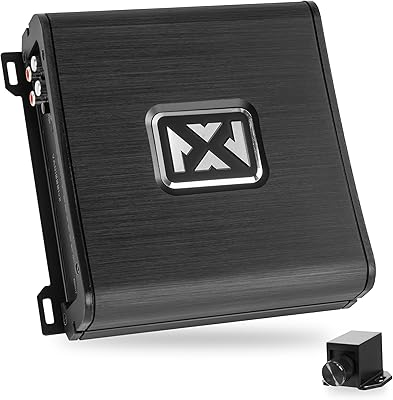
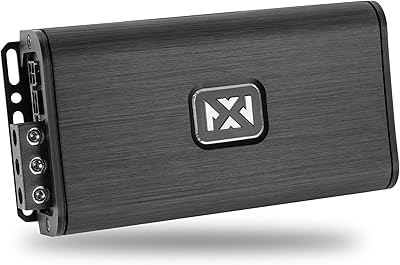
NVX VADM1v2 Monoblock Amplifier
82%
88%
Power Output
93%
Compact Form Factor
71%
Thermal Management
86%
Tuning Controls
74%
High-Level Input Usability
More
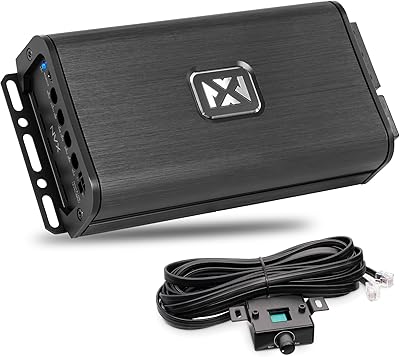
NVX VAD10001 v2 Monoblock Class D Amplifier

88%
91%
Sound Quality
93%
Build Quality
85%
Ease of Installation
88%
Bass Control Flexibility
89%
Heat Management
More
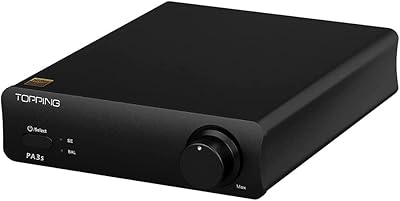
Topping PA3s
Topping PA3s
82%
91%
Sound Cleanliness
88%
Channel Separation
79%
Power & Headroom
86%
Input Flexibility
67%
Build Quality
More
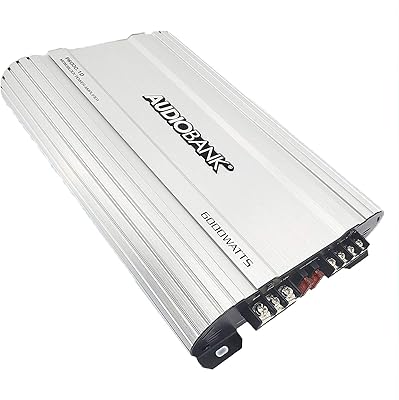
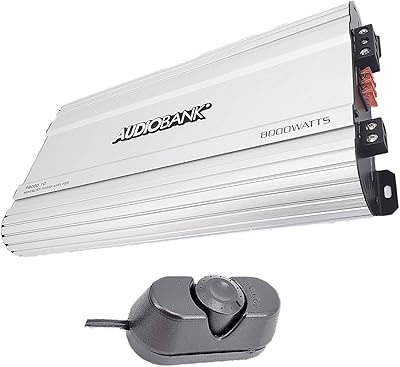
Audiobank P8001 Monoblock Car Amplifier
63%
74%
Value for Money
31%
Power Accuracy
81%
Ease of Installation
57%
Build Quality
53%
Thermal Management
More
Taramp's TL 500 2-Channel Car Amplifier
74%
88%
Value for Money
91%
Ease of Installation
74%
Sound Quality
62%
Power Output
67%
Build Quality
More
Pioneer GM-D9701 Mono Class D Car Amplifier
83%
93%
Bass Output Quality
88%
Power Delivery Consistency
84%
Installation Experience
91%
1-Ohm Stability
86%
Thermal Management
More
Audiobank P6001 Monoblock Car Amplifier
61%
74%
Value for Money
38%
Power Accuracy
56%
Build Quality
52%
Thermal Management
78%
Installation Ease
More

FAQ

The Sony XM-GS100 Class D Subwoofer Amplifier delivers 330W RMS into 4 ohms, which is the continuous, sustained power output during actual listening. The peak figures, like 600W at 4 ohms, represent brief burst measurements that the amp cannot hold indefinitely. For everyday use, focus on the RMS number — it is a far more honest indicator of what you will actually hear.

Yes, the GS100 is rated stable at 2 ohms, where it produces 600W RMS. Running at 2 ohms is common when wiring a dual voice coil sub in parallel. Just make sure your subwoofer's RMS power handling matches or exceeds what the amp puts out at that impedance to avoid damaging the driver.

It depends on the vehicle, but at roughly 13.4 by 11 inches, it is genuinely compact for the output class. Many installers have mounted it under the rear bench of a sedan or in a shallow trunk well without issue. Measure your available clearance before committing, and factor in airflow space to prevent heat buildup.

For an amp in this power range, a 4-gauge power and ground cable is the standard recommendation. Using undersized wire is one of the most common causes of performance issues and thermal protection trips, so don't cut corners there. A good, clean ground to bare metal on the chassis is just as important as the wire gauge itself.

Yes, the GS100 includes a low-pass crossover filter, which is exactly what you need for subwoofer duty. Engage the low-pass filter and set the crossover frequency between 60Hz and 80Hz as a starting point, then tune by ear. This prevents midrange frequencies from reaching your sub, keeping the bass tight and clean.

The most common culprits are a poor ground connection, an impedance mismatch, or insufficient ventilation causing thermal shutoff. Start by checking your ground point — it must be bare metal, not painted or coated. If grounding checks out, confirm your sub's impedance matches what the amp expects, and make sure the amp has at least a few inches of airspace around it.

It can work with a factory head unit, but you may need a line output converter (LOC) to step the speaker-level signal down to a preamp-level RCA input the amp can accept. Some factory radios have low output voltage, which can limit your gain range, so a quality LOC makes a noticeable difference in that scenario.

Sony's GS Series warranty covers manufacturing defects for three years from purchase. You'd need proof of purchase and would contact Sony's support to initiate a claim. It is worth registering the product with Sony after purchase to streamline any future warranty process.

The GS100 is a single-channel mono amp, so there is nothing to bridge — it already operates as a dedicated mono unit. Bridging is a technique used on stereo (two-channel) amplifiers to combine channels into one higher-power output, which does not apply here.

The GS100 pairs well with a single 10-inch or 12-inch subwoofer in a properly tuned sealed or ported enclosure. A 10-inch sub rated around 300 to 400W RMS is a natural match at 4 ohms. If you go with a dual voice coil 12-inch wired to 2 ohms, the 600W RMS output gives you plenty of headroom for a punchy, musical street build.