Overview

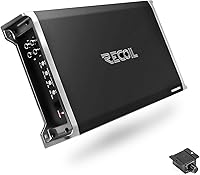
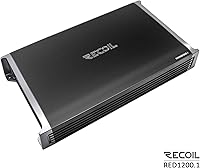
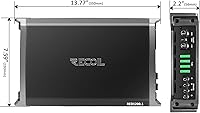
The Recoil RED1200-1 Mono Subwoofer Amplifier enters a crowded budget Class-D market with one genuinely compelling argument: 1-ohm stable operation at a price most rivals simply can't match. That alone makes it worth a closer look, since most mono blocks in this range demand a 2-ohm minimum load, which limits how freely you can wire your subs. This amp removes that restriction. It's also strappable, so you can pair two units down the road if your build grows. Physically, it's compact enough for most trunk installs at roughly 14 inches long. Just go in with clear eyes — this is a solid value pick, not a boutique audiophile unit.

Features & Benefits

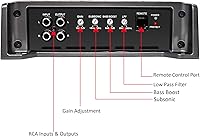
The number that actually matters here is 1250W RMS at 1 ohm — that's the real sustained output, not the inflated peak figure brands love to plaster on the box. For a single or dual sub setup, that's genuinely usable power. The built-in tuning controls cover a lot of ground: a variable low-pass filter from 35 to 250Hz, a subsonic filter to protect your woofer from damaging ultra-low frequencies, and up to 9dB of bass boost. The remote bass knob is a small but practical addition — adjust levels on the fly without fumbling under a seat. Four-way protection circuitry and an efficient heatsink keep the amp stable during longer, louder drives.

Best For

This Class-D amplifier makes the most sense for daily drivers on a budget who want meaningful bass without stretching their wallet thin. It fits particularly well in trucks and SUVs where there's decent space for a moderately sized amp. If you're stepping up from a factory head unit or a weak entry-level amp, the performance jump will be noticeable. Users running 1-ohm sub configurations will get the most out of it, squeezing that full 1250W RMS rather than leaving power on the table. Hobbyists who plan to strap two units together later will also appreciate the built-in master/slave capability — it's a forward-thinking touch that gives any growing system room to expand.

User Feedback

The RED1200-1 holds a 4.1-star average, and the most consistent praise centers on bass output relative to cost — buyers are generally surprised by how much punch they get. Wiring is reported as straightforward, and the included remote knob earns appreciation from daily commuters. That said, power ratings draw skepticism: more than a few users feel real-world output falls short of the advertised figures when pushed hard. Thermal behavior comes up occasionally too, with some reporting the amp runs noticeably warm during extended high-volume sessions. A handful of installers flagged tight terminal spacing as a minor annoyance. For the money, most buyers walk away satisfied — but power-hungry builds may need to look at higher-tier options.

Pros

  • 1-ohm stable operation is rare at this price point, giving you more wiring flexibility than most budget rivals offer.
  • Delivers genuinely satisfying bass output for everyday listening at a fraction of what comparable specs normally cost.
  • Strappable master/slave design lets you scale up power later without replacing your entire amp setup.
  • The remote bass knob is a practical, appreciated inclusion that eliminates the need to adjust settings under a seat.
  • Onboard low-pass, subsonic filter, and bass boost controls make tuning accessible without external processors.
  • Four-way protection circuitry provides real peace of mind for users who push the amp hard over long drives.
  • Compact dimensions fit comfortably in standard trunk installs without requiring a custom mounting solution.
  • Wiring setup is reported as straightforward by the majority of buyers, even those doing their first DIY install.

Cons

  • Real-world power output is reported by some buyers as noticeably lower than the advertised RMS figures suggest.
  • The amp can run noticeably warm during long, high-volume sessions, which may be a concern in tight installs.
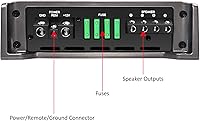
  • Terminal spacing is tight, making it awkward to terminate thick-gauge power and ground cables cleanly.
  • Gain sensitivity can be tricky to dial in precisely, and a poorly set gain can invite distortion at higher volumes.
  • Build quality reflects the budget price tier — internal components feel adequate rather than confidence-inspiring.
  • No independent third-party power verification exists, so buyers must take manufacturer claims on faith.
  • Not well-suited for low-airflow mounting positions where sustained heat dissipation becomes a reliability concern.

Ratings

The scores below reflect an AI-driven analysis of verified global buyer reviews for the Recoil RED1200-1 Mono Subwoofer Amplifier, with spam, incentivized, and bot-generated feedback actively filtered out before scoring. Each category is evaluated on the weight of real user experiences — not manufacturer claims — so both the genuine strengths and recurring frustrations are represented without bias. Where opinions were divided, scores reflect that split honestly rather than defaulting to an inflated middle ground.

Value for Money
88%
Most buyers walk away feeling this mono amp punches well above its price bracket, especially given the 1-ohm stability and included remote knob that usually cost extra at this tier. Daily drivers upgrading from a factory setup consistently describe the performance jump as well worth the spend.
A minority of buyers who pushed the amp hard in competition-style builds felt the real output didn't fully justify even the modest asking price. The value perception drops if you're expecting boutique-level build quality alongside the performance.
Bass Output
83%
For casual and enthusiast listeners running a single or dual subwoofer setup, the low-end punch from this Class-D amplifier is consistently praised. Users pairing it with a quality 1-ohm woofer configuration report deep, satisfying bass that fills a truck cab or SUV interior without strain.
Some buyers noted that at high volume the bass loses a bit of its tightness, with occasional muddiness creping in around the upper sub frequencies. Those expecting competition-level slam from a budget unit may find the output falls short of their expectations in demanding listening sessions.
Power Accuracy
61%
39%
The 1250W RMS at 1-ohm figure is enough for most daily builds, and buyers who set realistic expectations for a value-tier amp generally don't feel deceived by the spec sheet. Running a modest single-sub setup, real output is adequate and consistent.
This is a persistent sore point in user reviews: a meaningful portion of buyers believe the advertised RMS figures are optimistic, particularly when the vehicle's charging system sits closer to 12V than 14.4V. Independent testing is absent, so there's no third-party benchmark to settle the debate.
1-Ohm Stability
91%
The ability to run stable at 1 ohm is genuinely uncommon in this price range, and users who specifically sought this feature report it works reliably without nuisance shutdowns under normal conditions. It opens up wiring flexibility that competing budget amps simply don't offer.
A small number of users reported the amp triggering protection mode when pushed to 1-ohm loads at sustained high volume in warm environments. This appears to be more of a thermal management issue than a true instability problem, but it's worth noting for hot-climate installs.
Thermal Management
63%
37%
Under moderate listening conditions in a reasonably ventilated trunk, the heatsink design does its job without obvious thermal throttling. Users who mount the amp with adequate airflow clearance generally report no shutdowns during typical daily commutes.
Extended loud listening sessions — road trips, tailgating, or hot summer days — generate consistent complaints about the amp running hot. Several buyers with trunk installs in warmer climates reported intermittent thermal protection shutdowns, which is a real concern if airflow around the unit is limited.
Ease of Installation
77%
23%
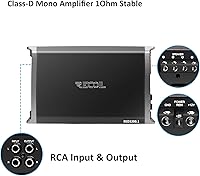
The majority of buyers, including first-time DIY installers, describe the wiring process as intuitive and straightforward. Clear labeling on the input/output terminals and a logical control panel layout reduce the guesswork for those doing their first amp install.
The terminal block spacing drew criticism from more experienced installers working with 2-gauge or thicker power wire, as terminating heavy-gauge cable in the confined spacing requires some patience and the right ferrule or ring terminal. It's a minor but genuine annoyance.
Tuning Controls
79%
21%
Having a variable low-pass filter, subsonic filter, and bass boost all onboard saves budget-conscious buyers from needing an outboard processor. The range covered — especially the subsonic filter reaching down to 10Hz — is genuinely practical and appreciated by users who care about woofer protection.
The gain control was flagged by a handful of users as being sensitive and difficult to set precisely by ear, with small adjustments producing larger-than-expected changes in output level. Without an oscilloscope or tone generator, dialing in a clean gain setting takes trial and error.
Remote Bass Knob
86%
The inclusion of a wired remote level knob is one of the most universally praised aspects of this amp among daily drivers. Being able to reduce bass on the fly at a traffic stop or crank it up on the highway without touching the amp is a small but genuinely meaningful quality-of-life feature.
A few users reported the knob feeling slightly loose or plasticky, and there are occasional mentions of it introducing a very subtle channel noise at extreme low settings. It functions well, but the hardware finish reflects the budget tier of the overall unit.
Build Quality
58%
42%
The chassis is functional and the heatsink fins feel solid to the touch. For a value-tier amp, the internal layout is reportedly clean enough, and most buyers are satisfied with construction quality given what they paid.
Side-by-side with mid-range amplifiers, the difference in component quality and chassis rigidity is noticeable. Users who have owned higher-end amps describe the RED1200-1 as feeling adequate rather than confidence-inspiring, and a small number of buyers reported quality control inconsistencies out of the box.
Strappable Functionality
74%
26%
Buyers who planned ahead and purchased two units to strap together report the master/slave configuration works as described, delivering a meaningful bump in output for higher-demand builds. It is a forward-thinking feature that adds genuine long-term value to the purchase.
There is limited user-generated documentation on real-world strapped output performance, so buyers must largely take the feature on faith. A few users also noted that sourcing a second identical unit later can be tricky if stock availability changes.
Protection Circuitry
81%
19%
The four-way protection system covering thermal, voltage, speaker, and DC faults gives buyers genuine peace of mind, and the amp has been reported to recover cleanly from protection events rather than failing permanently. For a budget unit, this kind of fault tolerance is reassuring.
Some users found the protection circuit triggers a bit prematurely under sustained 1-ohm loads in warm conditions, cutting out before the amp is truly in danger. While it's technically doing its job, it can feel frustrating mid-listening when you haven't pushed anything unreasonably hard.
Signal Clarity
67%
33%
At moderate listening levels, the signal passing through the RED1200-1 is clean enough for subwoofer use, with the 85dB signal-to-noise ratio adequate for low-frequency applications where absolute transparency matters less than in full-range systems.
At higher gain settings or when the bass boost is pushed aggressively, some users noticed a graininess or added coloration in the low end that suggests the amp's noise floor is more apparent near its limits. It is not a dealbreaker at this price, but it is audible to attentive listeners.
Packaging & Accessories
72%
28%
The box typically arrives with the remote knob cable already included, and most buyers report the unit arriving well-protected without cosmetic damage. Having mounting hardware in the box is a small but appreciated touch for first-time installers.
The included documentation is sparse, and several buyers noted the quick-start guide doesn't provide enough detail on gain-setting procedure or strapping configuration for less experienced installers. A more thorough manual would meaningfully reduce the learning curve.

Suitable for:

The Recoil RED1200-1 Mono Subwoofer Amplifier is a strong match for budget-conscious car audio enthusiasts who want genuine, usable bass power without committing to a premium price tag. It suits daily drivers — particularly those running trucks, SUVs, or sedans with reasonable trunk space — who are pairing one or two subwoofers and want to run them at a low 1-ohm load for maximum efficiency. First-time upgraders stepping away from factory audio or a weak stock amp will notice a real, satisfying improvement in low-end output. Hobbyists with an eye toward future expansion will appreciate the strappable design, which allows two units to be bridged together as a system grows. Anyone who spends a lot of time in the car and wants quick bass adjustments on the go will find the included remote knob a genuinely useful day-to-day convenience.

Not suitable for:

The Recoil RED1200-1 Mono Subwoofer Amplifier is not the right call for builders chasing serious competition-level output or for anyone who needs rated power figures they can take to the bank. Users with thermally sensitive install locations — tight enclosures, under-seat mounting with little airflow — may run into heat management issues during extended loud listening. Those wiring thick-gauge power cables may find the terminal spacing tighter than ideal, which can frustrate a clean professional install. If your subwoofer load requires rock-solid, independently verified RMS numbers rather than manufacturer claims, this amp's real-world output may leave you wanting more headroom. Audiophiles prioritizing a pristine signal-to-noise floor or precision tuning over raw value will also find that this Class-D amplifier plays in a different league than higher-end alternatives.

Specifications

  • Amplifier Class: Class-D mono-block topology, which prioritizes power efficiency and reduced heat generation compared to Class-AB designs.
  • RMS Power (1Ω): Delivers 1250 watts RMS into a 1-ohm load at 14.4V, representing the sustained, real-world output figure buyers should use for planning.
  • RMS Power (2Ω): Rated at 900 watts RMS into a 2-ohm load at 14.4V for systems wired at higher impedance.
  • RMS Power (4Ω): Produces 550 watts RMS into a 4-ohm load at 14.4V, suitable for single high-impedance subwoofer configurations.
  • Impedance Stability: Stable down to 1 ohm, allowing parallel wiring of multiple subwoofers without risking amplifier shutdown or damage.
  • Strappable Design: Features a master/slave switch enabling two identical units to be bridged together for higher combined power output in demanding builds.
  • Low-Pass Filter: Variable low-pass filter adjustable between 35Hz and 250Hz, allowing the user to roll off midrange frequencies cleanly before they hit the subwoofer.
  • Subsonic Filter: Variable subsonic filter adjustable between 10Hz and 50Hz, protecting the subwoofer from damaging infrasonic frequencies below audible range.
  • Bass Boost: Built-in bass EQ provides up to 9dB of boost, adjustable to add presence and weight to the low-frequency output.
  • Signal-to-Noise: Signal-to-noise ratio rated at 85dB, which is adequate for most street and daily-use subwoofer applications.
  • Damping Factor: Damping factor exceeds 150, helping the amplifier maintain tighter control over subwoofer cone movement for cleaner bass response.
  • Protection Circuitry: Four-way protection covers thermal overload, voltage irregularities, speaker faults, and DC offset to reduce the risk of damage during abnormal conditions.
  • Operating Voltage: Operates across a 9V to 16V DC range, compatible with standard 12V automotive electrical systems including those with minor voltage fluctuations.
  • Fuse Rating: Requires an 80-amp fuse, which should be installed on the power wire as close to the battery as practical.
  • Dimensions: The amplifier body measures 13.78″ long by 7.6″ wide by 2.2″ tall, a footprint that fits most standard trunk and under-seat mounting locations.
  • Weight: Unit weighs 8.25 pounds, which is typical for a mono block of this output class and easy to handle during solo installs.
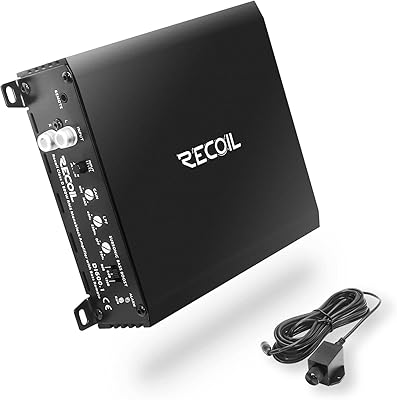
  • Remote Knob: A wired remote bass level knob is included in the box, allowing the driver to adjust bass output from the front seat without touching the amp.
  • Frequency Response: Rated frequency response spans 20Hz to 250Hz, covering the full subwoofer range from deep rumble to upper bass punch.

Related Reviews
Recoil DI600.1 Mono-Block Subwoofer Amplifier
74%
83%
Value for Money
67%
Real-World Power Output
61%
Build Quality
88%
Ease of Installation
74%
Remote Bass Knob
More
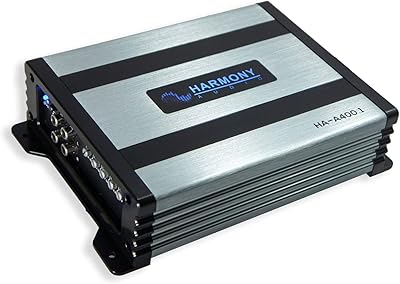
Harmony Audio HA-A400.1 800W Mono Subwoofer Amplifier
86%
91%
Bass Performance
88%
Ease of Use
84%
Build Quality
87%
Reliability
92%
Power Handling
More
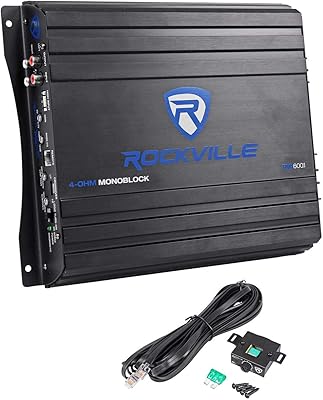
Rockville RVA600.1 Mono Car Amplifier
74%
83%
Value for Money
74%
Sound Quality
88%
Ease of Installation
52%
Power Accuracy
67%
Build Quality
More
Recoil SL1708 8″ Under Seat Slim Amplified Car Subwoofer
85%
92%
Value for Money
88%
Bass Performance
91%
Ease of Installation
89%
Compact Design
68%
Sound Clarity at High Volumes
More
AIYIMA A3001
AIYIMA A3001
78%
91%
Value for Money
84%
Audio Performance
53%
Power Output Accuracy
93%
Ease of Setup
79%
Low-Pass Filter Usability
More
MTX Thunder1000.1 Class D 1000W Mono Amplifier
87%
91%
Performance & Power Output
88%
Bass Enhancement
85%
Compact Design & Installation
89%
Heat Dissipation & Durability
87%
Bass Boost Functionality
More
Harmony Audio HA-A1500.1 Mono Subwoofer Amplifier
74%
86%
Value for Money
72%
Power Output
83%
Installation Ease
91%
1-Ohm Stability
61%
Thermal Management
More
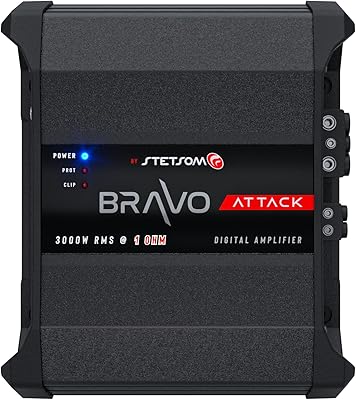
Stetsom Bravo Attack 3000.1 Mono Car Amplifier
86%
92%
Power Output
84%
Thermal Performance
88%
Ease of Installation
85%
Sound Quality
90%
Bass Control
More
DR Double Rock DR-2000.1 Monoblock Car Amplifier
74%
83%
Value for Money
71%
Power Output
86%
Installation Ease
62%
Build Quality
74%
Thermal Management
More
OSD Audio SMP500 800W Mono-Channel Subwoofer Amplifier
86%
88%
Performance
90%
Bass Enhancement
81%
Ease of Installation
93%
Heat Management
85%
Power Output
More

FAQ

Yes, that is exactly the use case this amp is built around. The RED1200-1 is rated stable at 1 ohm, so a single dual-voice-coil sub wired in parallel to hit 1 ohm is a perfectly appropriate load. Just make sure your gain is set conservatively at first to avoid pushing distorted power to the woofer.

Strappable means you can link two identical units together — one set as master, the other as slave — so they function as a single higher-output amplifier. You do need a second compatible Recoil unit to use this feature; it is not something that applies to a single amp on its own. For most daily-driver builds, one amp is more than enough.

The knob uses a standard RCA-style connection and is plug-and-play with no additional wiring required beyond running the cable to your preferred location. The included cable is typically long enough to reach the front console from a trunk-mounted amp in most mid-size vehicles, though exact cable length can vary. It is a straightforward addition that most buyers find genuinely useful.

Yes, this Class-D amplifier accepts both high-level speaker inputs and standard RCA line-level inputs, so you can connect it to a head unit that only has speaker wire outputs using a high-low adapter or direct high-level input if the amp supports it. Check the wiring diagram in the manual to confirm the correct input method for your specific head unit setup.

Like most Class-D amps, the RED1200-1 does generate heat, and some users report it running noticeably warm during extended loud sessions. Mounting it in a completely sealed, unventilated space is not recommended. Leave at least a couple of inches of clearance around the heatsink fins, and if your trunk gets particularly hot in summer, a small cooling fan mounted nearby can help extend the amp's lifespan.

Given the 80-amp fuse rating, a 4-gauge power and ground wire is the standard recommendation for runs up to around 15 feet. For longer cable runs or to minimize voltage drop under load, stepping up to 2-gauge is a smarter choice. Always fuse the power wire within 18 inches of the battery connection.

This is a common conversation with budget amps across the board. The honest answer is that the 1250W RMS figure is the manufacturer-stated number measured under ideal lab conditions. In a real vehicle with typical 12V charging voltage rather than 14.4V, output will be somewhat lower. For most subwoofer builds this is not a dealbreaker, but if you are trying to precisely match amplifier output to a subwoofer's rated RMS power handling, build in some margin rather than relying strictly on the spec sheet.

You can absolutely run two subwoofers off this mono amp, provided you wire them so the combined impedance stays at or above 1 ohm. Two 2-ohm DVC subs wired in a specific configuration to hit 1 ohm is a popular pairing. Just make sure both subs have compatible power handling for the output this amp produces at that load.

Recoil does offer a manufacturer warranty, though the specific terms and duration should be confirmed directly with the seller or Recoil at the time of purchase, as warranty policies can vary by retailer. Customer support experiences reported online are mixed, which is fairly typical for this price segment. Keeping your purchase receipt and registering the product if that option is available is always a good idea.

Start with the gain turned all the way down, then play a bass-heavy track at about 75 to 80 percent of your head unit's maximum volume. Slowly raise the gain until you begin to hear distortion or clipping in the bass, then back it off slightly from that point. This method is not perfectly precise, but it is safer than setting the gain by ear at high volume right from the start. If you want to be more precise, a multimeter or an oscilloscope can help you dial it in to a specific output voltage.

Where to Buy