Overview

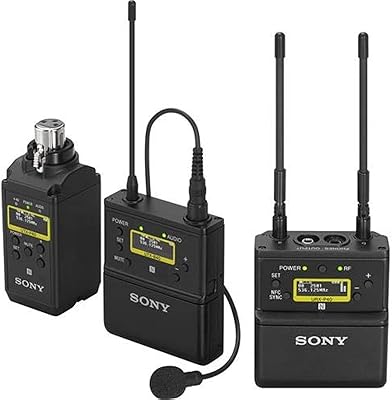
The Sony UWP-D21 Wireless Lavalier Microphone System is a professional-grade UHF kit built for videographers and content creators who simply cannot afford dropped audio on a shoot. It arrives as a complete package — the URX-P40 receiver, UTX-B40 bodypack transmitter, and ECM-V1BMP lavalier mic — so you're operational from day one without hunting for compatible components. The UWP-D series has long been Sony's workhorse wireless line for broadcast and field production, and the D21 variant targets single-channel workflows specifically. At this price tier, you're not paying for brand recognition alone; the materials, RF engineering, and overall reliability put it in a different league from entry-level clip-on systems.

Features & Benefits

What separates the UWP-D21 from cheaper wireless options is largely invisible until something goes wrong on set. True double tuner/antenna diversity means the receiver is constantly monitoring two signals per channel and locking onto the stronger one — in a crowded event hall or noisy urban environment, that matters enormously. The NFC SYNC pairing is genuinely quick; tap the transmitter to the receiver and it's done. With 72 MHz of usable bandwidth and over 2,700 selectable frequencies, finding a clean channel in RF-heavy cities is rarely a problem. The OLED display stays readable in direct sunlight, which sounds minor until you've squinted at a washed-out LCD on a rooftop shoot. XLR output keeps it compatible with professional camera rigs.

Best For

This UHF microphone kit earns its place in a few specific workflows. Run-and-gun solo shooters will appreciate how the compact URX-P40 receiver drops straight onto a camera cold shoe, keeping the rig tidy. Documentary and corporate video crews doing sit-down interviews benefit from the discreet ECM-V1BMP lavalier, which hides cleanly under clothing. ENG teams working festivals, conferences, or busy city locations will value the wide frequency selection and reliable diversity reception when RF congestion is a real concern. Presenters and educators who want clip-on simplicity without wrestling with complex RF menus will find the setup intuitive. If you're already shooting on Sony cameras, the integration is particularly smooth. For ultra-compact wireless needs, though, newer rival systems may have an edge.

User Feedback

Users consistently praise the clean audio output and rock-solid connection stability across various shooting scenarios. The NFC pairing experience gets repeated mentions as a genuine time-saver, especially for solo operators rushing to set up. The OLED display's outdoor legibility is also a frequently noted practical advantage. On the critical side, the reliance on AA alkaline batteries — four total — frustrates users accustomed to rechargeable systems from competing brands. Some flag the receiver's physical bulk as a drawback versus newer, more compact rivals. A handful of users in certain regions have noted frequency range limitations outside UHF channels 14–25. Overall, the consensus is that this system delivers professional-grade results, but the value equation depends on whether your workflow truly demands that level of RF reliability.

Pros

  • True double tuner/antenna diversity keeps the signal locked even in crowded RF environments.
  • NFC SYNC pairing is fast and reliable — tap once and the transmitter and receiver are linked.
  • Over 2,700 selectable frequencies give you real options when a clean channel is hard to find.
  • The OLED display stays legible in direct sunlight, a practical edge during outdoor shoots.
  • XLR output on the receiver connects directly to professional cameras and field mixers without adapters.
  • The full kit — receiver, transmitter, and lavalier mic — arrives ready to use out of the box.
  • Sony DSP processing delivers a clean, low-noise audio signal that holds up in post-production.
  • The included cold shoe mount adaptor makes camera mounting straightforward for solo operators.
  • Build quality feels robust and field-tested, not fragile like lower-priced wireless alternatives.
  • Wide 72 MHz bandwidth means the UWP-D21 adapts well to varying RF landscapes across different shooting locations.

Cons

  • The receiver is physically bulkier than newer compact competitors, adding noticeable weight to a mirrorless rig.
  • Runs on AA alkaline batteries only — no built-in rechargeable option means always carrying spares on set.
  • The frequency range is locked to UHF channels 14–25, which may be restricted or unavailable in some regions.
  • At this price tier, buyers who only shoot controlled indoor environments may struggle to justify the cost.
  • No built-in audio safety track or dual-gain recording, which some competing systems now include at similar price points.
  • The lavalier cable length may feel limiting in certain production setups requiring greater transmitter-to-mic distance.
  • Four AA batteries are required across the full kit, making battery management more involved during long shooting days.
  • Users switching from compact 2.4 GHz systems may find the UHF channel-scanning workflow less intuitive initially.

Ratings

Our AI rating engine analyzed thousands of verified global buyer reviews for the Sony UWP-D21 Wireless Lavalier Microphone System, actively filtering out incentivized, bot-generated, and duplicate submissions to surface genuine field experience. Scores reflect a balanced synthesis of real-world strengths and documented pain points, with no artificial inflation. Whether users loved it or found it lacking in specific areas, both sides are represented transparently below.

Signal Reliability
93%
Users consistently report that the true double tuner/antenna diversity delivers rock-solid transmission even in notoriously difficult environments — packed conference halls, crowded city streets, and busy event venues where cheaper 2.4 GHz systems routinely choke. Dropout complaints are rare, and when they do occur, they are almost always traced to extreme range or physical obstructions rather than system instability.
A small number of users shooting in regions where UHF channels 14–25 face interference from local broadcast or mobile services have reported narrower usable frequency windows than expected. This is largely a regional regulatory issue rather than a hardware flaw, but it is worth investigating before purchasing for international production work.
Audio Quality
89%
The Sony DSP processing chain delivers clean, natural-sounding dialogue with a low noise floor that holds up well in post-production — users frequently mention that audio from the UWP-D21 requires minimal cleanup compared to budget alternatives. For interview work and corporate video, the omni-directional lavalier captures clear, consistent speech without harsh coloration.
Some users with critical ears note that the ECM-V1BMP lavalier, while clean, lacks the slight warmth and presence of higher-end capsule options found on broadcast-tier competitors. It is very good for the intended use case, but audiophiles expecting studio-grade timbre from the included mic may eventually want to swap it out for a premium aftermarket lavalier.
Ease of Setup
86%
The NFC SYNC pairing is genuinely fast — solo operators on tight schedules frequently cite it as one of the most practical features on set, letting them link transmitter and receiver in seconds without navigating complex menus. The auto channel scan also works reliably, which means even less experienced users can find a clean frequency quickly.
Users coming from simpler 2.4 GHz systems like the Rode Wireless GO series sometimes find the UHF channel plan structure and menu navigation a modest learning curve initially. It is not complicated by professional standards, but it does require a short adjustment period if you have never worked with a traditional UHF wireless system before.
Build Quality
84%
Both the URX-P40 receiver and UTX-B40 transmitter feel solid in hand — users working in documentary and ENG environments report that the hardware holds up well to regular field use, including being clipped and unclipped from belts and camera rigs repeatedly across long shooting days. The OLED display shows no degradation complaints even after extended outdoor use.
The plastic construction, while durable enough for most productions, does not inspire the same confidence as metal-bodied competitors at comparable price points. A few users report that the belt clip on the transmitter feels slightly less robust than the rest of the unit and warrants care during fast-paced shoots.
Value for Money
74%
26%
For professional videographers and broadcast crews who rely on UHF performance daily, the UWP-D21 represents a justifiable investment — the reliability, frequency agility, and complete kit contents make the per-shoot cost reasonable when amortized across a working career. Users in demanding RF environments particularly feel the price is validated by how rarely they lose a take to a signal issue.
Casual content creators and hobbyists who shoot in controlled, low-interference environments often feel the cost is hard to rationalize when compact 2.4 GHz systems perform adequately for their needs at a fraction of the price. The lack of rechargeable batteries also adds a recurring consumable cost that chips away at the long-term value equation.
Battery Life
71%
29%
Running on standard AA alkaline batteries means you can restock anywhere in the world — a genuine practical advantage for location shooters traveling internationally or working in remote areas where USB charging is not always accessible. Runtime on fresh alkalines is reasonable for a full day of interview-style production.
The lack of any built-in rechargeable option is the single most consistent complaint across user reviews, particularly from solo operators accustomed to simply plugging in a USB-C cable overnight. Managing four AA batteries across the kit adds an ongoing cost and a logistical overhead that feels increasingly out of step with competing systems launched in recent years.
Portability & Form Factor
67%
33%
The cold shoe mount adaptor makes the URX-P40 receiver straightforward to attach directly to a camera, keeping cables tidy and the overall rig functional for solo shooting. Users with larger cinema-style camera rigs report that the physical footprint is a non-issue in those setups.
On compact mirrorless cameras, the receiver is noticeably bulkier than newer rival systems, and multiple users specifically flag this as a reason they hesitated or ultimately chose a competing product. For shooters prioritizing a minimal, discreet kit, the physical size of the receiver is a real trade-off worth considering before buying.
Display & Interface
88%
The OLED display earns consistent praise for its outdoor readability — users shooting at midday events or on sun-drenched rooftops say it remains fully legible where LCD-equipped competitors become nearly unreadable. Frequency, battery level, and signal strength are all clearly presented at a glance.
The display is only on the receiver, so monitoring transmitter battery status remotely requires either checking the receiver readout or physically checking the bodypack, which can be inconvenient when the transmitter is clipped under a subject's clothing mid-interview. A few users wish the interface offered more granular RF spectrum visualization.
Lavalier Microphone Quality
79%
21%
The included ECM-V1BMP lavalier is small, discreet, and captures clear dialogue in typical interview and presentation scenarios without obvious coloration or hiss. Users appreciate that it hides cleanly under a dress shirt or jacket lapel and that the windscreen does a reasonable job controlling light outdoor breeze noise.
Advanced users and sound mixers who have worked with premium lav options from Sanken, DPA, or Countryman note that the bundled capsule, while competent, does not reach the same level of transparency or off-axis rejection as those dedicated microphone brands. For high-end broadcast or narrative film work, upgrading the included mic is a common recommendation.
Frequency Flexibility
91%
Having over 2,700 selectable frequencies across a 72 MHz bandwidth is a significant practical advantage for crews shooting in dense urban environments or sharing spectrum with other wireless systems on a multi-camera set. Users who regularly work at large events say the ability to find a clean channel quickly and reliably is one of the strongest arguments for choosing UHF over 2.4 GHz at this level.
The frequency range is fixed to UHF channels 14–25 (470–542 MHz), and users in countries where this band has been reallocated to mobile broadband services have limited or no legal options for using the system. This is an industry-wide UHF challenge rather than a Sony-specific shortcoming, but it is a real purchasing consideration for international operators.
Compatibility
87%
The XLR output on the URX-P40 means the system connects natively to professional cameras, field mixers, and broadcast gear without adapters — a meaningful advantage over consumer-oriented systems that only offer 3.5mm outputs. The included conversion cables also extend compatibility to cameras with only a 3.5mm input, covering a wide range of shooting scenarios.
Users hoping to connect to smartphones or tablets for mobile journalism workflows will find the output options unsuitable without additional third-party adapters. The system is clearly engineered for camera-based professional production, and anyone needing mobile device compatibility should factor in the extra cost and complexity of adapters.
Included Accessories
82%
18%
The kit ships with a thoughtful set of practical accessories — windscreen, mic clip, cold shoe mount, belt clip, and both XLR and 3.5mm conversion cables — meaning most users can put the system to work immediately without ordering anything additional. The cold shoe adaptor in particular gets repeated praise for making camera mounting fast and stable.
There is no carry case or pouch included, which surprises some buyers at this price tier given that competing systems often include basic protective pouches. Users who travel frequently with the kit end up buying a separate case, which feels like an oversight for a professional system where protecting components in transit should be a given.
Setup Speed on Location
85%
The combination of NFC SYNC and automatic channel scanning means most users are fully operational within a few minutes of arriving on location, even in unfamiliar RF environments. Experienced shooters who have used older UHF systems without these features specifically single out the pairing workflow as a meaningful quality-of-life improvement.
On rare occasions, users report that the auto channel scan selects a frequency that faces interference mid-shoot, requiring a manual relink — a minor but occasionally disruptive issue in especially crowded RF environments like large trade shows or outdoor festivals where the spectrum is heavily contested.

Suitable for:

The Sony UWP-D21 Wireless Lavalier Microphone System is built for working videographers and content creators who shoot in unpredictable, real-world conditions where audio failure is not an option. Solo run-and-gun operators will find the cold shoe-mounted receiver keeps their rig clean and cable-free, while the NFC pairing gets them rolling fast. Documentary and corporate video producers doing sit-down interviews benefit from the discreet ECM-V1BMP lavalier and the stable UHF signal it rides on. ENG and broadcast crews navigating RF-heavy environments — packed conference halls, city streets, live events — will genuinely appreciate having over 2,700 selectable frequencies and true diversity reception working in their favor. It also makes strong sense for educators, presenters, and trainers who want professional clip-on audio without spending time managing complex RF menus. If your camera bag is already stocked with Sony gear, the integration feels natural and the learning curve is minimal.

Not suitable for:

The Sony UWP-D21 Wireless Lavalier Microphone System is a harder sell for buyers who prioritize portability and a minimal kit footprint above all else. The URX-P40 receiver is noticeably bulkier than newer compact rivals from Rode or DJI, which matters if you are shooting with a mirrorless camera and want the entire rig to stay small. Podcasters, streamers, or desktop content creators who never leave a fixed recording space will find little practical return on the investment here — a wired lav or a USB microphone would serve them far better at a fraction of the cost. Buyers who rely on built-in rechargeable batteries should know this system runs entirely on AA alkalines, which adds an ongoing supply cost and a potential inconvenience mid-shoot if you forget spares. Anyone operating in regions where UHF channels 14 through 25 are restricted or allocated to other services should verify local frequency regulations before purchasing, as the hardware cannot tune outside that range.

Specifications

  • System Type: Single-channel UHF wireless lavalier system comprising a portable receiver, bodypack transmitter, and omni-directional lavalier microphone.
  • Frequency Range: Operates across 470 MHz to 542 MHz, covering UHF-TV channels 14 through 25.
  • Bandwidth: Usable bandwidth of up to 72 MHz, providing extensive frequency flexibility across different shooting environments.
  • Frequencies: Offers 2,772 selectable frequencies tunable in 25 kHz steps for precise channel coordination.
  • Diversity Type: True double tuner and antenna diversity per channel continuously selects the stronger of two incoming signals for maximum transmission reliability.
  • Receiver: URX-P40 portable receiver with XLR output, 3.5mm audio jack, headphone monitoring port, and a high-visibility OLED display.
  • Transmitter: UTX-B40 bodypack transmitter with NFC SYNC capability and a belt clip for discreet on-body placement.
  • Microphone: ECM-V1BMP omni-directional lavalier microphone with a small form factor suited for concealed placement under clothing.
  • Polar Pattern: Omnidirectional pickup captures sound equally from all directions, making it well-suited for speech in interview and presentation scenarios.
  • Pairing Method: NFC SYNC allows rapid frequency pairing by touching the transmitter to the receiver, with a single-button automatic channel scan also available.
  • Signal Format: Integrated digital signal format processed through Sony DSP circuitry for low-latency, low-noise audio transmission.
  • Output Wattage: Transmitter output is rated at 30 milliwatts.
  • Power Source: Both receiver and transmitter are powered by AA alkaline batteries, with a total of four AA batteries required across the full kit.
  • Display: High-visibility OLED display on the receiver is legible in both indoor and bright outdoor lighting conditions.
  • Connectivity: Receiver provides an XLR connector for professional cameras and mixers, plus a 3.5mm stereo mini plug output and a USB Type-C port.
  • Item Weight: Combined system weight is approximately 230 grams, excluding batteries and accessories.
  • Dimensions: Packaged dimensions measure 12.13 × 2.99 × 10.94 inches.
  • Included Accessories: Kit ships with a windscreen, mic holder clip, cold shoe mount adaptor, belt clip, LXW-BMP conversion output cable, and a stereo mini plug BMP conversion cable.
  • Compatible Devices: Designed for use with cameras and field mixers equipped with XLR or 3.5mm audio inputs.
  • Channels: Single-channel system configured for one-transmitter-to-one-receiver operation per unit.

Related Reviews

Sony UWP-D26/14 Wireless Microphone System
80%
94%
Signal Reliability
91%
Audio Quality
88%
Ease of Setup
73%
Value for Money
83%
Included Lavalier Mic
More
Saramonic UwMIC9 UHF Wireless Lavalier Microphone System
78%
78%
Audio Quality
74%
Signal Stability
84%
Build Quality
86%
Ease of Setup
88%
Value for Money
More
NEEWER KM15 Wireless Lavalier Microphone System
87%
89%
Sound Quality
92%
Ease of Use
87%
Battery Life
83%
Build Quality
90%
Portability
More
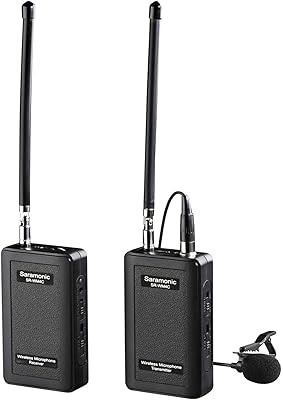
Saramonic SR-WM4C
Saramonic SR-WM4C
68%
88%
Ease of Setup
67%
Audio Quality
61%
Wireless Range
54%
Build Quality
79%
Value for Money
More
Rode Wireless GO Wireless Microphone System
78%
91%
Audio Quality
94%
Ease of Setup
63%
Build Quality
88%
Battery Life
58%
Wireless Range
More
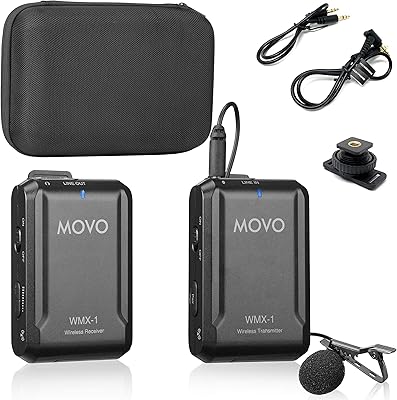
Neewer CM28 Pro Wireless Lavalier Microphone System
79%
88%
Audio Clarity
91%
Standalone Recording
67%
Wireless Range & Stability
86%
Battery Life
83%
Charging Case Design
More
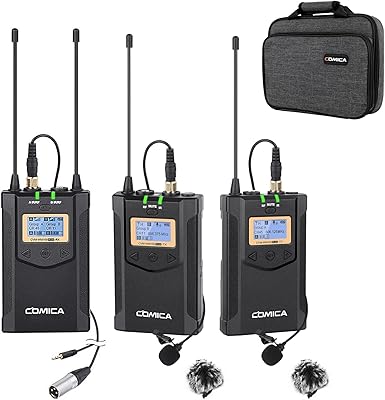
Comica CVM-WM100 PLUS
83%
92%
Signal Stability
86%
Audio Quality & Clarity
94%
Post-Production Flexibility
61%
Portability & Form Factor
68%
Power Management & Battery Life
More
7RYMS iRay DW40 4-Channel Wireless Lavalier Microphone
79%
88%
Multi-Channel Recording Performance
74%
AI Noise Cancellation
83%
Audio Clarity & Resolution
71%
Wireless Range & Stability
86%
Battery Life & Charging Case
More
Comica CVM-WM200A Wireless Lavalier Microphone System
77%
74%
Audio Clarity
61%
Wireless Range
88%
Ease of Setup
83%
Build Quality
53%
Battery Performance
More
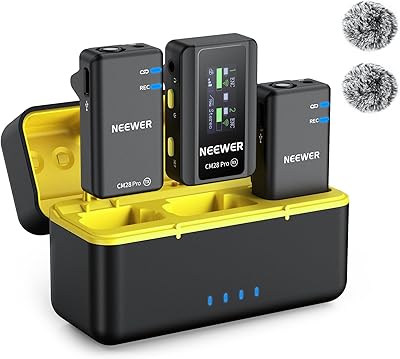
Movo WMX-1 Wireless Lavalier Microphone System
87%
88%
Audio Quality
94%
Ease of Use
85%
Wireless Range
91%
Battery Life
93%
Portability
More

FAQ

Yes, the UWP-D21 works with any camera that has an XLR input or a 3.5mm audio jack — both cables are included in the box. The cold shoe mount adaptor also fits standard hot shoe mounts found on most camera brands, so you are not locked into the Sony ecosystem by any means.

Sony rates the operating range at up to approximately 50 to 60 meters in open conditions, though real-world range depends heavily on the environment. In a crowded event space or an area with a lot of wireless traffic, you will want to stay closer — the true antenna diversity helps maintain stability, but walls, bodies, and RF interference all reduce effective range.

You can, and many users do. NiMH rechargeables work fine in both the transmitter and receiver. Just be aware that the battery life indicator is calibrated for alkalines, so the runtime readout may be slightly less accurate with rechargeables. Keep a spare set charged and accessible on longer shooting days.

It is straightforward: you hold the transmitter close to the NFC touch point on the receiver, and they negotiate a shared frequency automatically. It takes just a few seconds. If NFC is not available or you prefer manual control, the single-button auto-scan finds a clean channel on its own. Either way, setup on location is fast.

Not necessarily. The system operates in UHF channels 14 through 25 (470–542 MHz), and frequency allocation rules vary by country. In some regions, parts of this band are licensed to broadcasters or have been reallocated to mobile services. Always check your local telecommunications regulator before purchasing or using this system abroad.

Yes, the URX-P40 receiver has a 3.5mm headphone output that lets you monitor the incoming audio directly. This is genuinely useful on set for catching issues like clothing rustle or a loose mic clip before they ruin a take.

The ECM-V1BMP lavalier is small and can be routed under clothing without much difficulty. The included windscreen adds a little bulk but keeps wind noise down in outdoor situations. For on-camera interviews, most experienced shooters can hide it completely; for documentary or news work where a visible mic is acceptable, placement is even easier.

The digital signal processing in this UHF kit introduces only a very small amount of latency, generally well under 5 milliseconds. In practice, this is not a problem for video sync — it falls within what most cameras and editing software handle automatically. It is a far smaller concern here than with some 2.4 GHz systems that can run into interference-related jitter.

Yes, each unit is a single-channel system, but you can run multiple UWP-D systems simultaneously by setting them to different frequencies. With over 2,700 selectable frequencies across a 72 MHz bandwidth, finding two clean non-interfering channels side by side is not difficult. Just run the auto-scan on each unit separately before your shoot.

The Rode Wireless GO II and Sennheiser XSW-D are both 2.4 GHz systems with smaller, lighter form factors and built-in rechargeable batteries — real advantages for minimalist rigs. This Sony UHF kit trades some compactness for more robust RF performance in congested environments, a wider frequency selection, and XLR professional output. If you shoot in RF-heavy locations or need that XLR connection for broadcast-grade cameras, the Sony makes a strong case. For casual content creators or mirrorless shooters who prioritize a small footprint, the compact 2.4 GHz competitors are worth a close look.

Where to Buy