Overview

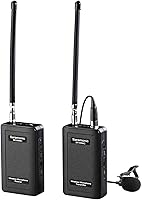
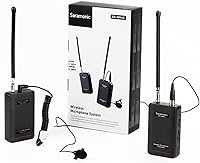
The Saramonic SR-WM4C has been quietly holding its ground in the budget wireless audio space since 2015 — which, in itself, says something. It's an entry-level VHF lavalier system that bundles a belt-pack transmitter, a camera-mountable receiver, and an omnidirectional clip-on mic into one tidy package. This wireless lav system runs on AAA batteries with no built-in rechargeable option, so you'll want spares on hand. With around 195 ratings averaging 4.1 stars, it's clearly working for a lot of people — though not everyone walks away fully satisfied. For solo creators watching their spending, it's a reasonable starting point.

Features & Benefits

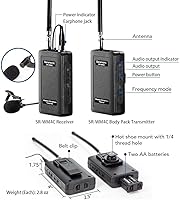
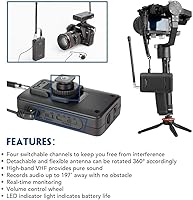
The Saramonic kit gives you four switchable channels, which helps dodge interference when you're not the only person running wireless gear on set. The 60-meter range claim is best treated as a best-case figure — in practice, with walls, people, and competing signals in the mix, expect closer to 30 to 40 meters of reliable coverage. That's still workable for most interview or vlog scenarios. The antenna detaches and rotates a full 360 degrees, making receiver placement less fussy. A 78 dB signal-to-noise ratio keeps background hiss reasonably at bay, and the 3.5mm output connects to virtually any camera body without adapters.

Best For

This VHF mic set is a natural fit for YouTubers, student filmmakers, and anyone running solo interview shoots without a dedicated sound person. If you're currently tethered to a wired lav and want freedom of movement without committing to a professional rig, this is a logical step up. It suits run-and-gun shooting well — the kind of spontaneous, lightweight filming where spending ten minutes on audio setup just isn't realistic. That said, if you're working in dense urban areas or delivering audio for professional broadcast, the inherent constraints of a VHF system will likely push you toward something more capable.

User Feedback

Buyers consistently highlight the plug-and-play setup — most say it's working within minutes out of the box, which genuinely matters when you're new to wireless audio. The recurring criticism is build quality: the plastic housing feels light in a way that raises durability questions for heavy outdoor use. Some users in busy urban environments report occasional signal dropouts, a known limitation of VHF compared to UHF systems. The bundled lav mic earns mixed marks — functional for casual content, but several reviewers recommend swapping it out if audio quality is a real priority. AAA battery dependency is a minor but persistent annoyance on longer shoot days.

Pros

  • Extremely fast setup — most users are recording within minutes of unboxing, no configuration headaches.
  • Universal 3.5mm output connects directly to virtually any DSLR or mirrorless camera body.
  • Four switchable channels make it easy to sidestep interference without technical know-how.
  • Lightweight enough to disappear into a camera bag without adding meaningful bulk to your kit.
  • LED battery indicator prevents the frustrating experience of a dead transmitter mid-take.
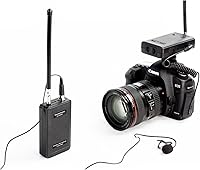
  • Cold-shoe receiver mount keeps the rig tidy and the cable run short for solo operators.
  • Rotating, detachable antenna lets you optimize signal direction on the fly during dynamic shoots.
  • At its price point, bundling transmitter, receiver, and lav mic together represents solid starter value.

Cons

  • Real-world wireless range falls noticeably short of the advertised 60-meter figure in typical shooting conditions.
  • Plastic housing feels fragile and shows wear faster than expected with regular use.
  • The included lavalier mic lacks clarity and handles noise poorly — many buyers replace it quickly.
  • AAA battery dependency with no rechargeable option is inconvenient during longer shoot days.
  • VHF technology is inherently prone to interference in urban areas, busy venues, or Wi-Fi-dense spaces.
  • Audio quality has a hard ceiling that becomes obvious when compared side-by-side with UHF systems.
  • The belt clip on the transmitter struggles to grip thinner fabrics securely during movement.
  • Antenna connection point can loosen over time with repeated detaching, potentially affecting signal stability.

Ratings

The Saramonic SR-WM4C has been analyzed by our AI rating engine after processing verified buyer reviews from multiple global markets, with spam, incentivized, and bot-generated feedback actively filtered out before scoring. What emerges is a product that punches reasonably well for its price tier but carries real trade-offs that budget-conscious creators should weigh carefully. Both the genuine strengths and the recurring frustrations are reflected transparently in the scores below.

Ease of Setup
88%
Most buyers report being up and running within minutes of opening the box — no drivers, no app, no pairing ritual. For a first-time wireless mic user upgrading from a wired clip-on, that frictionless experience genuinely reduces the anxiety of adding audio gear to a solo shoot.
A small number of users encountered channel sync issues straight out of the box, requiring manual channel-matching between transmitter and receiver. The included documentation is minimal, which can leave less technical buyers guessing when something does not behave as expected.
Audio Quality
67%
33%
For casual YouTube videos, talking-head interviews, and short-form social content, the audio output is clean enough to use without heavy post-processing. The 78 dB signal-to-noise ratio keeps the noise floor acceptably low in quiet indoor environments, which covers the majority of use cases this kit is designed for.
Anyone who has used a mid-range UHF system will immediately notice the quality ceiling here. The sound can feel slightly flat and lacks the dynamic clarity that even modestly priced UHF competitors deliver. In louder environments, the noise floor becomes more noticeable and harder to clean up in editing.
Wireless Range
61%
39%
In open outdoor conditions — think a park interview or a wide outdoor vlog setup — the system holds a stable signal at distances that cover most practical shooting scenarios for solo creators. For indoor shoots in a standard room or small studio, range is never a real concern.
The advertised 60-meter figure is a line-of-sight ideal that rarely reflects real-world use. Buyers shooting in apartments, offices, or busy urban streets frequently report signal degradation or dropout well before that distance. Walls, competing wireless signals, and even people moving between transmitter and receiver all chip away at reliable coverage.
Build Quality
54%
46%
The kit is genuinely lightweight, which makes it easy to carry in a camera bag without adding meaningful bulk. For creators who are moving quickly between locations, the compact form factor is a practical advantage over bulkier professional rigs.
The plastic housing is the most common complaint across buyer reviews, and it is hard to argue against it. Both the transmitter and receiver feel fragile relative to what a working videographer would want clipped to clothing or mounted on a camera regularly. Several buyers reported clips and connectors showing wear faster than expected.
Value for Money
79%
21%
Relative to what wireless audio used to cost at the entry level, this VHF mic set offers a lot of functionality for creators on tight budgets. Getting a transmitter, receiver, and lav mic in one package without spending heavily is a genuine advantage for students or hobbyists testing the waters of wireless audio.
The value calculation shifts if you factor in the likelihood of upgrading the included lav mic, buying extra batteries, or eventually replacing the unit once the build quality catches up with you. Buyers who stretch slightly further in budget consistently report being happier with their long-term investment.
Interference & Signal Stability
58%
42%
In quiet suburban environments or rural outdoor shoots, the four switchable channels give you enough flexibility to find a clean frequency without much effort. Switching channels takes seconds and often resolves minor interference without needing to diagnose the source.
VHF is inherently more susceptible to interference than UHF, and buyers in dense urban areas — particularly those shooting near Wi-Fi routers, other wireless gear, or in public venues — report noticeable dropouts. This is less a flaw of this specific kit and more a structural limitation of the VHF format that buyers should understand before purchasing.
Battery Life & Power
63%
37%
The LED battery indicator is a practical touch that prevents the frustrating experience of a mid-take power failure. For shorter shoots of one to two hours, a fresh set of AAA batteries handles the session comfortably without any anxiety about power management.
AAA dependency is a recurring gripe, particularly for creators who do multi-hour shoots or forget to stock up. There is no USB charging option, no rechargeable battery slot, and no low-battery warning beyond the LED — which some buyers describe as going from green to dead faster than expected during longer sessions.
Compatibility
84%
The 3.5mm output connects directly to Canon, Nikon, Sony, and most mirrorless bodies without adapters or converters. Buyers across a wide range of camera setups consistently confirm that the plug-and-play connection works on first attempt, which removes a common point of friction with budget audio gear.
A small number of users with certain Sony cameras reported needing to adjust input gain levels significantly to get usable audio, suggesting the output level may not be optimally tuned for every camera's input sensitivity. This is a minor issue but worth testing before a critical shoot.
Included Lavalier Microphone
59%
41%
The bundled clip-on mic is functional for low-stakes content — casual vlogs, tutorial videos, or social media clips where broadcast-grade clarity is not expected. For buyers coming from no external microphone at all, it represents a meaningful step up in recorded voice quality.
Experienced audio users tend to swap it out quickly. The capsule picks up handling noise more than it should, and in anything beyond a quiet room the audio can feel thin and slightly harsh. A meaningful portion of reviewers specifically recommend pairing the system with a better third-party lav mic to get the full benefit of the wireless setup.
Portability & Form Factor
82%
18%
At just over 25 grams for the mic unit, this is one of the lightest wireless systems available at this price point. Tossing the whole kit into a jacket pocket or small pouch is genuinely easy, making it well-suited to travel content creators or journalists who move fast.
The compact size does mean smaller controls, and some buyers with larger hands find the channel-switching and volume wheel fiddly to operate on the fly. The belt clip on the transmitter is functional but not confidence-inspiring when attached to thinner fabrics or lightweight shirts.
Camera Mount & Receiver Design
72%
28%
The receiver mounts directly to a standard cold shoe, keeping the cable run short and the overall rig tidy. For solo shooters who cannot have a separate audio monitor, having the receiver visible and accessible on the camera body is a practical workflow advantage.
The mount feels secure enough on most cameras but introduces noticeable wobble on cheaper cold shoes or third-party rigs. A few buyers also note that the receiver adds visible bulk to smaller mirrorless bodies, which can look unwieldy in certain shooting situations.
Antenna Performance
66%
34%
The detachable, rotatable antenna gives users a way to optimize signal direction based on where the subject is moving. Being able to point the antenna without repositioning the whole receiver is a small but useful feature during dynamic interview scenarios.
The antenna connection point feels like one of the more fragile parts of the system. Buyers who frequently detach and reattach the antenna report that the connection can loosen over time, which potentially contributes to signal instability in extended use.
Longevity & Durability
51%
49%
The fact that this system has remained available and unchanged since 2015 suggests it has a stable enough user base to justify continued production. For occasional use in controlled environments, buyers report the unit lasting through months of light shooting without issues.
Regular working use tells a different story. Buyers who use the kit multiple times per week report mechanical wear on clips, connectors, and the antenna mount within a few months. The overall construction does not inspire confidence for creators who depend on their gear professionally.

Suitable for:

The Saramonic SR-WM4C is a practical choice for solo content creators, student filmmakers, and vloggers who are taking their first real step into wireless audio without committing to professional-grade spending. If your workflow involves interview-style YouTube videos, talking-head tutorials, or short documentary segments shot in reasonably controlled environments, this wireless lav system covers the basics reliably. It works particularly well for creators who are currently tethered to a wired clip-on mic and want the freedom to move without the complexity or cost of a prosumer rig. The plug-and-play setup via 3.5mm jack means it connects directly to Canon, Nikon, Sony, and most mirrorless bodies without hunting for adapters. For light-use scenarios — a few shoots per week in indoor or suburban outdoor settings — the Saramonic kit delivers enough to meaningfully improve production quality over built-in camera audio.

Not suitable for:

The Saramonic SR-WM4C is not the right tool for creators who need broadcast-ready audio, work regularly in dense urban environments, or depend on their gear through heavy, daily professional use. VHF systems are fundamentally more vulnerable to interference than UHF alternatives, and anyone shooting in busy venues, near Wi-Fi-heavy locations, or alongside other wireless equipment will likely encounter signal dropout that becomes genuinely disruptive. The plastic build quality is not engineered for the kind of punishment that comes with frequent travel, outdoor documentary work, or multi-shoot weeks — buyers in those situations tend to report accelerated wear on clips, connectors, and the antenna mount. The included lavalier mic has a real audio ceiling that will frustrate anyone whose audience has come to expect crisp, professional-sounding voice recordings. If you are even slightly serious about audio as a craft, this VHF mic set should be viewed as a temporary stepping stone rather than a long-term solution.

Specifications

  • Wireless Type: The system operates on VHF (Very High Frequency) wireless technology across four user-selectable channels.
  • Channels: Four switchable channels are available to minimize interference when multiple wireless systems are in use nearby.
  • Wireless Range: Maximum claimed range is up to 60 meters in open, line-of-sight conditions with no physical obstacles between transmitter and receiver.
  • Signal-to-Noise Ratio: The system delivers a 78 dB signal-to-noise ratio, providing reasonably low background noise for entry-level wireless audio recording.
  • Polar Pattern: The included lavalier microphone uses an omnidirectional polar pattern, capturing sound evenly from all directions around the capsule.
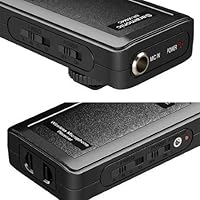
  • Connector Type: The receiver outputs audio via a 3.5mm jack, compatible with the microphone inputs found on most DSLRs, mirrorless cameras, and camcorders.
  • Antenna Design: The receiver features a detachable antenna that rotates a full 360 degrees to allow flexible signal directioning based on subject position.
  • Power Source: Both the transmitter and receiver are powered by AAA batteries; no rechargeable or USB-powered option is built into the system.
  • Battery Indicator: An LED indicator on the unit displays current battery status to alert users before power loss interrupts a recording session.
  • Mic Unit Weight: The lavalier microphone unit weighs approximately 25.4g, keeping the overall system light enough for comfortable clip-on body wear.
  • Package Dimensions: The packaged kit measures 10.55 x 5.63 x 2.05 inches, making it compact enough to fit in a standard camera accessory pouch.
  • Audio Sensitivity: The microphone capsule operates at an audio sensitivity of 30 dB, suited for capturing close-range voice in quiet to moderate environments.
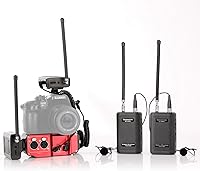
  • Included Components: The kit ships with a belt-pack transmitter, a cold-shoe camera-mountable receiver, and one omnidirectional lavalier microphone.
  • Camera Mount: The receiver is designed to mount directly onto a camera cold shoe, keeping the wireless receiver close to the camera operator.
  • Compatibility: The system is compatible with Canon, Nikon, Sony, and most other DSLR, mirrorless, and camcorder bodies that have a 3.5mm mic input.
  • Color: The kit is finished in a red and black color scheme across both the transmitter and receiver units.
  • Model Number: The official model identifier is SR-WM4C, manufactured by Saramonic and first made available in August 2015.
  • Manufacturer: Saramonic is the manufacturer, and the product is confirmed as not discontinued as of the latest available product listing data.

Related Reviews
Saramonic SR-XM1 Omnidirectional Microphone
84%
92%
Value for Money
87%
Sound Quality
90%
Portability & Weight
93%
Ease of Use (Plug-and-Play)
79%
Durability & Build Quality
More
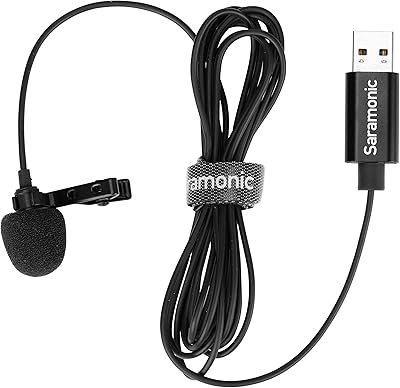
Saramonic SR-ULM10 Lavalier Mic with USB-A Connector
85%
91%
Value for Money
85%
Audio Clarity
94%
Ease of Use
80%
Build Quality
88%
Cable Length
More
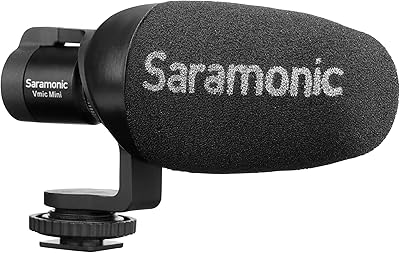
Saramonic VMICMINI Shotgun Microphone
86%
88%
Audio Quality
92%
Value for Money
94%
Portability
90%
Ease of Use
85%
Build Quality
More
Steno SR Pro-2 Dual Microphone
82%
96%
Voice Isolation
92%
Transcription Accuracy
84%
Ergonomic Comfort
57%
Out-of-the-Box Connectivity
94%
Voice Privacy
More
SmallRig 13164-SR Shotgun Microphone
84%
93%
Portability & Weight
96%
Power Reliability
84%
Audio Immersiveness
89%
Build Quality
92%
Setup & Ease of Use
More
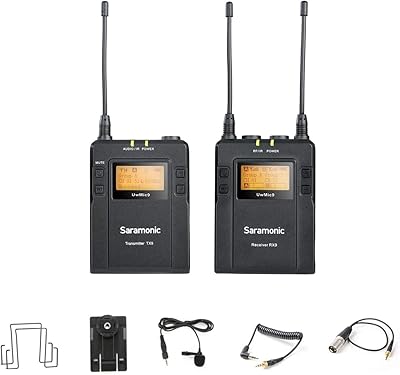
Saramonic UwMIC9 Wireless Lavalier Microphone System
85%
90%
Audio Quality
89%
Ease of Setup
92%
Range and Signal Stability
65%
Battery Life
87%
Portability and Weight
More
Sangean SR-35 AM/FM Pocket Radio
82%
93%
Portability
88%
Battery Life
71%
Sound Quality
85%
Reception Reliability
90%
Ease of Use
More
Yamaha SR-C20A Compact Sound Bar
84%
88%
Sound Quality
91%
Ease of Setup
79%
Bass Performance
84%
Bluetooth Connectivity
82%
Build Quality
More
Stryker SR-955HPC 10 Meter Amateur Radio
87%
93%
Signal Strength and Clarity
88%
Noise Reduction Performance
85%
Ease of Setup
91%
Audio Quality
87%
Durability and Build Quality
More
Saramonic Blink500 ProX Q4 Wireless Lavalier Microphone
87%
90%
Sound Quality
94%
Ease of Setup
88%
Battery Life
85%
Wireless Range
81%
Build Quality
More

FAQ

It works right out of the box with no software, drivers, or app required. You plug the receiver into your camera's 3.5mm mic input, make sure both the transmitter and receiver are set to the same channel, and you're recording. Most users are up and running within a few minutes.

In most cases, yes — if your Sony camera has a standard 3.5mm microphone input, the receiver connects directly. That said, some Sony bodies require you to manually bump up the mic input gain in the camera menu to get a strong enough signal level, so it's worth checking your camera's audio settings on your first test shoot.

The Saramonic SR-WM4C is rated for up to 60 meters, but that figure assumes a clear, open outdoor environment with no obstacles. In practical shooting conditions — indoors, around walls, or in areas with competing wireless signals — most users find reliable performance closer to 30 to 40 meters. Plan around that figure and you won't be caught off guard.

Yes, standard rechargeable AAA batteries work fine in both the transmitter and receiver. The system doesn't have a built-in charging port, so you'll need a separate AAA charger. Many users keep a spare set charged and ready, especially for longer shoot days where battery life becomes a concern.

The bundled lav mic is functional for casual content like vlogs, tutorials, or basic interview footage. If you're producing content where audio quality is a key part of your brand — podcast-style videos, documentary work, or anything with a discerning audience — most experienced users recommend swapping it out for a dedicated third-party lavalier mic to get the best from this wireless system.

This is worth thinking through before you buy. VHF systems are more susceptible to interference than UHF systems, and dense urban environments with heavy wireless traffic can cause occasional dropouts or signal noise. Switching channels usually helps, but if you're regularly shooting in crowded venues or urban locations, a UHF system would give you more reliable results.

The receiver has a standard cold-shoe mount on the bottom that slides directly onto your camera's hot shoe or any cold shoe accessory mount. Once seated, a short 3.5mm cable connects it to your camera's microphone input. The setup keeps everything compact and avoids dangling cables if you position it correctly.

There are four switchable channels available. In most solo shooting situations you'll never need to switch — just pick any channel and go. Switching becomes useful when you're on a set with other filmmakers using wireless gear, or if you notice audio interference or dropout on your current channel. It's a quick fix that takes seconds.

It handles occasional outdoor use well enough, but the plastic build is not engineered for harsh conditions or heavy daily use. If you're shooting outdoors regularly — especially in dusty, humid, or physically demanding environments — treat it carefully. Users who clip and unclip the transmitter frequently report that the hardware shows wear faster than expected over several months of active use.

The system does support real-time audio monitoring, and there is a volume control wheel on the receiver to manage output levels. However, you would need to connect headphones to your camera's headphone output rather than directly to the wireless receiver itself, which means your monitoring setup depends on your camera's capabilities as much as the Saramonic kit itself.