Overview

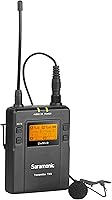
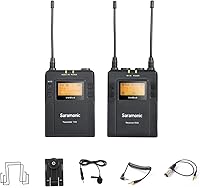
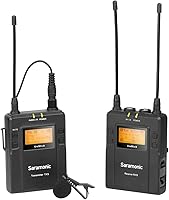
The Saramonic UwMIC9 UHF Wireless Lavalier Microphone System sits in a sweet spot for videographers who want genuine UHF performance without spending professional broadcast money. You get a complete kit out of the box: the RX9 receiver, TX9 bodypack transmitter, and a lavalier mic — everything needed to go wireless on your first shoot. What immediately stands out is the metal construction on both units; it feels noticeably more solid than the all-plastic competitors at similar price points. This is a strong performer for solo interviews and run-and-gun work, though a few real-world considerations are worth knowing before you buy.
Features & Benefits

The UwMIC9 offers 96 selectable UHF channels spread across the 514–596 MHz band, which matters most when shooting in venues packed with other wireless gear — trade shows, conference halls, and busy event spaces. The dual-output receiver handles both 3.5mm and XLR connections, so you can plug directly into a DSLR, mirrorless camera, or dedicated audio recorder without adapters. Both units carry small but readable LCD screens that make channel matching fast, even in poor lighting. The headphone jack on the receiver is a practical touch — you can catch audio problems on the spot, not during editing. The omnidirectional lavalier is forgiving of mic placement, which helps when subjects move around.

Best For

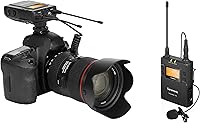
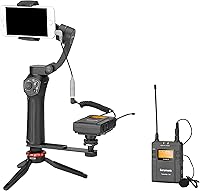
This Saramonic kit is an ideal match for solo content creators — YouTubers and vloggers shooting interviews or talking-head videos without a dedicated sound person. Event videographers covering weddings or corporate panels will appreciate the quick setup; pairing the transmitter on a subject and locking in a channel takes under a minute once you know the system. It also works well for journalists and documentary shooters who need a discreet lapel mic that won't draw attention. Via the 3.5mm output, it pairs cleanly with most DSLRs and mirrorless cameras. Even GoPro and smartphone users are covered, making it a genuinely flexible kit for mobile video work.

User Feedback

Buyers who shoot regularly with this wireless lav system consistently highlight the clean audio quality and stable signal as the standout strengths. The LCD displays also earn specific praise from users who've worked in fast-changing environments where quick channel switching is necessary. On the critical side, the dependency on AA batteries in both units is the most common complaint — on a full day of shooting, you'll want spare batteries in your bag. A smaller number of users report RF interference in dense urban locations or crowded studio environments. The included lavalier performs well enough for most uses, but serious audio work may call for an upgraded capsule. Overall, criticism targets accessories more than the core system.

Pros

  • The UHF band with 96 channel options gives real interference-avoidance flexibility in busy shooting environments.
  • Metal construction on both the transmitter and receiver holds up to regular on-location use far better than plastic-bodied alternatives.
  • Dual 3.5mm and XLR outputs mean this wireless lav system works with DSLRs, mirrorless cameras, audio recorders, and more.
  • The onboard headphone jack lets you monitor audio live, catching problems before they ruin a take.
  • LCD screens on both units make channel matching straightforward, even when you're working quickly in the field.
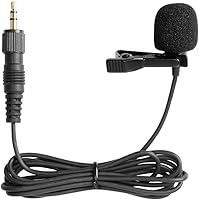
  • The omnidirectional lavalier capsule is forgiving of placement, which is a genuine advantage when subjects move around.
  • Compact, lightweight form factor makes the kit easy to carry and fast to set up without a dedicated sound person.
  • Broad device compatibility — including smartphones, tablets, and GoPro cameras — suits creators who shoot across multiple platforms.
  • Overall audio clarity at this price tier earns consistent praise from buyers doing interviews, vlogs, and event coverage.

Cons

  • AA battery dependency across both units means you must carry spares on any shoot longer than a couple of hours.
  • The included lavalier mic is adequate but noticeably limits audio quality in critical or professional recording scenarios.
  • RF interference has been reported by users shooting in dense urban environments or locations with heavy competing wireless traffic.
  • No rechargeable battery option built in means ongoing consumable costs that add up over time.
  • The system ships with one transmitter, so covering two subjects simultaneously requires purchasing a second kit entirely.
  • Signal-to-noise ratio of 70 dB is acceptable for general use but falls short of higher-end wireless systems in quiet recording environments.
  • Larger venues may expose the limits of real-world usable range, which does not always match the figures suggested by the specifications.
  • No color screen or advanced on-device feedback means troubleshooting RF issues in the field relies mostly on trial and error.

Ratings

The scores and analysis presented here for the Saramonic UwMIC9 UHF Wireless Lavalier Microphone System are generated by AI after processing thousands of verified purchase reviews from buyers worldwide, with spam, bot activity, and incentivized feedback actively filtered out. Every category rating reflects the genuine balance of praise and frustration expressed by creators who actually use this wireless lav system in the field. Both the standout strengths and the recurring pain points are represented transparently so you can make a fully informed purchase decision.
Audio Quality
78%
22%
Reviewers across interview and vlog applications consistently describe the audio as clean and well-defined for the price tier. The omnidirectional capsule handles conversational recordings well, and the frequency response up to 18 kHz means voices come through with enough clarity to use straight from camera without heavy post-processing.
The 70 dB signal-to-noise ratio shows its limits in quieter recording environments, where a low hiss becomes audible during post-production. Users doing critical audio work — narration, broadcast, or high-end documentary — consistently report that the noise floor falls short of what dedicated audio professionals expect at this level.
Signal Stability
74%
26%
In typical shooting environments — outdoor interviews, indoor corporate panels, and event venues with moderate RF traffic — the connection between the TX9 and RX9 holds steady and users report very few dropouts. The UHF band choice gives it a meaningful advantage over 2.4 GHz systems in similar real-world conditions.
A consistent subset of users flagged signal interruptions in dense urban areas, large convention centers, and broadcast environments where multiple wireless systems compete for the same spectrum. Real-world usable range also tends to fall noticeably short of the maximum specification when shooting through walls or in RF-heavy interiors.
Build Quality
84%
The metal housings on both the TX9 transmitter and RX9 receiver stand out immediately against cheaper plastic-bodied competitors. Users who shoot regularly report that the units survive being knocked around in gear bags and used across varied climates without developing the creaks and rattles that plague budget alternatives after a few months of use.
While the overall build is solid, some users note that the battery compartment doors feel less premium than the rest of each unit and require care to avoid stressing the plastic hinges over time. The bodypack clip and mounting hardware are functional but noticeably less refined than on higher-end systems in the next price bracket.
Ease of Setup
86%
Getting this wireless lav system ready to shoot is fast and intuitive. The LCD screens on both units make channel matching straightforward, and the whole pairing process takes under a minute. Users new to wireless audio regularly mention being fully operational on their first session without ever needing to consult a manual.
The manual channel selection process, while quick once learned, requires setting both units independently rather than offering any automatic pairing or scan-and-lock feature found on pricier systems. A handful of users also note that the channel navigation buttons feel slightly stiff, making fine adjustments a little frustrating when working quickly under pressure.
Value for Money
88%
The consensus across buyer reviews is clear: the UwMIC9 delivers audio performance and hardware quality that genuinely punches above its weight. The metal build, dual XLR and 3.5mm outputs, and reliable UHF performance combine into a kit that would cost considerably more from better-known professional audio brands.
The ongoing cost of AA batteries across both units chips away at the overall value proposition over time, particularly for high-frequency users. Many buyers also feel the included lavalier capsule does not fully match the rest of the system's capability, effectively requiring an accessory upgrade to unlock the kit's full audio potential.
Battery Life
57%
43%
AA batteries are universally available, meaning you can grab replacements at virtually any convenience store, airport, or supermarket worldwide. For creators shooting short-form content or single interview sessions, a fresh set of AAs typically carries through an entire shoot without issue.
The absence of any built-in rechargeable option is the most consistently cited frustration across user reviews. On full-day event shoots or multi-session production days, managing two separate battery sets across the transmitter and receiver creates real logistical overhead, and mid-shoot battery failures have been reported often enough to make carrying spares non-negotiable.
RF Interference Resistance
71%
29%
Having 96 channels spread across the 514–596 MHz UHF band gives users meaningful headroom to find clean frequencies when a venue is busy with other wireless gear. In most standard shooting locations — corporate conference rooms, outdoor ceremonies, and studio environments — users find a workable channel without significant difficulty.
In environments with genuinely heavy RF congestion — large broadcast venues, urban concert halls, or productions running many competing wireless systems — the 96-channel option does not guarantee a clean signal. A vocal group of reviewers found interference persistent enough to disrupt multiple takes, particularly in high-density city-center locations.
Device Compatibility
89%
Few wireless lav systems at this price point offer both XLR and 3.5mm outputs on the receiver, and buyers frequently cite the dual-output design as a key reason they chose this Saramonic kit. Support for DSLRs, mirrorless cameras, smartphones, tablets, and GoPro cameras means it adapts across multiple shooting setups without extra hardware.
Smartphone users with USB-C-only or Lightning-only devices will need adapters to make the 3.5mm connection work, adding a minor but real extra step and an additional accessory to manage. GoPro compatibility also depends on the specific model and media mod configuration, meaning it is not plug-and-play universal across the entire GoPro product range.
Display & Controls
82%
18%
The LCD screens on both units are among the most consistently praised design decisions in user reviews. Being able to see your channel and confirm sync status at a glance is a genuine time-saver when setting up quickly at a live event, wedding, or fast-moving documentary location.
Neither display handles very bright sunlight ideally, and a few users mention having to shade the screen to read channel information clearly in harsh outdoor conditions. The navigation buttons are small and closely spaced, which makes fine adjustments slightly frustrating when wearing gloves or rushing through a setup under time pressure.
Included Lavalier Quality
63%
37%
For everyday vlogging, online tutorials, and standard corporate interview work, the stock lavalier mic included with this wireless lav system is adequate and gets the job done without any immediate upgrade required. Users operating in this range of use cases generally find the default capsule acceptable straight out of the box.
The bundled capsule is a clear weak point for anyone with higher audio standards. Reviewers consistently note that swapping to a quality third-party lavalier noticeably improves sound, which suggests the stock mic was engineered to a cost target rather than to match the actual performance capability of the transmitter and receiver hardware.
Portability
83%
The compact footprint of both units makes this Saramonic kit easy to carry alongside a camera and lenses in a standard shoulder bag. Wedding and event videographers particularly appreciate being able to hand the transmitter to a subject and pocket the receiver on a belt clip without adding meaningful bulk to their existing load.
The metal build, while welcome for durability, does add more weight than comparable plastic-bodied systems, which is a minor but real trade-off for creators who prioritize absolute minimum pack weight. The overall package is also noticeably bulkier than the ultra-compact clip-on 2.4 GHz alternatives that have gained popularity in the same market segment.
Headphone Monitoring
77%
23%
Having a headphone jack built into the RX9 receiver is a practical feature that event and documentary videographers consistently appreciate. It lets you confirm that the audio signal is clean and levels are appropriate before a take begins, without needing a separate monitoring device or routing audio through an external recorder.
The monitoring output does not offer fully independent volume control from the main output level in all configurations, which limits its practical utility for some users. A few reviewers also flag that the monitored signal carries a slight latency, making it better suited to level-checking at the start of a shoot than to real-time speech monitoring.
Channel Flexibility
81%
19%
With 96 channels organized across two groups, the UwMIC9 provides a genuinely useful degree of frequency flexibility for a system at this price. Event shooters and run-and-gun videographers appreciate being able to hop channels quickly when interference appears, rather than being constrained to one or two fixed operating frequencies.
Channel selection is entirely manual, with no automatic frequency scanning or intelligent channel recommendation to speed up the process in congested environments. In a busy broadcast scenario or a production running multiple wireless systems simultaneously, the time required to identify and assign clean channels through trial and error becomes a meaningful practical limitation.

Suitable for:

The Saramonic UwMIC9 UHF Wireless Lavalier Microphone System is a practical, well-rounded choice for independent video creators who need dependable wireless audio without a full production crew behind them. Solo YouTubers and vloggers shooting interview content will find the quick transmitter-to-receiver pairing and readable LCD displays genuinely useful on fast-moving shoots. Event videographers working weddings, corporate panels, or conference sessions benefit from the 96-channel UHF band, which gives real flexibility when other wireless systems are competing for RF space in the same venue. Journalists and documentary filmmakers who need a discreet lapel setup with minimal fuss will appreciate how compact and field-ready both units are. The dual 3.5mm and XLR outputs also mean this kit works across a wide range of cameras and recorders, so it grows with your gear rather than locking you into one setup. Mobile shooters using smartphones or action cameras are covered too, making this a genuinely versatile pick for creators who work across multiple formats.
Not suitable for:

Buyers expecting broadcast-grade audio quality or professional studio performance should look elsewhere — the Saramonic UwMIC9 UHF Wireless Lavalier Microphone System is a capable mid-range system, but it has real ceilings that matter in critical recording situations. The included lavalier capsule is adequate for general use but falls short of the detail and low-noise floor that serious audio professionals expect, and swapping it for a quality third-party mic adds cost to the overall investment. Anyone shooting all-day events or multi-hour live streams will need to stay on top of battery levels, since both the transmitter and receiver run on AA batteries that can become a logistics headache without spares on hand. Users operating in extremely dense RF environments — packed urban venues, large broadcast facilities, or locations with heavy wireless traffic — may encounter interference that the 96-channel selection cannot always resolve cleanly. If you need a true dual-talent system where two subjects are miked simultaneously from a single receiver, this kit's single-transmitter configuration means you would need a second system entirely, adding expense and complexity.
Specifications

  • Frequency Range: The system operates across the 514–596 MHz UHF band, positioning it well away from common Wi-Fi and Bluetooth interference sources.
  • Channel Count: 96 selectable channels are organized into 2 groups, giving users ample options to find a clean frequency in crowded RF environments.
  • Polar Pattern: The included lavalier uses an omnidirectional polar pattern, capturing voice evenly from all directions around the capsule regardless of exact placement.
  • Signal-to-Noise Ratio: The system delivers a signal-to-noise ratio of 70 dB, which is appropriate for general video production, interviews, and content creation work.
  • Audio Sensitivity: Microphone sensitivity is rated at 95 dB, supporting clear voice capture across typical indoor and outdoor shooting conditions.
  • Frequency Response: The system's frequency response extends up to 18 kHz, covering the full range of human speech and most general audio content.
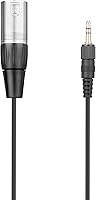
  • Output Connections: The RX9 receiver provides both a 3.5mm TRS jack and an XLR output, enabling connection to cameras, audio recorders, and professional mixers.
  • Power Source: Both the TX9 transmitter and RX9 receiver run on AA batteries, requiring 4 AA batteries in total to operate the complete system.
  • Build Material: The housings of both the transmitter and receiver are constructed from metal, providing greater field durability than the plastic-bodied systems common at similar price points.
  • Package Dimensions: The complete kit ships in packaging measuring 13.43 x 7.09 x 2.17 inches, compact enough to fit inside a standard camera bag alongside other gear.
  • System Weight: Total system weight is approximately 480 grams, keeping the overall load manageable for travel and on-location shooting.
  • Device Compatibility: The kit is compatible with DSLRs, mirrorless cameras, smartphones, tablets, and GoPro action cameras via the receiver's output connections.
  • Monitoring Output: A 3.5mm headphone jack on the RX9 receiver supports real-time audio monitoring without requiring a separate playback device.
  • Display Type: Both the TX9 and RX9 units feature LCD screens that display channel and operational status clearly, including in bright outdoor lighting conditions.

Related Reviews

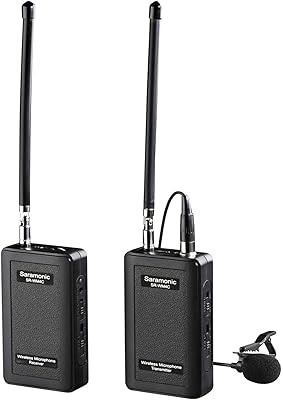
Saramonic SR-WM4C
Saramonic SR-WM4C
68%
88%
Ease of Setup
67%
Audio Quality
61%
Wireless Range
54%
Build Quality
79%
Value for Money
More
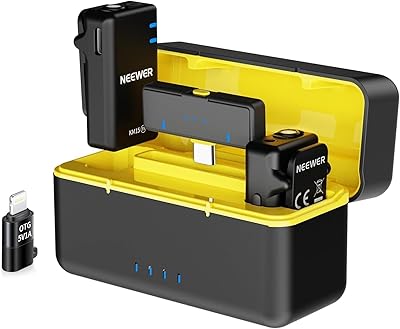
NEEWER KM15 Wireless Lavalier Microphone System
87%
89%
Sound Quality
92%
Ease of Use
87%
Battery Life
83%
Build Quality
90%
Portability
More
Comica CVM-WM200A Wireless Lavalier Microphone System
77%
74%
Audio Clarity
61%
Wireless Range
88%
Ease of Setup
83%
Build Quality
53%
Battery Performance
More
Movo WMX-1 Wireless Lavalier Microphone System
87%
88%
Audio Quality
94%
Ease of Use
85%
Wireless Range
91%
Battery Life
93%
Portability
More
Comica CVM-WM100 PLUS
83%
92%
Signal Stability
86%
Audio Quality & Clarity
94%
Post-Production Flexibility
61%
Portability & Form Factor
68%
Power Management & Battery Life
More
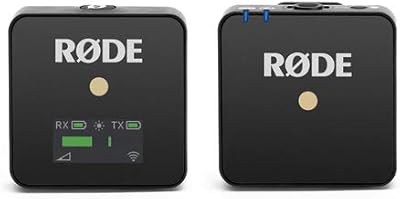
Rode Wireless GO Wireless Microphone System
78%
91%
Audio Quality
94%
Ease of Setup
63%
Build Quality
88%
Battery Life
58%
Wireless Range
More
Gemini UHF-02M-S34 Wireless Microphone System
85%
88%
Performance & Signal Quality
93%
Ease of Setup & Use
85%
Sound Clarity & Audio Fidelity
87%
Durability & Build Quality
80%
Battery Life & Power Management
More
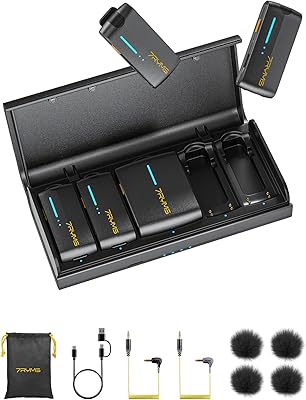
7RYMS iRay DW40 4-Channel Wireless Lavalier Microphone
79%
88%
Multi-Channel Recording Performance
74%
AI Noise Cancellation
83%
Audio Clarity & Resolution
71%
Wireless Range & Stability
86%
Battery Life & Charging Case
More
Neewer CM28 Pro Wireless Lavalier Microphone System
79%
88%
Audio Clarity
91%
Standalone Recording
67%
Wireless Range & Stability
86%
Battery Life
83%
Charging Case Design
More
Saramonic Blink500 ProX Q4 Wireless Lavalier Microphone
76%
83%
Audio Quality
71%
Wireless Reliability
93%
Ease of Setup
81%
Battery Performance
62%
Build Quality
More

FAQ

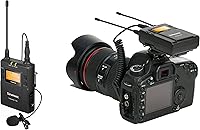
Yes, the Saramonic UwMIC9 UHF Wireless Lavalier Microphone System connects directly to DSLRs and mirrorless cameras via the 3.5mm output on the RX9 receiver. Most modern Canon, Sony, Fuji, and Nikon bodies with a 3.5mm mic input will work without any adapters. If your camera accepts XLR inputs instead — like a cinema body or external recorder — the XLR output on the receiver covers that too.
It depends heavily on your environment. In open outdoor spaces with clear line of sight, users consistently report reliable performance up to around 100 feet. Indoors, or in locations packed with competing wireless gear, expect that figure to drop. Build your shoot around a conservative range estimate rather than the maximum spec number.

Most users get a few hours of continuous use per set of AAs, though this varies with temperature and signal conditions. There is no built-in rechargeable option, so it is worth packing at least one spare set of four AAs any time you are heading into a full-day shoot. It is a small but real operational cost to factor in if you use the kit regularly.

Yes, the receiver's 3.5mm output is compatible with smartphones that have a headphone and mic combo jack. If your phone is USB-C only, a USB-C to 3.5mm adapter will handle the connection. iPhone users without a headphone jack can use a Lightning to 3.5mm adapter — both types are widely available.

It does, but only with GoPro models that support an external microphone input via a media mod or ProTune-compatible adapter. Not every GoPro model has a built-in mic jack, so check your specific model before buying. The receiver connects to the GoPro's input through its standard 3.5mm jack once the right adapter is in place.

Not out of the box — this Saramonic kit includes one transmitter and one receiver, which is a single-channel setup. To cover two subjects simultaneously you would need a second kit. Many users run two systems on different channels, which works well as long as there is enough channel separation to avoid crosstalk between them.

Yes, and many users do exactly this. The TX9 transmitter accepts a standard 3.5mm lavalier input, so you can connect a higher-quality capsule from any compatible brand if you need lower noise or more detail. The stock mic is fine for everyday use, but swapping it is the simplest upgrade path if your audio demands grow.

Use the 96-channel selector to find a clean frequency before your shoot starts. Both units have LCD screens that help you identify and switch to uncongested channels quickly. If you are running two of these kits simultaneously, assign them well-separated channel numbers to prevent them from interfering with each other.

It is straightforward once you have done it once. You manually set both the TX9 and RX9 to the same channel number using the controls and LCD displays on each unit. The whole process takes under a minute, and it is a good habit to verify the channel match at the start of every shoot rather than assuming it carried over from the last session.

It works well for both, particularly if you are streaming from a camera or recording into a computer via an audio interface with a 3.5mm input. Use the headphone monitoring jack on the receiver to catch any dropouts before they hit your stream. For purely static setups where you never move from your desk, a wired lavalier might be simpler, but this wireless lav system is a solid pick if you want the freedom to move around or shoot in different spaces.