Comica CVM-WM200A Wireless Lavalier Microphone System

Comica CVM-WM200A Wireless Lavalier Microphone System — image 1
Comica CVM-WM200A Wireless Lavalier Microphone System — image 2
Comica CVM-WM200A Wireless Lavalier Microphone System — image 3
Comica CVM-WM200A Wireless Lavalier Microphone System — image 4
Comica CVM-WM200A Wireless Lavalier Microphone System — image 5

Comica CVM-WM200A Wireless Lavalier Microphone System — image 6
Comica CVM-WM200A Wireless Lavalier Microphone System — image 7
Comica CVM-WM200A Wireless Lavalier Microphone System — image 8
77%
23%

Overview

The Comica CVM-WM200A Wireless Lavalier Microphone System sits in a practical sweet spot for independent creators: it offers proper UHF wireless performance with dual transmitters and a single receiver, without the price tag or complexity of broadcast-level gear. Around since 2017, it has accumulated a meaningful real-world track record. The metal construction and a clear LCD screen on the receiver give it a more substantial feel than similarly priced plastic alternatives. Worth noting upfront: if you intend to use this wireless lav system with a smartphone, a TRS-TRRS adapter is required and sold separately — a detail that catches some buyers off guard.

Features & Benefits

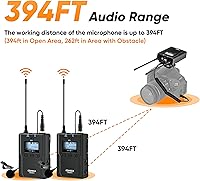
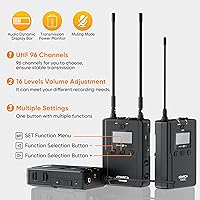
With 96 selectable UHF channels and an auto-scan function, the CVM-WM200A handles interference-heavy environments — busy conference rooms, crowded event floors — without you having to manually hunt for a clean frequency. In open air it reaches around 328 feet, though indoors with walls and obstacles expect something closer to 150-200 feet. Audio delay runs under 20 milliseconds, so lip sync holds up well. The kit includes both TRS and XLR cables out of the box, letting you plug directly into a DSLR, a camcorder, or a mixing board. The one-button mute on each transmitter is also a genuinely useful touch for brief pauses mid-shoot.

Best For

This dual-transmitter mic kit is a natural pick for solo YouTube creators who regularly conduct sit-down interviews — instead of buying two separate systems, you get both transmitters in one box. Run-and-gun vloggers and documentary shooters will appreciate how quickly it pairs via IR sync. If you work with an XLR camcorder or a field recorder, the included XLR cable means you are ready to roll without extra adapters. Where it earns its place most is in two-person video setups: a host and a guest, both miked up, feeding into a single receiver. It is not the right tool for broadcast or large theatrical productions.

User Feedback

Buyers consistently highlight the ease of IR pairing and the clear LCD display as standout practical touches. The metal build also draws positive comments — it feels more durable than most gear in this category. On the critical side, battery life is a recurring complaint; drain can be faster than expected depending on the cells you use, and since AA batteries are not included, stock up before your first shoot. Indoor range consistently falls short of the stated spec; most users report reliable performance up to around 100-150 feet when walls are involved. Smartphone users also flag the need for a separate adapter — it works fine, but it is an extra purchase worth factoring in.

Pros

  • Dual transmitters and one receiver in a single kit makes two-person interviews straightforward to set up.
  • IR sync pairs transmitters to the receiver quickly, with no manual frequency hunting required.
  • 96 UHF channels give you real options for finding a clean signal in busy wireless environments.
  • Both TRS and XLR output cables are included, so most cameras and camcorders are covered out of the box.
  • The metal housing feels noticeably more durable than plastic competitors at a similar price point.
  • The LCD screen on the receiver shows battery level, signal strength, and audio activity at a glance.
  • A 3.5mm headphone jack lets you monitor audio live on location before problems become a ruined take.
  • One-button mute on each transmitter lets a subject pause discreetly without interrupting the recording workflow.
  • USB-C power bank support means you are not solely dependent on batteries during long shooting days.
  • Audio latency under 20 milliseconds keeps the system practical for video work where lip sync matters.

Cons

  • AA batteries are not included in the box, which can catch first-time buyers off guard on day one.
  • Battery drain is faster than many users expect, especially in high RF power mode during longer shoots.
  • Indoor range regularly falls well short of the advertised 328-foot figure when walls or obstacles are present.
  • Smartphone users must purchase a separate TRS-TRRS adapter, adding cost and an extra item to carry.
  • The omnidirectional lav capsules pick up ambient noise more readily in loud or echoing environments.
  • No rechargeable battery system built in means ongoing AA battery costs for frequent shooters.
  • The signal-to-noise ratio of 70dB is adequate but noticeably behind higher-end wireless systems in quiet recording conditions.
  • Mono/stereo switching on the receiver adds a setup step that can confuse users new to wireless audio.

Ratings

Our AI rating engine analyzed thousands of verified global purchases of the Comica CVM-WM200A Wireless Lavalier Microphone System, actively filtering out incentivized reviews, duplicate submissions, and bot activity to surface what real buyers actually experienced. Scores reflect a balanced picture — where this dual-transmitter mic kit genuinely delivers and where it falls short — so you can make a fully informed decision before buying.

Audio Clarity
74%
26%
For YouTube interviews, talking-head vlogs, and event coverage, most users found the audio output clean and intelligible without heavy post-processing. The under-0.5% distortion spec holds up in controlled settings, and dialogue recorded in quiet rooms typically needs only minor EQ adjustments.
In louder environments — outdoor shoots with wind, busy conference halls, or reverberant rooms — the omnidirectional capsules pick up a noticeable amount of background noise. Users expecting studio-level clarity in less-than-ideal conditions regularly reported disappointment compared to higher-tier wireless systems.
Wireless Range
61%
39%
In open outdoor settings like parks, courtyards, or parking lots, the CVM-WM200A performs reliably across a genuinely useful distance, giving videographers enough freedom to move around their subject without managing cables. Users shooting outdoor interviews or ceremonies in unobstructed spaces found the range more than adequate.
Indoors, the advertised 328-foot range is rarely achievable. Multiple buyers shooting through even a single wall reported dropouts beyond 100–150 feet, and in buildings with dense RF activity the signal became unreliable at surprisingly short distances. This is one of the most frequently mentioned frustrations across all buyer feedback.
Ease of Setup
88%
The IR sync pairing process is genuinely fast — most users had both transmitters linked and recording within two or three minutes of unboxing, even with no prior wireless audio experience. The auto-scan channel selection removes the guesswork that plagues manual-tuning systems, which buyers new to wireless audio particularly appreciated.
A small but consistent group of users reported confusion around the mono/stereo output switch, occasionally discovering mid-shoot that their camera had recorded only one channel. The initial learning curve around output mode selection is a real setup pitfall that the included documentation does not address clearly enough.
Build Quality
83%
The all-metal housing on both transmitters and the receiver is one of the most consistently praised aspects across buyer reviews. Compared to the plastic-bodied competitors in the same price bracket, users reported that the CVM-WM200A feels noticeably more solid and survived regular use in bags, on location, and through moderate physical handling without cosmetic or structural damage.
A few users noted that the clip mechanism on the lavalier capsule itself — which is plastic — felt less robust than the main units. There were isolated reports of the clip becoming loose or breaking after extended use, particularly on thicker fabrics where the clip is under more stress.
Battery Performance
53%
47%
The USB-C power bank option on the receiver is a practical fallback that frequent shooters genuinely use, effectively extending recording sessions without depending entirely on disposable batteries. Users who invested in quality rechargeable AA cells reported significantly better and more consistent runtimes.
Battery drain is the single most common complaint in global feedback. The system ships with no batteries included, which catches many first-time buyers off guard, and even with brand-name alkaline cells, several users reported needing to replace batteries mid-shoot during longer production days. In high RF power mode, drain accelerates noticeably compared to low-power operation.
Dual-Channel Functionality
86%
The ability to run two transmitters simultaneously into one receiver is the defining reason most buyers choose this kit over a single-transmitter alternative. Interview-style creators and event videographers consistently praised how well the two-channel setup worked in practice, with both audio feeds arriving cleanly at the camera without phase issues.
When both transmitters operate simultaneously in environments with heavy wireless traffic, a minority of users reported occasional brief dropouts on one channel that did not affect the other. Managing mono versus stereo recording modes when using both transmitters also requires some upfront understanding of your camera's audio input behavior.
LCD Display
81%
19%
The receiver's LCD screen showing battery levels, signal strength, and audio activity bars in real time was frequently highlighted as a standout feature at this price point. Shooters working alone without a sound assistant found it especially useful for catching issues — like a dying transmitter battery — before they became a ruined take.
In bright outdoor sunlight, several users noted that the screen becomes harder to read without angling the receiver toward shade. The display size is also fairly small, which means checking fine detail at a glance during active shooting requires closer attention than ideal.
Compatibility
71%
29%
The inclusion of both TRS and XLR output cables in the box makes this wireless lav system genuinely plug-and-play for most DSLR, mirrorless, and XLR camcorder users. Buyers with field recorders and audio mixers also appreciated not needing to source additional cables before their first use.
Smartphone compatibility is the clear weak point — a separate TRS-to-TRRS adapter is required and not included, which a surprising number of buyers discover only after unboxing. For creators whose primary device is a phone, this adds an extra purchase and an additional failure point in the signal chain.
Value for Money
78%
22%
Getting two transmitters, one receiver, dual output cables, and a metal-built system in a single box represents strong value for independent creators who need two-person wireless audio on a realistic budget. Most buyers who evaluated the kit against single-transmitter competitors at similar prices felt the dual-channel capability justified the cost clearly.
Users who primarily needed a single-mic setup felt they were paying for hardware they would never use. And when factoring in the cost of AA batteries, a TRS-TRRS adapter for smartphone users, and potentially a better carrying case, the real out-of-pocket total climbs noticeably above the base price.
Latency
84%
The sub-20-millisecond audio delay is low enough that lip sync holds up reliably across standard video frame rates, including 24fps and 30fps productions. Users shooting interview content, event coverage, and talking-head videos reported no perceptible drift between audio and video when using standard camera recording settings.
A small number of users shooting at higher frame rates or using certain camera models with internal processing overhead reported occasional sync drift that required manual audio alignment in post. This appears to be an edge case rather than a systemic issue, but it is worth testing on your specific camera before a critical shoot.
Monitoring Capability
76%
24%
Having a dedicated 3.5mm headphone output on the receiver for real-time audio monitoring is a feature more commonly found on higher-priced systems, and solo shooters in particular found it valuable for confirming audio quality on location before it became a post-production problem.
The monitoring output lacks any volume control on the receiver itself, which means the headphone level is fixed and can be uncomfortably loud with certain in-ear monitors. Users accustomed to more refined monitoring setups found this limitation frustrating during longer monitoring sessions.
Mute Functionality
79%
21%
The single-button mute on each transmitter works cleanly and discretely, allowing subjects to silence their mic during brief pauses without any visible disruption to the recording workflow on the camera side. Interview subjects and on-camera hosts appreciated being able to cough or pause without needing to signal the camera operator.
There is no visual confirmation on the transmitter itself that mute has been activated — no LED indicator or screen readout — so subjects occasionally accidentally unmuted themselves without realizing it. A simple mute status LED would resolve this issue entirely, and its absence feels like an oversight at this build level.
Portability
82%
18%
At 125g per transmitter and 145g for the receiver, the whole system is light enough to carry in a jacket pocket or small gear pouch without adding meaningful weight to a travel kit. Run-and-gun shooters and travel vloggers consistently cited the compact footprint as a practical advantage over bulkier wireless systems.
The kit does not include a dedicated carrying case or storage pouch, which means the cables, transmitters, and receiver tend to get jumbled together in a bag over time. Several users noted that the wire antenna on the transmitters is vulnerable to bending when packed loosely alongside other gear.

Suitable for:

The Comica CVM-WM200A Wireless Lavalier Microphone System is a strong match for independent content creators who need reliable two-person audio without investing in a professional broadcast setup. YouTube interviewers, TikTok creators, and documentary-style vloggers will get the most value here — particularly anyone who regularly mikes up both themselves and a guest simultaneously. Run-and-gun shooters will appreciate how quickly the IR sync gets both transmitters connected and ready to record. If you shoot with a DSLR, mirrorless camera, or XLR camcorder, the included cables mean you can plug in and start working right away. Event videographers covering panels, seminars, or small corporate shoots will also find the dual-transmitter setup genuinely practical without the overhead of managing two entirely separate wireless systems.

Not suitable for:

The Comica CVM-WM200A Wireless Lavalier Microphone System is not the right choice for anyone expecting broadcast-grade audio fidelity or rock-solid range in complex RF environments. If you are shooting in large venues, through multiple walls, or across long distances indoors, the real-world range will likely disappoint — the 328-foot spec applies only in open air with no obstructions, and many users report reliable performance closer to 100–150 feet inside buildings. Smartphone-first creators should know upfront that this kit does not work plug-and-play with phones; a separate TRS-TRRS adapter is required and not included. Anyone on a strict budget who shoots solo and only needs one mic channel is probably paying for dual-transmitter capability they will never use. And if you are working in a professional broadcast, film production, or live sound reinforcement context, this system simply is not built for those demands.

Specifications

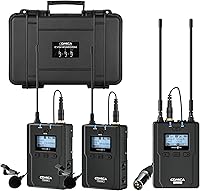
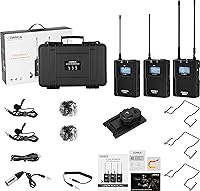
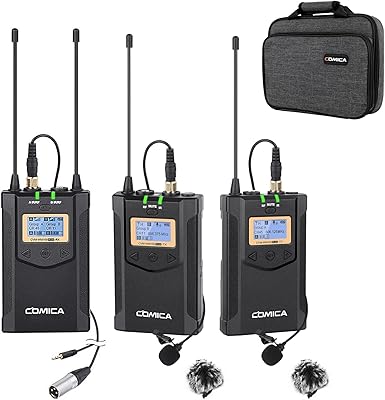
  • Configuration: The system includes two transmitter units and one receiver unit, enabling simultaneous dual-channel audio capture from two independent sources.
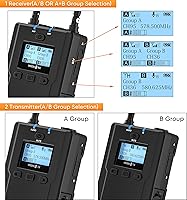
  • Frequency Band: Operates on UHF frequencies across two groups: Group A covers 534.125–557.875MHz and Group B covers 566.125–589.875MHz.
  • Channels: Offers 96 selectable UHF channels with an automatic scanning function to identify and lock onto the cleanest available frequency.
  • Transmission Range: Rated up to 328ft in open-air conditions with no obstructions; practical indoor range is typically 100–200ft depending on walls and interference.
  • Audio Latency: End-to-end audio delay is under 20 milliseconds, keeping the system viable for video recording where lip sync accuracy is required.
  • Signal-to-Noise: Signal-to-noise ratio is rated at 70dB, delivering acceptably clean audio for content creation and interview-style video production.
  • Audio Distortion: Total harmonic distortion is specified at under 0.5%, meaning the audio signal remains clean across normal operating conditions.
  • Polar Pattern: Both lavalier microphone capsules use an omnidirectional polar pattern, picking up sound evenly from all directions around the capsule.
  • Power Source: Each transmitter and the receiver run on 2x AA batteries each (4x AA total, not included), with an alternative USB-C power bank input supported.
  • Transmitter Weight: Each transmitter unit weighs 125g, making it compact enough to clip discreetly to clothing without significant drag or visibility.
  • Receiver Weight: The receiver unit weighs 145g and is designed to mount on a camera hot shoe or sit on a flat surface during recording.
  • Output Connectors: The receiver outputs audio via a 3.5mm TRS jack; the kit includes both a TRS-to-TRS cable and a TRS-to-XLR cable for broad device compatibility.
  • Headphone Monitor: A dedicated 3.5mm headphone output on the receiver allows real-time audio monitoring during recording sessions without additional hardware.
  • Display: An LCD screen on the receiver shows channel number, battery levels for both transmitters, audio dynamic bars, and wireless signal strength simultaneously.
  • Build Material: Both transmitters and the receiver are constructed from metal, providing more structural durability than the plastic housings common at this price tier.
  • Mute Function: Each transmitter features a one-button mute that silences the audio feed without powering off the unit or interrupting the recording on the camera.
  • Mono/Stereo Mode: The receiver supports switchable mono and stereo output modes, allowing the two transmitter channels to be recorded as dual-mono or a stereo pair.
  • Included Cables: The kit ships with a TRS-to-TRS cable and a TRS-to-XLR cable; a TRS-to-TRRS adapter for smartphone use is not included and must be purchased separately.

Related Reviews
Comica CVM-WM100 PLUS
83%
92%
Signal Stability
86%
Audio Quality & Clarity
94%
Post-Production Flexibility
61%
Portability & Form Factor
68%
Power Management & Battery Life
More
Comica Vimo Q 4-Channel Wireless Lavalier Microphone System
84%
92%
Sound Quality
89%
Ease of Setup
85%
Battery Life
80%
Range and Performance
75%
Portability
More
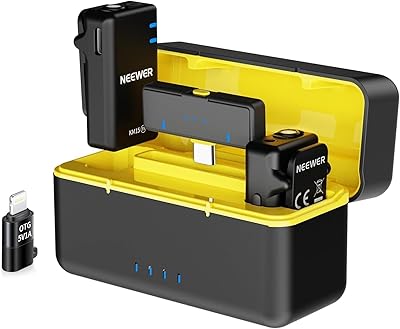
NEEWER KM15 Wireless Lavalier Microphone System
87%
89%
Sound Quality
92%
Ease of Use
87%
Battery Life
83%
Build Quality
90%
Portability
More
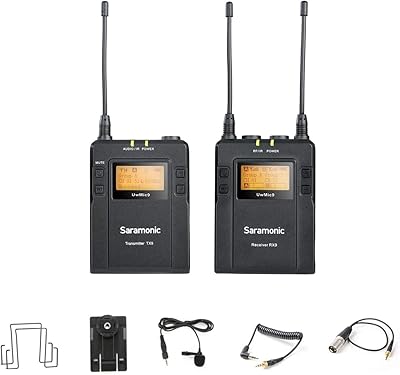
Saramonic UwMIC9 UHF Wireless Lavalier Microphone System
78%
78%
Audio Quality
74%
Signal Stability
84%
Build Quality
86%
Ease of Setup
88%
Value for Money
More
Saramonic SR-WM4C
Saramonic SR-WM4C
68%
88%
Ease of Setup
67%
Audio Quality
61%
Wireless Range
54%
Build Quality
79%
Value for Money
More
Movo WMX-1 Wireless Lavalier Microphone System
87%
88%
Audio Quality
94%
Ease of Use
85%
Wireless Range
91%
Battery Life
93%
Portability
More
7RYMS iRay DW40 4-Channel Wireless Lavalier Microphone
79%
88%
Multi-Channel Recording Performance
74%
AI Noise Cancellation
83%
Audio Clarity & Resolution
71%
Wireless Range & Stability
86%
Battery Life & Charging Case
More
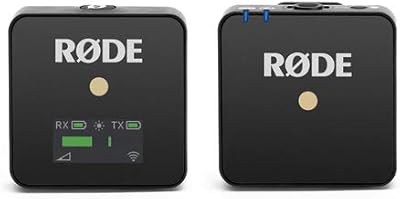
Rode Wireless GO Wireless Microphone System
78%
91%
Audio Quality
94%
Ease of Setup
63%
Build Quality
88%
Battery Life
58%
Wireless Range
More
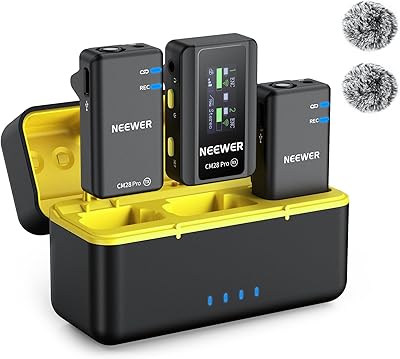
Neewer CM28 Pro Wireless Lavalier Microphone System
79%
88%
Audio Clarity
91%
Standalone Recording
67%
Wireless Range & Stability
86%
Battery Life
83%
Charging Case Design
More
BOYA BY-WM4 Pro K2 Wireless Lavalier Microphone
65%
58%
Audio Quality
54%
Wireless Stability
83%
Ease of Setup
67%
Value for Money
51%
Build Quality
More

FAQ

Not without an extra adapter. The receiver outputs a standard 3.5mm TRS signal, but most modern smartphones require a TRRS connection to accept microphone input through the headphone jack. You will need to purchase a TRS-to-TRRS adapter separately before it will work with a phone.

The system uses infrared sync to pair. You point the front of the transmitter at the IR window on the receiver while both units are powered on, then press the sync button. The LCD screen on the receiver confirms when the link is established. It takes about ten seconds and is one of the more straightforward pairing processes in this product category.

In practice, no. The 328-foot figure applies to open outdoor environments with no walls, furniture, or other wireless devices interfering. Inside a typical room or building, expect reliable performance somewhere between 100 and 200 feet. If you are shooting in a large venue with heavy RF activity, staying within 100 feet of the receiver is a safer assumption.

No, they do not. The system requires 4x AA batteries in total — two for each transmitter and two for the receiver. Make sure you have a fresh set ready before your first shoot, because there is nothing in the box to get you started on battery power.

Battery life varies depending on the brand and quality of the AA cells you use and whether the transmitters are running in high or low RF power mode. Most users report somewhere between 4 and 8 hours on good-quality alkaline batteries. If you shoot frequently, rechargeable AA batteries or using a USB-C power bank for the receiver will cut down on running costs.

Yes, that is one of the core features of the Comica CVM-WM200A Wireless Lavalier Microphone System. Both transmitters feed into the single receiver simultaneously, and you can switch between recording them as two separate mono channels or as a combined stereo pair depending on your editing workflow.

Yes. The included TRS-to-TRS cable connects directly to the 3.5mm microphone input found on most DSLRs and mirrorless cameras. No additional adapters are needed for standard camera use.

If the transmitter moves out of reliable range or encounters heavy interference, the audio feed to the camera will drop out rather than gracefully degrading. The LCD screen on the receiver shows signal strength in real time, so monitoring that display during shoots helps you catch weak signal before it becomes dropout. Staying within a comfortable range margin rather than pushing the limits is always the safer approach.

The clip is functional and holds reasonably well on most collar and lapel fabrics. It is not the most robust clip on the market, but for standard interview and talking-head setups it does the job. If you are shooting active subjects who move around a lot, adding a small piece of medical tape under the mic capsule gives you extra security.

Yes, and this is actually one of the more useful things about this dual-transmitter mic kit. The included TRS-to-XLR cable lets you connect directly to the XLR input on a professional camcorder, audio recorder, or mixer without buying any additional cables. Just make sure your device is set to accept line-level or microphone-level input as appropriate.

Where to Buy