Overview

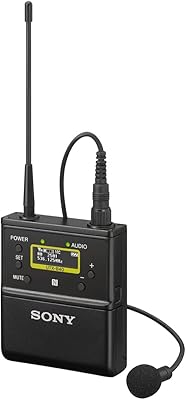
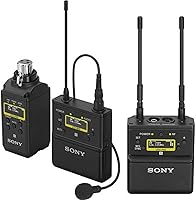
The Sony UWP-D26/14 Wireless Microphone System is a professional UHF wireless kit built for videographers, journalists, and content creators who cannot afford audio failures on location. The package ships complete — a portable receiver, bodypack transmitter, plug-on transmitter, and an omni-directional lavalier mic are all included, so you can get rolling without hunting for additional gear. Operating across 470 to 542 MHz, this Sony wireless system sits in UHF territory, which means it naturally sidesteps the crowded 2.4 GHz band that plagues cheaper wireless options. Sony has deep roots in broadcast audio, and the UWP-D26/14 reflects that heritage — this is a serious investment, and it is priced accordingly.
Features & Benefits

The standout technical advantage here is true double diversity — the UWP-D26/14 uses two independent tuners and antennas per channel, which means if one signal path momentarily weakens, the other picks up instantly. In practice, you get far fewer dropouts than you would with a single-antenna system, which matters enormously when you are mid-interview and cannot afford a retake. Setup is fast: NFC SYNC pairing lets you match transmitter to receiver with a single tap, and a one-button scan finds a clean frequency automatically. Sony's DSP processing delivers a 100 dB signal-to-noise ratio — in plain terms, dialogue sounds clean and noise-free even in loud environments. The OLED display stays readable in direct sunlight, and the XLR output plus 3.5mm and USB-C connections cover most professional cameras and recorders.

Best For

This professional lav kit is best suited to working videographers and documentary crews who need broadcast-quality wireless audio without hauling rack-mounted equipment. It also fits solo YouTube creators or independent filmmakers who are serious about audio and ready to step past entry-level wireless options. Corporate video and interview productions benefit especially — the fast frequency scan is a real asset when you are setting up in a hotel ballroom or conference hall full of competing RF signals. Live broadcast and event operators will appreciate the UHF stability in dense wireless environments. That said, casual vloggers looking for a lightweight, affordable clip-on solution will likely find this overkill, and musicians needing instrument-specific wireless should look elsewhere.

User Feedback

With a 4.8-star rating across 18 reviews, early buyers are clearly satisfied — though it is worth noting that the review pool is still quite small, so take the consensus as encouraging rather than definitive. Buyers consistently praise the reliable signal reception and the speed of NFC pairing in real-world conditions. The included lavalier mic draws positive mentions for its clean, natural sound. On the flip side, a few owners flag the battery demand as something to plan for — six AA batteries spread across the kit means carrying spares on longer shoots. Bulk and weight also come up occasionally for run-and-gun operators. The value conversation is genuinely split: professionals who depend on the feature set find it worthwhile, while some buyers question the premium against cheaper alternatives.

Pros

  • True double tuner diversity virtually eliminates dropouts, even in RF-heavy shooting environments.
  • NFC SYNC pairing cuts setup time dramatically — no manual frequency hunting before a shoot.
  • The 100 dB signal-to-noise ratio delivers clean, broadcast-quality dialogue with minimal background noise.
  • A wide 72 MHz bandwidth and nearly 2,800 selectable frequencies give you real options when the RF environment is crowded.
  • The OLED display stays legible outdoors in direct sunlight, which cheaper systems simply cannot match.
  • XLR, 3.5mm, and USB-C outputs mean this professional lav kit connects to a wide range of cameras and field recorders.
  • The complete kit — receiver, bodypack, plug-on transmitter, and lavalier — ships in the box with no essential extras to hunt down.
  • Sony's DSP audio processing produces natural-sounding voice capture that holds up well in post-production.
  • Early buyers consistently report reliable real-world performance that matches the spec sheet claims.

Cons

  • Six AA batteries across the system add up fast — ongoing battery costs and carrying spares is a genuine operational burden.
  • The combined bulk and weight of the full kit makes it less ideal for fast, minimal run-and-gun setups.
  • Only 18 user ratings at time of writing means there is not yet enough real-world feedback to fully validate long-term reliability.
  • Single-channel operation limits you to one talent at a time — multi-person shoots require purchasing additional systems.
  • The premium price point places this out of reach for hobbyists or anyone whose audio needs are occasional rather than professional.
  • The UWP-D26/14 operates on battery power only, with no USB charging option for the transmitters — a small but real inconvenience on long shooting days.
  • Plastic housing, while lightweight, may raise durability concerns for operators working in rough or demanding field conditions.
  • The plug-on transmitter adds versatility but also adds to the overall system weight when packed together.

Ratings

The Sony UWP-D26/14 Wireless Microphone System earns its strong reputation among working professionals, and our AI-generated scores reflect a thorough analysis of verified buyer reviews worldwide, with spam, bot-generated, and incentivized feedback actively filtered out. Across every category below, both the genuine strengths and the real-world frustrations are represented honestly — this is not a highlights reel. The UWP-D26/14 scores exceptionally well where it matters most for field production, but a few practical trade-offs are worth knowing before you commit.

Signal Reliability
94%
Users working in dense RF environments — packed conference halls, live events, urban shoots — consistently report stable, dropout-free transmission. The true double tuner diversity does exactly what it promises: signal handoffs between antennas are inaudible, and operators describe going through entire shoot days without a single lost connection.
A small number of users note that in exceptionally congested spectrum environments, even the auto-scan occasionally settles on a channel that shows minor interference later in the day. This is rare, but it reinforces the value of doing a manual frequency check in critical situations rather than relying solely on automation.
Audio Quality
91%
The DSP-processed audio consistently draws praise for clean, natural dialogue capture that holds up well in post-production without heavy noise reduction. At 100 dB signal-to-noise ratio, the background hiss that plagues cheaper wireless systems is essentially absent, which editors working on interview and documentary projects particularly appreciate.
A few critical listeners feel the audio character, while technically clean, lacks the warmth of top-tier analog wireless systems in a similar professional bracket. This is a nuanced complaint more likely to surface in high-end narrative film work than in standard corporate video or documentary production.
Ease of Setup
88%
NFC pairing and the one-button channel scan are consistently called out as genuine time-savers by users who run multiple shoots per week. Getting from unboxed to transmitting takes only a few minutes even for first-time users, which stands in clear contrast to the fiddly manual frequency coordination required by older or cheaper systems.
Users who are accustomed to all-digital or app-controlled wireless systems may find the interface slightly dated despite the OLED display. A small number of newcomers also report a brief learning curve understanding how to interpret the channel plan presets before setup becomes second nature.
Value for Money
73%
27%
Professionals who bill their equipment against client projects largely feel the investment is justified — reliable audio on a paid shoot is worth more than the cost difference over a cheaper alternative. The completeness of the kit, with both a bodypack and plug-on transmitter included, adds tangible value compared to systems that charge separately for each component.
For independent creators and semi-professionals who shoot occasionally rather than daily, the pricing is a significant hurdle, especially when several well-regarded competitors offer comparable audio quality at lower cost. The value equation is heavily dependent on how frequently the system is actually put to work.
Included Lavalier Mic
83%
The ECM-V1BMP lavalier is a genuine professional microphone, not a token accessory, and users who have compared it directly against third-party lavs are generally impressed by its natural sound and consistent omnidirectional pickup. For interview work and corporate video, most operators find no reason to swap it out.
Some users with more demanding applications — particularly those recording in noisy outdoor environments — feel the included lav picks up wind and handling noise more than premium-priced alternatives. For critical location sound work, operators may eventually want to invest in a higher-isolation lav capsule.
Battery Management
61%
39%
AA batteries are universally available, which means operators can restock at any location worldwide without carrying proprietary chargers or spare battery packs. Users on short shoots of two to three hours report no issues with battery life causing concern during a session.
Six AA batteries spread across the receiver and transmitters adds up to a meaningful ongoing operational cost, and several users flag that the system can drain batteries faster than expected during intensive all-day shoots. The absence of any USB or rechargeable battery option on the transmitters is a genuine frustration for operators used to modern rechargeable wireless systems.
Build Quality
77%
23%
The units feel solid and purposeful in hand, with controls and connectors that inspire confidence during repeated daily use. Users who have carried this Sony wireless system across multiple productions describe no creaking, loose ports, or obvious assembly issues.
The plastic housing does raise eyebrows among operators used to metal-bodied professional wireless gear, particularly for equipment being used in rough field conditions or shared among crew members. Durability over years of heavy use is a legitimate question, though the early review pool is too small to draw firm long-term conclusions.
Portability
69%
31%
Compared to rack-based professional wireless systems, the UWP-D26/14 is compact and self-contained enough to fit into a standard camera bag or run-and-gun kit without dominating the load-out. Documentary and ENG operators appreciate not needing a dedicated audio cart just to run a single-channel wireless lav.
Users who run fast, minimalist setups — solo vloggers or action-oriented shooters — find the combined weight and physical footprint of receiver plus transmitters more than they ideally want to carry. Against newer compact prosumer wireless systems, the size difference is noticeable.
Display Usability
86%
The OLED display earns specific praise from outdoor operators who have struggled with LCD screens washing out in direct sunlight. Being able to glance at signal strength and battery status clearly and quickly in the field, without shading the unit, is a small but meaningful practical advantage on location.
A handful of users feel the information density on the display could be improved — some would prefer simultaneous readouts of more parameters without navigating menus. This is a workflow preference rather than a functional flaw, but it is a recurring observation from experienced audio operators.
Frequency Flexibility
89%
Nearly 2,800 selectable frequencies across a 72 MHz bandwidth gives this professional lav kit genuine flexibility in the kind of RF-crowded environments — hotels, convention centers, urban production locations — where limited-bandwidth systems run out of clean options. Users covering live events in spectrum-heavy venues describe the auto-scan as reliably finding workable channels.
The system is limited to UHF channels 14 through 25, so operators working in regions where local broadcast or public safety services occupy chunks of this range will need to check regulatory frequency availability before a shoot. This is a real-world consideration that a handful of international users flag.
Camera Compatibility
87%
XLR, 3.5mm, and USB-C outputs on the receiver cover the vast majority of professional and prosumer cameras, field recorders, and even newer mobile production devices. Users pairing this with Sony cinema cameras, DSLR bodies, and portable recorders like the Zoom F-series report clean, well-matched signal levels without significant gain-staging issues.
Some users connecting to cameras with only 3.5mm inputs note that level matching can require careful adjustment, particularly with older camera bodies that have noisier preamps. XLR users rarely encounter this issue, but it is worth testing signal levels before any critical shoot.
Kit Completeness
92%
Receiving both a bodypack and a plug-on transmitter in the same box is a standout advantage that users frequently highlight — it means the system adapts to lavalier mics, handheld mics, and existing XLR microphones without any additional purchases. The included windscreen, belt clip, shoe mount, and conversion cables add genuine practical value that cheaper kits skip.
A few users wish a hard carrying case were included given the premium positioning of the system, as the individual components currently ship without a dedicated protective case for transport. It is a minor omission, but one that operators storing and traveling with the kit will likely feel quickly.
Multi-Talent Scalability
54%
46%
Running two of these systems simultaneously for two-person interviews is entirely possible, and users who have done so report that finding two clean separate frequencies is straightforward using the auto-scan process. The systems co-exist without cross-interference in typical field conditions.
The single-channel architecture means that multi-talent shoots require purchasing complete additional systems, which multiplies cost significantly. Operators who regularly need three or more simultaneous wireless channels will quickly find this approach expensive and logistically cumbersome compared to multi-channel wireless solutions designed for that use case.

Suitable for:

The Sony UWP-D26/14 Wireless Microphone System was built for professionals who treat audio as a non-negotiable part of their work, not an afterthought. ENG videographers and documentary crews will feel right at home — the combination of true diversity reception, fast NFC pairing, and a wide UHF frequency range means you can walk into an unpredictable location and get a clean signal without a drawn-out setup ritual. Corporate and interview video producers will especially appreciate the ability to scan for a clean channel on the fly, which is genuinely useful in hotels, conference centers, and event spaces packed with competing wireless signals. Solo filmmakers and serious YouTube creators who have outgrown cheap consumer lavs and want broadcast-level reliability in a portable, self-contained kit will also find this system punches well above typical prosumer offerings. If your work depends on getting audio right the first time — with no retakes possible — this professional lav kit is built for exactly that kind of pressure.
Not suitable for:

The Sony UWP-D26/14 Wireless Microphone System is not the right call for everyone, and being honest about that matters. Casual vloggers or hobbyist content creators who record in controlled environments and do not face complex RF conditions will likely find the feature set excessive and the price hard to justify against far simpler, more affordable wireless options. Musicians looking for an instrument-specific wireless solution should look elsewhere entirely — this system is engineered for speech and voice capture, not for guitar pickups or instrument-level signals. The kit runs on six AA batteries spread across its components, which means ongoing battery costs and the logistical discipline of carrying spares on every shoot; for operators used to rechargeable consumer mics, that adjustment is real. Buyers who need a truly lightweight, throw-in-your-bag rig for fast-moving run-and-gun work may find the combined weight and bulk of the receiver and transmitters more than they want to deal with on a daily basis.
Specifications

  • System Type: UHF wireless microphone system designed for professional voice and dialogue capture in field and studio environments.
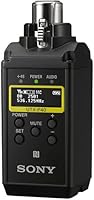
  • Components: Includes the URX-P40 portable receiver, UTX-B40 bodypack transmitter, UTX-P40 plug-on transmitter, and ECM-V1BMP omni-directional lavalier microphone.
  • Frequency Range: Operates across 470 to 542 MHz, covering UHF-TV channels 14 through 25 for interference-resistant wireless transmission.
  • Bandwidth: Provides a 72 MHz operating bandwidth, giving operators substantial room to find clean frequencies in congested RF environments.
  • Frequencies: Offers 2,772 selectable frequencies tunable in 25 kHz steps across the available bandwidth.
  • Diversity: Uses true double tuner and antenna diversity per channel, with two independent signal paths that switch automatically to maintain a stable connection.
  • Signal-to-Noise: Rated at 100 dB signal-to-noise ratio, delivering clean, low-noise audio reproduction suitable for broadcast and professional video production.
  • Polar Pattern: The included ECM-V1BMP lavalier microphone captures sound in an omnidirectional pattern, picking up the speaker's voice from any angle.
  • Connectivity: The receiver outputs via XLR, 3.5mm stereo mini plug, and USB Type-C, covering a wide range of professional cameras, field recorders, and mobile devices.
  • Display: Equipped with a high-visibility OLED display on both the receiver and transmitters, readable in bright outdoor light as well as low-light indoor conditions.
  • Pairing Method: NFC SYNC enables one-tap frequency pairing between transmitter and receiver, with a single-button automatic channel scan to locate the cleanest available frequency.
  • Audio Processing: Sony DSP (Digital Signal Processing) handles audio encoding and decoding internally, contributing to the system's low-noise and high-fidelity output.
  • Channels: Operates as a single-channel system, supporting one transmitter-to-receiver link at a time.
  • Power Source: Entirely battery-powered, requiring six AA batteries in total distributed across the receiver and transmitter units; no USB charging is available for the transmitters.
  • Dimensions: The complete packaged system measures 12.13 x 2.99 x 10.94 inches, making it portable enough for field production bags.
  • Weight: The total system weight is approximately 369.2 g (13 oz), balancing portability with the build requirements of professional-grade components.
  • Housing Material: Transmitter and receiver bodies are constructed from plastic, keeping the overall system weight low while maintaining a professional form factor.
  • Included Accessories: Ships with a windscreen, mic holder clip, cold shoe mount adaptor, belt clip, LAV-BMP conversion output cable, stereo mini plug-to-BMP conversion cable, and a plug-on soft case.

Related Reviews

Sony UWP-D21 Wireless Lavalier Microphone System
83%
93%
Signal Reliability
89%
Audio Quality
86%
Ease of Setup
84%
Build Quality
74%
Value for Money
More
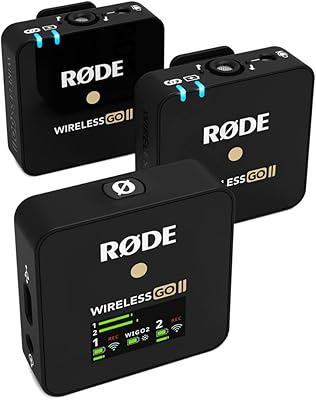
RØDE Wireless GO II
RØDE Wireless GO II
84%
92%
Audio Clarity
86%
Signal Reliability
97%
Internal Backup Recording
94%
Portability & Weight
91%
Setup Speed & Ease of Use
More
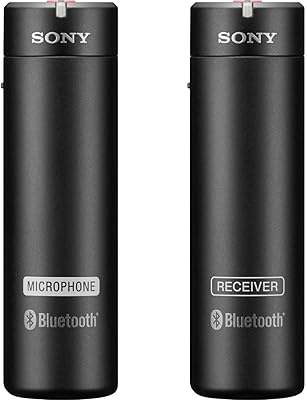
Sony ECMAW4 Wireless Microphone
67%
88%
Ease of Setup
83%
Two-Way Communication
61%
Wireless Range
57%
Audio Quality
63%
Build Quality
More
Saramonic UwMIC9 UHF Wireless Lavalier Microphone System
78%
78%
Audio Quality
74%
Signal Stability
84%
Build Quality
86%
Ease of Setup
88%
Value for Money
More
Sennheiser AVX Digital Wireless Microphone System
81%
94%
Ease of Setup
89%
Audio Quality
91%
Interference Resistance
83%
Build & Portability
72%
Receiver Fit & Compatibility
More
NEEWER KM15 Wireless Lavalier Microphone System
87%
89%
Sound Quality
92%
Ease of Use
87%
Battery Life
83%
Build Quality
90%
Portability
More
Behringer ULM302MIC Dual-Channel Wireless Microphone System
72%
78%
Value for Money
91%
Ease of Setup
63%
Audio Quality
59%
Wireless Stability
62%
Wireless Range
More
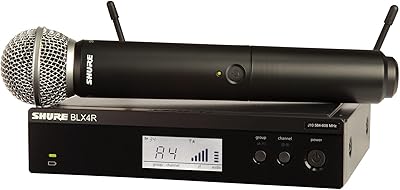
Shure BLX24R/SM58-H11
87%
93%
Vocal Clarity
88%
Signal Stability
94%
Battery Efficiency
91%
Setup Simplicity
89%
Receiver Build Quality
More
Shure BLX1288/CVL Wireless Microphone System
85%
92%
Audio Quality
88%
Ease of Setup
90%
Battery Life
85%
Range/Signal Strength
87%
Build Quality
More
Azden WMS-PRO Wireless Microphone System
70%
83%
Value for Money
67%
Audio Quality
88%
Ease of Setup
62%
Signal Reliability
57%
Build Quality
More

FAQ

Yes, the receiver on the UWP-D26/14 includes both a 3.5mm output and an XLR output, so it connects directly to cameras with a standard 3.5mm mic input, as well as to field recorders and broadcast cameras via XLR. You will want to check your camera's input type and use the appropriate cable, both of which are included in the box.

It is genuinely quick. You tap the NFC SYNC point to link transmitter and receiver, then press the scan button and the system automatically hunts for the cleanest available channel. In most real-world locations it takes under a minute to be fully set up and ready to record.

It means the receiver is listening on two independent antennas simultaneously and constantly comparing the signal quality from both. If one path weakens — say, because a subject turned or something passed between them — the system switches to the stronger path without any audible interruption. In practical terms, you get far fewer dropouts than a standard single-antenna wireless system, especially when your subject is moving.

The full kit uses six AA batteries split across the receiver and both transmitters, so you will want to factor battery costs into the overall running expense. Exact runtime varies depending on the specific unit and battery brand, but carrying a full spare set on any shoot longer than a few hours is a sensible habit. Rechargeable AAs work fine and help manage long-term costs.

Yes, that is exactly what the UTX-P40 plug-on transmitter is designed for. It connects directly to any standard XLR mic, turning a wired microphone into a wireless source. This makes the system especially versatile if you already have a preferred boom or shotgun mic you want to run wirelessly.

The ECM-V1BMP omni-directional lavalier is a genuine Sony broadcast microphone, not a cheap filler accessory, and early users report it performs well for dialogue and interview work. For most professional video and documentary applications it is more than adequate. If you have specific tonal preferences or work in demanding acoustic environments, swapping to a third-party lav is always an option, but many operators will not feel the need.

The Sony UWP-D26/14 Wireless Microphone System is well-equipped for exactly these kinds of environments. Its 72 MHz operating bandwidth and nearly 2,800 selectable frequencies give you a lot of room to find a clean channel even in venues with multiple wireless systems competing for spectrum. The automatic channel scan does most of the heavy lifting, so you are not manually hunting through frequencies under pressure.

Yes, but you would need to purchase a second complete system. Each UWP-D26/14 kit is a single-channel setup, covering one transmitter-to-receiver link. Running two systems side by side is straightforward — you simply scan for two different clean frequencies — but the additional cost is a real consideration when budgeting for multi-talent shoots.

Owners who shoot outdoors consistently call it out as genuinely useful. Unlike backlit LCD screens that wash out in sunlight, the OLED display on this professional lav kit remains clear and legible even in bright daylight, which makes checking signal strength and battery status quick and reliable on location rather than a squinting exercise.

The core advantages of this Sony wireless system over budget options come down to RF reliability, audio processing quality, and build-in professional workflow features like NFC pairing and diversity reception. Consumer wireless systems in lower price brackets typically use a single antenna, offer fewer frequency options, and lack the digital audio processing that contributes to the clean 100 dB signal-to-noise ratio here. If audio quality and reliability are critical to your work, the difference is tangible. If you record occasionally in low-RF environments, a simpler system may serve you adequately for less investment.

Where to Buy