Overview

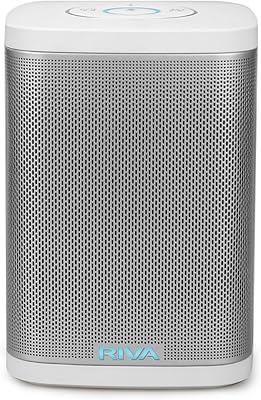
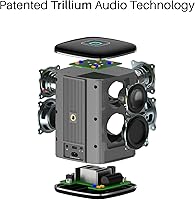
The RIVA Arena enters the mid-range multiroom speaker space with something most competitors in this price tier lack: genuine audio engineering heritage. Built by Audio Design Experts, the brand has deep roots in premium sound design, and that background shows in this compact tabletop enclosure that punches well above its modest footprint. The patented Trillium technology is the headline differentiator — a spatial audio approach that widens the soundstage without resorting to digital gimmicks. Compared to a Sonos One or Amazon Echo Studio, this Wi-Fi speaker is not a household name. That obscurity is a legitimate concern, but it should not be mistaken for a reflection of what the hardware actually delivers.

Features & Benefits

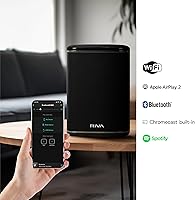
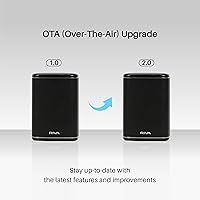
Six drivers crammed into a 7-inch enclosure sounds like a marketing claim until you understand the 2.1 channel configuration behind it. Two channels of stereo output plus a dedicated low-frequency driver produce 50 watts of power that can genuinely fill a medium-sized room without distortion at higher volumes. What makes the Arena particularly flexible is its dual-ecosystem multiroom support — AirPlay 2 and Chromecast run simultaneously, so an Apple household and an Android user can both stream to it without compromise. Spotify Connect and Tidal work natively, meaning your phone does not need to stay active as a Bluetooth bridge. OTA updates and a USB charge-out port round out a feature list that is unusually complete at this price.

Best For

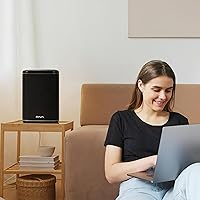
This multiroom speaker is a natural fit for anyone building an Apple-centric home audio setup who does not want to pay Sonos prices for every room. It also works well in a bedroom or home office — the compact footprint does not demand shelf space, and sound quality holds up for close-range critical listening. Multi-platform streamers will appreciate not having to switch apps or devices depending on which ecosystem they are in. That said, skip it if you need voice assistant integration — there is no Alexa or Google Assistant built in. It is strictly an indoor speaker, so patio use is out. Budget-conscious buyers expanding a multiroom system one unit at a time will find the value proposition here genuinely compelling.

User Feedback

Owners of this Wi-Fi speaker consistently highlight two things: the surprisingly wide soundstage for such a small cabinet, and how painless AirPlay 2 setup actually is. Build quality earns positive mentions too — it does not feel like a budget device. The honest counterpoints are worth noting. App-based setup trips some users up, particularly on initial Wi-Fi configuration, and a handful report early connectivity hiccups before firmware updates resolved them. Bass is present and decent for the size, but do not expect room-shaking low end — at 3 pounds, physics still apply. The bigger open question for many buyers is long-term support: as a smaller brand, RIVA's track record for sustained updates and responsive customer service is harder to verify than a Sonos or Bose.

Pros

  • Supports AirPlay 2 and Chromecast simultaneously — rare at this price point and genuinely useful in mixed-device households.
  • Spotify Connect lets your phone step away entirely while music keeps playing without any Bluetooth tether.
  • The patented Trillium spatial audio produces a stereo soundstage that consistently surprises listeners given the cabinet size.
  • Six drivers in a 2.1 configuration deliver 50W of clean output — enough to fill a bedroom or home office without strain.
  • AUX and USB inputs make it compatible with older source devices that Wi-Fi-only speakers simply cannot accommodate.
  • OTA firmware updates have already resolved early connectivity bugs, showing the manufacturer is actively maintaining the product.
  • Build quality feels premium for the price — the enclosure is dense, rattle-free, and holds up well on a daily-use desk.
  • Tidal HiFi and lossless streaming are natively supported, giving hi-res audio fans a real path beyond compressed formats.
  • At 3 pounds, it is easy to relocate between rooms and reconnects to Wi-Fi quickly after moving.

Cons

  • Initial Wi-Fi setup through the companion app is noticeably unreliable on Android, with multiple users needing repeated attempts to complete onboarding.
  • No built-in voice assistant means all controls require a phone or app — there is no hands-free option at all.
  • Bass rolls off at lower frequencies in ways that EQ can partially address but not fully overcome given the enclosure size.
  • Multiroom grouping occasionally introduces a brief audio lag when joining a sync session after the speaker has been idle.
  • RIVA is a smaller brand with limited public track record for long-term firmware support beyond the first few years.
  • Customer service response times receive mixed reviews, which matters more when you are buying outside a major ecosystem.
  • The soundstage widening effect works best in near-field positions — move too far back and the spatial imaging collapses noticeably.
  • No battery means it is permanently tethered to a power outlet, eliminating any flexibility for outdoor or travel use.
  • Physical controls on the unit itself are minimal, making volume adjustment almost always a two-step process through a phone.

Ratings

The scores below for the RIVA Arena were generated by AI after systematically analyzing verified buyer reviews from global markets, with spam, bot-submitted, and incentivized feedback actively filtered out. Both the genuine strengths and the recurring frustrations are reflected here — nothing has been smoothed over to flatter the product. If real owners flagged a problem consistently, it shows up in the numbers.

Sound Quality
84%
For a speaker that fits on a nightstand, the spatial width surprises most first-time listeners. The Trillium technology produces a stereo image that sounds considerably broader than the physical cabinet would suggest, and at moderate volumes the clarity holds up well across vocals and mid-range instruments.
At higher volumes some users notice a subtle compression in the upper mids that robs acoustic tracks of their natural air. It is not a dealbreaker, but listeners who favor classical or jazz at high volumes may find it slightly clinical compared to larger two-channel setups.
Bass Performance
68%
32%
The 2.1 configuration does give low frequencies a dedicated path, and for a 3-pound tabletop unit the bass is more textured than thumpy — which is actually the right call for desk or bedroom use where boomy low end would overwhelm a small space.
Anyone expecting a subwoofer-like presence will be disappointed. Bass rolls off noticeably below around 80Hz, and while EQ adjustments in compatible apps can compensate somewhat, the physical limits of the enclosure are real. It is a tradeoff the design makes deliberately, not a flaw exactly, but worth knowing upfront.
Multiroom & Ecosystem Integration
89%
Having both AirPlay 2 and Chromecast active simultaneously is genuinely rare at this price point. In households where one person uses an iPhone and another an Android, this multiroom speaker just works for both without any configuration gymnastics — something even pricier options sometimes fail to deliver.
Grouping multiple units for synchronized playback occasionally introduces a brief lag on the first connection attempt, particularly after the speaker has been idle for a while. It self-corrects quickly, but in a quiet room the half-second delay when joining a group is noticeable.
Setup & App Experience
61%
39%
AirPlay 2 setup specifically gets positive marks — iPhone users report being up and running in under three minutes with no manual IP configuration or port forwarding. For straightforward wireless listening, the out-of-box experience is clean.
The companion app draws consistent criticism for being unintuitive, particularly during initial Wi-Fi onboarding on Android devices. Several verified buyers report needing two or three attempts before the speaker held its network credentials reliably. It is the single most common friction point across global reviews and pulls the category score down meaningfully.
Streaming Platform Support
91%
Spotify Connect, Tidal, Chromecast audio, and AirPlay 2 covering essentially every major streaming service in one speaker is a legitimately strong lineup. Spotify Connect in particular means your phone can go to sleep or leave the room entirely while music keeps playing without interruption — a small but daily-use convenience.
Tidal integration works well but requires navigating the Tidal app rather than any dedicated controls on the speaker itself. Users on less mainstream platforms like Amazon Music HD or Qobuz must fall back to Bluetooth or AirPlay, which works but sidesteps the native low-latency path.
Build Quality & Design
83%
The enclosure feels denser and more substantial than the 3-pound weight implies — it does not rattle or resonate at the base when bass hits, which is a telltale sign of thoughtful cabinet construction. The matte finish resists fingerprints and looks clean on a bookshelf or desk.
The control buttons on the unit itself are minimal, which some users find limiting when they want tactile volume control without reaching for a phone. The rectangular prism shape is functional but unremarkable — buyers who care about a speaker as a design object will find it plain.
Connectivity Options
86%
Having a 3.5mm AUX input alongside USB means older source devices — turntable preamps, portable DACs, legacy laptops — can connect without adapters. This kind of analog fallback is increasingly rare on Wi-Fi speakers and earns genuine appreciation from users with mixed setups.
Bluetooth range is adequate for same-room use but walls reduce it noticeably. Users who place the speaker in an adjacent room and wander back to their phone sometimes report dropouts that would not occur on a dedicated Bluetooth speaker with a stronger radio.
Volume & Room Coverage
79%
21%
50 watts in a compact enclosure is enough to comfortably fill a bedroom or home office at around 70% volume with headroom to spare. Users in open-plan kitchen-dining areas report it handles background listening levels without strain.
In larger living rooms or open-plan spaces over roughly 400 square feet, the Arena starts to show its physical limits at maximum volume, particularly in the high frequencies. It was not designed for large-space primary listening and functions best as a room-specific unit.
Value for Money
82%
18%
Against a Sonos One at a higher price, the Arena offers a comparable feature set and — in several direct comparisons — a broader soundstage for less money. For a buyer who wants AirPlay 2, Chromecast, and Spotify Connect in one box without overspending, the value arithmetic works clearly in its favor.
The value case weakens slightly when factoring in brand risk. Sonos buyers know what they are getting in terms of support longevity. With a smaller manufacturer, the possibility of discontinued firmware support in three to four years is a real consideration that the lower sticker price only partially offsets.
Long-Term Firmware & Support
58%
42%
OTA update support is present and has been used to fix early connectivity bugs — several verified reviewers note that issues they encountered in the first months were resolved via firmware without needing to contact support. That responsiveness is a positive signal for a smaller brand.
The honest concern is sustainability. RIVA is not a Sonos or a Bose, and buyers have no strong track record to lean on when asking whether this speaker will still receive updates in 2027. Customer service response times draw mixed reviews, with some users reporting slow turnaround on warranty queries.
Ease of Daily Use
77%
23%
Once configured, day-to-day use is largely hands-off. AirPlay 2 auto-reconnects reliably, Spotify Connect remembers the speaker as a default output, and the speaker wakes from standby quickly enough that it does not interrupt the flow of starting music in the morning.
The lack of a physical volume knob is a recurring minor complaint — tapping a phone to adjust volume by a few percent mid-conversation is a small but real friction point. Voice control is absent entirely, so hands-free operation is simply not on the table.
Soundstage & Imaging
81%
19%
The Trillium spatial processing creates a noticeably wide stereo image for a mono-cabinet design. Listeners sitting at desk distance report instrument separation that sounds more like a two-speaker stereo setup than a single point source — a genuine achievement for the form factor.
The imaging works best in a near-field listening position, roughly 3 to 8 feet away. Move much further back and the spatial effect collapses somewhat, reducing to a more conventional centered sound. It is tuned for close-range listening environments, which matches its intended use case but limits flexibility.
Portability & Placement Flexibility
55%
45%
At 3 pounds with a compact footprint, moving the Arena between rooms is physically easy and takes less than a minute to reconnect to Wi-Fi in a new location. It is well-suited to a carry-between-rooms usage pattern within the home.
It requires a power outlet — there is no battery. That makes it genuinely stationary once placed, and completely unusable outdoors or during travel. Buyers looking for a speaker that can do both indoor home use and patio or camping duty need to look elsewhere.
High-Resolution Audio Support
74%
26%
Tidal Masters and lossless Tidal HiFi content stream natively, and the 80dB signal-to-noise ratio is clean enough that the difference between compressed and lossless sources is perceptible on familiar tracks. For a mid-range unit, hi-res support is a meaningful inclusion.
The dynamic driver array has physical resolution limits that a dedicated audiophile DAC-and-speaker chain would expose. Hi-res file support is real but the hardware ceiling means the last 10% of that source quality does not fully translate — it is better than lossy streaming but not a substitute for a dedicated hi-fi system.

Suitable for:

The RIVA Arena is a strong match for anyone who wants a capable home audio setup without committing to a full Sonos ecosystem or paying premium prices for every room. It works particularly well for Apple-household users who rely on AirPlay 2 daily — the integration is genuinely smooth, and the multiroom capability lets you build out a whole-home system incrementally rather than all at once. Bedroom and home office users will appreciate that it sounds considerably larger than its footprint suggests, making it a practical choice for near-field listening at a desk or on a nightstand. If you regularly switch between Spotify, Tidal, and Chromecast casting depending on the device or the mood, this multiroom speaker handles all three without requiring workarounds. It is also a reasonable pick for anyone with a mixed Android-and-Apple household, since AirPlay 2 and Chromecast coexist on the same unit — a genuine convenience most single-platform speakers cannot offer.

Not suitable for:

Buyers who depend on voice assistants for hands-free control should look elsewhere — the RIVA Arena has no Alexa or Google Assistant built in, and that is not a gap that firmware updates are likely to fill. Anyone planning to use it outdoors, on a patio, or in a humid bathroom environment should also pass; it is strictly an indoor, corded speaker with no weatherproofing whatsoever. If deep, room-filling bass is a priority — for EDM, hip-hop, or home theater use — a 3-pound tabletop unit running on six small dynamic drivers will not satisfy that need, regardless of what the spec sheet says. Buyers who strongly value long-term brand support and a proven service track record may feel more comfortable with an established name like Sonos, since RIVA is a smaller manufacturer without the same publicly demonstrated history of sustained software support. Finally, anyone who finds app-dependent setup genuinely frustrating should be aware that onboarding, particularly on Android, has been a recurring pain point in verified owner feedback.

Specifications

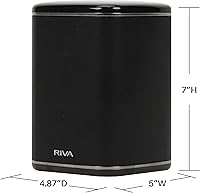
  • Dimensions: The speaker measures 4.87″ deep, 5″ wide, and 7″ tall, making it a compact tabletop unit suitable for desks, nightstands, and bookshelves.
  • Weight: At 3 pounds, the unit is light enough to relocate between rooms easily while still feeling substantial and well-built in hand.
  • Total Power: The speaker delivers 50 watts of total output power across its six-driver array.
  • Driver Count: Six dynamic drivers are arranged in a 2.1 surround channel configuration, with dedicated low-frequency and stereo mid-high pathways.
  • Audio Technology: RIVA's patented Trillium spatial audio processing is built in to widen the stereo image beyond the physical cabinet boundaries.
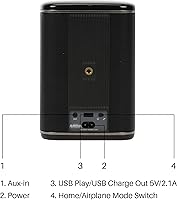
  • Connectivity: Supported inputs include Wi-Fi, Bluetooth, 3.5mm AUX, and USB, covering both wireless and wired source devices.
  • Streaming Protocols: Native streaming support includes AirPlay 2, Chromecast, Spotify Connect, and Tidal, with no additional hardware required.
  • Signal-to-Noise Ratio: The unit achieves an 80 dB signal-to-noise ratio, delivering clean audio reproduction with minimal background noise at typical listening volumes.
  • USB Charge Output: A USB charge-out port provides 5V at 2.1A, sufficient for charging smartphones and small tablets while the speaker is in use.
  • Power Source: The speaker runs on corded electric power only — no internal battery is included, and the unit requires a standard wall outlet at all times.
  • Driver Type: All six drivers use dynamic driver technology, which is well-suited to the broad frequency response requirements of a multiroom speaker.
  • Control Method: Primary control and configuration is handled through a companion app; physical controls on the unit itself are limited to basic functions.
  • Firmware Updates: Over-the-Air (OTA) firmware updates are supported, allowing the speaker to receive feature additions and bug fixes without any manual intervention.
  • Indoor Use: The speaker is rated for indoor use only and carries no weatherproofing or water-resistance certification of any kind.
  • Warranty: The unit is covered by a limited manufacturer warranty; buyers should confirm specific terms and duration directly with RIVA or their retailer.
  • Included Items: The package includes the speaker unit, a power cable, and a user manual — no additional mounting hardware or audio cables are included.
  • Placement Type: Designed exclusively as a tabletop mount, the speaker has no integrated wall-mount bracket or VESA-compatible attachment points.
  • Manufacturer: The Arena is manufactured by Audio Design Experts, Inc., the parent company behind the RIVA audio brand.

Related Reviews
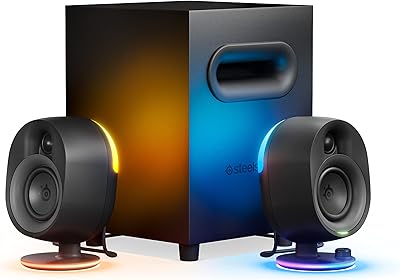
SteelSeries Arena 7 2.1 Gaming Speakers
82%
90%
Sound Quality
88%
Bass Performance
85%
RGB Lighting
82%
Connectivity Flexibility
78%
Ease of Setup
More
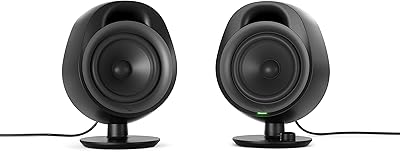
SteelSeries Arena 3 2.0 Desktop Gaming Speakers
85%
88%
Audio Quality
82%
Ease of Setup
90%
Sound Clarity
85%
Bass Response
87%
Bluetooth Performance
More
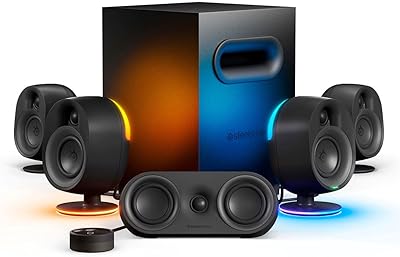
SteelSeries Arena 9
SteelSeries Arena 9
77%
88%
Surround Sound Performance
91%
Subwoofer & Bass Quality
93%
Wireless Rear Speaker Convenience
82%
Treble & Midrange Clarity
86%
Build Quality & Materials
More
RIVA Concert Wi-Fi Bluetooth Smart Hi-Fi Speaker
85%
93%
Sound Quality
85%
Alexa Integration
88%
Connectivity Options
90%
Ease of Setup
87%
Multiroom Audio Compatibility
More

FAQ

Yes, and this is actually one of its more practical strengths. AirPlay 2 handles Apple devices while Chromecast covers Android and Google ecosystem users — both protocols run simultaneously, so a mixed household does not need to pick sides or switch modes.

Absolutely. Spotify Connect lets the speaker act as a direct streaming target — once you hand off playback to it through the Spotify app, your phone is free to lock, leave the room, or even run out of battery without interrupting the music.

AirPlay 2 setup is genuinely straightforward for iPhone users and takes just a few minutes. Wi-Fi onboarding through the companion app on Android has been a more mixed experience based on owner feedback — some users sail through it, while others have needed two or three attempts before it sticks. Having your Wi-Fi password handy and keeping the phone close to the speaker during setup tends to help.

Amazon Music HD and some other services are not natively supported through a dedicated integration, but you can still stream them by casting via AirPlay 2 from an Apple device or via Chromecast from an Android device or Chrome browser. It works, but you lose the native low-latency path that Spotify Connect and Tidal provide directly.

Honest answer: it is better than most tabletop speakers at this size, thanks to the 2.1 channel configuration giving bass its own dedicated driver path. That said, if deep, chest-hitting sub-bass is central to your listening experience, a 3-pound corded speaker will hit its physical limits. It handles kick drums and basslines with reasonable authority — it just will not replace a subwoofer.

Multiroom grouping via AirPlay 2 or Chromecast allows you to run multiple units together, and some users do place two in the same room for wider coverage. However, they are not officially sold or configured as a dedicated stereo pair in the traditional left-right channel sense — the grouping is primarily designed for whole-home audio rather than precision stereo imaging.

No, neither voice assistant is built into the speaker. All control goes through the companion app or the native controls of whatever streaming service you are using. If hands-free voice control is important to your daily use, this is a genuine gap that no firmware update is likely to address.

Yes, the 3.5mm AUX input handles any analog source — a turntable with a built-in preamp, a portable DAC, a laptop headphone output, whatever you have. Just note that a standard turntable without a phono preamp will still need one before connecting, as the AUX input is line-level only.

In a bedroom or dedicated home office, it fills the space comfortably with volume headroom to spare. In a large open-plan living room over roughly 400 square feet, it starts to show its limits at maximum output — it is engineered for room-specific use rather than large-space primary listening. Think of it as the right speaker for the right room, not a whole-floor solution.

That concern is fair and worth taking seriously. Audio Design Experts, the company behind this Wi-Fi speaker, has been active in the premium audio space for years and has issued firmware updates since launch — which is a positive signal. That said, the support track record is shorter than what you get with a Sonos or Bose, and there is no guarantee of indefinite software maintenance. If long-term ecosystem security is a top priority, that is a real trade-off to weigh against the price advantage the Arena offers.