Overview

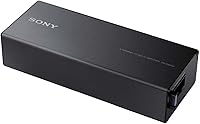
The Sony XMS400D 4-Channel Micro Car Amplifier is the kind of upgrade that makes sense for drivers who want noticeably better sound without tearing apart their entire interior. Sony has a long history in car audio, and this micro amp sits comfortably in the middle of that legacy — not a budget throwaway, not a flagship powerhouse. Its compact form factor is really the headline: it fits where conventional amplifiers simply won't. Think under-seat mounting, tucked into a trunk corner, or hidden behind a kick panel. If you're replacing a factory deck and want clean, reliable amplification for four speakers, this Sony 4-channel is a practical, well-considered choice.
Features & Benefits

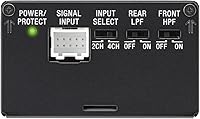
Running on Class-D technology, the XMS400D draws less current and runs cooler than older amplifier designs — a real advantage when you're working with factory wiring that wasn't built to handle heavy electrical loads. The rated 45W RMS per channel at 4 ohms isn't flashy, but it's honest, usable power that will wake up a set of aftermarket door speakers without complaint. Built-in low-pass and high-pass filters mean you won't need a separate crossover for a basic four-speaker build. The hi-level input with auto turn-on is genuinely useful — connect directly to factory speaker wires and the amp powers on and off with the head unit automatically. An onboard protection circuit with a status LED rounds things out nicely.

Best For

This micro amp is a strong fit for anyone upgrading from a factory head unit who doesn't want the complexity of a full custom installation. If your car has tight mounting real estate — think compact sedans, small SUVs, or hatchbacks with minimal trunk space — the XMS400D's footprint genuinely opens up options that a standard-size amplifier would close off. It's also a natural choice for first-time amp installers; the hi-level input removes the need for an aftermarket head unit or RCA adapter, cutting both cost and wiring headaches considerably. Drivers aiming to power four full-range speakers as their primary goal will find this Sony 4-channel a clean, capable match.

User Feedback

With a 4.2-star average across roughly 124 ratings, the XMS400D earns its score without drama. Buyers consistently praise how straightforward the install is, and many specifically call out the auto turn-on feature as working reliably — which, from experience, is not something every amp in this category gets right. The improvement over factory head-unit power is the most commonly reported win. On the other side, a handful of users note the output feels strained at higher volumes, particularly with speakers that dip below 4 ohms. Heat in cramped mounting spots has also come up, though less frequently. The sample size is moderate, so treat outlier complaints with some skepticism — the general picture is solid mid-range performance.

Pros

  • The micro footprint opens up mounting locations that standard amplifiers cannot fit into, including under most front seats.
  • Class-D operation keeps current draw low, reducing strain on factory wiring and the vehicle electrical system.
  • Built-in high-pass and low-pass filters eliminate the need to buy a separate crossover for a basic speaker setup.
  • The hi-level input with auto turn-on works reliably with factory head units straight out of the box.
  • At roughly one pound, the XMS400D is easy to reposition or relocate if your install needs change.
  • An onboard protection circuit with a status LED makes troubleshooting noticeably less frustrating.
  • Sound quality at moderate listening volumes is clean and noticeably better than passive head-unit output.
  • Sony brand support and a one-year warranty offer reasonable peace of mind for the price tier.
  • Both RCA and speaker-level inputs are included, giving installers flexibility in how they wire the system.

Cons

  • Output starts feeling constrained at higher volumes, especially with speakers that are harder to drive.
  • 45W RMS per channel leaves limited headroom for dynamic audio peaks in demanding music genres.
  • No wireless remote or bass boost control means you lose some real-time tuning flexibility post-install.
  • The amp can run warm in sealed or low-airflow mounting spots, which warrants careful placement planning.
  • Only 124 user ratings exist for this model, so edge-case reliability patterns are harder to confirm.
  • Not compatible with low-impedance (2-ohm) speaker loads, which limits pairing options down the road.
  • Gain and filter adjustments require physical access to the amp, which is inconvenient in tight installs.
  • No subwoofer output channel means you will need a separate amplifier if you later add a sub to the system.

Ratings

Our AI-generated scores for the Sony XMS400D 4-Channel Micro Car Amplifier are derived from deep analysis of verified global buyer reviews, with spam, bot-submitted, and incentivized feedback actively filtered out before scoring. The ratings below reflect a balanced picture — genuine strengths are recognized, but recurring pain points are weighted honestly and transparently. Whether this micro amp fits your build or falls short depends heavily on your expectations, and these scores are designed to help you figure that out quickly.
Installation Ease
88%
First-time installers consistently report that getting the XMS400D up and running takes far less time than expected. The hi-level input paired with auto turn-on sensing means most users connect directly to factory speaker wires and are done — no head unit swap, no extra adapters, no separate remote wire hunting.
A small portion of buyers found the gain and filter adjustment controls fiddly to access once the amp is tucked under a seat, particularly in vehicles with very low seat clearance. The lack of clearly labeled adjustment markings on some units also caused minor confusion during first-time setup.
Sound Clarity
79%
21%
At moderate listening volumes, buyers frequently describe the output as noticeably cleaner and more defined than what their factory head unit delivered alone. Vocals come through with better separation, and the overall listening experience on daily commutes improves meaningfully with standard aftermarket door speakers.
As volume increases, some users report a subtle flatness or compression in the high-frequency range that suggests the amp is working near its limits. It does not distort harshly, but the refinement of more powerful amplifiers in the next price tier becomes apparent when you push past about 75 percent volume.
Power Output
63%
37%
The 45W RMS per channel is genuinely adequate for a four-door sedan running standard 4-ohm aftermarket speakers at typical listening levels. Buyers upgrading from passive head-unit power hear a clear improvement in dynamic range and bass response without touching the subwoofer territory.
Power-hungry component speaker sets expose the limits of this amp quickly, and buyers who listen at high volumes in larger vehicle cabins — like full-size SUVs or minivans — frequently report that the output feels underpowered. Comparing the rated RMS to inflated peak figures from competitors is a common source of post-purchase disappointment.
Compact Form Factor
93%
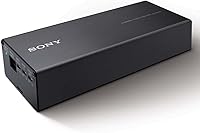
This is where the XMS400D genuinely stands apart from similarly priced competitors. At just 8 × 6.12 × 2.44 inches and one pound, it slides under most front seats with clearance to spare, and installers working in compact hatchbacks or sedans with zero trunk space find it a practical lifesaver.
The small chassis, while ideal for placement, also means the internal components are tightly packed — a trade-off that can accelerate heat buildup in completely sealed or unventilated mounting cavities, particularly during long drives in summer heat.
Thermal Management
67%
33%
Class-D amplification gives the XMS400D a meaningful thermal advantage over older Class-AB designs, and most buyers report it runs comfortably warm rather than hot under normal conditions. For daily commutes with moderate volume levels, heat rarely becomes a noticeable issue.
Buyers who mount the unit in completely enclosed spaces — sealed under carpet, inside door panels, or in unventilated trunk corners — have noted the unit warming considerably during extended highway drives. A small number of users triggered the protection circuit in particularly confined, airflow-restricted installs.
Hi-Level Input Quality
82%
18%
The speaker-level input is not merely a convenience checkbox — it genuinely performs well, picking up clean signal from factory outputs without the audible noise floor issues that plague cheaper implementations of the same feature. Auto turn-on sensitivity is reliable and responsive in the vast majority of reported installs.
A handful of buyers with unconventional factory wiring setups — particularly certain European vehicles with signal-processing amplifiers built into the factory system — reported auto turn-on inconsistencies that required additional troubleshooting. This is an edge case, but worth noting for those vehicles.
Build Quality
74%
26%
The chassis feels appropriately solid for the price tier, with no obvious flex in the housing and terminals that accept wiring connections without stripping easily. Buyers who have had the unit installed for a year or more do not commonly report mechanical degradation or connector loosening.
Compared to higher-end car audio brands, the internal component quality and external finish feel consistent with the mid-range positioning — functional rather than premium. A few buyers noted the chassis heatsink area feels less robust than expected given the Class-D marketing, though functional complaints remain rare.
Value for Money
77%
23%
For buyers whose primary goal is clean four-speaker amplification from a factory deck without the complexity of a full system build, this Sony 4-channel hits a practical sweet spot. The hi-level input and built-in filters alone save the cost of several additional components that competing bare-bones amps require.
Buyers who need more headroom will quickly find themselves eyeing the next tier up, which can make the XMS400D feel like an interim purchase rather than a long-term solution. If you anticipate adding a subwoofer or upgrading to more demanding speakers within a year, the value calculation shifts.
Built-in Filter Performance
72%
28%
Having both a low-pass and a high-pass filter on board is a genuine advantage for basic builds where simplicity is the goal. The filters work as intended for separating frequency ranges across channels, and most buyers doing a straightforward four-speaker setup find them more than adequate.
The filter controls lack the granularity that more experienced installers prefer — slope settings and precise crossover frequency adjustments are limited compared to discrete external crossovers. Enthusiasts who tune carefully will find these filters functional but not sophisticated.
Wiring Compatibility
81%
19%
Supporting both RCA and high-level inputs means this amp adapts to a wider range of source units than single-input competitors. Buyers switching between vehicles or repurposing the amp for a different install later appreciate not being locked into one connection type.
The fuse and power terminal sizing is appropriate for the amp's output but limits future upgrades — if a buyer eventually wants to push more power through the same wiring run, the existing setup will need to be reworked. The lack of a dedicated subwoofer preamp output is also a wiring constraint worth planning around.
Protection Circuit Reliability
78%
22%
The onboard protection circuit with status LED has been praised repeatedly as a practical diagnostic feature, especially for first-time installers who would otherwise struggle to identify wiring faults. It engages promptly in short-circuit situations and has prevented component damage in multiple user-reported scenarios.
A small number of buyers found the protection circuit triggered unnecessarily under normal operating conditions, possibly due to marginal speaker impedance or borderline installation wiring. Resolving false triggers required process-of-elimination troubleshooting that was frustrating without a more informative diagnostic readout.
Brand Reliability
83%
Sony's long-standing presence in consumer audio carries real weight with buyers who are cautious about no-name amplifier brands flooding the market. The one-year warranty and the confidence that replacement parts or support exist if needed adds genuine peace of mind for first-time car audio buyers.
Some long-term Sony car audio enthusiasts note that this product line does not represent the same engineering investment as Sony's flagship Xplod or Mobile ES tiers, which can make the brand premium feel slightly overstated relative to the actual component specification.
Impedance Flexibility
51%
49%
For buyers running standard 4-ohm aftermarket speakers — which covers the majority of the target market — the impedance rating is a non-issue and the amp performs exactly as expected within its designed operating range.
The inability to handle 2-ohm loads is a genuine limitation that restricts upgrade paths. Buyers who later want to run parallel speaker configurations or switch to lower-impedance component sets will find the amp incompatible, forcing a full replacement rather than a simple speaker swap.
Tuning & Control Options
58%
42%
The inclusion of built-in gain control alongside the LP and HP filters gives casual users enough adjustment range to dial in a reasonable sound balance without needing any additional equipment, which suits the plug-and-play audience this amp targets.
There is no bass boost, no remote level control, and no subsonic filter — omissions that become frustrating once a buyer's audio ambitions grow beyond the initial install. Anyone who enjoys fine-tuning their sound will hit the ceiling of this amp's control options fairly quickly.

Suitable for:

The Sony XMS400D 4-Channel Micro Car Amplifier was clearly designed with a specific type of buyer in mind, and for that buyer it genuinely delivers. If you drive a compact sedan, small SUV, or any vehicle where trunk space is tight and under-seat real estate is limited, the micro form factor here is not just a convenience — it is the whole point. Drivers upgrading from a factory head unit will particularly appreciate the hi-level input, which allows a direct connection to existing speaker wires without purchasing an aftermarket radio or a line output converter. First-time installers benefit from the auto turn-on sensing, which removes one of the most common wiring headaches from the process entirely. This amp also makes strong sense for anyone who wants noticeably cleaner sound across four door speakers without committing to a full custom build, a large power capacitor, or upgraded wiring runs throughout the vehicle.
Not suitable for:

The Sony XMS400D 4-Channel Micro Car Amplifier is not the right tool if your ambitions extend beyond a clean four-speaker daily-driver setup. At 45W RMS per channel, the power output is honest but modest — buyers expecting to push component speaker sets hard, or anyone running speakers with lower impedance loads, will likely find the amp running out of headroom before they find their ideal volume. If you already have an aftermarket head unit with preamp RCA outputs and are planning a more involved system with a dedicated subwoofer amplifier, there are competing options in this price range that offer more flexible gain staging and higher output. Heat can also become a factor if the amp is installed in an extremely confined, unventilated space, so buyers in hot climates who plan under-carpet or sealed-cavity mounting should factor in airflow. Competition audio enthusiasts or anyone chasing high SPL output should look elsewhere entirely.

Specifications

  • Channels: This amplifier operates across 4 independent channels, allowing it to power a full set of four speakers simultaneously.
  • RMS Power: Each channel delivers 45W RMS at 4 ohms, representing the continuous, real-world output rather than inflated peak figures.
  • Amplifier Class: Class-D topology is used, which converts power more efficiently than Class-A or Class-AB designs, resulting in less heat generation and lower current draw.
  • Dimensions: The unit measures 8 × 6.12 × 2.44 inches, a notably compact footprint that enables under-seat and confined-space mounting.
  • Weight: The amplifier weighs 1 pound, making it easy to handle during installation and reposition if needed.
  • Input Types: Both high-level (speaker-level) and low-level (RCA) inputs are supported, providing compatibility with factory and aftermarket head units alike.
  • Auto Turn-On: Hi-level sensing allows the amplifier to detect speaker output from the head unit and power on automatically, eliminating the need for a dedicated remote turn-on wire in many installs.
  • Built-in Filters: Onboard low-pass (LP) and high-pass (HP) filters are included, allowing basic frequency management without a separate external crossover.
  • Protection Circuit: An integrated protection circuit guards against overloads and short circuits, with a status indicator LED to help identify fault conditions quickly.
  • Impedance: The amplifier is rated for 4-ohm speaker loads; operation with lower-impedance speakers is not supported and may trigger the protection circuit.
  • Wireless Remote: No wireless remote is included or supported with this model.
  • Color: The unit is finished in black, which suits discreet mounting in most vehicle interiors.
  • Warranty: Sony provides a 1-year limited manufacturer warranty covering defects in materials and workmanship.
  • Model Number: The official Sony model designation is XMS400D, which should be referenced when sourcing compatible accessories or wiring kits.
  • Manufacturer: This product is manufactured by Sony Mobile Communications (USA) Inc., a subsidiary of Sony Corporation.
  • Availability: As of the available product data, this model has not been discontinued by the manufacturer.

Related Reviews
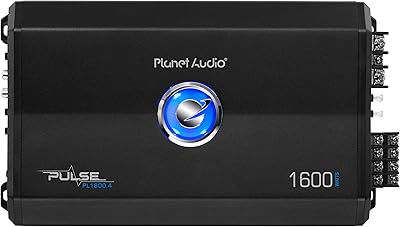
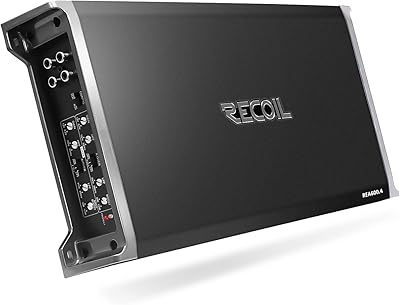
Recoil REA600.4 4-Channel Car Audio Amplifier
84%
89%
Audio Performance
91%
Ease of Installation
85%
Sound Quality at High Volumes
62%
Heat Management
90%
Power Output
More
Recoil DI800.4 4-Channel Car Audio Amplifier
83%
88%
Sound Quality
92%
Power Output
65%
Thermal Management
84%
Build Quality
91%
Ease of Installation
More
Recoil DI550.4 4-Channel Car Audio Amplifier
74%
91%
Value for Money
78%
Power Output
86%
Ease of Installation
74%
Sound Quality
67%
Build Quality
More
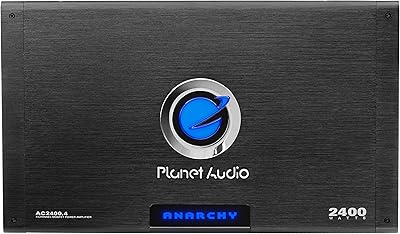
Planet Audio AC2400.4 4-Channel Car Amplifier
84%
95%
Power Output
89%
Sound Clarity
87%
Bass Performance
82%
Ease of Installation
65%
Thermals/Heat Management
More
Planet Audio PL1600.4 4-Channel Car Amplifier
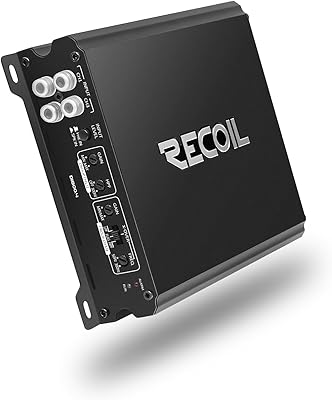
72%
88%
Value for Money
84%
Ease of Installation
74%
Sound Quality
58%
Power Output (Real-World)
61%
Build Quality
More
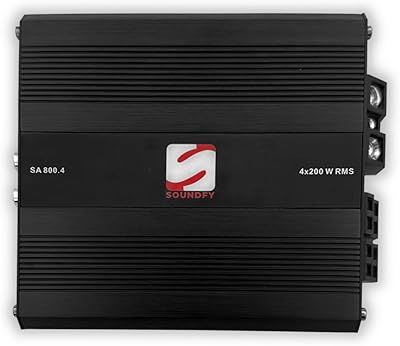
Soundfy SA 400.4 4-Channel Car Amplifier
71%
78%
Value for Money
72%
Sound Quality
63%
Power Output
58%
Build Quality
81%
Thermal Management
More
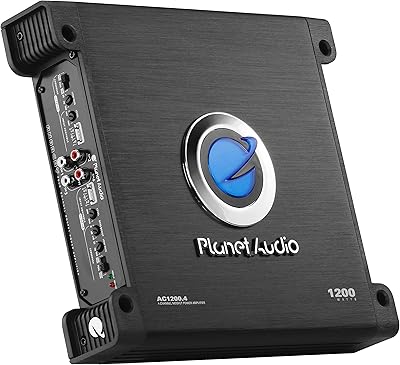
Planet Audio AC1200.4 4-Channel Car Amplifier
73%
88%
Value for Money
67%
Power Output
83%
Installation Ease
74%
Sound Quality
61%
Build Quality
More
Planet Audio AC1600.4 Anarchy Series 4-Channel Car Amplifier
82%
94%
Power Output
88%
Sound Quality
70%
Ease of Installation
92%
Value for Money
85%
Build Quality
More
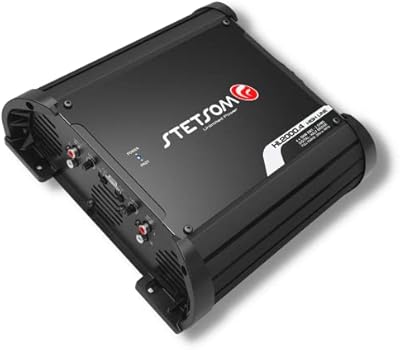
Stetsom HL 2000.4 2-Ohm 4-Channel Car Audio Amplifier
87%
93%
Power Output
85%
Cooling System Efficiency
88%
Sound Quality
91%
Ease of Installation
82%
Durability
More
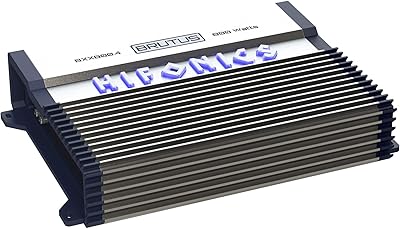
Hifonics BXX800.4 Brutus 800W RMS 4-Channel Car Audio Amplifier
86%
88%
Sound Quality
92%
Power Output
85%
Build Quality
72%
Heat Management
89%
Ease of Installation
More

FAQ

Yes, and this is one of the most practical aspects of the XMS400D. The hi-level input lets you tap into your existing factory speaker wires, and the auto turn-on sensing means the amp powers up and shuts down with your radio. No RCA outputs or extra adapters required.

In most cases, yes. At 8 × 6.12 × 2.44 inches and just 1 pound, this micro amp is specifically sized for tight installations. That said, ground clearance under seats varies by vehicle, so it is worth measuring your available space before committing to that location.

For the vast majority of everyday listening, yes. Factory head units typically output 15 to 18W RMS at best, so jumping to 45W RMS of clean amplified power is a meaningful improvement in clarity and dynamic range. Where it shows limits is at high volume with demanding speakers — it is not a replacement for a high-powered system, but for a four-door daily driver it holds up well.

No. The built-in high-pass and low-pass filters handle basic frequency management on board. For a standard four-speaker setup, you can configure the filters directly on the amp and skip the external crossover entirely.

This amp is rated for 4-ohm loads only, so pairing it with 2-ohm speakers is not recommended. Attempting it will likely trigger the protection circuit and could stress the unit over time. Stick to 4-ohm rated speakers for reliable, long-term performance.

The product documentation does not explicitly confirm a bridged mono mode, and this unit is not marketed as a subwoofer amplifier. If adding a subwoofer is part of your plan, you would be better served by a dedicated mono amp for that channel rather than relying on this unit to cover it.

The onboard status indicator LED will signal a fault condition when the protection circuit activates. This typically happens due to a short circuit, overheat, or impedance mismatch. Checking the LED is usually the first diagnostic step before tracing wiring.

Class-D amps run significantly cooler than older designs, which is one reason the XMS400D is well-suited to compact mounting spots. That said, completely sealing it inside an unventilated cavity — like under carpet with no airflow — is never ideal for any amplifier. Leave some breathing room where you can, especially in hot climates.

For an amp in this power range, an 8-gauge wiring kit is generally appropriate and widely recommended by installers. A full kit typically includes the power cable, ground wire, RCA cables, remote turn-on wire, and a fuse holder. Since the hi-level input handles the signal side, you may not need RCA cables if you are connecting to a factory radio.

Based on available product data, Sony has not discontinued this model. However, it has been on the market since mid-2016, so availability through certain retailers may be inconsistent. If you spot it in stock, it is worth not waiting too long if you have already decided it fits your needs.

Where to Buy