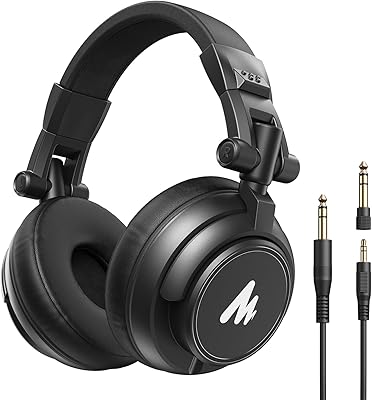
Sony MDR-M1 Professional Closed-Back Monitor Headphones







Overview
Sony MDR-M1 Professional Closed-Back Monitor Headphones arrived in September 2024 as Sony's direct answer to a real gap in their professional lineup — a closed-back reference option alongside their well-regarded open-back MDR-MV1. Sony developed the MDR-M1 in close collaboration with working studio engineers, which gives it a credibility that marketing copy rarely earns on its own. At just 216 grams, long session comfort is treated as a practical priority, not an afterthought — and anyone who has spent six hours behind a console knows exactly why that matters. This is a wired-only professional tool, designed for studio work, and its price reflects that positioning squarely in prosumer-to-professional territory. Casual listeners should look elsewhere from the start.
Features & Benefits
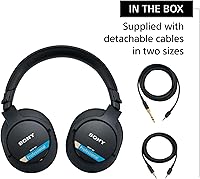
The MDR-M1's custom 40mm dynamic driver spans a frequency range of 5Hz to 80kHz — well past the ceiling of human hearing, but that headroom means the driver isn't being strained at the edges of audible range, contributing to low distortion reproduction during critical listening. The closed acoustic design delivers genuine passive isolation, making it a practical choice wherever open-back bleed would compromise a recording. Both included cables — 1.2m for compact rigs and 2.5m for studio desks — lock in via a screw-lock connector, so accidental yanks are a non-issue. A 3.5mm-to-6.3mm adapter is included. Worth flagging: at 50 Ohm impedance, these headphones will perform noticeably better paired with a proper audio interface or dedicated headphone amp than plugged directly into a phone.
Best For
These Sony monitor headphones are purpose-built for tracking and overdubbing — situations where a musician needs to hear a clean mix in a live recording space without sound bleeding into open microphones. Audio engineers handling post-production for film, podcast, or broadcast will find the passive isolation genuinely useful when working in rooms that aren't acoustically treated. Home studio producers who want an honest, uncolored reference sound for mixing decisions — rather than the hyped bass of consumer headphones — will find real value in the MDR-M1. That said, for casual commute listening, these are simply the wrong tool. The flat, analytical character that makes this closed-back studio headphone so reliable in a studio context tends to feel dry and uninvolving outside of one.
User Feedback
Across professional communities, the MDR-M1 earns consistent praise for its build and cable system — users specifically appreciate the screw-lock connectors, noting they feel far more secure than standard push-in designs common on competing models. Comfort during long sessions is frequently highlighted, and the user-replaceable earpads are recognized as a smart long-term value feature for a working tool. The sound signature, however, divides opinions: listeners coming from consumer headphones often find the flat response initially underwhelming, while experienced engineers consider it a genuine strength. Isolation is rated positively overall, though a handful of users note some competing closed-back options offer marginally more attenuation at similar prices. Comparisons to the open-back MDR-MV1 are common, with most users treating the two as workflow-specific complements rather than direct competitors.
Pros
- Flat, accurate frequency response makes mixing decisions more reliable and translatable across playback systems.
- Screw-lock cable connectors are far more secure than standard push-in designs, reducing accidental disconnections during sessions.
- At just 216 grams, these Sony monitor headphones stay comfortable during even the longest recording or editing sessions.
- Two cable lengths included out of the box — 1.2m for compact rigs and 2.5m for studio desks — cover most real-world setups.
- Passive sound isolation is effective enough for tracking in live recording environments without adding electronic noise cancellation complexity.
- User-replaceable earpads extend the working life of the headphone significantly, making it a smarter long-term investment.
- The 40mm dynamic driver delivers low distortion reproduction across an extremely wide frequency range, supporting detailed and precise monitoring.
- A screw-in jack adapter for both 3.5mm and 6.3mm connections handles compatibility with most professional and consumer audio gear.
- Sony's consultation with working engineers during development shows in practical design choices — the cable system, weight, and sound tuning all reflect real studio priorities.
- Build quality and cable reliability are consistently praised by users who put the MDR-M1 through daily professional use.
Cons
- 50 Ohm impedance means these headphones need an audio interface or headphone amp to perform properly — a smartphone alone will not cut it.
- No Bluetooth option whatsoever limits use strictly to wired, stationary setups.
- The analytical sound signature requires an adjustment period for anyone coming from consumer headphones with emphasized bass or treble.
- Plastic construction on the headband and housing may feel less premium than some competing models at this price tier.
- A few users report that passive isolation, while solid, falls slightly short of the best-performing closed-back competitors in the same price range.
- There is no inline microphone or remote on either cable, ruling out hands-free use or device control entirely.
- The flat reference tuning actively works against enjoyment in casual listening contexts — this is a tool, not a lifestyle headphone.
- New buyers unfamiliar with studio monitor headphones may need time to learn how to interpret what they are hearing before the accuracy becomes an asset.
Ratings
Our AI rating system analyzed verified global user reviews for the Sony MDR-M1 Professional Closed-Back Monitor Headphones, actively filtering out incentivized, bot-generated, and spam submissions to reflect only genuine buyer experiences. The scores below cover the categories that matter most to working audio professionals and serious home studio users, and they do not shy away from the real trade-offs these Sony monitor headphones present. Both the standout strengths and the honest frustrations are reflected transparently in every scorecard.
Sound Accuracy
Sound Isolation
Comfort & Wearability
Build Quality
Cable System
Driver Performance
Impedance & Amp Compatibility
Earpad Quality
Frequency Response Range
Value for Money
Connectivity Versatility
Headphone Sensitivity
Setup & Out-of-Box Experience
Noise Bleed (Outward Leakage)
Suitable for:
The Sony MDR-M1 Professional Closed-Back Monitor Headphones are a strong match for anyone whose work demands accuracy over flattery — starting with recording engineers who need reliable isolation during tracking sessions where open-back designs would bleed into live microphones. Home studio producers who have outgrown consumer headphones and need an honest, uncolored reference for mixing decisions will find the flat response genuinely useful rather than frustrating. Post-production professionals working in film, podcast, or broadcast environments — especially those without access to a fully treated room — benefit from the passive sound isolation that keeps ambient noise from contaminating critical listening. Musicians who monitor through headphones on stage or in a recording booth will appreciate both the secure screw-lock cable connection and the lightweight build that stays comfortable over hours of use. Anyone investing in a professional monitoring headphone they expect to maintain and repair over years, rather than replace, will value the user-swappable earpads and durable detachable cable system.
Not suitable for:
The Sony MDR-M1 Professional Closed-Back Monitor Headphones are genuinely the wrong choice for everyday casual listening, and buyers should be clear-eyed about that before committing. The flat, analytical sound signature that makes the MDR-M1 indispensable for mixing work tends to feel dry and uninvolving for playlist listening, gaming, or commuting — genres and activities where a bit of bass emphasis actually improves enjoyment. At 50 Ohm impedance, these headphones also underperform when driven directly from a smartphone or laptop without a dedicated headphone amplifier or audio interface, which adds cost and complexity that casual users rarely want. Anyone hoping to use these wirelessly is simply out of luck — there is no Bluetooth option, and no adapter will change that. Budget-conscious buyers looking for a first pair of studio headphones may also find better value at a lower price point, since the MDR-M1 is priced for professionals who will actively exploit its reference-grade capabilities.
Specifications
- Headphone Type: Closed-back over-ear dynamic headphones designed for professional studio monitoring and reference listening.
- Driver Size: Custom 40mm dynamic driver unit engineered for low distortion across an ultra-wide frequency range.
- Frequency Response: Rated from 5Hz to 80kHz, covering well beyond the audible spectrum to reduce driver strain at frequency extremes.
- Impedance: 50 Ohm nominal impedance, which generally requires an audio interface or dedicated headphone amplifier for optimal output level and performance.
- Sensitivity: 102 dB sensitivity rating, indicating the loudness output per unit of electrical power delivered to the driver.
- Weight: Approximately 216g without cable, placing it in the lightweight category for professional over-ear studio headphones.
- Cables Included: Two straight detachable cables are included: a 1.2m cable for compact or portable setups and a 2.5m cable for studio desk use.
- Cable Connection: Both cables attach to the headphone via a screw-lock system, providing a mechanically secure connection that resists accidental disconnection.
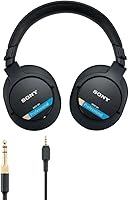
- Jack Compatibility: The headphone terminates in a 3.5mm stereo jack; a screw-in 6.3mm adapter is included to connect to professional audio interfaces and amplifiers.
- Earpads: Soft, thick over-ear cushions designed for extended wear comfort, and engineered to be user-replaceable without specialist tools.
- Noise Control: Passive sound isolation achieved through the closed acoustic structure — no active noise cancellation electronics are used.
- Connectivity: Wired only; there is no Bluetooth or wireless capability of any kind.
- Headband: Adjustable headband constructed from plastic with cushioning, accommodating a wide range of head sizes.
- Housing Material: Headband frame and ear cup housings are constructed primarily from plastic, keeping the overall weight low.
- Color: Available in black only as of the product's release in September 2024.
- Dimensions: Product dimensions are approximately 7.54 x 2.3 x 9.37 inches, reflecting a standard full-size over-ear form factor.
- Intended Use: Designed specifically for professional studio recording, tracking, overdubbing, mixing, and audio post-production monitoring workflows.
- Release Date: The MDR-M1 was first made available in September 2024, positioning it as a current-generation professional monitoring product.
Related Reviews

Sony MDR-MV1 Open-Back Reference Monitor Headphones
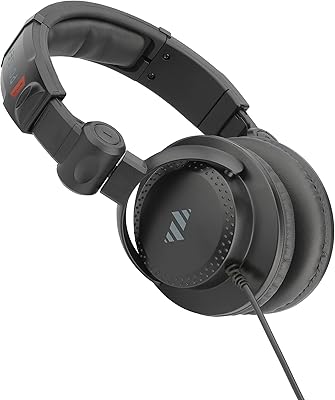
Polsen HPC-A30-MK2 Studio Monitor Headphones
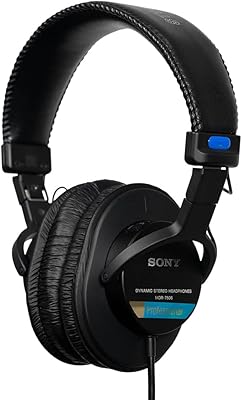
Sony MDR7506
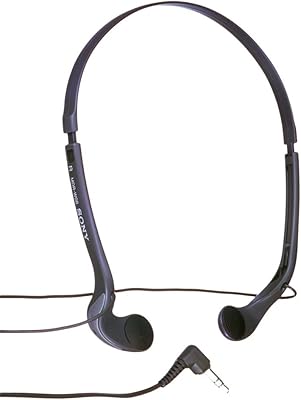
Sony MDR-W08L In-Ear Headphones
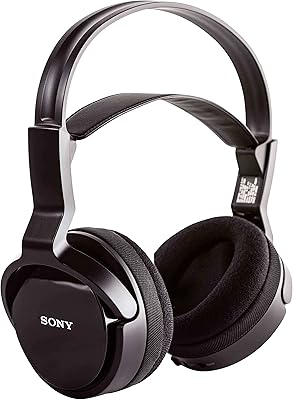
Sony MDR-RF811RK Wireless RF On-Ear Headphones
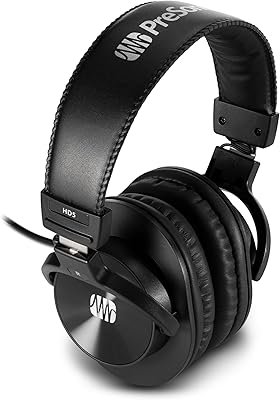
PreSonus HD5

Sony MDR-ZX110 On-Ear Headphones
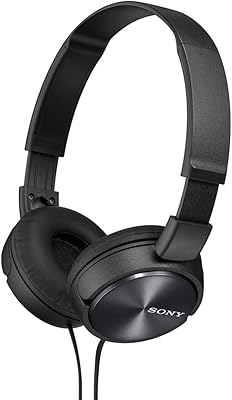
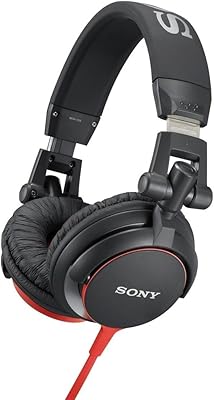
Sony MDR-V55 DJ Over-Ear Headphones