
Overview

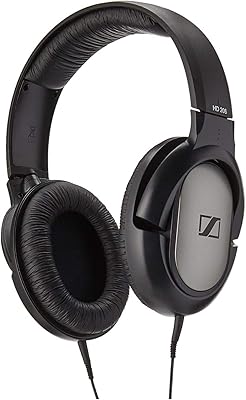
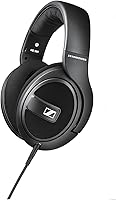
The Sennheiser HD 569 sits in Sennheiser's 500 series — a line built for home and office listeners who want genuine audio quality without venturing into audiophile territory. The closed-back design is a conscious choice: you get passive sound isolation in exchange for a slightly tighter soundstage compared to open-back alternatives. That trade-off suits most everyday listeners just fine. Underneath the ear cups sit 38mm dynamic drivers tuned for a warm, bass-forward character, spanning a frequency range of 10 to 28,000 Hz. In a crowded mid-range field alongside Sony, Audio-Technica, and Beyerdynamic, this headphone holds its own through comfort, versatility, and a sound signature built for casual, daily use.

Features & Benefits

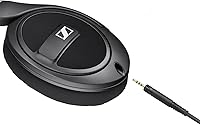
Practical decisions make the HD 569 easy to live with day-to-day. The dual-cable system is genuinely useful: a 3-meter cable with a 6.3mm jack handles desktop listening, while the included 1.2-meter cable with a 3.5mm jack and inline mic takes care of calls and mobile use. At just 23 ohms impedance, these over-ear cans don't need a separate amplifier — your phone or laptop drives them without effort. The replaceable ear pads are a small but meaningful detail; they extend the headphone's lifespan and stay comfortable during long sessions. A sensitivity of 115 dB means volume is never a struggle, even from low-powered sources.

Best For

This closed-back headphone is a strong fit for anyone who needs to focus in a noisy environment without relying on active noise cancellation or managing battery life. Remote workers will particularly appreciate a comfortable all-day pair with a built-in mic ready for calls at a moment's notice. If your listening leans toward pop, hip-hop, or electronic music, the warm, bass-forward tuning will feel natural and satisfying. It also works well as a first serious upgrade for someone stepping past entry-level gear — the improvement in comfort and detail is immediately noticeable. Commuters who prefer wired reliability over Bluetooth will find it a sensible, uncomplicated pick.

User Feedback

Owners of these over-ear cans largely agree on the comfort — the ear pads feel soft from day one, and most report no fatigue across several hours of use. The sound earns strong reactions from pop and electronic listeners, though classical music fans sometimes find the bass emphasis a touch heavy for their tastes. The plastic construction draws fair criticism; it doesn't feel fragile, but it does feel slightly budget-adjacent given the price point. Clamping force runs firm out of the box but loosens up naturally with use. The inline mic handles calls acceptably well — just don't expect anything beyond basic call quality from it.

Pros

  • Soft, replaceable ear pads make all-day wear genuinely comfortable for most users.
  • Dual detachable cables cover both desktop and mobile use cases right out of the box.
  • Drives easily from any phone or laptop — no amplifier needed.
  • Passive sound isolation works reliably in offices and moderate commute environments.
  • Warm, bass-rich sound tuning flatters pop, hip-hop, and electronic music noticeably well.
  • Replaceable ear pads extend the headphone's lifespan and lower long-term ownership costs.
  • The inline mic handles calls adequately without requiring a separate headset.
  • Low 23-ohm impedance means strong volume from virtually any source device.
  • Frequency response extending to 10 Hz delivers a full, physical low-end presence.
  • Detachable cable design protects the most failure-prone component from permanent damage.

Cons

  • No carrying case included — a real oversight for a full-size over-ear at this price.
  • Plastic construction feels noticeably less premium than metal-bodied competitors in the same range.
  • Clamping force is uncomfortably firm out of the box and requires a break-in period.
  • Inline microphone quality is too thin and noise-prone for anything beyond basic calls.
  • No wireless option available, which increasingly limits its appeal against rival headphones.
  • The 6.3mm desktop cable requires a separate adapter for use with modern laptops.
  • Ear cups retain warmth during extended sessions, which can be uncomfortable in hot environments.
  • Soundstage feels noticeably confined compared to open-back headphones at a similar price.
  • Headband padding is thinner than the ear cups, causing crown pressure over very long sessions.
  • Plastic finish picks up visible scratches and surface wear faster than comparable metal-built rivals.

Ratings

The scores below were generated by AI after analyzing thousands of verified owner reviews for the Sennheiser HD 569 from global marketplaces, with spam, bot-submitted, and incentivized feedback actively filtered out. The result is an honest snapshot of what real buyers experience after weeks and months of daily use — strengths and frustrations included in equal measure.

Sound Quality
83%
The warm, bass-forward tuning lands well for casual listening to pop, hip-hop, and electronic music. Buyers regularly describe the low-end as full and satisfying without crossing into bloated territory, making long playlist sessions genuinely enjoyable.
Classical and acoustic music listeners find the tuning colored rather than neutral, with some midrange detail feeling slightly recessed. Compared to open-back alternatives in the same price range, the soundstage can feel contained and less airy.
Comfort & Fit
88%
The soft over-ear pads are one of the most consistently praised aspects across long-term owners. Many users report wearing these over-ear cans for four or more hours without noticeable pressure or heat buildup, which is genuinely impressive for a closed-back design.
Clamping force is noticeably firm straight out of the box, and a handful of buyers with wider heads found it uncomfortable during the first week. It does loosen with regular use, but new owners should expect a short break-in period.
Build Quality
67%
33%
The headphone feels solid in daily handling — the hinges move smoothly, the headband adjusts with a satisfying click, and nothing rattles. For everyday home and office use, durability has not been a recurring complaint among long-term owners.
The predominantly plastic construction is a regular point of criticism at this price point. Buyers who handle competing metal-framed alternatives often comment that the HD 569 feels a tier below what the asking price implies, and that perception lingers.
Sound Isolation
81%
19%
Passive isolation does its job reliably in typical office environments and during commutes — keyboard noise, air conditioning hum, and moderate background chatter are noticeably muffled. No battery or active circuitry required, which appeals to buyers tired of managing charge levels.
It is not a noise-cancelling headphone, so in louder environments like airplanes or busy coffee shops, some ambient sound bleeds through. Buyers expecting ANC-level isolation from a passive design will find themselves adjusting expectations.
Microphone Quality
61%
39%
The inline mic on the 1.2-meter cable handles video calls and phone conversations without making the other party strain to hear you. For remote workers who need a quick, cable-based call solution, it removes the need for a separate headset.
Voice clarity is adequate but unremarkable — background noise pickup is evident, and recordings sound thin. Anyone expecting studio-adjacent quality or even a step above basic call use will be disappointed; this mic is strictly a convenience feature.
Cable & Connectivity
84%
The dual-cable inclusion is practical and well thought out. The 3-meter cable suits desktop setups, while the shorter mobile cable with inline remote handles on-the-go use cleanly. Detachable connectors on both cables mean replacements are easy to source.
The cables are not braided or particularly tangle-resistant, and a few users note they feel lightweight relative to the headphone itself. There is no wireless option at all, which is increasingly a sticking point for buyers comparing across the category.
Value for Money
74%
26%
For buyers who prioritize sound tuning and all-day comfort, the price feels justified — especially given the dual-cable system and replaceable ear pads that extend the product's useful life well beyond cheaper alternatives in the segment.
The plastic build and basic mic make it harder to defend the price against competitors that offer more premium materials or better overall feature sets. Buyers who stretch their budget for this headphone sometimes feel the hardware does not fully match the brand's reputation.
Ease of Use
91%
At 23 ohms impedance, it drives effortlessly from any phone, tablet, or laptop without any additional hardware. Setup is genuinely plug-and-play, and the inline remote works reliably for basic playback and call control on compatible devices.
The 6.3mm jack on the long cable requires an adapter for use with standard 3.5mm ports on most modern laptops, which is a minor but real inconvenience. The adapter is not included, and some buyers only discover this after unboxing.
Ear Pad Quality
86%
The pads are generously sized and soft enough that most users forget they are wearing them during long sessions. The replaceable design is a meaningful long-term advantage — worn pads can be swapped rather than retiring the whole headphone.
After extended use over several months, the padding shows compression and slight material wear. A few buyers also note that the pads retain warmth during use, which can be uncomfortable in summer or in warmer rooms.
Portability
58%
42%
The detachable cables help somewhat with packing — you can stow the shorter cable and avoid the full 3-meter tangle when traveling. The headphone folds flat enough to fit into a carry-on bag without dedicated padding.
There is no included carrying case or pouch, which is a real omission at this price. Full-size over-ear cans without a case are awkward to transport, and buyers who travel frequently find themselves sourcing a third-party solution.
Low-End Performance
82%
18%
Bass extension down to 10 Hz gives the HD 569 a physical, present low-end that budget headphones simply cannot match. Electronic and bass-heavy genres in particular benefit from this driver tuning, and the sub-bass feels controlled rather than boomy.
Bass-sensitive listeners occasionally describe the low-end as slightly dominant relative to the mids, which can obscure vocal clarity in dense mixes. It is a deliberate tuning choice, not a defect, but it is not universally appreciated.
Headband Comfort
79%
21%
The padded headband distributes weight reasonably well across the crown, and most buyers do not cite head pressure as a concern during moderate listening sessions. The adjustment mechanism is smooth and holds its position reliably.
The headband padding is thinner than the ear cups, and buyers with larger heads who also push the adjustment to its widest point report some discomfort after extended hours. More headband cushioning would bring it in line with the ear pad comfort level.
Frequency Response Accuracy
76%
24%
The 10 to 28,000 Hz range captures more low-frequency detail than many rivals in the segment. For everyday music and video content, the tuning feels full and well-rounded, particularly at moderate to high listening volumes.
The response is shaped for consumer enjoyment rather than accuracy, so mixing engineers or anyone who needs a flat reference will find the tuning misleading. It is not a critical-listening tool, and the coloration is evident on analytical tracks.
Long-Term Durability
72%
28%
Core components — drivers, cable connectors, headband mechanism — hold up well through regular daily use over one to two years based on owner reports. The detachable cable design protects the most failure-prone part of any wired headphone.
The plastic housing shows surface scratches and finish wear more visibly than metal-bodied competitors over time. A handful of long-term owners report hinge loosening after sustained heavy use, though outright failure is not a common complaint.

Suitable for:

The Sennheiser HD 569 is a strong match for anyone who spends long stretches at a desk and wants a wired headphone that handles both focused listening and video calls without switching gear. Remote workers will find the combination of all-day comfort and an inline mic particularly practical — it removes the need for a separate headset when colleagues ring throughout the day. Casual music fans who gravitate toward pop, R&B, hip-hop, or electronic genres will feel right at home with the warm, bass-forward tuning; it flatters these styles naturally. Home listeners who want passive sound isolation — blocking out a noisy household or open-plan office without fussing over battery levels or ANC settings — will appreciate the simplicity of the closed-back design. It also makes a compelling first serious upgrade for anyone stepping up from budget earbuds or entry-level over-ears, where the jump in comfort and audio detail is immediately and clearly felt.

Not suitable for:

Buyers who expect audiophile-grade neutrality or a wide, open soundstage will find the HD 569 limiting — the closed-back design keeps the sound somewhat contained, and the bass-forward tuning is not suited to critical listening or studio reference work. If you primarily listen to classical, jazz, or acoustic music where tonal accuracy and midrange transparency matter most, the coloration in this headphone's sound will likely bother you over time. Wireless users will need to look elsewhere entirely; there is no Bluetooth option, and in a market where most mid-range competitors now offer both wired and wireless modes, that is a real constraint for anyone who hates cable management. Frequent travelers expecting a carrying case will be disappointed — nothing is included in the box, and full-size over-ear cans without protection are awkward to pack. Anyone prioritizing premium materials and a metal build at this price point should also compare carefully, as the plastic construction is a consistent buyer concern that won't disappear just because the sound is good.

Specifications

  • Driver Size: Each ear cup houses a 38mm dynamic transducer, a size that balances low-frequency extension with controlled midrange reproduction.
  • Impedance: The headphone measures 23 ohms, making it straightforward to drive from smartphones, laptops, and tablets without any additional amplification.
  • Frequency Response: Audio reproduction spans 10 Hz to 28,000 Hz, covering the full range of human hearing with additional headroom on both ends.
  • Sensitivity: Rated at 115 dB SPL at 1 kHz per 1 Vrms, ensuring ample volume output even from low-powered mobile source devices.
  • Distortion: Total harmonic distortion is specified at under 0.2% at 1 kHz and 100 dB, indicating clean reproduction at typical listening levels.
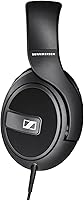
  • Design Type: Closed-back, circumaural (over-ear) construction that passively attenuates ambient sound without any electronic noise-cancellation circuitry.
  • Cable 1: A 3-meter detachable cable terminated with a straight, gold-plated 6.3mm jack is included for use with home audio equipment.
  • Cable 2: A 1.2-meter detachable cable with a straight 3.5mm gold-plated jack and an inline single-button remote with omni-directional microphone is included for mobile use.
  • Microphone: The inline microphone uses an omni-directional pickup pattern, capturing voice from all directions and suitable for phone and video calls.
  • Connectivity: Wired-only connection via standard 3.5mm or 6.3mm audio jacks; no Bluetooth, NFC, or any wireless transmission is supported.
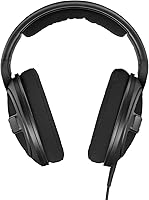
  • Ear Pad Material: Soft, replaceable circumaural ear pads are fitted as standard and can be swapped out independently to extend the headphone's usable life.
  • Weight: The headphone weighs approximately 0.75 kg including the cable, which is within the normal range for full-size over-ear designs.
  • Compatible Devices: Works with smartphones, tablets, laptops, desktop computers, and desk telephones — any device with a standard 3.5mm or 6.3mm headphone output.
  • Series: The HD 569 belongs to Sennheiser's 500 series, a mid-range lineup positioned between the entry-level 400 series and the premium 600 series.
  • In-Box Contents: The package includes the headphone unit, a 3-meter cable with 6.3mm jack, a 1.2-meter cable with 3.5mm jack and inline remote, and a user manual.
  • Carrying Case: No carrying case or storage pouch is included in the standard retail package.
  • Water Resistance: The headphone carries no water-resistance rating and is not designed for use in wet conditions or during exercise.
  • Noise Control: Sound isolation is achieved passively through the closed-back ear cup design rather than through active noise-cancellation electronics.
  • Hardware Interface: The primary desktop cable uses a 6.3mm (quarter-inch) straight jack, which requires a 3.5mm adapter for use with most modern laptops.
  • Manufacturer: Designed and manufactured by Sennheiser, a German audio company with over 75 years of experience in professional and consumer audio products.

Related Reviews
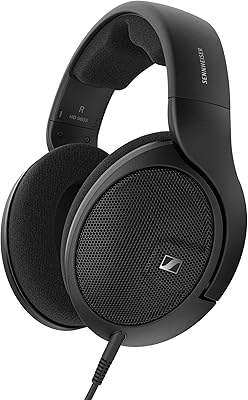
Sennheiser HD 650
Sennheiser HD 650
84%
96%
Sound Clarity
88%
Bass Response
94%
Midrange Accuracy
91%
Treble Detail
89%
Comfort
More
Sennheiser HD 560S
Sennheiser HD 560S
74%
93%
Sound Accuracy
91%
Soundstage & Imaging
88%
Comfort & Fit
63%
Build Quality
71%
Amplifier Dependency
More
Sennheiser HD 25 Special Edition
85%
94%
Build Durability
89%
Ambient Noise Isolation
86%
Professional Sound Accuracy
68%
Ergonomics & Comfort
91%
Overall Value
More
Sennheiser HD 600
Sennheiser HD 600
75%
94%
Sound Accuracy & Neutrality
91%
Soundstage & Imaging
88%
Comfort & Wearability
61%
Amplifier Dependency
72%
Build Quality
More
Sennheiser HD 206 Stereo Headphones
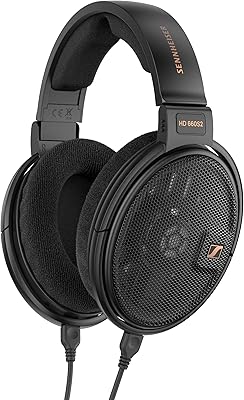
82%
92%
Value for Money
85%
Sound Quality
88%
Comfort & Fit
70%
Noise Isolation
80%
Build Quality
More
Sennheiser HD 4.50 SE
82%
91%
Sound Quality
88%
Active Noise Cancellation
76%
Comfort & Fit
85%
Battery Life
79%
Wireless Connectivity
More
Sennheiser HD 660S2
Sennheiser HD 660S2
80%
93%
Sound Quality
84%
Bass Performance
91%
Soundstage & Imaging
58%
Amplifier Dependency
88%
Comfort & Wearability
More
Sennheiser HD 300 Over-Ear Headphones
82%
85%
Sound Quality
87%
Comfort & Fit
82%
Noise Isolation
88%
Portability
80%
Build Quality
More
Sennheiser HD 280 Pro
81%
91%
Noise Isolation
88%
Sound Accuracy
86%
Build Quality
63%
Comfort Over Long Sessions
89%
Passive Attenuation Performance
More
Sennheiser HD 400S
Sennheiser HD 400S
77%
88%
Sound Quality
81%
Comfort & Fit
74%
Passive Noise Isolation
67%
Build Quality
63%
Cable & Connectivity
More

FAQ

No, you don't. At 23 ohms impedance, the HD 569 is easy enough to drive that any modern smartphone, tablet, or laptop will power it to comfortable and loud listening levels without any extra hardware.

Yes, and it works quite well for that purpose. The shorter 1.2-meter cable comes with an inline microphone and a one-button remote, so you can take calls, mute, and adjust volume without touching your computer. Just keep in mind the mic is functional rather than exceptional — perfectly clear for calls, but not something you'd want to use for recording voice-overs.

The main difference is soundstage and isolation. Closed-back cups keep sound contained, which means ambient noise stays out and your audio stays in — great for shared spaces. The trade-off is that the sense of space in the music feels a bit narrower than you'd get from an open-back design. For casual listening and work use, most people consider that a fair exchange.

It runs on the firm side when new, and some buyers notice it during longer sessions in the first week or two. The good news is it loosens naturally with regular use. If you find it tight early on, gently bending the headband slightly outward over a few days can speed up the process.

The ear pads are designed to be removable and replaceable, which is a genuine long-term advantage. Official Sennheiser replacement pads are available directly through Sennheiser's website and through major audio retailers. Third-party compatible pads also exist if you want different materials or a lower price point.

If your phone has a 3.5mm headphone jack, the shorter included cable plugs straight in and the inline remote will function for basic playback and call control. If your phone has dropped the headphone jack entirely, you will need a Lightning-to-3.5mm or USB-C-to-3.5mm adapter, which is sold separately.

For standard video calls on Zoom, Teams, or Google Meet, it holds up just fine — your colleagues will hear you clearly in a quiet room. It is an omni-directional mic, so it does pick up background noise more than a directional microphone would. In a noisy environment, a dedicated USB microphone or headset with a boom mic will perform noticeably better.

In a typical office or home setting, it reduces background noise meaningfully — air conditioning, keyboard clicks, and moderate conversation all get pushed back. It is not at the level of active noise cancellation, so on a loud train or airplane you will still hear some of what's around you. For most work-from-home and open-office scenarios, though, the passive isolation is genuinely useful.

Yes. If your console controller or TV has a 3.5mm headphone output, the mobile cable connects directly. For receivers or older amplifiers with a 6.3mm output, the longer desktop cable is the right pick. There is no wireless or optical connectivity, so for TVs without a headphone jack you would need an adapter or a separate DAC.

The core components — drivers, headband mechanism, and cable connectors — hold up well under regular use based on long-term owner reports. The main wear points are the ear pads, which compress and show material wear over time, and the plastic housing, which picks up surface scratches more visibly than a metal frame would. The detachable cable design is a real durability advantage since cables are the most common failure point on wired headphones, and replacements are easy to find.