
Overview

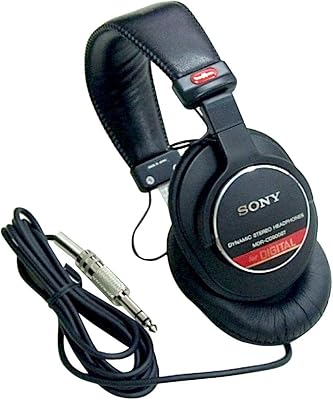
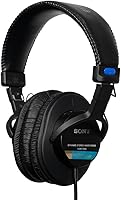
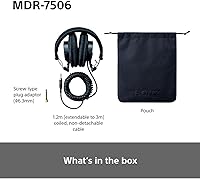
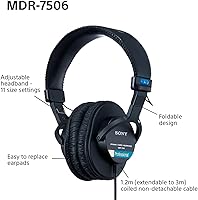
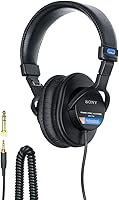
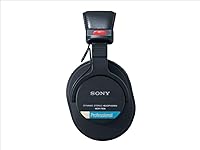
Walking into almost any professional recording studio, you are likely to spot the Sony MDR7506 draped over a console or hanging in a vocal booth. This industry-standard headset has earned its place through three decades of unglamorous, reliable service. The design is purely functional, skipping modern aesthetic trends in favor of a rugged metal headband and a utilitarian aesthetic that prioritizes mechanical durability above all else. When you first pick up this studio gear, the weight feels substantial but balanced, and the frame folds down into a compact shape for easy transport. The package includes a screw-on adapter and a simple pouch, signaling that these headphones are tools meant for a working environment rather than high-fashion accessories.

Features & Benefits

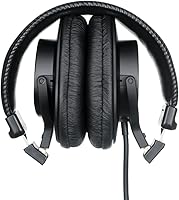
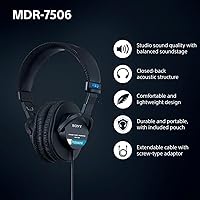
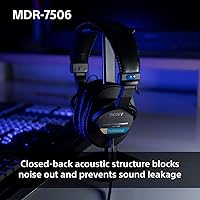
The performance of this industry-standard headset centers on its 40mm Neodymium drivers, which are tuned specifically for a flat sound profile. Unlike consumer gear that boosts bass to hide flaws, this studio gear provides an honest, transparent look at your audio, making it easier to spot clicks or hiss. Its closed-back design is essential for tracking, as it offers the isolation needed to prevent sound from bleeding into a live microphone. For those who move between locations, the folding mechanism makes these wired cans surprisingly portable despite their size. Additionally, the heavy coiled cable is a highlight for desk work; it stretches far enough to let you reach for equipment without yanking your interface off the table.

Best For

This industry-standard headset is the go-to choice for audio engineers who require a reliable reference point that they can trust across different rooms. Because the response is so neutral, it is also ideal for podcasters and broadcasters who need to monitor their own voice with absolute clarity. Video editors working in busy offices or noisy remote environments will appreciate how these wired cans block out distractions during long editing sessions. Beyond the professional sphere, this studio gear remains a top recommendation for creators on a modest budget. You are getting professional-grade monitoring capabilities without the inflated price tag often found in high-end equipment, making it a safe investment for anyone serious about sound quality.

User Feedback

Long-term owners frequently celebrate how this studio gear survives years of daily studio abuse that would shatter plastic alternatives. While the earpads eventually flake after heavy use, users appreciate that they are easy to replace, extending the life of the hardware significantly. Another major plus is that these wired cans are efficient enough to be driven directly by standard laptop jacks without needing an external amplifier. On the downside, some field recordists find the non-detachable cable slightly cumbersome if it gets snagged, but many view the hardwired connection as a point of failure avoided. Despite being an older design, the overwhelming consensus remains that this industry-standard headset offers a level of consistency that newer, flashier models rarely match.

Pros

  • Delivers a transparent and flat frequency response essential for accurate audio mixing and mastering.
  • The closed-back design provides excellent passive isolation, preventing sound bleed into live studio microphones.
  • Legendary mechanical durability allows the Sony MDR7506 to withstand years of heavy professional use.
  • Folding mechanism and included soft pouch make it easy to transport between different recording sessions.
  • Efficient drivers allow for high-quality monitoring directly from laptops or smartphones without an external amp.
  • Includes a high-quality screw-on 1/4-inch adapter for switching between consumer and pro-grade equipment.
  • Widely available replacement parts like earpads ensure these wired cans last for over a decade.
  • The 9.8-foot coiled cable offers great mobility around a large mixing console or desk setup.

Cons

  • The non-detachable cable makes simple cord failures a difficult repair for users without soldering skills.
  • Standard earpads are prone to flaking and cracking after a few years of consistent wear.
  • Stock padding can lead to heat buildup and ear fatigue during extended sessions in warm rooms.
  • The 63-ohm impedance might be slightly high for some very low-power mobile devices to hit peak volume.
  • Utilitarian design lacks the refined aesthetic and comfort features of modern high-end consumer models.
  • Coiled cable is unnecessarily heavy and cumbersome for anyone trying to use them while walking.
  • Exposed wiring between the headband and earcups is a potential snag hazard in messy workspaces.
  • Clinical high-end response can sometimes highlight digital artifacts in low-quality audio files too aggressively.

Ratings

To help you make an informed decision, we analyzed thousands of global user experiences with the Sony MDR7506, applying a strict filter to remove promotional fluff and incentivized spam. The resulting scores reflect the authentic performance of this studio gear in real-world recording environments, highlighting both its legendary reliability and its specific functional limitations.

Audio Accuracy
93%
Engineers love the flat, clinical response that reveals every hidden flaw in a mix. It provides a transparent window into the audio spectrum, ensuring that what you hear is exactly what is being recorded without artificial bass boosting.
The honest sound signature can feel fatiguing or sterile for casual listeners who prefer a warm, colored profile. It is a tool for precision, so it will not make poorly mastered tracks sound pleasant or forgiving.
Mechanical Durability
96%
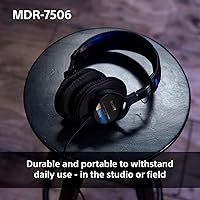
This industry-standard headset is built like a tank, frequently surviving a decade or more of daily studio abuse. The metal headband and simple, robust pivot points are designed to withstand being dropped, sat on, or shoved into gear bags.
While the frame is nearly indestructible, the thin wires connecting the earcups are exposed and could potentially snag. The external sliding mechanism can also feel a bit stiff and industrial compared to sleek, modern consumer alternatives.
Value for Money
94%
For a relatively small investment, you are getting professional-grade monitoring that competes with equipment three times the price. Its longevity makes it one of the most cost-effective purchases any audio creator can make over the long term.
Budget-conscious buyers might find cheaper options, but they rarely offer the same repairability or sonic accuracy. You are paying for a proven tool, not a lifestyle brand, so don't expect premium unboxing experiences or flashy materials.
Sound Isolation
82%
18%
The closed-back design is highly effective at keeping sound from leaking into sensitive microphones during vocal tracking. This makes these wired cans a staple for broadcasters who need to monitor their own voice without creating a feedback loop.
While the seal is good, it is not an active noise-canceling system, so loud ambient hums will still bleed through. The passive isolation is excellent for studios but may struggle in extremely noisy environments like airplanes or construction zones.
Repairability
91%
Users appreciate that Sony designed this studio gear with longevity in mind, offering widely available replacement parts. Swapping out worn earpads or even replacing a driver is a straightforward task that saves you from buying an entirely new pair.
The non-detachable cable means that if the cord fails, you will need basic soldering skills to fix it yourself. Many modern competitors now offer plug-and-play cable replacements, which makes this specific design feel a little dated for DIY novices.
Comfort Over Time
76%
24%
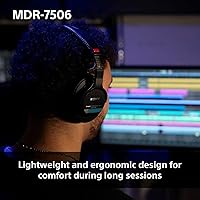
The lightweight 8-ounce frame ensures that these headphones don't cause significant neck strain during marathon editing sessions. The adjustable headband provides a secure fit that stays in place even when you are moving around a busy mixing desk.
The stock earpads are known to flake over time and can cause the ears to get quite warm during summer months. Some users find the clamping force a bit tight initially, requiring a brief break-in period to become truly comfortable.
Cable Management
68%
32%
The 9.8-foot coiled cable is perfect for studio work, stretching easily to let you reach for a rack unit or instrument. It keeps the floor clear of tangled wires while providing enough slack for mobility within a workspace.
For mobile use or commuting, the heavy coiled cord is incredibly bulky and cumbersome to manage. It weighs down your pocket and makes these wired cans less than ideal for anyone looking for a streamlined, portable listening experience.
Portability
87%
The clever folding design allows the earcups to tuck inside the headband, making the unit surprisingly small for storage. It slides easily into the included soft pouch, protecting the drivers when you are traveling between different recording sessions.
While it folds up nicely, the lack of a hardshell case means you have to be careful about what you pack it next to. The bulky cable also takes up a significant amount of room in a backpack, regardless of how well the frame folds.
Ease of Use
97%
There is zero learning curve with this studio gear; you just plug it in and start working. The low impedance means you don't need a fancy headphone amplifier to get high-quality sound from a standard laptop or tablet jack.
The lack of an inline microphone or volume controls might frustrate users looking for a headset for office calls. It is a pure audio tool, so it lacks the convenience features found in modern Bluetooth or gaming headsets.
Aesthetic Design
64%
36%
The timeless, utilitarian look signals that you are a professional who prioritizes performance over trends. It fits perfectly into a tech-heavy studio environment where functionality is the highest form of beauty.
If you are looking for a sleek, modern, or luxurious aesthetic, this design will likely disappoint. It looks like it belongs in the 1990s, with visible screws and a basic finish that many find visually uninspiring.
Hardware Connectivity
89%
The inclusion of a high-quality, screw-on 1/4-inch adapter is a major win for those switching between professional consoles and standard audio jacks. This secure connection prevents the adapter from getting stuck inside your gear or being lost in a bag.
Since there is no wireless option, you are strictly tethered to your source at all times. Users with modern smartphones will need to keep a separate dongle handy, as this legacy design relies entirely on the traditional 3.5mm hardware interface.

Suitable for:

The Sony MDR7506 is the definitive choice for audio professionals, podcasters, and video editors who require a neutral, uncolored sound stage for critical monitoring. If you are building a home studio or working in a broadcast environment, this industry-standard headset provides the surgical precision needed to detect background hiss, vocal pops, or minor mixing errors. Its rugged, foldable metal frame makes it particularly valuable for field recorders and traveling creators who need equipment that can survive being tossed into a gear bag daily. Additionally, the high sensitivity means you can get professional results without investing in a dedicated headphone amplifier.

Not suitable for:

While legendary in the studio, the Sony MDR7506 is a poor fit for casual listeners who crave the heavy, immersive bass found in modern consumer headphones. The honest, flat frequency response can feel sterile or even harsh during long sessions of recreational music listening. Commuters and office workers should also look elsewhere, as the bulky coiled cable is difficult to manage on the go, and there is no built-in microphone for phone calls. Furthermore, if you are looking for a luxurious aesthetic or premium materials, the industrial plastic and basic earpads of this studio gear will likely underwhelm you.

Specifications

  • Driver Type: The headphones utilize 40mm Neodymium dynamic drivers for precise audio reproduction.
  • Ear Design: The closed-back circumaural design provides passive noise isolation and prevents sound leakage.
  • Frequency Response: The hardware supports a wide frequency range from 10Hz to 20kHz.
  • Impedance: The rated impedance is 63 Ohms, making it compatible with most studio and consumer devices.
  • Sensitivity: The unit features a sensitivity rating of 106 dB/mW for efficient volume output.
  • Cable Type: The non-detachable coiled cable extends to a maximum length of 9.8 feet.
  • Connector: It features a gold-plated 3.5mm stereo mini-plug with a screw-on 1/4" adapter included.
  • Foldability: A collapsible folding mechanism allows the earcups to tuck into the headband for storage.
  • Weight: The headphones weigh approximately 8 oz excluding the weight of the cable.
  • Magnet Material: The drivers incorporate high-energy Samarium Cobalt magnets for improved signal response.
  • Voice Coil: The internal wiring uses oxygen-free litz copper wire for enhanced conductivity.
  • Power Handling: The hardware has a maximum power handling capacity of 1000mW.
  • Headband Material: The adjustable headband is constructed from durable metal with a padded exterior.
  • Earpad Type: The earpieces are fitted with replaceable soft faux-leather ear cushions.

Related Reviews
Sony MDRXB600IP Headphones
82%
88%
Bass Performance
85%
Comfort for Extended Use
83%
Noise Isolation
78%
Build Quality
81%
Portability
More
Sony MDR-CD900ST
Sony MDR-CD900ST
89%
96%
Sound Accuracy
91%
Comfort & Fit
94%
Build Quality
92%
Durability
95%
Frequency Response
More
Sony BDP-S360
Sony BDP-S360
86%
94%
Video Quality
90%
DVD Upscaling
88%
Audio Performance
91%
Setup & Installation
85%
Build Quality
More
Sony VRDMC3 DVDirect
81%
88%
Recording Quality
91%
Ease of Use
85%
Setup & Installation
78%
Connectivity Options
84%
Disc Compatibility
More
Sony WH-CH720NB
Sony WH-CH720NB
88%
94%
Noise Cancellation Effectiveness
91%
Sound Clarity
88%
Bass Performance
95%
Battery Life
90%
Comfort During Extended Use
More
Sony SRS-XB23
Sony SRS-XB23
87%
94%
Sound Quality
91%
Bass Performance
97%
Portability
89%
Build Durability
93%
Waterproofing
More
Sony MDRE9LP Earbuds
79%
83%
Sound Quality
78%
Comfort & Fit
80%
Build Quality
75%
Microphone Performance
88%
Portability
More
Sony SRF-59 Radio
Sony SRF-59 Radio
83%
92%
Portability
85%
Sound Quality
89%
Ease of Use
87%
Battery Life
78%
Build Quality
More
Sony HT-S100F Soundbar
85%
84%
Sound Quality
92%
Ease of Setup
65%
Bass Performance
90%
Voice Clarity
88%
Connectivity Options
More
Sony ECM-CS3 Microphone
83%
85%
Sound Quality
90%
Ease of Use
92%
Portability
80%
Build Quality
65%
Noise Handling
More

FAQ

You can plug this studio gear directly into your laptop, phone, or tablet without any issues. While they benefit from professional interfaces, they are efficient enough to sound great through standard jacks.

The cable on the Sony MDR7506 is permanently attached, so you can't just swap it out like a modular cord. If it fails, it would require a bit of soldering to replace, which is why most users treat the cord with extra care.

They are designed for accuracy rather than enjoyment, so the sound is very flat and honest. If you love heavy, booming bass, you might find these wired cans a bit thin or clinical for casual listening.

While the closed-back design blocks out some ambient sound, it is not active noise canceling. You will still hear the low rumble of an engine, but they are great for focusing in a moderately noisy office.

A quick wipe with a slightly damp, lint-free cloth is usually enough to keep them clean. Avoid using harsh chemicals, as the material can start to flake or peel if it gets too dry or exposed to alcohol-based cleaners.

Yes, they work well for gaming because the clear high-end makes it easy to hear footsteps or environmental cues. Just keep in mind that there is no built-in microphone, so you'll need a separate mic for chat.

The clamping force is moderate, but some glass wearers find them a bit snug after several hours. Because the pads are relatively thin, the arms of your glasses might break the seal slightly, though it shouldn't ruin the sound.

The cushions are actually very easy to replace and are widely available online. Most long-term owners of this industry-standard headset swap the pads every few years to keep them feeling fresh and comfortable.

In a studio or at a desk, the weight isn't really noticeable since the cable usually rests on your lap or the floor. However, if you're walking around with your phone, the weight of the coil can feel a bit bulky.

Some enthusiasts believe in a burn-in period, but these wired cans typically sound exactly as intended straight out of the box. Any changes you hear over time are usually just your ears getting used to the neutral sound signature.