Overview

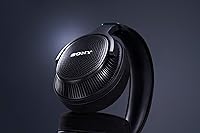
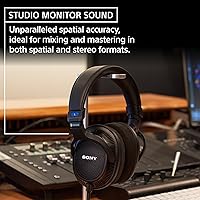
Sony MDR-MV1 Open-Back Reference Monitor Headphones mark Sony's deliberate step into the open-back studio monitoring segment, a space where names like Beyerdynamic and Sennheiser have held firm for years. These open-back studio headphones are built around one central idea: give engineers a headphone that mirrors how reference speakers behave in a treated room. The open-back construction delivers a wide, natural soundstage, but it comes with a real tradeoff — sound bleeds both in and out, making them a poor choice for noisy environments. At a lean 226 grams, the aluminum alloy frame manages to feel sturdy without punishing your neck during a six-hour mix session.

Features & Benefits

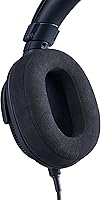
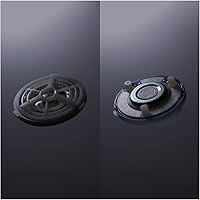
At the core of the MDR-MV1 is a newly developed 40mm driver, tuned specifically for an open-back acoustic structure rather than adapted from an existing design. The frequency response stretches from 5Hz to 80kHz — figures that go well beyond what most human ears can detect, but which matter in high-resolution mastering workflows where overtones and spatial cues live in the upper registers. With a 24-ohm impedance, these headphones are easy to drive from a laptop output or audio interface without needing an external amp. The suede ear pads offer genuine comfort during long sessions, and the detachable 2.5m cable with its machined aluminum connector feels appropriately durable for professional use.

Best For

These open-back studio headphones are most at home in the hands of mixing and mastering engineers working with stereo and immersive audio formats — particularly those producing Dolby Atmos or 360 Reality Audio content, where accurate spatial imaging is non-negotiable. Home studio producers who want a reliable headphone reference without investing in acoustic treatment will find them genuinely useful. That said, the open-back design is a hard limitation: anyone working in a shared space, a coffee shop, or a loud apartment is going to struggle. These work best in a quiet studio environment. Audiophiles stepping into critical listening with professional-grade tools will find the MDR-MV1 a compelling option as well.

User Feedback

Buyers who have put the MDR-MV1 through real studio work consistently praise its soundstage width and imaging precision — qualities that closed-back headphones rarely match. Many engineers report that the tonal balance translates well to speaker references, which is the real test of a monitor headphone. On the critical side, open-back sound leakage draws frequent mention: reviewers in shared or home environments found it impractical for daily use. Some buyers also question whether the price is fully justified alongside well-established rivals like the Beyerdynamic DT 900 Pro X or Sennheiser HD 490 Pro. Build quality and cable durability generally earn positive marks, though a handful of longer-term users noted ear pad wear over time.

Pros

  • Soundstage width and imaging accuracy are consistently praised by engineers who have used closed-back headphones for years.
  • The 24-ohm impedance means you can drive these properly from a laptop or audio interface without buying a separate headphone amp.
  • At 226 grams, the MDR-MV1 is light enough that you genuinely forget you are wearing it during long mix sessions.
  • Suede ear pads feel noticeably more breathable and comfortable than standard leatherette alternatives during extended wear.
  • The detachable cable design reduces long-term wear risk and makes replacement straightforward if the cable is ever damaged.
  • Spatial and immersive audio monitoring support makes these a forward-thinking choice as Dolby Atmos music production continues to grow.
  • Tonal balance reportedly translates well to speaker references, which is the real benchmark for any monitor headphone.
  • The machined aluminum cable connector feels durable and substantially built compared to the plastic connectors found on many rivals.
  • A bundled 3.5mm-to-6.3mm adapter ensures compatibility with professional audio interfaces right out of the box.
  • Build quality overall strikes a balance between professional-grade rigidity and the kind of lightness that actually matters during long studio days.

Cons

  • Open-back sound leakage makes these completely impractical in shared workspaces, apartments with thin walls, or any noisy environment.
  • No noise isolation whatsoever — even moderate ambient noise bleeds in and can obscure quiet details in a mix.
  • The premium price is hard to justify unless you already have a quiet, dedicated listening space to put them to proper use.
  • Ear pad wear has been reported by some longer-term users, raising questions about durability over a year or more of regular use.
  • Wired-only connectivity with no Bluetooth option limits flexibility for anyone who has grown accustomed to a cable-free workflow.
  • Competing options from Beyerdynamic and Sennheiser at similar price points give buyers real alternatives worth auditioning before committing.
  • The 2.5-meter cable length is practical in a studio but can feel unwieldy when switching quickly between different workstation setups.
  • Some buyers feel the value proposition is uncertain compared to more established open-back reference headphones with longer track records.

Ratings

The scores below for the Sony MDR-MV1 Open-Back Reference Monitor Headphones were generated by AI after analyzing verified purchase reviews from buyers worldwide, with spam, bot activity, and incentivized feedback actively filtered out. Each category reflects the full spectrum of real user experience — not just the highlights — so both the strengths and the friction points are honestly represented. Whether you are weighing this against competing open-back headphones or deciding if it fits your specific studio workflow, these ratings are designed to give you a clear, unvarnished picture.
Sound Accuracy
91%
Engineers consistently report that the MDR-MV1 delivers an unusually honest representation of a mix — not flattering, not hyped, just accurate. Reviewers who cross-referenced their headphone mixes against studio monitors noted strong translation, which is the single most important quality for a reference tool.
A small number of experienced engineers feel the low end is slightly generous compared to the most clinical reference headphones on the market. This is minor, but for mastering engineers working at the highest precision levels, it is worth auditioning before committing.
Soundstage & Imaging
88%
The open-back design produces a wide, three-dimensional soundstage that closed-back headphones at any price cannot replicate. Users working on spatial and immersive mixes specifically praised the left-right and depth imaging as genuinely useful for Dolby Atmos production decisions.
Some users noted that the soundstage, while wide, does not quite match the absolute best open-back headphones from Sennheiser or Audeze at similar price points. For most mixing engineers this gap is minor, but dedicated audiophiles doing direct comparisons may notice it.
Comfort & Wearability
84%
At 226 grams with suede ear pads, these headphones are genuinely light for their category, and buyers report wearing them for four to six hours without the neck fatigue or pressure soreness that heavier studio headphones cause. The aluminum frame distributes weight evenly across the headband.
A handful of users with larger heads or glasses reported that the clamping force became noticeable after extended sessions, and the suede pads — while comfortable initially — have shown early wear signs for some users after several months of daily studio use.
Build Quality
82%
18%
The aluminum alloy frame feels solid and purposeful without being heavy, and the machined aluminum cable connector is a clear step above the plastic fittings found on many competing headphones in this range. Most users report no creaking, flex, or structural concerns during normal studio handling.
The headband adjustment mechanism feels slightly less refined than the rest of the build, and a few long-term users have noted some cosmetic wear on the matte surfaces after a year of regular use. It feels durable but not quite indestructible.
Cable Quality
79%
21%
The detachable cable is a practical design choice that most studio users appreciate, since cable damage is one of the most common reasons headphones are retired early. The 2.5-meter length gives you genuine freedom of movement around a workstation without pulling at the connector.
Some users feel the cable itself — while functional — does not feel as premium as the headphone body it attaches to, and microphonic noise when the cable brushes against clothing or a desk has been flagged by a few reviewers during quieter passages.
Immersive Audio Performance
86%
These open-back studio headphones were explicitly built with spatial audio workflows in mind, and users producing Dolby Atmos or 360 Reality Audio content report that the imaging and frequency extension make them a genuinely useful monitoring tool for object-based mix decisions.
Buyers without an active immersive audio workflow will not benefit from this capability at all, which makes it a somewhat niche strength. The value of this feature is entirely dependent on whether spatial audio production is actually part of your day-to-day work.
Value for Money
67%
33%
For engineers who are actively working in professional studio environments, the MDR-MV1 delivers professional-grade accuracy and comfort that justifies the investment over time. Users who use these daily as their primary reference tool tend to feel satisfied with the purchase relative to its performance.
The value question is where buyer sentiment splits most noticeably. Producers who do not work in immersive formats, or who share a studio space and cannot exploit the open-back design, frequently feel the price is harder to rationalize against Beyerdynamic and Sennheiser alternatives that offer comparable performance.
Ease of Use
88%
With a 24-ohm impedance, these headphones work straight out of the box with most audio interfaces and laptop outputs — no amplifier required. The included 6.3mm adapter means you are ready for both consumer and professional setups without hunting for additional accessories.
There is no in-line remote or volume control on the cable, which some users found inconvenient when switching between listening and communicating quickly. This is a deliberate professional design choice, but it catches some buyers off guard who are used to feature-rich consumer headphones.
Noise Isolation
21%
79%
There is nothing to say here in the traditional sense — these headphones offer zero passive isolation by design, and engineers who understand open-back monitoring accept this as the fundamental trade-off for natural soundstage reproduction.
For anyone who was not fully aware of what open-back means before purchasing, the complete absence of isolation is a shock. Sound bleeds in from the environment and out to everyone nearby, making these unusable in shared apartments, open offices, or any space with background noise above library levels.
Driver Performance
89%
The custom 40mm driver tuned for open-back acoustics produces a controlled, extended low end that many users did not expect from a 40mm dynamic driver — typically a size associated with more consumer-oriented designs. High frequencies extend cleanly without harshness during long sessions.
A small number of users who compared the MDR-MV1 directly to planar magnetic alternatives felt the dynamic driver has a slightly less precise transient response in very complex mix passages. It is a narrow concern, but one that surfaces in more technically focused reviews.
Portability
34%
66%
The relatively light weight and wired simplicity mean there are no batteries to charge and no firmware to update, which experienced users appreciate as one less variable during critical studio sessions.
These headphones ship without a hard case and are not designed for travel — the open-back structure makes them vulnerable to physical damage in a bag, and their impracticality in public environments means portability is essentially irrelevant to their intended use case.
Compatibility
87%
The low impedance and standard 3.5mm connection make the MDR-MV1 compatible with virtually any audio device, from professional rack-mounted interfaces to a basic laptop headphone jack, with the included adapter covering 6.3mm professional outputs as well.
The wired-only connection is a genuine limitation for users who have moved to a wireless studio setup or who regularly move between rooms or workstations. There is no workaround — Bluetooth is simply not part of this headphone's design at any level.
Long-Term Durability
73%
27%
The aluminum frame and detachable cable are both design choices that favour longevity — the cable being replaceable is particularly meaningful since that is typically where studio headphones degrade first. Most users report no structural issues within the first year of regular use.
Suede ear pad wear has been flagged by a meaningful number of longer-term users, and replacement pad availability is not always consistent depending on region. If the pads degrade faster than expected, sourcing replacements can become a frustrating experience.
Frequency Extension
92%
The 5Hz to 80kHz frequency response is one of the widest available in production headphones, and engineers working with high-resolution audio files report that the top-end extension reveals spatial cues and harmonic detail that narrower-bandwidth headphones simply do not resolve.
For producers working entirely with standard 44.1kHz stereo audio, the extreme frequency extension offers diminishing practical returns and will not audibly change how they work day to day. The specification is real, but its usefulness scales directly with the resolution of your source material.

Suitable for:

Sony MDR-MV1 Open-Back Reference Monitor Headphones are built for engineers and producers who need an honest, accurate window into their mixes — particularly those working with immersive formats like Dolby Atmos or 360 Reality Audio, where spatial imaging has to be right. If you spend long hours in a quiet home studio or professional environment, the lightweight aluminum build and suede ear pads make sustained sessions genuinely comfortable rather than something you push through. Home studio producers who cannot invest in full acoustic treatment will find these headphones a practical alternative for reference monitoring, especially given how well the tonal balance reportedly translates to speaker playback. Audiophiles with a serious interest in critical listening will also appreciate the wide frequency response and the natural, open soundstage that closed-back designs simply cannot replicate. Engineers who regularly cross-reference between headphone and speaker monitoring will find the MDR-MV1 holds up well as a consistent reference point across both.

Not suitable for:

The Sony MDR-MV1 Open-Back Reference Monitor Headphones have a fundamental limitation that no feature list can paper over: the open-back design means sound leaks freely in both directions, making them impractical in any shared, noisy, or public environment. If you record vocals or instruments in the same room where you mix, bleed into microphones is a genuine risk — these are not tracking headphones. Commuters, remote workers in open offices, or anyone who needs passive isolation from ambient noise should look elsewhere entirely. Buyers expecting wireless convenience will also be disappointed; there is no Bluetooth here, and the wired-only setup is intentional but worth flagging for anyone used to modern flexibility. If your budget is tight and you are still building your studio setup, the premium price point is hard to justify without a controlled listening environment to take full advantage of what the MDR-MV1 actually offers.

Specifications

  • Headphone Type: Open-back over-ear reference monitor headphones designed for studio mixing and mastering environments.
  • Driver: 40mm dynamic HD driver unit developed specifically for an open-back acoustic structure.
  • Frequency Response: 5Hz to 80kHz, covering well beyond standard human hearing range to support high-resolution audio workflows.
  • Impedance: 24 ohms, low enough to drive adequately from a laptop headphone output or standard audio interface without an external amplifier.
  • Sensitivity: 100 dB, providing sufficient output level from typical consumer and professional audio sources.
  • Weight: 226 grams without cable, placing it among the lighter options in the professional open-back category.
  • Cable: 2.5m straight detachable cable with a machined aluminum connector for durability and secure fit during studio use.
  • Connector: 3.5mm stereo plug with a bundled 6.3mm adapter included for compatibility with professional audio interfaces and mixers.
  • Frame Material: Aluminum alloy construction providing a rigid yet lightweight chassis suitable for extended professional use.
  • Ear Pad Material: Soft suede ear pads designed to reduce pressure and heat buildup during long mixing or mastering sessions.
  • Noise Isolation: None; the open-back design allows air and sound to pass freely, which is intentional for natural soundstage reproduction.
  • Connectivity: Wired only via 3.5mm connection; no Bluetooth or wireless capability of any kind.
  • Audio Format Support: Compatible with both stereo and spatial/immersive audio formats including Dolby Atmos and 360 Reality Audio monitoring.
  • Compatible Devices: Works with laptops, desktop computers, tablets, smartphones, and professional audio interfaces with a 3.5mm or 6.3mm output.
  • Dimensions: 9.49 x 7.99 x 2.4 inches overall, accommodating a range of head sizes with over-ear cup placement.
  • Water Resistance: Not water resistant; the MDR-MV1 is intended strictly for indoor studio environments and should not be exposed to moisture.
  • Bluetooth Support: Not supported; this is a purely analog wired headphone with no wireless communication technology included.
  • Audio Driver Size: 40mm driver diameter, a standard size for over-ear headphones but tuned here for open-back acoustic performance.
  • Ear Cup Shape: Rounded ear cup design with an over-ear fit to fully encompass the ear for comfort and acoustic consistency.
  • Included Accessories: Ships with a 2.5m detachable cable and a 3.5mm-to-6.3mm mini-jack plug adapter for professional interface compatibility.

Related Reviews
Sony MDR-M1 Professional Closed-Back Monitor Headphones
83%
93%
Sound Accuracy
78%
Sound Isolation
88%
Comfort & Wearability
82%
Build Quality
91%
Cable System
More
Sony MDR-ZX310
Sony MDR-ZX310
68%
67%
Sound Quality
78%
Comfort & Fit
58%
Build Quality
72%
Cable & Connectivity
83%
Portability
More
Sony MDR-V55 DJ Over-Ear Headphones
70%
72%
Sound Quality
58%
Comfort & Fit
54%
Build Quality
83%
Design & Aesthetics
78%
Cable & Connectivity
More
Sony MDR-W08L In-Ear Headphones
71%
91%
Wearing Comfort
78%
Sound Quality
34%
Noise Isolation
63%
Build Quality
72%
Cable Design
More
Sony MDR-RF811RK Wireless Headphones
83%
88%
Sound Quality
92%
Wireless Range
75%
Comfort
85%
Battery Life
82%
Build Quality
More
Sony MDR-ZX110 On-Ear Headphones
68%
83%
Value for Money
61%
Sound Quality
58%
Comfort
54%
Build Quality
82%
Portability
More
Shure SRH1840 Professional Open-Back Headphones
86%
94%
Sound Accuracy
88%
Comfort for Extended Use
90%
Open-Back Design (Soundstage)
87%
Bass Performance
91%
Build Quality
More
Sony MDR-XB800 Over-Ear Headphones
78%
88%
Bass Performance
79%
Comfort & Fit
61%
Sound Clarity
82%
Build Quality
84%
Portability
More
Sony MDR-Z1R Over-Ear Headphones
77%
94%
Sound Quality
93%
Build Quality
71%
Comfort
88%
Cable & Connectivity
58%
Amplifier Dependency
More
Sony MDR-RF995RK Wireless Home Theater Headphones
83%
92%
Sound Quality
88%
Comfort & Fit
90%
Battery Life
86%
Wireless Range
84%
Ease of Setup
More

FAQ

Not necessarily. The MDR-MV1 has a relatively low impedance of 24 ohms, which means most audio interfaces, laptop headphone outputs, and even some smartphones can drive them to a usable volume. That said, a quality headphone amp or audio interface preamp will give you better dynamic control and a cleaner signal if you want to get the most out of them during critical mixing work.

Technically yes, but they are not well suited for it. The open-back design means sound leaks out noticeably, which will bother people around you in public spaces, and ambient noise bleeds in freely, which will disrupt your listening. These are purpose-built for quiet studio environments, not everyday portable use.

Sony does offer replacement ear pads for the MDR-MV1, though availability can vary by region. Given that some long-term users have reported wear on the suede material over time, it is worth checking Sony's accessory support pages or contacting their customer service to confirm current replacement options before purchasing.

Open-back headphones allow air to move freely through the ear cups, which produces a much wider, more natural soundstage — closer to how sound behaves in a room rather than inside a sealed enclosure. The tradeoff is that there is no passive noise isolation, and sound leaks out just as freely as it comes in. For mixing and mastering, many engineers prefer this because the spatial imaging is more honest and less artificially compressed than what you get from a closed-back design.

Yes, this is actually one of the stronger use cases for these headphones. They were explicitly designed with spatial and immersive audio monitoring in mind, and their wide frequency response and accurate imaging make them a practical tool for engineers working in Dolby Atmos or similar formats. That said, true Atmos mixing at a professional level still relies on calibrated speaker rigs — the MDR-MV1 is a strong supplementary reference tool rather than a complete replacement.

The cable is detachable and locks into the left ear cup with a secure connector. The machined aluminum plug feels sturdy and does not feel like it will loosen with regular use. If the cable is ever damaged, detachable cable designs are generally straightforward to replace, and compatible cables with the same connector type are available from third-party suppliers as well.

All three are serious open-back studio headphones in a similar price range, and the choice often comes down to tonal preference and workflow. The MDR-MV1 is generally praised for a natural, balanced sound that suits immersive audio work, while the DT 900 Pro X tends toward a slightly brighter character. The HD 490 Pro is newer and also targets spatial audio production. If you can audition all three, you should — tonal preference at this level is genuinely personal.

Yes, it will. Open-back headphones leak a noticeable amount of audio, roughly comparable to listening to a phone speaker at moderate volume when you are seated nearby. Anyone in the same room will hear what you are listening to. This is not a flaw — it is a byproduct of the design — but it is a real practical concern for home studio users who share space with others.

These open-back studio headphones work well for binaural and headphone-specific mixing too. Their accurate imaging and wide soundstage make them useful for evaluating how a spatial mix will translate on consumer headphones. Sony's ecosystem also includes 360 Reality Audio tools that are designed to pair with this type of reference monitoring.

Comfort is generally one of the more consistent positives in long-term user feedback. The suede ear pads reduce heat and pressure compared to leatherette alternatives, and the 226-gram weight is low enough that fatigue is rarely the main complaint. Individual head shapes vary, so the clamping force may feel different for different people, but the overall design is clearly built with extended studio use in mind.

Where to Buy