Overview

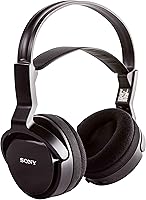
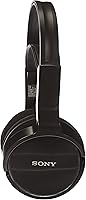
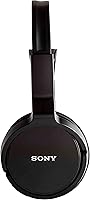
The Sony MDR-RF811RK Wireless RF On-Ear Headphones have been quietly doing their job since 2014 — and with over 7,700 ratings still coming in, clearly a lot of people have taken notice. Unlike most wireless options today, this Sony wireless set uses radio frequency technology rather than Bluetooth, which means the signal punches through walls and floors up to 100 meters away. That matters if you want to wander to the kitchen mid-episode without losing audio. The auto-adjusting headband makes them comfortable for long sessions, and AAA batteries keep things running for up to 13 hours — straightforward, if not the most modern approach.
Features & Benefits

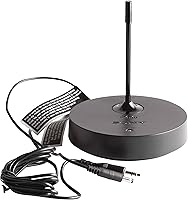
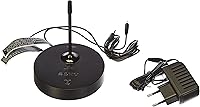
The RF transmitter plugs into your TV or audio source via a 3.5mm jack — worth knowing upfront, since the whole setup depends on that small base unit staying near your screen. Once it is in place, the connection is rock solid. Low latency means dialogue stays in sync with what you are watching, something Bluetooth headphones cannot always guarantee. The 40mm dynamic drivers cover a full 20Hz–20kHz range, delivering clear dialogue and decent bass without any audiophile pretensions. Touch controls sit conveniently on the ear cup, and the water-resistant build means an occasional kitchen splash will not cause any lasting damage.

Best For

These RF headphones are a natural fit for late-night TV watching — the kind of situation where one person wants the volume up and everyone else is trying to sleep. They also work especially well for older adults or anyone with mild hearing difficulties who simply wants personal volume control without turning the whole room into a cinema. The extended range suits people who cannot sit still; you can head to another room and come back without missing a beat. Anyone worn down by Bluetooth pairing rituals will appreciate the plug-and-play setup: dock the transmitter, put on the headphones, and you are done.

User Feedback

With a 4.2-star average across more than 7,700 ratings, the MDR-RF811RK has clearly built real, lasting loyalty. Buyers most often praise the range, the ease of setup, and how comfortable the headphones feel during long evening sessions — many note that it simply works right out of the box, which counts for a lot. That said, people hoping for high-fidelity music performance sometimes come away underwhelmed; this Sony wireless set was built for practical home use, not critical listening. The AAA battery requirement draws occasional complaints from users used to USB-C charging. Long-term owners, though, consistently report that both the headphones and the transmitter hold up well over years of daily use.

Pros

  • Stable RF connection eliminates the audio lag that plagues many Bluetooth headphones during TV watching.
  • Up to 100 meters of range means the signal holds even through walls and across multiple rooms.
  • Plug-and-play setup via a 3.5mm transmitter requires no apps, no pairing, and no technical knowledge.
  • The auto-adjusting headband makes these RF headphones comfortable for long evening sessions without pressure points.
  • Broad device compatibility covers TVs, laptops, tablets, and phones through the transmitter.
  • Water-resistant construction handles everyday use without needing careful handling.
  • Over 7,700 customer ratings averaging 4.2 stars points to strong, consistent real-world satisfaction.
  • Touch controls on the ear cup make volume adjustments easy without fumbling for buttons.
  • 13 hours of battery life comfortably covers a full day of home listening on a single set of batteries.
  • Long-term owners frequently report that both the headset and transmitter hold up reliably over years of daily use.

Cons

  • Requires AAA batteries rather than a built-in rechargeable cell, which adds an ongoing supply cost.
  • The RF transmitter must remain plugged in and positioned near the TV, which creates a permanent desk or shelf commitment.
  • Sound quality is adequate for speech and TV audio but noticeably flat compared to modern Bluetooth headphones at a similar price.
  • No active noise cancellation means background noise from the room bleeds in freely during use.
  • Completely unsuitable for portable or outdoor use since the entire system is tethered to a fixed transmitter.
  • On-ear fit can cause discomfort or heat buildup during very extended sessions for some users.
  • RF frequency interference from other household wireless devices can occasionally cause static or dropouts.
  • The MDR-RF811RK design and feature set have not been meaningfully updated since 2014, so it lacks modern conveniences like app control or EQ customization.

Ratings

The scores below for the Sony MDR-RF811RK Wireless RF On-Ear Headphones were generated by our AI after analyzing thousands of verified global buyer reviews, with spam, bot activity, and incentivized submissions actively filtered out. Each category reflects what real owners actually experienced — not manufacturer claims — so both the genuine strengths and the frustrating trade-offs are represented honestly. If a score looks lower than you expected, that is intentional: it means real users had real complaints worth knowing before you buy.
Wireless Connectivity
91%
The RF connection is the single most praised aspect across thousands of reviews. Buyers consistently report that the signal holds steady through multiple walls, across floors, and well beyond the living room — exactly the kind of performance that makes late-night TV watching genuinely hassle-free.
A small but consistent group of users in densely populated apartments or homes with many wireless devices report occasional static or brief interference. RF frequency conflicts with other household electronics are rare but real, and there is no way to manually switch channels on this model.
Setup & Ease of Use
93%
Plug the transmitter into a 3.5mm output, insert the batteries, and it works — that is the experience the vast majority of buyers describe. For older adults, less tech-savvy users, or anyone fatigued by Bluetooth pairing rituals, this simplicity is genuinely valued and repeatedly mentioned in long-form reviews.
The only friction comes when the source device lacks a 3.5mm jack, which is increasingly common on modern televisions and laptops that have dropped the port in favor of optical or HDMI ARC outputs. In those cases, an adapter is required, and that step trips up a meaningful minority of buyers.
Range Performance
88%
Most users find the real-world range lives up to the 100-meter claim in practical home environments. Being able to walk to another room, step into the kitchen, or briefly leave the TV area without losing audio is a recurring highlight — especially for people with mobility needs or restless viewing habits.
Range degrades noticeably in homes with thick concrete or reinforced walls, and a handful of reviewers in older buildings report the signal becoming unreliable beyond two rooms. The rated range is clearly achievable in open-plan or standard construction homes, but it is not guaranteed in every environment.
Audio Quality
63%
37%
For TV dialogue, news, and general home listening, the sound is clear and functional. Voices come through cleanly, and the 40mm drivers handle the mid-range frequencies that matter most for speech intelligibility — which is exactly what the majority of the user base is using these RF headphones for.
Music listeners and anyone expecting rich, detailed audio will likely come away underwhelmed. Bass lacks depth, high frequencies can feel slightly compressed, and compared to modern Bluetooth headphones in the same price bracket, the overall sonic performance is noticeably behind. This is not an audiophile tool and the reviews make that clear.
Comfort & Fit
76%
24%
The auto-adjusting headband removes the guesswork from sizing, and most users report the headphones feel stable and reasonably comfortable during standard evening viewing sessions of one to two hours. The lightweight 270g build means there is minimal neck fatigue even during extended use.
The on-ear design, rather than over-ear, is the main comfort divider. After two to three hours, a consistent subset of reviewers notes ear pressure and warmth building up, particularly for users with larger ears. The ear cushions are not replaceable in any straightforward way, which limits long-term comfort customization.
Battery Life
71%
29%
Thirteen hours of playback is more than enough for a full day of casual home listening, and most users find they only need to swap batteries every few days to a week depending on usage patterns. The runtime is reliable and consistent with what Sony claims.
The reliance on AAA batteries rather than a built-in rechargeable cell is a genuine frustration for a vocal segment of buyers, particularly those used to USB-C charging. The ongoing cost and environmental impact of disposable batteries adds up, and forgetting to keep spares on hand can kill a listening session mid-evening.
Build Quality
78%
22%
Long-term owners — many of whom have been using the same unit for three or more years — regularly note that both the headset and the transmitter base have held up reliably under daily use. The physical construction feels solid without being heavy, and the water-resistant finish has proven its worth in everyday home environments.
The plastics used in the headband and ear cups show wear and surface scratches more visibly over time, and a smaller number of reviewers report the headband hinge becoming loose after a year or two of regular use. Durability is generally good but not exceptional for a product intended for daily long-term ownership.
Transmitter Design
67%
33%
The transmitter base is compact enough to sit unobtrusively near a TV unit or on a desk, and the simple 3.5mm connection means it works with virtually any audio source without needing power adapters beyond what the headphones themselves use. Its understated design does not clash with most home setups.
The transmitter must remain permanently positioned near the audio source, which means it occupies a visible spot on your TV stand or shelf indefinitely. Buyers who want a tidy, minimal setup find this an aesthetic compromise, and a few reviewers note the cable management around the transmitter can look untidy if not handled deliberately.
Value for Money
82%
18%
Given the consistent real-world range, durable construction, and reliable daily performance over multiple years, most buyers feel the MDR-RF811RK delivers solid return on investment. It does one specific job — home wireless listening — at a fair price point, and the large review base suggests that outcome is repeatable.
The value case weakens if you compare it against modern Bluetooth alternatives at a similar price that offer better sound quality, rechargeable batteries, and portability. For purely home TV use the value holds up well, but for anyone wanting broader versatility, the cost-benefit balance is less clear.
Compatibility
79%
21%
The 3.5mm transmitter connection covers an impressively wide range of devices — televisions, laptops, desktops, tablets, and even older car audio systems. For households with older or legacy AV equipment, this universality is genuinely useful and reduces friction compared to device-specific wireless systems.
The growing trend of removing the 3.5mm headphone jack from modern televisions and laptops is slowly eroding this compatibility advantage. Buyers with newer smart TVs that only output audio via optical, HDMI ARC, or Bluetooth will need a digital-to-analog converter to use this Sony wireless set, adding cost and complexity.
Latency & Sync
86%
RF technology has a measurable latency advantage over standard Bluetooth for TV audio, and buyers consistently confirm this in practice. Dialogue sync issues — one of the most common complaints with Bluetooth TV headphones — are rarely mentioned in reviews of the MDR-RF811RK, which speaks to how well the RF approach handles real-time audio.
A small number of reviewers do report occasional sync drift after very long continuous sessions, requiring a quick power cycle to reset. It is not a widespread issue, but it surfaces often enough across the review base to be worth flagging for buyers who are particularly sensitive to audio-visual alignment.
Portability
31%
69%
The headphones themselves are reasonably lightweight at 270g, and the headband folds to a smaller profile for storage. Within the home, moving from room to room is effortless, which is the intended use case and where the form factor makes complete sense.
These are not portable headphones in any meaningful sense. The RF transmitter must remain connected to an audio source, which anchors the entire system to one location. Taking the MDR-RF811RK to a gym, on public transport, or to a friend's house is simply not a viable use case, and buyers who miss this detail in the listing tend to leave disappointed reviews.
Noise Isolation
44%
56%
The open acoustic design does allow some awareness of your immediate surroundings, which some users — particularly those with safety concerns about missing household sounds like doorbells or children — actually prefer over complete isolation. It suits a relaxed home listening context where total silence is not always desirable.
For anyone wanting to block out a noisy household or concentrate despite background noise, the lack of any passive or active noise isolation is a real limitation. Reviewers in busy homes or open-plan living spaces note that ambient noise competes with the audio, particularly at moderate volume levels.
Control Interface
72%
28%
Touch controls on the ear cup handle volume adjustments quickly and intuitively once you are used to their placement. Most users adapt within a day or two and appreciate not having to locate small physical buttons, especially in low-light evening conditions where tactile navigation can be unreliable.
The touch controls have a learning curve, and a segment of buyers — particularly older users — find them finicky or prone to accidental activation. There is no dedicated button for muting or skipping tracks, which limits the control scope compared to headphones with full multi-button layouts.

Suitable for:

The Sony MDR-RF811RK Wireless RF On-Ear Headphones are a genuinely smart choice for anyone whose primary use case is watching TV at home, especially in a shared living situation where keeping the volume personal is a daily need. Late-night viewers, shift workers, and anyone living with a light sleeper will immediately understand the value here. The 100-meter RF range is also a real advantage for people who like to move around the house while listening — getting up to make tea or check on kids without yanking out a cable or breaking a Bluetooth connection is a small but meaningful quality-of-life improvement. Older adults or those with hearing difficulties will find the personal volume control especially liberating, and the plug-and-play RF transmitter setup means there is no app, no pairing mode, and no frustration. Anyone who has struggled with Bluetooth dropouts or compatibility issues will appreciate how reliably these RF headphones just work.
Not suitable for:

The Sony MDR-RF811RK Wireless RF On-Ear Headphones are not the right tool for buyers who want a versatile, on-the-go audio companion. Because the system relies on a physical RF transmitter that must stay plugged in near your audio source, these are firmly home-bound headphones — you cannot take them to the gym, use them on a commute, or pair them with a phone via Bluetooth. Listeners who care deeply about sound quality will also want to look elsewhere; these RF headphones prioritize reliable connectivity and convenience over detailed, high-fidelity audio reproduction. The dependence on AAA batteries rather than a built-in rechargeable cell is a recurring frustration for buyers used to simply plugging in a USB-C cable overnight. If you need active noise cancellation for a busy office or open-plan home, this set offers none — it is an open design that lets in ambient sound freely.
Specifications

  • Wireless Technology: These headphones use RF (radio frequency) transmission, not Bluetooth, for a stable and low-latency connection.
  • Range: The RF signal reaches up to 100 meters, covering multiple rooms and passing through walls without significant signal loss.
  • Driver Size: Each ear cup houses a 40mm dynamic audio driver for balanced sound reproduction across the full hearing range.
  • Frequency Response: Audio reproduction spans 20Hz to 20kHz, covering the full range of human hearing from deep bass to high treble.
  • Battery Type: The headphones are powered by 2 x AAA batteries, which are not included and must be purchased separately.
  • Battery Life: A full set of AAA batteries provides up to 13 hours of continuous playback under normal listening conditions.
  • Form Factor: On-ear headband design with an auto-adjusting band that adapts to different head sizes without manual sizing.
  • Weight: The headset weighs approximately 270g (9.5 oz), keeping it manageable for extended home use sessions.
  • Control Method: Touch-sensitive controls are located on the ear cup for volume and basic playback adjustments without removing the headphones.
  • Water Resistance: The headphones carry a water-resistant rating suitable for everyday use, protecting against minor splashes and humidity.
  • Transmitter Input: The RF transmitter base connects to any audio source using a standard 3.5mm jack, such as a TV headphone output.
  • Cable: No cable is included or required for the headphones themselves; all audio is transmitted wirelessly via the RF base unit.
  • Compatible Devices: Works with any device that has a 3.5mm audio output, including televisions, laptops, desktops, tablets, smartphones, and car audio systems.
  • Noise Control: The MDR-RF811RK uses an open acoustic design with no active noise cancellation, allowing ambient room sound to pass through.
  • Model Number: The official model identifier is MDRRF811RKEU8, designed primarily for European markets.
  • Availability: First listed in January 2014 and confirmed as not discontinued by the manufacturer as of the latest product data.
  • UPC: The product UPC barcode is 723856331615, useful for cross-referencing at retail or for warranty verification.
  • Manufacturer: Designed and manufactured by Sony, a Japanese multinational electronics company with decades of audio product experience.

Related Reviews
Sony MDR-V55 DJ Over-Ear Headphones
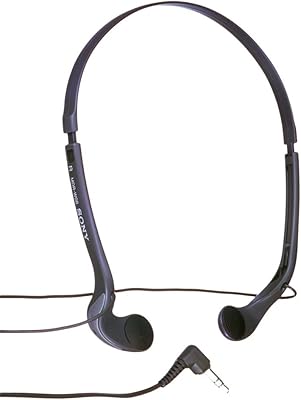
70%
72%
Sound Quality
58%
Comfort & Fit
54%
Build Quality
83%
Design & Aesthetics
78%
Cable & Connectivity
More
Sony MDR-W08L In-Ear Headphones
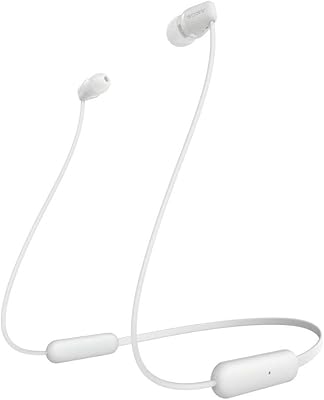
71%
91%
Wearing Comfort
78%
Sound Quality
34%
Noise Isolation
63%
Build Quality
72%
Cable Design
More
Sony WI-C310 Wireless In-Ear Headphones
72%
91%
Battery Life
84%
Call Quality
78%
Comfort & Fit
73%
Sound Quality
61%
Eartip Fit & Seal
More
Sony WI-C200 Wireless In-Ear Headphones
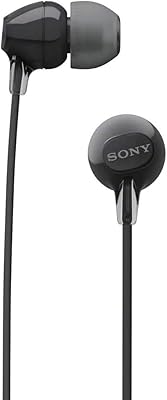
76%
91%
Battery Life
88%
Value for Money
83%
Call Quality
86%
Comfort & Fit
72%
Sound Quality
More
Sony WI-C100
Sony WI-C100
79%
93%
Battery Life
88%
Value for Money
72%
Sound Quality
84%
Microphone & Call Quality
69%
Comfort & Fit
More
Sony MDR-AS210 Sport In-Ear Headphones
71%
83%
Fit & Stability
74%
Sound Quality
68%
Build Quality
77%
Water Resistance
71%
Comfort Over Time
More
Sony WH-CH520
Sony WH-CH520
75%
93%
Battery Life
81%
Comfort & Fit
67%
Sound Quality
62%
Build Quality
88%
Value for Money
More
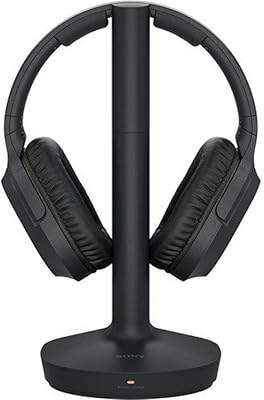
Sony MDR-RF995RK Wireless Home Theater Headphones
83%
92%
Sound Quality
88%
Comfort & Fit
90%
Battery Life
86%
Wireless Range
84%
Ease of Setup
More
Sony ULT WEAR Wireless Noise-Canceling Headphones
77%
91%
Bass Performance
78%
Noise Cancellation
93%
Battery Life
67%
Comfort & Fit
82%
Call Quality
More
Sony Float Run Open-Ear Sport Headphones
77%
91%
Wearing Comfort
94%
Situational Awareness
83%
Fit Stability
61%
Audio Quality
78%
Battery Life
More

FAQ

Setup is about as simple as it gets. You plug the RF transmitter base into your TV or audio source using the 3.5mm jack, put in the AAA batteries, and the headphones connect automatically. There is no pairing process, no app to install, and no Bluetooth menu to navigate.

In most homes, yes. The RF signal is rated for up to 100 meters and is designed to pass through walls and floors, so moving to an adjacent room should not drop the connection. Results can vary depending on the construction materials in your home and whether other wireless devices are operating on similar frequencies.

You can, as long as the device has a 3.5mm headphone output. The transmitter plugs directly into that port, so any compatible source will work. Keep in mind the transmitter needs to stay near the source, so it is not a portable solution.

At up to 13 hours per charge, a typical evening TV watcher might go a week or more on a single set of AAA batteries. Using rechargeable AAA batteries is a smart workaround if you want to avoid the recurring cost and waste of disposables.

RF technology has a much lower latency than standard Bluetooth, so lip sync is generally not a problem. This is actually one of the main reasons people choose RF headphones specifically for TV use — the audio stays noticeably more in sync compared to many Bluetooth alternatives.

Most users find them comfortable for long sessions, helped by the auto-adjusting headband that avoids pressure points. The on-ear design does mean the cushions rest directly on your ears rather than around them, which can cause some fatigue or warmth over very extended periods, particularly for people with sensitive ears.

The standard setup only includes one headset and one transmitter, and the system is designed as a one-to-one solution. To have two people listening simultaneously, you would need a second compatible Sony RF headset that operates on the same frequency, or a separate audio splitter arrangement.

Replacement transmitters for this model series are sometimes available through Sony directly or third-party electronics retailers, but availability can be inconsistent given the product's age. It is worth checking Sony's support site or major marketplaces, though finding an exact match may require some searching.

Yes, this is actually one of the most common use cases for this Sony wireless set. Personal volume control means the listener can turn up their own headphones independently of the TV speaker, which is a significant practical benefit for people with hearing difficulties without affecting anyone else in the room.

Long-term owners fairly consistently report that both the headphones and the transmitter hold up well with daily use over multiple years. The build quality is solid for the price tier, and the relatively simple RF technology means there are fewer components that can fail compared to more complex smart headphones.

Where to Buy