Overview

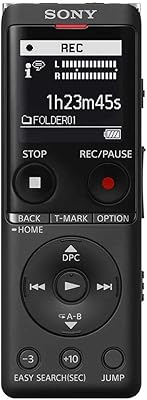
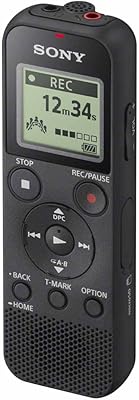
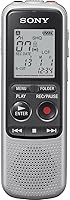
The Sony ICD-BX140 4GB Digital Voice Recorder is a no-frills recorder that has quietly built a loyal following since its 2014 launch. At just 2.54 oz, it's genuinely pocketable — slim enough for a shirt pocket and light enough to forget it's there. This Sony recorder runs on two AAA batteries that Sony rates at up to 28 hours of continuous recording, which holds up well in practice. The 4GB of built-in flash memory is plenty for real-world use, and the plastic body keeps things light. Priced in the mid-range for dedicated recorders, it focuses on doing one thing well rather than packing in features most people will never touch.
Features & Benefits

One of the most practical touches on this voice recorder is Voice Activated Recording — it only starts capturing when it detects sound and pauses when things go quiet, which is genuinely useful during long interviews or lectures with natural pauses. The automatic record level adjustment means you don't need to manually dial in sensitivity each time, and the Low Cut Filter does a decent job of taming wind noise outdoors. A Noise Cut mode helps make speech more intelligible on playback, which matters when you're transcribing later. Recording in MP3 at either 128 or 192 kbps keeps file sizes manageable, and there's a 2.5mm headphone jack for on-device review. Just be aware: this is a mono microphone, so don't expect stereo separation.

Best For

This Sony recorder has a clear sweet spot: people who need reliable audio capture without a learning curve. Students recording lectures will appreciate how simple the operation is — press record, put it on the desk, walk away. Journalists conducting one-on-one interviews will find the ICD-BX140 compact enough to hold discreetly and capable enough to produce clean, transcribable audio. Business professionals who need to document meetings or dictate notes on the go will find it fits neatly into a jacket pocket. Writers who like to think out loud while drafting, or anyone wanting a dedicated backup to their phone, will find this voice recorder earns its place. It's not built for music — it's built for words.

User Feedback

Across years of buyer reviews, a few patterns stand out. People consistently praise ease of use — the controls are intuitive enough that most users start recording within minutes of unboxing. Battery life also earns regular positive mentions, with many buyers reporting it meets or even exceeds Sony's stated estimates. On the flip side, the mono microphone is the most common criticism, particularly from users who later compared it to stereo recorders and noticed the difference in spatial quality. File transfers via USB to PC generally work without issues, though a handful of buyers found the process slightly clunky. A smaller number raised concerns about button responsiveness after extended use. Overall, the feedback skews positive for its intended purpose — capturing clear speech.

Pros

  • Battery life regularly meets or exceeds Sony's stated 28-hour estimate in real-world use.
  • Voice Activated Recording intelligently cuts dead air, making long session files easier to review.
  • Fits in a shirt pocket at under three ounces — genuinely easy to carry every day.
  • Auto record level adjustment removes the need to fiddle with sensitivity settings before each session.
  • Noise Cut mode makes speech noticeably easier to transcribe during playback.
  • Connects to PC as a standard flash drive — no drivers or software installation needed.
  • Batteries are included in the box, so it is ready to use immediately after unboxing.
  • Low Cut Filter reduces wind and low-frequency rumble during outdoor recordings.
  • Years of real buyer feedback confirm reliable performance for close-range speech capture.
  • Simple one-button recording operation that works for users of any technical skill level.

Cons

  • Mono-only microphone is a hard limitation that cannot be worked around in post-processing.
  • The 2.5mm headphone jack requires an adapter for anyone using standard 3.5mm earphones.
  • No rechargeable battery or USB charging — you will always need to carry spare AAAs.
  • Buttons can become less tactile and harder to press after extended daily use over time.
  • No expandable storage slot means heavy users will hit capacity limits on long trips.
  • File transfer interface feels dated and slower compared to recorders with modern USB-C ports.
  • Plastic casing shows cosmetic wear and scuffs faster than expected with regular handling.
  • Audio quality drops noticeably when the speaker is more than a few feet from the device.
  • Full user manual is not included in the box and must be downloaded separately from Sony's site.
  • Competing recorders at a similar price now offer stereo mics and more modern port options.

Ratings

The Sony ICD-BX140 4GB Digital Voice Recorder has accumulated years of verified buyer feedback across global markets, and our AI rating system has processed that data — filtering out incentivized, bot-generated, and duplicate reviews — to surface what real users consistently experience. The scores below reflect genuine patterns in satisfaction and frustration, not averages inflated by promotional noise. Strengths in simplicity and battery endurance score high, while limitations around audio fidelity and build durability are reflected honestly.

Ease of Use
93%
Buyers across all age groups and tech comfort levels repeatedly describe this Sony recorder as one of the most intuitive devices they have owned. Students report being able to set it on a desk and start recording within seconds of opening the box, with no manual required.
A small number of users found the button layout slightly cramped, particularly when trying to navigate menus quickly in the dark or while wearing gloves. The lack of a touchscreen means all navigation is physical, which can feel dated to users coming from smartphones.
Audio Clarity for Speech
86%
For capturing lectures, interviews, and dictation, this voice recorder consistently delivers clean, intelligible speech playback — especially indoors at close range. The Noise Cut mode earns frequent praise from users who transcribe recordings, as it noticeably reduces background hiss.
Audio quality drops in large rooms or when the recorder is placed more than a few feet from the speaker. The monaural microphone captures a flat, single-channel signal that lacks the spatial depth some users expect when recording group conversations.
Microphone Quality
67%
33%
The built-in mono mic handles one-on-one interviews and close-range dictation reliably. Its 75 Hz to 15 kHz frequency response captures the core vocal range well, and auto level adjustment prevents obvious clipping in most situations.
Mono-only recording is the most frequently cited limitation across all buyer feedback. Users who later compared recordings to stereo devices noticed a clear difference in richness and spatial quality, making it a real weakness for anyone recording panel discussions or ambient environments.
Battery Life
91%
Real-world battery performance is one of the most praised aspects of the ICD-BX140. Many buyers report that two AAA batteries lasted through multi-day conference trips or several weeks of intermittent lecture recording, often meeting or exceeding Sony's stated 28-hour estimate.
A minority of users reported shorter-than-expected battery life, which in most cases appeared linked to using lower-quality third-party batteries. There is no rechargeable battery or USB charging option, which can be inconvenient for users who prefer to charge rather than carry spares.
Build Quality & Durability
62%
38%
The slim plastic shell is light enough to carry without noticing, and the overall form factor feels purposeful rather than cheap out of the box. Most users report no issues during the first year or two of regular use.
Over time, a recurring pattern in long-term reviews points to buttons becoming less tactile and responsive. Several buyers noted that the plastic casing feels fragile under frequent daily handling, and a few reported cosmetic wear that made the device look worn faster than expected.
Portability & Form Factor
89%
At under three ounces and slim enough for a shirt pocket, this voice recorder is one of the easier dedicated recorders to carry daily. Journalists and students frequently mention tossing it into a bag and forgetting about it until they need it.
The 2.5mm headphone jack, while functional, is a less common port size that requires an adapter for users whose earphones use a standard 3.5mm connector — a minor but recurring inconvenience noted in buyer reviews.
Voice Activated Recording
84%
The VAR feature is consistently praised by users who record long sessions with natural gaps, such as courtroom proceedings or class Q&A segments. It saves storage meaningfully and makes post-session file management easier.
Some users report that VAR occasionally cuts off the first syllable of a sentence when a speaker starts talking again after a pause. Sensitivity calibration is limited, which means it may miss soft-spoken openers in quiet environments.
Storage & File Management
78%
22%
Four gigabytes of built-in flash memory is more than sufficient for most real-world recording needs at typical quality settings. Users who record daily meetings report going weeks before needing to transfer or delete files.
There is no expandable storage slot, so power users who record hours of content daily will hit limits eventually. File transfer to a PC is functional but has drawn criticism for feeling clunky — a few buyers found folder navigation via the built-in interface less intuitive than expected.
PC Connectivity & Transfer
71%
29%
The built-in flash interface connects to Windows and Mac without requiring a driver installation in most cases, and files transfer as standard MP3s that open in any media player or transcription software. For straightforward workflows, it just works.
Several buyers flagged that the connection process felt slower or more cumbersome compared to recorders with dedicated USB-C ports. A handful reported occasional recognition issues on certain Windows configurations, requiring a replug or restart to resolve.
Value for Money
74%
26%
For a single-purpose device that handles speech recording reliably without demanding any setup expertise, the ICD-BX140 sits at a reasonable price point for what it delivers. Users who need a dependable, grab-and-go recorder find it justifies the spend.
At its asking price, the absence of stereo recording and the dated port choice start to feel harder to overlook — especially with competing recorders offering more features at similar or lower prices. Buyers who discover the mono limitation after purchase often feel the value proposition weakens.
Noise & Wind Reduction
81%
19%
The Low Cut Filter does a credible job of reducing low-frequency rumble during outdoor recordings, and users who recorded in mildly windy conditions or near air-conditioning vents noticed a real improvement in playback clarity when it was enabled.
In genuinely windy outdoor conditions, the filter is not enough on its own — without a physical windscreen accessory, recordings can still come out muddy. The filter also cannot be fine-tuned, so users working in varied acoustic environments have limited control.
Playback Experience
77%
23%
On-device playback through the 2.5mm headphone jack is clear enough for review and spot-checking recordings in the field. The Noise Cut mode during playback is particularly appreciated by users who transcribe recordings without transferring files to a computer first.
There is no built-in speaker for hands-free playback monitoring, which some users found limiting when reviewing recordings with colleagues. Volume range on the headphone output is adequate but not generous, and a few buyers with hearing difficulties flagged it as insufficient at maximum output.
Setup & Learning Curve
92%
Unboxing to first recording takes under two minutes for most users. Batteries are included, controls are clearly labeled, and the device does not require any app, account, or pairing process — a genuinely appreciated trait for users who want a tool that just works immediately.
The included Quick Start Guide covers only the basics, and users who want to explore less obvious settings like VAR sensitivity or file folder organization may find the documentation thin. Accessing the full manual requires downloading it separately from Sony's website.
Long-Term Reliability
68%
32%
Many buyers who have owned the ICD-BX140 for two or more years report it still functions as expected for basic recording tasks, which speaks to the core electronics holding up reasonably well over time with standard use.
The most common long-term concern is physical wear rather than electronic failure — buttons lose their crispness, and the plastic shows scuffs and stress marks. Users who carry it loose in a pocket or bag without a case tend to report deterioration faster than those who store it carefully.

Suitable for:

The Sony ICD-BX140 4GB Digital Voice Recorder is built for people who need a dependable, grab-and-go tool for capturing spoken audio without any technical fuss. Students who record lectures will find it particularly well-suited — place it on a desk, press one button, and focus on the class rather than the device. Journalists conducting one-on-one interviews will appreciate the compact size and the Voice Activated Recording feature, which handles natural pauses without leaving long stretches of silence to sift through later. Business professionals who dictate memos, document meetings, or need a reliable backup to their phone will find this Sony recorder fits neatly into a jacket pocket and is ready to work within seconds. Writers and creatives who think out loud while drafting will also find it a practical companion — simple, light, and long on battery life for extended creative sessions.

Not suitable for:

The Sony ICD-BX140 4GB Digital Voice Recorder is not the right choice for anyone who needs stereo recording, and that is a genuine dealbreaker worth understanding before buying. Its built-in microphone captures mono audio only, which means group conversations, panel discussions, musical performances, or any recording where spatial separation matters will come out flat and limited. Users who need to record in large halls, lecture theaters with distant speakers, or outdoor environments with significant wind will find the audio quality noticeably compromised, even with filters enabled. If you are looking for a recorder that doubles as a portable music capture device or field recorder for ambient soundscapes, this voice recorder simply was not designed for those tasks. Buyers who prefer USB-C or modern connectivity options may also find the experience frustrating, and those who handle their gear roughly should know the plastic build shows wear faster than metal-bodied alternatives at a similar price point.

Specifications

  • Built-in Memory: The device includes 4GB of built-in flash memory with no expansion slot available.
  • Audio Format: All recordings are saved as MP3 files, compatible with virtually any media player or transcription software.
  • Bitrate Options: Users can choose between 128 kbps and 192 kbps MP3 recording quality depending on their storage and clarity needs.
  • Microphone Type: A built-in monaural (mono) microphone captures audio in a single channel with a frequency response of 75 Hz to 15 kHz.
  • Battery Type: Powered by two AAA alkaline batteries, which are included in the box at purchase.
  • Battery Life: Rated up to 28 hours of continuous recording at 128 kbps and up to 26 hours at 192 kbps.
  • Headphone Jack: A 2.5mm headphone jack is built into the device for private audio playback in the field.
  • Dimensions: The recorder measures 1.52″ x 0.84″ x 4.54″, making it slim enough to fit in a shirt pocket.
  • Weight: The device weighs 2.54 oz (72g), making it one of the lighter dedicated voice recorders in its category.
  • Body Material: The outer casing is constructed from plastic in a matte black finish.
  • PC Connectivity: The device connects to a PC or Mac via a built-in USB interface, appearing as a removable flash drive without requiring additional drivers in most cases.
  • Voice Activation: A Voice Activated Recording (VAR) mode automatically starts and pauses recording based on detected sound levels.
  • Noise Reduction: A Noise Cut mode is available during both recording and playback to improve speech intelligibility in noisy environments.
  • Wind Reduction: A Low Cut Filter reduces low-frequency rumble and wind noise, useful for outdoor or near-HVAC recording situations.
  • Auto Level Control: Automatic record level adjustment continuously monitors input volume and adjusts sensitivity to reduce clipping and distortion.
  • Color: Available in black only.
  • Availability Date: The product was first made available in March 2014 and remains in active production as of the time of writing.
  • In the Box: Package includes the IC recorder unit, two AAA alkaline batteries, and a printed Quick Start Guide.

Related Reviews
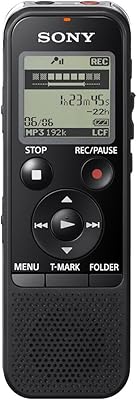
Sony ICD-PX440 Digital Voice Recorder 4GB
87%
89%
Sound Quality
91%
Portability
87%
Battery Life
94%
Ease of Use
85%
Recording Time
More
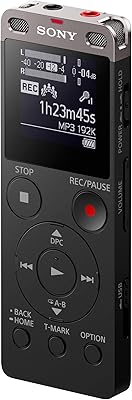
Sony ICD-UX570
Sony ICD-UX570
79%
83%
Audio Clarity
76%
Noise Cancellation
91%
Built-In USB Convenience
88%
Battery Life
92%
Portability & Form Factor
More
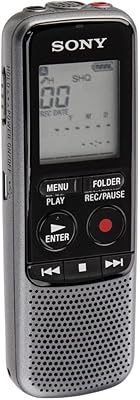
Sony ICD-UX560
Sony ICD-UX560
76%
88%
Audio Clarity
84%
Recording Modes
81%
Voice Activation
86%
Ease of Use
74%
Build Quality
More
Sony ICD-PX240 4GB
Sony ICD-PX240 4GB
81%
83%
Audio Clarity
91%
Ease of Use
94%
Portability & Form Factor
78%
Battery Performance
67%
Storage & File Management
More
Sony ICD-PX370 4GB
Sony ICD-PX370 4GB
83%
97%
Battery Longevity
89%
Portability & Form Factor
94%
File Transfer Convenience
78%
Recording Quality
91%
User Interface & Ease of Use
More
Sony ICD-PX312 Voice Recorder
73%
91%
Ease of Use
88%
Battery Life
79%
Audio Clarity — Quiet Environments
48%
Audio Clarity — Noisy Environments
63%
Build Quality
More
Sony ICD-UX512 2GB Digital Voice Recorder
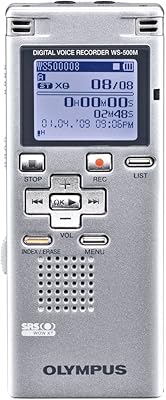
83%
89%
Ease of Use
91%
Battery Life
78%
Audio Quality
95%
Portability
84%
Build Quality
More
OM Digital Solutions WS-500 Digital Voice Recorder
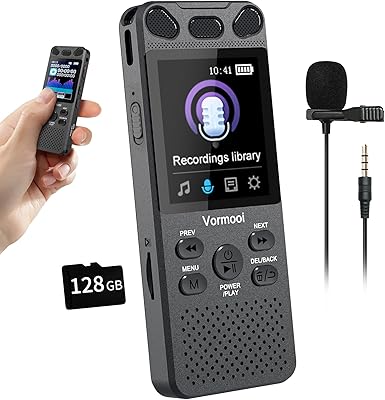
81%
94%
Battery Life
91%
Ease of Use
78%
Sound Quality
96%
Recording Time
85%
Portability
More
Vormooi O1 160GB Digital Voice Recorder
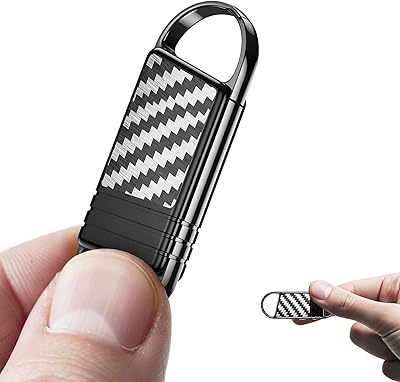
78%
93%
Battery Life
88%
Storage Capacity
81%
Audio Recording Quality
67%
Noise Reduction Performance
84%
External Microphone Usefulness
More
YOXIJAC LYB-101 8GB
YOXIJAC LYB-101 8GB
75%
91%
Ease of Use
78%
Audio Quality — Quiet Environments
47%
Audio Quality — Noisy Environments
63%
Voice Activation Accuracy
69%
Battery Life
More

FAQ

It works right away. Just insert the included AAA batteries, set the date and time if prompted, and you are ready to record. No software installation is needed for basic use, and when you connect it to a computer, it shows up as a standard removable drive so you can drag and drop your MP3 files.

No, it cannot. The built-in microphone is monaural, meaning it captures a single-channel audio signal. For recording lectures, interviews, or dictation this is generally fine, but if you need stereo separation for music, group discussions with spatial context, or ambient soundscapes, you would need to look at a different model.

Most users report battery life that meets or slightly exceeds Sony's stated estimates of around 26 to 28 hours. If you are recording in intermittent bursts rather than continuously, two AAA alkaline batteries can last several weeks. Using Voice Activated Recording also helps extend battery life by reducing active recording time.

It works with both. The recorder connects via its built-in USB interface and mounts as a standard flash drive on both Windows and Mac systems. No drivers are required in most cases, and the MP3 files it creates open in any standard audio application on either platform.

For best results, keep it within a few feet of the person speaking. At close range — on a desk during a one-on-one meeting or a classroom desk during a lecture — clarity is generally very good. As distance increases beyond roughly three to five feet, audio quality drops noticeably, especially in larger rooms with echo or background noise.

Not directly. The headphone jack on this voice recorder is 2.5mm, which is a less common size. You will need a 2.5mm to 3.5mm adapter, which is inexpensive and widely available, but it is worth knowing upfront so you are not caught off guard when you want to review a recording in the field.

When VAR is enabled, the recorder only captures audio when it detects sound above a threshold and automatically pauses when things go quiet. It is genuinely useful for long sessions with natural gaps — court proceedings, interviews, or classes with extended silences. The one caveat is that it can occasionally clip the very first syllable of a sentence when audio resumes, so for critical recordings you may prefer to leave it off.

No, unfortunately there is no memory expansion slot. The 4GB of built-in storage is all you get. At 128 kbps MP3 quality, 4GB holds a substantial amount of audio for typical use — many weeks of regular recording sessions — but if you record hours of content daily, you will want to transfer and clear files regularly.

Slide out the built-in USB connector on the device and plug it directly into a USB port on your computer. The recorder mounts as a removable drive and you can copy or move your MP3 files like any other document. There is no proprietary software required, though Sony does offer optional companion software for more organized file management if you prefer it.

It is solidly functional but not rugged. The plastic body is light and reasonably sturdy for everyday use in a bag or pocket, but it is not drop-resistant or water-resistant in any meaningful way. Long-term owners sometimes report that button feel degrades over time with heavy use, and the casing can show scuffs and wear if carried loosely without a case. A small protective sleeve is worth the small extra cost if you plan to carry it daily.