Overview

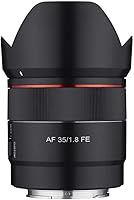
The Rokinon AF 35mm F1.8 Wide Angle Lens entered the market in late 2020, positioning itself squarely between budget manual-focus primes and Sony's own pricier native options. For Sony mirrorless shooters who wanted reliable autofocus without stretching their budget to G-series or Zeiss territory, it filled a real gap. At just 210g and barely over two and a half inches long, it feels almost inconspicuous on a compact Sony body — which matters when you're shooting on the street or packing light for travel. It won't outperform Sigma Art glass wide open, but set expectations accordingly and this 35mm prime consistently punches above its weight.
Features & Benefits

The autofocus system is one of the clearest selling points here. The linear stepping motor locks onto subjects quickly and, crucially, does so without audible noise — a genuine advantage if you shoot video on Sony bodies where lens hum tends to bleed into on-camera audio. The F1.8 aperture and nine-blade diaphragm produce smooth, rounded bokeh that holds up well in portrait work. Sharpness is strong through the center at F1.8, though the corners benefit from stopping down a stop or two. The custom switch — which lets you repurpose the focus ring as an aperture dial — is a small ergonomic touch that photographers with specific shooting styles will actually use. Weather sealing rounds out a genuinely practical feature set.

Best For

This Sony E-mount lens is particularly well-suited for street and travel photographers who want a discreet prime that won't slow them down. The combination of fast AF, compact size, and weather sealing makes it a practical daily carry — especially on trips where you'd rather not lug around multiple bodies and lenses. It's also a smart pick for Sony APS-C shooters who plan to move to full-frame eventually, since the lens covers both formats. Video creators working with Sony bodies will appreciate the quiet motor in run-and-gun situations. And for anyone moving up from a kit lens and looking for their first fast prime, the Rokinon 35mm F1.8 makes a convincing entry point without demanding a significant financial stretch.

User Feedback

Buyers who've taken this 35mm prime out in the field largely come away satisfied. The consensus across hundreds of ratings leans positive, with many praising optical sharpness and how reliably the autofocus tracks on Sony bodies across varied lighting conditions. Build quality gets mentioned often — it feels more substantial than the price might suggest. On the flip side, some users report noticeable vignetting wide open, particularly in flat or evenly lit scenes where corner shading becomes obvious. A handful mention occasional focus hunting in dim environments, which is worth knowing if low-light shooting is a priority. Long-term durability comments are sparse, but early indications suggest the weather sealing performs as advertised.

Pros

  • Autofocus is fast and near-silent, making it a practical choice for video work on Sony bodies.
  • At 210g, this 35mm prime is light enough to carry all day without fatigue.
  • Produces genuinely pleasing background blur at F1.8 — bokeh is smooth and well-suited for portrait work.
  • Center sharpness wide open is impressive for the price bracket.
  • Weather sealing adds real-world confidence for outdoor and travel shooting.
  • The custom switch — repurposing the focus ring as an aperture dial — is a thoughtful ergonomic option.
  • Full-frame coverage makes it future-proof for APS-C shooters planning a body upgrade.
  • Build quality feels solid and more premium than the price might suggest.
  • Compatible with 58mm filters, giving photographers access to a wide range of affordable filter options.
  • Comes with a petal lens hood, front and rear caps, and a pouch — a complete kit right out of the box.

Cons

  • Noticeable vignetting wide open can be distracting in evenly lit or flat scenes.
  • Corner sharpness at F1.8 is soft and requires stopping down to improve meaningfully.
  • Occasional focus hunting in low light means you may miss a shot in dim conditions.
  • Minor chromatic aberration appears in high-contrast areas when shooting wide open.
  • Long-term durability data is limited — the lens simply hasn't been around long enough to assess.
  • The Rokinon 35mm F1.8 lacks in-lens optical stabilization, which limits handheld video smoothness on bodies without IBIS.
  • Maximum magnification of 0.17x makes it a poor choice for close-up or detail-oriented work.
  • Some users find the custom switch fiddly to operate consistently in fast-paced shooting situations.
  • AF tracking on fast or erratic subjects is inconsistent compared to Sony's native G-series options.

Ratings

The scores below were generated by AI after analyzing verified buyer reviews worldwide for the Rokinon AF 35mm F1.8 Wide Angle Lens, with spam, bot activity, and incentivized submissions actively filtered out to reflect only genuine user experiences. Each category captures both the consistent strengths and the recurring frustrations that real photographers have reported across a broad range of shooting scenarios. Nothing has been glossed over — where this 35mm prime earns praise, the scores reflect it, and where users have hit real limitations, those are represented just as honestly.

Autofocus Performance
83%
For everyday shooting — street corners, casual portraits, travel moments — the linear STM motor locks on quickly and confidently on Sony bodies. Users consistently report that phase-detection AF works well in good-to-moderate lighting, and the near-silent operation makes it a reliable option for video work where lens noise would otherwise ruin a take.
In genuinely dim environments, some users report hesitation and occasional hunting before the lens settles on a subject. It is not a sports or wildlife lens — fast, erratic movement in low light exposes the motor's limits, and a handful of reviewers noted missed focus during unpredictable indoor shoots.
Sharpness & Clarity
81%
19%
Center sharpness at F1.8 earns consistent praise from photographers shooting portraits, street scenes, and travel imagery — subjects in the frame's core come out crisp and well-defined, which is genuinely impressive at this price tier. Stopping down to F4 or F5.6 brings the full frame into tight, edge-to-edge clarity that most users find more than adequate for their needs.
Corner sharpness wide open is a known weakness; fine architectural details or landscape edges toward the frame's periphery look noticeably softer at F1.8. Users who shoot flat subjects — product photography, documents, or wide environmental scenes — will find the performance uneven until they stop down significantly.
Bokeh Quality
78%
22%
Portrait photographers and lifestyle shooters report smooth, natural-looking background blur that flatters subjects without drawing attention to itself. The nine-blade diaphragm keeps highlight circles rounded at mid-apertures, which is exactly what you want when shooting people against cluttered urban backgrounds or busy foliage.
At the absolute edges of the frame or at close focusing distances, some users note that bokeh transitions can become slightly nervous or show minor fringing around high-contrast edges. It is pleasant rather than exceptional — buyers expecting the buttery rendering of a premium F1.2 prime may come away a little underwhelmed.
Build Quality
79%
21%
The lens feels noticeably solid for its weight class — the barrel has a reassuring density to it that does not feel hollow or plasticky in hand. Multiple reviewers specifically mentioned being surprised by the build given the price, with the fit and finish holding up well through months of regular travel and daily carry use.
A small number of users raised questions about long-term durability, particularly around the custom switch mechanism and focus ring resistance over extended use. The lens has not been on the market long enough to generate robust multi-year reliability data, so longevity remains an open question for cautious buyers.
Weather Sealing
72%
28%
Photographers who have used this Sony E-mount lens in light rain, sea air, or dusty outdoor conditions generally report no issues — the sealing appears functional for the kinds of incidental exposure typical of travel and street shooting. Paired with a sealed Sony body, it gives reasonable confidence for shooting in unpredictable environments.
Rokinon does not publish detailed ingress protection ratings, and real-world durability data from heavy or prolonged moisture exposure is limited. Users treating the sealing as equivalent to higher-grade professional weather resistance will likely be setting expectations too high — it handles mist and dust, not downpours.
Value for Money
88%
This is consistently the most praised aspect of the Rokinon 35mm F1.8 across verified buyer feedback. Photographers who compared it directly to Sony's native equivalent — which costs substantially more — report that in real-world shooting the differences are narrower than the price gap suggests, especially for travel, street, and portrait work.
A small segment of buyers who upgraded from this lens to a Sony or Sigma Art equivalent felt in hindsight that the optical compromises — particularly vignetting and corner softness — were more significant than they initially accepted. For photographers who shoot wide open frequently and need consistent edge performance, the value calculation shifts.
Size & Portability
91%
At 210g and barely over 2.5 inches long, this is one of the easiest fast primes to live with daily. Users who travel light — one camera body, one or two lenses in a small bag — specifically cite the compact footprint as a deciding factor, and the lens balances well on both full-frame and APS-C Sony bodies without front-heaviness.
There is very little to criticize here, though a handful of users with larger hands mentioned the compact barrel gives less surface area to grip during manual focus adjustments. This is a minor ergonomic note rather than a genuine flaw for the vast majority of shooters.
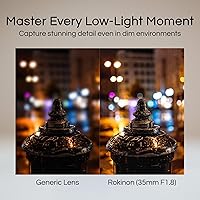
Low-Light Capability
74%
26%
The F1.8 aperture pulls in enough light for usable handheld shooting in restaurant interiors, evening street scenes, and dim indoor environments where kit lenses would force awkwardly high ISO settings. Users routinely report shooting at ISO 1600 or lower in conditions that would otherwise require flash.
The AF system's tendency to hunt in truly dark environments — deep shadows, candle-lit rooms, poorly lit event venues — limits confidence in low-light shooting situations where you only have one chance at a frame. Experienced photographers working in these conditions may find themselves switching to manual focus more often than expected.
Video Usability
77%
23%
The quiet STM motor is a genuine asset for video creators — run-and-gun shooters using Sony bodies report clean audio tracks without focus noise bleeding in, which is a common frustration with older or third-party lenses. Smooth focus transitions also make rack focusing during video look intentional rather than mechanical.
There is no optical stabilization in the lens itself, so shooters on bodies without in-body image stabilization will notice camera shake in handheld video at slower shutter speeds. A small number of video-focused reviewers also noted that continuous AF during long takes occasionally drifted slightly before reacquiring focus.
Chromatic Aberration
67%
33%
In typical shooting conditions — outdoor daylight, portraits against natural backgrounds — most buyers report that chromatic aberration is not a visible issue and images look clean straight from the camera. Sony's in-camera lens correction profiles also address a portion of the fringing automatically on compatible bodies.
At F1.8 in high-contrast situations — bare branches against bright sky, backlit hair, high-contrast architectural edges — purple and green fringing becomes visible on close inspection and requires manual correction in post-processing. It is manageable but not invisible, and perfectionists who rarely want to touch sliders in Lightroom will notice it.
Vignetting
61%
39%
For photographers shooting portraits, street scenes, or subjects against naturally dark or complex backgrounds, the corner darkening at F1.8 is largely absorbed by the subject matter and often adds a subtle framing effect that some users actually prefer. Sony's lens correction profiles handle much of it with a single toggle in-camera.
In flat, evenly lit scenes — overcast skies, smooth walls, product shots on white backgrounds — the vignetting at F1.8 is objectively noticeable and requires active correction in post. Users who shoot architecture, real estate, or product photography without intending any vignette effect will find this an ongoing friction point.
Custom Switch Utility
69%
31%
Photographers who prefer a more tactile, physical control over aperture genuinely appreciate being able to repurpose the focus ring for that function — it keeps the right hand on the shutter button and makes one-handed aperture adjustments natural during street or event shooting.
The switch feels small and can be accidentally toggled when adjusting grip, which a handful of users found frustrating mid-shoot. It is also a feature that many photographers will never use, making it a nice-to-have rather than a standout differentiator in the buying decision.
Distortion Control
73%
27%
For a wide-angle prime at 35mm, distortion is well-controlled — architectural lines and horizons hold reasonably straight without heavy correction, and the lens renders scenes with a natural perspective that users find pleasing for street and environmental portrait work.
Some barrel distortion is present and visible in geometrically critical shots like interior architecture or flat-lay photography, requiring a correction pass in editing software to fully straighten lines. It is within the expected range for a lens of this design but worth knowing if precise geometric rendering is a priority.
Compatibility & Integration
86%
Full native E-mount integration means EXIF data, Eye AF, subject tracking, and in-body stabilization compensation all work exactly as they would with a Sony-branded lens. Users report no firmware conflicts or communication errors across a wide range of Sony bodies from the a6000 series through current full-frame models.
The lens is exclusively for Sony E-mount — there are no adapters or variants for other systems, so any photographer considering a future switch to a different camera ecosystem would need to replace it entirely. This is an inherent platform limitation rather than a product flaw, but worth factoring into long-term lens investment decisions.

Suitable for:

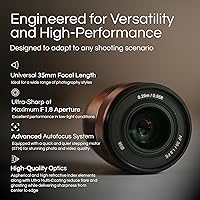
The Rokinon AF 35mm F1.8 Wide Angle Lens is a strong match for Sony mirrorless shooters who want a capable, lightweight prime without paying first-party prices. Street photographers and travelers will appreciate how little it adds to a bag — at 210g and barely over two inches long, it practically disappears on a compact Sony body. It covers full-frame sensors, so APS-C shooters who plan to upgrade their body down the road won't need to replace the glass. Video creators working on Sony cameras will find the linear STM motor a genuine asset: it tracks subjects quickly and stays quiet enough that on-camera audio stays clean. Lifestyle and portrait photographers shooting in natural light will also get solid mileage out of the F1.8 aperture, which delivers enough background separation to flatter a subject without needing to spend significantly more.
Not suitable for:

Photographers who demand the absolute best optical performance wide open will likely find the Rokinon AF 35mm F1.8 Wide Angle Lens falls short of expectations at F1.8 — corner sharpness and vignetting are real issues that require stopping down to F2.8 or beyond to fully resolve. Shooters who regularly work in challenging low-light environments, such as dimly lit event spaces or night street photography, may also run into occasional focus hunting, which can cost you a shot at the wrong moment. If you're a professional who relies on consistent, near-perfect autofocus tracking for fast-moving subjects — sports, wildlife, unpredictable kids — this lens is not the right tool; the AF is good for its price bracket, but not at the level of Sony's G or GM lenses. Buyers seeking maximum long-term reliability data should also note that this lens hasn't been on the market long enough to build a deep track record for durability, particularly around the weather sealing claims.
Specifications

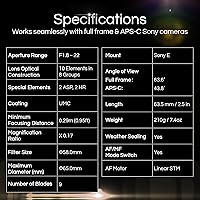
  • Lens Mount: Designed exclusively for Sony E-mount cameras, covering both full-frame and APS-C sensor formats.
  • Focal Length: Fixed 35mm focal length, providing a 63.6° angle of view on full-frame and 43.8° on APS-C bodies.
  • Aperture Range: Maximum aperture of F1.8 and minimum aperture of F22, offering a wide exposure range for varied shooting conditions.
  • Diaphragm: Nine rounded diaphragm blades produce smooth, circular bokeh at wide and mid apertures.
  • Optical Design: 10 elements arranged in 8 groups, including 2 aspherical and 2 high-refractive index elements for controlled distortion and aberration.
  • Lens Coating: Ultra Multi-Coating (UMC) is applied to reduce flare and ghosting under challenging or backlit lighting conditions.
  • AF Motor: A linear stepping motor (STM) drives autofocus, enabling fast, precise, and near-silent focus acquisition.
  • Focus Distance: Minimum focusing distance is 11.4″ (0.29m), with a maximum magnification ratio of 0.17x.
  • Filter Thread: 58mm front filter thread accepts standard circular polarizers, ND filters, and other 58mm accessories.
  • Custom Switch: A physical custom switch on the barrel allows the focus ring to be reassigned as a manual aperture control ring.
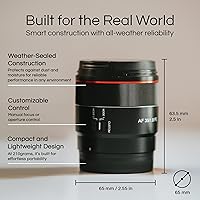
  • Weather Sealing: The lens body incorporates dust and moisture seals, providing basic environmental protection for outdoor use.
  • Dimensions: The lens measures 2.5″ (63.5mm) in length and 2.56″ (65.0mm) at its widest diameter.
  • Weight: Total weight is 7.4oz (210g), making it one of the lighter full-frame 35mm primes available for Sony E-mount.
  • Lens Hood: A removable petal-shaped lens hood is included to reduce stray light and protect the front element.
  • In the Box: Package includes the lens, removable petal hood, front and rear lens caps, a soft pouch, and a printed user manual.
  • Availability: First made available in November 2020, with the model number IO3518-E used for identification and compatibility reference.

Related Reviews

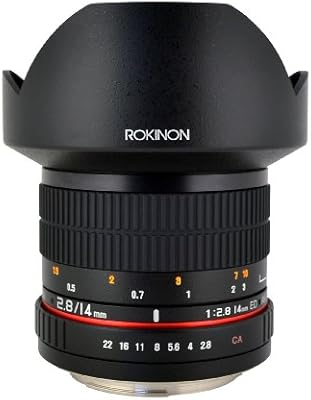
Rokinon 14mm F2.8 Wide Angle Lens
71%
83%
Optical Sharpness (Center Frame)
58%
Edge & Corner Sharpness
52%
Vignetting Control
61%
Chromatic Aberration
74%
Flare & Ghosting Resistance
More
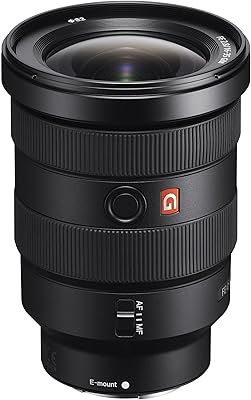
Sony FE 16-35mm F2.8 GM Zoom Lens
82%
94%
Optical Sharpness
91%
Aperture Consistency
89%
Autofocus Performance
88%
Build Quality & Weather Sealing
86%
Distortion Control
More
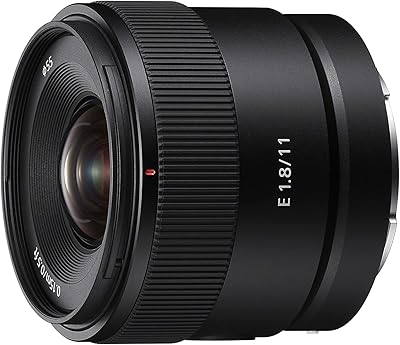
Sony E 11mm F1.8 APS-C Ultra-Wide-Angle Prime Lens
87%
93%
Autofocus Speed
91%
Image Quality
89%
Portability
74%
Low-Light Performance
88%
Build Quality
More
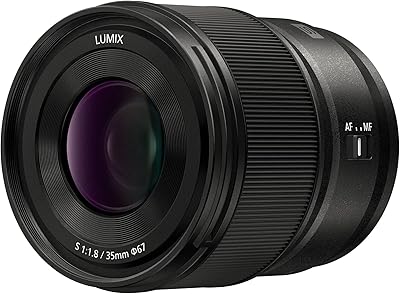
Panasonic S-S35 35mm F1.8 Prime Lens
83%
93%
Optical Sharpness
91%
Build Quality
67%
Autofocus Performance
88%
Video Usability
94%
Portability & Size
More
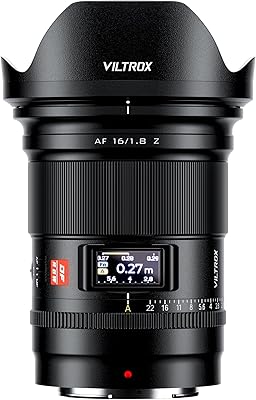
Viltrox AF 16mm F1.8 Wide Angle Lens
82%
91%
Optical Sharpness
84%
Chromatic Aberration Control
78%
Autofocus Performance
83%
Video Usability
88%
LCD Display Utility
More
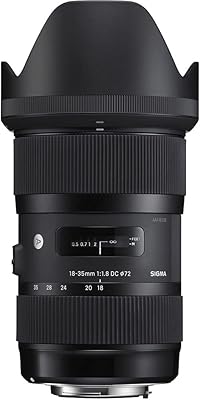
Sigma 18-35mm F1.8 Art DC HSM Lens for Canon
87%
94%
Sharpness & Image Quality
85%
Autofocus Speed & Accuracy
91%
Low-Light Performance
88%
Bokeh Quality
90%
Build Quality & Durability
More
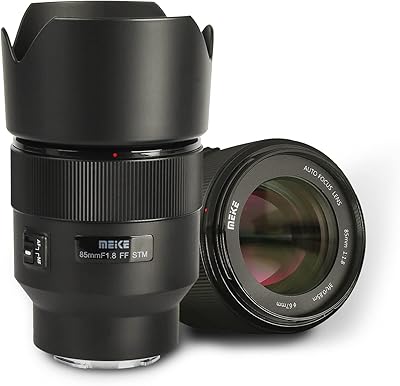
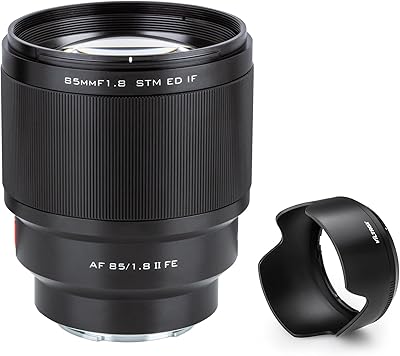
Meike 85mm F1.8 AF STM Sony E Mount Lens
85%
92%
Value for Money
88%
Autofocus Speed and Accuracy
90%
Image Quality
85%
Bokeh and Background Blur
78%
Low-Light Performance
More
Viltrox AF 85mm F1.8 Mark II Lens
81%
86%
Autofocus Speed
91%
Autofocus Noise
88%
Center Sharpness
63%
Edge & Corner Sharpness
79%
Bokeh Quality
More
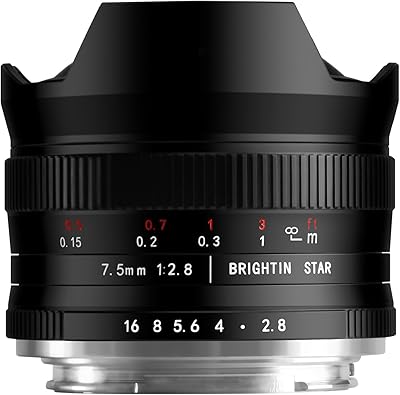
Brightin Star 7.5mm F2.8 III Fisheye Lens
75%
78%
Image Sharpness
88%
Value for Money
71%
Low-Light & Astrophotography Performance
82%
Build Quality & Construction
61%
Manual Focus Usability
More
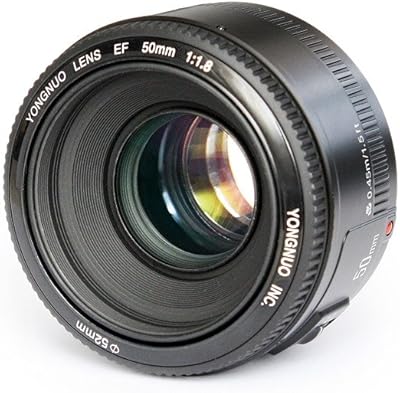
Yongnuo YN50mm F1.8 Prime Lens
71%
93%
Value for Money
78%
Image Sharpness
58%
Autofocus Speed
61%
Autofocus Accuracy
76%
Bokeh Quality
More

FAQ

Yes, the Rokinon AF 35mm F1.8 Wide Angle Lens fits any Sony E-mount camera, including APS-C bodies. On an APS-C sensor, the effective field of view narrows to the equivalent of roughly 52mm, which gives a natural, slightly tighter perspective. Autofocus and all electronic functions work fully on APS-C bodies.
Quite well for the price bracket. The linear stepping motor is quiet enough that it won't bleed into footage captured by an on-camera microphone, and focus transitions are smooth rather than abrupt. It's not quite at the level of Sony's own cine-oriented lenses, but for run-and-gun video or vlogging it performs reliably.

There is noticeable corner darkening at F1.8, especially in flat or evenly exposed scenes. Whether it bothers you depends on your subject matter — for portraits or street work with busy backgrounds, most people barely notice it. Stopping down to F2.8 largely eliminates the issue, and software correction in Lightroom or Sony's in-camera lens compensation takes care of it in seconds if needed.

Yes. This is a fully native E-mount lens with electronic contacts, so your camera records focal length, aperture, and other metadata automatically. You also get access to Sony's phase-detection AF, in-body image stabilization compensation (where supported), and real-time Eye AF.

When toggled, it reassigns the focus ring on the barrel to control aperture in manual increments, rather than turning the lens manually for focus. Photographers who prefer to keep their right hand on the shutter button and adjust aperture with their left hand on the lens find it genuinely handy. It's not a feature everyone will use, but it's a thoughtful option rather than a gimmick.

The sealing is designed to resist dust and light moisture, not heavy rain or submersion. Think of it as useful protection against a light drizzle, sea spray, or dusty environments rather than a waterproofing guarantee. Pairing it with a weather-sealed Sony body like the a7 IV or a7R V gives you a more complete barrier against the elements.

Most users report smooth, pleasing background blur that holds up well for portrait and lifestyle work. The nine rounded blades help keep out-of-focus highlights circular rather than polygonal, which contributes to a natural rendering. It won't match the buttery smoothness of a dedicated portrait prime at F1.2 or F1.4, but for a 35mm at F1.8 the background separation is genuinely attractive.

Yes. Because the lens communicates natively with the Sony body, it takes full advantage of Sony's phase-detection system, which powers Eye AF and subject tracking. Both features work as they would with any Sony-branded lens at a similar focal length.

Both lenses are sharp in the center at F1.8, and stopped down to F4 or F5.6 the differences narrow considerably. The Sony edges ahead in corner sharpness and has slightly better controlled aberrations wide open. However, the Rokinon 35mm F1.8 costs noticeably less and delivers results that most photographers shooting travel, street, or everyday work would struggle to fault in real-world use.

Yes. The 58mm filter thread on the front of the lens accepts standard screw-on filters without any issues. Circular polarizers work normally, and there are no reported problems with vignetting from slim-profile filters at this focal length.

Where to Buy