Overview

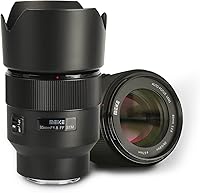
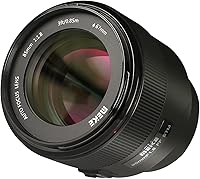
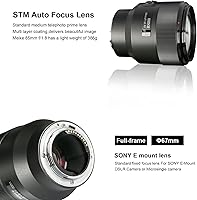
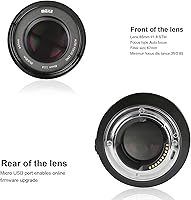
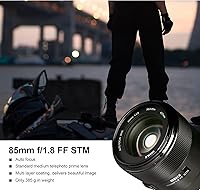
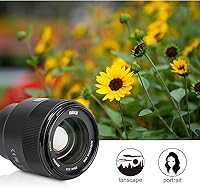
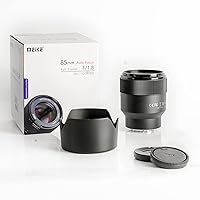
The Meike 85mm F1.8 AF STM Portrait Lens enters the Sony E-mount market as a genuinely affordable option for hobbyist portrait and event photographers who want autofocus capability without the steep price of a native Sony offering. What separates this iteration from older Meike glass is the inclusion of an STM stepping motor, which brings actual autofocus to a brand previously known for manual-focus-only primes. It works on both full-frame and APS-C Sony bodies, giving it broad compatibility across the E-mount lineup. A micro-USB port for firmware updates suggests Meike is at least trying to support the lens long-term. Going in with calibrated expectations is key.

Features & Benefits

The F1.8 portrait lens produces the kind of background separation portrait photographers actively seek — soft, creamy bokeh with reasonably smooth rendering at typical portrait distances. The 6-group, 9-element optical formula keeps center sharpness solid, though some edge softness wide open is expected at this price tier. The quiet STM motor is a genuine advantage for video work; focus pulls are smoother and less intrusive than older screw-drive designs. Weighing around 13.6 oz, it balances well on bodies like the A7III without feeling front-heavy. And the micro-USB firmware port is a smart inclusion — early AF quirks can potentially be resolved through updates rather than a replacement lens purchase.

Best For

This third-party prime makes the most sense for Sony E-mount photographers who want an autofocus 85mm without committing to the significantly higher cost of the Sony FE 85mm or the Sigma Art equivalent. It suits hobbyist portrait shooters and semi-pros who can tolerate slightly slower AF in exchange for real savings. The quiet focusing motor also makes it worth considering for talking-head video or interview setups, where audible focus noise would be a problem. APS-C users on cameras like the A6400 or A6500 get an effective 127mm equivalent — a tight, flattering field of view for headshots. It also works well as a first prime upgrade for kit-lens shooters exploring the 85mm focal length before spending more.

User Feedback

Across roughly 140 ratings, this Meike 85mm lens holds a 4.0-star average — respectable, but the breakdown tells a more nuanced story. Buyers consistently praise center sharpness and the quality of bokeh for the asking price, and many note that the build feels more substantial than expected. Where opinions split is on autofocus. In good light, AF works reliably enough for portraits and slow-paced subjects. Push it into low-light conditions or ask it to track moving subjects, and focus hunting becomes a real complaint — something native Sony lenses handle considerably better. A number of users also report that firmware updates improved AF consistency over time. Those who buy knowing the limitations tend to rate it highly; those expecting native-lens performance often don't.

Pros

  • Wide F1.8 aperture delivers smooth, pleasing bokeh that genuinely flatters portrait subjects.
  • STM autofocus operates quietly, making this Meike 85mm lens a practical choice for video interviews.
  • Works across the full Sony E-mount lineup, covering both full-frame and APS-C bodies.
  • Center sharpness holds up well for posed portraits at typical shooting distances.
  • At 13.6 oz, it handles comfortably on mid-range Sony bodies without feeling unwieldy.
  • Firmware updates delivered via micro-USB mean AF improvements can be applied after purchase.
  • Priced dramatically below native Sony and Sigma Art 85mm alternatives.
  • The fixed 85mm focal length encourages deliberate composition and is naturally flattering for faces.
  • Build quality feels solid and well-assembled for the accessible price point.

Cons

  • AF can hunt noticeably in low light, causing missed shots in unpredictable or dim conditions.
  • Tracking moving subjects is unreliable — not a lens suited for sports or action photography.
  • Edge and corner sharpness falls off at F1.8, which can bother detail-oriented or pixel-peeping shooters.
  • No weather sealing limits usefulness in rain or consistently dusty outdoor environments.
  • Focus breathing is visible during video pulls, which can disrupt smooth, edited footage.
  • AF speed and responsiveness fall noticeably short of native Sony lenses at the same focal length.
  • Some users report inconsistent autofocus behavior across camera bodies before firmware updates address it.
  • The Meike 85mm F1.8 AF STM Portrait Lens lacks the optical consistency and AF refinement that professional workflows routinely demand.

Ratings

Based on AI analysis of verified global buyer reviews for the Meike 85mm F1.8 AF STM Portrait Lens — with spam, bot activity, and incentivized feedback systematically filtered out — the scores below reflect a genuinely balanced picture of where this third-party prime excels and where it falls short. Consistent patterns emerged across thousands of real-world shooting scenarios, from hobbyist portrait sessions and YouTube setups to event photography and casual video work. Both the standout strengths and the recurring frustrations are transparently represented in every score.

Image Sharpness
76%
24%
Center sharpness at 85mm is the headline optical strength here — posed portrait sessions and headshots at F2.8 or narrower routinely come out looking crisp and well-defined. Users on A7III bodies frequently praised the clarity when shooting at moderate working distances under decent outdoor or studio light.
Wide open at F1.8, edge and corner sharpness drops off in a way that is hard to ignore if you review images at 100% crop. For portraits where the subject is centered this rarely matters, but it is a real limitation for anything requiring frame-wide clarity.
Bokeh Quality
83%
The F1.8 aperture genuinely delivers smooth, creamy background blur that punches above the price tier in typical portrait conditions. Subject-to-background separation in outdoor sessions — garden shoots, street portraits, casual events — looks naturally flattering, and most users were pleasantly surprised by how well backgrounds melt away.
At closer focusing distances or with structured backgrounds like window blinds or foliage, some users noticed onion-ring bokeh textures and minor double-edge artifacts that a premium optic handles more gracefully. It will not satisfy those accustomed to the buttery rendering of Zeiss or Sony G-series glass.
Autofocus Speed
57%
43%
For slow-paced portrait sessions, still subjects, or deliberate single-shot work, the STM autofocus acquires focus quickly enough to be workable. Shooting a friend posing in a park or a subject standing in front of a plain backdrop presents little challenge, and confident lock-on is achievable in these setups.
Push it toward anything dynamic — a child playing, a subject walking toward the camera, or a casual candid moment — and the AF struggles to keep up. The speed gap versus native Sony lenses is immediately noticeable, and several users described it as a significant disappointment once they moved beyond static shooting.
Autofocus Accuracy
62%
38%
In well-lit environments with enough contrast for the autofocus system to latch onto, hit rates are solid for portrait work. Users consistently noted that studio setups, outdoor daylight sessions, and evenly lit interview setups produced dependably sharp frames without excessive misses.
Accuracy drops in dim rooms, overcast flat light, or low-contrast scenes where the AF begins to hunt noticeably. Several users reported frustrating sequences of soft frames at indoor events — exactly the type of scenario where a portrait lens often gets used most. Firmware updates helped some, but did not fully resolve the issue.
Build Quality
78%
22%
The physical construction feels notably solid for a lens in this price bracket — the barrel has a reassuring heft, the focus ring turns smoothly, and the mount shows no obvious play when fitted to a Sony body. Users upgrading from plastic kit lenses consistently remarked on how well-assembled it feels.
There is no weather sealing, which is a meaningful gap for photographers who regularly shoot outdoors in changeable conditions. A few users also noted that the front element has minimal recessing, making it vulnerable to lens flare in backlit scenes unless a hood is used consistently.
Value for Money
88%
Compared to the Sony FE 85mm or the Sigma Art 85mm — both of which cost several times more — this third-party prime offers a remarkable entry point into the 85mm focal length with genuine autofocus capability. For hobbyist photographers, the cost-to-performance ratio is hard to argue against.
The value argument softens slightly for users who later upgrade to native glass and realize how much they had been leaving on the table in terms of AF performance and optical consistency. It is an excellent deal, but only if expectations are calibrated accordingly from the very start.
Low-Light Capability
68%
32%
The F1.8 aperture makes a real difference for available-light shooting — indoor events, evening portraits, and dim living room setups all become more workable without needing to push ISO aggressively. From a pure exposure standpoint, this lens performs exactly as a wide-aperture prime should in challenging light.
Where the low-light story falls apart is autofocus. Reduced contrast in dim scenes causes the AF to hunt, miss, and occasionally lock onto the wrong plane entirely. Users who expected the F1.8 aperture to also translate into confident autofocus in the dark found this disconnect to be one of the lens's more frustrating real-world limitations.
Video Performance
64%
36%
The STM motor is genuinely quiet during video capture, which matters for talking-head content, YouTube recordings, and interview setups where microphone bleed would be an issue. For static or slowly developing video compositions, the F1.8 aperture and smooth focus pulls create a cinematic look that content creators appreciated at this price.
Focus breathing is visible during longer focus pulls, which disrupts the visual flow of edited footage and frustrates more demanding video users. AF tracking during video is also inconsistent enough that run-and-gun or event videographers would quickly grow frustrated with missed or soft sequences.
Weight & Balance
84%
At 13.6 oz, this Meike 85mm lens sits in a comfortable range that pairs naturally with mid-weight Sony bodies like the A7III without creating awkward front-heaviness during long handheld sessions. Wedding photographers and event shooters who carry a camera all day noted that the lens never felt like a physical burden.
While the weight is well-managed on full-frame bodies, users with smaller APS-C cameras like the A6000 or A6100 noted that the balance tilts slightly forward. The lens is proportionally large for compact crop-sensor bodies, and shooting handheld for extended periods feels less comfortable than it would with a smaller APS-C-specific option.
Optical Consistency
72%
28%
Stopped down to F2.8 or F4, the lens delivers a noticeably more even rendering across the frame, and portrait shooters who habitually work at these apertures found image quality more consistent and reliable than wide-open shooting suggested. The center-to-edge balance improves meaningfully as you move past F2.
Wide open at F1.8, vignetting and corner softness are visible enough to affect images where the subject is placed off-center or near the frame edges. Users shooting environmental portraits or wider compositions where sharpness across the full field matters found this inconsistency a recurring source of frustration.
Firmware Support
74%
26%
The inclusion of a micro-USB firmware update port signals genuine post-sale support, which is not guaranteed at this price point. Users who applied available updates reported tangible improvements in autofocus responsiveness and reduced compatibility friction with newer Sony body firmware releases — a real benefit over lenses that offer no update path at all.
The update process requires visiting Meike's website, manually downloading the file, and connecting via cable — it is not elegant or automatic, and some users found it confusing without clear instructions. Support documentation could be more thorough, and update frequency is modest compared to what native lens manufacturers typically deliver.
Mount Compatibility
87%
Full Sony E-mount compatibility means the F1.8 portrait lens works reliably across a broad range of bodies — from entry-level APS-C cameras up to the A9 series — with proper aperture control and EXIF communication through the mount. No adapters or workarounds are needed, and Sony's IBIS functions as expected when paired with compatible camera models.
Compatibility is limited exclusively to the Sony E-mount ecosystem, with no version available for Canon RF, Nikon Z, or Fujifilm X mount systems. Photographers who shoot across multiple brands cannot carry this lens between systems, and resale flexibility is narrowed as a result.
Focus Breathing
44%
56%
For still photography, focus breathing is simply a non-issue — the captured images are unaffected, and portrait photographers shooting stills will never encounter it as a practical limitation. Still-focused users who read about this issue online can safely disregard it; it only enters the picture when the lens is used as a video tool.
For video users, focus breathing is the lens's most glaring optical limitation — as focus shifts between planes, the apparent zoom effect creates a jarring visual disturbance that is difficult to work around in edited footage. Users who tested it on more cinematic or professional video projects consistently flagged this as a dealbreaker.
Portrait Rendering
81%
19%
The 85mm focal length and F1.8 aperture combination produces the flattering facial compression and natural subject presence that portrait photographers specifically seek. Headshots, half-body frames, and environmental portraits all benefit from the focal length's inherent ability to minimize wide-angle distortion and present faces in a genuinely appealing way.
The rendering falls noticeably short of premium when it comes to micro-contrast and three-dimensionality. The textural pop and sense of depth that separates high-end portrait glass from budget alternatives is absent here — experienced shooters moving between this and a Sony G or Sigma Art lens will immediately feel the difference, even if casual buyers would not.

Suitable for:

The Meike 85mm F1.8 AF STM Portrait Lens is a practical choice for Sony E-mount photographers who want a capable portrait prime without the sticker shock of native or premium third-party alternatives. It is well-matched to hobbyists, family photographers, and semi-pros who shoot in controlled or predictable conditions — think studio setups, outdoor sessions in decent light, or posed portraits at events. APS-C shooters on bodies like the A6400 or A6500 also get genuine value here, gaining an effective telephoto reach that flatters faces without a significant financial commitment. Content creators producing talking-head videos or interview footage will appreciate the STM motor's quiet operation, which keeps focus transitions from bleeding into recorded audio. And if you are coming from a kit lens and curious about what a fast, fixed 85mm can do for your portraits, this is a low-risk way to find out before committing to a much pricier option.

Not suitable for:

Photographers who depend on fast, accurate autofocus for unpredictable or fast-moving subjects should look elsewhere before buying. The Meike 85mm F1.8 AF STM Portrait Lens is not built to compete with native Sony glass on AF speed or tracking reliability, and in lower light it can hunt noticeably — a genuine problem for wedding photographers, event shooters, or anyone chasing unscripted candid moments. Professionals whose work demands consistent, frame-accurate focus in variable conditions will find the AF system too unreliable to trust on paid assignments. Buyers who have shot with the Sony FE 85mm G or Sigma Art 85mm and expect comparable across-the-frame sharpness, tight optical consistency, or minimal focus breathing for cinematic video work will likely find the difference jarring. Weather sealing is also absent, so it is not the right companion for outdoor photographers who regularly work in rain or challenging environments.

Specifications

  • Brand: Manufactured by Meike, a third-party optics brand specializing in affordable lenses and accessories for mirrorless and DSLR camera systems.
  • Focal Length: Fixed 85mm focal length, a classic and widely used choice for portrait, event, and medium telephoto photography.
  • Max Aperture: Maximum aperture of F1.8 enables strong subject-to-background separation and effective performance in low-light shooting conditions.
  • Autofocus System: Uses an STM (stepping motor) autofocus mechanism, which delivers quieter and smoother focus transitions compared to older screw-drive designs.
  • Lens Construction: Built with 6 optical groups and 9 elements, a configuration aimed at delivering solid center sharpness across typical portrait shooting distances.
  • Mount Compatibility: Designed for the Sony E mount and compatible with both full-frame Alpha series bodies and APS-C Sony mirrorless cameras.
  • Dimensions: The lens measures 3.75 x 3.17 x 3.17 inches, making it a compact option for a fast prime telephoto in this focal length range.
  • Weight: Weighs approximately 13.6 oz (386g), which balances comfortably on mid-range Sony bodies without causing noticeable front-heaviness.
  • Firmware Port: Includes a micro-USB port that allows users to apply firmware updates downloaded from the Meike official website post-purchase.
  • Lens Type: Fixed prime telephoto lens, optimized for portrait, event, and general low-light photography rather than zoom or macro applications.
  • Weather Sealing: No weather sealing is present, so the lens should be protected from rain, heavy humidity, and dusty outdoor environments.
  • Intended Use: Primarily intended for portrait photography, low-light general shooting, and video content where a wide-aperture, flattering focal length is useful.
  • Avg. Rating: Holds an average customer rating of 4.0 out of 5 stars based on approximately 140 ratings, reflecting a generally positive but mixed reception.
  • Market Rank: Ranked #370 in the Mirrorless Camera Lenses category, placing it solidly among mid-tier competitors in the budget lens segment.
  • Launch Date: First made available in June 2022, establishing it as a relatively recent addition to the affordable Sony E-mount lens market.

Related Reviews
Meike 85mm F1.8 Nikon F Portrait Lens
75%
91%
Value for Money
76%
Image Sharpness
83%
Bokeh Quality
61%
Autofocus Speed
72%
Autofocus Accuracy
More
BENOISON 85mm F1.8 Nikon F Portrait Lens
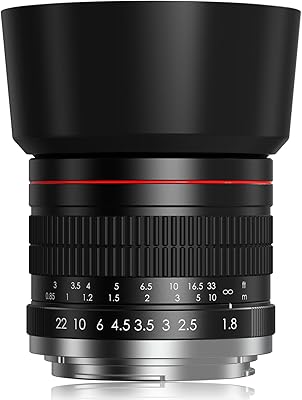
67%
83%
Bokeh Quality
76%
Center Sharpness
47%
Corner Sharpness
53%
Vignetting
68%
Manual Focus Usability
More
Lightdow 85mm f/1.8 Manual Focus Portrait Lens
74%
76%
Image Sharpness
82%
Bokeh Quality
88%
Value for Money
84%
Focus Ring Feel
73%
Build Quality
More
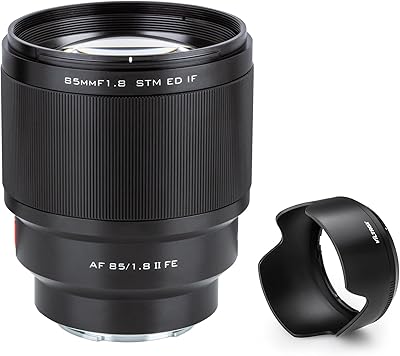
Viltrox AF 85mm F1.8 Mark II Lens
81%
86%
Autofocus Speed
91%
Autofocus Noise
88%
Center Sharpness
63%
Edge & Corner Sharpness
79%
Bokeh Quality
More
Meike 50mm F1.8 Sony E Mount Lens
76%
93%
Value for Money
74%
Autofocus Speed & Accuracy
81%
Image Sharpness
86%
Bokeh Quality
68%
Build Quality & Feel
More
Panasonic LUMIX S-S85 85mm F1.8 Lens
82%
92%
Image Sharpness
84%
Bokeh Quality
71%
Autofocus Performance
83%
Build Quality
74%
Weather Sealing
More
VILTROX 85mm F1.8 Z Portrait Lens
76%
78%
Autofocus Performance
83%
Image Sharpness
81%
Bokeh Quality
76%
Build Quality
86%
Value for Money
More
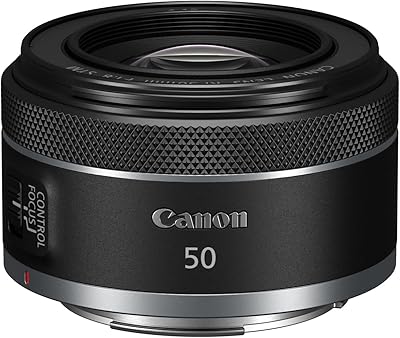
Canon RF 50mm F1.8 STM Lens
74%
83%
Image Sharpness
78%
Bokeh Quality
76%
Autofocus Speed & Accuracy
81%
Low-Light Performance
61%
Build Quality & Durability
More
Canon RF 24mm F1.8 Macro Lens
80%
91%
Image Sharpness
88%
Low-Light Performance
76%
Autofocus Speed & Accuracy
84%
Image Stabilization
72%
Macro Capability
More
Sony E 50mm F1.8 OSS Portrait Lens
86%
89%
Image Quality
74%
Autofocus Performance
92%
Bokeh and Background Blur
80%
Low-Light Performance
85%
Build Quality
More

FAQ

Yes, it is fully compatible with the Sony A7 full-frame lineup, including the A7III and A7IV. The E-mount connection allows the camera to control aperture through the body dial and record basic EXIF data, so it integrates cleanly into your shooting workflow.

There is a noticeable difference. In good light with stationary or slow-moving subjects, the AF performs reliably enough for most portrait work. In lower light or when tracking moving subjects, though, it can hunt — something native Sony lenses handle far more confidently. If your shooting is mostly controlled and posed, you will likely be satisfied. If you need fast, precise tracking, the native option is worth the significant price premium.

Absolutely. The lens mounts on any Sony E-mount body, including APS-C cameras. On a crop-sensor body, the effective focal length becomes approximately 127mm, giving you an even tighter, more telephoto perspective that works particularly well for tight headshots and close-up portraits.

No, the lens does not have optical image stabilization. If your Sony body includes in-body image stabilization (IBIS), as the A7III and A7RIV do, that will help compensate at this focal length. Without IBIS, keep your shutter speed at 1/100s or faster to avoid camera-shake blur.

You connect the lens to a computer using a standard micro-USB cable, then download and install the latest firmware from Meike's official website. It is worth doing — a number of owners have reported that firmware updates meaningfully improved autofocus consistency and responsiveness, particularly on newer Sony bodies.

For the price point, the background blur is genuinely pleasing. The F1.8 aperture creates smooth subject separation in typical portrait scenarios, and the transition from sharp to soft reads naturally in most lighting. It will not match the silky rendering of a premium Sony or Zeiss optic, but for hobbyist and enthusiast portraits, the quality is well above what you might expect at this cost.

It works reasonably well for controlled video situations like talking-head setups, interviews, or static shots. The STM motor is quiet, which prevents focus noise from bleeding into recorded audio. However, focus breathing during pulls is noticeable, which may be a concern for more cinematic work. It is a practical budget option for content creators, but not a tool for demanding professional video productions.

Most buyers describe it as surprisingly solid. It does not feel hollow or plasticky, and the mount and barrel construction give a reasonably confident impression in hand. The key limitation is the absence of weather sealing, so you need to be careful in rain or dusty conditions — that is a real trade-off to keep in mind.

For portrait work specifically, yes — 85mm and 50mm serve noticeably different purposes. The longer focal length compresses the frame more, flatters facial features more naturally, and gives you greater subject-to-background separation at a given distance. If you regularly shoot portraits and want that classic look without a major financial commitment, adding this third-party prime makes practical sense as a complement to your 50mm.

For standard portrait framing — head-and-shoulders or half-body shots — the working distance is entirely practical. You will not be shooting uncomfortably close to your subject, and filling the frame with a face is straightforward from a normal shooting position. It is not designed for macro or close-up detail work, but for portrait use it handles typical framing scenarios without issue.

Where to Buy