Overview

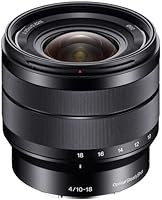
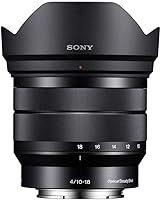
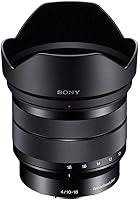
The Sony SEL1018 Wide-Angle Zoom Lens has been Sony's dedicated ultra-wide option for APS-C E-mount mirrorless shooters since 2012, and it hasn't lost its relevance. Covering 10-18mm — roughly 15-27mm in full-frame terms — it gives you a genuinely wide perspective without adding a large, heavy chunk of glass to an otherwise compact kit. That balance matters. This is a specialized tool, not a lens you'd reach for in every situation, but for the photographers who need it, very few alternatives fit the E-mount system as naturally. At its price tier, it's clearly aimed at serious enthusiasts and working professionals rather than beginners testing the waters.
Features & Benefits

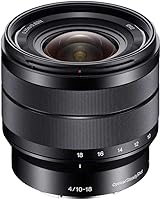
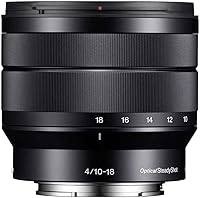
The constant f/4 aperture is one of this wide-angle zoom's most practical traits — you set your exposure and it stays consistent as you zoom, which matters when composing quickly in changing light. At 10mm, the 109-degree angle of view is dramatic enough to pull entire rooms or sweeping landscapes into a single frame. The Optical SteadyShot stabilization does real work, especially on older Sony bodies without built-in IBIS. A minimum focus distance of just 0.25m opens up close-and-wide compositions you wouldn't typically expect at this focal length. ED glass elements and multi-coating keep flare and color fringing well managed, even when shooting toward bright windows or open sky.

Best For

The SEL1018 is most at home in the hands of real estate photographers and architectural shooters — anyone who regularly works inside spaces where stepping back against the wall still isn't enough. Travel photographers carrying compact Sony kits will appreciate that this lens barely adds bulk to a bag. Street shooters who prefer a wide, immersive perspective rather than a compressed telephoto point of view will find it equally useful. Handheld videographers benefit noticeably from the OSS, especially when walking and filming. If your Sony APS-C body predates in-body stabilization, this wide-angle zoom becomes an even more logical pairing for keeping footage smooth without a gimbal.

User Feedback

With over 325 ratings averaging 4.5 stars, Sony's ultra-wide E-mount lens has earned a genuinely solid reputation across more than a decade. Buyers consistently single out sharpness across the frame and OSS effectiveness as standout strengths. The criticism that surfaces most often is predictable: f/4 is the ceiling, and in low-light settings — dim venues, candlelit interiors — the lens pushes you toward higher ISO than you'd prefer. Some buyers also flag that third-party alternatives have closed the quality gap at a lower price point. Autofocus earns solid marks for stills, though a handful of video shooters mention occasional focus hunting. Long-term durability feedback is largely encouraging, with many owners reporting years of regular use without problems.

Pros

  • Constant f/4 aperture across the full zoom range keeps exposure predictable and consistent in the field.
  • Built-in Optical SteadyShot stabilization is a genuine advantage on Sony bodies that lack in-body IBIS.
  • The 109-degree angle of view at 10mm captures entire rooms and sweeping landscapes in a single frame.
  • Compact, travel-friendly dimensions make it easy to carry alongside other lenses without straining your bag.
  • Sharp, well-corrected images across the frame, even toward the edges at wider focal lengths.
  • A 0.25m minimum focus distance enables creative wide-angle close-up compositions most ultra-wides cannot manage.
  • ED glass and multi-coating do a solid job controlling flare and chromatic aberration in high-contrast lighting.
  • Autofocus is fast and dependable for stills, with reliable subject acquisition in typical shooting conditions.
  • Over a decade on the market with consistently strong user ratings confirms real-world durability and longevity.
  • Pairs naturally with Sony APS-C mirrorless bodies without adding significant weight or system imbalance.

Cons

  • The f/4 ceiling becomes a genuine liability when shooting in dim or artificially lit indoor environments.
  • Priced at a premium tier where third-party lenses now offer competitive optical quality for less money.
  • Video shooters report occasional focus hunting in certain lighting conditions, disrupting otherwise smooth footage.
  • No weather sealing, which limits confidence when shooting outdoors in light rain or dusty conditions.
  • The 62mm filter thread is a less common size, potentially requiring additional adapter rings for existing filter sets.
  • Zoom range is narrow by design, meaning you will always need a second lens to cover everyday focal lengths.
  • Distortion at 10mm, while manageable with software correction, requires post-processing attention for architecture work.
  • Lacks the aperture depth needed for selective background blur, which limits creative portraiture at the wide end.
  • Original 2012 optical design means it does not fully exploit the resolving power of newer high-megapixel Sony sensors.

Ratings

The scores below reflect our AI-driven analysis of verified global user reviews for the Sony SEL1018 Wide-Angle Zoom Lens, with spam, bot-generated, and incentivized feedback actively filtered out before processing. Drawing on hundreds of real-world owner experiences across photography and video use cases, these ratings are designed to give you an honest, unvarnished picture of where this wide-angle zoom genuinely excels and where it falls short.

Image Sharpness
91%
Reviewers consistently describe sharp, well-resolved images across the frame, even toward the edges at 10mm — a focal length where many wide zooms struggle to hold together. Architectural photographers in particular praise how cleanly straight lines and fine details render when shooting building facades and interiors.
A small number of users note that corner sharpness drops slightly when shooting wide open at f/4, though stopping down to f/5.6 or f/8 brings it back in line. For the vast majority of use cases, this is a minor issue that most buyers will never notice in practice.
Optical Stabilization
86%
Owners on older Sony APS-C bodies without in-body stabilization rate the OSS system highly for handheld stills and walking video shots, describing noticeably sharper results compared to unstabilized alternatives at equivalent shutter speeds. Travel shooters and videographers shooting in tight indoor spaces cite it as one of the most practically useful features on the lens.
On newer Sony bodies that already have effective in-body stabilization, the in-lens OSS adds less incremental value and a handful of users question whether the combination always works harmoniously. Some video shooters also report that OSS alone is not enough to fully compensate for deliberate panning or fast movement.
Build Quality
79%
21%
The SEL1018 feels solid and well-assembled in hand, and its compact form factor does not come at the cost of a flimsy or plasticky feel. Many owners report years of regular use without any mechanical issues, which is a meaningful endorsement given how long this lens has been on the market.
There is no weather sealing, which limits confidence when shooting outdoors in rain, mist, or dusty conditions — a real concern for landscape photographers working in variable weather. The lens barrel extends slightly during zoom, which some users find less reassuring than a fully internal design.
Autofocus Performance
82%
18%
For still photography, the autofocus draws consistent praise for being quick, quiet, and accurate in a wide range of lighting conditions, from bright daylight to moderately dim interiors. Street photographers appreciate how unobtrusively the motor operates, avoiding the clicking and whirring that can draw attention or disrupt a scene.
Video shooters have a more mixed experience, with a recurring complaint of occasional focus hunting when light levels drop or when the subject moves through areas of low contrast. It is not a universal issue, but enough reviewers mention it to treat it as a real risk for those prioritizing smooth continuous autofocus in video work.
Low-Light Performance
61%
39%
In reasonably lit indoor environments, the lens performs adequately, and the OSS helps recover some margin at slower shutter speeds when shooting static subjects. Real estate photographers shooting brightly lit staged rooms report acceptable results without pushing ISO too aggressively.
The f/4 maximum aperture is a genuine ceiling in darker settings — dim event venues, candlelit restaurants, or nighttime outdoor scenes will push ISO into territory where image quality suffers noticeably on most APS-C sensors. This is the single most common disappointment raised by buyers who hoped to use the lens in low-light environments.
Distortion Control
74%
26%
With in-camera or software correction applied, barrel distortion at 10mm is well controlled and the images look clean and natural — something real estate and architectural photographers who rely on straight lines particularly appreciate. Sony cameras apply automatic lens correction profiles that handle much of this transparently.
Without correction, barrel distortion at the wide end is visible and will require post-processing attention, especially for architectural work where straight verticals and horizontals are critical. Users who shoot in RAW and prefer to manage all corrections manually describe it as a routine but necessary step.
Chromatic Aberration
83%
The ED glass elements and multi-layer coatings do a solid job of keeping chromatic aberration and color fringing in check, even in high-contrast scenes like backlit windows and bright sky against dark building edges. Landscape photographers note that fringing is minimal and easily corrected when it does appear.
Shooting directly toward strong light sources can introduce some fringing along high-contrast edges, and a small number of users mention occasional purple fringing in very bright highlight areas. These are edge cases rather than everyday concerns, but worth noting for photographers who work frequently in high-contrast lighting.
Flare Resistance
77%
23%
With the included ALC-SH123 lens hood attached, flare resistance is good for an ultra-wide lens, and most reviewers find it performs acceptably even when composing toward windows or shooting outdoors on sunny days. The multi-coating noticeably reduces ghosting compared to older or cheaper wide-angle options.
Shooting without the hood or pointing the lens directly at a strong light source at the widest focal lengths can introduce visible ghosting and reduced contrast in the affected area. A few reviewers note that the hood, while effective, can vignette slightly on wider focal lengths when stacked with thick filters.
Size & Portability
93%
This is consistently one of the most praised aspects of the lens — it is genuinely compact and lightweight compared to most ultra-wide zoom options, and it fits naturally into a travel bag alongside other lenses without dominating the space. Owners who pair it with small Sony APS-C bodies like the A6400 or A6600 describe the combined kit as remarkably portable.
There is little to criticize here, though some users with larger hands find the compact barrel slightly awkward to grip and zoom smoothly during handheld video. The slight barrel extension during zooming is a minor ergonomic complaint compared to the overall portability advantage.
Value for Money
67%
33%
For Sony system users who want a fully native, stabilized ultra-wide zoom with reliable autofocus and proven long-term performance, the SEL1018 remains a defensible purchase. Its decade-long track record and consistent user satisfaction ratings suggest buyers are getting a lens that holds its value both in quality and resale.
The price is a recurring sticking point in reviews, especially as third-party alternatives have matured and now offer competitive optical performance at meaningfully lower cost. Buyers who do not specifically need OSS or native Sony autofocus integration will find it difficult to justify the premium over well-regarded manual focus alternatives.
Video Usability
73%
27%
For handheld video, the OSS provides a clear and practical benefit, and the quiet autofocus motor avoids the on-camera microphone pickup issues that plague noisier lenses. Wide-angle video shooters using it for travel vlogs and environmental documentary footage generally report positive experiences.
The inconsistent continuous autofocus performance in video mode is a real limitation for shooters who need confident subject tracking, and the lack of a smooth, de-clicked aperture ring makes exposure adjustments during recording more cumbersome than on dedicated cine-style lenses.
Lens Hood Quality
71%
29%
The included ALC-SH123 hood is a welcome inclusion and does its job effectively in most outdoor and bright indoor situations, helping control stray light and providing a degree of physical protection for the front element. Reviewers appreciate that Sony includes it in the box rather than selling it separately.
The hood is a petal-style design that some users find fiddly to attach and detach quickly in the field, and a handful of reviewers note it can feel slightly loose on the mount after extended use. Its fit with thick or stacked filters at the widest focal lengths can also cause minor vignetting.
Compatibility & Integration
89%
As a native Sony lens, it integrates cleanly with Sony APS-C camera bodies — automatic lens correction profiles, EXIF data, and OSS coordination all work without configuration. Owners upgrading within the Sony ecosystem from older NEX-series bodies to newer A6000-series cameras report the lens transitions across bodies without any friction.
Compatibility is strictly limited to Sony E-mount APS-C shooting, which is both a strength and a hard constraint — there is no path to using this lens effectively on full-frame bodies or any other mount system. Buyers who anticipate upgrading to a full-frame Sony body in the near future may find the investment harder to justify.
Long-Term Durability
87%
With over a decade on the market, the SEL1018 has an unusually long ownership history to draw from, and reports of mechanical failure or optical degradation over time are rare across the review base. Multiple reviewers describe using the same copy for five or more years of regular shooting without any issues.
The absence of weather sealing remains a concern for owners who push the lens into challenging outdoor conditions over time, and a small number of long-term users mention that the zoom ring can develop a slightly looser feel with heavy use. These are not widespread complaints, but realistic considerations for working photographers.

Suitable for:

The Sony SEL1018 Wide-Angle Zoom Lens is a strong fit for Sony APS-C mirrorless users who have a clear, recurring need for ultra-wide coverage. Real estate photographers will find it indispensable for making cramped rooms look spacious and inviting in a single shot. Architectural photographers and interior designers who document spaces professionally will also get consistent, reliable results. Travel shooters who want to keep their kit small without sacrificing a true wide-angle option will appreciate how little room it takes up in a bag. Handheld videographers — especially those on older Sony bodies without in-body stabilization — benefit directly from the built-in OSS when capturing walking shots or run-and-gun footage. Street photographers drawn to wide, environmental compositions will find the 10mm end genuinely immersive.
Not suitable for:

The Sony SEL1018 Wide-Angle Zoom Lens is not the right choice for photographers who regularly shoot in low-light conditions without a tripod, since the f/4 maximum aperture can force uncomfortably high ISO settings in dim venues, candlelit rooms, or nighttime outdoor scenes. It is also a poor fit for anyone looking for a versatile all-purpose lens — the focal range tops out at 18mm, so you will need a separate lens the moment you want anything approaching a standard or portrait perspective. Budget-conscious buyers should think carefully before purchasing, as several third-party alternatives now offer comparable optical performance at a meaningfully lower price point. Full-frame Sony shooters are simply incompatible here, since the SEL1018 is built specifically for the APS-C sensor format. If your primary subject is wildlife, sports, or anything requiring reach, this lens has nothing to offer.
Specifications

  • Focal Length: Covers 10-18mm on APS-C sensors, equivalent to approximately 15-27mm on a full-frame camera.
  • Max Aperture: Constant f/4 maximum aperture is maintained throughout the entire zoom range for consistent exposure control.
  • Min Aperture: The lens stops down to a minimum aperture of f/22 for maximum depth of field in bright conditions.
  • Angle of View: Angle of view ranges from 109 degrees at 10mm to 76 degrees at 18mm on an APS-C sensor.
  • Stabilization: Optical SteadyShot (OSS) in-lens image stabilization compensates for camera shake during handheld shooting.
  • Focus Distance: Minimum focus distance is 0.25m (0.82 ft), enabling close-subject wide-angle compositions.
  • Magnification: Maximum magnification ratio is 0.1x, suitable for environmental close-ups rather than true macro work.
  • Lens Mount: Designed exclusively for the Sony E-mount, compatible with APS-C mirrorless camera bodies.
  • Filter Thread: Accepts 62mm screw-on filters, including polarizers and ND filters for landscape and video use.
  • Dimensions: The lens measures 2.52 inches in length and 2.76 inches in diameter, keeping it compact for travel.
  • Weight: Real-world weight is approximately 225g, making it one of the lighter ultra-wide zoom options for E-mount.
  • Optical Design: Incorporates Extra-low Dispersion (ED) glass elements with multi-layer coatings to reduce chromatic aberration and flare.
  • Aperture Blades: The lens features a 7-blade circular aperture diaphragm for reasonably smooth out-of-focus rendering.
  • Autofocus Type: Uses a quiet internal autofocus motor, making it suitable for both still photography and video recording.
  • Model Number: The official Sony model designation for this lens is SEL1018.
  • In-Box Items: The lens ships with the ALC-SH123 lens hood, a front lens cap, and a rear lens cap included as standard.
  • Manufacturer: Designed and manufactured by Sony Corporation, with the lens first made available in September 2012.
  • Sensor Format: Optimized for APS-C sensors and will produce significant vignetting if used on full-frame Sony E-mount bodies.

Related Reviews
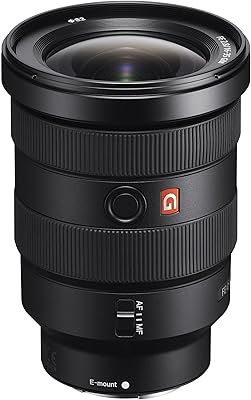
Sony FE 16-35mm F2.8 GM Zoom Lens
82%
94%
Optical Sharpness
91%
Aperture Consistency
89%
Autofocus Performance
88%
Build Quality & Weather Sealing
86%
Distortion Control
More
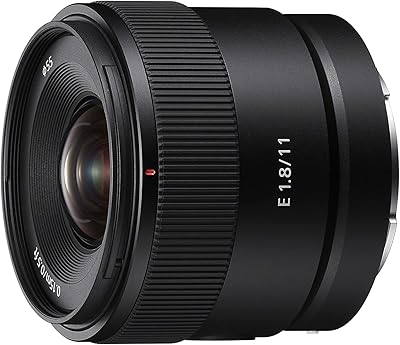
Sony E 11mm F1.8 APS-C Ultra-Wide-Angle Prime Lens
87%
93%
Autofocus Speed
91%
Image Quality
89%
Portability
74%
Low-Light Performance
88%
Build Quality
More
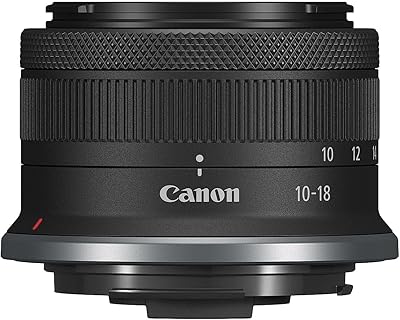
Canon RF-S10-18mm F4.5-6.3 IS STM Zoom Lens
83%
91%
Image Sharpness
84%
Autofocus Performance
88%
Image Stabilization
76%
Build Quality & Handling
93%
Vlogging Usability
More
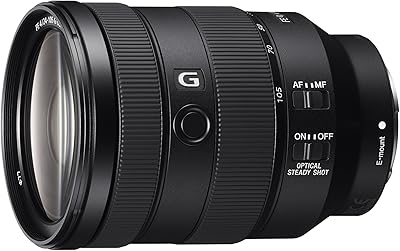
Sony SELP1650 16-50mm Power Zoom Lens
76%
93%
Portability & Form Factor
88%
Video Performance
78%
Image Stabilization
66%
Optical Sharpness
71%
Aberration & Distortion Control
More
Rokinon 14mm F2.8 Wide Angle Lens
71%
83%
Optical Sharpness (Center Frame)
58%
Edge & Corner Sharpness
52%
Vignetting Control
61%
Chromatic Aberration
74%
Flare & Ghosting Resistance
More
Sony FE 24-105mm F4 G OSS Lens
84%
93%
Optical Sharpness
91%
Autofocus Performance
89%
Build Quality
86%
Image Stabilization
88%
Video Performance
More
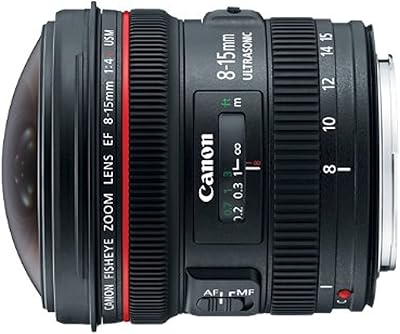
Canon EF 8-15mm f/4L Fisheye Zoom Lens
82%
93%
Optical Sharpness
91%
Zoom Versatility
88%
Autofocus Performance
94%
Build Quality
61%
Low-Light Capability
More
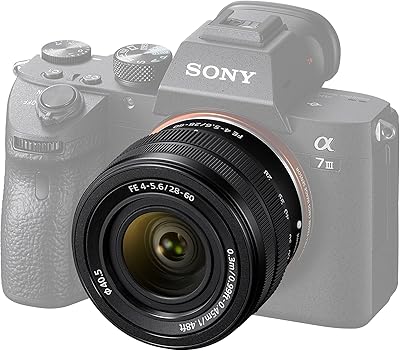
Sony FE 28-60mm f/4-5.6 Full-Frame Compact Zoom Lens
85%
92%
Portability & Weight
88%
Autofocus Performance
86%
Build Quality
84%
Image Stabilization
72%
Low-Light Performance
More
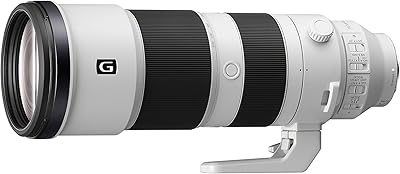
Sony SEL200600G 200-600mm Telephoto Zoom Lens
79%
93%
Autofocus Speed
91%
Optical Sharpness
88%
Image Stabilization
89%
Build Quality
74%
Value for Money
More
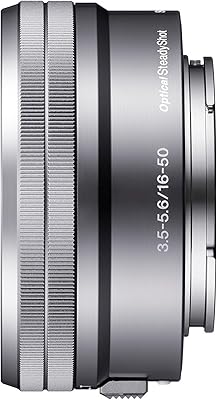
Sony 16-50mm f/3.5-5.6 OSS Alpha E-Mount Retractable Zoom Lens
85%
91%
Value for Money
87%
Image Quality
93%
Portability/Size
88%
Ease of Use
82%
Build Quality
More
Brightin Star 7.5mm F2.8 III Fisheye Lens
75%
78%
Image Sharpness
88%
Value for Money
71%
Low-Light & Astrophotography Performance
82%
Build Quality & Construction
61%
Manual Focus Usability
More

FAQ

Technically it will mount, but it is not recommended. The SEL1018 is designed for APS-C sensors, so on a full-frame body you will get heavy vignetting across much of the frame. You would need to shoot in APS-C crop mode, which defeats the purpose of owning a full-frame camera.

Yes, particularly at the wider end of the zoom range where camera shake is less obvious but still present, especially in lower light. Owners of older Sony bodies without in-body stabilization — like the A6000 or NEX series — report it makes a real, practical difference for handheld stills and walking video shots.

It is one of the most practical options in the Sony APS-C ecosystem for that use case. The 10mm end gives you enough width to make small rooms feel open and spacious, and the consistent f/4 aperture helps with indoor lighting. Just plan to correct barrel distortion in post-processing, which most real estate photographers do as a matter of routine anyway.

Better than you might expect for an ultra-wide lens. The multi-layer coatings do a reasonable job, and the included lens hood helps considerably. That said, shooting directly into a strong light source at 10mm can still produce some ghosting, so it's worth checking your shots when composing against bright windows.

It depends on the environment. In well-lit interiors or with a tripod, f/4 is perfectly workable. In dim venues, event spaces, or low-light indoor scenes, you will find yourself pushing ISO higher than you might like. If you regularly shoot in dark environments handheld, this is a genuine limitation worth factoring into your decision.

For stills, the autofocus is fast and accurate in most conditions. For video, the experience is more mixed. A portion of video shooters report occasional focus hunting, particularly in tricky lighting. It is not a deal-breaker for many, but if smooth, continuous autofocus for video is your top priority, it is worth testing on your specific body before committing.

The gap has narrowed over the years. Lenses from Sigma and Samyang in similar focal ranges offer competitive optical quality at lower price points, though some are manual focus only or lack OSS. If in-lens stabilization matters to you and you want native Sony integration, the SEL1018 still holds its own. If you can live without OSS, exploring third-party options is a reasonable approach.

The lens does extend slightly as you zoom toward the wider end, so it is not a fully internal zoom design. The change in length is modest and not a practical issue for most shooters, but it is worth knowing if you are considering filter use, as the extending barrel does not rotate the filter thread.

For most APS-C Sony shooters, yes. The optical formula holds up well, and there is no direct Sony-branded replacement that offers the same focal range in an E-mount APS-C package. The core reasons people buy it — compact size, OSS, and wide coverage — have not been made obsolete by newer lenses. Twelve-plus years of sustained strong reviews say quite a bit about its real-world durability.

It is compatible with any Sony E-mount camera body, including the full A6000 series, A6100, A6400, A6600, A6700, and older NEX cameras. It also physically mounts on full-frame Sony bodies but should only be used in APS-C crop mode on those. Always confirm E-mount compatibility with your specific body model before purchasing.

Where to Buy