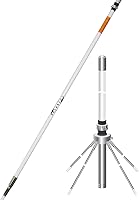
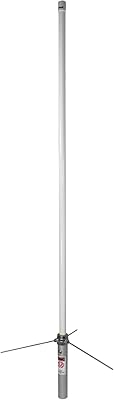
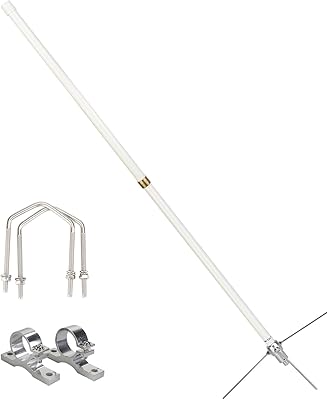
Overview

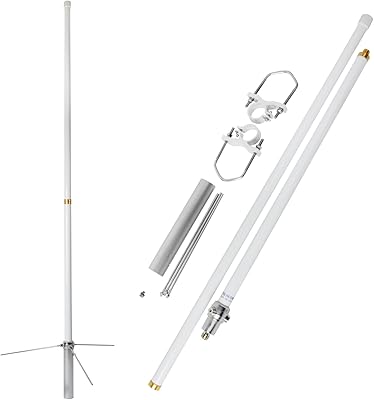
The Solarcon A-99CK Fiberglass Base Station Antenna has been a fixture in the CB and 10-meter radio community since 2008, a long run that reflects genuine field performance rather than marketing momentum. It arrives in three fiberglass sections that one person can assemble without a crew or a full afternoon on a ladder. The bundled ground plane kit is a real differentiator at this price tier — most competing antennas make you source that component separately. Worth stating plainly: this base station antenna is a fixed, permanent installation. It is not designed for vehicles or portable setups, and buyers who understand that going in tend to be the most satisfied with it.

Features & Benefits

The 8.2 dBi gain figure means this fiberglass CB antenna radiates a noticeably wider signal footprint than a standard quarter-wave unit — real-world range difference you actually feel during a contact, not just a brochure claim. Coverage extends meaningfully above and below the traditional CB band, which opens the door to export and 10-meter ham operation without swapping hardware. The antenna handles up to 2,000 watts, giving operators far more electrical headroom than most CB rigs ever demand. DC grounding and high-voltage insulation add safety margin that not every fiberglass competitor matches. The heavy-duty mounting plate holds firm under real wind loading, and the sectional design keeps solo installation genuinely manageable.

Best For

The A-99CK is built for operators putting together a permanent home base setup who want a clear range upgrade without crossing into commercial antenna territory. Rural users get the most out of it — when your nearest regular contact is thirty miles out, the gain advantage stops being theoretical and starts being audible. Licensed ham operators running 10-meter allocations will also find it a capable, low-hassle option that avoids juggling multiple antennas. This base station antenna is a strong fit for anyone who wants a weatherproof installation that stays mounted through seasons with minimal fuss. Portable or mobile operators should look elsewhere entirely.

User Feedback

The two things owners mention most consistently are straightforward assembly and a noticeable improvement in received and transmitted signal quality compared to whatever they replaced. The included ground plane kit earns genuine praise for being a usable component rather than an afterthought. Where opinions diverge is SWR tuning — experienced operators dial it in without much drama, but newcomers sometimes need a few attempts and a reliable SWR meter to get a clean match. A portion of users flag the mounting hardware as functional but not particularly robust, and coax connector fit is worth verifying before final installation. Long-term fiberglass durability in cold climates is mostly reported as solid, with ice loading the one condition worth monitoring.

Pros

  • High gain rating translates to real, audible range improvement over standard CB antennas in everyday use.
  • The included ground plane kit improves signal radiation pattern and saves you a separate purchase.
  • Broad bandwidth means this fiberglass CB antenna covers CB, export, and 10-meter ham frequencies without swapping gear.
  • Three-section construction makes solo installation practical — no crew needed to get it in the air.
  • Built to handle far more power than most CB rigs ever produce, giving plenty of electrical headroom.
  • DC grounding and high-voltage insulation add a layer of safety that not every competitor offers.
  • The heavy-duty mounting plate holds up reliably under wind load, with owners reporting stable long-term performance.
  • Fiberglass construction resists corrosion and weathering, making it a low-maintenance outdoor installation.
  • Long market track record since 2008 means real-world reliability data is abundant and easy to find.
  • Omni-directional pattern means no pointing or rotating required — useful in areas with contacts spread across multiple directions.

Cons

  • SWR tuning requires a meter and some patience; beginners without prior experience may find initial setup frustrating.
  • The included mounting hardware is functional but can feel underbuilt for demanding installations or heavy mast configurations.
  • Coax connector fit is inconsistent for some users and worth verifying before completing the installation.
  • At 17 feet, the A-99CK demands a real outdoor mounting location — tight yards or rooftop restrictions make it impractical.
  • Some owners report the ground plane kit feels like a value-tier component compared to dedicated aftermarket options.
  • Ice loading in cold climates is a legitimate concern worth monitoring, particularly at the section joints.
  • The 32-ohm impedance is non-standard and may require an impedance-matching solution depending on your existing coax and radio setup.
  • No pre-assembled option — even the simplified three-section design still requires careful alignment during installation.
  • Urban or suburban operators with neighbors in close proximity may find local RF interference limits the antenna's practical effectiveness regardless of gain.

Ratings

The Solarcon A-99CK Fiberglass Base Station Antenna earned its scores through AI analysis of verified buyer reviews collected worldwide, with spam, bot-submitted, and incentivized feedback actively filtered out before scoring. Across thousands of real operator experiences — from rural CB hobbyists to licensed 10-meter ham users — both the genuine strengths and the recurring frustrations are reflected in these numbers without softening either side.

Signal Performance
88%
Operators consistently report a clear, audible improvement over standard CB antennas once the A-99CK is properly installed and tuned. Rural users in particular note that contacts previously too weak to hold become reliable, which is exactly the outcome this class of antenna is built to deliver.
Real-world performance is heavily dependent on coax quality, installation height, and local RF environment — buyers in RF-noisy suburban areas sometimes feel the improvement is less dramatic than expected. The gain advantage is real, but it is not a substitute for a clean feedline and a well-chosen mounting location.
Build Quality
83%
The fiberglass sections feel solid and well-finished, with no obvious weak points in the material that would raise durability concerns during handling and assembly. Most owners report that the antenna looks and feels like a mid-to-premium product when held, which matches its positioning in the market.
The mounting hardware and ground plane components feel noticeably less substantial than the antenna itself, which creates an uneven impression of overall build consistency. A handful of users have flagged minor cosmetic imperfections in the fiberglass finish, though these appear to be cosmetic rather than structural issues.
Ease of Assembly
84%
The three-section design genuinely simplifies what could otherwise be a cumbersome solo installation — most buyers report getting the antenna assembled on the ground in under thirty minutes without consulting any instructions. The section connections are straightforward and the overall process is well thought out for a 17-foot antenna.
Getting the fully assembled antenna up onto a mast or rooftop is where solo installers start to feel the awkwardness of the length, and a second person is strongly recommended for that final stage. The instructions included in the package are functional but thin on detail for first-time antenna installers.
SWR Tuning
67%
33%
Experienced operators find the adjustable tuning section responsive and capable of achieving a clean SWR reading across the CB band with reasonable effort. For those who have tuned antennas before, the process is familiar and the antenna responds predictably to adjustments.
SWR tuning is the single most common frustration cited by buyers who are new to base station antennas — without a meter and some prior knowledge, the process can feel opaque and discouraging. Several first-time buyers report spending hours troubleshooting readings that turned out to be caused by coax or connector issues rather than the antenna itself.
Durability & Weather Resistance
81%
19%
The fiberglass construction handles rain, UV exposure, and moderate wind loads well, and owners in mild-to-moderate climates frequently report multi-year installations with no degradation in performance or physical condition. DC grounding adds a layer of protection against static and transient voltage events that can shorten the life of poorly protected antennas.
Ice loading in northern climates is a legitimate stress point, with some owners noting tension at the section joints after severe freezing rain events. The mounting hardware, while adequate for normal conditions, has drawn criticism from users in consistently high-wind locations who feel a heavier-duty option would provide more confidence.
Value for Money
74%
26%
The bundled ground plane kit is a genuine financial and practical benefit — sourcing a quality kit separately adds cost and effort, and having it included at this price tier makes the overall package feel considered rather than stripped down. For operators who want a capable, long-term base station setup, the per-year cost of ownership is reasonable given the antenna's track record.
Buyers who discover they also need to invest in a quality SWR meter, low-loss coax, and potentially upgraded mounting hardware can find the total setup cost climbing noticeably above the antenna's sticker price. For casual or infrequent CB users, the overall investment is difficult to justify against simpler, less expensive alternatives.
Bandwidth Coverage
91%
The broad frequency coverage is a genuine operational advantage for anyone who moves between standard CB, export, and 10-meter ham allocations — one antenna handles all of it without compromise. Licensed ham operators in particular appreciate not needing a separate antenna for 10-meter work.
The non-standard 32-ohm impedance means that extracting the full benefit of that wide bandwidth requires attention to impedance matching that a standard 50-ohm setup does not demand. Operators who skip this step may not realize the full bandwidth advantage the antenna is technically capable of delivering.
Mounting Hardware
61%
39%
The included heavy-duty mounting plate covers the needs of a basic mast or pipe installation without requiring any additional purchases in straightforward scenarios. For most standard rooftop or tower setups, the hardware is adequate to get the antenna up and operational.
The mounting hardware is a consistent source of criticism from buyers with more demanding installations — larger mast diameters, high-wind rooftop exposures, or non-standard mounting angles frequently require aftermarket solutions. Several users describe the included hardware as the weakest link in an otherwise solid package.
Ground Plane Kit Quality
69%
31%
The ground plane kit functions as intended and solves a real technical problem for operators mounting on non-conductive surfaces — its inclusion removes a step that would otherwise require a separate purchasing decision. In standard installations, it delivers the radiation pattern improvement it is designed to provide.
Compared to dedicated aftermarket ground plane kits, the included components feel like a value-tier addition, and a portion of experienced operators replace or supplement it after initial testing. The kit is better described as a functional starter solution than a premium component.
Coax Connector Compatibility
66%
34%
The antenna's connector works with standard PL-259 terminations that are widely available and familiar to most radio operators, keeping the feedline side of the installation straightforward for anyone with basic coax assembly experience.
Connector fit tolerance has generated enough complaints to be a recurring theme in user feedback — some buyers report a looser-than-expected fit that requires careful seating and weatherproofing to avoid signal loss or moisture ingress. Verifying connector compatibility before finalizing the coax run is a step worth taking seriously.
Installation Practicality
76%
24%
The sectional design solves the real-world logistics problem of transporting and handling a 17-foot antenna, and the overall installation process is more manageable than competing antennas of similar size that ship as a single unit. Solo assembly on the ground is genuinely achievable for most buyers.
The final step of raising and securing a fully assembled 17-foot fiberglass antenna is consistently flagged as a two-person job, and buyers who attempt it alone in tight spaces or at height report varying degrees of frustration. Urban and suburban properties with limited outdoor clearance may find the physical footprint of the installation a real constraint.
Long-Term Reliability
82%
18%
The antenna's presence in the market since 2008 provides an unusually long performance track record, and long-term owners frequently report stable SWR and consistent signal performance years after initial installation. Fiberglass aging under UV and thermal cycling appears to be a minimal concern based on extended ownership reports.
Section joint integrity over many years of thermal expansion and contraction is the area most frequently cited by long-term owners as a maintenance consideration. A small percentage of users in harsh climates report needing to reseal or re-secure joints after several years of outdoor exposure.
Omni-Directional Pattern
86%
The omni-directional radiation pattern is a practical daily-use advantage for operators whose contacts are spread across multiple compass directions — there is no rotator to manage and no need to repoint the antenna when conditions change. This characteristic makes the antenna particularly useful for base stations serving as a hub for a regional group of operators.
The omni-directional pattern concentrates gain at the horizon rather than in any specific direction, which means operators with a known primary contact direction cannot take advantage of directional antenna gain the way a Yagi or beam antenna would allow. For point-to-point communication in a fixed direction, a directional antenna of equivalent gain would outperform it.
Packaging & Delivery Condition
78%
22%
The sectional design provides an inherent packaging advantage — three shorter fiberglass sections are far less vulnerable to shipping damage than a single long antenna, and most buyers report receiving the product in good condition. The included components are generally well-organized inside the box.
A recurring minority of buyers report receiving sections with minor cosmetic damage or connector thread imperfections that, while not always affecting function, are frustrating at this price tier. Inspecting all components immediately on receipt and documenting any issues is a sensible precaution given these reports.

Suitable for:

The Solarcon A-99CK Fiberglass Base Station Antenna is purpose-built for serious home radio operators who want a meaningful, permanent range upgrade without stepping into commercial-grade complexity. It fits CB enthusiasts who have outgrown a basic whip and are ready to invest in a proper fixed installation — the kind of setup you mount once and leave up for years. Rural and semi-rural operators benefit most, since the high-gain design compensates for the long distances between contacts that are simply a fact of life outside urban areas. Licensed ham radio operators working 10-meter allocations will also appreciate the broad bandwidth coverage, which handles frequencies well outside the traditional CB band without requiring a second antenna. Anyone who also dabbles in export or commercial frequencies will find the wide operating range a practical bonus rather than an afterthought.

Not suitable for:

The Solarcon A-99CK Fiberglass Base Station Antenna is entirely the wrong tool if you need anything mobile, portable, or vehicle-mounted — it is a fixed installation by design, full stop. At 17 feet across three sections, it demands a real mounting location, adequate coaxial cable runs, and ideally some prior experience with SWR meters and antenna tuning; this is not a plug-and-play device for a first-time antenna buyer. Operators with limited outdoor space, strict HOA restrictions, or rooftop access issues will struggle to get value from it regardless of the antenna's capabilities. If your radio setup is low-power and casual — a 4-watt handheld or an occasional weekend rig — the performance ceiling here far exceeds what you actually need, and a simpler, less expensive antenna will serve you just as well. Budget-focused buyers should also weigh whether the mounting hardware included meets their specific installation requirements, or whether they will need to budget for upgrades.

Specifications

  • Antenna Height: The antenna measures 17 feet in total length and ships disassembled into three fiberglass sections for manageable transport and solo installation.
  • Gain: Rated at 8.2 dBi, this antenna provides significantly stronger signal radiation compared to a standard quarter-wave CB antenna.
  • Power Handling: The antenna is rated to handle up to 2,000 watts of continuous power, well beyond the output of typical consumer CB transceivers.
  • Voltage Insulation: Internal components are insulated to withstand up to 14,500 volts, providing a meaningful safety margin in adverse electrical conditions.
  • Impedance: The antenna operates at 32 ohms impedance, which is non-standard and may require an impedance-matching transformer depending on your feedline and radio setup.
  • Frequency Coverage: Bandwidth extends above and below the standard 40-channel CB band, covering export frequencies and the 10-meter amateur radio allocation.
  • CB Channels: Covers all 40 standard CB channels as defined by FCC regulations for domestic Citizens Band operation.
  • Material: The radiating element is constructed from fiberglass, providing corrosion resistance and durability through extended outdoor exposure.
  • DC Grounding: The antenna is DC grounded, which helps dissipate static charge buildup and reduces the risk of voltage transients damaging connected equipment.
  • Ground Plane Kit: A complete ground plane kit is included in the package, improving the antenna's radiation pattern when mounted on non-conductive or elevated surfaces.
  • Mounting Plate: A heavy-duty mounting plate is included and engineered to withstand elevated wind loads typical of rooftop or elevated mast installations.
  • SWR Tuning: The antenna features an adjustable SWR tuning section, allowing operators to optimize the standing wave ratio for their specific installation and operating frequency.
  • Item Weight: The complete antenna package weighs 7.8 pounds, making it manageable for a single person to carry and position during installation.
  • Radiation Pattern: The antenna radiates in an omni-directional pattern, distributing signal equally in all horizontal directions without requiring aiming or rotator hardware.
  • Manufacturer: Designed and produced by Solarcon, a manufacturer with a long-standing presence in the CB and amateur radio antenna market.
  • Model: This antenna is officially designated as model A-99CK, where the CK suffix denotes inclusion of the ground plane kit versus the standalone A-99 version.
  • Assembly: The antenna assembles from three interlocking fiberglass sections and does not require specialized tools for basic installation.
  • Application: Intended for fixed base station use only and is not designed or rated for mobile, vehicular, or portable deployment.

Related Reviews
HYS 144/430MHz Dual-Band Base Station Antenna
77%
83%
RF Performance
78%
Build Quality
88%
Ease of Setup
81%
Weatherproofing
62%
Mounting Hardware
More
Solarcon IMAX-2000 Vertical Base Station Antenna
77%
88%
Signal Performance
83%
Build Quality
79%
Ease of Assembly
63%
SWR Tuning
86%
Durability & Longevity
More
UAYESOK UA-CB6200 20ft CB Base Station Antenna
74%
83%
Signal Performance
78%
SWR & Tuning
74%
Build Quality
86%
Ease of Installation
81%
Weather Resilience
More
Tram 1480 Dual-Band Fiberglass Base Antenna
76%
88%
Signal Performance
83%
Build Quality
86%
Weather Resistance
91%
Ease of Installation
89%
Connector Compatibility
More
Diamond Antenna X30A Dual-Band Base Antenna
80%
91%
Signal Performance
88%
Build Quality
86%
Weatherproofing
84%
Ease of Installation
89%
SWR Consistency
More
Yealink W70B Phone Base Station
84%
91%
Call Quality
70%
Ease of Setup
88%
Voice Clarity
87%
Reliability
92%
Security Features
More
Tram 1477 Dual-Band VHF/UHF Base Antenna
79%
91%
Ease of Setup
78%
RF Performance
83%
Build Quality
86%
Value for Money
67%
Connector Quality
More
Galaxy DX-2547 AM/SSB CB Base Station
75%
86%
SSB Performance
82%
AM Audio Clarity
61%
Build Quality
73%
Ease of Setup
69%
Value for Money
More
UAYESOK VHF Marine Base Antenna 48 Inch
87%
87%
Performance at Sea
92%
Durability in Harsh Conditions
91%
Installation Ease
89%
Signal Range and Clarity
85%
Compatibility with Marine Radios
More
Retevis GMRS Base Antenna 7.2dBi 462-467MHz
85%
93%
Signal Clarity
88%
Ease of Installation
90%
Build Quality
91%
Durability in Outdoor Conditions
85%
Range Performance
More

FAQ

It genuinely matters. When an antenna is mounted on a non-conductive surface like a wooden roof or a fiberglass mast, it loses the natural ground reference it needs to radiate efficiently. The included kit provides that reference artificially, which can noticeably clean up your SWR and improve overall signal performance. Skipping it in certain installations is a real tradeoff, not just a technicality.

Honest answer: it takes a bit of patience and you will need an SWR meter — one is not included. The process involves trimming or adjusting the tuning section while monitoring your readings, which is a standard antenna setup task but not something you can skip. If you have never tuned an antenna before, budget an hour and watch a couple of tutorial videos specific to fiberglass CB antennas before you start. Most people get a satisfactory reading within a few attempts.

The antenna is rated at 32 ohms, which differs from the 50-ohm standard used by most CB and ham radios. In practice, many operators connect it directly with 50-ohm coax and tune out the mismatch via SWR adjustment, but for the cleanest possible match, an impedance transformer or matching network is the technically correct solution. How much this matters in real-world performance depends on your power levels and how precise you need your setup to be.

Yes, for receiving and standard CB transmission it is legal. Keep in mind that the FCC limits CB transmitter output to 4 watts AM or 12 watts PEP SSB regardless of your antenna gain, so the antenna's high power handling rating is not an invitation to run amplified power on CB. The 10-meter ham portion requires a valid amateur radio license.

The fiberglass construction handles cold temperatures and moisture well in general, and most owners in northern climates report no issues with the main sections. Ice loading is the area worth watching — if you are in a region that gets significant freezing rain or ice storms, keep an eye on the section joints and mounting hardware after severe weather events. A few users have reported stress at the joints under heavy ice accumulation, so periodic inspection is sensible practice.

The broad bandwidth of this base station antenna covers frequencies above and below the standard CB band, which includes the range commonly associated with export and 11-meter operation. Whether operating on those frequencies is legal in your jurisdiction is an entirely separate question that varies by country, and that is worth researching on your own before using the antenna outside licensed allocations.

RG-8X or LMR-240 are popular choices for runs up to about 50 feet, while longer runs benefit from lower-loss cable like LMR-400 to avoid eating into your signal performance. The antenna's gain advantage can be partially or fully offset by coax loss if you use thin or low-quality cable over a long run, so the feedline is worth taking seriously. Keep connectors weatherproofed with self-amalgamating tape to prevent moisture ingress at the connection point.

Assembly of the three sections on the ground is straightforward solo work. The physical lifting and securing to a mast or rooftop mount is where a second set of hands becomes genuinely useful, particularly if you are working at height or dealing with any wind. At 17 feet fully assembled, it has enough length to be awkward in tight spaces, so plan your installation route before you start.

A high-gain antenna does not create range out of nothing — it reshapes where the signal goes, pushing more energy toward the horizon rather than wasting it skyward. In practical terms, operators switching from a basic half-wave dipole or a low-gain fiberglass antenna typically notice a clear improvement in readable signal on contacts that were previously marginal. Exact improvement depends on terrain, local interference, your radio, and your coax quality, so measured results will vary.

The included mounting plate is adequate for a straightforward installation on a standard mast or pipe. Where some owners feel it falls short is in heavy-duty applications — large-diameter masts, rooftop installations in high-wind areas, or situations requiring a non-standard mounting angle. If your installation is anything beyond basic, it is worth evaluating the included hardware against your specific requirements before you commit to using it as-is.

Where to Buy