Overview

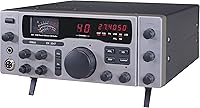
The Galaxy DX-2547 AM/SSB CB Base Station is a serious piece of kit built for operators who want more than a basic CB setup sitting on a desk. Galaxy has been a fixture in the CB world for decades, trusted by truckers and hobbyists alike, and this base radio sits firmly in the upper tier of what the brand offers. It runs on 120V AC right out of the box — no separate power supply juggling required — and its support for both AM and SSB modes immediately separates it from budget-tier competition. If you're stepping into base station territory for the first time, or finally making the jump from a mobile rig, this CB base station makes a compelling case for itself.

Features & Benefits

All 40 channels across the standard CB band are covered in both AM and SSB modes, and that SSB capability is worth understanding — it uses a more efficient signal that allows for significantly longer-range contacts than standard AM can achieve. The automatic no-calibrate SWR meter is a genuine convenience, eliminating the need for a separate antenna-matching tool. A built-in digital frequency counter takes the guesswork out of SSB fine-tuning, where small frequency shifts actually matter. Variable RF output and adjustable mic gain let you control your signal rather than just transmitting at full power all the time. Talkback, a modulation meter, and a switchable Roger Beep round out a feature set that is unusually complete for this class of radio.

Best For

This CB base station is best suited to home operators chasing SSB skip communication — bouncing signals off the ionosphere for contacts well beyond normal line-of-sight range. It's a natural upgrade for anyone coming from a basic 40-channel AM mobile rig who wants to stay in the CB band without pursuing a full amateur radio license. Rural users who depend on CB for community links, and preparedness-minded buyers who want a reliable, infrastructure-independent communication option, will appreciate the straightforward 120V AC setup. One thing new buyers sometimes overlook: this is a base station, which means a proper outdoor antenna is essential and should be budgeted for separately.

User Feedback

Holding a 4.1-star average across 281 ratings, the Galaxy DX-2547 earns solid marks overall, though the picture isn't entirely uniform. Buyers frequently highlight receive audio clarity and the SSB range performance as genuine strengths, and many appreciate how the automatic SWR meter makes initial setup far less daunting than older rigs. Less positive feedback tends to cluster around build quality consistency — some units apparently arrive with minor functional quirks that suggest production tolerances aren't always tight. A handful of reviewers have also described mixed experiences with Galaxy's after-sale support. These aren't widespread dealbreakers, but they're worth factoring in, especially at this price point where buyers reasonably expect a polished out-of-box experience.

Pros

  • SSB mode enables significantly longer-range contacts than standard AM CB operation allows.
  • The automatic no-calibrate SWR meter makes antenna matching accessible even for less experienced operators.
  • Built-in digital frequency counter simplifies SSB fine-tuning without needing external equipment.
  • Variable RF output lets you match your transmission power to real operating conditions.
  • Talkback function makes monitoring your own audio quality quick and practical.
  • Runs on standard 120V AC household power — no external power supply or converter needed.
  • Adjustable mic gain provides meaningful control over how your signal sounds on the other end.
  • At 4.1 stars across 281 reviews, user satisfaction is consistently solid for this class of radio.
  • The feature set rivals units that cost considerably more, making it competitive in its market tier.
  • Switchable Roger Beep and modulation meter add useful tools for enthusiast operators.

Cons

  • Build quality consistency has been flagged by multiple buyers, with some units arriving with minor functional issues.
  • Galaxy's after-sale customer support has received mixed reviews, which matters if something goes wrong post-purchase.
  • A quality outdoor antenna is a mandatory additional expense that new buyers sometimes don't anticipate.
  • The red color scheme is not to everyone's taste and may feel dated in a modern shack.
  • SSB operation involves a learning curve that can frustrate buyers expecting a simple plug-and-use experience.
  • Only a user manual is included in the box — no microphone or antenna is bundled at this price point.
  • At 10.7 pounds and over 11 inches wide, this CB base station requires a dedicated, sturdy workspace.
  • The AC-only power supply means zero portability — this radio cannot be used in a vehicle or off-grid without additional equipment.
  • QC tolerances appear inconsistent enough that buying from a seller with a clear return policy is advisable.

Ratings

Our editorial team analyzed verified buyer reviews for the Galaxy DX-2547 AM/SSB CB Base Station from multiple global sources, actively filtering out incentivized, bot-generated, and spam submissions to reflect genuine user experience. The scores below are AI-synthesized from real-world feedback and transparently capture both the strengths that make this CB base station a popular choice among enthusiasts and the friction points that prevent it from being a perfect buy. Whether this base radio earns its place on your desk or falls short of expectations at this price tier, the data tells the full story.

SSB Performance
86%
Users consistently report that SSB reception and transmission quality is the standout strength of this base radio, with long-distance skip contacts achievable under good ionospheric conditions. Hobbyists specifically upgrading from AM-only units describe the improvement in effective range as immediately noticeable and rewarding.
A small segment of users note that SSB clarifier tuning requires patience and a learning curve, particularly for operators new to sideband operation. Without a quality outdoor antenna, the SSB performance advantage can be difficult to fully realize.
AM Audio Clarity
82%
18%
Receive audio on AM is frequently praised for being clean and well-defined, with the built-in speaker producing enough volume and intelligibility for a home shack environment. Operators monitoring local channels describe fatigue-free listening even during extended sessions.
A few users find the transmitted AM audio slightly prone to distortion at higher mic gain settings, requiring some experimentation to dial in a clean sound. The stock microphone connection also means audio quality is highly dependent on the quality of the third-party mic the buyer chooses.
Build Quality
61%
39%
The chassis has a solid, substantial feel consistent with its weight class, and the front panel controls are laid out logically for experienced operators who value a traditional CB radio aesthetic. Many long-term users report years of reliable operation without hardware failure.
Quality control inconsistency is the most commonly cited criticism across verified reviews, with some buyers reporting minor functional defects or cosmetic issues on arrival. This variability at a mid-to-premium price point is a genuine concern, and it suggests manufacturing tolerances are not as tight as they should be.
Ease of Setup
73%
27%
The automatic no-calibrate SWR meter genuinely lowers the barrier to entry for antenna setup, removing a step that traditionally required a separate instrument and some experience. Most buyers with even basic CB knowledge report being operational within a reasonable amount of time.
New users who have never run a base station antenna installation often underestimate the complexity involved, and the included user manual is considered adequate but not particularly thorough. Routing coaxial cable and mounting an outdoor antenna remains a significant undertaking for first-timers.
Value for Money
69%
31%
For operators who actively use SSB mode, the feature set relative to the asking price compares favorably against competing base station units with fewer built-in tools. The combination of the SWR meter, frequency counter, and talkback in one unit would otherwise require additional purchases.
Buyers who primarily operate on AM and rarely use SSB features may find it difficult to justify the price premium over simpler, less expensive alternatives. The QC inconsistency issues reported by some buyers further complicate the value calculation at this tier.
Frequency Counter Accuracy
84%
The integrated digital frequency counter is consistently described as accurate and genuinely useful for SSB operation, where even small frequency offsets matter for intelligibility. Experienced operators appreciate having this readout built in rather than relying on a separate device.
The display readability under certain lighting conditions has been noted as a minor inconvenience by a handful of users, though this is not a widespread complaint. It does not represent a functional limitation, more of an ergonomic nuance.
Talkback Function
78%
22%
Variable talkback is a feature that operators who care about their transmitted audio quality genuinely appreciate, allowing real-time self-monitoring without needing a second receiver. Users who run nets or communicate regularly with the same group find it particularly practical for maintaining consistent audio standards.
At certain talkback volume levels, some users report a slight feedback loop tendency depending on microphone placement and room acoustics. This is manageable with adjustment but requires some initial experimentation to find the right balance.
SWR Meter Usefulness
81%
19%
The no-calibrate automatic SWR meter works reliably for the purpose of verifying antenna match and catching obvious issues during initial installation. Users upgrading from radios without a built-in SWR meter describe this feature as a meaningful quality-of-life improvement.
Veteran antenna experimenters sometimes find the built-in meter less precise than a dedicated external unit, particularly when making fine adjustments to antenna length or feedline. For advanced tuning work, a separate meter remains preferable.
Control Layout
77%
23%
The front panel layout is generally well-regarded among experienced CB operators, with controls positioned intuitively for someone familiar with base station radios. The variety of adjustable parameters — RF power, mic gain, talkback — gives the operator genuine flexibility during operation.
For complete beginners, the density of controls can be initially overwhelming without a more detailed reference guide than the one included. Labels on certain controls are on the smaller side, which can be a minor inconvenience in low-light operating environments.
Roger Beep
71%
29%
The switchable Roger Beep is a useful courtesy feature for operators who prefer the traditional end-of-transmission tone, and the ability to disable it entirely is equally appreciated by those who consider it unnecessary. It works reliably and does not interfere with normal operation.
The Roger Beep tone itself has been described by some users as sounding slightly cheap or electronically harsh compared to more premium implementations on other radios. It is a minor point, but noticeable to operators with experience across multiple brands.
Modulation Meter
74%
26%
Having an onboard modulation meter gives operators a real-time reference for ensuring they are transmitting with appropriate modulation depth, which directly affects how clear their signal sounds to others. Regular net participants appreciate the ability to monitor this without external equipment.
The modulation meter response has been described as somewhat sluggish by a few technically-oriented users, meaning it may not capture brief peaks accurately. For casual operators this is inconsequential, but for those who want precise modulation management it is a limitation worth knowing.
Receiver Sensitivity
79%
21%
Receive sensitivity on both AM and SSB is considered competitive for a base station in this class, with weak signals being pulled in well when paired with a proper outdoor antenna. Users in rural areas with good antenna installations report picking up distant stations reliably.
In urban environments with high RF noise floors, some users find that weaker signals are buried under interference more than they expected. This is partly an inherent challenge of the CB band and not exclusively a radio-specific limitation, but it is a real-world constraint for city-based operators.
After-Sale Support
52%
48%
Some users have reported positive warranty resolution experiences when issues were escalated properly to Galaxy's support channels. For straightforward cases, replacement or repair has been handled without significant friction for a portion of affected buyers.
A notable minority of reviewers describe Galaxy's customer support as difficult to reach or slow to respond, which is a recurring theme in critical reviews. For a radio at this price point, inconsistent post-purchase support is a legitimate concern that prospective buyers should factor into their decision.
Antenna Compatibility
80%
20%
The radio accepts standard PL-259 coaxial connections and is compatible with the full range of commonly available base station CB antennas, giving buyers wide flexibility in their antenna selection. There are no reported compatibility issues with standard 50-ohm feedline configurations.
Because no antenna is included, new buyers must research and purchase a suitable antenna before the radio is useful — an additional cost and step that some find unexpectedly significant. The radio cannot compensate for a poor antenna choice, so this external dependency remains the single biggest variable in overall system performance.

Suitable for:

The Galaxy DX-2547 AM/SSB CB Base Station was built for a specific kind of buyer, and when the fit is right, it delivers real value. Home-based CB enthusiasts who want to explore SSB skip communication — making long-distance contacts by bouncing signals off the ionosphere — will find this base radio has everything they need without requiring an amateur radio license. It's also a natural next step for anyone who has outgrown a basic mobile or handheld CB and wants a dedicated, AC-powered home setup with proper controls. Rural residents and preparedness-minded users who rely on CB as a primary or backup communication tool will appreciate the reliability of a fixed base station over a repurposed mobile rig. If you already understand antenna basics and plan to run a proper outdoor antenna, this CB base station will reward that investment with noticeably better performance.

Not suitable for:

The Galaxy DX-2547 AM/SSB CB Base Station is not the right choice for every buyer, and it's worth being clear-eyed about that. Casual users who just want to listen to local truckers or use CB occasionally for road trips should look at simpler, less expensive mobile units — the feature set here is overkill, and the AC-only power supply means it isn't portable. Buyers on a tight budget may also find the value proposition harder to justify if they are not actively using SSB mode, since AM-only operators can accomplish similar goals with far cheaper hardware. New CB users who aren't prepared to purchase and install a quality external antenna may be disappointed; this base radio cannot overcome a poor antenna setup regardless of how many features it carries. Finally, anyone hoping for a plug-and-talk experience with zero learning curve may find the array of controls and the SSB tuning process more involved than expected.

Specifications

  • Manufacturer: This CB base station is manufactured by Galaxy, a brand with a long-standing presence in the consumer CB radio market.
  • Model Number: The unit carries the model designation DX-2547.
  • Operating Modes: Supports both AM (Amplitude Modulation) and SSB (Single Sideband) operation across all 40 standard CB channels.
  • Frequency Range: Covers the standard CB band from 26.965 MHz to 27.405 MHz.
  • Channels: Provides access to all 40 legally designated CB channels in both AM and SSB modes.
  • Power Supply: Operates on standard 120V AC household current, making it suitable for fixed home base station use only.
  • RF Output: RF output power is variable, allowing the operator to adjust transmission strength to suit conditions.
  • SWR Meter: Features a built-in automatic SWR meter that requires no manual calibration, simplifying antenna setup.
  • Frequency Counter: Includes an integrated digital frequency counter display for precise channel and offset readout.
  • Talkback: Variable talkback function routes transmitted audio back through the speaker so the operator can monitor their own signal.
  • Mic Gain: Microphone gain is adjustable, giving the operator control over transmitted audio levels.
  • Roger Beep: A Roger Beep tone is included and can be switched on or off according to the operator's preference.
  • Modulation Meter: An onboard modulation meter allows real-time monitoring of transmit modulation depth.
  • Dimensions: The unit measures 11.5 x 11.15 x 4.25 inches, requiring a dedicated, flat workspace for installation.
  • Weight: The radio weighs 10.7 pounds, reflecting a robust internal build typical of full-featured base station units.
  • Color: Available in red, which is the standard color option for this model.
  • Water Resistance: This radio carries no water resistance rating and must be used in a dry, indoor environment.
  • In the Box: The package includes the radio unit and a user manual; no microphone or antenna is included.

Related Reviews
UAYESOK UA-CB6200 20ft CB Base Station Antenna
74%
83%
Signal Performance
78%
SWR & Tuning
74%
Build Quality
86%
Ease of Installation
81%
Weather Resilience
More
Galaxy DX-959B Mobile CB Radio
86%
91%
Signal Quality & Range
88%
Ease of Setup
85%
Build Quality & Durability
94%
Display Visibility
84%
Sound Clarity
More
Solarcon IMAX-2000 Vertical Base Station Antenna
77%
88%
Signal Performance
83%
Build Quality
79%
Ease of Assembly
63%
SWR Tuning
86%
Durability & Longevity
More
Yealink W70B Phone Base Station
84%
91%
Call Quality
70%
Ease of Setup
88%
Voice Clarity
87%
Reliability
92%
Security Features
More
President McKinley TXUS600 AM/SSB CB Radio
86%
88%
Communication Range
85%
Voice Quality & Clarity
82%
Noise Reduction Performance
90%
Ease of Use
87%
Build Quality
More
Uniden Bearcat 980 SSB CB Radio
78%
91%
SSB Range Performance
84%
Display Quality
67%
Ease of Use
78%
Build Quality
61%
Microphone Quality
More
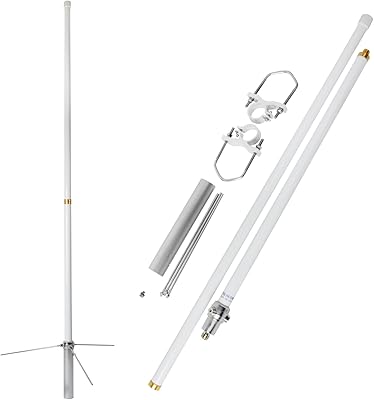
HYS 144/430MHz Dual-Band Base Station Antenna
77%
83%
RF Performance
78%
Build Quality
88%
Ease of Setup
81%
Weatherproofing
62%
Mounting Hardware
More
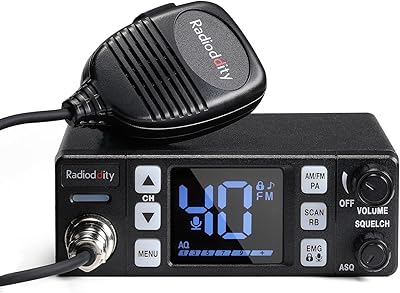
Radioddity CB-606 CB Radio
76%
88%
Ease of Installation
86%
Display Readability
67%
Audio Clarity & Speaker Output
63%
Microphone Quality
81%
Squelch Performance
More
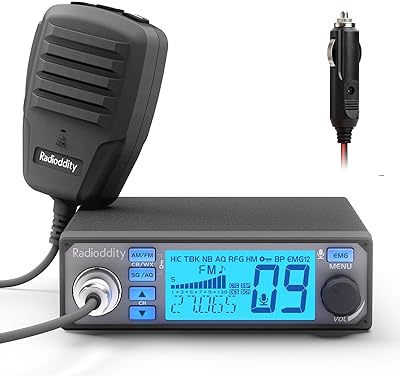
Radioddity CB-900 PRO AM/FM CB Radio
78%
83%
Audio Clarity & Receive Quality
74%
Transmit Quality & Microphone Performance
78%
Noise Reduction Effectiveness
69%
AM/FM Dual-Mode Operation
86%
NOAA Weather Alert Reception
More
Radioddity CB-500 CB Radio Mobile Transceiver
79%
88%
Audio Clarity
86%
Noise Reduction Performance
67%
Transmission Range
83%
Ease of Installation
63%
Menu Navigation & Usability
More

FAQ

No, neither a microphone nor an antenna is included in the box — you only get the radio and a user manual. You will need to purchase a compatible CB microphone and a suitable base station antenna separately before you can transmit.

In the United States, no license is required to operate a CB radio, including on SSB mode. CB is a licensed-by-rule service, meaning legal operation is permitted as long as you follow FCC Part 95 rules regarding power limits and frequency use.

You will need a dedicated base station CB antenna — a mobile whip is not an appropriate substitute. Popular choices include fiberglass vertical antennas mounted on the roof or a mast, with coaxial feedline running to the radio. Antenna quality has a larger impact on performance than almost any other factor, so it is worth investing in a good one.

SSB, or Single Sideband, is a more efficient transmission mode than standard AM that concentrates signal energy into a narrower bandwidth. In practical terms, it allows for longer-range contacts — particularly during ionospheric skip conditions — compared to AM at the same power level. It is the primary reason enthusiasts choose a radio like this over a basic AM-only unit.

No. This radio runs on 120V AC household power only and is strictly a home base station unit. If you need a mobile CB setup, you will want a separate 12V mobile radio designed for vehicle use.

The built-in automatic SWR meter is genuinely useful for basic antenna tuning and will give you a reliable indication of whether your antenna is well-matched. Most users find it sufficient for everyday setup, though serious antenna experimenters sometimes prefer a dedicated external SWR meter for more granular readings.

The Galaxy DX-2547 AM/SSB CB Base Station is relatively approachable compared to older base rigs, largely because the automatic SWR meter removes one of the trickier steps. That said, running coaxial cable from an outdoor antenna and positioning it properly will take some time and planning. Reading the user manual before starting is genuinely recommended here.

The Roger Beep is fully switchable — you can turn it off if you find it annoying or if the people you are communicating with prefer cleaner transmissions. Many experienced operators leave it off; it is there for those who want it.

A portion of user reviews do mention occasional quality control inconsistencies, with some units arriving with minor functional quirks. It is not a widespread pattern, but it is real enough to be worth purchasing from a seller with a straightforward return or exchange policy, just in case.

A dedicated base station like this one offers several practical advantages over a repurposed mobile rig: a proper 120V AC power supply, a larger chassis with better heat management, and a more complete set of operator controls including the built-in frequency counter and automatic SWR meter. Mobile radios used at home require an external 12V power supply and typically lack several of the features found here.

Where to Buy