Overview

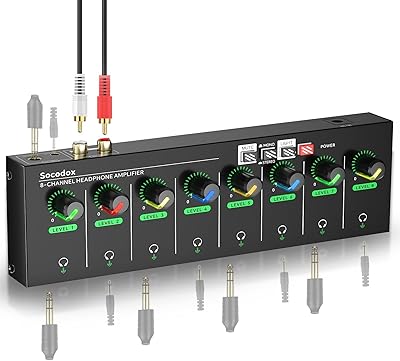
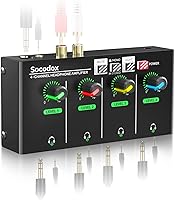
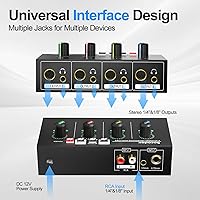
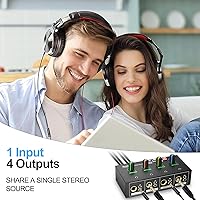
The Socodox 4-Channel Headphone Amplifier is the kind of box you do not notice until you need it, and then you wonder how you managed without one. Built into a compact metal shell, it exists to let one audio source feed a whole room of headphones instead of just a single set. With four input channels and eight headphone outputs, it handles everything from a band squeezing into a small practice space to a couple of editors checking the same mix at once. Connections cover 1/4-inch, 1/8-inch, and RCA jacks, so most cables already sitting in a drawer will work without hunting for adapters. It runs off a 12V wall adapter rather than batteries, which keeps things steady during longer sessions.

Features & Benefits

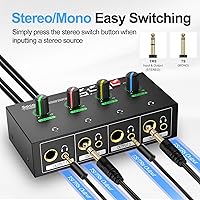
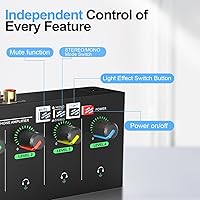
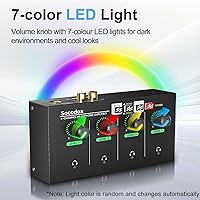
Inside, this headphone amp pairs 5532 and 4580 op-amps, a combination meant to add a bit more clarity than a cheap passive splitter would manage, though nobody should expect studio-monitor magic from a unit this size. What stands out more in daily use is that every jack gets its own volume dial, so one listener can crank things up while another keeps it low, with no fighting over a shared control. The knobs light up in seven colors, a nice touch in a dim room and easy enough to switch off if that is not your style. A STEREO/MONO switch adds flexibility for different sources, and the metal housing with rubber feet keeps the mixer planted on a desk or stage rather than sliding around mid-session.

Best For

This amplifier earns its keep in spots where several people need headphones running off one source at the same time. Band and music practice rooms are the obvious fit, letting each musician dial in their own monitor level without arguing over a single shared knob. Home and small studio setups benefit too, especially when recording or mixing requires more than one set of ears listening closely. Podcasters and streamers working alongside a co-host or guest get an easy way to monitor audio independently, and the same logic applies to classroom or library listening stations, where a handful of users need separate volume control on one shared playback source without extra hardware cluttering the desk.

User Feedback

Most buyers gravitate toward the multi-headphone setup as the real draw, since it solves a practical problem that splitters and adapters never quite handle well. The RGB lighting gets mentioned fairly often too, usually as a pleasant extra rather than a deciding factor, and people seem happy it can be switched off. On the downside, a few owners bring up the manufacturer's own warning about cable quality and power placement, noting that cheaper RCA cables or a crowded power strip can introduce some interference. None of that seems to be a dealbreaker, though, since the overall rating lands in solid territory, suggesting most people get dependable performance for what they paid.

Pros

  • Lets up to eight people listen to one source with their own independent volume control
  • Handles 1/4-inch, 1/8-inch, and RCA connections, so most existing cables work right away
  • Dual op-amp design adds noticeably more clarity than a cheap passive headphone splitter
  • Metal housing and rubber feet keep the amplifier steady during active band or studio use
  • STEREO/MONO switch gives real flexibility for different recording and mixing scenarios
  • RGB lighting on the knobs makes levels easy to read in dim rooms, with an off switch
  • Small footprint fits easily into a practice room, booth, or crowded studio rack
  • Solid overall buyer ratings suggest dependable performance for the price point

Cons

  • Sound quality improvements are modest, not a substitute for a true high-end headphone DAC
  • Overkill for solo listeners who only ever plug in a single pair of headphones
  • Requires a 12V wall adapter, so it is tied to an outlet rather than being portable
  • RGB lighting may feel unnecessary to buyers who just want a plain, no-frills mixer
  • Performance can suffer with low-quality RCA cables or a crowded power strip nearby
  • No battery or USB-power option for quick setups away from a wall socket
  • Eight outputs may be more than smaller two- or three-person setups actually need
  • Lacks any onboard EQ or tone shaping beyond the basic stereo and mono switch

Ratings

Our scores for the Socodox 4-Channel Headphone Amplifier are generated by AI after analyzing verified buyer reviews from around the world, with spam, bot activity, and incentivized feedback filtered out before scoring. The goal is a transparent snapshot that reflects both what people genuinely love and where real frustrations show up. Use these scorecards alongside the full review to judge whether this headphone amp fits your specific setup.

Multi-Headphone Support
91%
Buyers running band practice or shared listening setups consistently praise being able to plug in up to eight headphones at once without anyone fighting over a single volume knob. It genuinely solves the group-listening problem better than passive splitters ever could.
A handful of solo users feel the eight-output design is simply more capacity than they will ever use, making it feel oversized for one-person setups. It is not a downside in function, just a mismatch for some buyers' actual needs.
Sound Clarity
74%
26%
The dual 5532 and 4580 op-amps give noticeably cleaner output than basic splitters, which matters during long practice sessions or casual recording work where fatigue from muddy audio adds up. Most users describe the improvement as easy to notice immediately.
It does not hold up against dedicated high-end headphone DACs, and a few buyers expecting audiophile-level detail were mildly disappointed. For serious mastering or critical listening, this amplifier is more of a practical tool than a precision instrument.
Build Quality
85%
The metal housing feels solid for its compact size, and the rubber feet keep it from sliding around during active band rehearsals or stage use. Several owners mention it survives regular handling in busy practice rooms without issue.
Its small footprint means there is not much heft to it, so a few buyers worry about long-term durability if it gets knocked around frequently. It is sturdy for desk and rack use, but not built like rugged road gear.
Independent Volume Control
93%
Each of the eight headphone jacks getting its own dedicated dial is the single most appreciated feature across reviews, letting every listener set a comfortable level without disturbing anyone else nearby. This shows up constantly in feedback from classrooms and studios alike.
A few users note the knobs are small enough that quick adjustments in a dark room take a second longer than expected, even with the RGB backlighting helping visibility. It is a minor friction point rather than a real flaw.
Connectivity Options
88%
Having 1/4-inch, 1/8-inch, and RCA jacks all on one unit means most existing cables and gear plug in directly, which buyers repeatedly call out as a time-saver compared to hunting for adapters. It works comfortably across instruments, mixers, and everyday headphones.
Some buyers connecting older or budget RCA cables report occasional interference, which the manufacturer also flags as something to watch. It is more of a setup consideration than a flaw in the unit itself.
RGB Lighting
78%
22%
The seven-color lighting on the knobs gets called out as a nice, unexpected touch, especially for visibility when adjusting levels in dim practice rooms or stage setups. Many buyers appreciate that it can be switched off entirely if it is not their style.
A small portion of reviewers find the lighting unnecessary or slightly distracting during focused recording sessions, even with the off switch available. It is a cosmetic extra that not everyone values equally.
Stereo/Mono Flexibility
81%
19%
The toggle switch between stereo and mono modes proves genuinely useful for buyers working with different source material or troubleshooting single-channel audio. It adds a layer of flexibility that basic splitters typically lack entirely.
Some newer users mention needing to check the manual to understand when switching modes actually matters for their specific setup. Once understood, though, it rarely causes ongoing confusion.
Portability & Footprint
86%
Its compact size makes this amplifier easy to tuck into a gig bag, studio rack, or small booth without taking up real estate, which podcasters and traveling musicians mention often. It fits where larger mixers simply would not.
Because it relies on a wall adapter rather than batteries, it is less convenient for fully mobile setups away from outlets. A few buyers wish for a battery-powered alternative for outdoor or remote use.
Power Reliability
71%
29%
The included 12V adapter with its 5.5-foot cable provides stable power for extended sessions, and most buyers report no issues running it for hours during rehearsals or recording. It avoids the inconsistency some battery-powered units suffer from.
Being tied to a wall outlet limits placement options in rooms without nearby power, and a few users mention the cable length feels short for larger setups. Interference from shared power strips is also an occasional complaint.
Ease of Setup
84%
Most buyers describe getting this headphone mixer running as straightforward, since the labeled inputs and outputs make it clear which cable goes where without needing to dig through the manual. First-time use in a practice room or studio tends to go smoothly.
A few first-time buyers needed a moment to understand the stereo/mono switch and its effect on audio, since the function is not always intuitive at a glance. Clearer on-device labeling would help here.
Value for Money
80%
20%
Given the number of outputs, independent volume controls, and connectivity options packed in, many buyers feel they got more functionality than expected for the price point. It is frequently described as a practical, no-nonsense purchase for shared listening needs.
Buyers who only need one or two headphone outputs sometimes feel they paid for capacity they will not fully use. The value holds up best for genuinely shared, multi-person setups rather than solo use.
Overall Reliability
82%
18%
The solid overall rating across reviews points to consistent performance for most buyers, with the multi-headphone setup working as advertised session after session. Long-term users in practice rooms and studios report few ongoing complaints.
A small number of reviews mention being extra mindful about cable quality and power placement to avoid interference, which adds a bit of setup care that some buyers were not expecting. It is manageable but not entirely plug-and-forget.

Suitable for:

The Socodox 4-Channel Headphone Amplifier makes the most sense for anyone who regularly needs several people listening to the same audio source without crowding around one speaker. Bands and music students practicing in shared rooms benefit directly, since each person can dial in their own monitor level instead of fighting over a single output. Small home studios and podcast setups are another natural fit, especially when a host needs to monitor independently from a guest or co-host. Teachers running listening stations, or libraries setting up shared media corners, get a simple way to give several users individual volume control off one source. It also suits anyone who already owns a mix of 1/4-inch, 1/8-inch, and RCA gear and wants something that plugs in without buying adapters.

Not suitable for:

The Socodox 4-Channel Headphone Amplifier is not the right pick for someone chasing true audiophile-grade sound, since the onboard op-amps are there to add clarity over a basic splitter, not to rival a dedicated high-end headphone DAC. Solo listeners who only ever use one set of headphones will be paying for outputs and features they will never touch. Anyone allergic to RGB lighting on gear should know it is there by default, even though it can be switched off easily. Buyers without access to a wall outlet near their setup may find the 12V adapter and its cable length limiting in tighter spaces. It is also a poor match for anyone unwilling to be a little careful about cable quality and power placement, since the manufacturer notes that cheap RCA cables or busy power strips can introduce interference.

Specifications

  • Input Channels: The unit provides 4 separate input channels for connecting multiple audio sources.
  • Headphone Outputs: There are 8 individual headphone output jacks, each with its own volume control.
  • Amplifier Chips: Audio is processed through dual 5532 and 4580 operational amplifiers.
  • Large Input Jack: A 1/4-inch (6.35mm) TRS jack is included for standard instrument and headphone cables.
  • Small Input Jack: A 1/8-inch (3.5mm) TRS jack is included for consumer headphones and portable devices.
  • RCA Connectivity: RCA inputs are available for connecting mixers, sound systems, and similar equipment.
  • Volume Control: Each headphone output has an independent volume knob for individual level adjustment.
  • Knob Lighting: The volume knobs feature 7-color RGB lighting that can be switched off.
  • Audio Mode Switch: A STEREO/MONO toggle switch lets users change the audio mode.
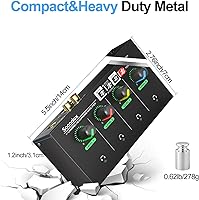
  • Housing Material: The exterior housing is constructed from metal for added durability.
  • Base Feet: Anti-slip rubber feet are fitted to the bottom of the unit for stability.
  • Power Source: The amplifier is powered by a 12V DC wall adapter rather than batteries or USB.
  • Power Cable Length: The included power adapter cable measures 5.5 feet (about 1.7 meters).
  • Unit Dimensions: The amplifier measures 5.5 x 2.76 x 1.2 inches.
  • Item Weight: The unit weighs approximately 9.9 ounces.
  • Included Items: The package includes the amplifier, a 12V DC charger, and a user manual.

Related Reviews
Zoom ZHA-4 Compact 4-Channel Headphone Amplifier
87%
91%
Sound Quality
95%
Portability
75%
Battery Life
88%
Ease of Use
83%
Build Quality
More
YGiTK KTYDAC152 4-Channel Headphone Amplifier
82%
91%
Value for Money
93%
Ease of Setup
94%
Per-Channel Volume Control
88%
Input Flexibility & Mixing
77%
Build Quality
More
LZSIG LHA1 4-Channel Headphone Amplifier
82%
88%
Audio Clarity
84%
Build Quality
91%
Value for Money
93%
Ease of Setup
87%
Channel Independence
More
Socodox 8-Channel Headphone Amplifier
73%
88%
Value for Money
67%
Audio Clarity
91%
Output Count & Flexibility
93%
Ease of Setup
72%
Build Quality
More
Samson QH4
Samson QH4
87%
88%
Audio Transparency
86%
Build Durability
92%
Value for Money
94%
Ease of Setup
83%
High Impedance Support
More
Rockville RHPA4 4-Channel Headphone Amplifier
80%
94%
Ease of Setup
88%
Value for Money
61%
Output Volume & Power
79%
Build Quality
91%
Channel Independence
More
PreSonus HP4
PreSonus HP4
81%
88%
Build Quality
91%
Output Power & Volume
84%
Channel Independence
82%
Signal Clarity & Noise Floor
93%
Ease of Setup
More
Neoteck NTK190us 4-Channel Headphone Amplifier
77%
88%
Build Quality
83%
Sound Clarity
86%
Value for Money
87%
Noise Floor
91%
Channel Independence
More
Fosi Audio PH04
Fosi Audio PH04
85%
93%
Value for Money
87%
Build Quality
89%
Audio Clarity & Noise Floor
96%
Ease of Use
91%
Independent Volume Controls
More
Pyle PHA40 4-Channel Headphone Amplifier
74%
86%
Value for Money
93%
Ease of Setup
57%
Output Volume & Headphone Drive
71%
Signal Clarity & Noise Floor
62%
Build Quality
More

FAQ

Yes, that is the whole point of the design. Each of the 8 outputs has its own dedicated volume knob, so one listener turning theirs up does not pull down the level for everyone else.

Probably not. Between the 1/4-inch, 1/8-inch, and RCA jacks, this headphone amp covers most common headphone and cable sizes you would already own.

It is a step up from a basic passive splitter thanks to the onboard op-amps, but it is built more for practical monitoring and group listening than for true audiophile mixing work. For casual recording and rehearsal monitoring, it does the job well.

No batteries required. It runs on a 12V wall adapter that comes included with a 5.5-foot cable, so you will need an outlet nearby rather than relying on USB or battery power.

Yes, there is an on/off button specifically for the lighting. You can keep the RGB effect for low-light visibility or just switch it off if you prefer a plainer look.

It lets you toggle the output mode depending on your source material. Mono mode can be useful when working with single-channel audio or troubleshooting, while stereo keeps the full left-right separation for music playback.

It is one of the more natural use cases for it. Each musician can plug in and set their own monitor level without needing a separate amp or fighting over one shared volume knob.

Yes, this is a common setup for it. Both people can monitor the same audio feed independently, each adjusting their own headphone volume without affecting the other's levels.

It can, especially with the RCA connections. Using mid-range RCA cables and avoiding the same power outlet as other audio gear helps minimize the interference some buyers have mentioned.

The metal housing and rubber feet help it stay put during active use, which makes it reasonably suited to recurring sessions on a desk or small stage rather than just occasional home use.