Overview

The Rockville RHPA4 4-Channel Headphone Amplifier is a compact, no-frills solution for anyone who needs to distribute audio to multiple listeners without spending a lot. Rockville has built a reputation for accessible audio gear, and this 4-channel amplifier fits squarely in that tradition — practical and built for real working environments. It supports up to eight headphones at once, which is genuinely useful in podcast studios, small recording rooms, or classroom settings. Power comes via a standard USB-A cable, so there's no wall wart hunting involved. The metal housing is modest but feels solid enough for regular use. It won't impress audiophiles, but that was never the point.

Features & Benefits

What makes the RHPA4 stand out at this price tier is how thoughtfully the outputs are arranged. Each of the four channels includes both a 1/4-inch and a 3.5mm jack, which means you can plug in a studio headphone and a consumer pair side by side without adapters. The stereo/mono toggle is a small but practical touch — useful for checking how a mix translates to mono during a session. Every channel has its own volume knob, so one person cranking their level won't bleed into anyone else's experience. The whole unit runs off USB power and weighs under a pound, making it easy to toss in a bag.

Best For

This headphone amp is a natural fit for home studio engineers who just need to get audio to a few people without routing through a complex interface. Podcast setups with two to four hosts benefit most, since each person can independently manage their monitor level. It also works well in educational environments — audio production teachers can send a single mix to a whole row of students. Live sound folks running small rehearsals will find the compact footprint handy when space is tight. Anyone chasing audiophile performance should look elsewhere, but for straightforward headphone distribution on a budget, it covers the bases without overcomplicating things.

User Feedback

Buyers generally appreciate how easy to set up this unit is — plug in a source, connect headphones, done. That simplicity earns a lot of goodwill. The recurring concern, though, is output ceiling: users with lower-sensitivity headphones sometimes find the maximum volume underwhelming. The build quality draws mostly positive comments given the price tier, with the metal shell feeling more substantial than expected. Some users find the stereo/mono switch genuinely useful during sessions, while others never touch it. A few noted the included USB cable feels thin. Overall sentiment leans positive for buyers who understand what this 4-channel amplifier is — a practical, no-drama headphone splitter — and critical mainly from those expecting pro-grade amplification.

Pros

  • Each channel has its own volume knob, so every listener controls their own level independently.
  • Dual outputs per channel — both 1/4-inch and 3.5mm — means no adapters needed for mixed headphone types.
  • USB-A power keeps the setup clean and cable-light, running directly off a laptop or wall adapter.
  • The metal housing feels more substantial than you might expect at this price point.
  • Plug-and-play operation means no drivers, no software, no learning curve.
  • The stereo/mono toggle is a genuinely handy feature for checking mix compatibility on the fly.
  • Supports up to 8 headphones simultaneously across 4 channels — solid capacity for small group sessions.
  • Compact footprint and light weight make it easy to pack into a bag for mobile or location work.
  • Rubber feet keep the unit from sliding around on a desk during active sessions.
  • At its price tier, this headphone amp delivers reliable functionality that justifies the investment for casual and semi-pro use.

Cons

  • Maximum output volume can fall short when driving lower-sensitivity or higher-impedance headphones.
  • The included USB cable feels thin and cheap — worth replacing if you plan to move the unit around frequently.
  • No talkback, cue mixing, or aux send features limit its usefulness in more complex studio workflows.
  • Any noise or hum in your signal chain passes through unfiltered, with no built-in noise control.
  • Only one audio input source can be distributed at a time — not useful for multi-source monitoring needs.
  • The stereo/mono switch, while useful for some, feels redundant or unused for buyers doing straightforward playback.
  • Four channels may not be enough for larger group sessions or ensemble rehearsals with five or more participants.
  • No rack-mount option or professional installation path makes it unsuitable for permanent studio builds.

Ratings

The scores below reflect an AI-driven analysis of verified buyer reviews for the Rockville RHPA4 4-Channel Headphone Amplifier, collected from global sources and actively filtered to remove spam, bot activity, and incentivized feedback. Every category is scored on real-world performance patterns — not manufacturer claims — so both the strengths and the friction points are represented honestly. Whether this 4-channel amplifier fits your workflow or falls short depends heavily on your use case, and these ratings are designed to help you figure that out quickly.

Ease of Setup
94%
Buyers consistently describe setup as taking under two minutes — plug in the USB power cable, connect your audio source, and you are ready. This is one of the most praised aspects across reviews, especially from podcast hosts and teachers who have no patience for complicated configurations.
A small number of users initially had trouble identifying the correct input when using a 3.5mm-to-RCA adapter not included in the box. The lack of any labeling on the input jack caused brief confusion for first-time buyers.
Value for Money
88%
For a unit that handles up to 8 headphones simultaneously with independent volume control per channel, most buyers feel the price-to-functionality ratio is hard to beat in this segment. Users frequently mention that comparable solutions cost significantly more and do less for their specific needs.
A few buyers felt the overall package was slightly let down by the thin USB cable included in the box, which felt like a corner-cutting choice at any price. If you factor in replacing that cable, the effective value dips slightly.
Output Volume & Power
61%
39%
For standard consumer headphones and semi-pro models with moderate sensitivity, most users report perfectly adequate listening levels in quiet studio or home environments. The RHPA4 handles everyday headphones reliably without distortion at mid-range volumes.
This is the most commonly cited frustration in user reviews. Buyers using higher-impedance or low-sensitivity studio headphones frequently find the maximum volume insufficient for comfortable monitoring. The output ceiling is a real limitation that has pushed several users toward more powerful alternatives.
Build Quality
79%
21%
The all-metal housing genuinely surprised buyers who expected plastic at this price tier. Rubber feet keep it anchored on a desk, and the unit feels solid enough to withstand regular packing and unpacking for mobile setups without worrying about it cracking or warping.
While the chassis itself earns praise, the volume knobs feel lightweight and slightly loose on some units, which raises questions about long-term wear. The included USB cable is consistently described as flimsy and is frequently the first thing buyers replace.
Channel Independence
91%
Each channel operating with its own dedicated volume knob is a practical win that users appreciate immediately in real sessions. Podcast guests adjusting their own levels without disturbing others, or a student turning up without affecting the rest of the class, is exactly what this design enables.
All headphones sharing a single channel are locked to the same volume level, which can be a mild inconvenience when two people on the same channel have very different hearing preferences. This is an inherent limitation of the two-outputs-per-channel design rather than a defect.
Output Jack Versatility
86%
Having both a 1/4-inch and a 3.5mm jack on every channel removes a real-world friction point. Studio headphones and consumer earbuds can coexist on the same unit without a drawer full of adapters, which users in mixed-equipment home studios particularly appreciate.
Some users wanted a third output type or a direct XLR option, which is obviously outside the scope of this unit. A couple of reviewers also noted occasional looseness on the 3.5mm jacks after extended use, though this appears to be a minority experience.
Stereo/Mono Switch Utility
67%
33%
Producers and engineers who regularly check mono compatibility in their mixes find the toggle genuinely useful and appreciated having it built in at this price point. It saves a step during mix-checking workflows without needing to route through software.
For the majority of buyers — podcasters, teachers, and general monitoring users — the switch goes untouched and feels redundant to their needs. A handful of users were confused about what it actually does, suggesting the labeling or documentation could be clearer.
Portability
83%
At under a pound and roughly the footprint of a thick paperback book, this headphone amp travels well. Users running mobile recording sessions, location-based interviews, or classroom rotations mention it fits easily into a laptop bag without adding noticeable bulk.
USB-only power means you are always dependent on either a laptop or a USB wall adapter being nearby. There is no battery option, which limits true off-grid portability in situations where a power source is not immediately accessible.
USB Power Reliability
77%
23%
Buyers generally report stable, uninterrupted power during standard sessions when connected to a laptop or a quality USB wall adapter. The USB power approach is consistently praised for keeping the setup clean and reducing cable clutter compared to units requiring a separate power brick.
A small number of users reported intermittent power drops when using the included cable with certain USB hubs or lower-quality chargers. The bundled cable itself received repeated criticism for its thin gauge, and most long-term users end up replacing it proactively.
Signal Clarity
71%
29%
At normal listening levels with standard headphones and a clean source signal, most users report clear, uncolored audio that is perfectly acceptable for monitoring and playback purposes. The signal path stays transparent enough for podcasting and classroom use without introducing obvious artifacts.
There is no noise filtering onboard, so any buzz, hum, or interference in your source signal passes straight through to the headphones. Users running the RHPA4 off a noisy USB port or with a grounding issue in their setup have reported picking up background hum.
Compatibility
89%
The 3.5mm input means virtually any device with a headphone jack can feed this unit — laptops, tablets, phones, audio interfaces, and mixers all work without special configuration. This broad compatibility is a recurring positive note across buyer reviews from very different use cases.
The single input limits the unit to one source at a time, which becomes a problem in environments where multiple playback sources need to be routed simultaneously. Users expecting any kind of source switching or mixing capability will find this 4-channel amplifier too basic.
Footprint & Desk Presence
85%
The compact dimensions mean it occupies minimal real estate on a crowded desk or recording table. Users working in tight home studio corners or classroom setups specifically mention appreciating that it does not compete for space with other gear.
The small size, while generally a positive, also means the unit can get shifted or knocked easily if the rubber feet are not sitting on a flat surface. A few users working on textured or fabric surfaces found the feet less effective at keeping the unit stable.
Label & Interface Clarity
66%
34%
For most buyers, the straightforward layout — four knobs, two jacks per channel, one toggle switch — requires no manual and no guesswork. The minimalist approach suits users who just want to plug in and get to work without decoding a complex front panel.
The lack of clear labeling on the input and output jacks has caused confusion for new users, particularly around which jack is input versus output. The stereo/mono switch also lacks explanatory text nearby, leading some buyers to misuse or ignore it entirely.

Suitable for:

The Rockville RHPA4 4-Channel Headphone Amplifier is a strong pick for anyone who needs to get audio into multiple sets of ears quickly and without a complicated setup. Podcast hosts recording with two to four guests will find it particularly useful, since each person gets their own channel with an independent volume knob — no one has to compromise on their monitor level. Home studio engineers working on a budget can use it to run headphone feeds for a vocalist and a few collaborators simultaneously, without tying up outputs on their audio interface. It also fits well in educational settings, like audio production classrooms, where an instructor needs to push a single mix to several students at once. Small rehearsal spaces and low-key broadcast setups are another natural home for this 4-channel amplifier, especially when portability and USB power are priorities.

Not suitable for:

The Rockville RHPA4 4-Channel Headphone Amplifier is not the right tool for buyers chasing audiophile-grade sound or professional studio fidelity. If you are working with low-sensitivity or high-impedance headphones that demand serious driving power, this unit will likely leave you wanting more volume — the output ceiling has been a recurring frustration for users in that situation. It is also not designed for complex monitor mixing, so anyone who needs individual cue mixes per musician, aux sends, or talkback features should invest in a dedicated headphone distribution system or a mixer with built-in monitor routing. There is no built-in noise control, which means any hum or interference in your signal chain will pass straight through. For touring professionals or anyone running a fully equipped recording studio, the limitations here will become apparent quickly.

Specifications

  • Channels: Features 4 independent channels, each capable of driving two headphones simultaneously for a total of 8 connections.
  • Output Jacks: Each channel provides one 1/4-inch and one 3.5mm output jack, accommodating both studio and consumer headphone types without adapters.
  • Input Connection: Accepts audio input via a standard 3.5mm audio jack, compatible with most laptops, desktops, tablets, and audio interfaces.
  • Power Source: Powered via USB-A at 5V DC using the included USB-A to DC cable, compatible with laptops or standard USB wall adapters.
  • Dimensions: The metal housing measures 4.6″ x 3″ x 2.36″, making it compact enough for desktop use or packing into a carry bag.
  • Weight: The unit weighs 13.6 ounces, keeping it light enough for portable or location-based setups.
  • Housing Material: Constructed from metal with rubber feet on the base to prevent sliding on flat surfaces during use.
  • Volume Control: Each of the 4 channels has its own dedicated volume knob, allowing independent level adjustment per listener.
  • Stereo/Mono Switch: A toggle switch on the unit allows the user to switch the output between stereo and mono modes across all channels.
  • Frequency Response: The unit operates with a frequency response reaching up to 20 kHz, covering the standard range of human hearing.
  • Noise Control: No built-in noise reduction or filtering is included; any interference present in the source signal will pass through to the output.
  • Connectivity Type: Wired only — there is no Bluetooth, Wi-Fi, or any other wireless connectivity on this device.
  • Compatible Devices: Works with music production equipment, laptops, desktops, gaming consoles, tablets, smartphones, smart speakers, and televisions.
  • Included Accessories: Comes with a USB-A to DC power cable in the box; no audio input cables or headphones are included.
  • Water Resistance: Not water resistant — the unit should be kept away from liquids and is not rated for outdoor or wet environments.
  • Release Date: This model was first made available for purchase in January 2020.
  • Model Number: The official model identifier is RHPA4, manufactured and sold under the Rockville brand.
  • Package Dimensions: The retail package measures 6.89″ x 5.35″ x 5.28″ and ships in standard packaging with a unit count of one.

Related Reviews
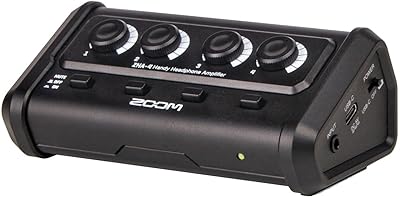
Zoom ZHA-4 Compact 4-Channel Headphone Amplifier
87%
91%
Sound Quality
95%
Portability
75%
Battery Life
88%
Ease of Use
83%
Build Quality
More
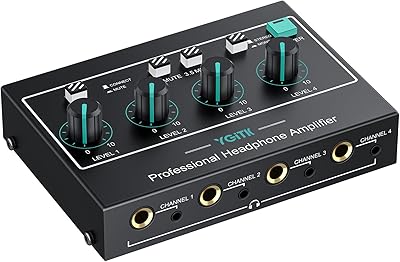
YGiTK KTYDAC152 4-Channel Headphone Amplifier
82%
91%
Value for Money
93%
Ease of Setup
94%
Per-Channel Volume Control
88%
Input Flexibility & Mixing
77%
Build Quality
More
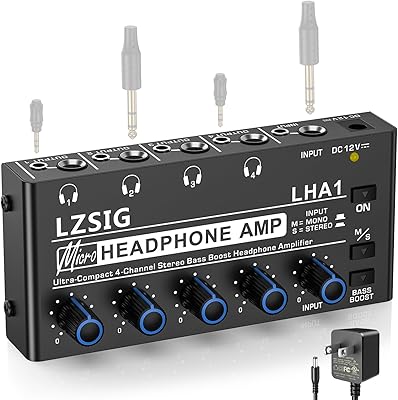
LZSIG LHA1 4-Channel Headphone Amplifier
82%
88%
Audio Clarity
84%
Build Quality
91%
Value for Money
93%
Ease of Setup
87%
Channel Independence
More
socodox 4-Channel Headphone Amplifier
85%
88%
Audio Quality
90%
Build Quality
91%
Volume Control Precision
85%
Portability
87%
Input Compatibility
More
Samson QH4
Samson QH4
87%
88%
Audio Transparency
86%
Build Durability
92%
Value for Money
94%
Ease of Setup
83%
High Impedance Support
More
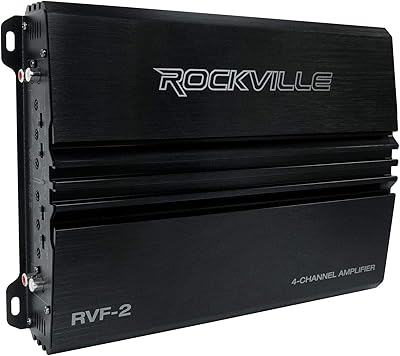
Rockville RVF-2 4-Channel Car Amplifier
84%
88%
Audio Quality
91%
Power Output
85%
Build Quality
72%
Thermals (Heat Management)
80%
Installation Ease
More
Fosi Audio PH04
Fosi Audio PH04
85%
93%
Value for Money
87%
Build Quality
89%
Audio Clarity & Noise Floor
96%
Ease of Use
91%
Independent Volume Controls
More
PreSonus HP4
PreSonus HP4
81%
88%
Build Quality
91%
Output Power & Volume
84%
Channel Independence
82%
Signal Clarity & Noise Floor
93%
Ease of Setup
More
Neoteck NTK190us 4-Channel Headphone Amplifier
77%
88%
Build Quality
83%
Sound Clarity
86%
Value for Money
87%
Noise Floor
91%
Channel Independence
More
Rockville DBM45 4-Channel Marine Amplifier
71%
78%
Sound Quality
74%
Build Quality
71%
Waterproofing
69%
Power Delivery
57%
Thermal Management
More

FAQ

Yes, technically. Each of the 4 channels has two output jacks — one 1/4-inch and one 3.5mm — so you can plug two headphones into a single channel simultaneously. That gets you to 8 total, though all headphones on the same channel share that channel's volume level.

It runs off USB power at 5V, and the cable is included in the box. You can plug it into a laptop USB port, a USB hub, or a standard wall adapter — whatever is most convenient for your setup. No dedicated power supply is needed.

It works with any source that outputs a standard 3.5mm audio signal, so yes, you can run it from a headphone output on an audio interface, a laptop, a phone, or a tablet. Just keep in mind it only has one input, so you can only distribute one source at a time.

This is probably the most common concern buyers have. The RHPA4 works well with standard consumer and semi-pro headphones, but if you are using higher-impedance or low-sensitivity studio cans, you may find the maximum volume underwhelming. It is not a high-powered headphone amp — it is a distributor designed for everyday monitoring headphones.

The switch toggles the output between stereo and mono. In practice, it is useful for producers who want to quickly check how a mix sounds when collapsed to mono — a common quality check in music production. For podcast or classroom use, most people leave it in stereo and never touch it.

Yes, that is one of the more practical things about this unit. Each channel has its own dedicated volume knob, so the person on channel 1 can run loud while the person on channel 3 keeps it quiet. There is no shared master volume that overrides individual settings.

For the price tier, most buyers are pleasantly surprised. The housing is metal rather than plastic, which gives it a sturdier feel than you might expect. The rubber feet are a nice touch for keeping it in place on a desk. The included USB cable is the weakest link — it feels a bit flimsy and is worth replacing if you move the unit around a lot.

No drivers, no software, no configuration needed. You plug in the power cable, connect your audio source, and plug in your headphones. It is entirely plug-and-play, which is a big part of why buyers appreciate it for quick setups.

In theory, you could connect a second unit to one of the output jacks of the first, but that is not an officially supported configuration and may degrade your signal quality. If you regularly need more than 4 channels, you would be better served by a purpose-built headphone distribution system with more inputs and outputs.

It is a solid fit for that scenario. A teacher can connect a laptop or tablet as the source, and up to 8 students can plug in and listen simultaneously, each adjusting their own volume. It is simple enough that setup takes under a minute, and the compact size means it does not take up much desk space.

Where to Buy