Overview

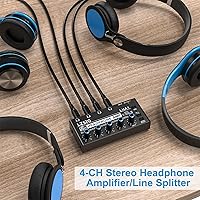
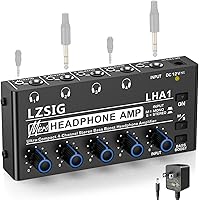
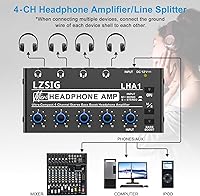
The LZSIG LHA1 4-Channel Headphone Amplifier is a compact, metal-bodied unit that punches well above its price bracket for anyone who needs to feed multiple pairs of headphones from a single source. Unlike a passive splitter — which just divides signal and inevitably kills volume — this headphone amp actively drives each output independently, so no one at the table is left cranking the volume dial on their cans. It fits easily on a crowded desk or studio shelf, taking up less space than a paperback. LZSIG is a small Chinese audio brand with a narrow product focus, and that specialization shows in the overall build quality and thoughtful feature set.
Features & Benefits

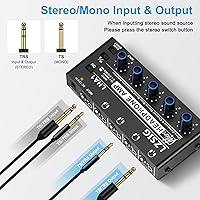
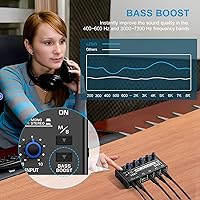
What sets this compact amplifier apart from cheaper options is the choice of components inside. Five ROHM op-amps — a reputable Japanese brand in the op-amp world — keep the noise floor impressively low, which you will notice immediately when running sensitive in-ear monitors. There is also a Bass Boost switch that nudges two specific frequency bands rather than applying a blunt shelf, making vocals and low-mids feel more present without turning everything muddy. A Stereo/Mono toggle is a thoughtful addition for broadcast and live work. Both 1/4-inch and 1/8-inch jacks are built right in, and the included DC 12V adapter carries proper UL, FCC, and CE safety certifications.

Best For

This headphone amp makes the most sense in situations where one audio source needs to reach several listeners simultaneously — and each of those listeners needs their own volume. Band rehearsal rooms are an obvious fit: the drummer wants it loud, the singer wants it quieter, and independent channel control means nobody has to compromise. Music teachers and podcast hosts will find the same logic applies. It also works well for home studio producers tracking with a collaborator in the room. One practical note: this is a desktop unit that requires a wall outlet, so it is not suited for mobile or battery-powered setups. Plan your cable run accordingly.

User Feedback

Across 600-plus verified ratings, the LZSIG 4-channel amp holds a 4.5-star average — and reading through the reviews, that score feels earned rather than inflated. The most consistent praise centers on clean, quiet output even at higher volumes, and buyers frequently mention that the all-metal chassis feels surprisingly solid for the price. On the downside, several users flag the power adapter's short cable and bulky brick as minor annoyances. The bass boost draws mixed reactions: some find it useful for monitoring; others call it too subtle to notice. A handful of buyers have also reported slight channel imbalance out of the box, worth keeping in mind if consistent output across all four channels is critical for your setup.

Pros

  • Each of the four outputs has its own volume knob — no more shared-level compromises in the room.
  • The all-metal chassis feels noticeably solid and holds up well on a busy studio desk.
  • ROHM op-amps keep the noise floor low enough to use with sensitive in-ear monitors without hiss.
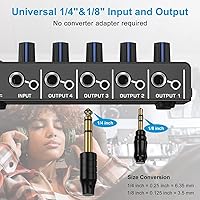
  • Both 1/4-inch and 1/8-inch jacks are built in, so adapter hunting before sessions is eliminated.
  • The included power adapter is properly safety-certified — UL, FCC, CE, and VI — which is not a given at this price.
  • A stereo/mono toggle is included, a genuinely useful feature for broadcast monitoring and live sound checks.
  • Setup takes under two minutes straight out of the box with no configuration or software required.
  • Active amplification means consistent output volume across all four channels, unlike passive splitters that divide and weaken the signal.
  • The compact footprint lets it sit beside a laptop or under a monitor without consuming meaningful desk space.
  • Over 600 verified buyers rate it at 4.5 stars — a credible signal of consistent, repeatable satisfaction.

Cons

  • The power adapter cable is short enough to force awkward cable routing in many desk and rack setups.
  • The adapter brick is bulkier than the amp itself, which can crowd a tight power strip.
  • A handful of units have shipped with a slight channel-level imbalance that requires testing before trusting in a professional session.
  • The bass boost effect is subtle to the point where many users cannot reliably detect it under normal listening conditions.
  • Knob quality does not fully match the chassis — pots can feel slightly loose and may develop crackle after extended use.
  • No LED or visual indicator confirms whether the stereo/mono switch is currently active, making accidental mode changes easy.
  • Only a single audio input is supported, so switching between two source devices requires an external switcher upstream.
  • After-sales support from a small overseas manufacturer can be limited if a warranty issue arises after purchase.

Ratings

The LZSIG LHA1 4-Channel Headphone Amplifier has been evaluated by our AI rating system after processing hundreds of verified global buyer reviews, with spam, bot-generated, and incentivized feedback actively filtered out. The scores below reflect a transparent, balanced picture of where this compact amp genuinely delivers and where real users have run into friction. Strengths and pain points are weighted equally so you can make an informed decision before buying.
Audio Clarity
88%
Most buyers using this amp for studio monitoring or rehearsal practice report a noticeably clean signal with very little background hiss, even when running sensitive in-ear monitors at moderate gain. The ROHM op-amps do their job quietly, which is the whole point of paying for active amplification over a passive splitter.
A small number of users pushing high-impedance headphones at full gain have noted a faint noise floor creeping in. It is not a dealbreaker for most use cases, but dedicated audiophiles with very revealing headphones may find the ceiling limiting.
Build Quality
84%
The all-metal enclosure is the first thing buyers mention when the unit arrives — it feels dense and purposeful, not hollow like a lot of similarly priced gear. Several reviewers compared it favorably to equipment costing considerably more, noting it sits firmly on a desk without sliding around.
The knobs, while functional, feel a touch plasticky relative to the solid chassis they are mounted on. A few long-term users reported a slight loosening of the pot feel after extended daily use, suggesting internal components may not fully match the external build standard.
Value for Money
91%
For a unit that includes a certified power adapter, dual jack compatibility, and four independent output channels, the asking price is hard to argue with. Buyers replacing cheap passive splitters consistently report feeling they got far more than they paid for once they heard the difference in output volume and channel separation.
The value equation depends entirely on your use case. If you only need one or two outputs, there are simpler solutions at lower cost. The savings shrink a little once you factor in the need for a nearby power outlet and possibly an extension cable to compensate for the short adapter lead.
Ease of Setup
93%
Plug in the power adapter, connect your source to the input, and plug in your headphones — there is genuinely nothing more to it. The front-panel controls are clearly laid out, and buyers with no technical background reported being up and running within a couple of minutes straight out of the box.
The stereo/mono switch and bass boost button have no labeling backlight, so in a dark rehearsal room or live stage environment they can be tricky to identify quickly. A printed quick-start guide would also help clarify the S/M toggle for users unfamiliar with mono summing.
Channel Independence
87%
Each of the four outputs has its own dedicated volume knob, which is the core reason most buyers choose this over a splitter. In a band practice context, a drummer and a vocalist can both sit at comfortable levels without compromising each other, which translates directly into fewer mid-session arguments.
A handful of buyers have flagged subtle channel-level imbalances out of the box, where one channel sits slightly louder than the others at the same knob position. It is not a widespread complaint, but for studio tracking where matched levels matter, it is worth testing all four channels before committing to a session.
Bass Boost Effectiveness
63%
37%
The bass boost targets a specific pair of frequency ranges rather than applying a broad shelf, which means vocals and low-mids get a subtle presence lift without the mix becoming muddy. For casual listening or helping students in a classroom hear detail more easily, it does add a little warmth.
Many users expecting a dramatic effect were underwhelmed — the boost is genuinely subtle and some buyers say they cannot reliably tell it is engaged unless they listen carefully. If you are buying this amp specifically for the bass boost feature, temper expectations significantly.
Noise Floor & Crosstalk
86%
Active amplification with proper audio isolation circuitry means the four channels stay cleanly separated — there is no bleed-through from one output to another, which matters when each listener has a different mix or when you are running a headphone cue system for tracking. Reviewers upgrading from passive splitters notice this immediately.
A small minority of units have arrived with a faint channel-specific hum that disappeared after a burn-in period, while a few others persisted. These appear to be isolated quality-control incidents rather than a systemic flaw, but it is worth running the unit for an hour before using it in a professional context.
Power Adapter Quality
71%
29%
The included DC 12V adapter carries UL, FCC, CE, and VI certifications, which is a genuine reassurance at this price point — a lot of budget audio gear ships with unlisted bricks that introduce noise or safety concerns. Buyers who have dealt with noisy switching supplies before specifically call this out as a positive.
The adapter cable is short enough to be a real inconvenience in many setups, and the brick itself is bulkier than expected for a unit this small. Multiple reviewers resorted to an extension cord or power strip repositioning just to get everything within reach, which is a minor but recurring friction point.
Jack Compatibility
89%
Having both 1/4-inch and 1/8-inch outputs built into every channel without needing adapters is a practical convenience that gets consistent praise. Musicians who regularly switch between studio headphones and consumer earbuds appreciate not having to hunt for a converter before every session.
The input side only accepts a single source, so if you want to switch between two audio sources you will need an external switcher or mixer upstream. This is expected for a headphone distribution amp, but buyers coming from mixer-style setups occasionally find it limiting.
Stereo/Mono Switch Utility
78%
22%
The ability to sum a stereo input to mono is a feature you rarely find at this price, and it earns genuine appreciation from podcasters, broadcast monitors, and live sound engineers who need to check mono compatibility without rewiring. It flips cleanly with no audible pop or dropout.
The switch itself has a very short throw with minimal tactile feedback, making it easy to bump accidentally during a session. There is no LED indicator to confirm the current state, so in the middle of a busy mix session you may not immediately realize you have been listening in mono.
Size & Portability
82%
18%
The footprint is genuinely small — it sits comfortably on a desktop pedal board shelf or beside a laptop without dominating the workspace. Several teachers and podcasters mention routing it under a desk or behind a monitor because it takes up so little room.
Portability ends the moment you factor in the power adapter dependency. This is a desktop unit that requires a wall socket, so anyone hoping to use it at an outdoor gig, on a tour bus, or at a coffee shop recording session will need to make alternative arrangements.
Headphone Compatibility
81%
19%
The amp is optimized for headphones in the 32 to 100 ohm range, which covers the vast majority of studio and consumer headphones used in home recording and rehearsal environments. Most buyers report their existing gear pairing without any issues straight away.
Users with high-impedance headphones above 150 ohms have reported underwhelming drive levels — the unit simply was not designed to push that load. Planar magnetic headphone owners in particular should look elsewhere, as the output stage does not have the current reserves those drivers typically require.
Long-Term Reliability
74%
26%
For buyers who have used this compact amplifier across six months to a year of regular rehearsal or studio work, the consensus is that it holds up without dramatic failures. The metal body protects internals from accidental bumps, and the electrical components appear to run cool during extended use.
There are enough scattered reports of pots developing crackle after a year or more of use to flag it as a moderate long-term concern. The warranty and after-sales support from a smaller Chinese electronics brand can also be limited, so factor that into the risk calculation for professional deployments.

Suitable for:

The LZSIG LHA1 4-Channel Headphone Amplifier is a strong fit for anyone who regularly needs multiple people listening to the same audio source — each at their own preferred volume. Band rehearsal rooms are a natural home for it: drummers, vocalists, and guitarists can all plug in and independently dial their own monitor level without a single compromise. Home studio producers tracking a collaborator will find it equally practical, since both engineer and artist can monitor simultaneously without sharing a headphone split that kills gain. Music teachers running classroom listening sessions get a clean, low-noise feed to every student without volume disputes. Podcasters and streamers who occasionally bring a co-host or guest into the room will appreciate how quickly it sets up — power adapter in, source plugged in, done. If you are currently using a passive splitter and noticing thin, low-volume output or bleed between channels, this compact amplifier is a direct and affordable upgrade.
Not suitable for:

The LZSIG LHA1 4-Channel Headphone Amplifier is not the right tool for everyone, and a few scenarios are worth calling out plainly before you buy. It requires a wall outlet — there is no battery option, no USB bus power, no way to run it untethered — so any mobile use case like on-location recording, outdoor gigs, or travel is off the table. Buyers with high-impedance headphones above 150 ohms may find the output drive underwhelming; the unit is optimized for standard 32 to 100 ohm headphones and was not engineered for planar magnetics or demanding audiophile cans. If you need more than four outputs, you will need a second unit or a different product category entirely, since there is no daisy-chain or expansion path. Serious audiophiles chasing ultra-transparent signal chains at higher price tiers will likely feel constrained by the output ceiling here. The bass boost, while a nice idea, is too subtle to rely on as a meaningful sound-shaping tool, so do not buy this amp expecting a built-in EQ workhorse.
Specifications

  • Model Number: The unit is identified by model number LHA1, manufactured by xisier Electronic Technology under the LZSIG brand.
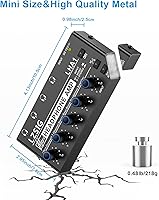
  • Dimensions: The enclosure measures 4.13 x 2.95 x 0.98 inches, making it small enough to sit beside a laptop or on a compact studio shelf.
  • Weight: The unit weighs 12 ounces, which is heavier than it looks due to the all-metal construction.
  • Body Material: The outer chassis is built from a continuous metal enclosure, contributing to both durability and passive shielding against electromagnetic interference.
  • Input Channels: The amp accepts a single stereo audio input via a 1/4″ (6.35 mm) or 1/8″ (3.5 mm) TRS jack on the rear panel.
  • Output Channels: Four independent headphone outputs are provided, each with its own dedicated volume knob and support for both 1/4″ and 1/8″ TRS/TS plugs.
  • Op-Amp Configuration: Five ROHM low-noise operational amplifiers are used in the signal path to minimize noise floor and distortion across all output channels.
  • Headphone Impedance: The amplifier is optimized for headphones rated between 32 and 100 ohms, with best results on standard 50 mm driver models in that range.
  • Bass Boost Bands: The bass boost switch simultaneously lifts two frequency ranges — 400 to 600 Hz for vocal presence and 3000 to 7200 Hz for upper harmonic clarity.
  • Stereo/Mono Switch: A front-panel toggle allows the user to sum the stereo input signal to mono, useful for broadcast compatibility checks and live monitoring applications.
  • Power Supply: The unit is powered exclusively via an included DC 12V external adapter and has no battery or USB bus-power option.
  • Adapter Certifications: The included power adapter carries UL, FCC, CE, and VI certifications, confirming compliance with North American and European electrical safety standards.
  • Power Management: An MPS power management chip is integrated into the circuit to regulate voltage stability and protect components during extended operation.
  • Audio Isolation: Proprietary audio isolation technology is built into the output stage to reduce crosstalk interference between channels when all four outputs are in simultaneous use.
  • Jack Compatibility: All input and output jacks accept both TS and TRS plug formats in 1/4″ and 1/8″ sizes, with no adapters required for either standard.

Related Reviews

Zoom ZHA-4 Compact 4-Channel Headphone Amplifier
87%
91%
Sound Quality
95%
Portability
75%
Battery Life
88%
Ease of Use
83%
Build Quality
More
socodox 4-Channel Headphone Amplifier
85%
88%
Audio Quality
90%
Build Quality
91%
Volume Control Precision
85%
Portability
87%
Input Compatibility
More
YGiTK KTYDAC152 4-Channel Headphone Amplifier
82%
91%
Value for Money
93%
Ease of Setup
94%
Per-Channel Volume Control
88%
Input Flexibility & Mixing
77%
Build Quality
More
Samson QH4
Samson QH4
87%
88%
Audio Transparency
86%
Build Durability
92%
Value for Money
94%
Ease of Setup
83%
High Impedance Support
More
Rockville RHPA4 4-Channel Headphone Amplifier
87%
88%
Audio Performance
85%
Build Quality
91%
Ease of Use
87%
Portability
89%
Volume Control Flexibility
More
PreSonus HP4
PreSonus HP4
81%
88%
Build Quality
91%
Output Power & Volume
84%
Channel Independence
82%
Signal Clarity & Noise Floor
93%
Ease of Setup
More
Neoteck NTK190us 4-Channel Stereo Headphone Amplifier
85%
88%
Sound Quality
85%
Build Quality
92%
Ease of Use
90%
Value for Money
89%
Noise Performance
More
Fosi Audio PH04
Fosi Audio PH04
85%
93%
Value for Money
87%
Build Quality
89%
Audio Clarity & Noise Floor
96%
Ease of Use
91%
Independent Volume Controls
More
Pyle PHA40 4-Channel Portable Stereo Headphone Amplifier
85%
87%
Performance
92%
Portability
72%
Build Quality
90%
Audio Quality
89%
Ease of Use
More
Crunch PX 1000.4 4-Channel 1000W Amplifier
85%
88%
Sound Quality
85%
Ease of Installation
81%
Build Quality
91%
Power Output
93%
Size & Portability
More

FAQ

Standard consumer headphones work fine as long as they fall in the 32 to 100 ohm impedance range, which covers the vast majority of everyday headphones. You can use either the 3.5 mm jack directly or a 6.35 mm plug with no adapter needed. If your headphones have a higher impedance — anything above 150 ohms — you may notice the output level is lower than expected.

Unfortunately, no. This compact amplifier runs exclusively off the included DC 12V wall adapter and has no battery option or USB power mode. If your rehearsal space or gig location does not have a convenient outlet nearby, you will need an extension cord or a portable power station to run it.

A passive splitter simply divides the signal between outputs, which means each headphone gets a fraction of the original volume — and the more headphones you add, the quieter and thinner everything sounds. This amp actively drives each output independently, so all four channels get full, clean signal simultaneously. It also eliminates the crosstalk bleed that passive splitters can introduce between channels.

Honest answer: it is subtle. The boost targets specific mid and upper-frequency bands rather than slamming the low end, so the effect is more of a gentle presence lift than a dramatic bass punch. Most users find it adds a slight warmth to vocals and low-mids, but if you are expecting something you can clearly hear switch on and off, you may be underwhelmed. It is a nice-to-have, not a headline feature.

No — the LZSIG LHA1 4-Channel Headphone Amplifier has a single input, so it only handles one source at a time. If you need to switch between, say, a computer and a mixing board, you would need an external audio switcher or a small mixer placed upstream of the amp's input.
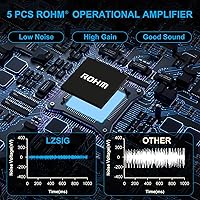
Yes, and it actually performs well with IEMs because the ROHM op-amps keep the noise floor low enough that sensitive in-ears do not pick up unwanted hiss at normal listening volumes. Just make sure your IEMs are in the compatible impedance range. The stereo/mono switch is also a practical bonus if you need to check mono fold for front-of-house alignment.

Exactly, and this is one of the most practical use cases for this headphone amp. Each of the four outputs has its own knob, so every student can set a comfortable listening level without affecting anyone else. It is a clean, simple setup that takes seconds to configure and requires no technical knowledge from students.

The built-in audio isolation circuitry does a good job of keeping channels separated during simultaneous use, and most buyers report a quiet, interference-free experience. A small number of users have mentioned picking up a faint hum on specific channels, though this appears to be isolated to individual units rather than a widespread issue. Running the amp for 30 to 60 minutes before critical use can help identify any such problems early.

This is one of the more consistent complaints from buyers — the adapter cable is on the shorter side, and the brick itself is bulkier than you might expect for a unit this small. If your power strip or wall outlet is not within easy reach of where you want to place the amp, plan for an extension cable. It is a minor inconvenience but worth knowing about before your gear arrives.

A small number of buyers have reported slight channel-level imbalances out of the box, likely due to minor variations in pot calibration during manufacturing. First, check that all knobs are genuinely at the same position — the short throws can be deceiving. If the imbalance is consistent and significant, it is worth contacting the seller for a replacement, as units that pass quality control should behave consistently across all four channels.