Overview

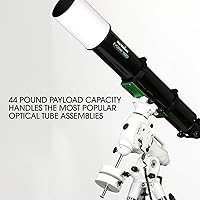
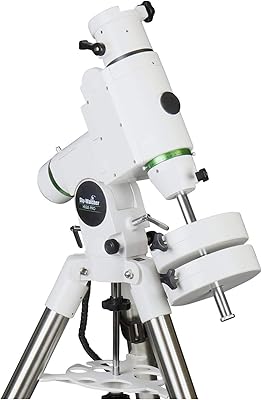
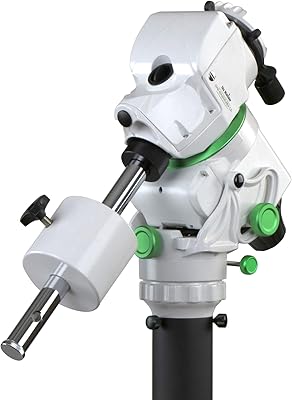
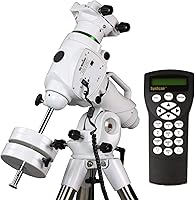
The Sky-Watcher EQ6-R German Equatorial Mount sits firmly in the upper tier of amateur astronomy mounts, built for those who have outgrown entry-level setups and want something that can genuinely handle serious astrophotography work. It competes directly with mounts like the iOptron CEM40 and the older HEQ5 Pro, but distinguishes itself with a belt-driven motor system that replaces the noisier, less precise worm-gear mechanisms found in older designs. The all-metal construction and 44-pound payload capacity signal that this is a workhorse built to last. One important note upfront: this is a mount only — no optical tube, no tripod included.
Features & Benefits

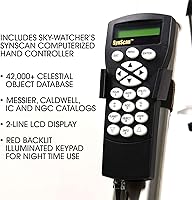
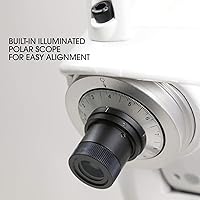
What sets the EQ6-R apart in daily use is how quietly and accurately it tracks. The belt-driven stepper motors dramatically reduce periodic error — that subtle, repetitive drift that ruins long-exposure astrophotography — and they do it without the grinding hum of traditional gear systems. The SynScan hand controller puts over 42,000 celestial objects at your fingertips, so you spend less time hunting and more time imaging. The built-in polar finderscope, illuminated for dark-field use, takes a lot of the frustration out of polar alignment. Running off a standard 12V supply also means a compact lithium battery pack can power a full night in the field.

Best For

This GoTo equatorial mount is really aimed at photographers and observers who have already moved past the beginner stage. If you are running a heavy refractor, a long imaging Newtonian, or a DSLR-plus-guide-scope rig, the 44-lb payload headroom gives you space to work without stressing the drive. It is also a logical next step for anyone upgrading from a Sky-Watcher HEQ5 who finds that mount straining under heavier loads. Visual astronomers benefit too — the deep catalog and automated slewing make marathon observing sessions far more efficient. It works best for those who image from dark-sky sites and need a mount that packs into a car without requiring a forklift.

User Feedback

With a 3.9-star average across nearly 100 ratings, the EQ6-R lands in interesting territory — respected but not universally loved. Most praise focuses on quiet motor performance and how straightforward polar alignment is right out of the box. Where it draws criticism is the SynScan hand controller, which has a dated interface and a learning curve that genuinely frustrates new users. A handful of buyers have also raised concerns about firmware reliability and the responsiveness of customer support when issues arise. Experienced imagers who cross-shopped against the iOptron CEM40 generally rate this Sky-Watcher mount as slightly more portable, though they note the CEM40 has an edge on balance and design.

Pros

  • Belt-driven motors deliver near-silent operation and measurably lower periodic error than older worm-gear mounts.
  • The 44-lb payload capacity comfortably handles large refractors, imaging Newtonians, and full camera rigs simultaneously.
  • Built-in illuminated polar finderscope makes alignment faster and less frustrating than relying on external tools.
  • The GoTo database covers over 42,000 objects, keeping experienced observers busy across hundreds of sessions.
  • All-metal construction gives the EQ6-R a rigidity and longevity that plastic-chassis competitors simply cannot match.
  • 12V DC compatibility means a portable lithium battery pack can power a full night of imaging away from the grid.
  • The integrated carry handle is genuinely practical for solo transport between car and observing field.
  • Once dialed in, tracking accuracy supports long-exposure astrophotography without constant guiding corrections.
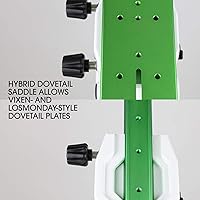
  • The dual-saddle design accepts a wide range of optical tube mounting styles without adapter workarounds.

Cons

  • The SynScan hand controller interface feels dated and has a non-intuitive menu structure that frustrates new users in the dark.
  • Firmware updates have an inconsistent track record, with some users reporting new bugs introduced after applying official releases.
  • At 44 lbs, the mount head alone is a significant physical burden for solo observers with limited carrying strength.
  • Manufacturer customer support response times have been widely criticized as slow and often unhelpfully generic.
  • Unit-to-unit quality control variation means some buyers receive a mount with noticeably higher periodic error than others.
  • Belt wear and minor mechanical drift have been reported by multi-year owners, and servicing costs are not trivial.
  • The included documentation is insufficient for users new to German equatorial mounts, forcing reliance on third-party resources.
  • Competitors like the iOptron CEM40 now offer comparable payload and tracking specs with more modern user interfaces at similar price points.

Ratings

The Sky-Watcher EQ6-R German Equatorial Mount earns a nuanced scorecard here — one built by our AI engine after parsing verified purchaser reviews from global marketplaces, with spam, incentivized posts, and bot activity filtered out before a single score was calculated. What emerges is a picture of a mount that genuinely impresses in core performance areas while carrying a few real frustrations that serious buyers deserve to know about upfront. Both the strengths and the friction points are reflected transparently below.

Tracking Accuracy
88%
Users consistently report clean, tight tracking over multi-minute exposures — a critical requirement for deep-sky astrophotography. The belt-driven system measurably reduces periodic error compared to gear-driven predecessors, and many imagers note they can push exposure lengths without guiding corrections piling up.
A small but vocal group of buyers found unit-to-unit variance in periodic error performance, suggesting some quality control inconsistency at the factory level. A few users also note that achieving the best tracking requires careful, patient polar alignment, which can take time to master.
Build Quality
84%
The all-metal construction gives the EQ6-R a solid, confidence-inspiring feel that stands out at this price tier. Photographers who have used lighter, partially plastic mounts immediately notice the difference in rigidity when attaching heavy imaging rigs — there is simply less flex and vibration during slewing.
Some users point out that while the main body is robust, certain smaller components like port covers and knobs feel less premium than the rest of the unit. A handful of long-term owners also report surface finish wear after extended outdoor use in humid or coastal environments.
Motor & Drive System
91%
The belt-driven stepper motors are a genuine highlight for users imaging or observing near residential areas — the near-silent operation means no distracting mechanical noise during long sessions. Observers who previously owned worm-gear mounts consistently describe the difference in sound and smoothness as immediately noticeable.
A minority of users have reported belt tension issues after extended use, requiring minor adjustment or, in rare cases, replacement. There are occasional reports of the motors behaving inconsistently after firmware updates, which is frustrating for users who had a stable working setup.
GoTo Accuracy
79%
21%
After a proper alignment routine, the GoTo system places targets reliably within the eyepiece field of view for the vast majority of objects in the 42,000-plus database. Observers running star parties appreciate how little manual correction is needed once the alignment stars are dialed in.
GoTo precision can degrade noticeably if the initial polar alignment is imperfect or if the observer skips the full three-star alignment process. Some users also report that objects near the meridian or at extreme declinations occasionally land outside a narrow field of view, requiring small manual nudges.
SynScan Hand Controller
62%
38%
The controller offers an impressively deep catalog and, once learned, allows experienced users to queue up an entire night's target list efficiently. Those who invest time in reading the manual report that most complaints about it stem from skipping the learning phase rather than genuine functional flaws.
The interface feels dated compared to app-based alternatives, and the menu logic is non-intuitive enough that new users frequently get lost in submenus mid-session in the dark. Firmware update reliability has also been criticized, with some users reporting that updates introduced new bugs rather than resolving existing ones.
Polar Alignment Experience
83%
The built-in illuminated polar finderscope is a practical, underappreciated feature — it removes the need for a separate polar scope or app-based alignment tool for most observers. Users at mid-latitudes report getting a solid polar alignment in under ten minutes once they have done it a few times.
The polar finderscope reticle pattern can be confusing for first-timers without a proper walkthrough, and the instructions provided in the box are not detailed enough to bridge that gap. Users at higher latitudes or in light-polluted areas sometimes struggle to confirm alignment accurately using the finderscope alone.
Payload Capacity & Balance
86%
The 44-lb payload rating gives serious imagers genuine flexibility — running a large refractor with a guide scope and camera simultaneously is well within the mount's comfort zone. Upgraders from the HEQ5 immediately appreciate not having to compromise on what they can attach.
At heavier loads approaching the rated maximum, some users note increased vibration settle time after slewing, which adds dead time during automated imaging sequences. Achieving precise balance with long or unusually distributed optical tubes can also take patience, especially for first-time GEM users.
Portability
74%
26%
For a mount in this payload class, the EQ6-R is reasonably manageable — the integrated carry handle is not just a marketing feature, it genuinely makes single-handed transport from a car to a dark-field setup realistic. Users who travel to dark-sky sites regularly appreciate that it fits in most SUV trunks without disassembly.
At 44 lbs for the mount head alone, this is not a grab-and-go setup by any reasonable definition. Observers with back problems or limited carrying strength report that the weight becomes a real barrier to spontaneous observing sessions, particularly when a full tripod and optical tube are added.
Setup & Assembly
77%
23%
Most intermediate-level users report getting from unboxed to aligned and tracking within 45 minutes to an hour on their first attempt, which is respectable for a mount of this complexity. The process becomes considerably faster with practice, and online community resources fill gaps left by the manual.
The included documentation is widely criticized as insufficient for users making the jump from Alt-Az or simpler EQ mounts — it assumes more baseline knowledge than many buyers have. First-time German equatorial mount users in particular often need to rely on third-party video tutorials just to complete basic setup confidently.
Software & Firmware
58%
42%
When functioning correctly, the SynScan firmware handles complex tasks like meridian flips and tracking rate adjustments reliably. Users who connect the mount to third-party planetarium software like Stellarium or Cartes du Ciel report that ASCOM compatibility works well in stable firmware versions.
Firmware update history has been a recurring frustration — users report inconsistent behavior after updates, and rolling back to a previous version is not straightforward. Sky-Watcher's communication around firmware release notes has also been criticized as vague, making it hard to assess whether an update is worth applying.
Value for Money
76%
24%
At this price point, the combination of belt-driven mechanics, a large GoTo database, and genuine all-metal construction represents solid value for serious amateurs who will use the mount regularly. Buyers who price out alternatives with similar payload and tracking specs often find the EQ6-R sits in a competitive position.
The iOptron CEM40 and similar competitors have pushed the value conversation harder in recent years, offering comparable or better specs with more modern interfaces at similar prices. Buyers who experience quality control issues or need customer support quickly feel the price-to-experience ratio shifts unfavorably.
Customer Support
51%
49%
Some users report positive resolution experiences when contacting authorized Sky-Watcher dealers directly rather than going through the manufacturer, suggesting the dealer network can partially compensate for slower official support channels.
Direct manufacturer support is a consistent complaint in user reviews — response times are reported as slow, and technical guidance for firmware or tracking issues is often described as generic rather than problem-specific. For a product at this price tier, buyers expect a higher level of post-purchase support than many report receiving.
Noise Level
93%
Quiet operation is one of the most universally praised attributes of the EQ6-R — users who share observation spaces, image from campsites, or simply prefer a distraction-free session consistently highlight how unobtrusive the motors are during slewing and tracking. It is genuinely among the quietest mounts in this payload class.
While tracking noise is near-silent, rapid slewing at full speed produces a noticeable whirring sound that can briefly disrupt a quiet session. This is minor and typical for any motorized mount, but buyers expecting complete silence at all times should set realistic expectations.
Long-Term Reliability
67%
33%
A meaningful portion of long-term owners — those who have used the EQ6-R across two or more years of regular sessions — report that the mount continues to perform consistently when basic maintenance is observed. The all-metal internals appear to hold up well under repeated thermal cycling.
There are enough reports of motor or electronics issues emerging after the warranty period to warrant attention. Belt wear and occasional GoTo drift over time are noted by multi-year owners, and the cost of professional service for a mount of this size is not trivial.

Suitable for:

The Sky-Watcher EQ6-R German Equatorial Mount is built for a specific kind of buyer — one who has moved past casual stargazing and is ready to invest seriously in astrophotography or systematic deep-sky observing. If you are running a heavy imaging rig — think a large apochromatic refractor or an 8-inch imaging Newtonian paired with a guide scope and a dedicated astronomy camera — this mount has the payload headroom and tracking precision to handle it without compromise. It is also a natural fit for anyone who has hit the ceiling of a lighter mount like the HEQ5 and needs more capacity without jumping to a permanently installed observatory setup. Visual observers who want to work through large catalog lists efficiently will appreciate the hands-free GoTo system, which frees up mental energy for actual observation rather than manual star-hopping. Photographers who travel to dark-sky sites a few times a month will find the carry handle and 12V power compatibility genuinely useful in the field. In short, this is the right tool for an intermediate-to-advanced astronomer who treats the hobby as a long-term commitment rather than an occasional pastime.
Not suitable for:

The Sky-Watcher EQ6-R German Equatorial Mount is a poor fit for anyone just starting out in astronomy or expecting a plug-and-play experience. At 44 lbs for the mount head alone, it demands a level of physical handling, transport logistics, and setup discipline that casual observers will quickly find exhausting. The SynScan hand controller has a real learning curve — if you are not prepared to spend meaningful time with the manual and ideally some online tutorial resources, your first few sessions will likely be frustrating rather than rewarding. Buyers hoping for a modern app-driven interface similar to what competitors now offer will also be disappointed by the controller's dated design. This is also not the right purchase for anyone without a stable, compatible tripod, or for those on a tight overall budget who still need to factor in optical tube, camera, and accessories — the mount alone is a significant investment, and the supporting gear costs add up fast. Finally, if your primary need is a lightweight setup for quick backyard sessions or travel to remote locations, the weight and bulk of this mount will work against you more often than not.
Specifications

  • Mount Type: German Equatorial Mount (GEM) with dual-axis motorized tracking designed for both visual observing and long-exposure astrophotography.
  • Drive System: Belt-driven stepper motors on both axes deliver near-silent slewing and significantly reduced periodic error compared to traditional worm-gear designs.
  • Payload Capacity: Rated at 44 lbs (20 kg), accommodating most mid-to-large optical tubes, imaging Newtonians, and fully loaded camera rigs.
  • GoTo System: Fully computerized GoTo with automated slewing to user-selected targets drawn from the onboard SynScan database.
  • Object Database: SynScan hand controller includes a catalog of over 42,900 celestial objects spanning planets, deep-sky objects, double stars, and named stars.
  • Power Input: Requires 12V DC at a minimum of 4 amps; compatible with standard AC adapters and portable lithium field battery packs.
  • Polar Alignment: Built-in illuminated polar finderscope with reticle is included for quick and accurate polar alignment in the field without additional tools.
  • Saddle Type: Dual-saddle design accepts both Vixen (V) and Losmandy (D) style dovetail bars, maximizing compatibility with a wide range of optical tubes.
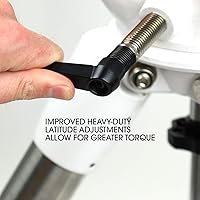
  • Latitude Range: Operable across latitudes from 5° to 65°, covering most inhabited locations in both the Northern and Southern hemispheres.
  • Dimensions: Mount head measures 25 × 21 × 12 inches when packaged, providing a relatively compact footprint for a mount in this payload class.
  • Weight: The mount head alone weighs 44 lbs (approximately 20 kg), not including counterweights, tripod, or optical tube assembly.
  • Build Material: All-metal construction throughout the main body and axes, contributing to long-term rigidity, thermal stability, and resistance to flex under load.
  • Portability: Integrated carry handle is built into the mount body, enabling single-handed transport between vehicle and observing site without a separate carrying case.
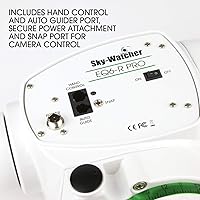
  • Connectivity: Includes a serial (RS-232) port for computer control and ASCOM compatibility, enabling use with third-party planetarium and imaging software.
  • Tracking Rates: Supports sidereal, lunar, and solar tracking rates, selectable via the SynScan hand controller for different observing targets.
  • Meridian Flip: Supports automated meridian flip to allow uninterrupted imaging sessions that cross the local meridian without manual intervention.
  • Manufacturer: Designed and produced by Sky-Watcher, a globally recognized optical and mount manufacturer headquartered in the United Kingdom.
  • Release Date: First made available to consumers in October 2017, with the design remaining in active production without discontinuation as of the most recent available data.

Related Reviews

Sky-Watcher HEQ5 Computerized Equatorial Telescope Mount
85%
94%
Tracking Precision
91%
Build Quality
87%
Ease of Setup
65%
Portability
89%
Payload Capacity
More
Sky-Watcher Star Adventurer GTi Mount Head Kit S20590
84%
89%
Performance
93%
Portability
75%
Ease of Setup
87%
Build Quality
92%
Stability
More
Sky-Watcher Flextube 250 Dobsonian
86%
94%
Image Quality
88%
Ease of Assembly
81%
Portability
86%
Stability
92%
Optical Aperture Performance
More
Sky-Watcher EvoStar 100 APO Refractor Telescope
83%
91%
Optical Clarity
87%
Chromatic Aberration Control
84%
Focuser Quality
78%
Astrophotography Performance
88%
Build Quality
More
Sky-Watcher Skymax 150 Maksutov-Cassegrain Telescope
77%
93%
Optical Performance
88%
Build Quality
91%
Out-of-Box Collimation
79%
Value for Money
54%
Thermal Stabilization
More
Sky-Watcher Skymax 180mm Maksutov-Cassegrain Telescope
84%
94%
Optical Performance
88%
Ease of Use
76%
Portability
91%
Build Quality
85%
Setup and Installation
More
Sky-Watcher Heritage 130mm Tabletop Dobsonian Telescope
82%
88%
Optical Performance
91%
Value for Money
89%
Ease of Use
86%
Portability & Storage
79%
Build Quality
More
Sky-Watcher S11550 190mm Maksutov-Newtonian Telescope
83%
94%
Optical Quality
86%
Ease of Use
91%
Build Quality
90%
Focusing Precision
60%
Portability
More
Sky-Watcher Skymax 127mm Maksutov-Cassegrain Telescope
76%
93%
Optical Clarity
91%
Planetary Performance
84%
Build & Tube Quality
52%
Thermal Equilibration
82%
Portability
More
Sky-Watcher Skymax 102mm Maksutov-Cassegrain Telescope
76%
93%
Optical Sharpness
88%
Build Quality
91%
Portability
82%
Value for Money
94%
Planetary Performance
More

FAQ

The EQ6-R is sold as a mount head only — no tripod is included in the standard package. You will need a compatible heavy-duty tripod rated for the mount's weight and payload. Sky-Watcher sells a matching stainless steel tripod separately, and many buyers pair it with that or a third-party pier for permanent setups.

Yes. The Sky-Watcher EQ6-R German Equatorial Mount includes a serial port that supports ASCOM-compatible software, meaning you can connect it to programs like Stellarium, Cartes du Ciel, or imaging suites like Sequence Generator Pro. A USB-to-serial adapter is typically needed, and once connected, the hand controller can often be bypassed entirely for a cleaner workflow.
Tracking is genuinely near-silent — most users describe it as inaudible in a quiet outdoor environment. Slewing at full speed produces a soft whirring sound, but nothing that would disturb nearby observers or violate quiet-site rules at a star party. It is considerably quieter than older gear-driven mounts in the same class.

Honestly, yes — it takes some patience. The menu structure is not intuitive, and navigating it in the dark during your first few sessions can be genuinely frustrating. Most users recommend spending time with it indoors before your first night out, and there are good video tutorials online that cover the alignment and GoTo workflow far better than the included documentation does.

As a practical rule, most experienced astrophotographers recommend loading a German equatorial mount to no more than 60–70% of its rated capacity for best tracking performance. For this mount, that puts the comfortable imaging payload in the 27–30 lb range. The full 44-lb rating is achievable but may result in slightly longer vibration settle times and marginally less precise tracking.

Yes, the dual saddle accepts both Vixen (V) and Losmandy (D) profile dovetail bars, so most standard optical tube rings and saddle plates will attach without modification. If you are upgrading from a lighter Sky-Watcher or Celestron mount, your existing tube assembly will almost certainly be compatible.

Absolutely — this is one of its more practical strengths for dark-sky site users. The mount runs on 12V DC at 4 amps minimum, which is well within the output range of most compact lithium power stations and dedicated astronomy battery packs. A mid-capacity pack will comfortably run the mount for an entire night of imaging.

This is a common comparison at this price tier, and neither mount wins outright. The EQ6-R has a slight edge in overall build robustness and has a longer track record in the field. The CEM40 counters with a more modern center-balance design that reduces counterweight requirements and a more user-friendly interface. If software control and balance efficiency matter most to you, the CEM40 is worth serious consideration; if raw build quality and community support resources are priorities, the EQ6-R holds its own.

With the built-in illuminated polar finderscope, most users report getting a workable polar alignment in 10 to 20 minutes once they are familiar with the process. First-timers will likely take longer, and the included instructions are not detailed enough to guide you through it without supplementary resources. After a few sessions, it becomes a quick and repeatable routine.

This is genuinely a mixed picture. Some firmware releases have improved functionality, while others have introduced tracking or GoTo inconsistencies that were not present before. The general advice from experienced users in the EQ6-R community is to research a specific update in user forums before applying it, and only update if it addresses a problem you are actually experiencing. Updates are applied via the hand controller using a PC and a serial connection, and rolling back is not straightforward.