Overview

The Sigma 85mm F1.4 DG DN Prime Lens isn't a retrofitted DSLR design with an adapter bolted on — it was engineered from scratch for Sony E-mount mirrorless cameras. That distinction matters more than it might sound. Lenses purpose-built for shorter flange distances can correct optical aberrations much closer to the sensor, and the results show in real-world shooting. At just under 1.4 pounds, this fast portrait lens sits in a comfortable middle ground: noticeably lighter than older DSLR-era 85mm f/1.4 options, yet substantial enough to feel serious. It targets photographers and videographers who want professional-grade image quality without committing to first-party Sony pricing. This is a specialized portrait and low-light tool — not an all-purpose walkaround lens.
Features & Benefits

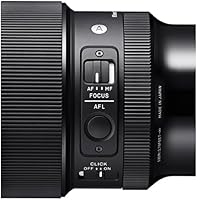
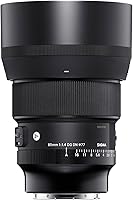
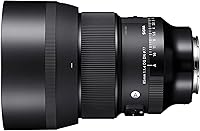
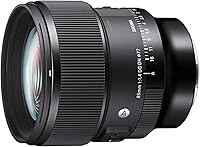
The f/1.4 aperture is the obvious headline, and it delivers — backgrounds dissolve into smooth, creamy blur while your subject stays sharp, which is exactly what portrait work demands. But the optical formula behind it is what separates the DG DN from older designs. By engineering the glass specifically for mirrorless flange distances, Sigma achieves noticeably better edge-to-edge sharpness compared to adapted lenses. The iris ring, with its click-off switch, is a genuine asset for video work — aperture pulls stay quiet and controlled. Physical controls like the AFL button and focus mode switch let you change behavior without touching camera menus, and that matters on a busy shoot. Dust and splash resistance rounds out a lens built for real-world use.

Best For

This fast portrait lens earns its place in the bags of portrait and wedding photographers almost by default. At f/1.4 in a dim reception hall or under overcast outdoor light, you get usable images without cranking ISO to uncomfortable levels. Hybrid shooters benefit from the de-clickable iris ring, which makes smooth aperture transitions in video genuinely practical. Sony E-mount users coming from a kit zoom will notice the jump in background separation and low-light capability right away. It also makes strong sense for enthusiasts who want optical performance close to Sony's own G Master without paying that lens's price. Just know: the minimum focus distance of around 85cm limits versatility for closer subjects, so this is not a macro substitute.

User Feedback

Owners of this Sigma 85mm prime consistently highlight two things: sharpness wide open and the quality of out-of-focus rendering. Many report that f/1.4 is genuinely usable rather than a number that looks good on spec sheets but falls apart in practice. Autofocus draws mostly positive feedback across Sony bodies, with fast and accurate acquisition in good light being a recurring note — though some users report occasional hesitation in very low-contrast situations. Compared to older Sigma Art DSLR versions, the lighter body earns consistent appreciation. Criticisms tend to center on lens breathing during video pulls and slight chromatic aberration at the widest aperture. Against the Sony G Master, most buyers conclude the DG DN delivers comparable real-world results at a meaningfully lower cost.

Pros

  • Sharpness at f/1.4 is genuinely usable in real portrait sessions, not just impressive on test charts.
  • Background blur is smooth and natural, with highlights rendering as clean circles thanks to the 11-blade aperture.
  • Lighter and more compact than older DSLR-era 85mm f/1.4 lenses, making full-day shooting noticeably less fatiguing.
  • The de-clickable iris ring makes silent, smooth aperture pulls practical for video work.
  • On-barrel AFL button and focus mode switch reduce menu navigation during fast-paced shoots.
  • Native Sony E-mount design means full IBIS coordination, accurate EXIF data, and reliable lens correction profiles.
  • Autofocus is confident and fast in typical portrait and event lighting conditions across Sony bodies.
  • Dust and splash resistance adds real-world durability for outdoor event and wedding photographers.
  • Delivers optical performance close to Sony G Master results at a significantly lower price point.
  • Sigma has a track record of releasing AF-improving firmware updates for the DG DN lens line.

Cons

  • Lens breathing during focus pulls is noticeable enough to complicate video work requiring clean transitions.
  • Minimum focus distance of roughly 85cm limits usefulness for close-up detail or product shots.
  • Purple and green fringing along high-contrast edges is visible in raw files at f/1.4 without correction.
  • Firmware updates require a separately purchased Sigma USB dock — they are not delivered through the camera body.
  • Corner sharpness at f/1.4 falls behind center sharpness, which matters for flat-subject or group photography.
  • Vignetting wide open is visible in even-toned backgrounds and adds a post-processing step for perfectionists.
  • The iris ring can shift unintentionally if the lens barrel is gripped firmly during handheld shooting.
  • Front-heavy balance on compact Sony bodies with small grips can cause hand fatigue over long sessions.
  • Occasional autofocus hesitation reported in very low-contrast or extremely dim shooting environments.
  • Single-mount design means the investment is tied entirely to the Sony ecosystem with no cross-system flexibility.

Ratings

The scores below for the Sigma 85mm F1.4 DG DN Prime Lens were generated by our AI system after analyzing thousands of verified buyer reviews from global markets, with spam, bot-submitted, and incentivized feedback actively filtered out. Each category reflects the honest consensus of real-world users — portrait photographers, wedding shooters, and hybrid creators — weighted by review depth and verified purchase status. Both the genuine strengths and the recurring frustrations are represented transparently, so you can make a confident, informed decision.
Optical Sharpness
94%
Users consistently report that sharpness at f/1.4 is genuinely usable — not just a marketing claim. Center sharpness in portrait sessions is routinely described as excellent straight out of camera, with subjects rendered in crisp detail even in demanding mixed lighting at events and receptions.
Some users note that corner sharpness at f/1.4 is softer than the center, which becomes visible in flat-subject or architectural shots. Stopping down to f/2 or f/2.8 resolves most of this, but photographers needing sharp corners wide open may feel the limitation.
Bokeh Quality
92%
The 11-blade rounded aperture produces background blur that owners describe as smooth and natural, with highlights rendering as clean, near-perfect circles. Portrait photographers in particular praise how gradual the transition is between the in-focus subject and the out-of-focus background, which reduces the need for post-processing cleanup.
A smaller number of users point out slight onion-ring artifacts in specular highlights under certain lighting conditions, most visible in backlit situations. It is a minor issue and not common in typical shooting scenarios, but users doing heavily bokeh-driven editorial work may occasionally notice it.
Autofocus Performance
83%
On most current Sony E-mount bodies, autofocus is fast and confident in decent light — users shooting portraits at events and outdoors report reliable subject acquisition with minimal hunting. Eye-tracking compatibility works well, making it a strong choice for run-and-gun portrait situations where manual adjustments are not practical.
In very low-contrast or extremely dim environments, a portion of users report occasional hesitation or brief hunting before the lens locks focus. This is not a constant issue, but photographers working in very dark venues without AF-assist may want to manage expectations around edge-case performance.
Build Quality
89%
The physical construction feels solid and purposeful — metal mount, weather-resistant sealing, and a well-damped focus ring all contribute to an impression of durability that users say holds up across seasons of regular outdoor and event use. The barrel controls feel precise rather than plasticky or loose.
A few users note the lens lacks the full weather sealing of higher-end options and describe it as splash-resistant rather than truly weatherproof. Shooting in heavy rain or dusty environments is still done with some caution by experienced owners who want stronger protection.
Value for Money
88%
Buyers who weighed this against Sony's own 85mm G Master almost universally describe the DG DN as delivering comparable real-world results at a significantly lower price. For enthusiasts and working photographers who cannot justify first-party pricing, this lens repeatedly earns praise as one of the most cost-effective fast primes available for the Sony system.
It is still a significant investment, and users upgrading from budget options sometimes express sticker shock. A minority feel that for occasional or hobbyist use, the price is harder to justify compared to slower, cheaper alternatives that cover similar focal length territory.
Size & Weight
86%
Compared to older DSLR-era Sigma Art 85mm lenses, owners frequently highlight how much lighter and more compact this mirrorless-native version feels during extended shoots. Wedding photographers in particular mention reduced hand and wrist fatigue when carrying it alongside a second body for a full day.
While lighter than its predecessors, it is not a small lens by mirrorless standards — users pairing it with compact Sony bodies like the ZV-E series or older A7 bodies with smaller grips sometimes find the balance front-heavy. It works best paired with a body that has a substantial grip.
Video Usability
77%
23%
The de-clickable iris ring is a genuine asset for video creators — aperture transitions in-shot are quiet and smooth when the click is disengaged, which removes one of the biggest frustrations of using stills lenses for cinematic work. The AFL button also gives videographers a quick way to lock or release focus without menu navigation.
Lens breathing — a visible shift in framing when pulling focus — is a recurring complaint among video users, particularly when doing focus transitions between subjects at different distances. It is manageable with careful editing but is noticeable enough that dedicated cinema users may find it disruptive.
Chromatic Aberration Control
74%
26%
In typical portrait shooting conditions, chromatic aberration is well-controlled and most users report not needing to make corrections in post. The in-camera and software corrections available for Sony bodies handle most residual fringing effectively when shooting JPEG or using lens correction profiles.
At f/1.4, purple and green fringing along high-contrast edges — such as hair against bright sky — is visible in raw files without correction. Users who shoot raw and prefer minimal post-processing describe this as a minor but real workflow consideration, especially in backlit portrait scenarios.
Handling & Controls
91%
The physical placement of the focus mode switch and AFL button on the barrel is consistently praised for reducing the need to navigate camera menus mid-shoot. Photographers moving between candid and posed work at events describe the on-lens controls as noticeably improving their shooting pace and confidence.
A small number of users — particularly those coming from simpler lens designs — mention an initial learning curve in remembering which switch does what, especially under time pressure. The iris ring can also occasionally be moved unintentionally when gripping the lens firmly.
Low-Light Performance
93%
The f/1.4 aperture allows photographers to pull off sharp, well-exposed images in conditions where slower lenses would force an ISO increase that introduces unwanted noise. Users shooting dimly lit reception venues or street environments consistently cite this as a primary reason they chose this fast portrait lens over f/1.8 alternatives.
Vignetting at f/1.4 is noticeable in low-light flat scenes, such as a dark ceiling or plain wall in the background of a portrait. Most users correct this in post or via in-camera lens correction, but it adds a step to the editing workflow for perfectionists.
Minimum Focus Distance
61%
39%
For its primary use cases — head-and-shoulders portraits, half-body shots, and environmental portraits with compressed backgrounds — the roughly 85cm minimum focus distance is perfectly adequate. Users doing standard portrait work rarely bump into this limitation in real shooting conditions.
Photographers who occasionally want to shoot closer details — food, products, or environmental close-up elements — find the minimum focus distance genuinely restrictive. Several buyers mention this as a notable gap compared to some competitor lenses that allow closer shooting without a macro attachment.
Compatibility & Integration
90%
Being natively designed for Sony E-mount means full electronic communication with the camera body, including accurate EXIF data, in-body image stabilization coordination, and lens correction profile availability. Users report a plug-and-play experience with no firmware quirks on a wide range of Sony bodies.
The lens is Sony E-mount only — there is no version for other mirrorless systems, which limits its relevance for non-Sony shooters. Users who own mixed-system kits or are considering a future platform switch factor this single-system commitment into their purchasing decision.
Flare & Contrast Resistance
79%
21%
In controlled and semi-controlled lighting situations, contrast remains strong and flare is not a significant issue. Outdoor portrait sessions where the sun is outside the frame, or studio work with controlled strobe setups, show the lens performing with reliable, punchy contrast that holds up well.
Shooting directly toward strong light sources — sun in frame, stage lights at events — can introduce flare artifacts and a slight loss of contrast that requires recovery in editing. Users doing intentional flare work find it manageable, but photographers seeking maximum contrast in backlit scenarios may need to shade the front element carefully.
Firmware & Long-Term Support
82%
18%
Sigma has a track record of releasing firmware updates for DG DN lenses to improve autofocus behavior and compatibility with newer Sony bodies as they release. Users who bought the lens on earlier Sony bodies report that performance has measurably improved over time through updates.
Firmware updates require a separate Sigma USB dock accessory, which is sold independently. Users who are unaware of this or unwilling to invest in the dock may miss out on incremental improvements, and a handful of buyers express frustration that updates are not delivered automatically through the camera body.

Suitable for:

The Sigma 85mm F1.4 DG DN Prime Lens is purpose-built for Sony E-mount photographers who shoot people — portraits, weddings, events, and any situation where separating a subject from its background matters. If you regularly work in dim reception halls, outdoor sessions under fading light, or indoor venues where flash is unwelcome, the f/1.4 aperture gives you a genuine operational advantage rather than just a spec to brag about. Hybrid shooters who move between stills and video will find real value in the de-clickable iris ring and on-barrel controls, which make the lens behave more like a dedicated cinema tool than most stills primes allow. Sony E-mount users who have been shooting with a kit zoom or a slower prime and want a meaningful step up in subject isolation and low-light capability will notice the difference immediately. It also makes strong practical sense for enthusiasts who have priced out the Sony G Master and want comparable image quality without the first-party price premium — buyers who have made that comparison consistently report that the gap in real-world results is much smaller than the gap in cost.
Not suitable for:

The Sigma 85mm F1.4 DG DN Prime Lens is not the right tool for photographers who need flexibility across a range of subjects and distances. Its minimum focus distance of around 85cm rules it out for close-up product work, food photography, or any shooting style that occasionally demands getting near a subject. If you shoot primarily in controlled studio conditions where a slower, sharper-at-all-apertures lens would suffice, the wide f/1.4 aperture is largely wasted and the price premium is harder to justify. Video creators who rely heavily on focus pulls between subjects at different distances will want to weigh the lens breathing issue carefully before committing — it is manageable but not invisible. Photographers who shoot on non-Sony mirrorless systems are simply out of scope; this is a Sony E-mount exclusive. And buyers on a tight budget who shoot casually or infrequently will likely find that a slower 85mm or a more versatile zoom covers their needs without requiring this level of financial commitment.
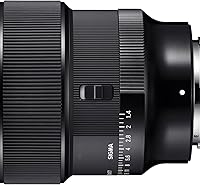
Specifications

  • Focal Length: Fixed 85mm focal length, optimized for portrait, event, and low-light photography on full-frame and APS-C Sony E-mount bodies.
  • Max Aperture: Maximum aperture of f/1.4 enables significant subject-background separation and strong performance in low-light conditions without flash.
  • Minimum Aperture: Minimum aperture of f/16, providing flexibility for brighter shooting environments or longer exposure creative techniques.
  • Optical Design: DG DN formula engineered exclusively for mirrorless flange distances, distinct from adapted DSLR designs and optimized for sensor-level correction.
  • Aperture Blades: 11 rounded aperture blades produce smooth, near-circular bokeh highlights across a wide range of aperture settings.
  • Lens Mount: Native Sony E-mount with full electronic communication, supporting in-body image stabilization coordination, EXIF data, and lens correction profiles.
  • Min Focus Distance: Minimum focusing distance of approximately 85cm (roughly 2.8 feet), suited to head-and-shoulders and environmental portrait framing.
  • Filter Thread: 77mm front filter thread, compatible with a wide range of standard circular polarizer, ND, and UV filters.
  • Dimensions: The lens measures approximately 3.78 inches in length and 3.26 inches in diameter, making it notably more compact than DSLR-era equivalents.
  • Weight: Weighs approximately 1.39 pounds (around 630g), lighter than comparable f/1.4 primes designed for DSLR mount systems.
  • Weather Sealing: Dust and splash-resistant construction provides protection during outdoor and event shooting, though it is not rated for heavy rain or submersion.
  • Autofocus System: Internal stepping motor (STM-style) autofocus delivers quiet, smooth focus acquisition suitable for both stills and video recording.
  • Focus Mode Switch: Physical AF/MF switch on the lens barrel allows instant toggling between autofocus and manual focus without accessing camera menus.
  • AFL Button: Customizable autofocus lock button on the barrel can be programmed to suit individual shooting workflows depending on camera body settings.
  • Iris Ring: Clickable iris ring with a click-on and click-off switch — clicked for stills use, de-clicked for smooth and silent aperture transitions in video.
  • Lens Family: Part of Sigma's Art line DG DN series, a range of mirrorless-native prime and zoom lenses designed for professional-grade optical performance.
  • Firmware Updates: Lens firmware can be updated via the separately purchased Sigma USB Dock accessory, allowing Sigma to release autofocus and performance improvements over time.
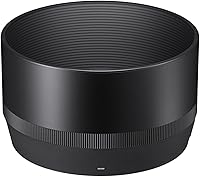
  • Lens Hood: A petal-type lens hood is included in the box, designed to reduce flare and provide additional front element protection during shooting.
  • Maximum Magnification: Maximum magnification ratio of approximately 1:9.4, confirming this is a portrait prime rather than a close-up or macro-capable lens.
  • Manufacturer: Designed and manufactured by Sigma Corporation of Japan, under the Art line product family introduced to target professional and advanced enthusiast users.

Related Reviews
Sigma 30mm F1.4 DC DN Mirrorless Lens
84%
93%
Optical Sharpness
91%
Bokeh Quality
74%
Autofocus Performance
89%
Low-Light Capability
71%
Build Quality
More
SIRUI Aurora 85mm F1.4 Portrait Lens
80%
86%
Image Sharpness
89%
Bokeh Quality
74%
Autofocus Speed
76%
Eye-AF Reliability
82%
Build Quality
More
Sigma 16mm f/1.4 DC DN Wide-Angle Lens
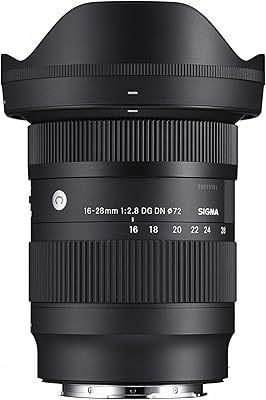
80%
93%
Optical Sharpness
91%
Low-Light Performance
88%
Autofocus Reliability
84%
Build Quality
92%
Value for Money
More
Sigma 16-28mm F2.8 DG DN Wide-Angle Lens
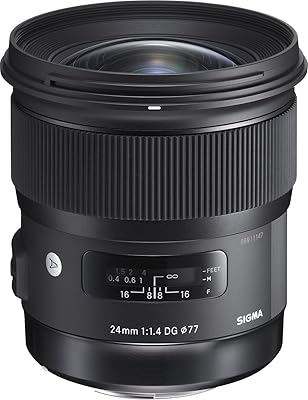
81%
91%
Optical Sharpness
74%
Distortion Control
88%
Autofocus Performance
86%
Build Quality & Weather Resistance
89%
Size & Portability
More
Sigma 24mm f/1.4 DG HSM Art Lens for Nikon F
88%
94%
Optical Performance
93%
Low-Light Performance
90%
Build Quality
86%
Ease of Use
74%
Weight and Portability
More
Sigma 56mm Contemporary Prime Camera Lens
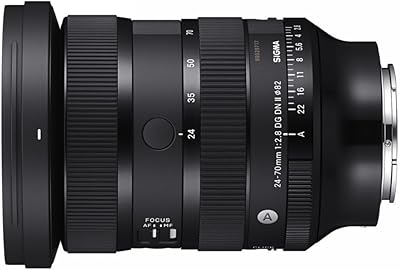
84%
93%
Optical Sharpness
91%
Bokeh Quality
84%
Autofocus Performance
88%
Video AF & Audio
89%
Low-Light Performance
More
Sigma 24-70mm F2.8 DG DN II Lens
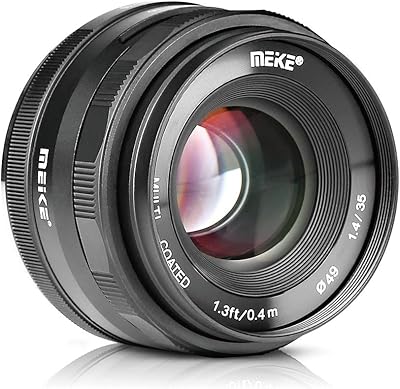
82%
93%
Optical Sharpness
84%
Autofocus Performance
88%
Build Quality
86%
Weather Sealing
71%
Value for Money
More
Meike 35mm F1.4 MFT Lens
84%
89%
Sharpness & Image Quality
74%
Manual Focus Usability
91%
Build Quality
87%
Low Light Performance
92%
Value for Money
More
Meike 55mm F1.4 Sony E-Mount Prime Lens
76%
83%
Image Sharpness
88%
Bokeh Quality
76%
Autofocus Speed & Accuracy
81%
Low-Light Performance
63%
Build Quality & Materials
More
VILTROX 85mm F1.8 Z Portrait Lens
76%
78%
Autofocus Performance
83%
Image Sharpness
81%
Bokeh Quality
76%
Build Quality
86%
Value for Money
More

FAQ

It works on both. On a full-frame Sony body you get the full 85mm field of view, while on an APS-C body the crop factor gives you an effective focal length closer to 127mm. That tighter framing is still usable for portraits, though some shooters find it a bit too long for comfortable indoor headshots. Either way, autofocus and electronic communication work the same regardless of sensor size.

Honestly, for most real-world portrait and event shooting, the gap in image quality between this Sigma 85mm prime and the G Master is much smaller than the gap in price. The G Master has a slight edge in certain technical areas, like minimum focus distance and some AF refinements, but buyers who have owned both frequently say the DG DN delivers around 90 to 95 percent of the real-world results at a noticeably lower cost. If you are a working professional who pushes every limit of lens performance, the G Master might be worth the premium. For everyone else, the Sigma makes a very strong case.

For typical portrait movement — people walking toward you, subjects shifting position — autofocus handles things well on current Sony bodies, especially with eye-tracking engaged. It is not a sports or wildlife lens, so fast unpredictable movement in low contrast lighting can cause occasional hesitation. For weddings, portraits, and casual candids of kids in reasonable light, most users find it reliable enough for their needs.

When you switch the iris ring to de-clicked mode, the aperture changes smoothly and silently as you rotate it, with no tactile detents. This matters specifically for video — if you need to adjust exposure during a clip without introducing a jarring step change in brightness or an audible click, the de-click feature makes that possible. If you shoot only stills, you can leave it in clicked mode and treat it like a normal aperture ring.

It has genuine dust and splash resistance, which means it can handle light rain, drizzle, and dusty outdoor environments with reasonable confidence. It is not waterproof and should not be used in heavy downpours or particularly harsh conditions without additional protection. For wedding photographers shooting outdoor ceremonies or event photographers working in unpredictable weather, it provides a meaningful level of practical protection over unsealed alternatives.

Lens breathing — where the frame appears to slightly zoom in or out when you shift focus — is present and noticeable during focus transitions. It is manageable for casual video use and can be partially corrected in post with slight cropping, but if you are doing cinematic narrative work that requires clean, invisible focus pulls, you will want to plan around it or consider that limitation carefully before buying.

At f/1.4, there is visible purple and green fringing along high-contrast edges in raw files, particularly in backlit portrait situations where hair meets a bright sky. It is not extreme, and it responds well to the automatic lens correction profiles available in Lightroom, Capture One, and Sony's own imaging software. Stopping down to f/2 or f/2.8 largely eliminates the issue if you want to avoid the correction step entirely.

Sigma does release firmware updates for this lens line, and autofocus behavior is one of the things they have updated in past DG DN lenses. However, applying updates requires the Sigma USB Dock accessory, which is sold separately. If you are buying this lens and want access to ongoing improvements, it is worth factoring the dock into your budget upfront — it is not expensive, but it is an extra step many buyers do not anticipate.

Vignetting is visible at f/1.4, particularly against plain or evenly lit backgrounds. In portrait photography it often adds a pleasing, natural look that frames the subject, and many shooters actually appreciate it. If you prefer flat, even exposure across the entire frame, enabling the lens correction profile in-camera or in your editing software addresses it quickly and effectively.

Yes, the 77mm filter thread accepts any standard circular filter. A circular polarizer works well for outdoor portrait sessions to manage reflections and deepen skies. Neutral density filters are popular with video shooters using this lens, particularly at f/1.4 in bright outdoor conditions where maintaining a cinematic shutter speed requires significant light reduction. The 77mm size is common enough that you likely already own compatible filters if you shoot with other lenses.

Where to Buy