Overview

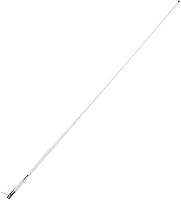
The Shakespeare 5225-XT Galaxy 8-Foot Marine VHF Antenna sits in the mid-to-premium tier of the marine antenna market — a range where Shakespeare has built decades of credibility. At 8 feet tall, it delivers meaningfully more signal gain than the compact 4-foot antennas many boats come with from the factory. That extra height matters on open water. It's a fixed-mount design, best suited to sailboats, larger powerboats, and any vessel where permanent installation is practical. A 20-foot coaxial cable with connector comes in the box, which handles most routing situations without needing an additional purchase.
Features & Benefits

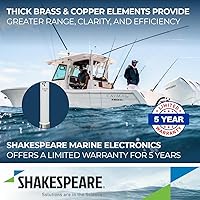
What sets this 8-foot Galaxy antenna apart technically is its collinear-phased design — a configuration that pushes signal energy outward along the horizontal plane rather than wasting it skyward. That's exactly the propagation pattern you want for vessel-to-vessel or vessel-to-shore communication. Internally, the brass and copper elements offer strong conductivity and hold up well against the kind of corrosion that eats through cheaper materials after a season or two. The stainless steel ferrule threads onto standard 1-inch-14 mounts, which covers most marine hardware. At 50-ohm impedance, it pairs directly with standard VHF radios — no matching required. The UV-resistant fiberglass housing completes the package, shrugging off sun and spray without fading or cracking.

Best For

This Shakespeare marine VHF antenna is built for boaters who actually depend on their radio — not just as a backup, but as a primary safety tool. If you're coastal cruising, doing offshore runs, or simply want the peace of mind that comes with reliable communication range, the 8-foot length is a real step up from a shorter antenna. It's a natural fit for sailboats, larger powerboats, and any vessel with a mast or cabin top that can handle the height. For anyone upgrading from a 4-foot antenna, the difference in range is usually tangible. It's not well-suited, though, for small runabouts, low-clearance center consoles, or trailered boats where the antenna height becomes a logistics problem.

User Feedback

Across buyer reviews, the 5225-XT earns consistent praise for noticeable range improvement over shorter antennas — boaters regularly mention picking up channels and stations that were simply out of reach before. Durability is another recurring theme: the hardware and finish hold up through multiple seasons of saltwater and sun without meaningful decline. On the less positive side, some buyers find the included 20-foot cable falls short depending on their routing setup, so longer runs may require an extension. A handful also flag connector compatibility issues with older radio installations. Most feel the value is fair given the build quality, though a small segment considers comparable options available at a lower price point.

Pros

  • The 8-foot length provides noticeably better range than most stock or 4-foot replacement antennas.
  • Brass and copper internal elements resist corrosion and maintain conductivity over multiple seasons of saltwater exposure.
  • Standard 1-inch-14 thread fits the vast majority of existing marine mounts without adapters.
  • A 20-foot low-loss coaxial cable is included, cutting down on extra parts needed for a typical install.
  • The fiberglass housing holds up well against UV degradation and does not visibly fade or crack with regular sun exposure.
  • At 50-ohm impedance, this Shakespeare marine VHF antenna pairs directly with standard radios — no tuning or matching hardware required.
  • Lightweight at 2.2 pounds, so mast-top or arch mounting does not meaningfully affect vessel balance.
  • The collinear-phased element design focuses signal propagation horizontally, which is exactly the geometry that matters on open water.
  • Build quality is consistently praised by long-term owners who report reliable performance across multiple years of use.
  • Shakespeare's established reputation in marine electronics means parts, documentation, and support are accessible.

Cons

  • The 20-foot cable may fall short on larger vessels, requiring buyers to source and splice an extension run.
  • Some users report that connector ends need re-termination or adapters to mate cleanly with older radio installations.
  • At 8 feet, the antenna is impractical for trailered boats unless a fold-over base is purchased separately.
  • The fixed-mount design offers no quick-release or break-away option for low-clearance docking situations.
  • Buyers comparing the 5225-XT against similarly priced competitors may find comparable performance at a lower cost from newer brands.
  • The white fiberglass finish, while clean-looking, can show waterline staining or mildew streaks in humid climates if not cleaned regularly.
  • Installation on curved or non-standard railings may require additional mounting hardware not included in the box.
  • No mounting hardware is included beyond the ferrule, so first-time buyers may need to purchase a separate base or bracket.
  • Range gains are highly dependent on antenna height and local terrain — buyers in congested harbors or sheltered inlets may see limited real-world improvement.

Ratings

The scores below reflect an AI-driven analysis of verified global buyer feedback for the Shakespeare 5225-XT Galaxy 8-Foot Marine VHF Antenna, with spam, incentivized reviews, and bot activity actively filtered out before scoring. Each category is weighted against real-world usage patterns reported by recreational boaters, coastal cruisers, and offshore sailors. Both standout strengths and recurring frustrations are captured honestly — nothing is glossed over.

Signal Range Performance
83%
Boaters consistently report a meaningful jump in reach after switching from a 4-foot factory antenna — coastal cruisers in particular describe picking up coast guard traffic and marina channels that were previously unreliable. The collinear-phased design delivers the horizontal propagation pattern that matters most on flat open water.
Buyers expecting dramatic range miracles sometimes come away underwhelmed, which is less a product flaw and more a reality of VHF physics — terrain, radio output power, and antenna height above water all shape actual results. In sheltered anchorages or harbors surrounded by hills, the performance advantage over shorter antennas narrows considerably.
Build Quality
88%
The combination of brass and copper internal elements, a stainless steel ferrule, and a fiberglass sleeve gives this Shakespeare marine VHF antenna a noticeably solid feel compared to lower-priced alternatives with plastic hardware. Owners who have run it through multiple saltwater seasons report that the finish and structural integrity hold up without visible degradation.
A small number of buyers noted that the base of the antenna, where the cable exits, can be a weak point if moisture finds its way into the junction — proper sealing during installation is essential. The fiberglass housing, while durable, is not immune to surface staining in high-humidity or tidal environments if left uncleaned for extended periods.
Ease of Installation
74%
26%
The standard 1-inch-14 thread means most boaters can drop the 5225-XT directly onto an existing mount without hunting for adapters, and the pre-terminated 20-foot cable gets a lot of appreciation from buyers who want to avoid connector crimping. For anyone with basic DIY confidence, this is a manageable afternoon installation.
Buyers with larger vessels quickly discover that 20 feet of cable is not enough for longer runs — mast-top installations on sailboats often require 30 to 50 feet or more, meaning an additional cable purchase is unavoidable. A handful of users also flagged that the connector style on the included cable required an adapter to mate with their specific radio model.
Durability Over Time
86%
Multi-season ownership reports are a consistent bright spot in buyer feedback — sailors and powerboaters alike describe antennas that perform just as well in year three or four as they did out of the box. The corrosion-resistant material choices clearly reflect engineering decisions made with saltwater environments in mind.
Long-term durability is closely tied to how well the connector and cable junction are sealed at installation — units that were not properly weatherproofed show accelerated degradation at that joint. UV-induced cosmetic yellowing on the white housing has been noted by a minority of owners after several years of intense sun exposure in tropical climates.
Value for Money
71%
29%
Buyers who prioritize longevity and brand reliability generally feel the price is justified — the build quality is clearly a step above budget-tier fiberglass antennas, and Shakespeare's distribution network makes warranty support accessible. The included cable adds tangible value for buyers who would otherwise need to source it separately.
A recurring thread in buyer commentary is that newer entrants to the marine antenna market offer comparable fiberglass construction and similar gain figures at a lower price point, making the value proposition feel less clear-cut than it once was. Buyers on a tighter budget who do not need multi-season heavy-duty durability may find the cost harder to justify.
Mounting Compatibility
89%
The 1-inch-14 standard thread is genuinely universal in the marine world — nearly every railing mount, deck base, and mast bracket sold in the last two decades accepts it, and most boaters report a direct thread-on fit with their existing hardware. This makes swapping out an older antenna a clean, tool-minimal job.
The compatibility story breaks down slightly for non-standard or older European-spec mounts, where thread profiles occasionally differ. There is also no included mounting base or railing bracket, so buyers who do not already have a mount installed need to factor that into both cost and installation planning.
Cable Quality
76%
24%
The included coaxial cable is described as low-loss, and most buyers who have tested signal levels before and after installation confirm it does not introduce meaningful signal degradation over its 20-foot length. Having a pre-terminated connector already fitted saves the step that most intimidates first-time antenna installers.
The 20-foot length is the single most common complaint in buyer feedback — it is adequate for smaller powerboats but consistently falls short on sailboats, larger cruisers, or any vessel where the radio helm is far from the antenna mount. Buyers should measure their run carefully and budget for an extension before purchase.
Weight & Form Factor
91%
At 2.2 pounds, the antenna is light enough that mast-top mounting does not raise meaningful concerns about added weight aloft or center-of-gravity impact, even on smaller keelboats. The slim 3-inch diameter profile integrates cleanly alongside other topside hardware without creating obstruction issues.
The 8-foot rigid length is simply impractical for certain boat categories — there is no soft mount or fold-over feature built in, so trailered boats and vessels with frequent low-clearance docking situations need to plan accordingly. Packaging and shipping the antenna without damage is also a noted challenge given its length.
Corrosion Resistance
87%
Saltwater boaters specifically call out the stainless ferrule and the non-corroding fiberglass sleeve as standout features when compared to antennas that use painted metal housings or aluminum hardware that oxidizes quickly. The internal brass and copper elements are well-protected from the marine environment by the sealed fiberglass shell.
The threaded ferrule junction and the cable exit point are the two spots where moisture can infiltrate if installation is done carelessly — owners who skipped sealing these areas with self-amalgamating tape or marine sealant have reported rust staining and connector corrosion within a single season in tropical saltwater environments.
Aesthetics & Finish
79%
21%
The clean white fiberglass finish looks sharp against most white or light-hulled vessels and does not clash with the visual profile of stainless deck hardware. Fresh out of the box, the finish is smooth and consistent, and most buyers are satisfied with how it integrates with the overall look of their boat.
White fiberglass is prone to picking up grime, tidal staining, and mildew streaks in humid or brackish environments, and it requires periodic cleaning to maintain a presentable appearance. A small number of long-term owners report subtle yellowing of the housing after four or five years of direct tropical sun exposure.
Brand Reputation & Support
82%
18%
Shakespeare is one of the oldest and most recognized names in marine antennas, and that heritage carries weight with buyers who have been boating for decades — there is an established trust in the consistency of the product line. Replacement parts and documentation are generally accessible through major marine retailers and the manufacturer directly.
Some buyers feel that Shakespeare's brand premium is increasingly based on legacy reputation rather than staying ahead of newer, innovation-focused competitors who have entered the marine antenna space in recent years. Customer support response times have received mixed feedback from buyers who needed to resolve warranty or compatibility questions.
Packaging & Shipping Integrity
63%
37%
When the antenna arrives undamaged, buyers are generally satisfied with the packaging relative to the product category — the fiberglass construction is more resilient to transit stress than a metal antenna of comparable length would be. Most buyers report the cable arrived pre-coiled and intact.
An 8-foot rigid antenna is inherently difficult to ship without damage risk, and a meaningful minority of buyers report receiving units with cosmetic scuffs, hairline cracks near the tip, or connector damage attributable to transit mishandling. This is partly a logistics challenge rather than a product defect, but it is a real source of frustration for affected buyers.
Compatibility with AIS Systems
58%
42%
The 50-ohm impedance and broadband fiberglass design mean the 5225-XT can technically be used with a splitter to share the antenna between a VHF radio and an AIS transponder, which some buyers find convenient for simplifying topside hardware on smaller vessels.
The antenna is not rated or marketed for AIS use, and buyers who attempt to use it in a split configuration without a proper antenna splitter report degraded performance on both systems. Those with dedicated AIS installations are consistently advised to run a separate antenna rather than relying on a shared setup.

Suitable for:

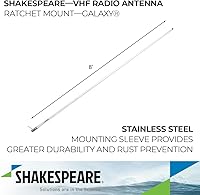
The Shakespeare 5225-XT Galaxy 8-Foot Marine VHF Antenna is built for boaters who treat their VHF radio as a genuine safety tool rather than an afterthought. If you operate in coastal or offshore environments where reliable communication range can make a real difference, the 8-foot length gives you a meaningful advantage over the compact antennas many vessels ship with. Sailors and powerboat owners with a mast, arch, or cabin-top hardpoint will find the standard 1-inch-14 mount fits most existing hardware without modification. The included 20-foot cable handles a typical run from antenna to radio on mid-sized boats, making the installation process relatively straightforward for anyone comfortable with basic wiring tasks. Anyone upgrading from a shorter stock antenna — especially a 4-footer — will likely notice the improvement in how far and how clearly they can reach other vessels and the coast guard.
Not suitable for:

The Shakespeare 5225-XT Galaxy 8-Foot Marine VHF Antenna is a poor match for smaller or low-clearance boats where 8 feet of vertical antenna creates practical headaches. Pontoons, small runabouts, jon boats, and center consoles with T-tops that sit close to bridges or dock covers will find the height more liability than asset. Trailering is another consideration — an 8-foot fixed antenna requires removal or a fold-over mount before towing, adding steps that some owners would rather avoid. Boaters on a tight budget should also think carefully, since there are shorter fiberglass options at a lower price point that perform adequately in sheltered bays or inland lakes where extreme range is not a priority. If your radio use is casual — checking weather on the hook, short hops in familiar waters — the step up in size and cost may not pay off.
Specifications

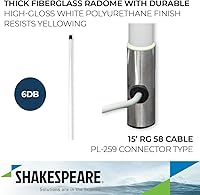
  • Antenna Length: The antenna measures 8 feet (96 inches) in total length, providing high-gain performance suited to open-water VHF communication.
  • Antenna Type: Designed specifically as a marine VHF antenna for vessel-to-vessel and vessel-to-shore communication on standard VHF marine channels.
  • Element Design: Uses collinear-phased 5/8-wave elements to direct signal energy horizontally, maximizing effective radiated power at sea level.
  • Internal Elements: Internal radiating elements are constructed from brass and copper, chosen for their high conductivity and resistance to saltwater corrosion.
  • Housing Material: The outer sleeve is UV-resistant white fiberglass, designed to withstand prolonged sun exposure and saltwater spray without cracking or fading.
  • Ferrule Material: The mounting ferrule is stainless steel, providing corrosion resistance and structural rigidity at the antenna base.
  • Mount Thread: Threads onto standard 1-inch-14 mount fittings, which are compatible with the vast majority of marine railing mounts, mast mounts, and antenna bases.
  • Impedance: Rated at 50 ohms, matching the input impedance of virtually all standard marine VHF radios without requiring external matching hardware.
  • Included Cable: Comes with a 20-foot low-loss coaxial cable pre-terminated with a connector, ready to run directly from the antenna to the radio.
  • Item Weight: The complete antenna assembly weighs 2.2 pounds, light enough for mast-top or arch mounting without significant impact on vessel stability.
  • Dimensions: Packaged dimensions are 96″ x 3″ x 3″, reflecting the full-length form factor that requires careful handling during shipping and installation.
  • Color: White finish integrates cleanly with standard marine hardware and vessel superstructure aesthetics.
  • Channels: Operates across a single broadband VHF frequency range covering all standard marine VHF channels including Channel 16, the international distress frequency.
  • Model Number: Official model designation is 5225-XT, used for parts lookup, warranty claims, and compatibility verification.
  • Brand: Manufactured by Shakespeare, a company with a long-standing focus on marine antenna products and widely distributed through marine retailers globally.
  • Discontinuation: As of the most recent product data available, this model has not been discontinued by the manufacturer and remains in active production.

Related Reviews
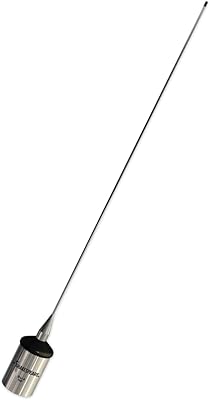
Shakespeare 5241-R 3-Foot VHF Marine Antenna
82%
88%
Ease of Installation
83%
Build Quality
71%
Signal Performance
86%
Corrosion Resistance
74%
Value for Money
More
Tram 1607-HC VHF Marine Fiberglass Antenna
77%
91%
Ease of Installation
83%
Signal Performance
78%
Build Quality
72%
Durability in Saltwater
74%
Ratchet Mount Reliability
More
HYS VHF Marine Antenna
77%
74%
Signal Performance
91%
Ease of Installation
78%
Build Quality
72%
Cable Quality
63%
Connector Fit
More
Shakespeare 5101 8ft Classic VHF Antenna
80%
83%
Signal Performance
81%
Build Quality
91%
Ease of Installation
54%
Cable Length
88%
Mount Compatibility
More
UAYESOK VHF Marine Base Antenna 48 Inch
87%
87%
Performance at Sea
92%
Durability in Harsh Conditions
91%
Installation Ease
89%
Signal Range and Clarity
85%
Compatibility with Marine Radios
More
Shakespeare 5215-AIS 3' VHF AIS Antenna
86%
90%
Build Quality
91%
Durability
88%
AIS Functionality
85%
Ease of Installation
72%
Performance Range
More
Tram 1600-HC 35-Inch VHF Marine Antenna
84%
88%
Signal Performance
91%
Build Quality
86%
Ease of Installation
93%
Corrosion Resistance
84%
Value for Money
More
Antennas Direct DB8e Outdoor TV Antenna
73%
83%
Signal Reception
88%
Build Quality
86%
Weather Durability
58%
Ease of Installation
71%
Value for Money
More
Tram 1602 VHF Marine Antenna
82%
91%
Build Quality
78%
Signal Performance
93%
Ease of Installation
94%
Quick-Disconnect Usability
62%
Cable Length & Quality
More
Tram 1604 VHF/AIS Marine Antenna
82%
86%
Build Quality
79%
Signal Performance
77%
AIS Reception
91%
Ease of Installation
84%
Corrosion Resistance
More

FAQ

It ships with a 20-foot low-loss coaxial cable already terminated with a connector, so for many boats that is all you need to go from antenna to radio. That said, if your routing runs longer than 20 feet — through a mast, under a deck, or across a larger cabin — you will need to purchase an extension or a longer replacement cable. Measure your run before assuming the included cable will reach.

It uses a standard 1-inch-14 threaded ferrule, which is the most common mounting thread in marine antenna hardware. Most railing mounts, deck mounts, and mast mounts sold at marine retailers are compatible without any adapters. If you already have an existing antenna base on your boat, chances are good this one threads right in.

Honestly, it depends on more than just the antenna. VHF is a line-of-sight technology, so your antenna height above water, the output power of your radio, and local terrain all factor in. That said, an 8-foot collinear antenna provides more gain than a standard 4-foot antenna, and most boaters who upgrade report being able to reach stations and vessels they could not connect with before. Open water and coastal cruising is where you will see the biggest real-world difference.

Yes, and that is one of the best applications for this 8-foot Galaxy antenna. Mounting it at the masthead puts it as high above water as possible, which is exactly what you want for VHF range. Just make sure the coaxial run from masthead to radio is planned carefully — the included 20-foot cable likely will not be long enough for a full mast run, so budget for additional cable.

Yes. This Shakespeare marine VHF antenna is rated at 50-ohm impedance, which matches the standard input on virtually all marine VHF radios on the market — including Standard Horizon, Icom, Garmin, Uniden, and Cobra models. The connector on the included cable is the most common marine coax type, though depending on your radio you may need a PL-259 adapter if your radio uses a different input style.

The fiberglass housing is low-maintenance — a rinse with fresh water after saltwater exposure is usually enough to prevent buildup. Periodically inspect the stainless ferrule and the cable connection point for any sign of corrosion or moisture ingress, especially if the antenna is mounted in a location that holds standing water. A light application of lanolin-based corrosion inhibitor on the connector and mount threads once a season goes a long way.

It can, depending on where you mount it. If your vessel passes under bridges, enters covered slips, or has a furling jib that sweeps close to the deck, an 8-foot fixed antenna needs to be positioned thoughtfully. Unlike a 4-foot antenna, this one does not bend or flex significantly. If clearance is a recurring concern, a fold-over base purchased separately can let you lay the antenna down when needed.

It is not the most convenient option for trailering. An 8-foot rigid antenna either needs to be removed before towing or paired with a fold-over mount, both of which add steps to your launch routine. If you are frequently trailering, a shorter 4-foot antenna or one with a built-in locking fold-over base would be a more practical daily choice.

Generally well. The brass and copper internal elements resist saltwater corrosion better than cheaper aluminum alternatives, and the fiberglass housing does not rust or degrade from UV exposure the way painted metal housings can. Buyers who have used the 5225-XT across multiple seasons consistently report that it holds up without significant performance degradation, provided connectors and cable ends are kept sealed and inspected annually.

An 8-foot collinear VHF antenna typically delivers around 6 dB of gain, compared to roughly 3 dB for a standard 4-foot antenna. Higher gain compresses the signal into a flatter, more horizontal beam — great for flat-water or open-ocean use, but worth noting that in rough seas where the boat is heeling or rolling, a very high-gain antenna can momentarily point its beam away from the horizon. For most coastal and offshore boaters, the gain on the 5225-XT hits a practical sweet spot.

Where to Buy