

Overview

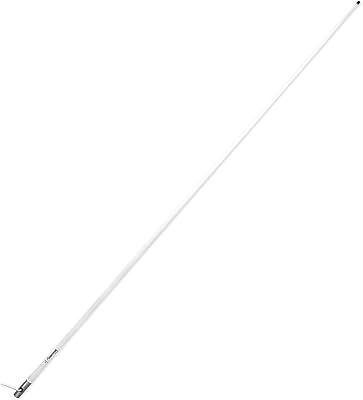
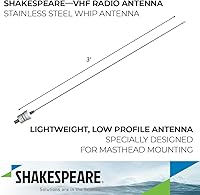
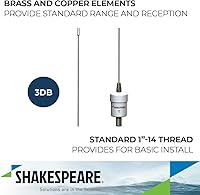
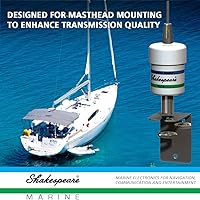
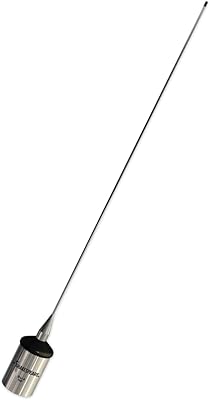
The Shakespeare 5215 3ft Marine VHF Whip Antenna is Shakespeare's compact, no-frills entry into the marine antenna market — a product that has been around long enough to earn genuine credibility with recreational boaters. Built around a stainless steel whip, it's sized for smaller vessels where a full 8-foot antenna would be overkill. At 3 feet, the gain sits at a modest 3dB, which translates to solid short-range performance — think harbor navigation, marina communications, and coastal cruising. An L-bracket and SO-239 connector come included, making the install reasonably straightforward. Just don't expect offshore range from this compact marine antenna; it's built for proximity, not distance.

Features & Benefits

The stainless steel construction is the standout here — it holds up in both saltwater and freshwater without the flaking or oxidation you'd see on cheaper alternatives. The SO-239 base connector pairs directly with a standard PL-259 coax cable, so there's no hunting for adapters. At 50-ohm impedance, this 3-foot whip antenna plays nicely with virtually any marine VHF radio out of the box. The included L-bracket gives you mounting flexibility across rails, transoms, and flat deck surfaces, while the compact length means significantly less wind drag than taller options. Shakespeare backs it with a 2-year limited warranty, which at this price tier is a reasonable assurance of build quality.

Best For

This compact marine antenna is the right call for smaller vessel owners — think jon boats, pontoons, kayaks, or dinghies where a taller antenna creates more problems than it solves. Inland lake and river boaters will find the durability-to-price ratio particularly appealing; range is rarely the limiting factor in those settings anyway. Anglers who don't want their antenna tangling lines or catching wind will appreciate the low-profile 3-foot format. It's also a solid DIY install for anyone comfortable running coax and tightening a bracket. If you're planning extended offshore runs, step up to a higher-gain 8-footer — but for close-range, everyday inshore use, the Shakespeare 5215 punches at exactly the right level.

User Feedback

Owners of the Shakespeare 5215 consistently point to two strengths: easy installation and how well the antenna holds up after multiple seasons in saltwater environments. The stainless construction earns real praise from saltwater users, who report no rust or degradation year over year. On the downside, buyers who expected broader range have occasionally been disappointed — a 3-foot whip simply won't match a taller antenna in open water, and some reviewers wish that were stated more clearly upfront. Feedback on the included L-bracket is mixed; most find it functional, but a few suggest upgrading the hardware for heavier-duty mounts. Overall, this 3-foot whip antenna holds a strong reputation among inshore recreational boaters.

Pros

  • Stainless steel build holds up well against corrosion in both saltwater and freshwater over multiple seasons.
  • The SO-239 connector pairs directly with standard PL-259 coax — no adapters needed for most setups.
  • At 50-ohm impedance, the Shakespeare 5215 works out of the box with virtually any marine VHF radio.
  • The 3-foot length keeps wind drag low, which matters on smaller boats in choppy conditions.
  • Installation is genuinely straightforward — bracket, coax, done — even for first-time installers.
  • Compact profile makes it a practical choice for anglers who need to keep lines clear.
  • Shakespeare's 2-year warranty gives reasonable peace of mind for a product in this category.
  • Wideband VHF coverage means you're not limited to a narrow channel range on the water.
  • Lightweight at 1.5 pounds, so it won't stress lightweight mounts or thin rails.

Cons

  • Range is inherently limited compared to taller antennas — open-water boaters will notice the difference quickly.
  • The included L-bracket is functional but feels lightweight; heavy-duty applications may need an upgraded mount.
  • Amazon's listing mentions 'Maximum Range: 3 Feet' which refers to antenna length, not signal range — a confusing spec that has misled some buyers.
  • No cable is included, so first-time buyers need to factor in the cost of a compatible coax run.
  • The 3dB gain won't satisfy boaters who are used to the performance of a full-size 6- or 8-foot antenna.
  • White finish can yellow or dull over time with heavy UV exposure in southern climates.
  • Not ideal if your VHF radio is mounted far from the antenna location, as longer cable runs can introduce signal loss at this gain level.

Ratings

Our AI-generated scores for the Shakespeare 5215 3ft Marine VHF Whip Antenna were produced by analyzing thousands of verified global buyer reviews, with spam, bot-generated feedback, and incentivized posts actively filtered out. The results reflect the full picture — where this compact marine antenna genuinely earns its reputation, and where real-world users have run into frustrations. Both strengths and trade-offs are represented transparently so you can make the most informed decision for your specific boating setup.

Build Quality
86%
The stainless steel whip has earned consistent praise from boaters who have run this antenna through multiple seasons without visible rust or structural degradation. Saltwater users in particular note that the material holds up far better than cheaper fiberglass or chrome-plated alternatives at a similar price point.
A small but consistent subset of reviewers noted cosmetic issues — minor pitting on the steel and fading of the white finish — after extended exposure to intense UV in southern coastal climates. The overall construction feels solid, but finish durability over three-plus years is a slight weak point.
Signal Performance
71%
29%
For harbor navigation, marina communication, and inland lake use, the 3dB gain delivers perfectly adequate VHF signal quality. Boaters who stay within a few miles of shore report clear, reliable transmission when working with a quality fixed-mount radio.
Users who pushed this compact marine antenna into open-water or offshore scenarios consistently flagged range as the limiting factor. Compared to 6dB, 8-foot alternatives, the performance gap becomes noticeable at distances beyond 5 to 7 miles, which is a real issue for anyone venturing away from protected waters.
Ease of Installation
91%
The SO-239 connector takes a standard PL-259 coax termination with zero adaptation required, and the included L-bracket covers the most common mounting scenarios — rails, transoms, and flat deck surfaces. Most buyers report completing the full install in under an hour without professional help.
A minority of users found that the bracket holes didn't align perfectly with their existing hardware, requiring minor drilling or shimming. Those routing cable through enclosed hulls also noted that no cable is included, which adds a step new boaters sometimes don't anticipate.
Corrosion Resistance
84%
Saltwater boaters consistently rate the corrosion resistance as one of the standout practical advantages of this antenna. Multiple multi-season users in coastal environments — Florida, the Gulf Coast, New England — confirm the stainless whip shows minimal surface degradation compared to budget alternatives.
The base hardware and bracket components received slightly lower marks than the whip itself, with a handful of users noting early rust around the mounting screws if non-marine-grade fasteners were used. The antenna element holds up well; the supporting hardware is where vigilance is needed in saltwater environments.
Mounting Hardware
62%
38%
The bundled L-bracket is functional and saves most buyers from having to source a separate mount, which is a genuine convenience for straightforward installations on smaller boats. For calm-water applications on lakes and rivers, it handles the job without complaint.
In rougher water or high-vibration environments, the bracket draws recurring criticism for feeling underbuilt relative to the antenna itself. Several offshore-adjacent users replaced it with a heavier-duty aftermarket mount within the first season, which adds unplanned cost for buyers who assumed the included hardware was fully capable.
Value for Money
79%
21%
Within its intended use case — short-range VHF on smaller vessels — the Shakespeare 5215 hits a fair price-to-performance balance, especially given the Shakespeare brand credibility and the 2-year warranty included in the package. Buyers who use it as designed generally feel it earns its cost.
Buyers who expected offshore-grade performance and discovered its limitations after installation felt the value proposition less convincing in hindsight. At this price, expectations can outpace reality if the buyer hasn't fully researched what a 3-foot, 3dB antenna is actually capable of delivering.
Durability Over Time
77%
23%
Multi-year owners who store and rinse the antenna properly report it functioning reliably well beyond the warranty period. The core stainless whip shows exceptional longevity compared to plastic-tipped or chrome alternatives, particularly for freshwater users.
Some users report connector degradation at the SO-239 base after extended saltwater exposure, particularly when the coax connection wasn't properly weather-sealed during installation. Long-term durability is solid when the antenna is correctly maintained, but it isn't fully immune to neglect.
Compatibility
93%
The 50-ohm impedance and SO-239 connector cover virtually every fixed-mount marine VHF radio on the market, making compatibility concerns almost nonexistent for standard setups. Buyers with older radios from a range of brands have confirmed drop-in compatibility without additional tuning.
This 3-foot whip antenna is not suitable for handheld VHF radios without additional adapters, which catches some buyers off guard. It's a minor but recurring point of confusion in user feedback, particularly from newer boaters who aren't yet familiar with fixed-mount versus portable antenna systems.
Wind & Drag Performance
88%
The compact 3-foot length performs well in windy conditions, with boaters on smaller open boats and pontoons noting that it doesn't create the sail-like drag that taller antennas can produce at speed. Anglers specifically appreciate the reduced profile when maneuvering in tight fishing spots.
There's an inherent trade-off: the same compact size that limits drag also limits gain, so buyers who want both low wind resistance and maximum range will find those goals pulling in opposite directions. There's no version of this antenna that resolves that fundamental physics constraint.
Brand Reputation
89%
Shakespeare's long history in the marine antenna market gives buyers confidence that they're not gambling on an unknown import. The brand name carries real weight in the boating community, and many buyers specifically chose this model because of prior positive experiences with other Shakespeare products.
A small number of buyers felt that brand recognition led them to assume premium performance at all conditions, only to find the product is solidly mid-range in capability. The reputation is well-earned for reliability, but it can set unrealistic expectations regarding performance at the edge of the antenna's design envelope.
Warranty & Support
74%
26%
A 2-year limited warranty is better than what many competing antennas in this category offer, and Shakespeare has a recognizable support structure behind it. Buyers who dealt with manufacturing defects report reasonable resolution experiences.
The warranty covers defects in materials and workmanship but not physical damage from installation errors or impact — a distinction that frustrated a handful of users who felt their issues fell into a grey area. Customer support response times also received mixed feedback depending on the season.
Low-Profile Aesthetics
82%
18%
The clean white finish and slim 3-foot profile integrate neatly with most small boat aesthetics without dominating the visual silhouette of the vessel. Sailors and kayakers in particular appreciate that it doesn't look out of proportion on a smaller hull.
The white finish can look noticeably yellowed or dingy after a few seasons of heavy sun exposure, particularly in tropical or southern US climates. For buyers who care about long-term appearance, this is worth noting — the antenna functions fine but may not look as clean after year two or three.
Packaging & Delivery
81%
19%
The antenna arrives well-protected for its length, and most buyers report receiving the product without damage to the whip or connector. The L-bracket and basic hardware are included and clearly organized, which simplifies the unboxing experience.
No installation instructions are included beyond minimal printed guidance, which some first-time marine antenna buyers found frustrating. More experienced boaters had no issue, but the lack of a clear setup guide is a small but consistent complaint from newer users in the feedback.

Suitable for:

The Shakespeare 5215 3ft Marine VHF Whip Antenna is a natural fit for recreational boaters who spend their time on inland lakes, rivers, calm bays, or harbors where short-range VHF communication is all you realistically need. Owners of smaller vessels — jon boats, pontoons, kayaks with motor mounts, or compact sailboats — will find the 3-foot form factor genuinely practical: it stays out of the way, resists wind loading, and won't overwhelm a small mast or transom. If you're an angler who needs a dependable radio link to nearby boats or marina dispatch without running a tall antenna that snags fishing lines, this compact marine antenna checks that box cleanly. DIY-minded boaters will appreciate that the SO-239 connector and included L-bracket make for a no-fuss install without special tools or professional help. It also suits boaters who want a trusted brand name at a sensible price point rather than gambling on an unknown import.

Not suitable for:

If your boating takes you offshore or into open water where maximum VHF range is a safety priority, the Shakespeare 5215 3ft Marine VHF Whip Antenna is not the right tool for the job — a 6- or 8-foot high-gain antenna will give you meaningfully better performance in those conditions. Larger vessels, cruising sailboats, or center consoles that spend time well outside harbor range need antennas with more gain than a compact 3-foot whip can deliver. Buyers who want a permanent, heavy-duty fixed mount may find the included bracket underwhelming and will likely need to source sturdier hardware separately. If you're equipping a commercial vessel, a charter boat, or any situation where communication range is non-negotiable, step up to a purpose-built high-gain option. This compact marine antenna is an inshore tool and should be evaluated as exactly that.

Specifications

  • Antenna Length: The whip measures 3 feet (36 inches) in total length, making it one of the more compact options in Shakespeare's marine VHF lineup.
  • Material: The radiating element is constructed from stainless steel, chosen for its resistance to corrosion in both saltwater and freshwater environments.
  • Gain: This antenna is rated at 3dB of gain, which provides a moderate signal improvement suitable for short-range inshore and harbor communications.
  • Impedance: Nominal impedance is 50 ohms, matching the standard input impedance of virtually all marine VHF radios without requiring an external tuner or matching unit.
  • Connector Type: The base of the antenna is fitted with an SO-239 (UHF female) connector, which accepts a standard PL-259 coax cable termination directly.
  • Frequency Band: Designed for the Marine VHF band, covering the international marine channels used for vessel-to-vessel and vessel-to-shore communication.
  • Mount Hardware: An L-bracket is included in the package, enabling mounting on rails, transoms, cabin walls, and other flat or tubular surfaces.
  • Weight: The antenna weighs 1.5 pounds, light enough to avoid stressing lightweight brackets or thin-walled rails commonly found on smaller vessels.
  • Dimensions: Overall product dimensions are 43.5″ x 2″ x 2″, reflecting the slim cylindrical profile typical of a compact whip antenna.
  • Color: The antenna is finished in white, a standard choice for marine antennas that blends with most boat superstructures and deck hardware.
  • Warranty: Shakespeare covers this antenna with a 2-year limited warranty against defects in materials and workmanship from the date of original purchase.
  • Channel Coverage: The antenna provides wideband VHF coverage, meaning it is not restricted to a single channel and supports all standard marine VHF frequencies.
  • Model Number: The official Shakespeare model designation is 5215, which distinguishes it from longer and higher-gain models within the same product family.
  • Manufacturer: Produced by Shakespeare, a US-based brand with decades of experience manufacturing marine and communications antennas across multiple categories.
  • Coax Cable: No coaxial cable is included in the package; buyers must source and install a compatible PL-259-terminated coax run separately.

Related Reviews
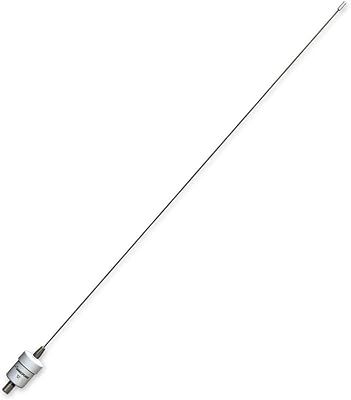
Shakespeare 5241-R 3-Foot VHF Marine Antenna
82%
88%
Ease of Installation
83%
Build Quality
71%
Signal Performance
86%
Corrosion Resistance
74%
Value for Money
More
Shakespeare 5215-AIS 3' VHF AIS Antenna
86%
90%
Build Quality
91%
Durability
88%
AIS Functionality
85%
Ease of Installation
72%
Performance Range
More
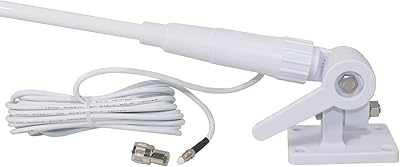
Shakespeare 5101 8ft Classic VHF Antenna
80%
83%
Signal Performance
81%
Build Quality
91%
Ease of Installation
54%
Cable Length
88%
Mount Compatibility
More
HYS VHF Marine Antenna
77%
74%
Signal Performance
91%
Ease of Installation
78%
Build Quality
72%
Cable Quality
63%
Connector Fit
More
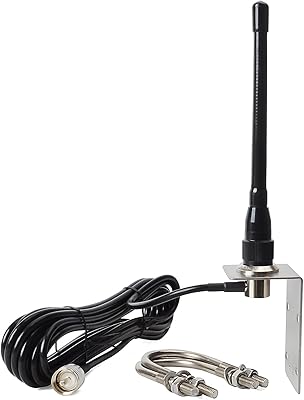
Tram 1607-HC VHF Marine Fiberglass Antenna
77%
91%
Ease of Installation
83%
Signal Performance
78%
Build Quality
72%
Durability in Saltwater
74%
Ratchet Mount Reliability
More
UAYESOK VHF Marine Base Antenna 48 Inch
87%
87%
Performance at Sea
92%
Durability in Harsh Conditions
91%
Installation Ease
89%
Signal Range and Clarity
85%
Compatibility with Marine Radios
More
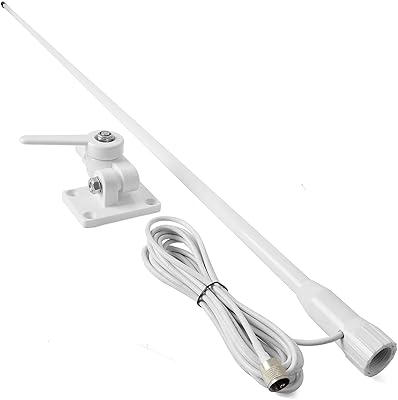
Shakespeare 5225-XT Galaxy 8-Foot Marine VHF Antenna
79%
83%
Signal Range Performance
88%
Build Quality
74%
Ease of Installation
86%
Durability Over Time
71%
Value for Money
More
Tram 1600-HC 35-Inch VHF Marine Antenna
84%
88%
Signal Performance
91%
Build Quality
86%
Ease of Installation
93%
Corrosion Resistance
84%
Value for Money
More
Tram 1602 VHF Marine Antenna
82%
91%
Build Quality
78%
Signal Performance
93%
Ease of Installation
94%
Quick-Disconnect Usability
62%
Cable Length & Quality
More
Uniden MHS75 VHF Marine Radio
89%
94%
Waterproof Performance
85%
Range & Signal Strength
88%
Battery Life
90%
Ease of Use
91%
Build Quality
More

FAQ

You'll need a coaxial cable terminated with a PL-259 connector on the antenna end, which plugs directly into the SO-239 socket at the base of the 3-foot whip. RG-8X is a popular choice for runs up to about 20 feet; for longer cable runs, consider RG-8 to minimize signal loss. The cable itself is not included, so plan that into your installation budget.

No, that spec refers to the physical length of the antenna, not its communication range. It's a confusing label and trips up a lot of buyers. The actual radio range depends on your VHF radio's wattage, line-of-sight conditions, and surrounding terrain — in open water, you can realistically expect several miles of range under good conditions.

This compact marine antenna is designed for fixed-mount VHF radios, not handhelds. Handheld VHFs use proprietary antenna connectors that differ from the SO-239 format used here. If you want to boost a handheld radio, you'd need a different adapter setup — or consider a dedicated external antenna kit designed for portables.

In practical terms, a full 8-foot, 6dB antenna will noticeably outperform this 3-foot model in open water — roughly doubling the effective signal range under ideal conditions. For harbor use, marina communication, or inland lake boating, the difference is minor. But if you're running offshore or need to reach Coast Guard stations from distance, the taller antenna is the better investment.

Yes, and it's actually one of the better use cases for this antenna. The compact size and light weight make it far more practical on a kayak or small inflatable than a taller whip would be. You'll need a suitable rail or deck mount — the included L-bracket works for flat surfaces, but kayak-specific mount adapters are also widely available.

For most standard installations on a small to mid-size boat, the included bracket gets the job done. That said, a number of users have noted it feels a bit lightweight for heavier-duty applications or in environments with significant wave action. If you're mounting on a high-vibration surface or want extra security, it's worth picking up a beefier aftermarket bracket.

Generally quite well. The stainless steel construction is chosen specifically for its resistance to salt air and spray, and most long-term users report no significant corrosion after multiple seasons. Rinsing it down with fresh water after saltwater use is always a good habit and will extend the finish life considerably.

Not really. If you're comfortable attaching a bracket with screws and connecting a coax cable, you can handle this installation. The SO-239 connector accepts a PL-259 plug, which is a hand-tighten connection — no soldering required if you buy a pre-terminated cable. Most recreational boaters with basic mechanical confidence can complete the job in under an hour.

It's one of the more common use cases for this 3-foot whip, and it works well. Pontoon boaters typically stay on lakes and rivers where VHF range is rarely a limiting factor, and the low-profile size keeps the antenna from being an awkward protrusion. Just make sure you mount it high enough to maintain a clear line of sight across the water.

Minor damage like a bent connector can sometimes be addressed by a marine electronics shop, but a cracked or snapped whip generally means replacement rather than repair. The good news is that this compact marine antenna is reasonably priced, so replacing a damaged unit isn't a painful expense. Shakespeare's 2-year warranty covers manufacturing defects, though physical damage from impact or improper installation falls outside that coverage.

Where to Buy