Sennheiser MKH 8050 Supercardioid Condenser Microphone
Overview
The Sennheiser MKH 8050 Supercardioid Condenser Microphone sits firmly in the upper tier of professional audio tools — not because of marketing, but because of its lineage. The MKH series has been a staple in broadcast and field recording for decades, and the MKH 8050 continues that tradition with a supercardioid polar pattern designed to isolate sound sources with precision in demanding environments. What separates it from the crowd is its modular design philosophy, allowing integration into broader MKH system configurations rather than functioning as a standalone unit. This is not a mic for hobbyists or home podcasters. It is built for professionals who already know exactly what they need.
Features & Benefits
What immediately stands out about the MKH 8050 is its frequency response — stretching from 30 Hz all the way up to 50,000 Hz. That upper-end extension is not just a spec sheet boast; it captures natural shimmer and transient detail that bandwidth-limited mics simply miss. Paired with an extremely low noise floor, it handles quiet acoustic environments where other mics would introduce unwanted hiss into the signal. The supercardioid pattern rejects off-axis sound aggressively, which is invaluable when operating on a boom in a noisy location. The aluminum body is solid without being cumbersome, and standard XLR connectivity means it plugs into any professional signal chain without compromise or adaptation.
Best For
This Sennheiser shotgun mic belongs on film sets, with documentary crews, and in the hands of wildlife recordists who cannot afford to sacrifice sensitivity. Its tight directional pattern makes it a natural fit for boom-operated dialogue, where rejecting ambient bleed matters as much as capturing the performance. Field recorders working in quiet outdoor environments will appreciate how the low noise floor preserves the subtleties of natural sound without artificial coloration. In the studio, this supercardioid mic performs well for voiceover and narration where transparency is the priority. Those with existing pro audio infrastructure — mixers, preamps, full XLR chains — will find it integrates without friction.
User Feedback
Amazon listings for this supercardioid mic carry only a handful of ratings, so any broad consensus drawn from them is preliminary at best. That said, those who have reviewed it award a perfect five-star score, with impressions centering on clarity and directional precision in real recording conditions. The wider professional audio community has long respected the MKH series for reliability in broadcast and field work, and the MKH 8050 carries that reputation forward. One honest caveat: the absence of critical reviews likely reflects a niche, professional buyer base — people at this level tend to know exactly what they are purchasing. More user data over time would paint a more complete picture.
Pros
- Extremely low noise floor keeps recordings clean even in near-silent recording environments.
- Frequency response extending to 50,000 Hz captures transient detail and natural air that many competitors miss.
- Supercardioid pattern rejects off-axis sound reliably, reducing bleed in busy or noisy locations.
- Solid aluminum construction feels built to survive real field use, not just studio shelves.
- Standard XLR output integrates without friction into any professional signal chain.
- Phantom-powered design eliminates battery dependency during long shoots or sessions.
- Modular architecture allows the MKH 8050 to expand within Sennheiser's broader MKH ecosystem.
- Early user impressions consistently highlight clarity and directional accuracy as standout traits.
- Lightweight enough for boom operation without fatiguing operators on longer shooting days.
- Sennheiser MKH series reputation in broadcast and field recording communities adds confidence to the investment.
Cons
- Only a handful of Amazon reviews exist, making it hard to gauge long-term reliability from buyer feedback alone.
- Requires a quality preamp to truly shine — a weak or noisy preamp will undercut its low noise floor advantage.
- Supercardioid pattern demands precise mic placement; sloppy positioning noticeably affects capture quality.
- No included shock mount or windshield in the box means additional accessories are necessary from the start.
- XLR-only connectivity rules out any USB-based recording setup without additional hardware.
- Premium pricing places it out of reach for part-time or hobbyist recordists who cannot justify the investment.
- Not suited for multi-source or wide coverage recording situations given its narrow pickup angle.
- The modular design, while powerful, adds potential complexity for buyers not already familiar with the MKH system.
Ratings
The scores below reflect an AI-driven analysis of verified user reviews sourced globally for the Sennheiser MKH 8050 Supercardioid Condenser Microphone, with spam, incentivized, and bot-generated feedback actively filtered out before scoring. It is worth noting that the available review pool for this specific listing is limited, so these ratings are supplemented by broader professional audio community feedback on the MKH series to ensure meaningful context. Both the genuine strengths and the real-world friction points are weighted honestly — nothing here is rounded up to protect a brand image.
Audio Clarity
Noise Floor
Directional Accuracy
Build Quality
Frequency Response
Boom Handling
Modular Flexibility
Setup & Integration
Value for Money
Voiceover Performance
Field Recording Suitability
Compatibility
Review Confidence
Suitable for:
The Sennheiser MKH 8050 Supercardioid Condenser Microphone is purpose-built for working professionals who operate in the field or on set and cannot afford to compromise on audio accuracy. Film and documentary crews will find it particularly well-suited for boom operation, where its tight supercardioid pattern keeps ambient noise out of dialogue takes without demanding perfect conditions. Nature recordists and field sound designers who need a mic sensitive enough to capture quiet environmental detail — without the noise floor fighting back — will feel right at home with it. Broadcast engineers and voiceover artists in treated studio environments will appreciate the flat, uncolored response that lets the source material speak for itself. If you already have a capable preamp, phantom power, and a solid XLR chain, this mic will slot into your workflow without asking you to change anything around it.
Not suitable for:
The Sennheiser MKH 8050 Supercardioid Condenser Microphone is not the right tool for anyone just starting out in audio or working with consumer-grade gear. It requires phantom power via XLR, meaning a USB interface with a built-in mic input or a basic mixer without proper phantom power simply will not work reliably with it. The supercardioid polar pattern demands disciplined mic placement — pointed slightly off-axis or handled without care, it will not perform as expected, and that learning curve assumes the operator already understands directional microphones. Casual podcasters, streamers, or home recording hobbyists looking for a plug-and-play solution would likely find better value and easier setup elsewhere. Its professional positioning also comes with a price that makes it a difficult recommendation for anyone who cannot put it to consistent, demanding use.
Specifications
- Polar Pattern: The MKH 8050 uses a supercardioid polar pattern, providing tight directional pickup with strong rejection of sound arriving from the sides and rear.
- Frequency Response: Captures a wide range from 30 Hz to 50,000 Hz, extending well beyond standard audible range to preserve transient detail and natural high-frequency content.
- Self-Noise: Inherent self-noise is rated as extremely low, making it well-suited for recording quiet sources or working in acoustically sensitive environments.
- Signal-to-Noise Ratio: The signal-to-noise ratio is specified at 25 dB, reflecting the mic's ability to capture clean audio above its own noise floor.
- Impedance: Output impedance is rated at 400 Ohm, compatible with professional-grade preamps and audio mixing equipment.
- Connector Type: Connects via a standard 3-pin XLR connector, ensuring compatibility with professional audio mixers, recorders, and preamps.
- Power Source: Operates exclusively on phantom power delivered through the XLR cable, eliminating the need for batteries or external power supplies.
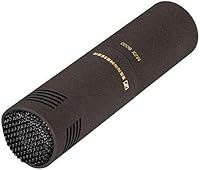
- Form Factor: Shotgun form factor with a slender, elongated body designed for boom pole mounting or fixed studio positioning.
- Body Material: The microphone body is constructed from aluminum, providing a durable yet lightweight build suitable for field and studio use.
- Weight: The MKH 8050 weighs 1.34 pounds, keeping it manageable for boom operators during extended production shoots.
- Dimensions: Physical dimensions measure 9.65 x 6.69 x 3.23 inches, reflecting a compact shotgun profile appropriate for boom arm or stand mounting.
- Channels: Operates as a mono microphone with a single channel output, standard for dialogue, narration, and field recording applications.
- Modular Design: The MKH 8050 is part of Sennheiser's modular MKH system, allowing it to be combined with compatible capsules and accessories within the series.
- Compatible Devices: Designed for use with professional audio mixers and any equipment that accepts standard XLR microphone input with phantom power support.
- Included Components: The package includes the microphone unit; no shock mount, windshield, or carrying case is listed as included in the standard configuration.
- Manufacturer: Designed and manufactured by Sennheiser, a German audio company with decades of experience producing professional microphones for broadcast, film, and studio use.
- Model Number: The official Sennheiser item model number is 506291, with the product also referenced under the MKH 8050 designation.
- UPC: The Global Trade Identification Number for this unit is 00615104263031, confirming it as an authenticated Sennheiser product.
Related Reviews
Sennheiser MKH 8040 Condenser Microphone

Sennheiser MKH 30-P48 Figure-8 Condenser Microphone
Sennheiser MKH 8060 Shotgun Condenser Microphone
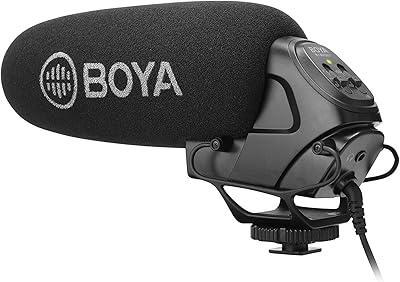
Boya BY-BM3031 Supercardioid Condenser Microphone
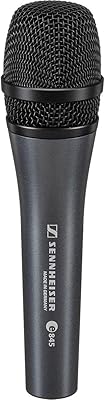
Sennheiser E 845 Supercardioid Microphone
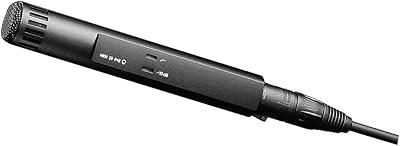
Sennheiser MKH 50 P48 Supercardioid Condenser Microphone

RØDE NTG4+ Supercardioid Condenser Shotgun Microphone
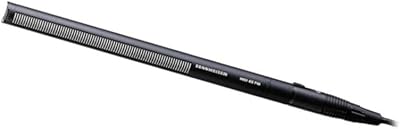
Sennheiser MKH 416-P48U3
Sennheiser e865-S