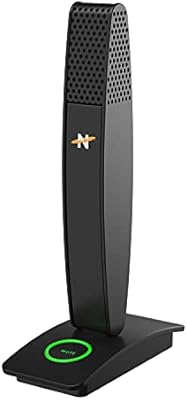
Sennheiser MKH 8040 Condenser Microphone
Overview
The Sennheiser MKH 8040 Condenser Microphone occupies a well-earned place in professional audio circles — a small-diaphragm cardioid built on Sennheiser's RF condenser technology that has long been trusted on film sets, in broadcast studios, and at classical music recordings. This isn't a mic you pick up casually. It's a reference-class tool designed for recordists who already know what they're doing and need a microphone that won't add character where none is wanted. The transformerless RF capsule and cardioid polar pattern are its defining traits. To get anything meaningful out of it, you'll need phantom power, a quality XLR chain, and the experience to position it well.
Features & Benefits
What separates the MKH 8040 from most small-diaphragm condensers is how honest it sounds across the entire frequency range — 30 Hz all the way to 50,000 Hz. That's not a spec to impress on paper; it means this Sennheiser condenser captures what's actually in the room without hyping highs or smearing transients. The ultra-low self-noise matters most for quiet sources like solo strings or acoustic guitar, where any hiss from a lesser mic becomes audible in the mix. The cardioid pattern holds its shape reliably off-axis, which is critical for precise spot-miking. And despite its capabilities, the compact body slips into tight placement positions that larger mics simply cannot reach.
Best For
This Sennheiser condenser is at home in environments where accuracy is non-negotiable. Think concert hall overheads, spot mics on a string quartet, or dialogue capture on a film set — situations where the recording chain has to stay out of the way of the source. The MKH 8040 is equally well-regarded in surround sound production, particularly when matched pairs are needed for consistent spatial imaging. Location recordists appreciate its reliability under pressure. That said, if your work is primarily podcasting, streaming, or casual home recording, this is not your mic. The complexity and cost only make sense when professional output quality is genuinely required, not merely aspired to.
User Feedback
Among engineers who rely on this professional mic regularly, consistent praise centers on its flat, uncolored response — recordings sound like the source, not like the microphone. The low noise floor draws particular attention from those capturing delicate acoustic instruments in quiet spaces. On the flip side, several buyers note that the included accessories feel thin relative to the overall investment. More than a few also point out that a mediocre preamp will hold this mic back considerably — it rewards, and frankly demands, a quality signal chain. For those prepared to build around it properly, the MKH 8040 tends to earn a permanent spot in the kit.
Pros
- Extraordinarily flat frequency response means recordings reflect the source truthfully, with no artificial coloring.
- Ultra-low self-noise makes this Sennheiser condenser one of the best choices for quiet acoustic instruments.
- Consistent cardioid pattern holds up reliably off-axis, reducing unwanted room sound during spot-miking.
- The compact body fits into tight placement positions where larger mics simply cannot go.
- Matched pairs show excellent capsule-to-capsule consistency, ideal for stereo and surround work.
- Built to withstand the rigors of location recording and professional production environments.
- Wide frequency response extending to 50,000 Hz captures detail that most condensers miss entirely.
- Transformerless RF design delivers exceptional transient accuracy without the coloration transformers can introduce.
- XLR connectivity integrates cleanly into any professional-grade signal chain or mixer setup.
- Trusted by broadcast engineers and classical recording teams worldwide over many years of real-world use.
Cons
- Requires a high-quality preamp to perform at its potential — budget interfaces will bottleneck results noticeably.
- Included accessories are minimal and may require additional purchases for a complete professional setup.
- The investment only makes financial sense in a semi-professional or professional recording context.
- Phantom power is mandatory, adding a dependency that limits use with basic or portable recording rigs.
- New buyers unfamiliar with mic placement will struggle to unlock what the MKH 8040 actually offers.
- No USB option or plug-and-play functionality — this mic demands a full analog signal chain.
- At this price tier, any weakness elsewhere in the recording chain becomes harder to ignore.
- Overkill for spoken word, podcasting, or casual home recording where simpler mics perform comparably.
Ratings
The scores below reflect an AI-driven analysis of verified user reviews from professional audio communities and global marketplaces, with spam, bot activity, and incentivized feedback actively filtered out. The Sennheiser MKH 8040 Condenser Microphone earns consistently high marks from working engineers and serious recordists, though a few recurring pain points around cost, accessories, and setup complexity keep some scores grounded. Both the genuine strengths and the honest frustrations are represented here without softening either side.
Sound Accuracy
Self-Noise Performance
Polar Pattern Consistency
Build Quality
Value for Money
Transient Response
Placement Versatility
Matched Pair Consistency
Frequency Extension
Durability Under Field Conditions
Setup & Integration
Accessory Inclusion
Surround Sound Suitability
Suitable for:
The Sennheiser MKH 8040 Condenser Microphone is purpose-built for professional recordists who need a microphone that gets out of the way and simply captures what's there. It excels as a spot mic in classical and orchestral recording, where any coloration or noise floor would be immediately noticeable to a trained ear. Film and broadcast sound engineers will find this Sennheiser condenser equally at home on a boom arm, mounted over a string section, or planted as a room mic in a controlled studio environment. Those building matched stereo or surround arrays will appreciate how consistently the capsule behaves from unit to unit — that kind of reliability is not a given at any price. Location recordists working in demanding conditions also benefit from the MKH series build quality, which holds up where less robust mics tend to fail.
Not suitable for:
If you are just getting into audio recording, building a home studio on a budget, or primarily recording voice for podcasts and content creation, the Sennheiser MKH 8040 Condenser Microphone is not a wise starting point. The return on this level of investment only materializes when it is paired with a genuinely capable preamp and a clean XLR signal chain — run it through a modest interface and you will not hear the difference that justifies the cost. The MKH 8040 is also not a plug-and-play solution; it demands thoughtful mic placement, acoustic awareness, and a recordist who already understands gain staging. Buyers expecting a significant sonic leap without upgrading the rest of their chain are likely to be disappointed. This professional mic is a long-term tool for a mature setup, not an upgrade for its own sake.
Specifications
- Polar Pattern: Cardioid directional pattern that rejects sound from the rear and sides, minimizing off-axis coloration in critical recording situations.
- Frequency Response: Wide response ranging from 30 Hz to 50,000 Hz, capturing detail well beyond the audible range of most standard condenser microphones.
- Capsule Type: RF condenser capsule with a transformerless circuit design, contributing to extremely low self-noise and accurate transient reproduction.
- Connectivity: XLR output connector for integration with professional preamps, mixing consoles, and audio interfaces.
- Power Source: Requires standard 48V phantom power supplied via XLR from a compatible preamp or audio interface.
- Form Factor: Mini small-diaphragm body designed for discreet placement on stage, in orchestras, or on film and broadcast sets.
- Dimensions: Physical dimensions measure 9.65 x 6.69 x 3.23 inches, allowing flexible positioning in tight recording environments.
- Weight: Weighs 1.33 pounds, making it manageable for boom and stand mounting across extended recording sessions.
- Channels: Single-channel (mono) output, intended for use as a standalone spot mic or in pairs for stereo and surround configurations.
- Self-Noise: Extremely low inherent self-noise level, making this microphone well-suited for capturing quiet acoustic sources without audible background hiss.
- Manufacturer: Designed and manufactured by Sennheiser, a professional audio company with decades of experience in broadcast and studio microphone development.
- Model Number: Official model number is 506289, commonly identified by the product designation MKH 8040 across professional audio markets.
- Compatible Devices: Primarily compatible with professional audio equipment including radio broadcast systems, mixing consoles, and high-quality studio preamps.
- Included Components: Package includes the microphone unit; additional accessories such as specialized mounts or windscreens are sold separately.
- UPC: Universal Product Code is 615104262980, corresponding to the standard retail unit sold under ASIN B012XGSV2C.
Related Reviews
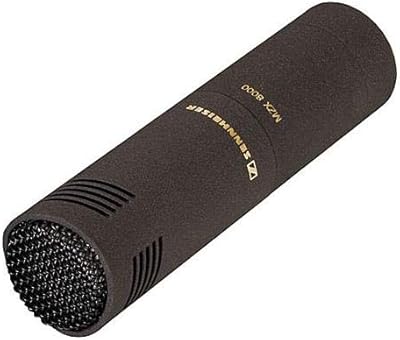
Sennheiser MKH 8050 Supercardioid Condenser Microphone

Sennheiser MKH 30-P48 Figure-8 Condenser Microphone
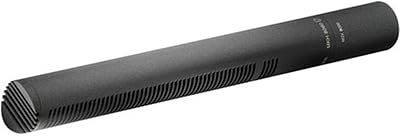
Sennheiser MKH 8060 Shotgun Condenser Microphone
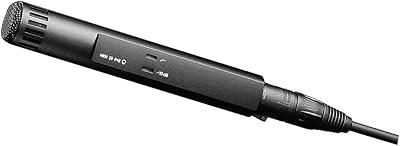
Sennheiser MKH 50 P48 Supercardioid Condenser Microphone
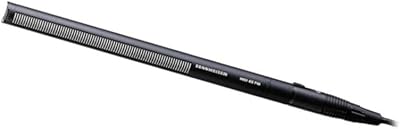
Sennheiser MKH 416-P48U3
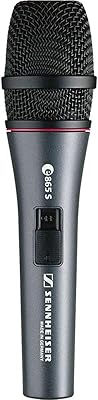
Sennheiser e865-S
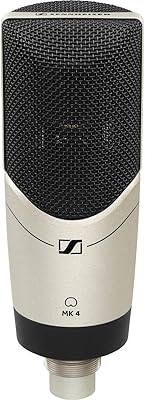
Sennheiser MK 4 Large-diaphragm Condenser Microphone
Aston Microphones Stealth Condenser Microphone
Blue Blueberry Cardioid Condenser Microphone