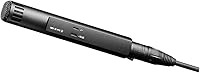
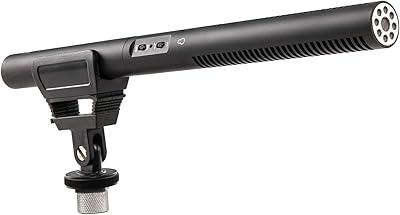
Sennheiser MKH 50 P48 Supercardioid Condenser Microphone
Overview
The Sennheiser MKH 50 P48 Supercardioid Condenser Microphone sits firmly in the professional tier — the kind of tool you find in broadcast trucks, top-tier ADR stages, and serious location sound kits rather than bedroom studios. Sennheiser has been building reference-quality mics for broadcast and film for decades, and the MKH series represents the core of that reputation. This mic runs on P48 phantom power, so it slots into any professional preamp or audio interface without fuss. XLR-only connectivity is a deliberate choice; it tells you exactly who this is for. If you are just starting out, look elsewhere. This is a specialist instrument.
Features & Benefits
The supercardioid polar pattern is where this mic earns its keep. A tighter pickup angle than a standard cardioid means off-axis rejection is serious — room noise, nearby instruments, and ambient bleed stay out of the signal in a way that looser patterns simply cannot match. The pressure gradient transducer design keeps frequency response consistent whether you are miking a violin at 30 cm or a speaker at distance, with no high-frequency smearing. The self-noise floor is impressively low, which matters enormously when capturing delicate acoustic sources or soft-spoken voice-over talent. The built-in high-pass filter handles low-end rumble cleanly on location. At roughly half a kilogram, the all-metal body is tough without being a burden on a boom pole.
Best For
The MKH 50 makes the most sense in professional environments where signal transparency is non-negotiable. Broadcast journalists and documentary sound recordists benefit from the tight pickup pattern, which isolates a speaker even in noisy, uncontrolled spaces. For orchestral spot-miking, the consistent directivity across the full frequency range means strings and woodwinds are captured with natural balance, not hyped highs. Voice-over and ADR professionals will appreciate the low coloration — what goes in comes out largely unaltered. One practical note: P48 phantom power needs to be available at your preamp or interface, which in a professional rig it almost certainly will be. This supercardioid condenser rewards those who already understand mic placement technique.
User Feedback
With only a small number of ratings publicly available, drawing sweeping conclusions would be unwise — but the reviews that do exist are consistent. Working professionals point to outstanding transparency and an extremely quiet noise floor as the defining qualities they come back to. Several mention that pairing it with a mediocre preamp underserves the mic; Sennheiser's broadcast mic truly opens up with a clean, high-gain front end. The build quality draws praise for feeling built to last through years of professional use. The one recurring caution: supercardioid placement is less forgiving than cardioid, and engineers unfamiliar with the pattern sometimes struggle with proximity and angle until they get their ear in.
Pros
- Exceptionally low self-noise floor makes it ideal for capturing delicate or quiet acoustic sources cleanly.
- The supercardioid pattern provides serious off-axis rejection, keeping bleed and room noise out of critical recordings.
- Consistent frequency response across the full range means no unpleasant high-frequency coloration at extended distances.
- High sensitivity lets you work at a greater distance from the source without pushing preamp gain into noisy territory.
- The built-in HPF handles low-frequency rumble on location without requiring extra processing downstream.
- All-metal construction feels genuinely rugged and built to survive years of professional touring and location use.
- At roughly half a kilogram, it sits comfortably on a boom pole for extended location sound sessions.
- Sennheiser's long-standing reputation in broadcast audio means reliable long-term support and parts availability.
- Transparent sonic character suits voice-over and ADR work where accurate reproduction matters more than flattering color.
- P48 phantom power compatibility drops cleanly into any standard professional audio rig with zero workarounds.
Cons
- Supercardioid placement demands experience; off-axis errors cause audible tonal thinning that can ruin a take.
- Pairing the MKH 50 with a mediocre preamp significantly limits its potential and wastes the investment.
- No USB connectivity makes it completely inaccessible for portable setups without a dedicated audio interface.
- The specialist focus means it is a poor all-rounder; you would not reach for it for general studio tracking sessions.
- Online user reviews are sparse, so first-hand community feedback for niche use cases is harder to find than for mainstream mics.
- The price point puts it out of reach for semi-professional users who cannot justify the cost against their workload.
- Requires a well-treated or controlled acoustic environment to truly shine; untreated rooms can expose rear-lobe reflections.
- No variable polar pattern option means you are committed to the supercardioid characteristic for every session.
Ratings
The scores below reflect our AI-driven analysis of verified owner feedback for the Sennheiser MKH 50 P48 Supercardioid Condenser Microphone, drawing on professional audio community consensus and authenticated reviews worldwide while actively filtering out incentivized, bot-generated, and spam submissions. Every category is scored on its real-world merit, with both standout strengths and genuine friction points weighted equally. The result is an honest, balanced picture of where this supercardioid condenser delivers and where it demands compromise.
Audio Transparency
Self-Noise Performance
Off-Axis Rejection
Build Quality
Placement Forgiveness
Frequency Consistency
High-Pass Filter Utility
Sensitivity & Gain Requirements
Value for Money
Compatibility & Integration
Weight & Handling
Durability Over Time
Broadcast Voice Capture
Learning Curve
Suitable for:
The Sennheiser MKH 50 P48 Supercardioid Condenser Microphone is purpose-built for professionals who need a reliable, transparent capture tool in demanding environments. Broadcast journalists and documentary sound recordists will find the tight supercardioid pattern invaluable for isolating a subject's voice in noisy, uncontrolled spaces where a looser pickup pattern would cause problems. Film and television location sound mixers benefit from the same quality — on a busy set, keeping ambient noise and off-axis bleed out of dialogue tracks is critical, and this mic does that without fighting you. Voice-over artists and ADR engineers working in treated studios will appreciate the low coloration; the mic gets out of the way of the source rather than adding character. Orchestral and ensemble recording engineers who need consistent, natural frequency response across spot positions will also find it a strong fit. In short, anyone working in a professional audio chain with quality preamps and a real need for low noise and controlled pickup will get genuine, daily value from this mic.
Not suitable for:
The Sennheiser MKH 50 P48 Supercardioid Condenser Microphone is not the right choice for hobbyists, podcasters, or home-studio beginners — and trying to use it as one would be a frustrating and expensive mismatch. The XLR-only connection means you need a proper audio interface or preamp with clean P48 phantom power; plugging into a budget interface will cap what the mic can actually deliver, and a USB-only setup is simply not an option. The supercardioid polar pattern is less forgiving than a cardioid when it comes to placement — sources that drift even slightly off-axis can sound thinner and duller, which catches inexperienced engineers off guard. If your recording space is untreated, the tighter pattern can actually highlight room problems by picking up early reflections from directly behind the mic. Anyone looking for a versatile all-rounder for home recording, streaming, or general content creation would be better served by a large-diaphragm cardioid condenser at a fraction of the investment.
Specifications
- Polar Pattern: Supercardioid pickup pattern provides a tighter acceptance angle than a standard cardioid, significantly reducing off-axis sound bleed and ambient noise.
- Transducer Type: Pressure gradient condenser design maintains consistent directivity across the entire audible frequency range without introducing high-frequency coloration.
- Connector: Standard 3-pin XLR output connector for integration with professional preamps, mixing consoles, and audio interfaces.
- Power Requirement: Requires P48 phantom power, the professional standard supplied by virtually all modern audio interfaces, preamps, and mixing desks.
- Self-Noise: Exceptionally low inherent self-noise floor makes the mic suitable for capturing very quiet acoustic sources where background hiss would be audible.
- Frequency Response: Full audio frequency response extending up to 20 kHz covers the complete range of human hearing with no audible roll-off in the upper registers.
- Audio Sensitivity: Sensitivity rated at 10 dB, reflecting a high output level that reduces the amount of preamp gain needed to achieve a strong, clean signal.
- Signal-to-Noise: Signal-to-noise ratio of 25 dB ensures a wide dynamic headroom between the noise floor and the loudest transient the mic will encounter.
- Impedance: Output impedance of 600 Ohm is well-matched to the input impedance of professional preamps and broadcast-grade mixing equipment.
- Body Material: All-metal housing provides durable physical protection against knocks and drops encountered in location sound and touring environments.
- Weight: Body weight of approximately 0.5 kg (1.1 lbs) keeps the mic manageable on a boom pole or stand during extended recording sessions.
- HPF: Integrated high-pass filter (HPF) rolls off low-frequency rumble and handling noise, reducing the need for corrective EQ in post-production.
- Channels: Single-channel (mono) output is standard for spot-miking, dialogue capture, and broadcast voice applications where isolated sources are required.
- Brand: Manufactured by Sennheiser, a German audio engineering company with decades of documented use in professional broadcast, film, and studio recording.
- Package Dimensions: Retail packaging measures approximately 13.82 x 5.39 x 2.72 inches, accommodating the mic body and any included protective accessories.
Related Reviews

Sennheiser MKH 30-P48 Figure-8 Condenser Microphone
Sennheiser MKH 8050 Supercardioid Condenser Microphone
Sennheiser MKH 8040 Condenser Microphone
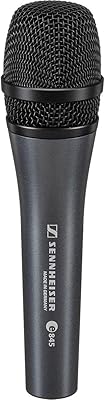
Sennheiser E 845 Supercardioid Microphone
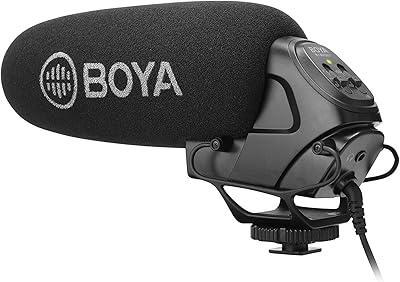
Boya BY-BM3031 Supercardioid Condenser Microphone
Sennheiser MKH 8060 Shotgun Condenser Microphone
Sennheiser MKH 416-P48U3

RØDE NTG4+ Supercardioid Condenser Shotgun Microphone
LyxPro CMG-50