Overview

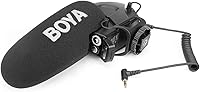
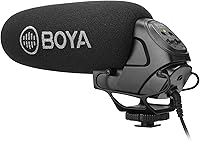
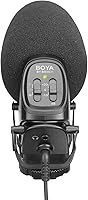
The Boya BY-BM3031 Supercardioid Condenser Microphone sits in an interesting spot — it is not a throwaway budget mic, but it is also not asking for a professional audio budget. Built for independent videographers and content creators who need something better than a camera's built-in audio, it uses a supercardioid polar pattern to capture a tighter sound field than a standard cardioid would, which genuinely helps when side noise is a problem on location. It runs on two AA batteries and connects via a 3.5mm jack, keeping setup simple. The integrated shockmount feels solid enough for regular use, and the lightweight ABS construction comes across as practical rather than cheap.
Features & Benefits

The three-level gain switch is one of the BY-BM3031's most practical assets. Dial it to +20dB in quiet rooms, leave it at unity for standard conditions, or pull it back to -10dB near loud sources like speakers or crowds. The switchable 80Hz high-pass filter handles low-frequency rumble well — foot traffic, HVAC hum, light wind — without noticeably dulling vocal presence. There is also a headphone monitoring jack, which lets you catch audio problems on the spot rather than discovering them in post-production. At 150 grams, this on-camera microphone will not throw off your rig balance on a handheld or gimbal setup.

Best For

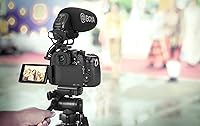
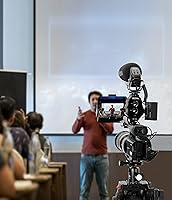
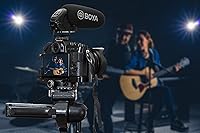
This shotgun mic is a natural fit for DSLR and mirrorless shooters who are tired of unusable built-in audio but are not ready to invest in a full audio kit with a dedicated recorder and boom operator. Solo run-and-gun videographers will appreciate how compact and unobtrusive it sits on a camera hot shoe. Interview shooters and vloggers working in moderately controlled environments — indoors, or light outdoor settings — should get reliable, consistent results. It also pairs well with a portable audio recorder for documentary-style fieldwork. Anyone who needs a monitoring output built directly into the mic will find that added convenience genuinely useful.

User Feedback

Buyers generally respond well to this on-camera microphone, pointing to the gain switch flexibility and compact footprint as the most useful practical benefits, with value for money mentioned frequently. The battery dependency, however, draws consistent criticism — carrying spare AAs adds friction for shooters who prefer phantom-powered mics they can simply plug in. Outdoor wind performance is another weak spot; without a dead cat windscreen, gusty conditions are a real issue. Compared to the Rode VideoMicro or Deity V-Mic D3, some buyers find the audio character slightly less polished. Those who prioritize feature count and monitoring access at this price tend to come away satisfied; buyers chasing cleaner audio alone may want to spend a bit more.

Pros

  • Three-level gain switch handles a wide range of recording environments without needing external adjustments.
  • Built-in headphone monitoring jack lets you verify audio quality on the spot, no extra gear needed.
  • Supercardioid pattern rejects side and rear noise better than most basic on-camera mics.
  • The switchable 80Hz high-pass filter effectively cuts HVAC hum and low rumble in indoor settings.
  • At 150 grams, the BY-BM3031 adds minimal weight to a handheld or gimbal camera setup.
  • Integrated shockmount does a decent job absorbing handling vibrations from the camera body.
  • Connects via standard 3.5mm jack, making it compatible with a wide range of cameras and recorders.
  • Offers strong feature density for its price tier, including gain control, filtering, and monitoring in one unit.
  • ABS construction keeps the unit light without feeling dangerously fragile for location work.

Cons

  • Requires two AA batteries to operate, adding ongoing cost and the risk of power loss mid-shoot.
  • No windscreen is included, making outdoor use in anything but calm conditions a real problem.
  • Audio quality, while acceptable, falls noticeably short of rivals like the Rode VideoMicro in terms of natural character.
  • Long-term durability of the 3.5mm jack and mount hardware has drawn concern from some regular users.
  • Battery-powered design means no phantom power compatibility, limiting workflow flexibility on some rigs.
  • Supercardioid pattern requires careful mic placement; point it slightly off-axis and you lose presence fast.
  • Mono-only output rules it out for any stereo recording application.
  • The plastic body, while lightweight, may not hold up well under the rigors of frequent professional field use.

Ratings

The scores below reflect an AI-driven analysis of verified global buyer feedback for the Boya BY-BM3031 Supercardioid Condenser Microphone, with spam, incentivized reviews, and bot activity actively filtered out before scoring. Each category is rated independently to give you an honest, granular picture of where this on-camera microphone genuinely delivers and where real users have run into friction. Both the strengths and the recurring pain points are weighted transparently in every score.

Audio Clarity
74%
26%
For indoor interviews, vlog narration, and controlled studio setups, buyers consistently report clean, intelligible dialogue with acceptable background noise rejection. The supercardioid pattern does real work in moderately noisy environments, pulling vocals forward in a way that built-in camera mics simply cannot match.
Compared to similarly priced rivals like the Rode VideoMicro, a portion of users notice the audio character is slightly thin and less natural-sounding, particularly on voices with a lot of mid-range warmth. It is honest, workable audio — but it is not the last word in sonic quality at this tier.
Noise Rejection
78%
22%
The supercardioid polar pattern gives the BY-BM3031 a tighter pickup angle than most entry-level shotgun mics, which translates to noticeably less ambient bleed during indoor shoots, office interviews, or crowded event filming. Buyers shooting in moderately busy environments consistently praise how well it isolates the primary sound source.
In genuinely loud or reverberant spaces — like a live venue or a tiled room — the rejection starts to break down and off-axis noise bleeds through more than the pattern suggests. Users expecting professional broadcast-level isolation will find the limits of this design fairly quickly.
Gain Control
88%
The three-position gain switch is one of the most praised features among buyers, offering real practical flexibility without needing to dive into camera menus mid-shoot. Switching to the +20dB boost for a quiet whisper-level source, or pulling back to -10dB near a loud speaker, takes seconds and makes a tangible difference to the recorded level.
The switch positions are not labeled in a way that is immediately intuitive without consulting the manual, and a few users report accidentally knocking the switch during a shoot. There is no detent resistance, so it can move more easily than you would want on a run-and-gun setup.
Wind Performance
41%
59%
The included foam windscreen handles very light breezes and indoor air conditioning drafts adequately, and for controlled outdoor conditions on a calm day it performs reasonably well. In those narrow circumstances, wind contamination is minimal enough to not be a serious concern.
Anything beyond a gentle breeze renders the stock windscreen functionally useless, which is a recurring and sharp frustration among buyers who shoot outdoors regularly. The mic essentially requires a third-party dead cat windscreen for any meaningful location work, adding cost that is not reflected in the box contents.
High-Pass Filter
82%
18%
Buyers shooting in spaces with HVAC systems, traffic rumble, or floor vibration find the 80Hz high-pass filter genuinely effective at cleaning up the low end without audibly dulling the vocal presence in the recording. It is the kind of feature you do not notice when it is working correctly — which is a good sign.
The filter is a fixed 80Hz cutoff with no adjustment, which works well for most scenarios but can feel blunt in situations where the problem frequency sits higher or lower. A small number of users working in specific acoustic environments wish the roll-off point were configurable.
Headphone Monitoring
83%
Solo shooters routinely single out the built-in 3.5mm headphone jack as a standout convenience, allowing real-time audio verification without carrying a separate field recorder. Catching a loose cable connection or an unexpected clipping issue before wrapping a shoot is the kind of thing that saves hours of reshooting.
The monitoring output does not include any level control, so users with sensitive in-ear monitors can find the output uncomfortably loud or difficult to balance. It is also worth noting that the monitoring is a direct feed, not a polished mix, so what you hear is the raw captured signal.
Build Quality
63%
37%
At its weight and price point, the ABS plastic construction feels acceptably solid for occasional and semi-regular production use. The overall form factor is tidy, the switches have a functional click to them, and the mic does not rattle or feel hollow when handled.
Long-term buyers flag wear around the 3.5mm connections and some loosening of the mount hardware after sustained daily use, which is a legitimate concern for anyone relying on it for professional fieldwork. The plastic body also shows scuffs and marks quickly, which does not inspire confidence in heavy-use scenarios.
Battery Dependency
52%
48%
Two AA batteries are easy to source anywhere in the world, and a fresh pair delivers several hours of continuous recording — enough for most single-day shoots without a mid-session swap. For shooters with a simple, predictable workflow, the battery system is a manageable trade-off.
The fundamental issue is that the condenser capsule is entirely dead without batteries, which adds a real point of failure that phantom-powered mics do not have. Buyers switching from plug-and-play rivals like the Rode VideoMicro regularly mention the battery management as an ongoing annoyance, particularly on longer or multi-location shooting days.
Shockmount Effectiveness
76%
24%
The integrated shockmount does a solid job of absorbing low-level handling vibration from the camera body, which means incidental bumps and footsteps translate less to the audio track during handheld or walking shots. Buyers who shoot event coverage or documentary-style content on the move notice a real reduction in mechanical thump.
For boom pole use specifically, a few users report that sharper handling knocks still pass through the mount more than they would expect from a dedicated external shockmount. It is adequate for on-camera use but not a substitute for a proper suspension mount in critical audio applications.
Ease of Setup
91%
Mounting to a hot shoe, connecting the 3.5mm cable, and dropping in batteries takes under two minutes — there is genuinely nothing complicated about getting this on-camera microphone operational. Buyers new to external microphones consistently mention how immediately accessible the setup process is.
The cable runs between the mic and camera can be awkward on smaller mirrorless bodies where there is limited routing space, and a few users find cable management fiddly during quick location changes. This is a minor friction point rather than a genuine setup barrier, but worth noting for shooters with compact rigs.
Compatibility
86%
The standard 3.5mm TRS output makes the BY-BM3031 compatible with an enormous range of cameras, camcorders, and portable recorders without needing proprietary adapters. Buyers running mixed-brand kit find it works across Canon, Sony, Nikon, Fujifilm, and most recorder brands without any configuration.
Smartphone users wanting to connect it via a TRRS jack need a separate adapter, and the lack of XLR output rules it out entirely for professional audio interfaces and higher-end camera systems that do not carry a 3.5mm input. It is a consumer-grade connection in a market that increasingly wants XLR flexibility.
Value for Money
81%
19%
When buyers weigh up the feature set — gain switch, high-pass filter, headphone monitoring, and integrated shockmount all in one unit — the value proposition holds up well against rivals at a comparable price. For a content creator upgrading from a built-in camera mic, the improvement in usability is immediate and noticeable.
Buyers who have also tested the Rode VideoMicro or Deity V-Mic D3 often conclude that the audio quality gap is real enough to justify spending a bit more, especially if their primary goal is clean audio rather than feature breadth. The value argument weakens somewhat for users who do not need or use the gain and monitoring features.
Portability & Weight
89%
At 150g, this shotgun mic adds almost nothing to a camera rig in practical terms, and its compact footprint means it fits easily into a camera bag pouch without dedicated mic storage. Buyers who travel frequently or shoot on the move appreciate not having to plan around the mic's bulk.
The physical dimensions, while compact for a feature-equipped shotgun, are still noticeably larger than ultra-compact options like the Rode VideoMicro, which matters for shooters building the smallest possible travel kit. It is a minor point, but for those prioritizing absolute minimalism in their setup, alternatives exist.

Suitable for:

The Boya BY-BM3031 Supercardioid Condenser Microphone is a solid match for independent videographers and content creators who have outgrown their camera's built-in audio but are not yet ready to build a full dedicated audio rig. Its supercardioid pickup pattern makes it particularly useful in environments where sound is coming at you from multiple directions — a busy street corner, a shared workspace, or a crowded event — since it rejects more off-axis noise than a standard cardioid would. Solo shooters who need to monitor audio in real time without carrying a separate recorder will appreciate having the headphone output built right into the mic. Vloggers, interview filmmakers, and documentary-style shooters working in moderately controlled conditions indoors or in calm outdoor settings are squarely in its wheelhouse. It also works well for anyone pairing it with a portable audio recorder, where the three-level gain control gives useful flexibility without relying entirely on the recorder's input sensitivity.
Not suitable for:

If you regularly shoot in unpredictable outdoor environments — strong wind, open fields, busy urban exteriors — this on-camera microphone will frustrate you without a quality dead cat windscreen, which does not come included. Audio professionals or anyone with a trained ear for microphone coloration may find the BY-BM3031's output acceptable but unremarkable compared to purpose-built options like the Rode VideoMicro or Deity V-Mic D3, both of which tend to deliver a cleaner, more natural sound character at a comparable price. The battery dependency is another genuine friction point: two AA batteries are required to power the condenser element, which means phantom power cameras or recorders get no benefit, and you will need to carry spares on longer shoots. Shooters who want a truly plug-and-forget setup will likely find the battery management annoying over time. Anyone prioritizing long-term durability under heavy daily use should also be aware that the 3.5mm connections and mount hardware have drawn some wear-related concerns from long-term owners.

Specifications

  • Polar Pattern: Supercardioid design captures sound from a narrow frontal field, rejecting more off-axis noise than a standard cardioid microphone.
  • Transducer Type: Condenser capsule technology provides sensitivity to detail and nuance, making it well-suited for voice and on-location dialogue recording.
  • Signal-to-Noise Ratio: Rated at 80dB, delivering acceptably clean audio output for video production at this price tier.
  • Gain Switch: Three-position switch offers +20dB boost, 0dB unity gain, and -10dB pad to accommodate quiet, standard, and loud recording environments.
  • High-Pass Filter: Switchable filter engages at 80Hz to reduce low-frequency rumble, HVAC noise, and handling vibration from the audio signal.
  • Connectivity: Outputs audio via a 3.5mm (1/8″) auxiliary jack, compatible with DSLR cameras, mirrorless cameras, camcorders, and portable audio recorders.
  • Headphone Output: Dedicated 3.5mm (1/8″) headphone monitoring jack allows real-time audio playback directly from the microphone without a separate recorder or mixer.
  • Power Source: Operates on two AA batteries (included or required separately), with no phantom power support from the mic body itself.
  • Weight: 150g (5.3 oz), keeping the camera rig balanced and manageable for handheld, tripod, or gimbal use.
  • Dimensions: Measures 8.23 x 4.06 x 1.97 inches, making it a compact shotgun form factor suited to on-camera hot shoe mounting.
  • Body Material: Constructed from ABS (Acrylonitrile Butadiene Styrene) plastic, offering a lightweight build with reasonable resistance to everyday handling.
  • Shockmount: Integrated shockmount is built into the mic housing to reduce mechanical vibration transfer from the camera body or boom pole.
  • Channels: Mono (single-channel) output only; not suitable for applications requiring stereo audio capture.
  • Compatible Devices: Designed for use with DSLRs, mirrorless cameras, camcorders, and portable audio recorders equipped with a 3.5mm microphone input.
  • Color: Available in matte black finish.
  • Warranty: EU spare part availability is listed at 2 years per manufacturer documentation.
  • Audio Channels: Single mono channel output; dual-channel or stereo recording is not supported by this microphone.
  • Form Factor: Shotgun-style body designed for directional on-camera or boom pole mounting in video production workflows.

Related Reviews

RØDE NTG4+ Supercardioid Condenser Shotgun Microphone
87%
91%
Sound Quality
96%
Battery Life
88%
Build Quality
84%
Ease of Use
90%
Noise Isolation
More
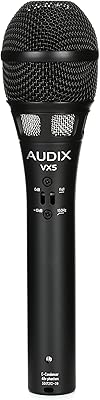
Audix VX5 Supercardioid Condenser Microphone

78%
91%
Vocal Clarity
88%
Feedback Rejection
86%
Build Quality
83%
Versatility
87%
Noise Floor
More
Blue Blueberry Cardioid Condenser Microphone
79%
93%
Tonal Character
91%
Vocal Performance
89%
Build Quality
94%
Capsule Quality
71%
Preamp Compatibility
More
Aston Microphones Stealth Condenser Microphone
79%
88%
Sound Quality
84%
Voice Mode Versatility
86%
Built-in Preamp
91%
Build Quality
83%
Value for Money
More
Neat Microphones Skyline USB Desktop Condenser Microphone
89%
94%
Audio Quality
91%
Ease of Use
89%
Build Quality
90%
Mute Button Functionality
92%
Value for Money
More
Aston Microphones Origin
85%
94%
Build Quality
89%
Vocal Clarity
92%
Instrument Response
71%
Internal Pop Filtering
91%
Price-to-Performance Ratio
More
Blue Bluebird SL Condenser Microphone
75%
91%
Vocal Sound Quality
88%
Build Quality
79%
Value for Money
54%
Ease of Setup
74%
Noise Rejection
More
Aston Microphones Spirit Large-Diaphragm Condenser Microphone

85%
93%
Sound Quality
96%
Build Quality
89%
Polar Pattern Versatility
88%
Built-in Pop Filter
84%
Value for Money
More
BOYA BY-M1 Lavalier Microphone
69%
73%
Audio Quality
88%
Value for Money
82%
Ease of Setup
69%
Device Compatibility
58%
Build Quality
More
Neumann TLM 102
Neumann TLM 102
86%
93%
Vocal Clarity & Presence
97%
High SPL Handling
89%
Build Quality & Durability
86%
Form Factor & Size
88%
Noise Rejection & Isolation
More

FAQ

Yes, as long as your camera has a 3.5mm microphone input jack, the BY-BM3031 will connect and work without any adapters. Most Sony Alpha and Canon EOS R series bodies have this input, so you should be good to go. Just make sure the gain switch is set appropriately for your environment before you start rolling.

The mic requires two AA batteries to operate, and whether they are included depends on where you purchase it — some listings include them, others do not. It is worth keeping a spare pair in your kit bag either way, since the condenser capsule will not function at all without power.

Technically possible with the right adapter, but it is not really designed for smartphones. Modern phones use a TRRS 3.5mm combo jack, while this mic uses a standard TRS output, so you would need a TRS-to-TRRS adapter. Results can be inconsistent depending on the phone and its input sensitivity, so camera and recorder use is where it performs best.

The Rode VideoMicro is generally considered to have a slightly more natural and refined audio character, and it does not require batteries since it draws power from the camera. The BY-BM3031 counters with more feature flexibility — the three-level gain switch and the built-in headphone monitoring jack are things the VideoMicro simply does not offer. If clean audio with minimal fuss is your priority, the Rode edges ahead; if you want more hands-on control and monitoring, this on-camera microphone makes a reasonable case for itself.

Yes, and it is one of the more common complaints from users. The mic does include a basic foam windscreen, but in anything beyond a light breeze, you will want to invest in a dead cat windscreen for outdoor use. Without one, gusty conditions can render outdoor footage unusable.

When you switch the high-pass filter on, the mic rolls off frequencies below 80Hz, which covers things like HVAC rumble, traffic bass, and the low-end thud you get from handling the camera. In a quiet indoor setting you may not notice a huge difference, but in a room with air conditioning or near a road, it cleans up the low end noticeably.

Yes, the integrated shockmount is designed to work on both a camera hot shoe and a standard boom pole or tripod stand. Just keep in mind that the cable terminating in a 3.5mm jack will need to reach your recorder or camera, so cable management matters more in a boom pole setup.

It is genuinely useful for solo shooters who want to verify their audio without a separate recorder in the chain. You plug headphones directly into the mic and hear what is being captured in real time. It will not replace a proper audio monitor setup, but for a one-person video shoot, catching a clipping or connectivity issue before you wrap is absolutely worth having.

Battery life varies depending on usage and battery brand, but most users report several hours of continuous use from a fresh pair of AA batteries. It is a good habit to check battery level before any critical shoot and carry a spare set, especially for all-day location work.

The ABS plastic body is reasonably solid for its weight class, but this on-camera microphone is not built for abuse. A few long-term users have noted wear around the 3.5mm jack connections and the mount hardware after extended daily use. For occasional or semi-regular production use it should hold up fine; if you are planning heavy professional fieldwork every day, investing in a more rugged option might be worth considering.

Where to Buy