Overview

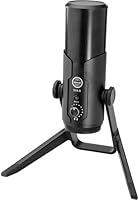
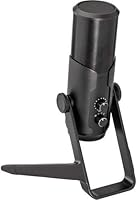
The Senal UC4-B USB Multi-Pattern Condenser Microphone is a desktop mic built for podcasters, home vocalists, and anyone who wants noticeably better audio without assembling a full studio rig. What separates it from the crowded USB mic market is its triple-capsule array, which delivers genuine pattern flexibility rather than locking you into cardioid-only recording. Plug it in via USB and it handles its own analog-to-digital conversion internally — no interface, no phantom power required. It competes directly with options like the Blue Yeti, and while it isn't a boutique studio tool, it's a capable all-rounder that holds its own for the price tier it occupies.
Features & Benefits

The UC4-B's four recording modes — cardioid, bidirectional, omnidirectional, and stereo — cover everything from focused solo vocals to capturing room ambience for video work. Recording resolution tops out at 192 kHz and 24-bit, which is overkill for a basic podcast but genuinely useful if you're tracking instruments and want headroom during editing. The zero-latency headphone output on the 3.5mm jack is a practical win; monitoring through your computer introduces enough delay to disrupt a live performance. All key controls — gain, mute, headphone volume, and pattern selection — sit right on the mic body, so you're never digging through software menus mid-session.

Best For

This multi-pattern microphone makes the most sense for solo podcasters and interviewers who want format flexibility without buying multiple mics. Home vocalists recording demos will appreciate skipping the audio interface entirely — the included USB cable gets you recording within minutes of unboxing. Streamers and remote workers who want reliable, clean audio without a complicated setup will find the day-to-day experience comfortable and consistent. Content creators who occasionally need stereo ambient capture for video will value that mode when it comes up. It's a less obvious fit for anyone already working in an XLR-based setup or a professionally treated space.

User Feedback

Buyers consistently highlight the onboard mute button as a practical standout — it gets called out repeatedly as a session saver during live recordings. Setup speed earns strong marks too, with most users reporting they were running within minutes of unboxing. On the downside, a number of buyers feel the build quality skews plasticky relative to expectations, and the included stand mount draws mixed feedback for stability. A subset of Mac users has noted occasional driver inconsistencies, though reports vary and it doesn't appear universal. Interestingly, most reviewers admit they rely almost entirely on cardioid mode day-to-day, treating the other patterns as occasional extras rather than regular tools.

Pros

  • Four selectable polar patterns in one mic body covers podcasting, interviews, and ambient recording without extra equipment.
  • Zero-latency headphone monitoring means you can track your voice accurately without software-induced delay.
  • Plug-and-play USB setup has most buyers recording within minutes of opening the box.
  • Onboard mute, gain, and pattern controls reduce interruptions during live sessions or recordings.
  • 24-bit / 192 kHz resolution captures more sonic detail than most entry-level USB mics offer.
  • The low-noise amplifier circuit delivers cleaner recordings than similarly priced single-capsule competitors.
  • No phantom power supply or external preamp is needed, keeping the total cost of entry low.
  • The included USB cable means you have everything required to start recording on day one.
  • Stereo mode adds genuine utility for content creators capturing room ambience or realistic-sounding dialogue.

Cons

  • Build quality skews toward plastic, which feels inconsistent with the mic's feature set and intended use case.
  • The included stand mount has drawn complaints for wobbling or not securing the mic firmly enough.
  • Condenser capsules pick up room noise easily, making an untreated recording space a real liability.
  • Some Mac users have reported intermittent driver or compatibility issues that required troubleshooting to resolve.
  • The multi-pattern feature, while useful in theory, goes largely unused by most buyers who default to cardioid.
  • No carrying case or shock mount is included, which is a noticeable omission for a mic at this tier.
  • Heavy-handed gain settings can introduce audible noise floor issues in quieter recording environments.
  • At 2.49 pounds, the mic is bulky enough that portability is not a practical selling point.

Ratings

The scores below for the Senal UC4-B USB Multi-Pattern Condenser Microphone were generated by our AI review engine after analyzing verified global buyer feedback, actively filtering out incentivized, bot-generated, and spam reviews to surface only genuine user experiences. Each category reflects both the real strengths that keep buyers satisfied and the friction points that show up repeatedly across honest long-term use. Nothing has been softened — the ratings transparently capture where this USB condenser mic earns its place and where it falls short.
Sound Quality
78%
22%
For a plug-and-play USB mic, the UC4-B consistently delivers cleaner, more detailed audio than buyers coming from headset mics or built-in laptop microphones expect. The low-noise amplifier circuit holds up well for vocal recording in reasonably quiet rooms, and the 24-bit depth gives recordings a natural, full-bodied character that translates well in podcast edits.
In less controlled environments — home offices with HVAC noise, hard floors, or parallel walls — the condenser capsules pick up more room character than buyers anticipate. Side-by-side comparisons with XLR condensers running through a dedicated preamp reveal a noticeable gap in transient detail and low-end warmth that the USB signal chain cannot fully close.
Multi-Pattern Versatility
74%
26%
Having four pickup modes in a single desktop mic is genuinely useful for buyers whose recording situations change week to week — switching from solo cardioid recording to bidirectional for a guest interview takes seconds using the onboard dial. The stereo mode earns specific praise from video content creators who need realistic ambient sound without carrying a separate recorder.
In practice, the majority of buyers settle into cardioid mode and rarely rotate the pattern selector after initial experimentation. The omnidirectional mode in particular draws mixed results in real rooms, picking up too much ambient noise to be practically useful outside of acoustically treated spaces or deliberate ambient recording scenarios.
Ease of Setup
92%
Nearly every buyer highlights how quickly they were up and recording — plug in the included USB cable, wait a few seconds for the device to register, and you are done. No drivers, no interface configuration, no phantom power troubleshooting. For first-time condenser mic users, this frictionless experience is one of the most consistently praised aspects of owning this mic.
A subset of Mac users has encountered recognition issues with specific DAW software, requiring manual input source selection or occasional system restarts to resolve. These cases appear to be edge-case configuration conflicts rather than a universal problem, but they are real enough to flag for buyers on macOS who use non-standard audio routing setups.
Onboard Controls
88%
The mute button in particular earns disproportionate praise — streamers and podcast hosts specifically call it out as a session-critical feature that saves takes and prevents awkward audio leaks during live recordings. Having gain, headphone volume, and pattern selection all physical and immediately accessible on the mic body removes the need to touch a computer mid-session.
The gain knob lacks detents or numbered markings, which makes it difficult to return to a reliable level after adjusting. Buyers who record across multiple sessions report having to re-calibrate by ear each time, which adds a small but recurring friction that a simple indexed dial would eliminate entirely.
Zero-Latency Monitoring
86%
The direct hardware monitoring through the 3.5mm jack is a legitimate zero-latency implementation, not a marketing approximation — vocalists and instrumentalists who have suffered through software monitoring delays consistently report that this feature alone makes the mic more comfortable to perform with. It changes the feel of a home recording session in a meaningful way.
The headphone output volume tops out at a moderate level that some buyers find insufficient for louder headphones with higher impedance. Users wearing over-ear studio headphones rather than consumer earbuds occasionally note that maximum volume is just barely enough, which can make subtle monitoring details harder to hear during a loud recording environment.
Build Quality
57%
43%
The mic has a solid enough physical footprint on a desk — its weight keeps it planted, and the external finish holds up to normal desktop handling without visible wear over typical use periods. The physical controls feel adequately responsive and have not drawn widespread reports of mechanical failure under normal conditions.
The plastic construction is the most consistently cited disappointment across buyer reviews, feeling noticeably lightweight and hollow relative to competitors at a comparable price point. The included stand mount draws specific criticism for stability, with multiple buyers reporting that the mic can tilt or slip during sessions, which is a practical frustration that affects recording reliability.
Value for Money
72%
28%
The combination of multi-pattern recording, onboard zero-latency monitoring, and high-resolution capture in a single USB device represents a reasonable feature-per-dollar proposition for buyers who want a versatile home recording tool without assembling a separate interface and mic chain. For first-time buyers stepping up from built-in audio, the value equation is favorable.
At its price point, the UC4-B competes against well-established alternatives with longer track records and stronger build reputations. Buyers who later migrate to XLR setups often reflect that the money would have been better applied toward an entry-level interface and dynamic mic, particularly if their recording scenarios are primarily solo-voice cardioid work.
Low-Noise Performance
69%
31%
In a softly furnished, relatively quiet room the noise floor stays low enough that post-production cleanup is minimal, which is a genuine advantage for home podcasters who do not want to spend time on noise reduction in every episode. The amplifier circuit performs above what the price tier typically delivers in controlled conditions.
Condenser microphones are inherently more sensitive to ambient sound than dynamic alternatives, and the UC4-B is no exception — buyers in open-plan apartments, rooms near street traffic, or spaces with exposed HVAC ducts consistently report audible background noise in recordings. Without at least basic acoustic treatment, the low-noise spec does not fully translate in real-world home environments.
Headphone Output Quality
66%
34%
For casual monitoring purposes the built-in headphone jack delivers a clean, accurate representation of the captured signal, which is all most podcast and streaming users need to confirm their levels and tone during a session. The output handles standard consumer headphones and earbuds without any perceptible distortion at moderate listening levels.
The output lacks the driving power needed for studio-grade headphones, and buyers using higher-impedance cans report that the volume ceiling is a genuine limitation. There is also no EQ or monitoring blend control between the mic signal and a backing track, which means musicians who want to hear both a click track and their own voice simultaneously have to manage that entirely in software.
Compatibility
76%
24%
Windows users almost universally report a smooth plug-and-play experience across Windows 10 and 11, with the mic registering as a standard USB audio device immediately and requiring zero configuration. This broad OS-level compatibility means buyers using standard broadcast or streaming software on PC rarely encounter setup friction.
macOS compatibility is less consistent, with a meaningful minority of buyers reporting that certain DAW versions or audio routing configurations require manual intervention to recognize the mic correctly. The incompatibility cases are not universal but appear often enough across independent reviews to suggest a driver or USB audio class behavior difference that Senal has not fully resolved.
Included Accessories
48%
52%
The included USB cable is a practical touch — it means the mic is genuinely ready to use out of the box without an immediate trip to find a cable, which is appreciated by buyers who are new to desktop recording and may not have USB audio cables on hand.
Beyond the cable, the accessory situation is thin for a mic at this price tier — no shock mount, no pop filter, and no carrying case are included. The bundled stand mount has been flagged by multiple buyers as inadequate for stable use, meaning most serious users will need to spend additional money on mounting hardware before they have a setup that works reliably.
Frequency Response
81%
19%
The full 20 Hz to 20 kHz response range means the mic captures the complete audible spectrum without artificial roll-off at the extremes, which matters for instrument recording and ensures vocal recordings retain both the low-end body and high-frequency air that make speech sound natural and present in a mix.
Some buyers note a slightly hyped presence peak in the upper midrange that can make voices sound a touch harsh on certain microphone placements, particularly with close-talking styles common in podcast recording. A small degree of EQ correction in post is often needed to tame this tendency, which undercuts the out-of-the-box naturalness the spec sheet implies.
Portability
44%
56%
The compact table-array form factor means the UC4-B takes up a predictable and manageable footprint on a desk, making it a tidier desktop companion than a tall boom-mounted condenser for buyers with limited workspace.
At 2.49 pounds and without any protective case in the box, the UC4-B is not a mic you would realistically transport between locations on a regular basis. Buyers who anticipated using it for field recording, travel podcasting, or location work quickly discovered that its bulk and lack of padding make it poorly suited for anything outside a fixed desktop setup.

Suitable for:

The Senal UC4-B USB Multi-Pattern Condenser Microphone is a strong match for anyone who wants a meaningful audio upgrade without the complexity of an interface-based setup. Solo podcasters benefit most from the pattern flexibility — being able to switch between cardioid for solo recording and bidirectional for a two-person conversation means one mic genuinely covers multiple formats. Home vocalists tracking demos will appreciate the 24-bit resolution and low-noise circuit, which captures more detail than a typical entry-level USB mic without requiring any additional gear. Streamers and remote workers who spend long hours on calls or live sessions will find the onboard mute button and zero-latency headphone jack genuinely useful on a daily basis. Content creators who occasionally need stereo ambient audio for video work get that capability built in, rather than needing a separate recorder. If you are stepping up from a built-in laptop mic or a basic gaming headset, this USB condenser mic will feel like a substantial and immediately noticeable improvement.
Not suitable for:

The Senal UC4-B USB Multi-Pattern Condenser Microphone is not the right call for anyone already working within a professional XLR-based signal chain, since the built-in USB conversion removes the flexibility that comes with dedicated preamps and audio interfaces. Buyers expecting broadcast-grade isolation in an untreated room may be disappointed — condenser mics at this level pick up room noise, HVAC hum, and ambient reflections more readily than a dynamic mic would. If pattern flexibility is genuinely central to your workflow rather than an occasional nice-to-have, investing in a proper XLR condenser with a quality interface will likely serve you better in the long run. Mac users with specific DAW configurations should do their homework before purchasing, as driver-related inconsistencies have come up in a subset of user reports. Anyone prioritizing rock-solid build quality and premium materials over features will likely find the plastic construction a sticking point at this price point.
Specifications

  • Polar Patterns: The mic supports four selectable pickup patterns: cardioid, bidirectional, omnidirectional, and stereo.
  • Sample Rate: Maximum sample rate is 192 kHz, with support for both 16-bit and 24-bit recording depth.
  • Frequency Response: The mic captures audio across a full 20 Hz to 20 kHz range, covering the entire audible spectrum.
  • Sensitivity: Audio sensitivity is rated at 32 dB, suited for close-range vocal and instrument recording at a desktop.
  • Capsule Design: A triple-capsule array powers the multi-pattern functionality, with each capsule contributing to a specific pickup configuration.
  • Connectivity: The mic connects via USB and draws power directly from the host device, requiring no external power supply.
  • Headphone Output: A built-in 3.5mm headphone jack provides zero-latency direct monitoring without routing audio through the computer.
  • Onboard Controls: The mic body includes a gain knob, mute switch, headphone volume control, and a polar pattern selector dial.
  • Form Factor: Designed as a desktop table-array mic, it is intended for stationary use on a stand rather than handheld operation.
  • Weight: The mic weighs 2.49 pounds, making it a stable desktop unit but not a practical choice for portable use.
  • Package Dimensions: The retail packaging measures 10.67 x 9.96 x 5.71 inches, sized to accommodate the mic and its included accessories.
  • Included Accessories: A USB cable is included in the box, providing everything needed to connect the mic to a computer on day one.
  • Power Source: The UC4-B is bus-powered over USB, so no batteries, wall adapters, or phantom power supplies are required.
  • Compatible Platform: The mic is confirmed compatible with PC and works as a plug-and-play USB audio device without additional driver installation on most systems.
  • A/D Conversion: Analog-to-digital conversion is handled internally within the mic, eliminating the need for an external audio interface.
  • Stand Compatibility: The mic is listed as stand-compatible and ships with a mount, though third-party stands may offer better stability.
  • Manufacturer: The UC4-B is designed and sold by Senal, a brand focused on professional audio equipment for broadcast and studio applications.
  • Release Date: This model was first made available on Amazon in June 2020.

Related Reviews

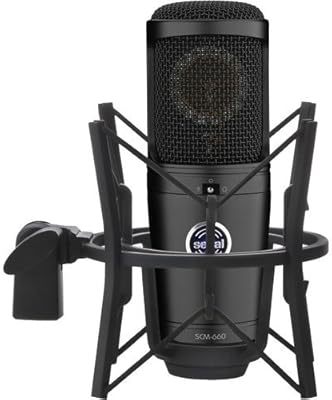
Senal SCM-660 Large-Diaphragm Condenser Microphone
71%
83%
Sound Quality
91%
Polar Pattern Versatility
86%
Build Quality
78%
Noise Performance
88%
SPL Handling
More
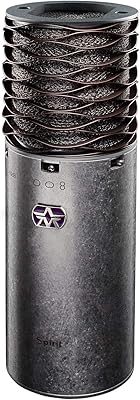
Aston Microphones Spirit Large-Diaphragm Condenser Microphone
85%
93%
Sound Quality
96%
Build Quality
89%
Polar Pattern Versatility
88%
Built-in Pop Filter
84%
Value for Money
More
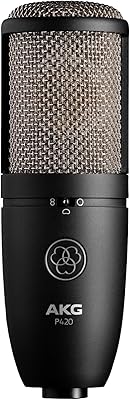
AKG P420 Multi-Pattern Condenser Microphone
85%
88%
Sound Clarity
93%
Polar Pattern Versatility
86%
Build Quality
91%
Value for Money
82%
Noise Floor Performance
More
Audio-Technica AT2050
79%
88%
Sound Quality & Clarity
92%
Versatility & Polar Patterns
86%
Build Quality & Durability
83%
Value for Money
68%
Background Noise Rejection
More
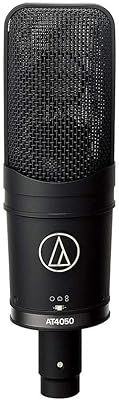
Audio-Technica AT4050 Multi-Pattern Condenser Microphone
83%
91%
Sound Quality
93%
Polar Pattern Versatility
88%
Vocal Recording
58%
Room Sensitivity
74%
Value for Money
More
Rode NT55 Multi-Pattern Condenser Microphone
82%
93%
Sound Transparency
91%
Transient Detail
88%
Pattern Flexibility
86%
Instrument Versatility
89%
Build Quality
More
Rode K2 Tube Condenser Microphone
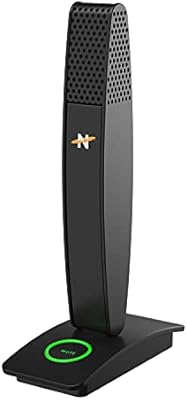
81%
94%
Sound Quality
92%
Vocal Performance
91%
Noise Performance
53%
Setup & Ease of Use
77%
Value for Money
More
Neat Microphones Skyline USB Desktop Condenser Microphone
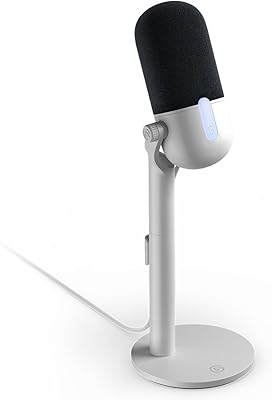
89%
94%
Audio Quality
91%
Ease of Use
89%
Build Quality
90%
Mute Button Functionality
92%
Value for Money
More
JOBY Wavo POD USB Condenser Microphone
76%
78%
Audio Quality
94%
Ease of Setup
62%
Build Quality
74%
Value for Money
57%
Background Noise Rejection
More
HyperX QuadCast S
HyperX QuadCast S
87%
88%
Vocal Clarity
96%
Mute Functionality
91%
Build Quality
84%
Shock Absorption
89%
Gain Control Ease
More

FAQ

No, nothing extra is needed. The mic handles its own analog-to-digital conversion internally and draws power straight from your USB port, so you just plug it in and your computer recognizes it as an audio device. No interface, no phantom power supply, no drivers to hunt down on most systems.

Cardioid is the right choice for solo recording — it focuses on sound directly in front of the mic and rejects noise from the sides and rear. Bidirectional works well if you are sitting across from a guest at the same desk, since it picks up from the front and back while ignoring the sides.

The monitoring is genuinely hardware-level direct monitoring, meaning the signal from the mic is routed straight to your headphones without passing through your computer first. That eliminates the processing delay you get when monitoring through software. It is a real and practical difference, especially if you are singing or playing an instrument while recording.

The mic is designed to work as a standard USB audio class device, which means it should be recognized on macOS without additional drivers. That said, a subset of Mac users has reported occasional compatibility hiccups with certain DAW configurations, so if you are using a specific recording application on Mac it is worth checking user reports for your setup before purchasing.

They are genuinely close competitors and share several core features, including multi-pattern selection and onboard monitoring. The UC4-B has a slight edge in maximum resolution, reaching 192 kHz versus the Yeti's 48 kHz. The Blue Yeti has a longer track record and a larger community of users, which can make troubleshooting easier. Build quality on both is plastic-heavy at this price range, so neither has a clear advantage there.

The included mount is functional for basic desktop use, but it has drawn enough stability complaints from buyers that it is worth budgeting for a third-party boom arm or desktop stand if you plan to use this mic regularly. A wobbly mic at the wrong moment can ruin a take, and a decent boom arm is not expensive.

It can work for acoustic guitar, particularly in cardioid mode for close-mic recording or in stereo mode if you want a wider ambient capture of the instrument in a room. That said, condenser mics are sensitive and will pick up every squeak, room reflection, and background noise, so the quality of your recording space matters a lot for instrument work.

The low-noise amplifier circuit does a respectable job under decent conditions, but this is still a condenser mic, which by nature is more sensitive to ambient noise than a dynamic mic would be. In a quiet, softly furnished room it performs cleanly. In a hard-walled space with HVAC or street noise, you will hear it in the recording. Acoustic treatment or a reflection filter makes a noticeable difference.

The mute switch cuts the signal entirely, which is what you want for a live session or stream. It is not a soft attenuation — it is a hard mute, and buyers specifically call it out as one of the more useful day-to-day features on the mic.

You get the mic itself and a USB cable, which is enough to get started immediately. There is no shock mount, pop filter, or carrying case included, so if you want any of those you will need to source them separately. A basic pop filter is a worthwhile addition given how sensitive condenser capsules are to plosive sounds.