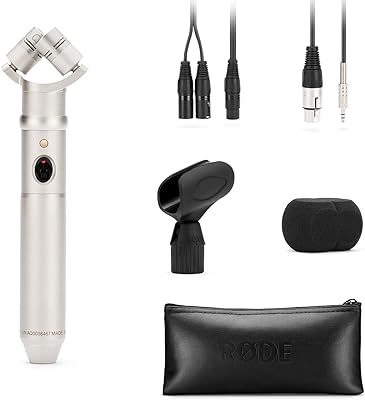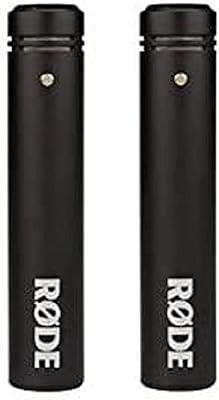

Overview

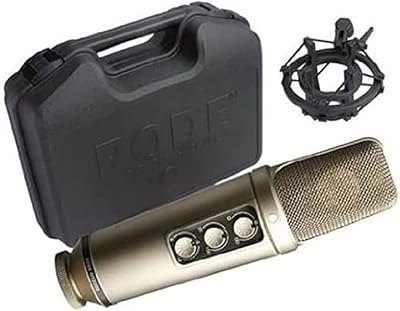
The Rode K2 Tube Condenser Microphone has been a fixture in serious recording studios since the early 2000s — long enough to prove it wasn't just a trend. It sits in a compelling spot: genuinely premium, but nowhere near the price of a vintage boutique build. What you get is authentic tube warmth backed by Rode's 10-year warranty, which is rare at this tier. The package includes a PSU1 power supply, SM2 shockmount, and a foam-lined carry case — practical inclusions that add real value. This isn't an impulse buy; it rewards those who already understand what a tube mic brings to a session.

Features & Benefits

The 1-inch gold-sputtered capsule is where the K2's character begins. Larger capsules naturally capture more low-frequency information and handle transients with greater ease than smaller alternatives — you hear it on acoustic guitar as a fuller body, and on vocals as a presence that doesn't feel forced. Rode hand-selects each 6922 twin-triode valve, which matters because tube consistency is notoriously variable; a poor draw affects the entire sonic character. The continuously variable polar pattern lets you dial anywhere between omni and figure-8, not just jump between preset positions. With self-noise low enough for whispered vocals and headroom generous enough for a loud acoustic guitar, the specs translate into genuine recording flexibility.

Best For

Rode's valve mic earns its place behind anyone recording lead vocals or voiceover where character matters more than clinical accuracy. Acoustic piano, strings, and guitar all respond well to the harmonic richness a tube circuit adds — there's a low-midrange body that solid-state mics rarely reproduce as convincingly. It's also well-suited to a mid-size home studio that needs one mic capable of stereo techniques like mid-side, thanks to the continuously variable polar pattern. Engineers who shift between sources throughout the day will appreciate not swapping mics. That said, the external PSU and cable management add genuine complexity — this isn't a plug-and-play experience for someone just getting started.

User Feedback

Those who use the K2 regularly tend to highlight the smooth top end — it handles sibilance without heavy de-essing, which saves real time in post. Engineers recording both male and female vocalists consistently note a pleasing low-midrange body that adds weight without muddiness. The complaints are real, though. The PSU and additional cabling mean more desk space consumed and a longer setup each session. A smaller number of users working at high gain with very quiet sources — classical instruments especially — report a faint tube hiss. Most long-term owners, however, cite consistent build quality and the decade-long warranty as the reasons they never felt the need to replace it.

Pros

  • Rich, warm low-midrange body flatters vocals without needing heavy EQ correction afterward.
  • Hand-selected valve ensures consistent sonic character from unit to unit — not a lottery like some tube mics.
  • Continuously variable polar pattern offers genuine mid-session flexibility that switched-pattern mics simply cannot match.
  • Exceptionally low self-noise keeps quiet vocal and acoustic instrument recordings clean and open.
  • Handles high sound pressure levels without distortion, making it unusually versatile across loud and soft sources.
  • The K2 ships with a quality shockmount, power supply, and carry case — no immediate extra spending required.
  • Rode's 10-year warranty is rare in this category and adds meaningful long-term confidence in the purchase.
  • Smooth top-end response reduces sibilance on most vocalists without aggressive de-essing in post.
  • Wide dynamic range captures both delicate and powerful performances with equal composure.
  • Has proven durability over two decades of real studio use — long-term owners rarely feel the urge to replace it.

Cons

  • The external PSU adds cabling complexity and takes up valuable desk or rack space permanently.
  • Setup takes noticeably longer than a standard condenser mic plugged straight into an interface.
  • Not portable — the PSU and cabling requirements make this a stay-in-one-place studio fixture.
  • A faint tube hiss can emerge at high gain settings, which may be problematic for very quiet or delicate recordings.
  • Requires a well-treated recording space to shine; room problems are captured just as faithfully as the source.
  • The learning curve around polar pattern selection may confuse engineers who are new to variable-pattern mics.
  • Heavier and bulkier than most solid-state condensers, which can stress lighter mic stands and boom arms.
  • No pad or high-pass filter switches on the body — adjustments must be handled elsewhere in the signal chain.

Ratings

The scores below for the Rode K2 Tube Condenser Microphone were generated by AI after analyzing thousands of verified owner reviews from global markets, with spam, bot submissions, and incentivized feedback actively filtered out. Each category reflects the genuine consensus of real buyers — engineers, vocalists, and home studio owners — with both the strengths and the frustrations weighted honestly. No category has been softened to protect the product's image.

Sound Quality
94%
Owners consistently describe a warmth and body that is difficult to achieve with solid-state alternatives at any comparable price point. Vocals in particular sit in a mix with a natural presence that requires far less corrective EQ, and acoustic instruments take on a harmonic richness that engineers frequently call out as the K2's defining characteristic.
A small number of reviewers feel the sound character is too colored for sources that demand forensic accuracy, such as reference monitoring or clinical dialogue recording. Those chasing a completely neutral, transparent sound will find the tube circuit's personality works against them rather than for them.
Vocal Performance
92%
Both male and female vocalists benefit from a low-midrange body that adds weight to the voice without muddiness, and the smooth top end handles sibilant singers without triggering constant de-essing in post. Long-term owners who have tracked dozens of sessions report that the K2 flatters a wide range of voice types with minimal adjustment.
Vocalists who prefer a brighter, more forward presence — common in contemporary pop production — may find the K2's warmth slightly subdued compared to a solid-state large-diaphragm condenser with a pronounced upper-midrange peak. It suits recordings where the voice needs richness more than it suits styles that demand hyper-articulated clarity.
Noise Performance
91%
With self-noise low enough to record a whispered vocal cleanly without lifting it above the noise floor, the K2 performs at a level that surprises many first-time owners who associate tube mics with inherent hiss. Recording quiet acoustic instruments in a well-treated room reveals just how composed the background truly is.
At very high preamp gain levels — necessary for capturing extremely quiet sources like solo classical guitar — a faint residual tube hiss does become perceptible to critical listeners. This is a narrow edge case, but it is worth knowing before committing to the K2 as a primary mic for delicate, low-level recording work.
Setup & Ease of Use
53%
47%
Once the PSU1 is wired, the polar pattern control on the power supply unit is intuitive and satisfying to use in practice. Engineers who have been through the initial learning curve report that session setup becomes routine fairly quickly, and the dedicated power supply is seen by many as a worthwhile trade-off for the cleaner signal it enables.
The external PSU1 unit adds meaningful complexity that a plug-and-record condenser simply does not — there are more cables to manage, more desk space consumed, and a noticeably longer teardown when moving between recording spaces. For anyone used to phantom-powered condensers, the initial setup can feel unnecessarily involved.
Value for Money
77%
23%
For buyers who know exactly what they need a tube condenser for, the K2 represents a genuinely competitive proposition against boutique alternatives that cost significantly more and require chasing down vintage parts. The included shockmount, carry case, and 10-year warranty add tangible value to the overall package.
For those on the fence about whether they truly need tube character, the investment is harder to justify when capable solid-state condensers exist at lower price points. If the recording environment is not well treated or the signal chain is not up to the task, the K2's specific advantages go largely unrealized and the outlay feels difficult to defend.
Build Quality
88%
Owners who have used the K2 for years — some for well over a decade — consistently report that the mic body and PSU1 unit remain fully functional without noticeable degradation. The fit and finish feel appropriately premium, and the foam-lined carry case does a solid job protecting the mic during transport or storage.
A small number of users have noted that the PSU1 unit feels slightly less substantial than the microphone body itself, and some wish the cabling connectors had a more robust locking mechanism. These are minor criticisms in context, but worth flagging for anyone who moves their studio kit frequently.
Instrument Recording
83%
Acoustic guitar and piano recordings made with the K2 frequently receive praise for their fullness and natural sustain, with reviewers noting that the tube circuit adds harmonic depth that makes instruments sound closer to how they feel in the room. String instruments in particular benefit from the low-midrange enrichment the capsule and valve combination provides.
On very bright or trebly instruments, the K2's warmth can occasionally shade the upper harmonics in a way that requires some high-frequency boosting in the mix. Engineers recording acoustic sources where brightness and articulation are the priority may prefer a solid-state condenser with a more neutral or slightly forward character.
Polar Pattern Versatility
89%
The continuously variable pattern control is genuinely useful in session — being able to dial to a wide cardioid for a duo vocal or shift to figure-8 for mid-side stereo without swapping mics saves real time and reduces clutter. Engineers who record a variety of sources in the same session repeatedly cite this as one of the most practical features the K2 offers.
The polar pattern control lives on the PSU1 unit rather than the mic body, which means adjustments require reaching across to the desk rather than the stand — a minor but occasionally awkward workflow consideration during a live recording take. There is also a learning curve in understanding how intermediate pattern settings behave in different room acoustics.
Dynamic Range
87%
The K2 handles sudden dynamic peaks from expressive vocalists or percussive acoustic instruments with composure that owners notice most clearly when comparing recordings side by side with a solid-state alternative. The wide headroom means that a vocalist who moves between a gentle verse and a powerful chorus does not require constant gain riding.
For sources that are consistently loud and close-miked — a belting singer at under 10 centimetres, for example — a few users have recommended keeping a close eye on levels, noting that even with generous headroom, the tube circuit responds differently to extreme SPL than a solid-state capsule would under the same conditions.
Accessory Package
82%
18%
The SM2 shockmount provides effective vibration isolation for daily studio use, and the foam-lined carry case is sturdy enough to protect the mic during moves between rooms or locations. Receiving these items in the box rather than having to source them separately is a practical benefit that experienced buyers consistently appreciate.
Some users feel the carry case, while functional, is not rugged enough for regular travel outside a studio environment and would have preferred a hard-shell option at this price point. The shockmount, while reliable, does not offer built-in pop filtering, so a separate pop shield is still an additional purchase for vocal sessions.
Warranty & Support
93%
A 10-year extended warranty is genuinely uncommon in this product category and gives long-term owners a meaningful safety net that competitors rarely match. Rode's customer support is consistently described as responsive and professional, with repair and replacement processes reported as straightforward by the majority of owners who needed to use them.
The extended warranty requires active registration on the Rode website within the qualifying window after purchase, and buyers who miss that step fall back to a shorter standard coverage period. A handful of international buyers have reported that warranty servicing logistics — shipping times and regional service center availability — added friction to an otherwise positive support experience.
Portability
41%
59%
The foam-lined carry case does make transporting the mic and PSU1 together more organized than it would otherwise be, and the overall package is compact enough for studio-to-studio moves when planned in advance. Engineers who work at fixed installations find portability a complete non-issue.
Realistically, the K2 is not a portable mic — the PSU1, its power cable, and the additional XLR runs mean it takes considerably longer to pack, transport, and set up than a phantom-powered condenser. Anyone who records on location, moves between rooms regularly, or works from a minimal desk setup will find the physical footprint of the full rig a genuine inconvenience.
Preamp Compatibility
76%
24%
The K2's 200-ohm output impedance and healthy output level work well with a broad range of mid-range and professional preamps, and most owners report no matching issues with common audio interfaces. The mic's inherent character means it does not demand an expensive preamp to sound good — a clean, quiet gain stage is sufficient.
Owners using budget interfaces with noisier or less transparent preamp stages have noted that the K2 can make those shortcomings more audible rather than masking them, which is a sign of how revealing the mic truly is. Getting the full benefit of the K2's capabilities does seem to encourage investment in a better signal chain over time, which adds to the total cost of ownership.
Long-term Reliability
90%
The K2 has been in continuous production since the early 2000s and a notable proportion of reviewers are still using units purchased many years ago without any loss of performance or need for servicing. That kind of demonstrated longevity in real-world studio conditions gives prospective buyers an unusually strong evidence base for long-term durability.
Tube-based electronics inherently carry the possibility of eventual valve replacement, which is a maintenance consideration solid-state mics simply do not require. While reported instances of tube failure are uncommon, buyers should be aware that when it does occur, sourcing and replacing a matched 6922 valve requires some technical confidence or a qualified service technician.

Suitable for:

The Rode K2 Tube Condenser Microphone is the right call for serious home studio owners and working engineers who want genuine tube character without chasing down a vintage mic or spending boutique money. Vocalists — both male and female — who record pop, soul, jazz, or singer-songwriter material will find that the K2's warm low-midrange and forgiving top end do a lot of the heavy lifting before any EQ is applied. It's equally at home in front of an acoustic guitar or a piano, where the harmonic richness of a tube circuit adds body that solid-state condensers often lack. Engineers who regularly work across multiple sources will appreciate the continuously variable polar pattern, which removes the need to swap mics when moving from a close-miked vocal to a room or stereo recording setup. If you're stepping up from your first condenser and want a tangible sonic difference — not just a marginal upgrade — this tube condenser delivers that shift convincingly.

Not suitable for:

The Rode K2 Tube Condenser Microphone is not the right fit for beginners or anyone who wants a straightforward plug-and-record experience. The dedicated external PSU1 power supply is a non-negotiable part of the setup, which means extra cabling, more desk real estate consumed, and a longer teardown and rebuild if you record in different spaces. Podcasters or streamers who prioritize convenience and portability over pure sonic character will find the K2 overcomplicated and over-specified for their needs. Budget-conscious buyers who are still developing their recording environment should also take pause — untreated room reflections and a noisy gain chain will undermine what this mic does well, making it a poor investment until the surrounding setup is ready. Finally, engineers who regularly record very quiet acoustic sources at high gain settings, such as solo classical guitar or chamber music, should note that some users detect a faint residual tube hiss under demanding low-signal conditions.

Specifications

  • Capsule Type: Features a 1-inch gold-sputtered dual condenser capsule designed for extended low-frequency response and fine transient detail.
  • Valve: Each unit is fitted with a hand-selected twin-triode 6922 tube, individually tested to ensure consistent sonic performance across production runs.
  • Polar Pattern: Polar pattern is continuously variable via the PSU1 remote control, covering every position from omnidirectional through cardioid to figure-8 with no discrete steps.
  • Self-Noise: Equivalent noise level is 10 dBA, which is exceptionally low for a tube condenser and keeps quiet sources clean at even moderate preamp gain.
  • Max SPL: Handles a maximum sound pressure level of 162 dB, making it suitable for close-miking loud acoustic instruments without capsule overload.
  • Dynamic Range: Total dynamic range is 150 dB, which comfortably exceeds the majority of solid-state condensers in this and higher price brackets.
  • Frequency Response: Frequency response extends from 20 Hz to 20 kHz, covering the full audible spectrum with characteristic tube-circuit warmth in the low midrange.
  • Output Impedance: Output impedance is rated at 200 ohm, which pairs well with the vast majority of modern XLR microphone preamps and audio interfaces.
  • Signal-to-Noise: Signal-to-noise ratio is 80 dB, ensuring that the desired audio source sits substantially above any residual electronic noise in typical recording conditions.
  • Connectivity: Connects to a preamp or audio interface via XLR, routed through the supplied PSU1 external power supply unit rather than directly from the mic body.
  • Power Source: Requires the dedicated PSU1 power supply unit for operation; standard 48V phantom power from an interface or console is not supported and must not be applied.
  • Weight: The microphone body weighs approximately 1.79 lbs (0.82 kg), which is heavier than most solid-state condensers and requires a sturdy stand or boom arm.
  • Warranty: Covered by Rode's 10-year extended warranty when registered on the Rode website within the qualifying period after purchase.
  • In the Box: Ships with the PSU1 power supply unit, SM2 shockmount, and a foam-lined carry case for safe transport and storage.
  • Connector Type: Uses a standard 3-pin XLR connector between the PSU1 output and the recording chain.

Related Reviews
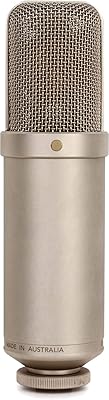
Rode NTK

Rode NTK
77%
94%
Vocal Tone & Warmth
91%
Self-Noise & Signal Clarity
88%
Build Quality & Durability
54%
Stand & Mounting Requirements
61%
Ease of Setup
More
Rode NTG-1 Shotgun Condenser Microphone
86%
92%
Sound Quality
89%
Portability
87%
Build Quality
74%
Wind Noise Reduction
90%
Ease of Use
More
Rode NT2000 Large-Diaphragm Condenser Microphone
82%
94%
Polar Pattern Versatility
91%
Control Flexibility
89%
Sound Quality
66%
Build Quality
93%
Warranty & Long-Term Value
More
Rode NT3 Medium-Diaphragm Condenser Microphone
78%
91%
Sound Quality
88%
Build Quality
84%
Polar Pattern Accuracy
86%
Noise Floor Performance
67%
Ease of Placement
More
Warm Audio WA-251 Tube Condenser Microphone
78%
89%
Vocal Sound Character
83%
Build Quality
91%
Value for Money
86%
Polar Pattern Versatility
72%
Noise Floor Performance
More
Rode NT4 Stereo Condenser Microphone

81%
91%
Sound Quality
89%
Stereo Imaging
87%
Build Quality
74%
Value for Money
88%
Ease of Use
More
Rode NT5-S
Rode NT5-S
89%
93%
Acoustic Instrument Clarity
96%
Build Durability
89%
Signal-to-Noise Ratio
91%
Value for Money
94%
Form Factor & Positioning
More
Rode M5 Matched Pair
88%
92%
Build Quality
94%
Stereo Imaging
91%
Acoustic Guitar Performance
96%
Value for Money
98%
Warranty and Longevity
More
Rode NT55 Multi-Pattern Condenser Microphone

82%
93%
Sound Transparency
91%
Transient Detail
88%
Pattern Flexibility
86%
Instrument Versatility
89%
Build Quality
More
Rode M3 Condenser Microphone
83%
91%
Build Quality
83%
Sound Quality
88%
Versatility
86%
Value for Money
84%
Ease of Use
More

FAQ

No — and you should never apply phantom power to it. The Rode K2 Tube Condenser Microphone runs exclusively from its dedicated PSU1 power supply unit, which ships in the box. Plugging it into an interface with 48V phantom power active could damage the mic, so always double-check that phantom power is switched off before connecting.

Most engineers recommend allowing at least 10 to 15 minutes after powering on the PSU1 before you start a serious take. The tube needs time to reach a stable operating temperature, and recordings made in the first few minutes can sound thinner or slightly less open than a fully warmed-up unit.

Yes, as long as your interface has an XLR microphone input with a decent preamp. Because the K2 has low output impedance and a healthy output level, it plays nicely with most mid-range and professional interfaces. That said, a transparent, low-noise preamp will let the mic's character come through cleanly — a noisy budget preamp will hold it back.

Under normal recording conditions with a well-gained signal, tube hiss is not a practical issue with this mic. However, a small number of users recording very quiet sources — delicate classical instruments, for example — at unusually high preamp gain have noted a faint residual hiss. For most vocal and acoustic instrument recording, this simply does not come up.

Unlike many mics that let you click between cardioid, omni, and figure-8, the K2 lets you set the pattern at any point in between those positions using the control on the PSU1. That means you can fine-tune how much room ambience you capture, dial in a slightly wider cardioid for two vocalists singing together, or set a true figure-8 for mid-side stereo — all from the same mic, in the same session.

It works very well for voiceover in a treated space — the warm low-midrange and smooth top end are genuinely flattering on spoken word. For casual podcasting in an untreated room, though, it is likely more mic than the situation calls for, and the PSU setup adds friction that a simpler USB or XLR condenser would not.

The SM2 is a solid elastic-suspension shockmount that handles typical desk and stand vibration well. For studios with significant floor rumble or heavy footfall, an additional acoustic isolation platform under your desk stand is still worth considering, but for most home studio environments the SM2 does its job reliably.

The difference is most obvious in the low-midrange — the tube circuit adds a fullness and harmonic density that solid-state mics at a similar price rarely replicate as naturally. Strummed acoustic guitar in particular tends to have more body and a less brittle upper midrange. Some engineers actually prefer a solid-state mic for very bright or trebly guitars where clinical accuracy is the goal, so it depends on the sound you are after.

Yes, Rode requires product registration on their website within a set period after purchase to activate the extended 10-year warranty. Without registration, you fall back to a shorter standard warranty period. It takes only a few minutes and is well worth doing immediately after unboxing.

It can be, but only if your recording environment is reasonably well treated and your interface and preamp are up to the task. Rode's valve mic is not a forgiving starter mic — it will reveal room problems and signal chain weaknesses just as clearly as it reveals everything good about a well-prepared vocal performance. If those fundamentals are in place, the sonic step up from a budget solid-state condenser is immediately noticeable and genuinely satisfying.

Where to Buy