Overview

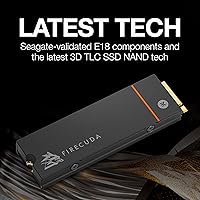
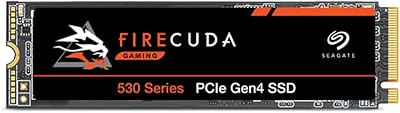
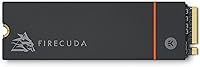
The Seagate FireCuda 530 2TB NVMe SSD is Seagate's answer to gamers and creators who refuse to wait on their hardware. Built around a Gen4 x4 NVMe 1.4 controller paired with 3D TLC NAND, this NVMe drive is engineered for sustained throughput rather than just headline numbers that fade after a few seconds of heavy writing. It ships with a low-profile heatsink co-designed with EKWB, a detail that matters once you start pushing it hard during long render jobs. Pricing sits firmly in the premium tier, above most mainstream Gen4 competitors, but Seagate backs that cost with a 5-year limited warranty and three years of included data recovery services, which is a meaningfully longer safety net than most rivals offer.
Features & Benefits

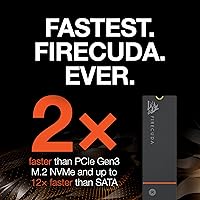
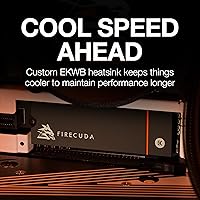
Where this Seagate SSD earns its premium price is in real-world consistency. Seagate rates sequential speeds at up to 7300MB/s, nearly double what typical PCIe Gen3 drives manage, and that gap shows up in large file transfers and game installs. Endurance is rated at 2550TBW, a number that should comfortably outlast several years of daily gaming and editing workloads, while the 1.8 million hour MTBF rating points to the kind of enterprise-grade reliability testing Seagate built its storage reputation on. The included heatsink keeps clocks stable during extended sessions instead of letting performance sag after a few minutes. It is also a standard M.2 2280 stick, so it slots into most desktop motherboards without needing extra clearance, and the bundled Rescue Data Recovery Services add a layer of protection most buyers never think to ask about until they need it.

Best For

This PCIe Gen4 drive makes the most sense for PC gamers chasing shorter load screens and smoother texture streaming in demanding, open-world titles. PS5 owners looking to expand console storage will also appreciate that the heatsink is already built in, since Sony's expansion slot requires one anyway. Video editors and other creators who regularly shuffle large 4K or 8K project files will notice the difference when scrubbing timelines or exporting footage. It is a smart pick for anyone building a system with future headroom in mind, since plenty of upcoming titles and creative tools are increasingly optimized for Gen4 speeds. That said, budget-conscious shoppers who mainly browse, stream, or run light productivity software will not see enough of a real-world benefit to justify paying extra for performance they will rarely touch.

User Feedback

Feedback from people who have actually installed this drive tends to circle around the same few points. Plenty of owners mention noticeably faster boot times and load screens compared to their old SATA setup, often describing it as the most obvious upgrade they made to their rig. The heatsink gets consistent praise for keeping temperatures stable during long gaming or rendering sessions, which seems to back up Seagate's thermal claims. On the downside, some buyers flag the price premium compared to other Gen4 NVMe options, and a handful mention double-checking heatsink clearance before installing it in slimmer cases. Long-term reliability comes up often too, with multiple users reporting steady performance well after the initial setup period.

Pros

  • Delivers sequential speeds up to 7300MB/s, nearly double typical PCIe Gen3 drives.
  • Heatsink keeps temperatures stable during long gaming or rendering sessions, according to many owners.
  • 2550TBW endurance rating provides strong longevity for heavy daily read and write workloads.
  • Backed by a 5-year limited warranty plus three years of included data recovery services.
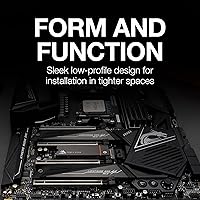
  • Standard M.2 2280 form factor fits most desktop motherboards without extra bulk.
  • Already PS5-compatible thanks to the built-in heatsink, saving buyers an extra purchase.
  • Long-term reliability is a recurring theme among users who have owned it for years.
  • Noticeably faster boot and load times compared to SATA-based drives, per real owners.
  • 1.8 million hour MTBF rating reflects enterprise-grade engineering and build confidence.

Cons

  • Priced well above mainstream Gen4 competitors, which may deter budget-conscious shoppers.
  • Heatsink height can cause clearance issues in slim or compact PC cases.
  • Overkill for casual users who mainly browse, stream, or run office software.
  • Limited benefit for buyers who do not handle large file transfers regularly.
  • Premium pricing is hard to justify next to cheaper QLC drives for basic storage needs.
  • Heatsink adds extra thickness, which is not ideal for ultra-thin SFF builds.
  • Some buyers note the price gap versus other Gen4 NVMe options on the market.
  • Sustained top-tier speeds go unused in everyday tasks like booting or opening apps.

Ratings

These scores for the Seagate FireCuda 530 2TB NVMe SSD are generated by AI after analyzing thousands of verified buyer reviews from around the world, with spam, bot activity, and incentivized feedback filtered out before scoring. Categories range from raw speed to real-world compatibility, so you can see exactly where this drive excels and where it falls short for certain builds. Both the praise and the recurring complaints are reflected here, not just the highlight reel.
Sequential Read/Write Speed
93%
Owners consistently report file transfers and large game installs finishing dramatically faster than on their old drive, with sequential numbers reaching up to 7300MB/s in real benchmarks. For anyone editing 4K footage, that headroom translates into less waiting and a smoother day-to-day workflow.
A handful of buyers note that everyday tasks like booting Windows or opening a browser do not feel meaningfully faster than on a solid Gen3 drive, since those workloads rarely push sequential limits. The speed advantage mostly shows up under sustained, heavy file movement rather than casual use.
Thermal Management & Sustained Performance
88%
The pre-installed heatsink gets specific praise from users running long gaming sessions or extended render jobs, who report temperatures staying stable instead of triggering throttling. That consistency matters most during multi-hour workloads where lesser drives start slowing down noticeably.
A few reviewers mention that performance can still dip slightly in poorly ventilated cases with little airflow around the M.2 slot. The heatsink helps significantly, but it cannot fully compensate for a case with genuinely weak overall airflow.
Endurance & Longevity (TBW)
86%
With a 2550TBW rating, daily users doing heavy gaming installs, video exports, or large dataset work feel confident the drive will hold up for years without hitting its write limit. Long-term owners frequently cite this as a reason they trust it for serious workloads.
Casual users who barely touch their storage beyond light browsing and occasional downloads will likely never come close to testing this endurance ceiling. For that group, the high TBW rating ends up being reassuring but functionally unnecessary.
Long-Term Reliability (MTBF)
84%
The 1.8 million hour MTBF rating lines up with what many long-term owners describe: steady, drama-free performance well past the first year of use. Reviewers who have run it for extended periods report no real degradation in everyday responsiveness.
MTBF is a statistical average rather than a guarantee, and a small number of buyers still report early failures or DOA units, which happens across any SSD line. Individual results can vary regardless of the published rating.
Heatsink & Build Quality
87%
The EKWB-designed heatsink feels solid rather than like an afterthought, with a finish several reviewers describe as fitting nicely alongside other gaming PC components. Build quality overall comes across as sturdy for a drive in this category.
Some buyers wish the heatsink were slightly slimmer, since its added height occasionally complicates installation alongside large graphics cards or front-mounted fans. It is a tradeoff for the cooling performance it ultimately delivers.
Form Factor & Motherboard Fit
91%
As a standard M.2 2280 stick, it drops into the vast majority of modern desktop motherboards without needing adapters or special slots. Builders appreciate not having to research compatibility extensively before purchase.
The one consistent caveat is the heatsink's added thickness, which can interfere with secondary M.2 slots positioned close together on some motherboard layouts. It is worth checking slot spacing beforehand on tightly packed boards.
PS5 Storage Compatibility
89%
PS5 owners specifically call out that the built-in heatsink already satisfies Sony's cooling requirement, so there is no need to track down a separate cooler before installing it. That convenience is a recurring positive in console-focused reviews.
A few users still recommend checking total height clearance against the PS5's expansion bay cover before buying, since fit can be tighter than expected depending on console revision. It generally works, but measuring first avoids surprises.
Gaming Load Times & Boot Speed
92%
Gamers frequently describe noticeably shorter load screens in open-world and texture-heavy titles after switching from a SATA drive, along with faster overall system boot times. That improvement is one of the most repeated points across reviews.
The jump from a Gen3 NVMe drive to this one is far less dramatic, since many games are not yet optimized to fully exploit Gen4 bandwidth. Buyers upgrading from another NVMe drive may notice a smaller improvement than expected.
Content Creation Workflow Speed
85%
Video editors moving large 4K or 8K project files report quicker scrubbing, faster exports, and less waiting during render jobs compared to older drives. That time savings adds up meaningfully across a typical editing day.
Buyers working primarily with smaller project files or lighter editing software may not notice enough of a difference to justify the cost over a more affordable Gen4 option. The benefit scales directly with file size and workload intensity.
Warranty Coverage
88%
The 5-year limited warranty gives buyers more peace of mind than many competing drives, and reviewers frequently mention it as a deciding factor over cheaper alternatives. It signals real confidence from Seagate in the drive's longevity.
Some users note that warranty claims still require proof of purchase and registration steps that can be easy to forget about right after installation. Keeping documentation organized from day one avoids headaches later on.
Included Data Recovery Service
82%
18%
The three years of included Rescue Data Recovery Services stand out as an unusual extra that several reviewers say pushed them toward this drive over competitors. It adds a real safety net beyond the standard warranty terms.
A portion of buyers admit they registered for the service but never tested how the recovery process actually works, so real-world experiences with it remain less documented than the core performance numbers.
Slim Case / SFF Compatibility
67%
33%
Builders working in standard mid-tower or full-tower cases rarely run into clearance problems, since most modern enclosures comfortably fit the heatsink height. Installation in these setups tends to be straightforward and quick.
Owners building in slim or small-form-factor cases report having to measure clearance carefully, and a few had to skip a neighboring slot or shift other components to make room. This is one of the more consistent complaints in user feedback.
Value for Money
71%
29%
For gamers, editors, and PS5 owners who actually use sustained high-speed transfers, reviewers generally feel the performance and included extras justify the higher price tag compared to mainstream Gen4 drives on the market.
Casual users repeatedly note that the price premium is hard to justify if daily tasks rarely tax sequential speeds, since cheaper Gen4 or even Gen3 drives feel just as fast for typical browsing and office work.

Suitable for:

The Seagate FireCuda 530 2TB NVMe SSD makes the most sense for PC gamers who want shorter load screens and smoother streaming in large, texture-heavy titles. PS5 owners expanding console storage will appreciate that the heatsink requirement is already handled, since Sony's expansion slot mandates one. Video editors and other creators who move sizable 4K or 8K project files regularly will notice real gains when scrubbing timelines or exporting renders. It also suits anyone building a new rig who wants some performance headroom for software that increasingly takes advantage of Gen4 speeds. Buyers who value a long warranty and built-in data recovery coverage will find added reassurance here too.
Not suitable for:

Casual users who mainly browse the web, stream video, or run light office software will not notice enough of a difference to justify the Seagate FireCuda 530 2TB NVMe SSD over a cheaper drive. Buyers on a tight budget should look elsewhere, since this drive sits well above mainstream Gen4 pricing without delivering proportionally faster everyday tasks like booting or opening apps. Anyone building in a slim case or compact form-factor PC needs to double-check clearance first, as the heatsink adds noticeable height that can conflict with case lids or graphics cards. It also is not the right pick for someone who simply needs bulk storage and has no interest in sustained write performance, since cheaper QLC drives handle that job just as well for less money.
Specifications

  • Capacity: This SSD is available in a 2TB configuration, suitable for large game libraries and media collections.
  • Interface: It connects through a PCIe Gen4 x4 interface, enabling significantly higher bandwidth than Gen3 connections.
  • Protocol: Data transfers are managed using the NVMe 1.4 protocol for efficient command processing and low latency.
  • Form Factor: The drive uses the compact M.2 2280 form factor, the standard slot size on most modern desktop motherboards.
  • NAND Type: It relies on 3D TLC NAND flash memory, which balances speed, endurance, and manufacturing cost.
  • Sequential Speed: Seagate rates maximum sequential read and write speeds at up to 7300MB/s under ideal conditions.
  • Endurance Rating: The drive carries a 2550TBW endurance rating, indicating the total data that can be written before wear becomes a concern.
  • MTBF Rating: Seagate rates the drive at 1.8 million hours MTBF, a statistical measure of expected operational reliability.
  • Cooling System: A low-profile heatsink co-designed with EKWB is pre-installed to help manage heat during sustained workloads.
  • Warranty: Seagate backs the drive with a 5-year limited warranty covering manufacturing defects.
  • Data Recovery: Three years of Rescue Data Recovery Services are included for professional file recovery assistance if the drive fails.
  • PS5 Compatibility: The drive supports PS5 storage expansion, since its built-in heatsink already meets the console's cooling requirement.
  • Weight: According to the manufacturer listing, the drive weighs approximately 0.286 ounces.
  • Dimensions: Physical dimensions measure 3.16 x 0.95 x 0.41 inches, including the attached heatsink.
  • Model Number: The exact model number for this 2TB variant is ZP2000GM3A023, useful for verifying authenticity or registering warranty service.

Related Reviews

Seagate FireCuda 510 2TB NVMe SSD
83%
91%
Sequential Read Speed
88%
Sequential Write Speed
89%
Real-World Gaming Performance
93%
Installation Ease
87%
Long-Term Reliability
More
Seagate FireCuda 530 500GB SSD
86%
94%
Performance
92%
Speed (Read/Write)
88%
Durability
85%
Thermals
76%
Value for Money
More
Seagate FireCuda 530 4TB M.2 NVMe SSD
82%
93%
Sequential Read Performance
91%
Sequential Write Performance
62%
Thermal Management
84%
PS5 Compatibility
96%
Endurance & Longevity
More
SanDisk 2TB SSD Plus M.2 NVMe SSD
86%
89%
Performance
92%
Ease of Installation
88%
Reliability
91%
Value for Money
90%
Capacity
More
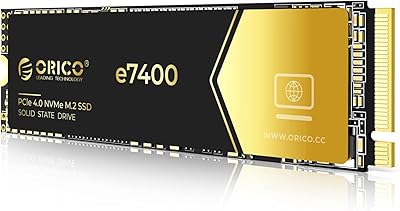
ORICO e7400 2TB M.2 NVMe SSD
81%
91%
Sequential Speed
78%
Random Read/Write
86%
Thermal Management
83%
PS5 Compatibility
88%
Value for Money
More
Seagate FireCuda 520N 1TB SSD
87%
94%
Performance
89%
Installation Ease
91%
Speed (Read/Write)
85%
Durability and Reliability
90%
Compatibility
More
WD_BLACK SN770 2TB NVMe SSD
85%
91%
Read & Write Performance
93%
Value for Money
94%
Installation & Compatibility
88%
Long-Term Reliability
92%
Gaming Load Times
More
TEAMGROUP MP33 2TB NVMe M.2 SSD
78%
93%
Value for Money
86%
Read Performance
67%
Write Performance
94%
Installation Ease
91%
Compatibility
More
KingSpec XG7000 2TB NVMe M.2 SSD
81%
88%
Sequential Read Speed
84%
Sequential Write Speed
93%
Value for Money
91%
PS5 Compatibility
74%
Thermal Management
More
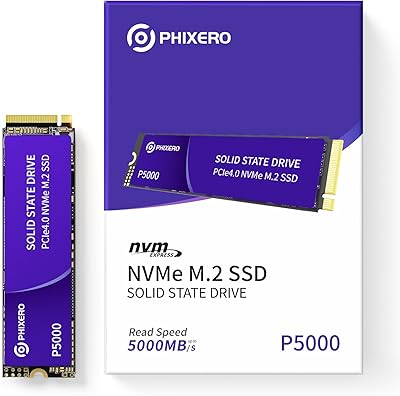
PHIXERO P5000 2TB NVMe SSD
88%
93%
Performance (Speed)
88%
Build Quality
90%
Heat Management
85%
Ease of Installation
92%
Compatibility
More

FAQ

Yes, the Seagate FireCuda 530 2TB NVMe SSD is built with PS5 compatibility in mind, and since it already includes a heatsink, you don't need to buy a separate one to meet Sony's cooling requirement for the expansion slot. Just make sure your console's firmware is up to date before installing it.
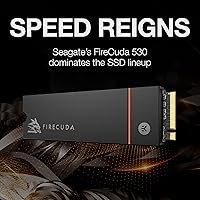
No, this Seagate SSD ships with a low-profile heatsink already attached, designed in collaboration with EKWB. You can install it as-is in most builds without sourcing extra cooling hardware.

It uses the standard M.2 2280 form factor, which is the most common NVMe slot size on desktop motherboards. Just double-check that your case and any nearby components have enough clearance for the heatsink height.

Quite a bit faster in practice. Rated sequential speeds reach up to 7300MB/s, which is roughly twelve times what a typical SATA SSD can manage, and owners consistently report noticeably quicker boot and load times after switching.

Honestly, probably not. If you mainly browse, stream, or use light office software, you won't notice much real-world difference compared to a cheaper drive. This PCIe Gen4 drive really shines for gaming, video editing, or other heavy file workloads.

You get three years of included Rescue Data Recovery Services on top of the standard 5-year limited warranty, so professional recovery help is available if something goes wrong. That combination is more generous than most competing drives offer.

It can be, yes. A few owners have mentioned needing to check clearance carefully in slim or compact PC cases, since the heatsink adds noticeable height compared to a bare M.2 stick.

It carries a 2550TBW endurance rating and a 1.8 million hour MTBF reliability rating, both of which point to strong longevity for years of daily gaming or editing workloads. Most users won't come close to the write limit under normal use.

No special drivers are required for normal operation on a modern PC, since NVMe support is built into most current operating systems. Seagate does offer optional toolkit software if you want to monitor drive health or check firmware updates.

Both are strong Gen4 performers with similar rated speeds, so the decision often comes down to pricing, warranty length, and bundled extras at the time of purchase. This NVMe drive stands out for its included heatsink and longer recovery service window.