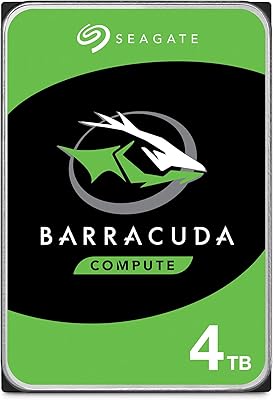
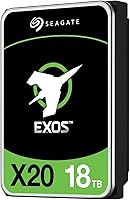
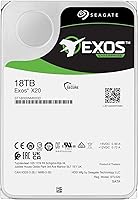
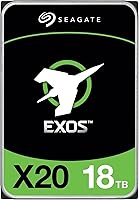
Seagate Exos X20 18TB Internal Hard Drive
Overview
The Seagate Exos X20 18TB Internal Hard Drive is an enterprise-class SATA HDD that Seagate sells in factory-recertified condition — and it is worth understanding exactly what that means before you buy. This is not a third-party refurb or a drive pulled from some unknown server rack. Factory recertified means Seagate itself has wiped the data, run diagnostics, updated the firmware, and verified every component, backing the result with a six-month replacement warranty. Originally engineered for hyperscale data centers, 18TB of raw capacity makes this recertified Seagate Exos drive a compelling option in today's storage market — just know upfront that it is a mechanical HDD, not an SSD.
Features & Benefits
At its core, the Exos X20 18TB runs on a SATA 6Gb/s interface at 7200 RPM — a pairing that delivers consistent sequential throughput for large file transfers and sustained workloads. The 256MB cache buffer is a practical asset; on a Plex media server streaming to multiple devices simultaneously, that buffer helps the drive queue and serve data without stumbling. Average latency sits at 4.16ms, and Native Command Queuing lets it reorder read and write requests intelligently, which matters in multi-user environments. One thing to confirm before installing: this drive uses a 512E sector format, which can cause friction with older RAID controllers or systems expecting native 4K sectors.
Best For
This 18TB hard drive hits a sweet spot for anyone building or expanding a high-capacity NAS — think home Plex servers, multi-drive backup arrays, or a small business file server where raw space matters more than raw speed. Surveillance setups are another natural fit; the Exos X20's design for continuous read and write cycles translates well to DVR and NVR environments. That said, it suits buyers who understand the recertified trade-off: enterprise hardware at a meaningful discount, but with a shorter warranty than a new drive carries. SSD-level performance is not what this drive offers, and that expectation should be set clearly from the start.
User Feedback
Across roughly 215 ratings, the Exos X20 18TB holds a 4.1 out of 5 — a respectable result for a recertified drive. Buyers consistently highlight the cost per terabyte, noting that comparable new drives rarely approach the same value. Long-term users in NAS and server environments report stable operation across months of continuous use. On the downside, some reviewers mention audible vibration in multi-drive enclosures, and heat output gets flagged in cases with limited airflow. A handful of DOA reports appear, which is not unusual territory for recertified hardware — most resolved through the warranty process, though the six-month coverage limit remains a frequent point of friction for buyers cross-shopping against new-drive warranties.
Pros
- Exceptional value per terabyte compared to buying a new drive of equivalent capacity.
- Enterprise-grade Exos X20 platform engineering translates to solid endurance in 24/7 workloads.
- Factory recertified by Seagate directly — data-sanitized, firmware-updated, and tested before shipping.
- 256MB cache buffer keeps large sequential transfers running smoothly in NAS and server environments.
- 7200 RPM spindle speed delivers consistent throughput competitive with other high-capacity HDDs.
- NCQ support helps the drive manage queued read and write requests intelligently under real workloads.
- 3.5-inch form factor fits virtually every desktop tower, NAS bay, and server chassis without adapters.
- This 18TB hard drive handles vibration compensation well in multi-drive enclosures, a common weak point for consumer-grade alternatives.
- Backed by a six-month Seagate replacement warranty, not a third-party guarantee.
- Community of NAS and home server users provides solid real-world usage data to draw on before buying.
Cons
- Six-month warranty is significantly shorter than the two-to-five year coverage on comparable new drives.
- Recertified units carry a higher DOA risk than new hardware, even when sourced from the manufacturer.
- 512E sector format can cause compatibility issues with older RAID controllers and certain legacy systems.
- Audible vibration and hum are reported by users running the Exos X20 18TB in enclosures with limited dampening.
- Heat output under sustained load requires adequate airflow — passive or poorly ventilated cases are a liability.
- No performance advantage over standard consumer HDDs when it comes to random read and write operations.
- Recertified stock availability can be inconsistent, making it harder to add matching drives for RAID expansion later.
- Not suitable as a primary or boot drive where responsiveness and latency matter to the end user.
- Some buyers report longer-than-expected warranty resolution times when submitting recertified drive claims.
- Enterprise origins mean the drive may spin up loudly or behave unexpectedly in consumer NAS firmware environments.
Ratings
The Seagate Exos X20 18TB Internal Hard Drive has been scored below using AI analysis of verified global buyer reviews, with spam, bot-generated, and incentivized feedback actively filtered out. Ratings reflect a balanced picture of where this recertified enterprise drive genuinely delivers and where real-world buyers have run into friction. Both the standout strengths and the legitimate pain points are represented transparently across each category.
Value for Money
Sequential Throughput
Reliability & Endurance
Warranty Coverage
NAS Compatibility
Noise & Vibration
Thermal Performance
Random I/O Performance
Unboxing & Packaging
Firmware & Software
Installation Experience
Brand Trust
Surveillance Workload Fit
Suitable for:
The Seagate Exos X20 18TB Internal Hard Drive is a strong fit for anyone who needs a serious amount of storage without paying new-drive prices for enterprise-grade hardware. Home lab enthusiasts building out a NAS for Plex libraries, personal backups, or network file sharing will find 18TB of capacity goes a long way, and the drive's engineering for continuous 24/7 operation aligns well with always-on setups. Small business owners running local file servers or lightweight surveillance systems will also appreciate the sequential write endurance baked into the Exos X20 platform. Surveillance DVR and NVR users in particular benefit from a drive designed to handle sustained, repetitive write cycles without degrading quickly. The ideal buyer here is someone technically comfortable with hardware, understands the recertified model, and is prioritizing cost-per-terabyte above all else.
Not suitable for:
The Seagate Exos X20 18TB Internal Hard Drive is not the right call for buyers who need speed, a long warranty, or plug-and-play simplicity. If your workload involves fast random I/O — virtual machines, databases, or OS drives — a mechanical HDD at any capacity is the wrong tool, and this drive is no exception. Buyers with older RAID controllers or motherboards should verify 512E sector compatibility before purchasing, as incompatibility can cause headaches that most casual users are not equipped to troubleshoot. The six-month replacement warranty is meaningfully shorter than what new enterprise or consumer drives typically offer, which is a real risk consideration for mission-critical storage. Anyone who would lose sleep over data loss without a robust manufacturer warranty should either opt for a new drive or maintain a strict backup strategy alongside this one.
Specifications
- Capacity: This drive provides 18TB of raw storage, formatted capacity will be slightly lower as reported by most operating systems.
- Form Factor: Standard 3.5-inch design fits desktop towers, most NAS enclosures, and server bays without any adapter.
- Interface: Uses a SATA 6Gb/s connection, backward compatible with SATA 3Gb/s ports at reduced throughput.
- Spindle Speed: Rotates at 7200 RPM, which supports consistent sequential read and write performance across sustained workloads.
- Cache Buffer: Equipped with 256MB of onboard cache to help manage data queuing and sustain transfer speeds during large file operations.
- Sector Format: Uses 512E (512-byte emulation) rather than native 4K sectors, which may require firmware or driver updates on older RAID controllers.
- Avg Latency: Average latency is rated at 4.16ms, consistent with enterprise-class 7200 RPM mechanical drives.
- Command Queuing: Supports Native Command Queuing (NCQ), allowing the drive to reorder pending read and write requests for improved efficiency under mixed workloads.
- Condition: Factory recertified by Seagate, meaning the drive has been data-sanitized, diagnostically tested, and firmware-updated at the manufacturer level before resale.
- Warranty: Includes a six-month replacement warranty provided directly by Seagate, covering manufacturing defects on the recertified unit.
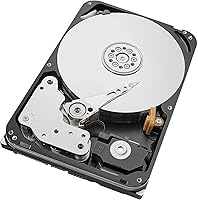
- Drive Type: Traditional mechanical hard disk drive (HDD) with spinning platters, not a solid-state drive.
- Model Number: Carries the official Seagate model designation ST18000NM003D, part of the enterprise Exos X20 series.
- Series: The Exos X20 platform was designed for hyperscale data centers, with engineering choices that prioritize 24/7 endurance and multi-drive vibration compensation.
- Installation: Internal drive only; requires mounting inside a compatible 3.5-inch bay and connection via a SATA data cable and standard power connector.
- Compatible Use: Rated for use in desktop workstations, NAS enclosures, server bays, and DVR/NVR surveillance systems requiring continuous operation.
- Item Weight: The drive weighs approximately 1.48 pounds, typical for a high-platter-count 3.5-inch enterprise HDD.
Related Reviews
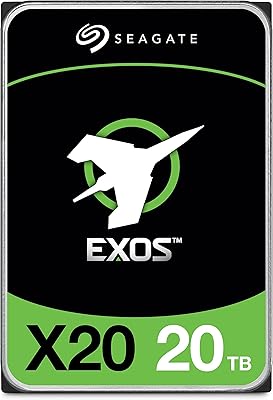
Seagate Exos X20 20TB Recertified Hard Drive
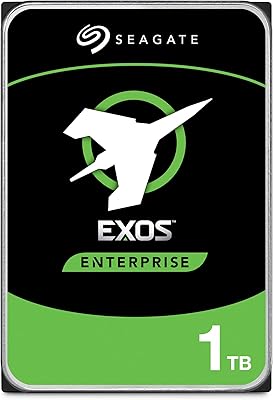
Seagate Exos 1TB Internal Hard Drive
Seagate Exos X10 10TB Internal Hard Drive
Seagate Exos 7E10 4TB Internal Hard Drive
Seagate Expansion 18TB External Hard Drive
Seagate BarraCuda 2TB Internal Hard Drive
Seagate BarraCuda ST1000DM010 1TB Internal Hard Drive
Seagate Barracuda 6TB Internal Hard Drive
Seagate BarraCuda ST8000DM004 8TB Internal Hard Drive