Overview

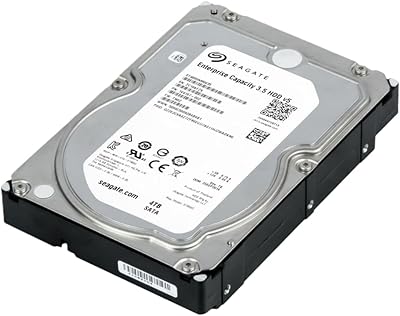
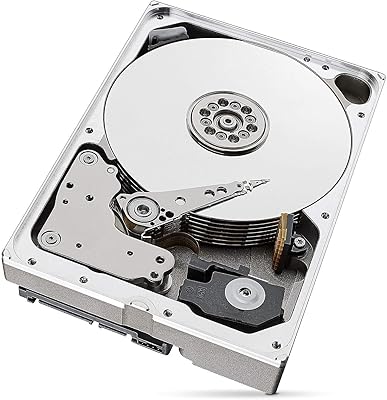
The Seagate Exos X20 20TB Recertified Hard Drive is enterprise-grade storage that has been factory refurbished — not just wiped and reshipped, but put through Seagate's own data sanitization, firmware verification, and full parts inspection before it ships. That process matters if you're on the fence about buying refurbished. You also get a 6-month replacement warranty, which won't satisfy everyone, but it's a real safety net. Fitting the standard 3.5-inch, SATA 6Gb/s form factor means it drops right into most desktop towers, NAS enclosures, and server builds. Think of this as enterprise-tier hardware at a realistic price — just with clear expectations about what recertified actually means.
Features & Benefits

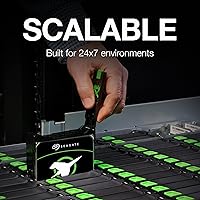
Spinning at 7200 RPM, this recertified Exos drive delivers the kind of consistent throughput that slower drives struggle to match under sustained workloads — genuinely useful when a NAS is serving multiple clients or feeding a data pipeline. The 20TB capacity means fitting serious storage density into a single bay rather than stacking several smaller drives. Support for both 512e and 4Kn formats via FastFormat adds flexibility across older and newer storage architectures. The enhanced caching design keeps latency in check during heavy sequential operations. An MTBF rating of 2.5 million hours is a meaningful figure — the kind of spec you'd expect from hardware built for always-on hyperscale environments, not consumer desktops.

Best For

This enterprise HDD is squarely aimed at buyers who know what they're getting into. Home lab builders assembling a high-capacity NAS array on a reasonable budget will find genuine value here — especially when pairing with platforms like Synology or TrueNAS. IT professionals repurposing enterprise hardware for backup servers or cold archival tiers are a natural fit too. Content creators sitting on growing libraries of raw video footage need bulk raw storage, not peak burst speed, which is exactly what the Exos X20 20TB delivers. Plex media server builds demanding substantial headroom round out the ideal audience. This is not a drive for casual users unfamiliar with refurbished hardware.

User Feedback

Sitting at 4.1 stars across 76 ratings, the reception is cautiously positive rather than enthusiastic. Buyers consistently praise the cost-per-terabyte value and note that drives arrive performing as expected under real workloads, with several reporting smooth integration into Synology and TrueNAS setups. That said, concerns do exist — a portion of reviewers flagged unease about long-term reliability, which is understandable given the refurbished nature. Experienced buyers strongly recommend running SMART data checks immediately on arrival, a sensible practice regardless of condition. The 6-month warranty remains the most polarizing aspect; compared to multi-year coverage on new drives, it is a genuine trade-off worth weighing carefully before purchasing.

Pros

  • 20TB in a single bay delivers exceptional storage density for NAS and server builds.
  • Factory recertification includes data sanitization, firmware checks, and full parts inspection.
  • The 2.5 million hour MTBF rating reflects genuine enterprise-grade durability standards.
  • 7200 RPM speed handles sustained multi-client workloads without significant throughput degradation.
  • SATA 6Gb/s interface ensures broad compatibility across desktops, NAS enclosures, and servers.
  • FastFormat support for both 512e and 4Kn gives flexibility across older and newer systems.
  • Cost-per-terabyte value is substantially better than buying a comparable new drive.
  • Buyers report smooth drop-in integration with popular NAS platforms like Synology and TrueNAS.
  • Enhanced caching architecture keeps latency manageable during heavy sequential read/write operations.
  • Seagate's factory refurbishment process is more rigorous than typical third-party refurbishers.

Cons

  • The 6-month replacement warranty is short compared to the 3-to-5-year coverage on new drives.
  • No way to verify prior workload history or how heavily the drive was used before recertification.
  • Enterprise HDDs run louder and generate more heat than consumer-grade desktop drives.
  • A failed drive within months of warranty expiry leaves buyers without meaningful recourse.
  • 76 ratings is a relatively small sample size to confidently assess long-term failure patterns.
  • Not suitable for use as a primary OS drive or in applications requiring fast random I/O.
  • Refurbished stock availability can be inconsistent, making repeat purchases or matched sets difficult.
  • Buyers must independently run SMART diagnostics on arrival — no pre-shipment health report is provided.

Ratings

The scores below reflect our AI-driven analysis of verified global buyer reviews for the Seagate Exos X20 20TB Recertified Hard Drive, with spam, bot activity, and incentivized feedback actively filtered out before scoring. Each category captures both what users genuinely praised and where real frustrations surfaced, giving you an honest picture rather than a polished highlight reel. Strengths and pain points are weighted equally so you can make a confident, informed decision.

Value for Money
88%
For buyers building out high-capacity NAS arrays or archival servers, the cost-per-terabyte on this recertified Exos drive is hard to argue with. Home lab builders and IT professionals consistently single out the price gap versus new enterprise drives as the primary reason they chose this unit over alternatives.
The value calculation shifts if the drive fails shortly after the 6-month warranty expires, since replacement costs at this capacity tier are significant. A small number of buyers felt the savings did not fully offset the anxiety of committing to refurbished hardware for critical storage roles.
Storage Capacity
93%
Twenty terabytes in a single 3.5-inch bay is genuinely impactful for Plex media servers, video editing scratch storage, and dense NAS builds where bay count is limited. Users building TrueNAS or Synology arrays specifically praised fitting more raw capacity into fewer drive slots without compromising on redundancy configurations.
The raw 20TB figure is unformatted capacity, so usable space after filesystem overhead is slightly lower — a point that occasionally surprised first-time enterprise HDD buyers. There are no meaningful capacity complaints, but expectations around formatted versus raw figures are worth setting clearly upfront.
Drive Performance
79%
21%
At 7200 RPM with an enhanced caching architecture, this enterprise HDD handles sustained sequential workloads well — multi-client NAS access, large file transfers, and continuous media streaming all performed reliably according to buyers who put it through real daily use. Latency under load stayed predictable in home server environments.
Random I/O performance is not a strength, and buyers who tested it against NVMe or even SATA SSD alternatives in mixed workloads noticed the gap immediately. It is purely a sequential throughput and bulk storage drive — anyone expecting snappy desktop-style responsiveness will be disappointed.
Reliability & Build
74%
26%
The 2.5 million hour MTBF rating gives buyers a meaningful baseline of confidence, and many users reported solid SMART data readings upon arrival with no early warning flags. Home lab users running these drives continuously in NAS enclosures over several months reported stable operation without unexpected failures.
The recertified nature introduces an irreducible uncertainty around prior workload history that a fresh drive simply does not carry. A subset of buyers reported elevated concern after noticing higher power-on hour counts in SMART data, which understandably raises questions about remaining usable lifespan even when all other metrics look clean.
Warranty Coverage
51%
49%
Seagate backing this drive with a 6-month replacement warranty — rather than leaving it to a third-party reseller — does carry some weight, particularly because the claim process goes through official Seagate channels and includes a verified refurbishment standard. Buyers who had to use it reported the process was straightforward.
Six months is genuinely short for a high-capacity storage drive, and it is the single most common complaint across buyer reviews. Compared to the 3-to-5-year warranties offered on new enterprise drives at similar price points, the coverage gap is hard to ignore for anyone planning long-term deployment.
Compatibility
91%
The standard SATA 6Gb/s interface and 3.5-inch form factor mean this recertified Exos drive drops into virtually any desktop tower, server chassis, or NAS enclosure without adapters or configuration headaches. Buyers using Synology, QNAP, and TrueNAS platforms specifically noted clean recognition and stable operation out of the box.
A small number of users with older NAS firmware versions reported needing a firmware update before the drive was fully recognized, adding an unexpected setup step. FastFormat sector switching also requires compatible tools and a wipe cycle, which is a minor but real friction point for less experienced buyers.
Recertification Process
76%
24%
Seagate's factory recertification is meaningfully more rigorous than typical third-party refurbishers — it covers data sanitization, firmware updates, and parts verification rather than just a superficial wipe and retest. Buyers who understood this distinction expressed noticeably more confidence in the unit's baseline condition compared to generic refurbished drives.
Seagate does not publish granular details about the refurbishment criteria or pass/fail thresholds, which leaves some buyers guessing about exactly how thorough the process is in practice. Without a condition report or power-on hour disclosure included in the box, buyers must rely on their own SMART checks to fill that information gap.
Noise & Acoustics
58%
42%
For a 7200 RPM enterprise-class drive, noise levels are within expected bounds — buyers running it inside a closed NAS enclosure in a separate room reported it as a non-issue. Those with experience using enterprise drives in server environments found the acoustic profile entirely normal and unremarkable.
In open desktop cases or home office NAS units placed on a desk, the drive's spin hum and seek noise are noticeably louder than consumer-grade alternatives. Several buyers accustomed to quieter desktop HDDs flagged the acoustics as an adjustment, particularly during longer sequential write sessions.
Thermal Performance
66%
34%
Under typical NAS workloads with reasonable enclosure airflow, the Exos X20 20TB runs within acceptable temperature ranges and does not throttle under sustained access. Buyers with properly ventilated enclosures reported stable temperatures even during overnight backup jobs and continuous media serving.
Enterprise drives are built to run in server rooms with active cooling, not in compact home NAS units with passive or minimal airflow. A handful of buyers noted higher-than-expected operating temperatures in tightly packed enclosures, which is a real concern for long-term reliability if thermal management is not addressed.
Packaging & Arrival Condition
69%
31%
Most buyers reported receiving the drive in adequately protective packaging with no physical damage, and drives generally arrived with SMART data showing clean health indicators. The overall unboxing experience met expectations for a refurbished enterprise component rather than a retail consumer product.
Packaging feedback was inconsistent — a subset of buyers reported minimal protective materials around the drive itself, which raised concerns given the sensitivity of spinning hard drives to physical shock during shipping. A few noted scuff marks or minor cosmetic wear that, while functionally irrelevant, signaled heavy prior use.
NAS Integration
87%
Buyers running Synology DSM, TrueNAS SCALE, and Unraid reported smooth plug-and-play recognition with no manual configuration needed beyond standard drive setup. The Exos X20 family has an established track record in home lab and small business NAS environments, which gave community-sourced confidence beyond the product listing itself.
Some Synology users encountered compatibility warnings in DSM because the drive is not on Seagate's official consumer NAS compatibility list, even though it functions correctly. This cosmetic flag in the NAS interface is harmless in practice but adds unnecessary uncertainty for less experienced users setting up their first array.
Ease of Installation
89%
Standard 3.5-inch SATA drives are about as straightforward as internal storage gets — four screws, one data cable, one power connector, and the drive is seated. Buyers across all experience levels reported no friction during physical installation in desktops, servers, and hot-swap NAS bays.
The FastFormat sector configuration step is an exception — switching between 512e and 4Kn requires dedicated tooling and a full drive wipe, which is not obvious from the product listing. First-time enterprise HDD buyers occasionally discovered this requirement mid-setup, which caused avoidable delays.
Sustained Throughput
82%
18%
Under continuous workloads — large backup jobs, media ingest, or multi-drive RAID rebuilds — the Exos X20 20TB maintained consistent transfer rates without the performance degradation that cheaper consumer drives exhibit over long sessions. Buyers running overnight tasks specifically praised this steady performance floor.
Peak throughput figures are solid but not class-leading even among enterprise HDDs at this capacity tier, and buyers who benchmarked against newer helium-filled alternatives noticed a measurable gap in best-case sequential speeds. For pure throughput-critical applications, newer-generation drives have a clear edge.

Suitable for:

The Seagate Exos X20 20TB Recertified Hard Drive is built for buyers who need serious storage capacity and understand the trade-offs of refurbished enterprise hardware. Home lab enthusiasts assembling multi-bay NAS systems on a budget will find this recertified Exos drive hard to beat on a per-terabyte basis, particularly when running platforms like TrueNAS or Synology DSM. IT professionals building out backup infrastructure or cold-storage archival tiers can stretch their hardware budget meaningfully without sacrificing the core reliability specs that enterprise-class drives are designed around. Content creators — especially videographers sitting on terabytes of raw footage — benefit from the sheer capacity without needing blazing sequential speeds for archival or editing scratch use. If you are comfortable running a SMART diagnostic on arrival and treating this as a known-quantity refurbished component, the value proposition is genuinely strong for high-volume storage builds.
Not suitable for:

The Seagate Exos X20 20TB Recertified Hard Drive is a poor fit for buyers who want the peace of mind that comes with a full manufacturer warranty and a known usage history. Casual users upgrading a single desktop PC will likely find the enterprise design philosophy — built for dense rack environments, not quiet home offices — unnecessary and potentially noisier than consumer-grade alternatives. Anyone deploying storage for mission-critical, always-on applications where a drive failure could cause serious operational damage should be cautious about relying on a 6-month warranty with no long-term coverage fallback. Buyers unfamiliar with refurbished hardware who would not know how to interpret SMART data or respond to early warning signs should consider a new drive instead. This enterprise HDD is also not ideal for those prioritizing ultra-quiet acoustics, since 7200 RPM enterprise drives run audibly louder than many consumer-focused options.
Specifications

  • Capacity: This drive offers 20TB of raw storage, formatted as 20,000GB under SATA specification.
  • Form Factor: It uses the standard 3.5-inch form factor compatible with most desktop towers, NAS bays, and server chassis.
  • Interface: The drive connects via SATA 6Gb/s (SATA-600), ensuring broad compatibility with modern and legacy SATA controllers.
  • Rotational Speed: Platters spin at 7200 RPM, delivering consistent sustained throughput suitable for demanding read/write workloads.
  • MTBF Rating: Seagate rates this drive at 2.5 million hours mean time between failures, reflecting its enterprise-class design origins.
  • Format Support: The drive supports both 512e and 4Kn sector formats via FastFormat, allowing use across a wide range of storage architectures.
  • Cache Design: An enhanced caching architecture reduces effective latency during sequential operations and high-demand data access tasks.
  • Condition: This is a factory recertified unit that has undergone Seagate's own data sanitization, firmware verification, and parts inspection process.
  • Warranty: Seagate provides a 6-month replacement warranty covering this recertified drive from the date of purchase.
  • Model Number: The official Seagate model designation for this drive is ST20000NM007D.
  • Weight: The drive weighs 1.48 pounds, consistent with standard 3.5-inch enterprise HDD construction.
  • Dimensions: Physical dimensions measure 5.79 x 4.01 x 1.03 inches (L x W x H), fitting standard 3.5-inch drive bays without adapters.
  • Installation Type: This is an internal hard drive requiring installation inside a compatible desktop, server, or NAS enclosure.
  • Data Sanitization: Each recertified unit is fully data-sanitized by Seagate's factory process before resale, with no prior user data retained.
  • Compatible Devices: The drive is compatible with desktop PCs, NAS enclosures, and server platforms that support standard SATA connections.
  • Drive Series: This unit belongs to the Exos X20 product family, which Seagate designed for hyperscale and high-density storage deployments.

Related Reviews

Seagate Exos 1TB Internal Hard Drive
80%
91%
Reliability & Uptime
67%
Value for Money
78%
Sequential Performance
88%
Noise Level
84%
Build & Durability
More
Seagate Exos X14 12TB Hard Drive
88%
91%
Performance
94%
Reliability & Durability
88%
Value for Money
89%
Energy Efficiency
92%
Build Quality
More
Seagate Exos 7E10 4TB Internal Hard Drive
75%
83%
Sustained Reliability
81%
Read/Write Performance
78%
Value for Money
89%
NAS Compatibility
61%
Vibration & Noise
More
Seagate Exos 7E10 6TB SAS Hard Drive
87%
94%
Performance in RAID Setups
92%
Reliability & Durability
90%
Workload Capacity
89%
Compatibility with Data Centers
60%
Noise Levels
More
Seagate Exos X24 24TB Enterprise Hard Drive
83%
97%
Storage Capacity
88%
Read/Write Performance
91%
Reliability & Longevity
86%
Thermal & Acoustic Performance
83%
Value for Money
More
Seagate Exos X10 10TB Internal Hard Drive
85%
88%
Performance
91%
Reliability
82%
Ease of Installation
86%
Data Transfer Speed
65%
Power Consumption
More
Seagate Exos 7E8 4TB Enterprise Hard Drive
80%
83%
Long-Term Reliability
91%
Workload Endurance
78%
Sequential Throughput
86%
NAS Compatibility
73%
Noise & Vibration
More
Seagate One Touch Hub 20TB External Hard Drive
84%
94%
Storage Capacity
86%
Data Transfer Speed
91%
Setup and Installation
90%
Compatibility (Windows & Mac)
88%
Data Security (Encryption & Backup Tools)
More
Seagate Game Drive for PlayStation 2TB
79%
94%
Ease of Setup
91%
Storage Capacity
93%
PS4 Compatibility
72%
PS5 Compatibility
74%
Transfer Speed
More
Seagate Exos X20 18TB Internal Hard Drive
71%
91%
Value for Money
83%
Sequential Throughput
78%
Reliability & Endurance
47%
Warranty Coverage
77%
NAS Compatibility
More

FAQ

It is more involved than a simple wipe. Seagate's factory recertification process includes full data sanitization, firmware updates, and a parts integrity check before the drive ships. It is not the same as a third-party refurbish — it goes through Seagate's own facility and standards, which is meaningfully different from a reseller just erasing data and reboxing a return.

Absolutely, and it is honestly good practice with any storage drive, recertified or not. Tools like CrystalDiskInfo on Windows or smartmontools on Linux will give you a full health readout within minutes of connecting the drive. Pay attention to reallocated sector counts and spin retry counts — those are the numbers that matter most for early warning signs.

In most cases, yes. The Exos X20 20TB uses a standard SATA 6Gb/s interface and a 3.5-inch form factor, which fits the vast majority of multi-bay NAS enclosures. That said, it is worth checking your specific NAS model's compatibility list, since some Synology and QNAP units have a curated drive support page and enterprise drives occasionally need a firmware nudge to be fully recognized.

It depends on how you plan to use it. For a backup tier or archival NAS where you already have redundancy built in, 6 months may be acceptable. For a primary, single-point-of-failure storage role, it is genuinely short compared to the 3-to-5-year coverage you would get buying new. Factor that risk into your decision, especially if losing the data would be costly.

Enterprise drives running at 7200 RPM are audibly louder than consumer-grade drives, and this one is no exception. In an open desktop or a home office NAS sitting on a desk, you will likely notice it — a consistent low hum and occasional seek noise. If acoustics matter in your setup, plan for some vibration dampening or place the enclosure away from your workspace.

Technically yes, but it is not what this drive was designed for. The Seagate Exos X20 20TB Recertified Hard Drive is built for sustained sequential workloads in always-on server environments, not random I/O-heavy desktop use. For a boot drive or primary OS disk, a modern SSD will give you a far better experience. This drive makes more sense as bulk storage attached alongside a faster boot device.
It uses a standard SATA power connector, the same flat 15-pin connector found on most desktop PSUs and NAS enclosures, so no adapters are needed. For cooling, enterprise drives do run warmer than consumer alternatives under load, so making sure your enclosure has reasonable airflow is worthwhile, especially in always-on NAS scenarios.

The cost difference can be meaningful, though pricing fluctuates. The trade-off is straightforward: you save money upfront but accept a shorter warranty, an unknown prior usage history, and a slightly higher baseline uncertainty compared to a sealed new unit. For buyers comfortable managing that risk — particularly those with RAID or redundant backups — the value case is real. For buyers who want certainty, the new-drive premium is probably worth it.

Yes, this recertified Exos drive works well with both TrueNAS and Unraid in practice. Several buyers have specifically noted smooth integration with these platforms. TrueNAS in particular pairs well with enterprise-class drives given its ZFS underpinnings, and the Exos X20 line has a solid reputation in the home lab community for reliable long-term operation in those environments.

Contact Seagate directly with your proof of purchase and the drive's serial number to initiate a warranty replacement claim. The 6-month window covers factory defects and failures, and since this is a Seagate-certified unit, the claim process goes through their official support channel rather than a third-party reseller. Keep your purchase receipt and note the warranty start date as soon as the drive arrives.