Overview

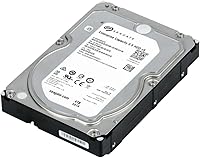
The Seagate Exos 7E8 4TB Enterprise Hard Drive sits in Seagate's enterprise lineup aimed squarely at small business servers, multi-drive NAS arrays, and workstation storage that runs continuously. What makes this enterprise hard drive appealing is the value equation: genuine enterprise endurance without the price premium of higher-capacity nearline options. One thing worth flagging early is the 512n sector format — older server hardware and certain HBAs handle this natively, but buyers on more recent platforms should verify compatibility before purchasing. Manage expectations going in: the Exos 7E8 4TB is a workhorse drive, built for reliability and sustained throughput, not for competing with SSDs on random I/O.
Features & Benefits

The 550TB/year workload rating is the headline spec here — roughly ten times what a standard desktop drive is designed to handle — and it's what separates this enterprise hard drive from consumer HDDs that get quietly overwhelmed in always-on NAS enclosures. Running at 7200 RPM with a 128MB cache, the Exos 7E8 4TB delivers consistent sequential throughput that holds up through RAID rebuilds and extended backup operations. The SATA 6 Gb/s interface means no proprietary SAS controllers required — just drop it into any standard backplane. A 2 million hour MTBF gives a concrete reliability baseline, and the bundled Seagate Rescue data recovery service is a practical safety net most buyers forget about until they actually need it.

Best For

This enterprise hard drive is a natural fit for small business NAS deployments — Synology and QNAP systems that run 24/7 without babysitting. Home lab builders assembling multi-drive RAID arrays will find the endurance rating and accessible price point hard to argue with. IT administrators refreshing server storage on a constrained budget also land squarely in the intended audience. Workloads built around sustained sequential throughput — video surveillance archiving, off-site backup targets, cold storage pools — are where this Seagate Exos drive consistently earns its keep. If your infrastructure specifically requires the legacy 512n sector format for compatibility with older systems, this drive covers that need without compromise.

User Feedback

With a 4.1-star average across roughly 230 ratings, the consensus is broadly positive — most buyers deploy the Exos 7E8 4TB in long-term server roles and come away satisfied. Quiet, stable operation inside multi-drive enclosures is a recurring point of praise. That said, a vocal minority has reported early failures, and it would be dishonest to ignore that; no drive line is immune to early-life attrition. Buyers building high-density RAID arrays have flagged vibration sensitivity, which is worth accounting for with proper drive dampening. A handful of owners on legacy systems also hit unexpected 512n compatibility snags. Notably, longer-term owners tend to rate this drive more favorably than first-month reviewers, which says something about how it ages.

Pros

  • A 550TB/year workload rating means the Exos 7E8 4TB handles continuous server loads that would degrade desktop drives quickly.
  • The 2 million hour MTBF rating is a strong, verifiable reliability benchmark for long-term deployment planning.
  • Standard SATA 6 Gb/s interface slots into virtually any existing server backplane without additional controller cards.
  • Rated for 24/7 operation, unlike SMR or desktop-class drives that are sometimes mistakenly used in server roles.
  • Runs noticeably quieter than many competing enterprise drives, a real advantage in shared office or home lab environments.
  • Bundled Seagate Rescue data recovery service offers a practical safety net that adds real value beyond the hardware itself.
  • Consistent sequential throughput makes it dependable for RAID rebuilds, surveillance recording, and large file transfers.
  • Proven track record in multi-drive NAS enclosures where stable, predictable performance matters more than peak speed.
  • Accessible price point brings genuine enterprise endurance within reach for SMB and home lab budgets.

Cons

  • A minority of buyers have reported early-life failures, so purchasing with a reliable return or warranty policy in place is advisable.
  • Vibration sensitivity in high-density drive arrays can cause instability if the chassis lacks proper dampening.
  • The 512n sector format can cause compatibility issues on newer platforms if not checked in advance.
  • At 4TB, per-slot capacity is modest compared to higher-density options available at a proportionally small premium.
  • Mechanical drives of any caliber cannot match SSD performance for random read/write workloads, regardless of enterprise rating.
  • Shorter-term reviewers report a steeper learning curve with initial setup in certain NAS systems, particularly around sector format recognition.
  • Heavier than some competing 3.5-inch drives at 1.72 pounds, which is a minor but real consideration for chassis weight budgets.
  • No SAS interface option at this capacity tier, limiting deployment in environments that have standardized on SAS backplanes.

Ratings

Our AI-generated scores for the Seagate Exos 7E8 4TB Enterprise Hard Drive are derived from analyzing verified buyer reviews worldwide, with spam, bot-submitted, and incentivized feedback actively filtered out before scoring. Ratings reflect both the consistent strengths that keep IT administrators and home lab builders coming back, and the genuine pain points that surface in real deployments. Nothing has been glossed over — the numbers tell the full story.

Long-Term Reliability
83%
Buyers who have run the Exos 7E8 4TB continuously in NAS enclosures for two or more years consistently report stable, failure-free operation. The 2 million hour MTBF and low annualized failure rate translate into real-world confidence for server administrators who cannot afford unexpected downtime.
A vocal minority of buyers encountered early-life failures within the first few months, which skews first impressions downward. While statistically within normal range for enterprise drives, it is enough to make some buyers nervous about receiving a bad unit.
Workload Endurance
91%
The 550TB/year workload rating is where this drive genuinely separates itself from NAS-targeted consumer options. Users running continuous backup jobs, surveillance recording streams, or active file server traffic report that the drive handles sustained load without the performance degradation seen in desktop HDDs pushed beyond their design limits.
For light or intermittent workloads — a home media server that sees activity a few hours a day — the endurance headroom goes entirely unused, making the value proposition less compelling for low-intensity deployments.
Sequential Throughput
78%
22%
At 7200 RPM with a 128MB cache, the drive delivers steady sequential read and write speeds that hold up well during large file transfers and RAID rebuild operations. Users copying multi-gigabyte backup archives or writing continuous surveillance footage report predictable, stable throughput without unexpected slowdowns.
Random I/O performance is unremarkable — as expected from any mechanical drive — and buyers who assumed enterprise labeling implied SSD-like responsiveness were disappointed. Application loading, database queries, and virtual machine boot times are not where this drive shines.
NAS Compatibility
86%
The standard SATA 6 Gb/s interface and 3.5-inch form factor mean this Seagate Exos drive drops into Synology, QNAP, and most other popular NAS enclosures without adapter hardware or firmware headaches. The majority of NAS users report clean detection and immediate usability out of the box.
The 512n sector format creates occasional compatibility friction on newer NAS platforms that default to expecting 512e or 4Kn drives. A subset of users had to work through sector format recognition issues, particularly on platforms with recently updated firmware.
Noise & Vibration
73%
27%
Relative to other enterprise-class drives, the Exos 7E8 4TB runs quietly enough that home office and small business users rarely flag noise as a problem. In a standard two- to four-bay NAS sitting on a shelf, the operational hum is unobtrusive during normal working hours.
In high-density configurations with six or more drives, vibration sensitivity becomes a real issue. Users building dense RAID arrays in enclosures without proper dampening have reported resonance and occasional read errors that required adding anti-vibration mounts to resolve.
Value for Money
88%
For buyers who actually need enterprise endurance, the price-to-workload-rating ratio is hard to beat at this capacity tier. IT administrators and home lab enthusiasts consistently note that getting 550TB/year endurance and a 2 million hour MTBF at this price point would have cost significantly more from competing brands historically.
For buyers who do not need enterprise-grade endurance — casual home users, occasional backup scenarios — there are cheaper NAS-targeted drives that deliver adequate reliability without the premium. The value case only holds when the workload genuinely justifies it.
Installation Experience
81%
19%
Physical installation is straightforward — standard dimensions, no proprietary mounting system, and no bundled software requirement. Most users report the drive being recognized and ready to format within minutes of being seated in a compatible enclosure or server bay.
A handful of users on legacy motherboards ran into BIOS-level 512n detection issues that required a firmware update or manual configuration to resolve. It is a solvable problem but an unexpected one for buyers who assumed plug-and-play behavior.
RAID Performance
76%
24%
Users running RAID 5 and RAID 6 arrays in Synology and QNAP enclosures report that the drive handles rebuild operations without the prolonged stalls sometimes seen with desktop drives repurposed for array use. The sustained sequential write capability makes rebuild times more predictable.
Vibration feedback in multi-drive arrays remains the main gripe from RAID users, particularly in enclosures that were not designed with enterprise drives in mind. Some users had to rebalance drive positioning within the chassis to minimize inter-drive resonance.
24/7 Operation Suitability
89%
Unlike SMR consumer drives that throttle write performance under sustained load, this enterprise hard drive is genuinely built for always-on environments. Users who previously burned through desktop drives in server roles report a meaningful step up in longevity after switching to the Exos 7E8.
The drive runs slightly warmer than some NAS-optimized drives under sustained workloads, which requires adequate airflow in enclosures. Users in poorly ventilated chassis have noted higher idle temperatures than expected, though nothing outside the drive's specified operating range.
Legacy System Compatibility
69%
31%
The 512n sector format is a genuine advantage for users running older server infrastructure that cannot handle 512e or 4Kn drives. For those specific deployments, this drive is one of the few modern options that fills that compatibility gap without requiring a full platform upgrade.
On modern platforms, 512n is a limitation rather than a feature, and several buyers were caught off guard when their newer system or HBA had trouble with the sector format. Compatibility checking before purchase is essentially mandatory, which adds friction to the buying process.
Data Recovery Coverage
77%
23%
The inclusion of Seagate Rescue Data Recovery Service is a meaningful differentiator that buyers often overlook until they actually need it. For small businesses without a dedicated IT team, having a recoverable safety net bundled into the drive purchase is a real, tangible benefit.
The coverage terms and duration are not prominently communicated at point of sale, leading some users to discover limitations — particularly around what failure types are covered — only after a problem occurs. It supplements but does not replace a disciplined backup strategy.
Out-of-Box Condition
74%
26%
Most buyers receive the drive well-packaged and in factory condition. Users who ran immediate diagnostic scans after delivery report clean SMART data and zero reallocated sectors, indicating the drive arrives ready for deployment without babysitting.
A small percentage of buyers received units with pre-existing SMART warnings or early signs of physical damage, likely attributable to shipping handling rather than manufacturing defects. Purchasing from a reputable seller with a clear return window is advisable.
Thermal Management
71%
29%
Under typical NAS workloads with adequate airflow, the drive stays within a comfortable operating temperature range that most enclosures manage without issue. Users with well-ventilated four-bay setups report stable temperatures even during extended sequential write sessions.
In compact or passively cooled enclosures, thermal buildup under sustained load is a real concern. A few users in fanless NAS systems noted throttling behavior or elevated SMART temperature readings during heavy backup windows that required them to add supplemental cooling.

Suitable for:

The Seagate Exos 7E8 4TB Enterprise Hard Drive is built for buyers who need a drive that simply keeps running — day and night, under constant load, without complaint. Small business operators managing always-on Synology or QNAP NAS systems will find the 550TB/year workload rating gives genuine headroom for real production traffic, not just the occasional file transfer. Home lab enthusiasts who want enterprise-class endurance in their RAID arrays without committing to high-capacity nearline pricing will get strong value here. IT administrators refreshing aging server storage on a tight budget are also a natural fit, especially when the existing infrastructure already uses standard SATA backplanes. Workloads centered on sustained sequential throughput — backup repositories, video surveillance archives, cold storage pools — are precisely where this drive earns its place. If your legacy systems specifically require the 512n sector format, this is one of the fewer modern options that still covers that need cleanly.

Not suitable for:

The Seagate Exos 7E8 4TB Enterprise Hard Drive is a poor choice for anyone expecting snappy random I/O performance — it is a mechanical spinning drive, and no amount of enterprise branding changes that fundamental reality. Buyers building a primary workstation storage tier for fast application loading or database work should be looking at SSDs, full stop. Consumers who just need a large drive for personal backups or media storage at home are likely overpaying for endurance specs they will never come close to stressing. Dense RAID configurations where vibration dampening is not addressed may surface stability issues reported by a segment of users, making it a less straightforward recommendation for high-density chassis builds. Anyone on a modern server platform should also verify 512n sector compatibility upfront — this caught a handful of buyers off guard, and it is an avoidable headache. Finally, buyers who need more than 4TB per slot will find higher-capacity drives in the same Exos family better suited to their density requirements.

Specifications

  • Capacity: The drive offers 4TB of raw storage capacity, suited for NAS arrays, backup repositories, and server deployments.
  • Interface: Connects via SATA 6 Gb/s, ensuring broad compatibility with standard server backplanes and HBAs without requiring SAS infrastructure.
  • Form Factor: Standard 3.5-inch form factor fits most tower servers, rackmount enclosures, and desktop NAS systems.
  • Spindle Speed: Operates at 7200 RPM, delivering consistent rotational performance suited to sustained sequential read and write workloads.
  • Cache: Equipped with a 128MB cache buffer to improve throughput during sequential data transfers and RAID rebuild operations.
  • Sector Format: Uses 512n (512-byte native) sector formatting, which is required for compatibility with certain legacy servers and older HBAs that do not support 512e or 4Kn.
  • Workload Rating: Rated for up to 550TB of data written per year, approximately ten times the endurance ceiling of a typical desktop hard drive.
  • MTBF: Carries a mean time between failures rating of 2 million hours, serving as a quantifiable benchmark for long-term deployment reliability.
  • AFR: Annualized failure rate is specified at 0.44%, reflecting the drive's design target for continuous enterprise operation.
  • Operation: Fully rated for 24/7 continuous operation, distinguishing it from consumer or desktop-class drives not designed for always-on environments.
  • Installation: Designed as an internal hard drive, installed directly into a compatible 3.5-inch drive bay using standard mounting hardware.
  • Dimensions: Physical dimensions measure 5.79 x 4.01 x 1.03 inches, conforming to standard 3.5-inch drive bay specifications.
  • Weight: The drive weighs 1.72 pounds, which is worth accounting for when calculating chassis weight limits in dense multi-drive enclosures.
  • Data Recovery: Includes access to Seagate Rescue Data Recovery Service, providing a recovery option in the event of accidental data loss or drive failure.
  • Series: Part of the Seagate Exos 7E8 series, positioned within Seagate's enterprise product lineup for data center nearline and business NAS applications.
  • Model Number: The official model identifier is ST4000NM0035, which should be used when verifying compatibility with server vendors or purchasing spare units.

Related Reviews
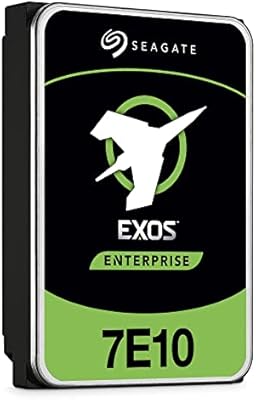
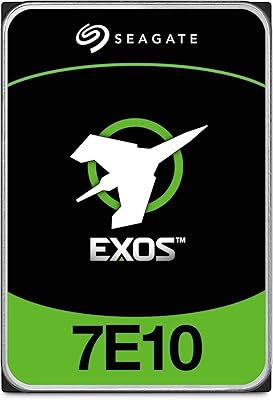
Seagate Exos 7E10 4TB Internal Hard Drive
75%
83%
Sustained Reliability
81%
Read/Write Performance
78%
Value for Money
89%
NAS Compatibility
61%
Vibration & Noise
More
Seagate Exos X24 24TB Enterprise Hard Drive
83%
97%
Storage Capacity
88%
Read/Write Performance
91%
Reliability & Longevity
86%
Thermal & Acoustic Performance
83%
Value for Money
More
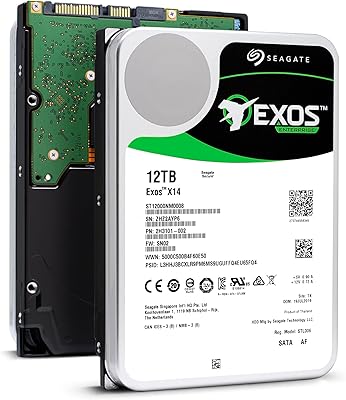
Seagate Exos X14 12TB Hard Drive
88%
91%
Performance
94%
Reliability & Durability
88%
Value for Money
89%
Energy Efficiency
92%
Build Quality
More
Seagate Exos 1TB Internal Hard Drive
80%
91%
Reliability & Uptime
67%
Value for Money
78%
Sequential Performance
88%
Noise Level
84%
Build & Durability
More
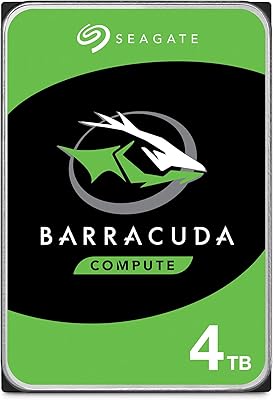
Seagate BarraCuda 4TB Internal Hard Drive
87%
86%
Performance
90%
Reliability
93%
Setup & Installation
95%
Storage Capacity
72%
Data Transfer Speed
More
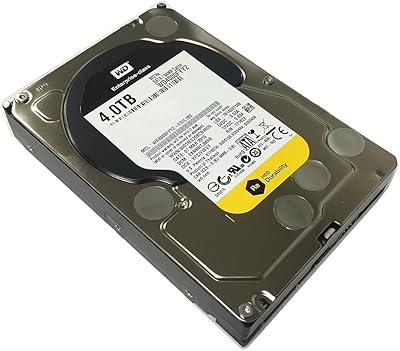
WD Gold 4TB Enterprise Hard Drive
86%
89%
Performance Under Load
93%
Reliability in 24/7 Environments
91%
RAID Compatibility
88%
Endurance and Lifespan
74%
Temperature Management
More
Seagate One Touch 4TB External Hard Drive
75%
93%
Ease of Setup
88%
Storage Value
74%
Transfer Speed
81%
Build Quality
61%
Long-Term Reliability
More
Western Digital WD4000FYYZ 4TB Enterprise Hard Drive
72%
88%
Long-Term Reliability
91%
RAID Performance
83%
Value for Money
58%
Condition on Arrival
82%
Throughput Speed
More
Seagate SkyHawk ST4000VX007 4TB Surveillance Hard Drive
85%
93%
Performance in Continuous Use
91%
Reliability for 24/7 Surveillance
90%
Storage Capacity (4TB)
88%
Workload Handling (180TB/year)
87%
Compatibility with Multi-Drive Systems
More
Seagate Exos X10 10TB Internal Hard Drive
85%
88%
Performance
91%
Reliability
82%
Ease of Installation
86%
Data Transfer Speed
65%
Power Consumption
More

FAQ

In most cases, yes. The Exos 7E8 4TB uses a standard SATA interface and 3.5-inch form factor that fits the vast majority of Synology and QNAP enclosures. That said, it is worth checking your NAS vendor's compatibility list before buying, since some firmware versions handle enterprise drives differently than consumer models. Most users report a clean, problem-free installation.

512n means the drive uses native 512-byte sectors, while 512e emulates 512-byte sectors on a drive with larger physical sectors underneath. For most modern systems, either format works fine. The 512n format on this drive is specifically valuable if you are running older server hardware or HBAs that do not support 512e or 4Kn — those legacy systems often require true 512n to function correctly. If you are unsure, check your motherboard or HBA documentation before purchasing.

Technically, yes — it will function as a desktop drive. Practically, it is overkill and possibly counterproductive for that use case. The Seagate Exos 7E8 4TB Enterprise Hard Drive is engineered for 24/7 server workloads and runs at 7200 RPM, which means slightly more noise and heat than a typical desktop drive optimized for intermittent home use. You would be paying for endurance headroom you will likely never use.

The 550TB/year workload rating tells you how much data the drive is designed to write across a full year before reliability starts to degrade. For a small business NAS that is writing backups and storing active project data around the clock, this headroom matters a lot. A standard desktop drive rated at 55TB/year would be saturated quickly under the same conditions, potentially shortening its lifespan significantly.

It is noticeably quieter than many competing enterprise drives, and most home lab and home office users report being satisfied with the noise level. That said, all 7200 RPM mechanical drives produce some audible hum and seek noise — it is not silent. If your NAS enclosure has good vibration dampening and sits a few feet away, it should not be disruptive in a typical home office environment.

Seagate Rescue is a data recovery service that can be used if the drive fails and you need to retrieve your data. It covers scenarios like accidental deletion, corruption, and physical failure in many cases. It is not a substitute for a proper backup strategy, but it is a meaningful safety net that comes bundled with the drive rather than as an additional purchase.

Early failures exist across every hard drive product line, and this one is no exception. The reported rate is a minority of buyers, not a widespread pattern. Buying from a seller with a straightforward return policy and registering the drive for warranty coverage are practical steps that manage that risk. Drives that make it past the first few months of operation in this series tend to earn much stronger long-term ratings from owners.

A subset of users in dense configurations has noted vibration-related instability, particularly in enclosures that lack proper drive dampening or vibration isolation. This is not unique to the Exos 7E8 — most mechanical drives can exhibit this in tightly packed bays. Using anti-vibration mounting accessories and ensuring adequate airflow goes a long way toward mitigating it. If your chassis was designed for enterprise drives, you should be fine.

The WD Red and IronWolf lines are purpose-built for consumer and SMB NAS use, with firmware tuned for NAS-specific error recovery and vibration compensation. The Exos 7E8 4TB has a significantly higher workload rating and MTBF, making it more durable under heavy load, but its firmware is optimized for server environments rather than NAS enclosures specifically. For light to moderate home NAS use, either NAS-targeted drive works well. If you are running a busy always-on NAS under real workload pressure, the enterprise endurance specs here are genuinely worth it.

The specific ST4000NM0035 variant does not include self-encrypting drive capabilities. Seagate does offer SED and SED-FIPS options within the broader Exos 7E8 family, but those are different model numbers. If hardware encryption is a requirement for your deployment, verify the model number carefully before ordering to ensure you are getting the variant with that feature.

Where to Buy