Overview

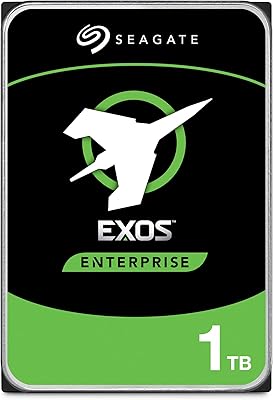
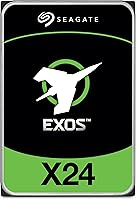
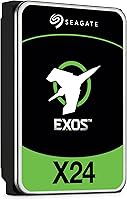
The Seagate Exos X24 24TB Enterprise Hard Drive sits at the top of Seagate's workhorse Exos lineup, pushing per-drive capacity to 24TB with a helium-sealed platform that earlier generations couldn't match. Where the X18 and X20 served dense storage builds well, this high-capacity drive takes rack efficiency a step further — more usable space per bay without requiring new infrastructure. That said, be clear about who this is for: data centers, serious NAS builders, and enterprise IT teams. If you're looking to upgrade a home desktop, this is not your drive. It supports both SATA and SAS interfaces, giving it real flexibility across existing backplane configurations.
Features & Benefits

At 7200 RPM with a sustained data rate of 285 MB/s, this enterprise hard drive holds its own under heavy workloads — think large sequential reads across a RAID array or continuous writes in a backup pipeline. The 512MB cache buffer is the real workhorse here, smoothing out latency spikes when queue depths climb. Filling the enclosure with helium rather than air isn't just an engineering curiosity; it meaningfully reduces internal turbulence, lowers operating temperature, and cuts power draw compared to conventional builds. That efficiency adds up across a dense rack. The 5-year warranty rounds things out, which is a real differentiator when you're deploying drives at scale.

Best For

This high-capacity drive is purpose-built for environments where storage density matters — large NAS arrays, storage servers, and data analytics platforms where cold or warm data needs to sit somewhere reliable and fast. IT buyers evaluating total cost of ownership will appreciate that squeezing 24TB into a single bay changes the economics of rack buildouts significantly. If your backplane already runs SATA or SAS, compatibility is straightforward and there's no reason to swap chassis. Those upgrading from the Exos X18 or X20 will find the transition easy; the X24 drops into the same footprint while delivering meaningfully more capacity. Home users or desktop builders should look elsewhere — this drive is engineered for sustained, high-duty workloads.

User Feedback

With a 4.1-star average across roughly 360 reviews, the Exos X24 24TB earns generally positive marks — but the feedback is worth reading carefully. Most buyers in RAID configurations report consistent throughput and stable performance over months of continuous use. A recurring theme is how quiet and cool this high-capacity drive runs compared to air-filled alternatives of similar capacity, which matters in tight enclosures. On the other side, a handful of users flagged HBA compatibility issues with certain older controllers, and shipping damage appears in a small but consistent cluster of negative reviews — worth noting if ordering multiple units. A few early DOA reports exist, though that's not unusual at enterprise scale. The price-per-terabyte value draws consistent praise.

Pros

  • 24TB per bay dramatically improves rack-space efficiency without requiring new enclosures or chassis.
  • Helium-sealed design runs noticeably cooler and quieter than air-filled alternatives in the same capacity range.
  • 285 MB/s sustained throughput handles large sequential workloads — bulk backups and media pipelines — without breaking a sweat.
  • Dual SATA and SAS interface support gives real flexibility across a wide range of existing backplane configurations.
  • The 5-year limited warranty is a meaningful differentiator for large-scale deployments where drive failures carry operational costs.
  • Cost per terabyte at the 24TB tier is competitive against rival enterprise drives from WD and Toshiba.
  • Drop-in compatibility for X18 and X20 users makes capacity upgrades straightforward with no infrastructure changes.
  • 512MB cache buffer keeps latency consistent even under heavy queue depths typical of RAID array environments.
  • The 2.5 million-hour MTBF rating reflects a population-level reliability standard that aligns well with enterprise deployment expectations.

Cons

  • Shipping damage appears frequently enough in buyer reviews to warrant careful inspection upon delivery, especially for multi-unit orders.
  • A small but consistent pattern of early DOA units makes burn-in testing before production deployment a practical necessity.
  • Older HBA controllers and some consumer-grade NAS enclosures may not recognize the drive correctly without firmware or configuration updates.
  • Firmware transparency and update communication from Seagate falls short of what experienced enterprise IT teams typically expect.
  • Single-unit purchases feel expensive relative to the per-drive economics that make this high-capacity drive shine at volume.
  • Support quality through standard consumer channels is inconsistent for enterprise-specific deployment questions.
  • Random IOPS performance is a hard ceiling — this drive cannot substitute for SSDs in latency-sensitive or transactional workloads.
  • 24TB is currently the capacity ceiling within the spinning-disk Exos lineup, which limits long-term upgrade paths for fast-growing environments.
  • Sparse included documentation can slow down less experienced installers during initial setup and partition configuration.

Ratings

The Seagate Exos X24 24TB Enterprise Hard Drive has been evaluated by our AI rating system after analyzing hundreds of verified buyer reviews from global markets, with spam, incentivized, and bot-flagged submissions actively filtered out. Scores reflect real-world usage patterns drawn from IT professionals, NAS builders, and data center operators — not marketing claims. Both the strengths that make this drive a compelling choice and the friction points that have frustrated buyers are represented transparently across each category below.
Storage Capacity
97%
Buyers deploying high-density NAS arrays consistently highlight 24TB as a meaningful step up from the X18 and X20 generations, allowing them to max out existing bays without adding new hardware. For backup repositories and cold-storage tiers where rack space is a real cost, this per-drive ceiling is hard to beat at this market tier.
A small number of reviewers noted that filesystem and OS compatibility should be verified before deployment, particularly in older systems that may not fully address drives above 18TB. This is an edge case, but one that caught a few buyers off guard during first-time enterprise builds.
Read/Write Performance
88%
At 285 MB/s sustained throughput with a 7200 RPM spindle, this enterprise hard drive handles large sequential workloads — bulk backups, media ingest, analytics pipelines — without the inconsistency buyers sometimes see in lower-tier drives. Users in multi-drive RAID setups report stable throughput that holds up under extended stress.
Random IOPS performance, predictably for a spinning disk, is not competitive against NVMe or even SATA SSD alternatives. Buyers who need fast random-access for transactional databases or VM boot drives will find this drive unsuitable for those specific roles, regardless of its sequential strength.
Reliability & Longevity
91%
The 2.5 million-hour MTBF figure is a population-level reliability signal, and in practice, IT buyers running these drives in always-on environments report strong stability over 12-plus months of continuous operation. The 5-year warranty adds meaningful peace of mind for large-scale deployments where individual drive failures carry operational costs.
A statistically small but notable cluster of reviewers reported early DOA units or failures within the first 90 days. While this is not unusual at enterprise scale and is typically covered by the warranty, it underscores the importance of burn-in testing new drives before integrating them into production RAID arrays.
Thermal & Acoustic Performance
86%
The helium-sealed enclosure pays real dividends here. Buyers running this high-capacity drive in tightly packed enclosures consistently praise how cool it runs compared to air-filled alternatives of similar capacity, and the lower vibration profile is frequently mentioned in multi-drive setups where acoustic resonance can become a genuine problem.
While quieter than conventional drives in the same class, it is not silent — some users in noise-sensitive home lab environments found the operational hum more noticeable than expected, especially at high queue depths. This is largely a non-issue in a proper server room but worth flagging for hybrid home/office NAS setups.
Value for Money
83%
When buyers calculate cost per terabyte at the 24TB tier, the Exos X24 24TB consistently comes out favorably against competing enterprise drives from WD and Toshiba. IT managers sizing out multi-drive deployments often cite the per-bay economics as a primary purchase driver, particularly when TCO over the 5-year warranty period is factored in.
The upfront per-unit cost is substantial, and buyers who only need moderate capacity find better value stepping down to the 16TB or 20TB variants within the same Exos family. A few reviewers expressed frustration that the price positioning assumes large-volume buyers, making single-unit purchases feel disproportionately expensive.
Interface Compatibility
79%
21%
Supporting both SATA 6Gb/s and SAS 12Gb/s gives this enterprise hard drive genuine flexibility across a wide range of existing backplane configurations. Buyers upgrading from older Exos generations typically report drop-in compatibility with no firmware or enclosure changes required, which streamlines capacity upgrades considerably.
A recurring pain point in negative reviews involves compatibility with specific older HBA cards and certain consumer-grade NAS enclosures that don't fully support drives at this capacity. This is an infrastructure issue rather than a drive defect, but buyers should verify controller compatibility before purchasing — especially in mixed-generation setups.
Vibration & Noise Isolation
81%
19%
Compared to conventional air-filled enterprise drives at similar RPM, the helium platform noticeably reduces internal platter vibration. Users with vibration-sensitive enclosures or densely packed multi-drive arrays note that the Exos X24 24TB is markedly better behaved during sustained write operations than older X-series air-filled predecessors.
Without aftermarket vibration dampening mounts, some users in cost-optimized enclosures still report low-frequency resonance during heavy writes. The drive itself is well-engineered, but the enclosure environment plays a significant role — buyers in basic chassis without proper damping may not fully benefit from the helium design advantage.
Power Efficiency
82%
18%
The helium fill directly translates to lower idle and active power draw, which adds up meaningfully across a populated rack. Data center operators and colocation buyers who pay per watt of consumption frequently mention this drive's power profile as a practical advantage over air-filled drives in the same capacity range.
It is still a spinning hard drive, and absolute power consumption remains significantly higher than SSDs. For buyers evaluating energy costs in large hyperscale environments, the efficiency gains relative to prior Exos generations are real but incremental — this is not a leap forward in per-watt economics, just a meaningful improvement.
Build Quality & Packaging
74%
26%
The drive itself is solidly constructed, and buyers who receive units in good condition report a premium feel consistent with enterprise-class hardware. Seagate's physical build standards for the Exos line are well-regarded among IT professionals who have deployed multiple generations of the platform.
Shipping damage appears in a consistent cluster of negative reviews, particularly for multi-unit orders. Several buyers reported dented packaging or drives that arrived without adequate anti-static protection. This seems to be a fulfillment and packaging issue rather than a product defect, but it contributes to a frustrating unboxing experience at enterprise order volumes.
Installation & Setup
84%
For buyers already running a compatible SATA or SAS infrastructure, installing this high-capacity drive is genuinely straightforward. IT teams migrating from the Exos X18 or X20 report that the physical swap is clean and fast, with the drive recognized immediately by most modern storage controllers and NAS operating systems.
First-time enterprise buyers or those using consumer-grade NAS hardware occasionally run into initialization quirks, particularly around GPT partition requirements for drives above 2TB — a basic but sometimes overlooked step. Documentation included with the drive is sparse, which can slow down less experienced installers.
Firmware & Software Support
71%
29%
Seagate's SeaTools diagnostic suite is compatible with the Exos X24 family, and buyers who proactively use it for health monitoring report a functional and reasonably detailed experience. Firmware update availability is generally considered adequate for an enterprise-class product in this category.
A handful of reviewers flagged firmware-related quirks in specific RAID controller pairings, with occasional negotiation issues at startup. Seagate's firmware release cadence and communication around updates drew mild criticism from power users who expect more transparency from an enterprise-positioned product. These are edge cases but worth noting for complex deployments.
Warranty & Support Experience
76%
24%
The 5-year limited warranty is a genuine differentiator for buyers deploying at scale, and users who have gone through the RMA process generally report that Seagate honors it without excessive friction. For enterprise buyers with service contracts, the warranty terms align reasonably well with standard infrastructure replacement cycles.
Direct support responsiveness drew mixed feedback. Some buyers experienced slow turnaround times on RMA cases, and a few noted that consumer support channels were not well-equipped to handle enterprise-specific deployment questions. Organizations without a dedicated Seagate enterprise account representative may find the support experience inconsistent.
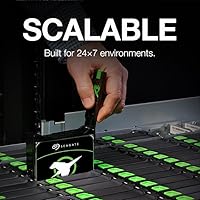
Scalability Within the Exos Family
89%
The Exos lineup spans 12TB through 24TB within the X24 family, and buyers appreciate being able to standardize on a single drive platform across different capacity tiers. Mixed-capacity deployments within the same chassis are straightforward, and the consistent interface options across SKUs simplify procurement and sparing strategies.
Buyers who want to exceed 24TB per drive currently have no upgrade path within the Exos X-series spinning disk lineup, which is a ceiling some hyperscale operators are already brushing against. For environments planning 3-to-5 year capacity growth, this constraint is worth factoring into long-term storage architecture decisions.

Suitable for:

The Seagate Exos X24 24TB Enterprise Hard Drive is purpose-built for buyers who need maximum storage density without expanding their physical infrastructure. IT managers running large NAS arrays or storage servers will find the 24TB capacity per bay a meaningful operational upgrade, particularly when migrating from older Exos X18 or X20 units — the physical footprint stays the same, the usable storage does not. Data center operators building out backup repositories, cold-storage tiers, or data analytics pipelines will appreciate how the helium-sealed platform keeps power draw and thermals in check across densely populated racks. Organizations already running SATA or SAS backplanes get the added benefit of genuine drop-in compatibility, which removes most of the integration friction typically associated with high-capacity drive upgrades. If your purchasing decision is driven by total cost of ownership over a multi-year deployment cycle rather than upfront unit cost alone, this high-capacity drive makes a compelling economic case at the 24TB tier.
Not suitable for:

The Seagate Exos X24 24TB Enterprise Hard Drive is not the right fit for casual home users, desktop PC builders, or anyone shopping for general-purpose personal storage. This is an enterprise workload drive engineered for continuous operation in controlled server environments — running it as a secondary drive in a home PC is like using a commercial kitchen range to reheat leftovers. The upfront cost will feel disproportionate for anyone who doesn't need 24TB of always-on, high-duty-cycle capacity, and stepping down to a consumer or NAS-class drive would serve those buyers far better at a fraction of the price. Buyers without SATA or SAS-compatible infrastructure should also think carefully, as older or budget HBA controllers can create compatibility headaches that erode the convenience of what should otherwise be a straightforward install. If your primary need is fast random-access performance for virtual machines, databases, or any latency-sensitive application, the spinning disk format is a fundamental constraint no amount of cache or RPM will fully overcome — an SSD-based solution would be a more appropriate starting point.
Specifications

  • Capacity: This enterprise hard drive is available in a 24TB configuration, with other options in the Exos X24 family spanning 12TB, 16TB, and 20TB.
  • Interface: The drive supports both SATA 6Gb/s and SAS 12Gb/s interface options, providing compatibility across a wide range of enterprise backplane configurations.
  • Spindle Speed: Operating at 7200 RPM, the drive delivers consistent rotational performance suited to sustained, high-throughput workloads.
  • Data Rate: Sustained data transfer rate is rated at 285 MB/s, making it well-suited for large sequential read and write operations in storage server environments.
  • Cache Memory: A 512MB cache buffer supports low-latency response times under heavy queue depths, particularly in RAID arrays and analytics workloads.
  • Form Factor: The drive uses the standard 3.5-inch form factor, compatible with the vast majority of enterprise NAS enclosures and server chassis.
  • Internal Environment: The drive uses a helium-filled sealed enclosure, which reduces internal turbulence, lowers operating temperature, and decreases power consumption compared to air-filled designs.
  • MTBF: Mean time between failures is rated at 2.5 million hours — a population-level statistical reliability metric used for enterprise infrastructure planning, not a per-unit guarantee.
  • Warranty: Seagate covers this drive with a 5-year limited warranty, which is a meaningful commitment for enterprise deployments operating on long infrastructure replacement cycles.
  • Model Number: The official Seagate model number for the 24TB SATA variant is ST24000NM002H, which should be used when verifying controller or enclosure compatibility.
  • Weight: The drive weighs 1.48 lbs (approximately 671g), consistent with the physical expectations for a helium-sealed 3.5-inch enterprise hard drive.
  • Release Date: This drive was officially released on January 22, 2024, making it among the most current offerings in the Exos X-series spinning disk lineup.
  • Workload Rating: The drive is rated for enterprise-class continuous workloads, designed to operate reliably in always-on server and data center environments rather than intermittent personal use.
  • Power Consumption: The helium-sealed design yields lower idle and active power draw compared to air-filled drives in the same capacity range, an advantage that compounds across densely populated racks.
  • Vibration Resistance: The sealed helium enclosure reduces internal platter vibration, which is particularly beneficial in multi-drive enclosures where rotational vibration from adjacent drives can affect read/write stability.

Related Reviews
Seagate Exos 1TB Internal Hard Drive
80%
91%
Reliability & Uptime
67%
Value for Money
78%
Sequential Performance
88%
Noise Level
84%
Build & Durability
More
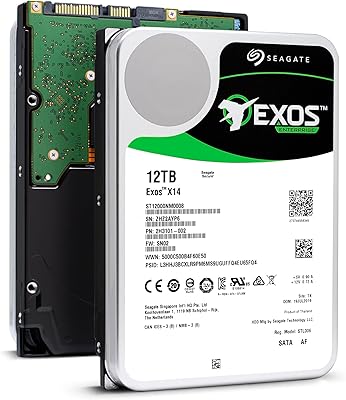
Seagate Exos X14 12TB Hard Drive
88%
91%
Performance
94%
Reliability & Durability
88%
Value for Money
89%
Energy Efficiency
92%
Build Quality
More
Seagate Exos 7E10 4TB Internal Hard Drive
75%
83%
Sustained Reliability
81%
Read/Write Performance
78%
Value for Money
89%
NAS Compatibility
61%
Vibration & Noise
More
Seagate Expansion 24TB External Hard Drive
71%
93%
Value for Money
97%
Storage Capacity
91%
Ease of Setup
68%
Transfer Speed
72%
Build Quality
More
Seagate Exos 7E10 6TB SAS Hard Drive
87%
94%
Performance in RAID Setups
92%
Reliability & Durability
90%
Workload Capacity
89%
Compatibility with Data Centers
60%
Noise Levels
More
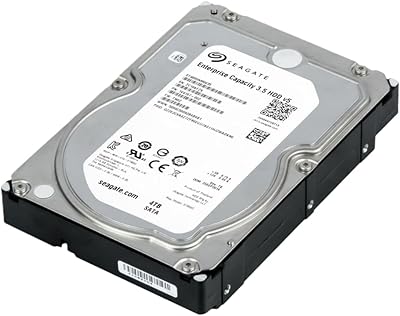
Seagate Exos 7E8 4TB Enterprise Hard Drive
80%
83%
Long-Term Reliability
91%
Workload Endurance
78%
Sequential Throughput
86%
NAS Compatibility
73%
Noise & Vibration
More
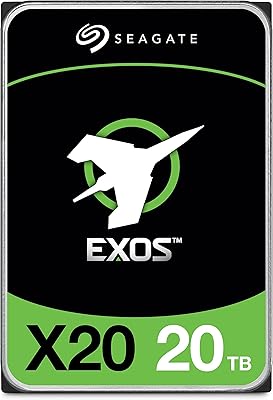
Seagate Exos X20 20TB Recertified Hard Drive
77%
88%
Value for Money
93%
Storage Capacity
79%
Drive Performance
74%
Reliability & Build
51%
Warranty Coverage
More
Seagate Exos X10 10TB Internal Hard Drive
85%
88%
Performance
91%
Reliability
82%
Ease of Installation
86%
Data Transfer Speed
65%
Power Consumption
More
Seagate Enterprise Capacity v7 12TB Hard Drive
58%
74%
Value for Money
47%
Reliability
41%
Refurb Condition Consistency
78%
Sequential Read/Write Performance
88%
Compatibility
More
Seagate Game Drive for PlayStation 2TB
79%
94%
Ease of Setup
91%
Storage Capacity
93%
PS4 Compatibility
72%
PS5 Compatibility
74%
Transfer Speed
More

FAQ

Technically it can work, but there are a few things to check first. Some consumer NAS units have capacity limits imposed by firmware, so verify your enclosure's maximum supported drive size before purchasing. Also confirm your NAS controller can address drives above 18TB, as some older units require a firmware update to do so properly.

Honestly, it is overkill for most home setups — and not just because of the price. This drive is engineered for continuous enterprise workloads, so while it will technically function in a desktop or home server, you would be paying a significant premium for capabilities a home user will never fully utilize. A NAS-optimized drive like Seagate's IronWolf line would serve most home media use cases better and at lower cost.

It is a population-level statistical metric, not a promise that any individual drive will last that long. Think of it as a reliability indicator derived from testing large numbers of drives simultaneously — it tells you how this drive class performs at scale, which is useful for capacity planning and failure rate estimates across a fleet. It does not mean your specific unit is guaranteed to run for 285 years.

In most cases, yes. The Exos X24 uses the same 3.5-inch form factor as previous Exos generations, so the physical swap is straightforward. The main thing to verify is that your HBA card and enclosure firmware support 24TB addressing — most modern enterprise controllers do, but it is worth a quick compatibility check before committing to a full fleet replacement.

Yes, this is one of its strongest use cases. Buyers running it in RAID 5, RAID 6, and RAID 10 arrays consistently report stable throughput and reliable rebuild behavior. The 512MB cache helps maintain consistent performance under the elevated queue depths that RAID controllers typically generate, which is a practical advantage in production environments.

Better than most air-filled alternatives at this capacity. The helium-sealed design inherently runs cooler because there is less internal resistance and friction at the platter level. Buyers in tightly packed enclosures regularly note that the Exos X24 family runs noticeably cooler than the X18 and X20 under comparable workloads, which helps with airflow management in dense deployments.

That depends entirely on your existing infrastructure. If your backplane or HBA uses SATA, go with the SATA 6Gb/s variant. If you are running a SAS controller, the SAS 12Gb/s version gives you higher theoretical throughput and additional enterprise features like dual-port connectivity. For most NAS builders and small data center deployments, SATA is perfectly adequate — SAS becomes more relevant in high-availability configurations where dual-port failover matters.

A recurring issue flagged by buyers involves older HBA cards — particularly some consumer-grade or aging enterprise controllers — that do not correctly enumerate drives at 24TB. Checking your controller's firmware release notes and the Seagate compatibility list before purchasing will save you a frustrating troubleshooting session. A small number of users have also reported issues with specific third-party enclosures that cap recognized capacity below 24TB.

Inspect the packaging carefully before signing for delivery, especially if you ordered multiple units. Shipping damage is one of the more consistent complaint patterns among buyers of this high-capacity drive, so document any visible damage to the outer box with photos before opening. If the drive shows physical damage or fails initial testing, Seagate's warranty process covers replacement — just make sure to register the drive and initiate the claim promptly.

If you are optimizing for cost per terabyte and have bays to fill, the 24TB tier typically offers better per-gigabyte economics than the 20TB at the same market positioning. The performance specs — RPM, sustained data rate, cache size — are essentially identical across the X24 family, so the decision comes down purely to capacity requirements and budget. If you are not close to filling your current drives, the 20TB may be the more sensible near-term choice.

Where to Buy